
A cramped root ball chokes your tomatoes, peppers, and herbs long before the first flower appears. Standard plastic pots trap roots in a circling pattern that stunts growth and invites disease, but 2 gallon grow bags fix this with passive air pruning. The fabric walls stop roots at the edge, forcing them to branch into a dense, fibrous network that feeds your plants with far more efficiency.
I’m Rikta — the co-founder and writer behind Lawn Gear Lab. I’ve spent hours comparing thread counts, handle stitching, fabric gram weights, and thousands of owner reports to separate the bags that hold their shape from the flimsy options that sag into puddles after two waterings.
After researching dozens of models across multiple price tiers, I’ve assembled the most practical, no-hype list of the best 2 gallon grow bags for indoor and outdoor gardening right now.
How To Choose The Best 2 Gallon Grow Bags
Two-gallon bags are the sweet spot for starting cuttings, running a compact herb garden, or growing single pepper plants on a patio. But every grow bag is not the same bag; the fabric thickness, handle construction, and base design separate a multi-season tool from a disposable sack. Focus on these three criteria to make a smart buy.
Fabric Weight — The 300G Threshold
Fabric weight is measured in grams per square meter (GSM). Bags under 200 GSM feel like thin landscape fabric and often collapse under wet soil, especially in 2-gallon size where the sidewalls have less structural support from soil volume. A 300G nonwoven fabric holds its shape season after season, resists UV degradation, and still drains freely. Every product that earned a spot in the reviews below uses at least 250G fabric, with the best options hitting a full 300G.
Handle Construction — Serged vs Strip
Cheaper grow bags cut handles from the same single layer of fabric, which tears under the weight of damp potting mix. Mid-range and premium bags sew the handles separately using serger stitches that distribute tension across a wider attachment point. For a 2-gallon bag filled with wet soil, handle reinforcement is not a luxury — it is the difference between a smooth move and a muddy spill.
Base Shape and Seam Placement
Round bags with a flat sewn base sit more stable on decks and shelves than tapered models that tip after watering. Also check whether the vertical seams run inside or outside. Exterior seams reduce friction on roots and make transplanting smoother when you slide the root ball out. The best designs put seams on the outside and add a flat bottom gusset for stability.
Quick Comparison
On smaller screens, swipe sideways to see the full table.
| Model | Category | Best For | Key Spec | Amazon |
|---|---|---|---|---|
| Rain Science White/Black | Premium | Long-term durability & UV resistance | Plastic-coated mesh, lifetime warranty | Amazon |
| Gardzen 10-Pack | Mid-Range | Best value per bag in a bulk pack | 300G nonwoven, X-stitched handles | Amazon |
| VIVOSUN 5-Pack | Mid-Range | Budget-friendly quality 5-pack | 300G nonwoven, serger handles | Amazon |
| HORTIPOTS 6-Pack | Mid-Range | Tall profile for deep root crops | 270G aeration fabric, 6 labels | Amazon |
| LUNGAR 10-Pack | Mid-Range | Extra double seam weatherproofing | 300G fabric, double stitch | Amazon |
| iPower 24-Pack | Value | High-volume operations / large gardens | 300G nonwoven, nylon handles | Amazon |
| GRO Pro Premium | Budget | Traditional nursery pot replacement | Injection-molded plastic, grip lip | Amazon |
In‑Depth Reviews
1. Rain Science White/Black 2 Gallon Grow Bag
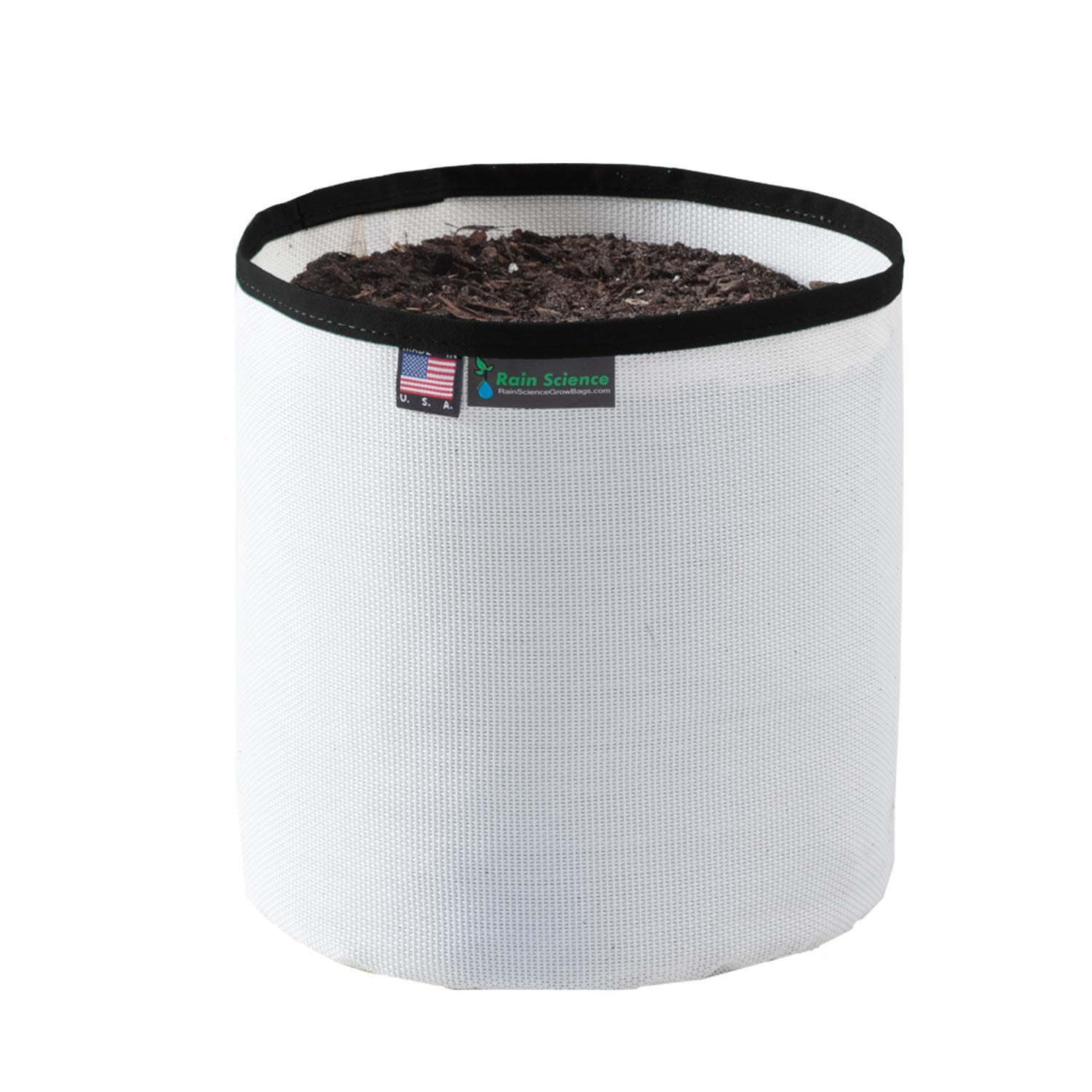
Rain Science uses a plastic-coated mesh that behaves differently from every other bag on this list. Instead of absorbing water like nonwoven fabric, the coated surface sheds moisture and stays dry to the touch, which reduces fungus-gnat habitat and keeps the bag from getting heavy with trapped water. The white outer layer reflects sunlight to keep root-zone temperatures several degrees cooler than black fabric bags during peak summer heat.
The seams are positioned on the outside, leaving the interior completely smooth so roots slide out without snagging during transplant. Owners consistently report these bags lasting five years or more, and the lifetime warranty backs that durability with no-hassle replacement. The tapered shape makes extraction effortless, and the material rinses clean in seconds.
One concession: the price per bag is higher than any nonwoven option, so this makes the most sense for gardeners who intend to use the same bags for many seasons. For heavy potting cycles or commercial starting, the longevity pays for itself within two years.
What works
- UV-stable white coating reflects heat and prevents algae
- Exterior seams and tapered design make transplanting nearly root-shock-free
- Washable, reusable, and backed by a lifetime warranty
What doesn’t
- Higher per-unit cost compared to standard nonwoven bags
- Mesh weave allows very fine soil particles to escape during initial watering
2. Gardzen 10-Pack 2 Gallon Grow Bags

Gardzen packs ten 2-gallon bags at a per-unit cost that undercuts most five-packs, making this the obvious choice for gardeners expanding a container garden in one order. The 300G nonwoven fabric is thick enough to stand upright when filled with damp mix, and the reinforced X-shaped stitching at each handle attachment prevents tearing under load.
Each bag measures 9.8 inches in diameter and 7 inches tall, providing a broad, stable base that resists tipping on windy balconies. The fabric breathes well enough to air-prune roots without drying the soil too fast, and owners report strong results with peppers, strawberries, and shallow-rooted herbs. The entire pack folds flat for winter storage.
One trade-off: the handles are sewn from the same fabric layer rather than being doubled with webbing, which is typical for this price bracket. They hold up fine for moving dry soil but need careful lifting when the bag is saturated.
What works
- Excellent value for 10 bags — lowest per-unit cost in the mid-range tier
- 300G fabric holds shape well without sagging
- Reinforced cross-stitch at handle points adds real tear resistance
What doesn’t
- Handles are not padded webbing; avoid one-hand carrying when fully wet
- Bags arrive folded and may need a fill-dry cycle to fully relax the shape
3. VIVOSUN 5-Pack 2 Gallon Grow Bags
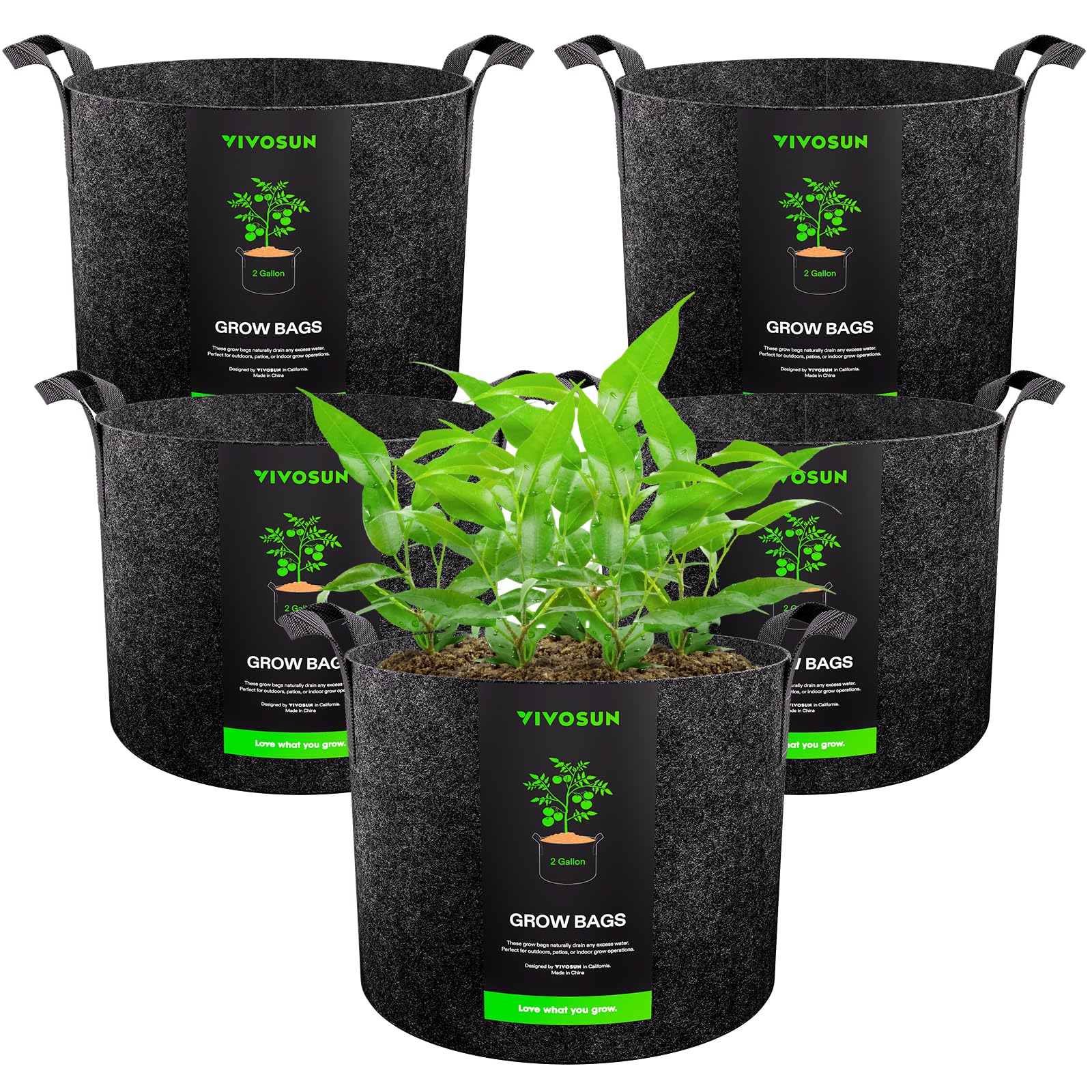
VIVOSUN’s 2-gallon five-pack uses 300G thickened nonwoven fabric with serger-stitched handles that separate this bag from the budget pack competition. The serger seam wraps the handle attachment in a dense thread loop that distributes tension evenly across the fabric, so the handles do not rip out when you lift a waterlogged bag.
The fabric is BPA-free and moderately permeable, meaning water drains at a controlled pace rather than gushing through large mesh holes. This is ideal for indoor use where drip trays need to catch runoff without overflowing. The bags measure 8.7 inches across and 7.9 inches tall, giving them a slightly taller profile than the Gardzen option.
Durability reports from owners show these bags lasting three to four seasons with normal outdoor use. The only common complaint is that the black color absorbs heat on hot patios, but that is inherent to any dark fabric pot.
What works
- Serger-stitched handles outperform simple cut-fabric handles for lifting
- 300G fabric provides excellent structure and drainage control
- BPA-free material suitable for organic vegetable growing
What doesn’t
- Five-pack only — cost per bag is higher than the Gardzen 10-pack
- Black fabric can heat up in direct afternoon sun
4. HORTIPOTS 6-Pack 2 Gallon Fabric Pots
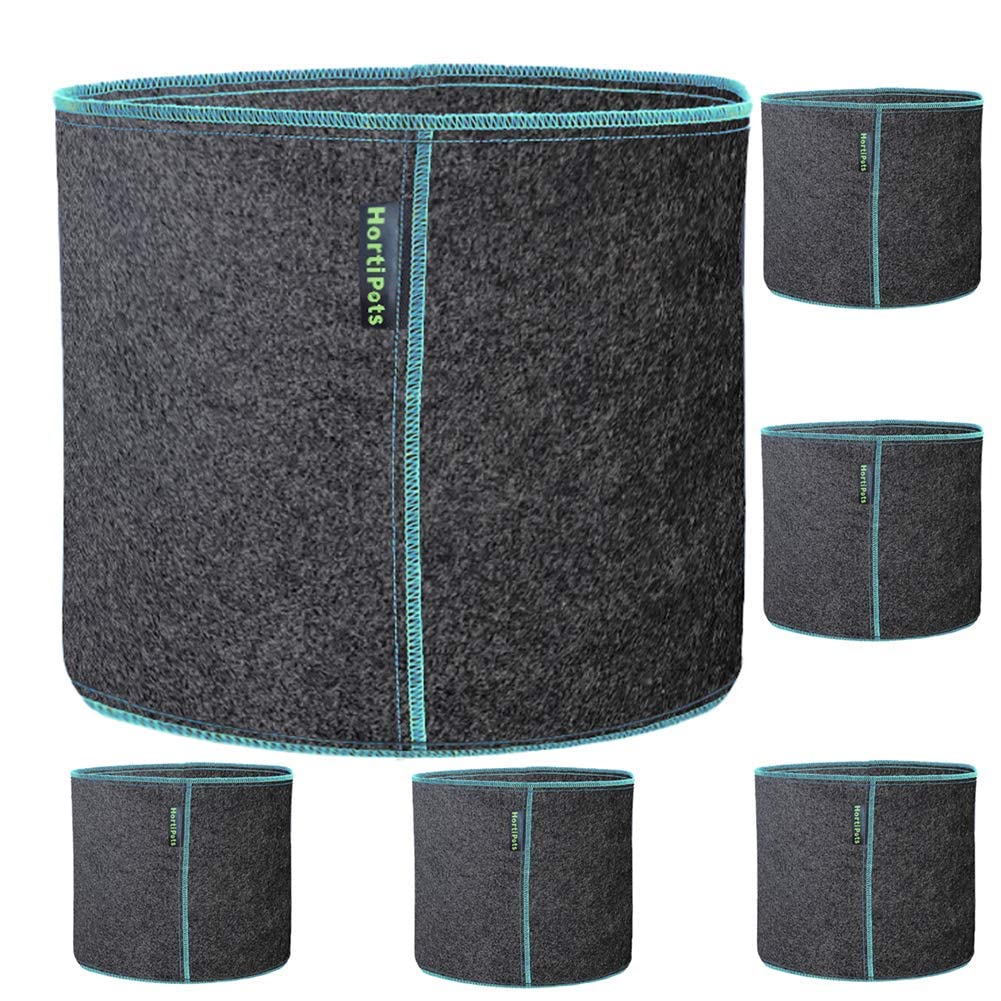
HORTIPOTS uses 270G nonwoven aeration fabric that sits between the lightweight budget options and the heavy 300G standard. The 2-gallon bags measure 8.25 inches in diameter and stand taller than most competitors, which makes them a strong fit for plants like garlic, onions, and shallow-rooted strawberries that benefit from depth without needing a wider pot.
The “Not-So-Floppy” branding is accurate — the 270G fabric holds its shape well when filled, and the gray-and-black color scheme looks cleaner than all-black bags on a deck or shelf. Each pack includes six free plant nursery labels, a small but welcome addition for tracking multiple varieties.
Some owners note that the taller shape makes the bags slightly less stable when completely saturated. Folding the top lip down by an inch increases stability but reduces the effective soil volume, so matching the bag to a saucer with a wider footprint is recommended for top-heavy plants.
What works
- Taller profile suits crops that need vertical root space
- 270G fabric is a good balance between breathability and durability
- Free labels included for organized planting
What doesn’t
- Tall bags can wobble when wet; best paired with a wide saucer
- Fabric weight is 270G, not the maximum 300G found on some competitors
5. LUNGAR 10-Pack 2 Gallon Grow Bags
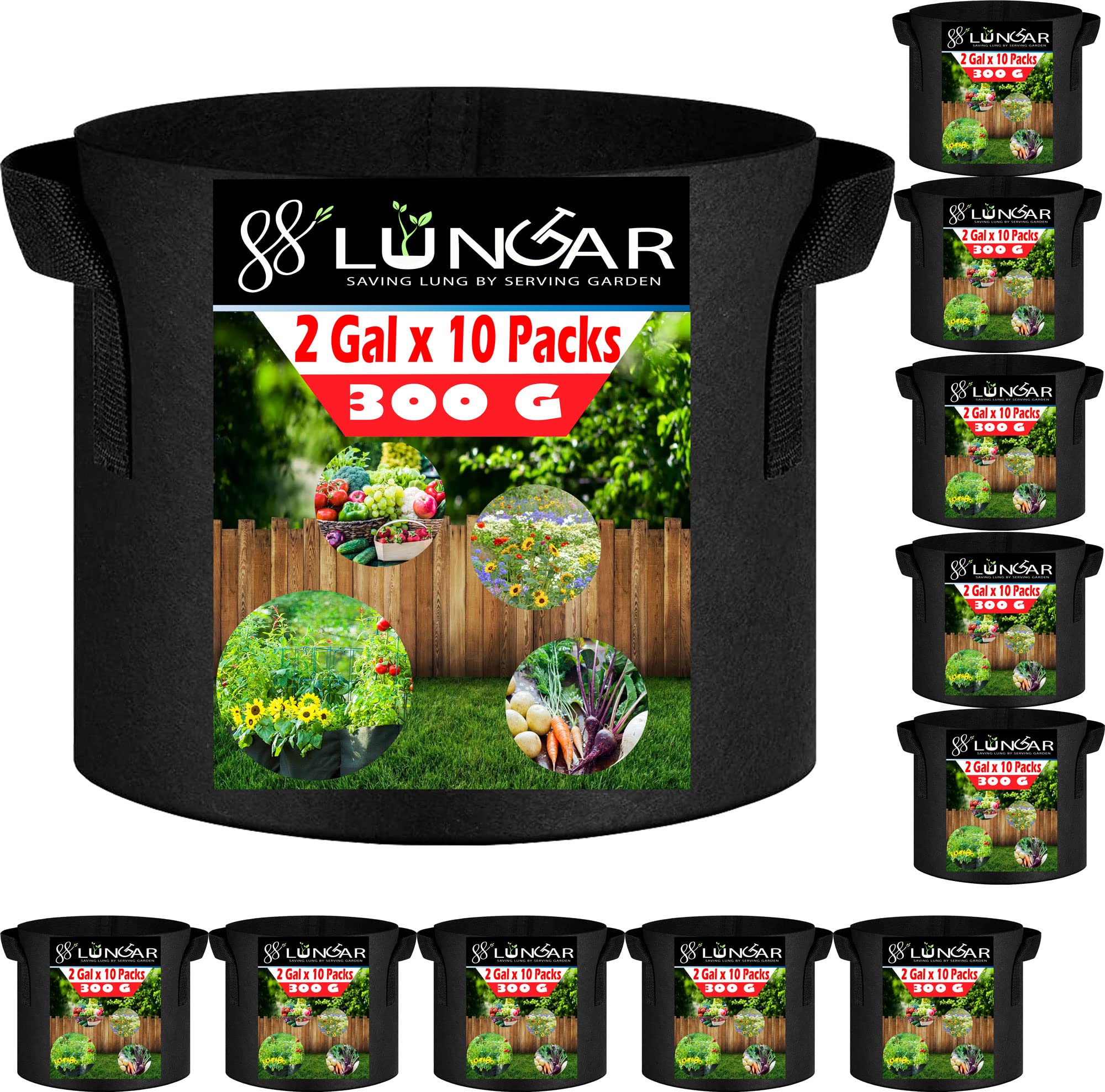
LUNGAR differentiates its 10-pack by doubling the seam stitching along the vertical edges and the base, creating a double-seam construction that resists fraying longer than single-stitched bags. The 300G nonwoven fabric feels dense in hand and stands upright with no slouching, even before the first fill.
The bag dimensions are on the compact side at 7 inches in diameter and 5 inches tall, which makes this 2-gallon bag physically smaller than the Gardzen or VIVOSUN options. That compact footprint works well for tight shelf spacing indoors, but the smaller surface area means the soil dries slightly faster and requires more frequent watering during hot weather.
Owner reviews consistently praise the build quality, with many reporting three years of continuous outdoor use before any thread loosening appears. The handles, however, are attached at the side without webbing reinforcement, so they remain the weakest link on an otherwise tough bag.
What works
- Double-stitched seams add noticeable longevity vs single-stitch bags
- Compact 7-inch diameter fits tight spaces and shelf racks
- Thick 300G fabric holds shape without sagging
What doesn’t
- Smaller diameter means faster soil drying in hot weather
- Side handles lack webbing for heavy lifting
6. iPower 24-Pack 2 Gallon Grow Bags
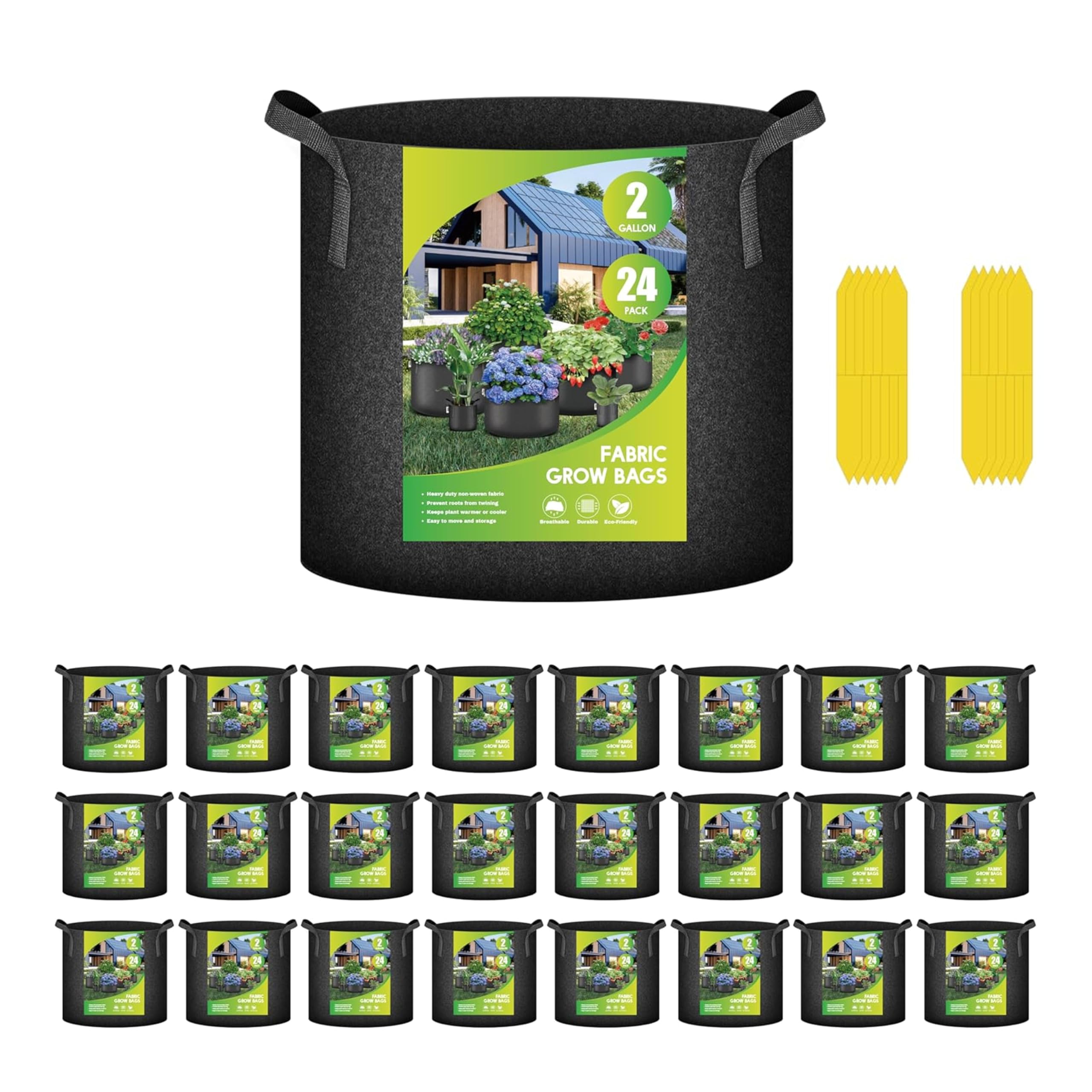
iPower’s 24-pack delivers the highest bag count in this guide, aimed at serious gardeners running large seed-starting operations or community plot growers. Each bag uses 300G thickened nonwoven fabric with nylon handles that are both double-thick and double-stitched, providing a genuine upgrade over the standard fabric-strip handles found on smaller packs.
The bags measure 8.7 inches in diameter and 7.9 inches tall, matching the VIVOSUN dimensions closely. Every bag comes with a matching plant label, so you get 24 labels out of the box — a detail that saves time during large transplant sessions. The nonwoven material drains well and promotes air pruning without excessive water loss.
The only notable concession is that the nylon handles, though stronger than fabric, are not padded and can dig into your hands when carrying multiple bags at once. For the sheer volume and per-bag cost, however, this pack is hard to beat for operations that cycle through dozens of plants each season.
What works
- Highest bag count in the guide with 24 per pack
- Nylon double-stitched handles are stronger than fabric-strip alternatives
- Matching plant labels included for every bag
What doesn’t
- Unpadded nylon handles can be uncomfortable when carrying full bags
- Some owners report bags measure slightly under the advertised dimensions
7. GRO Pro Premium Nursery Pot 2 Gallon

GRO Pro offers a traditional rigid nursery pot made from injection-molded black plastic, not fabric. This is the only non-fabric entry in the guide, included specifically for gardeners who prefer solid-wall containers or need to reuse standard nursery pots for transplant cycles. The 2-gallon pot measures 9 inches in diameter and 8.5 inches tall with a grip lip around the top rim for easy handling.
The thick plastic resists cracking and flexing under heavy soil loads, and the drainage holes at the base are adequate for standard potting mixes. For growers who move pots frequently, the rigid structure and lip grip make single-handed carrying far easier than a floppy fabric bag.
The trade-off is the lack of air pruning: roots will circle the interior wall and need manual teasing at transplant time. This pot is best used as a temporary nursery container or for plants that will be moved to garden beds before becoming root-bound.
What works
- Rigid plastic is easier to carry and stack than fabric bags
- Grip lip and drainage holes are well-designed for standard nursery use
- Durable enough for many seasons without fabric fraying concerns
What doesn’t
- No air pruning — roots circle and may become bound
- Plastic retains more heat than breathable fabric in direct sun
Hardware & Specs Guide
Fabric Weight (GSM)
GSM stands for grams per square meter and directly correlates to the bag’s structural integrity and lifespan. A 300G nonwoven bag holds its shape upright when filled with damp soil and typically survives three to five growing seasons before the fabric begins to weaken. Bags below 250G feel flimsy and often require double-potting or external support to stay stable. For 2-gallon bags, 300G is the gold standard — any thicker adds unnecessary weight without meaningful durability gains.
Handle Reinforcement
Grow bag handles are the first component to fail on budget models. The best reinforcement uses serger stitching or a separate nylon webbing strap sewn into the bag body. Serger-stitched handles wrap the attachment point in a continuous thread loop that spreads tension across several inches of fabric. Nylon webbing handles add a separate load-bearing strip that is stronger than the bag material itself. Single-layer fabric-strip handles are acceptable only for light lifting and should never be used to carry a fully saturated bag.
FAQ
How many seasons will a 300G nonwoven grow bag last outdoors?
Do 2-gallon fabric bags dry out faster than plastic pots?
Can I reuse grow bags after a season with diseased plants?
Final Thoughts: The Verdict
For most gardeners, the best 2 gallon grow bags winner is the Rain Science White/Black because its plastic-coated mesh, exterior seams, and lifetime warranty deliver unmatched longevity and transplant ease. If you want the highest bag count for the money, grab the iPower 24-Pack. And for a balanced mid-range five-pack with serger-stitched handles and proven durability, nothing beats the VIVOSUN 5-Pack.