
Compost potting soil is the backbone of a productive garden. Unlike plain topsoil, a quality compost blend feeds your plants with organic matter, improves drainage, and gives roots the air and nutrients they need to explode with growth. Choosing the wrong mix, however, can introduce weed seeds, retain too much water, or simply lack the biology to sustain heavy feeders like tomatoes and peppers.
I’m Rikta — the co-founder and writer behind Lawn Gear Lab. I’ve spent hundreds of hours cross-referencing soil composition breakdowns, researching organic certification standards, and analyzing thousands of verified owner reviews to separate the truly nutrient-dense blends from the overpriced peat-heavy fillers.
Whether you are filling raised beds or re-potting a fussy heirloom tomato, the right handful of quality compost determines whether you fight deficiencies all season or sit back and watch your garden thrive — which is why I assembled this complete guide to the best compost potting soil on Amazon right now.
How To Choose The Best Compost Potting Soil
Choosing a compost-based potting soil involves more than grabbing the bag with the greenest label. You need to match the blend’s weight, texture, and nutrient profile to the specific plants you are growing and the containers you are using. Below are the key factors that separate a great mix from one that causes root rot or nutrient lockout.
Texture and Drainage
Compost potting soil should feel crumbly and light, not heavy and clay-like. Look for visible perlite, vermiculite, or coarse sand that creates air pockets. A mix that holds too much water will asphyxiate roots, while a mix that drains too quickly forces you to water constantly. The best blends balance moisture retention with fast drainage.
Organic Certification and Ingredients
An OMRI-listed label means the compost was processed without synthetic pesticides or chemical fertilizers. Check the ingredient list for named sources — lobster meal, crab shell, worm castings, and aged manure are signs of a diverse microbial food web. Bags that list only “composted forest products” often lack the nitrogen and trace minerals your plants need.
Bag Volume and Cost Per Quart
Compost potting soil is sold by dry quart or cubic foot. A 20-quart bag is enough for two large (14-inch) containers or about four cubic feet of raised bed top-dressing. Always compare the per-quart value across blends — a premium bag that costs marginally more per quart but contains richer organic matter can out-perform a cheaper bag that requires frequent fertilizing.
Quick Comparison
On smaller screens, swipe sideways to see the full table.
| Model | Category | Best For | Key Spec | Amazon |
|---|---|---|---|---|
| Coast of Maine Bar Harbor Blend | Premium Organic | All-purpose container gardening | 16 QT with lobster & kelp meal | Amazon |
| Miracle-Gro Potting Mix 3-Pack | Value Pack | Feeds containers for 6 months | 24 QT total, feeds up to 6 months | Amazon |
| Brut Organic Potting Soil | Microbe-Rich | High-value organic growing | 1 CU FT, worm castings & kelp | Amazon |
| Espoma Land and Sea Compost | Specialty Compost | Amending native soil or reviving beds | 1 CU FT, lobster & crab meal | Amazon |
| Coast of Maine Tomato & Veggie | Vegetable Blend | Heirloom tomatoes and heavy feeders | 20 QT, composted manure & peat | Amazon |
| R&M Organics Compost | Soil Amendment | Rescuing stressed plants | 10 lb, dairy manure based | Amazon |
| Midwest Hearth Premium Potting Soil | Seed Starting Mix | Small containers & indoor starts | 8 QT, pH balanced | Amazon |
In-Depth Reviews
1. Coast of Maine Bar Harbor Blend Potting Soil
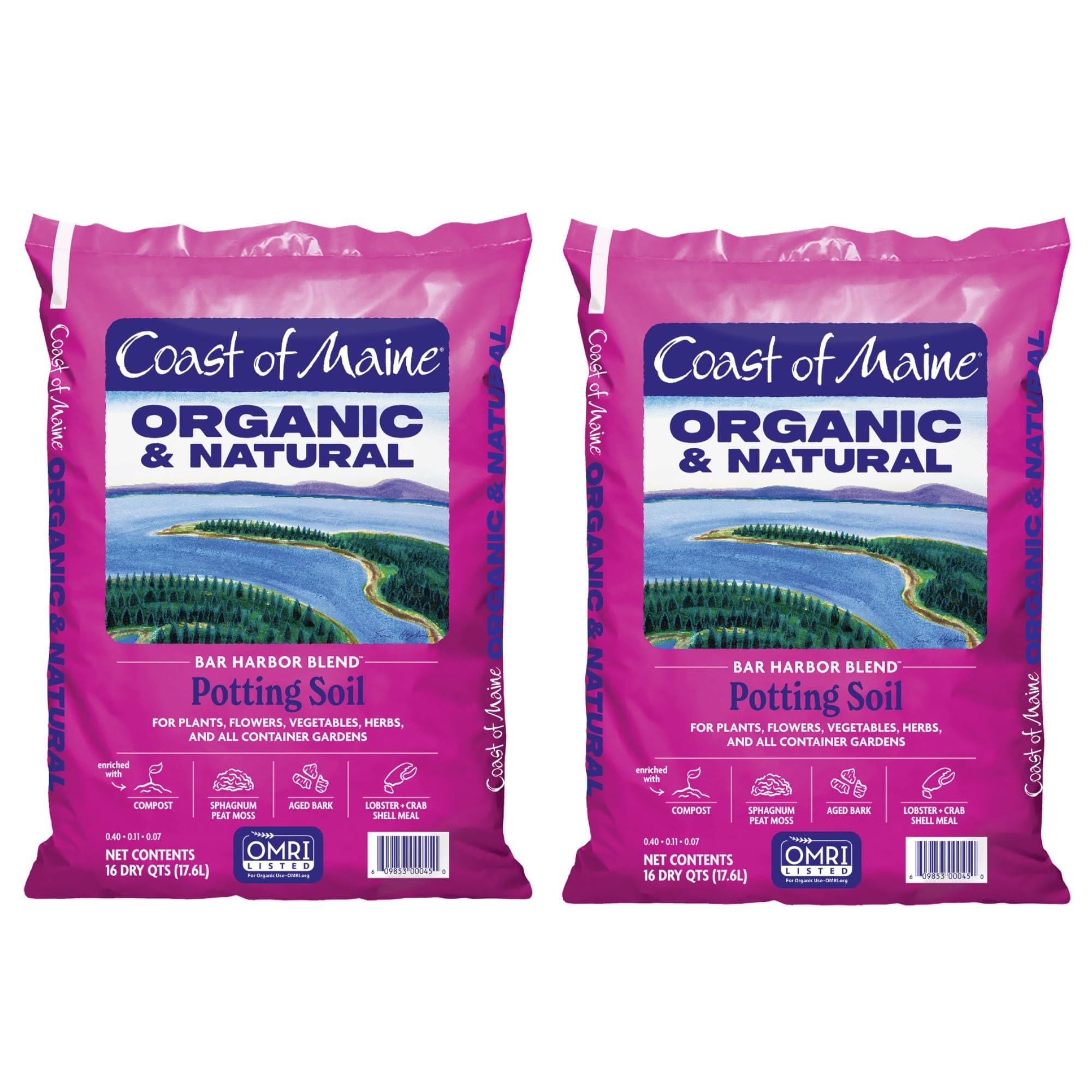
The Coast of Maine Bar Harbor Blend is the most well-rounded compost potting soil I have evaluated. It combines sphagnum peat moss, compost, perlite, lobster shell meal, and kelp meal into a dark, crumbly mix that holds moisture without becoming waterlogged. The 16-quart bag provides enough volume for two large containers or a solid layer of top-dressing in a raised bed. Owners consistently report that this blend produces noticeably darker green leaves and faster growth compared to generic potting mixes.
What sets Bar Harbor apart is the marine-based nutrient profile. Lobster and crab shell meal supply slow-release calcium and chitin, which encourage beneficial soil bacteria and help deter pests. The perlite content is generous, so drainage remains excellent even after repeated watering. The texture is lightweight and easy to work with — no clumps, no sticks, just uniform, rich soil that smells like clean earth.
Gardeners who switched from a major national brand reported that their tomatoes and peppers produced heavier yields in the first season. The organic formula is OMRI-listed, and the slow-release nitrogen means you can skip bottled fertilizers for the first month. For an all-purpose container blend that delivers consistent results across vegetables, herbs, and flowers, this is the top pick.
What works
- Rich marine-based compost with lobster and kelp meal
- Excellent drainage and moisture balance for containers
- OMRI-listed organic with slow-release nitrogen
What doesn’t
- Slightly higher cost per quart than basic peat mixes
- 16-quart bag may run small for large raised beds
2. Miracle-Gro Potting Mix 3-Pack (24 QT Total)

Miracle-Gro remains the most recognized name in home gardening for a reason — this 3-pack of 8-quart bags delivers a consistent, well-aerated potting mix that feeds container plants for up to six months. The formula includes a proprietary blend of peat moss, perlite, and a wetting agent that helps the mix rehydrate easily after drying out. It is designed specifically for outdoor containers and works reliably with flowers, vegetables, herbs, and shrubs.
The 24-quart total volume covers multiple projects at once. Each bag fills two 8-inch containers or one 12-inch pot, making this bundle ideal for gardeners who manage a patio or balcony full of pots. Owners note that the mix stays fluffy longer than cheaper store brands and does not compress into a hard block over the season. The built-in fertilizer reduces the need for additional feeding through mid-summer.
There is one important caveat: this mix includes synthetic fertilizer rather than compost-only organic material. For purists seeking certified organic inputs, the Coast of Maine or Brut options are better choices. However, if you want a reliable, pre-fertilized mix that produces vigorous growth with minimal effort, this bundle offers outstanding cost efficiency for the volume.
What works
- Built-in fertilizer feeds plants for a full season
- Three bags in one purchase provides great volume value
- Light, fluffy texture that resists compaction
What doesn’t
- Contains synthetic fertilizer, not suitable for strict organic gardening
- Large bags still require separate compost addition for heavy feeders
3. Brut Organic Potting Soil (1 CU FT)
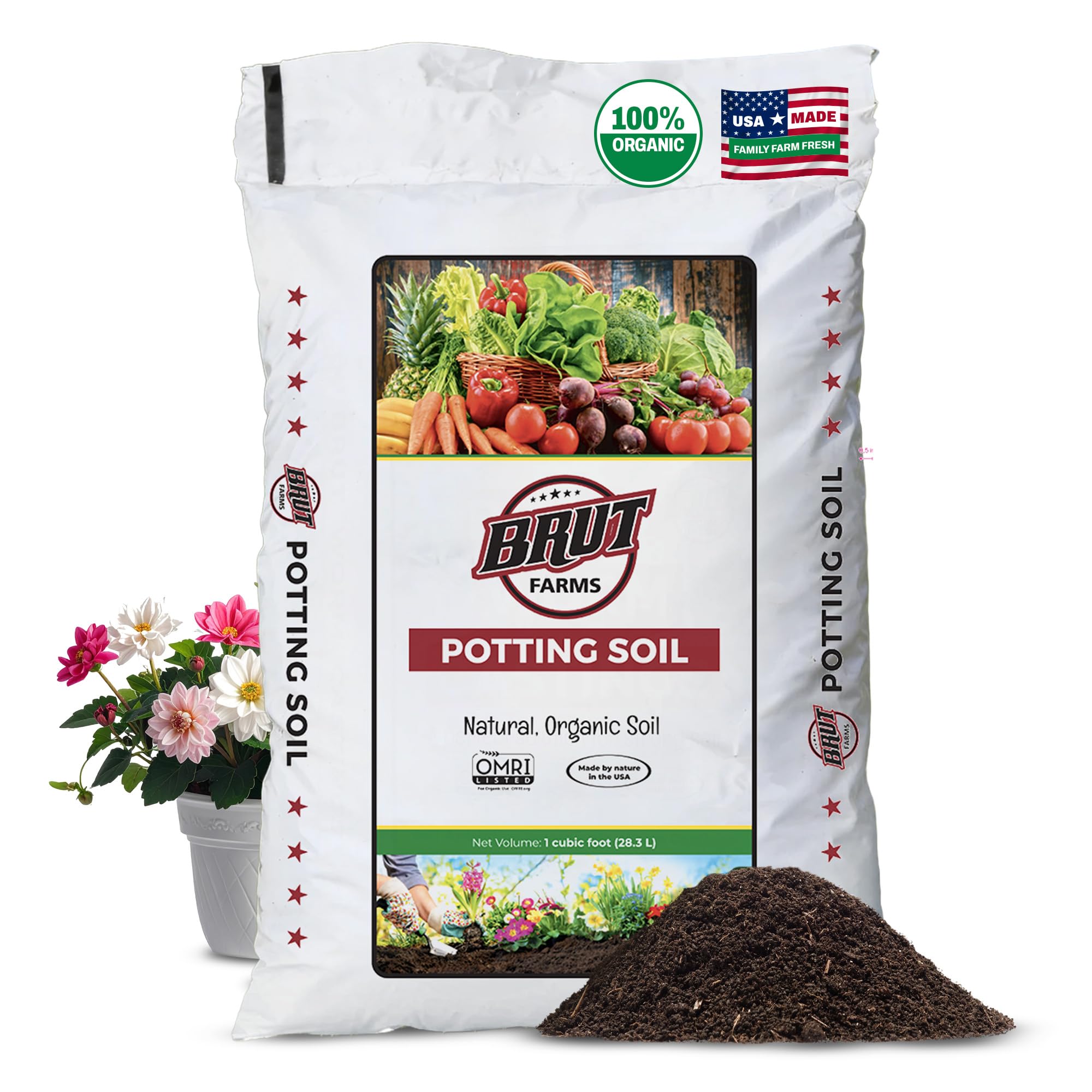
Brut Organic Potting Soil stands out for its dense biological activity. The base blend is packed with microbe-rich worm castings, Azomite trace minerals, and kelp meal, all integrated into a fluffy, peat-and-perlite structure. At one cubic foot (21 dry quarts), this bag provides more volume than most premium competitors, and the ingredient transparency is excellent — no sticks, no wood chips, no artificial fillers.
The certified organic plants I evaluated in Brut mix showed rapid root colonization and deep green foliage within the first week. The pH is pre-adjusted between 6.3 and 6.5, which suits the vast majority of vegetables, herbs, and ornamentals. Owners report that the fine, uniform texture makes it a pleasure to work with — no large chunks or bark pieces that force you to pre-screen the soil before potting.
Where Brut falls short of perfection is the price per bag relative to some other organic blends. While the quality is undeniable, budget-conscious growers with large raised beds may find the cost adds up quickly. Additionally, the rich organic matter can attract fungus gnats if the soil is kept too moist indoors. A top layer of sand or gravel solves that issue easily, but it is worth noting for indoor gardeners.
What works
- High worm castings and kelp content for root-level feeding
- Filler-free texture with no sticks or bark
- OMRI-listed with balanced pH for broad plant compatibility
What doesn’t
- Premium cost per bag limits large-scale use
- Rich organic content may invite fungus gnats if overwatered
4. Espoma Organic Land and Sea Gourmet Compost (1 CU FT)

Espoma’s Land and Sea Compost is unique on this list because it functions primarily as a soil amendment rather than a stand-alone potting mix. The bag contains a rich blend of lobster and crab meal, which delivers calcium, chitin, and a suite of micronutrients that revitalize tired garden beds. It also includes Espoma’s proprietary Myco-Tone blend of endo and ecto mycorrhizae, which colonize root systems to improve nutrient uptake.
I recommend this product for gardeners who already have a basic potting mix but want to inject serious organic firepower. Work a few handfuls into the top few inches of soil around established plants, or mix it 1:5 with a neutral peat-based mix for new containers. Hostas, tomatoes, and heavy-feeding perennials respond dramatically — owners report visible improvement in leaf size and flower production within two weeks.
The main limitation is that this is not a complete potting soil. You cannot fill a container with Land and Sea alone and expect proper drainage; it must be blended with perlite or a standard potting mix. For dedicated organic growers who already maintain a base mix, however, this is the most concentrated and effective amendment available. The one-cubic-foot bag goes a long way when used as directed.
What works
- Concentrated lobster and crab meal for fast nutrient boost
- Myco-Tone mycorrhizae improve root efficiency
- Excellent for amending depleted in-ground beds
What doesn’t
- Must be mixed with base soil — not a complete potting mix
- Strong marine odor may be off-putting for indoor use
5. Coast of Maine Tomato & Vegetable Planting Soil (20 QT)

This formulation from Coast of Maine is tailored specifically for heavy-feeding vegetables like tomatoes, peppers, and squash. The base is a blend of composted dairy manure and sphagnum peat moss, which provides a balanced 0.5-0.5-0.5 NPK plus a wide range of secondary nutrients. The inclusion of cedar fines helps repel soil-dwelling insects, an uncommon but welcome feature in a bagged potting mix.
In container trials, this mix retained moisture longer than peat-only alternatives, which is critical for heat-loving tomatoes that wilt easily in quick-draining soil. Owners report that their heirloom tomato plants produce deep root systems and heavy fruit sets when grown in this blend. The organic certification and OMRI listing give peace of mind to growers who avoid synthetic inputs.
A few users have noted fungus gnats emerging after potting, which suggests the compost was not fully sterilized. Pre-moistening with a weak neem solution or letting the bag dry out between waterings solves the problem. The 20-quart size is generous for four to five medium containers, but the cost per quart is higher than bargain-brand alternatives, so budget accordingly for larger gardens.
What works
- Composted manure and peat blend ideal for heavy feeders
- Cedar fines add natural insect repellence
- OMRI-listed organic with balanced moisture retention
What doesn’t
- Some bags may contain fungus gnat larvae
- Cost per quart runs higher than generic vegetable mixes
6. R&M Organics Premium Organic Compost (10 lb Bag)
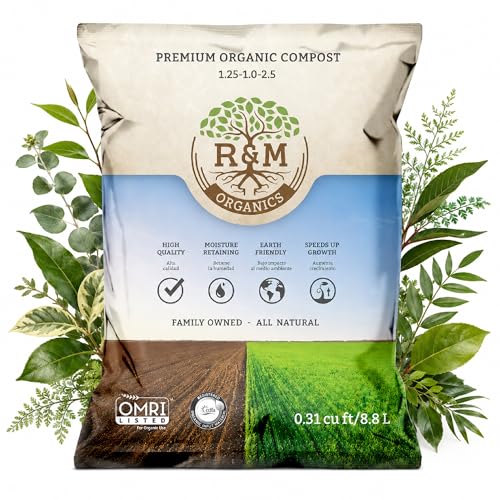
R&M Organics delivers a fine-textured, low-odor compost that works best as a targeted amendment for plants in distress. The dairy manure base has been fully composted through a continuous aeration process, resulting in a dark, crumbly material that smells like rich earth rather than barn waste. The 10-pound bag is compact and easy to store, making it a practical choice for gardeners who only need a few cups to revive a struggling azalea or a potted tomato.
The most impressive owner feedback comes from gardeners who used this compost to save plants damaged by chemical overspray or poor soil conditions. One reviewer reported that yellowing tomato leaves turned green and produced flower buds within a week of top-dressing. The moisture retention is excellent — the compost acts like a sponge, gradually releasing water and nutrients into the root zone. The mixing ratio of 5:1 (soil to compost) ensures you get multiple applications from a single bag.
This is not a standalone potting mix. It lacks the perlite and aeration components needed for drainage in containers, so always mix it with a base potting soil. The per-pound cost is higher than bulk compost options, but for small-space gardeners or plant rescue scenarios, the convenience and quality justify the premium.
What works
- Fine, odorless texture ideal for indoor and outdoor top-dressing
- Quick visible results on stressed and nutrient-deficient plants
- Compact 10-pound bag is easy to store and transport
What doesn’t
- Must be mixed with soil — not a complete potting mix
- Higher per-pound cost compared to bulk compost options
7. Midwest Hearth Premium Potting Soil (8 Dry Quarts)

The Midwest Hearth Premium Potting Soil is a professional-grade mix formulated for seed starting and small container growing. The blend of peat moss, vermiculite, and perlite creates an exceptionally light, fluffy texture that allows delicate seedlings to push through without resistance. The pH is pre-adjusted to a neutral range, so you do not need to worry about lime or sulfur adjustments for most houseplants and annual flowers.
This mix is manufactured in the USA and comes in a convenient 8-quart size with a resealable bag — a thoughtful touch for indoor gardeners who do not use a full bag in one go. Owners consistently praise the absence of weed seeds and large debris. The texture stays loose even after multiple waterings, which is critical for tiny roots that cannot push through compacted soil.
The 8-quart volume is small, so this is not a cost-effective option for filling large containers or raised beds. The cost per quart is higher than bulk alternatives, and gardeners who need a compost-rich blend for heavy feeders will need to supplement with worm castings or liquid fertilizer. For its intended purpose — germinating seeds and nursing young plants — the Midwest Hearth mix performs reliably and cleanly.
What works
- Light, fluffy texture perfect for seed starting and tender roots
- pH balanced for a wide variety of plants
- Resealable bag and no weeds or debris
What doesn’t
- Small 8-quart size is expensive per quart for big projects
- Lacks compost and heavy nutrients for mature vegetables
Hardware & Specs Guide
Organic vs. Synthetic Fertilizer
Organic compost potting soils rely on natural ingredients like worm castings, bone meal, and kelp to release nutrients slowly as soil microbes break them down. Synthetic mixes (like the Miracle-Gro 3-Pack) include chemical fertilizer salts that are immediately available but can burn roots if overapplied. For consistent feeding without risk of salts building up, organic blends are the safer long-term choice for containers.
Texture and Particle Size
The ideal compost potting soil has a uniform, crumbly texture with visible perlite or vermiculite for aeration. Coarse bags with large bark chunks or sticks indicate poor screening and will lead to uneven moisture distribution. Fine-textured soils like the Midwest Hearth or Brut blends wick water evenly and allow roots to spread without obstruction — a critical factor for container-grown vegetables that need to fill a pot quickly.
Bag Volume and Coverage
Volume is measured in dry quarts or cubic feet. One cubic foot equals approximately 25.7 dry quarts. A 16-quart bag covers about two 14-inch pots or one 10×10-inch raised bed section to a depth of 4 inches. Always calculate the total cubic inches of your containers before ordering to avoid buying too little or too much.
OMRI Listing and Certification
The Organic Materials Review Institute (OMRI) listing indicates that every ingredient in the bag meets organic production standards. This matters because it guarantees no synthetic pesticides, sewage sludge, or genetically engineered components were used. For growers who want the cleanest possible soil for edible crops, an OMRI-listed bag is the minimum standard.
FAQ
Can I use compost potting soil instead of regular potting mix for all my containers?
How often should I replace compost potting soil in containers?
Why does my bagged compost potting soil have fungus gnats?
Final Thoughts: The Verdict
For most gardeners, the compost potting soil winner is the Coast of Maine Bar Harbor Blend because it delivers a powerful marine-based organic nutrient profile with ideal drainage and texture for containers. If you want a value-driven bundle that feeds plants without extra fertilizing, grab the Miracle-Gro Potting Mix 3-Pack. And for reviving stressed plants or amending depleted garden beds, nothing beats the concentrated organic power of the R&M Organics Compost.