
A green bean crop that looks lush but yields a handful of pods is the clearest sign of an imbalanced feed. Green beans are nitrogen-fixing legumes, which means they react poorly to the high-nitrogen formulas designed for tomatoes or squash. Using the wrong ratio leads to towering vines with almost no fruit. The decision between a granular legume inoculant, a balanced organic mix, or a liquid fish emulsion determines whether your harvest fills a basket or a single bowl.
I’m Rikta — the co-founder and writer behind Lawn Gear Lab. My focus is on analyzing NPK data, soil microbiology research, and hundreds of verified owner experiences to isolate the products that actually move the needle on bean pod set and soil health.
best green bean fertilizer comes down to matching the plant’s unique nitrogen-fixing biology with a feed that supports pod development without over-fueling foliage.
How To Choose The Best Green Bean Fertilizer
Green beans have a symbiotic relationship with soil bacteria that pull atmospheric nitrogen into root nodules. This trait makes them radically different from heavy feeders like corn or tomatoes. A fertilizer that suppresses nodulation or floods the soil with excess nitrogen will hamper pod production.
NPK Ratio — The First Filter
Look for a middle or low first number (nitrogen) and a higher middle number (phosphorus). Ratios such as 5-7-3, 3-4-4, or 4-6-2 support pod set without pushing leafy growth. Formulas above 8 in the first number often reduce yield on green beans.
Calcium and Trace Minerals
Blossom end rot is less common in beans than in tomatoes, but calcium still influences pod firmness and disease resistance. A fertilizer that lists calcium, magnesium, or kelp meal as an ingredient provides structural support for developing pods.
Microbial Additives — Inoculants vs. Mycorrhizae
Inoculants containing Rhizobium bacteria are purpose-built for legumes and boost nitrogen fixation in the root zone. Mycorrhizal fungi improve water and nutrient uptake for the whole root system. Products that combine both elements often deliver the largest yield increases for new bean patches.
Quick Comparison
On smaller screens, swipe sideways to see the full table.
| Model | Category | Best For | Key Spec | Amazon |
|---|---|---|---|---|
| Down To Earth 4-6-2 All Purpose | Granular Organic | Steady multi-plant feed | 4-6-2 NPK with kelp meal | Amazon |
| FoxFarm Happy Frog 5-7-3 Tomato & Veg | Granular Organic | High pod set with calcium | 5-7-3 NPK + mycorrhizae | Amazon |
| FoxFarm Happy Frog 6-4-5 All Purpose | Granular Organic | Balanced maintenance feed | 6-4-5 NPK + soil microbes | Amazon |
| Espoma Garden-tone 3-4-4 | Granular Organic | Long-season heavy yield | 3-4-4 NPK + Bio-tone | Amazon |
| Sunday Garden Naturals 5-4-4 Mix | Granular Premium | Tomato-specific vigor | 5-4-4 NPK + turkey litter | Amazon |
| Alaska Fish Fertilizer 5-1-1 | Liquid Organic | Early vegetative boost | 5-1-1 NPK, OMRI liquid | Amazon |
| Park Seed Nature’s Aid Inoculant | Inoculant Granules | Legume nitrogen fixation | Live Rhizobium bacteria | Amazon |
In‑Depth Reviews
1. Down To Earth All Natural 4-6-2 All Purpose Mix

The Down To Earth 4-6-2 formula hits the ideal NPK zone for green beans, keeping nitrogen low enough to avoid foliage overload while phosphorus supports strong pod initiation. The five-pound box includes fish bone meal, blood meal, feather meal, rock phosphate, langbeinite, greensand, humates, and kelp meal — a diverse organic profile that feeds soil microbes as much as the plant itself.
OMRI listing confirms it meets organic production standards, and the granular format requires no mixing before application. Gardeners report visible improvement on pale, flimsy transplants within two weeks of side-dressing. The scent is noticeable for a few days after watering but fades as the granules break down.
For a single bag that works across beans, tomatoes, peppers, and herbs, this mix offers a broad-spectrum organic feed without the premium price of smaller boutique blends. It is not a legume-specific inoculant, so pairing it with a Rhizobium product will maximize nitrogen fixation on new bean patches.
What works
- NPK ratio well matched to legume pod development
- Diverse ingredient list feeds both plant and soil biology
- OMRI listed for certified organic gardens
What doesn’t
- Initial odor can be strong for a few days
- Lacks live Rhizobium bacteria for dedicated legume inoculation
2. FoxFarm Happy Frog 5-7-3 Tomato & Vegetable Fertilizer

The FoxFarm Happy Frog Tomato & Vegetable formula pushes phosphorus higher than many all-purpose blends, delivering a 5-7-3 ratio that targets fruit and pod development directly. Calcium is explicitly included to prevent blossom end rot, which also strengthens bean pod cell walls against softening during hot weather.
Mycorrhizal fungi in the granule enhance root efficiency, helping bean plants extract moisture and nutrients from a wider soil volume. Growers report that bag-grown bean plants respond quickly — increased flower count within two weeks of application. The four-pound bag covers multiple bed feedings for a typical home garden.
The higher phosphorus level makes this a stronger choice if your soil test already shows adequate nitrogen. It is not an inoculant, but the mycorrhizae complement Rhizobium bacteria well in a combined feeding program.
What works
- 5-7-3 ratio strongly favors pod and fruit set
- Calcium content reduces risk of blossom end rot on beans
- Mycorrhizal fungi improve root efficiency and water uptake
What doesn’t
- Premium price per pound compared to all-purpose organics
- Not formulated specifically for legume nitrogen fixation
3. FoxFarm Happy Frog 6-4-5 All Purpose Fertilizer

FoxFarm’s Happy Frog All Purpose blend uses a 6-4-5 NPK that is slightly higher in nitrogen than the ideal legume feed but works well as a maintenance fertilizer for mixed beds containing beans alongside heavier feeders. Beneficial soil microbes and mycorrhizal fungi are included to boost nutrient cycling and root colonization.
OMRI listing and gentle slow-release mechanism make it safe for established bean plants even if application rates are slightly off. Gardeners noted that yellowing tomato and zucchini plants turned green within a week of application, indicating the microbial activity helps unlock soil nutrients quickly. The granules are easy to spread by hand around the bean row.
The 6-4-5 ratio means you should reduce application frequency compared to a lower-nitrogen feed. Pair with a legume inoculant to offset the extra nitrogen and encourage nodulation on bean roots.
What works
- Microbial additives improve soil nutrient cycling
- OMRI listed for organic gardens
- Gentle slow-release won’t burn bean roots
What doesn’t
- 6-4-5 ratio is nitrogen-heavy for pure legume beds
- Strong manure-like odor during application
4. Espoma Organic Garden-tone 3-4-4 (Pack of 2)

The Espoma Garden-tone 3-4-4 formula is built around low nitrogen and balanced phosphorus-potassium, making it one of the safest granular options for green beans. The two-pack provides eight pounds of material, enough to feed a substantial bean patch for an entire season without needing to reorder mid-summer.
Bio-tone — Espoma’s proprietary blend of beneficial microbes and endo/ectomycorrhizae — accelerates root development and nutrient release. Calcium at 5% supports pod firmness and reduces common stress issues. Gardeners consistently report that heavy producers like pole beans respond with dense foliage and extended harvest windows when Garden-tone is applied monthly.
The low nitrogen profile means you can apply it at planting and follow up without worrying about excessive vine growth. It is not an inoculant, but the microbial load supports the Rhizobium bacteria if you add a separate inoculant at sowing time.
What works
- Low 3-4-4 NPK ideal for legume nitrogen sensitivity
- Two-pack offers excellent coverage per dollar
- Bio-tone microbes complement Rhizobium bacteria
What doesn’t
- Mild odor that some users find unpleasant
- Requires monthly reapplication for best results
5. Sunday Garden Naturals Veggie + Tomato 5-4-4 Mix (2 Pack)
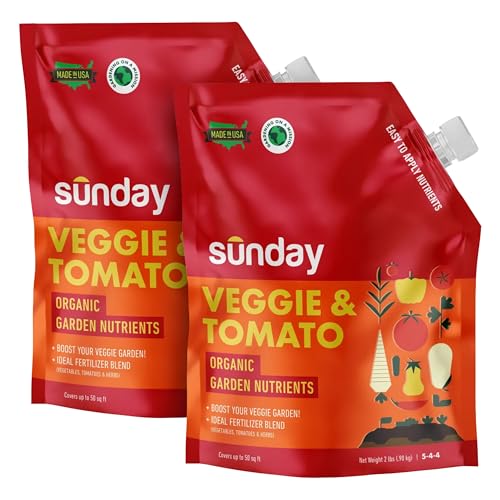
Sunday’s entry into the granular vegetable fertilizer market uses a 5-4-4 NPK derived from soy protein, composted turkey litter, potash, and feather meal. The two-pound shaker bag makes application straightforward for container beans or small raised beds — the recommended rate is two tablespoons per gallon of soil.
Phosphorus-prominent formulation supports fruiting in beans and tomatoes alike, and the four-to-six-week feeding interval aligns well with a typical bush bean production cycle. Users reported notably larger tomatoes and abundant flower production on pepper plants, suggesting the blend delivers consistent nutrient availability.
For green beans, the 5-4-4 ratio is slightly higher in nitrogen than ideal but still within an acceptable range if soil organic matter is moderate. Best suited for gardeners who want a premium-branded organic with simple measuring guidelines and a short reapplication window.
What works
- Shaker bag design reduces measuring errors
- Soy protein and turkey litter create a diverse organic nutrient profile
- Four-to-six-week feed interval fits bush bean cycles
What doesn’t
- Two-pound bag covers limited area for large beds
- FP ratio slightly nitrogen-heavy for legumes
6. Alaska Fish Fertilizer OMRI Listed 5-1-1
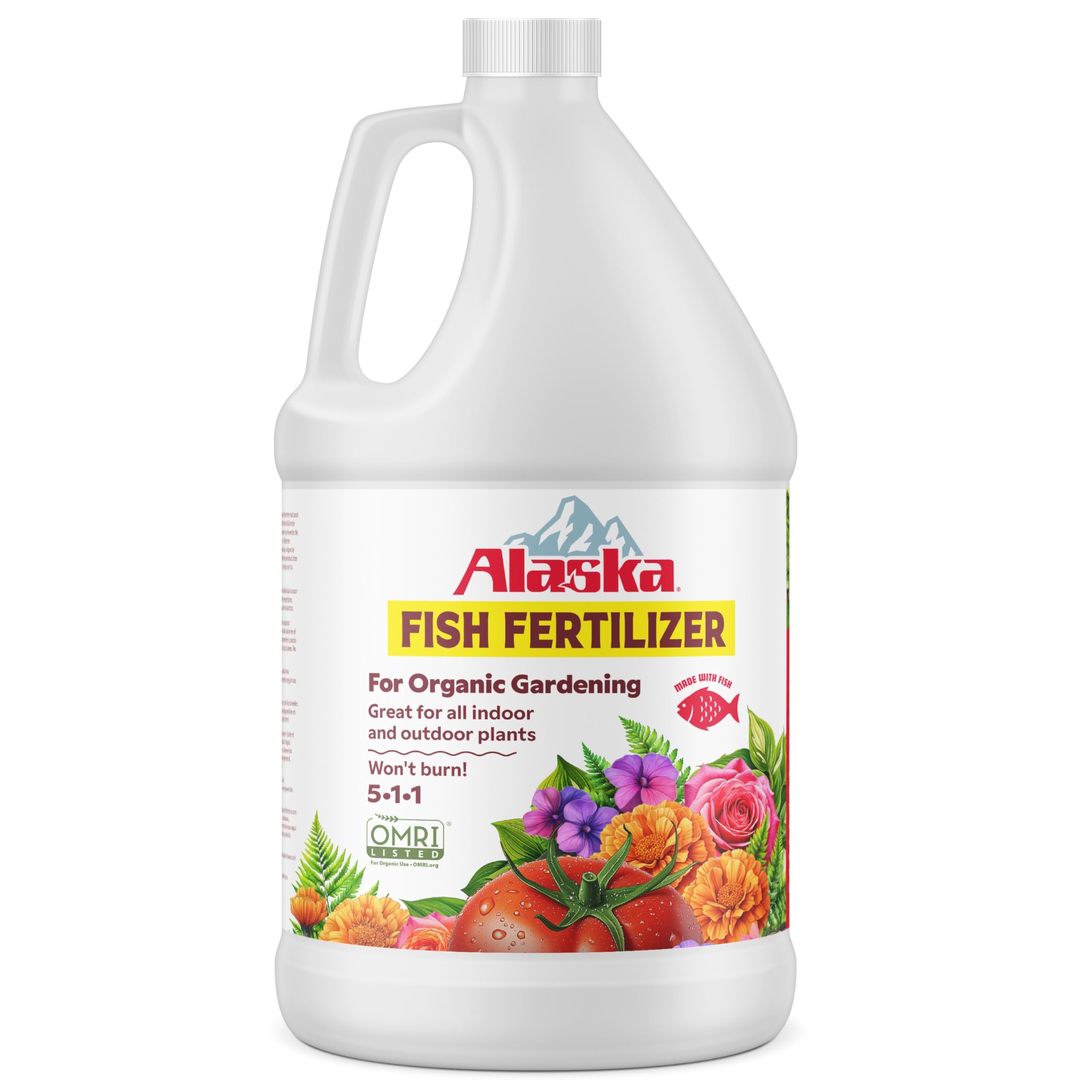
Alaska Fish Fertilizer is a liquid concentrate with a 5-1-1 NPK that is very high in nitrogen — not a primary green bean feed but valuable as a foliar or soil drench during the early vegetative stage when plants establish leaves. OMRI listing and cold-processed fish preserve amino acids and micronutrients that support rapid green-up.
The liquid format allows precise dosing through a hose-end sprayer or watering can, and the large 115-ounce jug treats up to 1,000 square feet. Growers using it on bean transplants noted stronger stems and faster establishment, though the low phosphorus means you must switch to a flowering-stage feed once blooms appear.
The fish odor is pungent during mixing but dissipates within a day after soil absorption. This product is best reserved for the first two weeks after bean emergence, then replaced with a blooming-stage organic granular.
What works
- Cold-processed liquid preserves micronutrients
- Large jug delivers high coverage for the price
- OMRI listed and plant-safe when diluted
What doesn’t
- Very low phosphorus limits its use during pod set
- Strong fish smell persists during application
7. Park Seed Nature’s Aid Garden Soil Inoculant
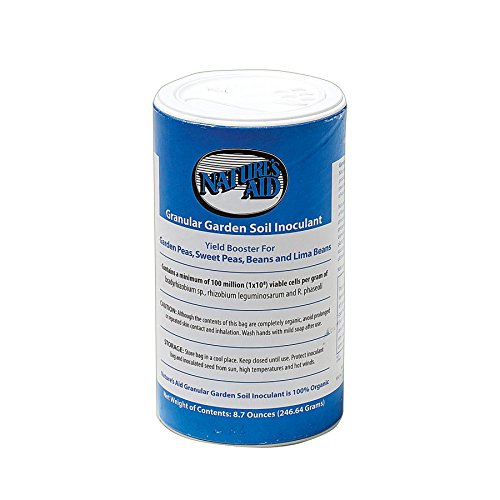
Park Seed Nature’s Aid is not a fertilizer in the traditional NPK sense — it is a granular inoculant containing live Rhizobium leguminosarum bacteria that colonize bean roots and fix atmospheric nitrogen. For green beans, this is the single most efficient way to provide nitrogen without synthetic inputs or high-N organic meals.
The 8.7-ounce container treats 150 feet of row, making it cost-effective for small to mid-sized plots. Growers using it on pole and bush beans reported the best yields of beans and peas in years, with visible nodule development on roots when inspected mid-season. The bacteria expire over time, so checking the date before spring planting is important.
This inoculant works alongside any granular NPK fertilizer — apply it at sowing directly into the seed furrow, then top-dress with a low-nitrogen organic feed once the plants flower. It replaces the need for a high-nitrogen fertilizer entirely for legume beds.
What works
- Live Rhizobium bacteria fix nitrogen directly on bean roots
- Reduces or eliminates need for nitrogen fertilizer on legumes
- Granular format sprinkles easily into seed furrows
What doesn’t
- Bacteria have a limited shelf life and expire within months
- Provides no phosphorus, potassium, or micronutrients
Hardware & Specs Guide
NPK Ratio — The Legume Rule
Green beans require a lower nitrogen number than most garden vegetables because they form nodules that pull nitrogen from the air. A ratio with the first number below 6 and the second number equal or higher is ideal. Formulas above 8-8-8 can suppress nodulation and reduce pod yields. The Down To Earth 4-6-2 and Espoma 3-4-4 both stay within the safe zone for legume beds.
Inoculants vs. Complete Fertilizers
A legume inoculant adds live Rhizobium bacteria to the soil but contains no NPK. A complete fertilizer provides the macronutrients but may not have the bacteria. For new bean patches or soil that has not grown legumes recently, using both at different stages delivers the highest yields. Park Seed Nature’s Aid handles the bacterial side while a 3-4-4 organic feed supplies phosphorus and potassium.
FAQ
Can I use a high-nitrogen lawn fertilizer on green beans?
When during the season should I apply a legume inoculant?
Does calcium in fertilizer matter for green bean pods?
Final Thoughts: The Verdict
For most gardeners, the best green bean fertilizer winner is the Down To Earth 4-6-2 All Purpose Mix because its balanced NPK and diverse organic ingredients support pod set without overwhelming legume root biology. If you want targeted phosphorus and calcium for maximum pod density, grab the FoxFarm Happy Frog 5-7-3. And for establishing a new bean patch that needs nitrogen fixation from the ground up, nothing beats the Park Seed Nature’s Aid Inoculant partnered with a low-nitrogen organic feed.