
Garden soil that’s been worked hard—stripped of organic matter by heavy rain, sun, and successive plantings—needs more than synthetic nitrogen to bounce back. It needs the slow biological rebuild that only a properly aged manure can provide. The wrong fresh product can burn roots and introduce weed seeds; the right one feeds the soil food web from the ground up.
I’m Rikta — the co-founder and writer behind Lawn Gear Lab. I’ve spent hours comparing soil amendment NPK ratios, analyzing particle texture from customer feedback, and cross-referencing composting methods to understand which manure products actually deliver humus without the hassle.
This guide focuses on the top-tier bagged and boxed options you can have delivered straight to your garden gate, covering everything from easy-pour pellets to bulk cubic-foot blends. Here is the definitive list of the best aged cow manure for rebuilding your soil this season.
How To Choose The Best Aged Cow Manure
Not all manure is created equal. Fresh manure burns plants, releases too much ammonia, and often carries weed seeds. Properly aged or composted manure has been broken down by microbes until it becomes a stable, dark, crumbly soil conditioner. Here are the critical factors to evaluate before buying.
NPK Ratio and Nutrient Density
Cow manure naturally has a milder nutrient profile than poultry or horse manure. The typical aged cow manure analysis is around 0.5-0.5-0.5, meaning it provides balanced but modest nitrogen, phosphorus, and potassium. This makes it ideal as a general soil builder rather than a high-octane bloom booster. For heavy feeders like tomatoes, combine aged manure with a faster-release organic nitrogen source.
Texture and Particle Size
Composted cow manure should be uniform, dark, and free of large sticks, rocks, or plastic debris. Pelletized or dehydrated products are ground into consistent granules that spread evenly and dissolve slowly. Loose composted blends often contain aged forest products that improve soil aeration and moisture retention. The right texture depends on your application: top-dressing a lawn calls for fine, sifted material, while tilling into a raised bed can handle a coarser, chunkier blend.
Certifications and Additives
An OMRI (Organic Materials Review Institute) listing ensures the manure has been produced without synthetic pesticides, prohibited fertilizers, or sewage sludge. Some commercial brands add wood chips, peat, or other bulking agents to improve handling. While these extend the volume, they also dilute the nutrient density. Check the label for “100% pure composted cow manure” if you want the most concentrated amendment.
Quick Comparison
On smaller screens, swipe sideways to see the full table.
| Model | Category | Best For | Key Spec | Amazon |
|---|---|---|---|---|
| Black Kow (35 lb) | Composted | Large gardens & bulk mixing | NPK 0.5-0.5-0.5 | Amazon |
| Espoma Organic DCM1 | Composted Blend | Moisture retention in pots | 1 cu ft volume | Amazon |
| Black Kow 8 qt | Composted | Small beds & container mixes | 1:1 mix ratio | Amazon |
| Brut Cow Compost | Pure Compost | Seedlings & delicate plants | OMRI Listed | Amazon |
| Hoffman 20505 | Pelletized | Quick soil boost | NPK 4-2-3 | Amazon |
| Insta-Cow (10 Cubes) | Compost Tea | Liquid composting | 10 cubes = 1 gal tea | Amazon |
| Back to the Roots Worm Castings | Vermicompost | Soil microbe boost | 80 oz resealable bag | Amazon |
In‑Depth Reviews
1. Black Kow Composted Cow Manure 35 lb Bag

The 35-pound Black Kow is the workhorse of the aged manure category. It arrives as a fully composted, dark, crumbly material with a mild 0.5-0.5-0.5 NPK analysis that won’t burn even tender tomato roots—in fact, the manufacturer suggests planting tomatoes directly into a slit bag on its side. The slow-release nature means a single application feeds for weeks without the ammonia spike you’d get from fresh manure.
Gardeners with large vegetable plots or multiple raised beds will appreciate the bulk coverage a 35 lb bag provides compared to smaller 5-pound offerings. The compost has a pleasant earthy aroma rather than a sharp barnyard stench, making it suitable for weekend tilling projects without offending neighbors. It also aerates heavy clay soils and helps sandy ground retain moisture longer.
The one caveat is that several verified customers reported the bag arriving slightly under the labeled weight, averaging around 20 pounds instead of 35. While the product itself is excellent, the discrepancy means you’re paying a premium for shipping on a bulk item. If you have a local garden center that stocks the same bag for less, that may be the better buy.
What works
- Massive coverage from a single bag
- Gentle NPK won’t burn established plants
- Improves both clay and sandy soil texture
What doesn’t
- Bag weight sometimes listed inaccurately
- Shipping cost can exceed local retail price
2. Espoma Organic Cow Manure with Aged Forest Products – 1 cu ft

Espoma has been a trusted name in organic gardening since 1929, and their DCM1 blend shows why. This product combines dehydrated cow manure with aged forest products, creating a fluffy, powder-like texture that mixes effortlessly into potting soil or top-dresses existing beds. The forest products act as a natural sponge, dramatically improving aeration and moisture-holding capacity in container gardens.
The 0.5-0.5-0.5 analysis is textbook for a maintenance amendment, and the organic certification ensures no synthetic fillers. Patio pot growers reported needing to water less frequently after incorporating this blend, as the aged wood fibers hold water near root zones without becoming waterlogged. Roses, hibiscus, and lawn bare spots all responded visibly within weeks in user trials.
The downside is the powder consistency can produce dust during dry application, so wearing a mask while mixing is advisable. Some bags also contain small twigs, which is expected from a forest product blend but can be annoying if you want a perfectly sifted medium. Overall, it’s the top choice for container gardeners who need moisture management.
What works
- Excellent moisture retention for pots
- Established brand with organic reputation
- Improves aeration in compacted soil
What doesn’t
- Powder form creates dust when dry
- Contains small sticks and twigs
3. Black Kow Nitrogen Phosphate Composted Cow Manure (8 qt)

For smaller-scale projects—a few raised beds, a flower border, or potting up new shrubs—the 8-quart Black Kow hits a practical sweet spot. It packs the same fully composted, slow-release formula as its 35 lb sibling, complete with millions of beneficial bacteria that convert nutrients into plant-available forms. Users consistently note it breaks up hard clay and gives sandy soil water-holding capacity it otherwise lacks.
The 1:1 mixing ratio makes it dead simple: blend equal parts of this manure with your existing garden soil or potting mix and plant. The smell is noticeable when first opening the bag—a classic earthy, slightly pungent barn note—but it dissipates quickly once worked into the ground. Vegetables, fruit trees, and flowering ornamentals all show improved vigor within weeks of application.
At roughly half the price of premium specialty blends, this is a solid value proposition. The bag is resealable for storage, though it isn’t waterproof, so keep it in a shed or garage between uses. Some customers mention the strong odor as a turnoff, but for the growth results, most consider it a fair trade.
What works
- Balanced 1:1 mixing ratio for easy use
- Beneficial bacteria improve nutrient uptake
- Breaks up heavy clay soils effectively
What doesn’t
- Strong earthy odor when bag is opened
- Bag not fully resealable or waterproof
4. Brut Cow Compost – Nutrient-Rich Composted Cow Manure (10 qt)

Brut stands out because it’s OMRI-listed and 100% pure composted cow manure with zero additives. No forest products, no bulking agents—just finely sifted, fully stabilized organic matter that’s been aerated and tested for safety. First-time growers especially appreciate the lack of odor; this product has no barnyard smell, making it pleasant to handle indoors or on a patio.
The fine, uniform texture is ideal for seed starting mixes, delicate seedling roots, and container-grown ornamentals. One reviewer used a 3:2 ratio of compost to soil for tomatoes and reported vigorous growth from seed to transplant in just over six weeks. The gentle formula completely eliminates the risk of nitrogen burn, even when applied directly around tender roots.
The 10-quart size is slightly smaller than the Black Kow 8 qt, though the density of the pure compost means you’re getting more actual organic matter per volume. The trade-off is a slightly higher cost per quart. For dedicated organic gardeners who want an additive-free, OMRI-certified choice, this is the cleanest option on the list.
What works
- Zero odor makes indoor use practical
- OMRI-listed organic certification
- Fine sifted texture safe for seedlings
What doesn’t
- Higher price per quart than blended options
- Small bag size for large garden beds
5. Hoffman 20505 Dehydrated Super Manure 4-2-3, 5 lb

This is actually a dehydrated poultry manure product, not pure cow manure, but it earns a place on this list for gardeners who want a higher nitrogen analysis (4-2-3) for a quick green-up. The pelletized form is easy to sprinkle evenly over lawns or into potted plants without the mess of loose compost. A 1-tablespoon-per-12-inch-pot dosage is all that’s needed, so a 5-pound bag goes much further than its size suggests.
Customers report visible results within days—greener leaves, faster growth, and stronger stems. The granules are shelf-stable and don’t attract pests. However, the higher nitrogen content means there’s a real risk of plant burn if you over-apply, especially in containers. Follow the directions carefully and avoid piling it against stems or crowns.
The 5-pound bag lacks a snap closure, so you’ll need a clip or separate container for storage. The faint, non-offensive odor is minimal for a manure product. This is a budget-conscious option for quick feeding, not for long-term soil building.
What works
- Concentrated NPK requires small amounts
- Easy-to-handle pelletized form
- Very fast visible greening effect
What doesn’t
- Requires careful measurement to avoid burn
- Bag has no resealable closure
6. Insta-Cow – Composted Aged Cow Manure (10 Cubes)
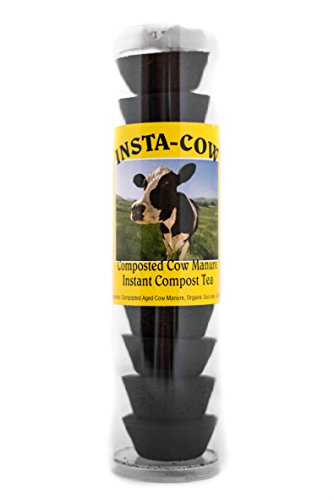
Insta-Cow takes a unique approach: ten concentrated cubes that you steep in water to create a gallon of compost tea. This is a liquid feeding solution rather than a soil amendment, which gives you instant nutrient availability without disturbing established root systems. The cubes are shelf-stable and odorless when dry, solving the storage problems of large compost bags.
Users who applied the tea to garden seedlings reported noticeably greener foliage within a week. The liquid form also makes it ideal for spraying onto lawn patches or watering hanging baskets where mixing solid manure into the soil isn’t practical. It comes with a bonus packet of fertilizing pellets as a compliment, adding extra value.
The main limitation is volume: each batch makes only one gallon, so large gardens will need multiple boxes. The cubes also have a slight odor once steeped, though it’s far milder than bagged compost. This is a niche but effective pick for targeted liquid feeding.
What works
- Instant liquid tea for quick absorption
- Odorless and shelf-stable when dry
- Easy to use on lawns and hanging baskets
What doesn’t
- Limited to one gallon per box
- Steeped solution still has some odor
7. Back to the Roots Organic Worm Castings, 5 lb

Although this is worm castings rather straight cow manure, it’s an essential companion product for anyone serious about soil biology. Earthworm castings are packed with beneficial microbes, humic acids, and enzymes that break down organic matter into plant-available nutrients. Unlike cow manure, worm castings have zero risk of burning roots, even if used straight out of the bag.
The 5-pound bag comes in a resealable pouch, making it easy to store between uses. Mix it into chunky aroid soil mixes (coco chips, perlite, charcoal) or sprinkle a handful into each planting hole. Gardeners report healthier root systems and more vigorous leaf growth without the need for chemical fertilizers. It’s also completely odorless, so it works well indoors.
The nutrient analysis (typically around 1-0-0) is lower in phosphorus and potassium than cow manure, so it’s best used as a soil conditioner rather than a primary fertilizer. For the price point, this is a premium microbe-booster that complements any of the aged manure products above.
What works
- Zero burn risk even for delicate roots
- Beneficial microbes improve soil life
- Resealable bag for easy storage
What doesn’t
- Lower overall NPK than fresh manure
- Premium price per pound
Hardware & Specs Guide
NPK Analysis
The three-number ratio on a manure bag stands for nitrogen (N), phosphorus (P), and potassium (K). Aged cow manure typically sits at 0.5-0.5-0.5, making it a balanced soil conditioner. Poultry-based manures like the Hoffman 4-2-3 are much higher in nitrogen and require careful measurement to avoid burn. Choose a lower NPK for established perennials and a higher one for nitrogen-hungry leafy greens.
Composted vs. Dehydrated
Composted cow manure has been fully broken down by microbes into a dark, crumbly substance that releases nutrients slowly and improves soil structure immediately. Dehydrated manure is heat-dried into pellets or granules on tape; it retains more nutrients per volume but should be moistened before application to prevent burning. Composted is best for long-term soil health; dehydrated works for a quick boost.
FAQ
How is aged cow manure different from fresh manure?
Can I use aged cow manure in container plants?
How often should I apply aged cow manure to my garden?
Final Thoughts: The Verdict
For most gardeners, the best aged cow manure winner is the Black Kow 35 lb Bag because it gives you the most coverage per purchase and the slow-release 0.5-0.5-0.5 formula is safe for nearly every plant. If you want a slightly smaller volume with forest product moisture retention, grab the Espoma Organic DCM1. And for certified organic purity with zero odor, nothing beats the Brut Cow Compost.