
Putting the wrong ground cover on your raised beds can lock nutrients away, invite pests, or slowly acidify the soil your vegetables depend on. Wood-based mulches vary wildly in pH impact, decomposition rate, and water retention, so choosing a specific type for an edible garden demands more care than a flower border.
I’m Rikta — the co-founder and writer behind Lawn Gear Lab. This guide is the result of many hours spent cross-referencing horticultural data on carbon-to-nitrogen ratios, pH shifts, and moisture-holding capacity across dozens of organic mulch products so you can match the right material to your vegetable plot.
To help you find the best organic ground cover that won’t stunt your tomatoes or peppers, I have evaluated seven top candidates for this wood mulch for vegetable garden roundup, sorting each by composition, coverage, and real-world gardener feedback.
How To Choose The Best Wood Mulch For Vegetable Garden
Vegetable gardens demand a ground cover that suppresses weeds without stealing nitrogen during breakdown or shifting the soil pH too far from the neutral zone most crops prefer. Unlike ornamental beds, the material you spread around peppers and beans will directly influence yield and root health over a single growing season.
Prioritize pH-Neutral or Alkaline Materials
Fresh pine bark and some cedar mulches release organic acids as they decompose, gradually lowering soil pH. Most vegetables perform best in a pH range of 6.0 to 7.0, so a strongly acidic mulch can lock up phosphorus and calcium. Coconut husk chips and cocoa bean shells are naturally closer to neutral, making them safer choices for mixed vegetable beds.
Check the Carbon-to-Nitrogen Ratio
Woody materials with a high C:N ratio (over 30:1) force soil microbes to scavenge nitrogen from the surrounding soil to break the mulch down, temporarily starving your plants. Fine-textured mulches such as wheat straw or well-composted bark chips have a lower C:N ratio and release nitrogen as they decompose rather than stealing it.
Evaluate Expansion and Coverage Volume
Compressed brick mulches — especially coco coir chips — can expand to three or four times their dry volume when hydrated. A standard 11-pound brick might yield 2 cubic feet of material, enough to cover roughly 12 square feet at the recommended 2-inch depth. For large raised beds, loose-fill bales or multiple bricks offer more predictable coverage.
Quick Comparison
On smaller screens, swipe sideways to see the full table.
| Model | Category | Best For | Key Spec | Amazon |
|---|---|---|---|---|
| Back to the Roots Coco Mulch | Compressed Coco Husk | Best Overall for raised beds | Expands to 2 cu ft | Amazon |
| Plantonix Coco Chips | Compressed Coco Chip Brick | Large-scale coverage | 10lb brick expands to 15 gal | Amazon |
| HealthiStraw GardenStraw | Wheat Straw Bale | Compost-friendly weed suppression | Covers 100 sq ft at 2-3 in | Amazon |
| Thrive Natural Gardens Coco Chips | Compressed Coco Husk Brick | Allergy-friendly alternative | Expands to 50L / 1.8 cu ft | Amazon |
| Hull Farm Cocoa Bean Shell Mulch | Cocoa Shell Mulch | Scent appeal & light fertility boost | Fertilizer value 2.5-1-3 | Amazon |
| Rio Hamza Trading Houseplant Mulch | Small Bark Chips | Indoor & small pot use | 8 Quarts volume | Amazon |
In‑Depth Reviews
1. Back to the Roots 100% Organic Mulch
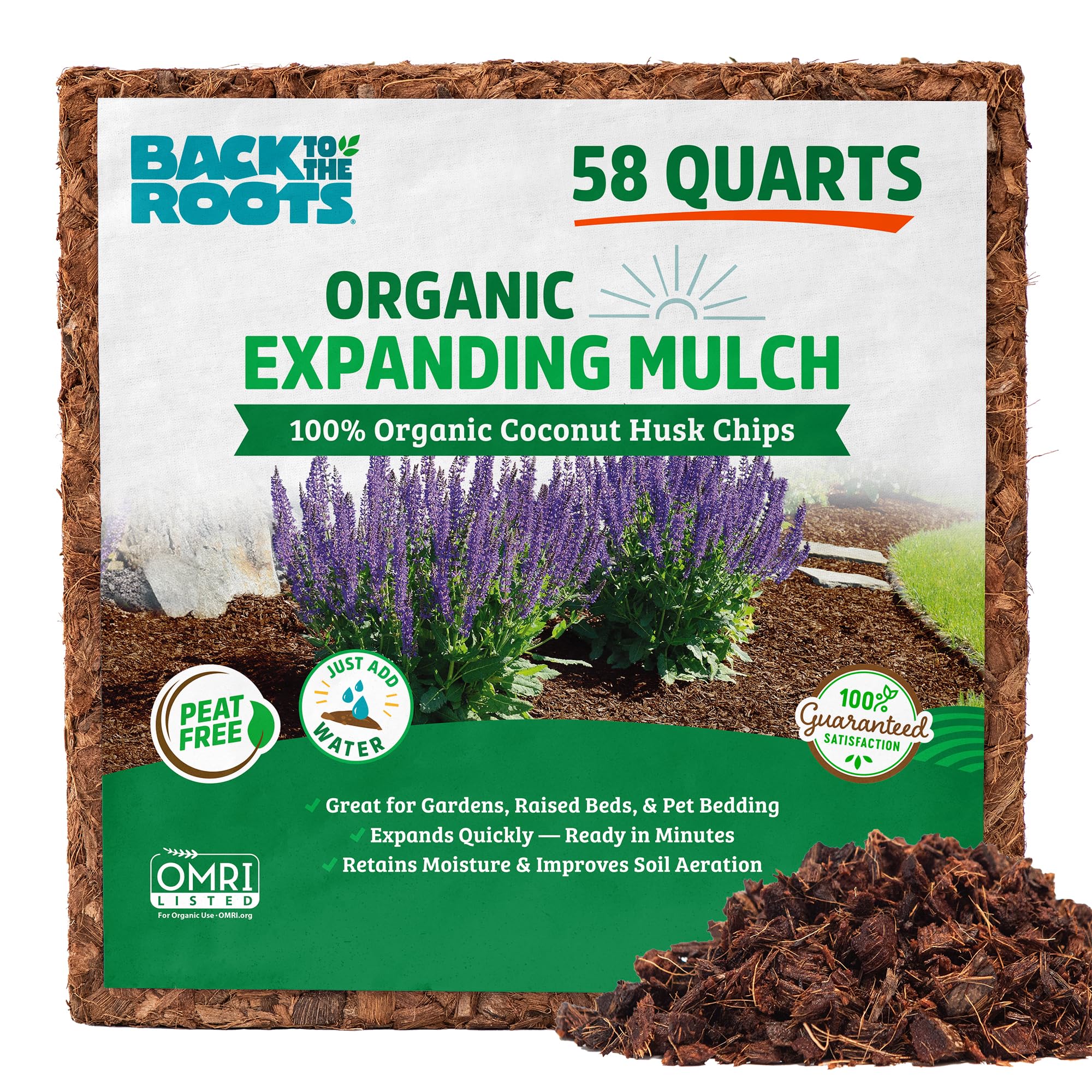
The Back to the Roots compressed coconut husk block is the most balanced option for vegetable growers who want organic certification and hassle-free hydration. A single 10-pound block expands to over 2 cubic feet of mulch when soaked, which is enough to cover roughly 12 square feet of raised bed at a 2-inch depth. The OMRI listing assures that production and handling meet organic standards, a meaningful distinction for anyone avoiding synthetic additives in their vegetable soil.
Customer feedback consistently highlights the dramatic expansion ratio — reviewers report filling a wheelbarrow three-quarters full from one brick — and the material’s ability to suppress weeds while retaining moisture without becoming waterlogged. The compressed format saves shipping weight and storage space, and users mention the mulch looks natural and uniform once hydrated. A few reviewers note that the block takes some effort to break apart by hand when dry, but that pre-soaking in a tub eliminates most of the work.
The biggest advantage here is the neutral pH: unlike pine bark mulches that can acidify soil over time, coconut husk chips stay close to 6.0–6.5, which aligns well with vegetable crops like tomatoes, peppers, and leafy greens. For an all-purpose vegetable garden mulch that arrives compact and expands generously, this is the most practical pick of the group.
What works
- OMRI organic certification provides peace of mind for edible beds.
- Expands massively — one block fills a wheelbarrow after hydrating.
- Neutral pH won’t interfere with vegetable nutrient uptake.
What doesn’t
- Dry brick requires pre-soaking or chipping for small projects.
- Coverage is modest for very large gardens; you may need multiple blocks.
2. Plantonix Organic Coco Chips

The Plantonix Coco Chips offer a slightly larger dry weight — 10 pounds compared to Back to the Roots’ 10-pound block — and advertise a post-expansion volume of 15 gallons. This equates to roughly 2 cubic feet once hydrated, making it a direct volume competitor. The chips are sourced from coconut husks that would otherwise be waste, and the brick format minimizes storage footprint until you need it.
Reviewers emphasize the chip size: bigger than standard coco coir, which improves aeration and reduces dust during handling. Multiple gardeners report mixing these chips with finer coir peat to create a custom potting mix that provides both drainage and moisture retention. The neutral pH and high cation exchange capacity (CEC) help hold onto nutrients rather than letting them leach out, which is an advantage for heavy-feeding vegetables like squash and corn.
A common note in the reviews is the importance of selecting “buffered” coco products to avoid excess salts. Plantonix chips are described as clean, but a few users recommend rinsing after expansion to remove any residual mineral content. For gardeners covering multiple raised beds who want a bulk purchase without the premium price tag of smaller packages, this block delivers strong volume per dollar.
What works
- Excellent aeration and drainage for heavy-feeding vegetables.
- High CEC helps retain nutrients in the root zone.
- Low dust production compared to powdered coco coir.
What doesn’t
- May require rinsing to remove mineral salts before use.
- Dry brick pieces can be irregular in size after breaking apart.
3. HealthiStraw GardenStraw
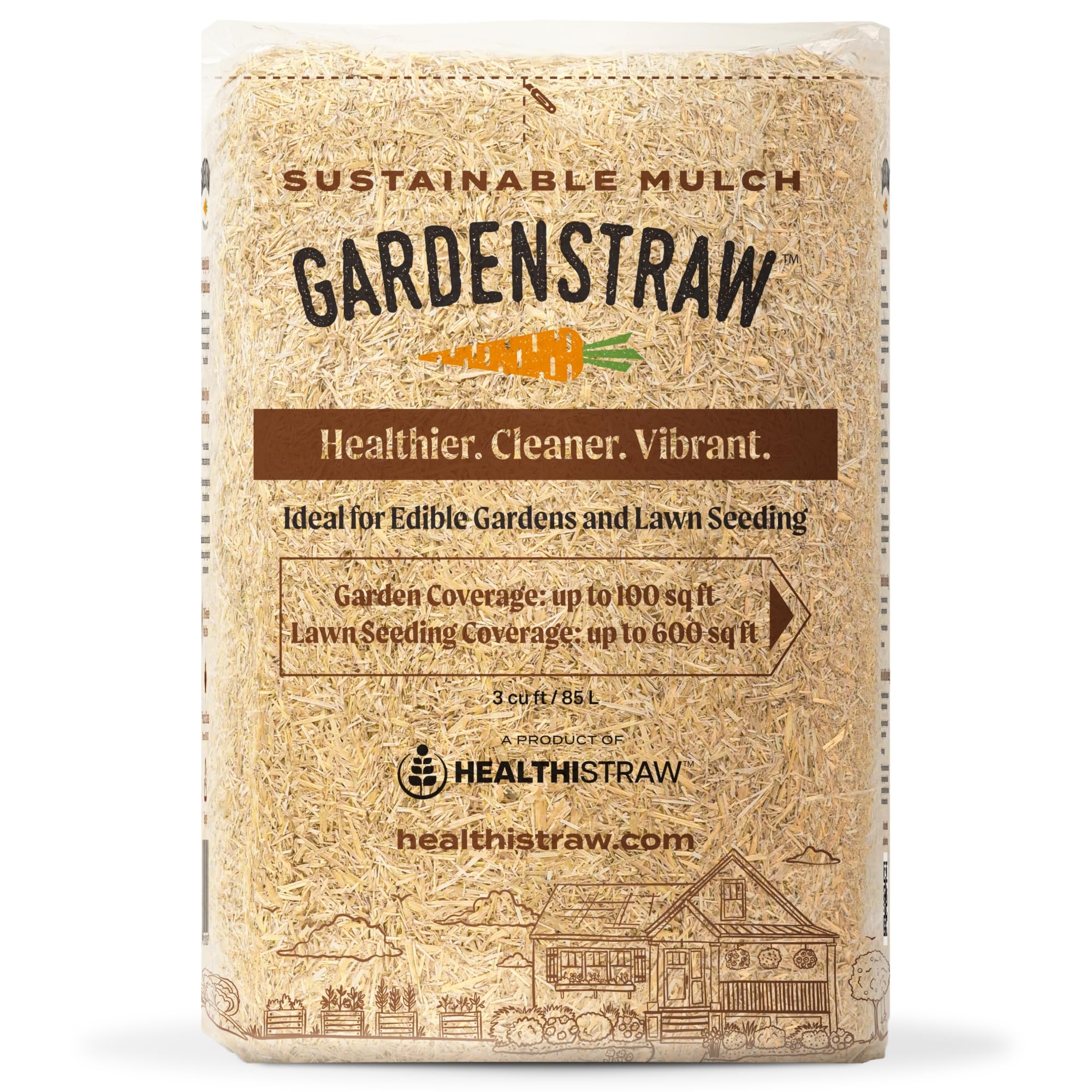
GardenStraw occupies a different niche on the mulch spectrum: instead of woody chips, it uses clean, non-GMO wheat straw that is filtered to remove as many weed seeds as possible. The 3-cubic-foot compressed bale provides expansive coverage — up to 100 square feet when laid at a 2- to 3-inch depth. This is the most economical coverage in the roundup for large vegetable plots.
Straw’s low carbon-to-nitrogen ratio means it breaks down relatively quickly, contributing organic matter and feeding soil microbes instead of robbing nitrogen. Reviewers note that the straw fibers interlock when watered, forming a mat that resists wind and rain without chemical binders. The material is also lightweight, making it easy to spread by hand over tender seedlings without compacting the soil below.
The main trade-off with straw is its faster decomposition rate — you will likely need to top it up mid-season, especially in hot, humid climates. A few reviewers also report some grass seeds surviving the filtering process, though the majority say the material is significantly cleaner than bale straw from a feed store. For gardeners who compost their mulch at the end of the season, straw is the most cycle-friendly choice here.
What works
- Highest coverage per package — ideal for large raised beds.
- Low C:N ratio won’t steal nitrogen from vegetable plants.
- Biodegradable and compostable; adds organic matter to soil.
What doesn’t
- Decomposes faster than wood chips; requires mid-season reapplication.
- Some users report occasional grass seeds despite filtering.
4. Hull Farm Cocoa Bean Shell Mulch

Cocoa bean shell mulch is one of the few wood-adjacent mulches that provides a minor fertilizer benefit — its NPK rating of 2.5-1-3 means it contributes a small amount of nitrogen, phosphorus, and potassium as it breaks down. The Hull Farm offering is a 2-cubic-foot bag of shell fragments that emit a strong chocolate aroma when first applied, a sensory bonus that many home gardeners enjoy.
Reviewers praise the fragrance and the natural weed-suppressing blanket the shells form after watering. The material is lightweight and easy to spread, though some users note that it can blow away if applied in an exposed area before the first rain settles it. A recurring caution: cocoa shell mulch is toxic to dogs if ingested in large quantities, so it is not suitable for households with pets that like to dig or chew.
The trade-off for the fertilizer content is a higher price per cubic foot compared to plain coco coir or wheat straw. A few experienced gardeners mention that the hulls can mold temporarily in humid weather — the mold is harmless and beneficial, but visually unappealing. For small, showpiece vegetable beds where appearance and aroma matter, this shell mulch brings a unique combination of scent and slow-release nutrients.
What works
- Mild fertilizer value (2.5-1-3) supplements vegetable nutrition.
- Pleasant chocolate aroma that many gardeners love.
- Forms a stable, weed-suppressing mat when wetted down.
What doesn’t
- Toxic to dogs if ingested — not safe for pet-accessible gardens.
- Higher cost per cubic foot than compressed coco bricks.
- Can develop harmless mold in high humidity.
5. Thrive Natural Gardens Coco Coir Chips Brick

The Thrive Natural Gardens brick matches the expansion profile of the other coco chips in this roundup — it expands to roughly 1.8 cubic feet (50 liters) after hydration. What sets it apart is its specific mention as an alternative for those allergic to pine bark, a consideration that is often overlooked but common among sensitive individuals. The husk chips are washed, compressed, and designed for use as both a soil amendment and a top-dressing mulch.
Customer reviews highlight the brick’s consistent chip size and the fact that it does not affect soil pH or tie up nutrients the way some wood mulches can. One experienced reviewer notes that washing the expanded chips reduces the high mineral/salt content, which is a good practice for any coco product used in vegetable beds. Another user who is allergic to pine bark confirms this product caused no reaction, making it a viable hypoallergenic choice.
The volume-to-weight ratio is within the same range as the other premium coco bricks, but the brand’s emphasis on allergen safety and moisture management makes this the best pick for gardeners with respiratory sensitivities. For a mid-price brick that balances cleanliness, long structure, and dust-free handling, this is a solid performer.
What works
- Safe alternative for those with pine bark allergies.
- Slow decomposition means less frequent reapplication.
- Clean, washed chips with minimal dust.
What doesn’t
- Washing recommended to reduce salt content.
- Brick requires pre-soaking; not a pour-and-spread product.
6. Rio Hamza Trading Houseplant Mulch

This bag of small bark wood chips is a noticeable step down in volume compared to the compressed bricks above — it contains only 8 quarts (roughly 0.3 cubic feet). It is designed primarily for indoor potted plants and small patio containers rather than sprawling vegetable beds. The chips are longer lasting than coconut coir shavings and add a consistent decorative layer to soil surfaces.
Reviewers mostly use it for houseplants rather than vegetable gardens, noting that it helps retain moisture in pots without bringing in pests. The color is described as natural and pleasing, and the chips are ready to use straight from the bag with no soaking or expansion required. A few customers point out that the quantity is small — one bag only covered 2.5 medium pots — making it uneconomical for raised-bed vegetable growing.
Because this is a true wood bark product rather than coco coir, it may gradually acidify potting soil over time if used exclusively. For a gardener maintaining a few container vegetables on a balcony or patio, the convenience of a pour-and-go bag is appealing. For anyone covering a standard 4×8 raised bed, the volume per dollar makes this a poor fit compared to the compressed coco bricks.
What works
- Ready to use directly from the bag with no prep work.
- Attractive natural color and consistent chip size.
- Effective moisture retention for container plants.
What doesn’t
- Low volume — impractical for full-sized vegetable beds.
- Wood bark can gradually lower soil pH in containers.
- Higher cost per cubic foot than compressed coco alternatives.
Hardware & Specs Guide
pH Impact on Vegetable Soil
Wood-based mulches are not inert; as they decompose, organic acids can lower the pH of the top inch of soil. Coconut husk chips typically range between pH 5.8 and 6.5, which aligns well with most vegetable crop requirements. Pine bark and cedar mulches can push pH below 5.5 over time, requiring lime amendments to keep calcium and phosphorus available. Testing your plot’s pH once a season helps you adjust before deficiency symptoms appear in the leaves.
Expansion Ratio of Compressed Bricks
Compressed coco coir bricks and chips expand by a factor of 3 to 5 when hydrated. A standard 11-pound brick that measures 12x10x4 inches dry can fill 1.8 to 2 cubic feet after soaking. This ratio matters for planning: if your raised bed measures 4×8 feet and you want a 2-inch mulch layer, you need roughly 5.3 cubic feet of material, which translates to three bricks of this size. Loose-fill mulches like wheat straw do not require rehydration but take up much more storage space before use.
FAQ
Will wood mulch steal nitrogen from my tomato plants?
Can I use cocoa bean shell mulch if I have dogs?
Final Thoughts: The Verdict
For most gardeners, the wood mulch for vegetable garden winner is the Back to the Roots 100% Organic Mulch because it combines OMRI organic certification, a neutral pH, and generous expansion from a compact brick. If you want the highest coverage per dollar and easy compostability, grab the HealthiStraw GardenStraw. And for a showpiece garden bed with a pleasant scent and a mild fertilizer boost, nothing beats the Hull Farm Cocoa Bean Shell Mulch.