
Pine beetles don’t just stress a tree—they bring a fungal partner that chokes off the vascular system from the inside, turning a green crown to red in weeks. Once you spot the popcorn-shaped pitch tubes oozing from the trunk, you’ve already entered a race against the clock where the wrong insecticide choice means total canopy loss.
I’m Rikta — the co-founder and writer behind Lawn Gear Lab. I’ve spent countless hours cross-referencing environmental safety data, active-ingredient persistence studies, and concentrated formulation ratios to isolate the top preventatives and curatives that foresters, arborists, and serious property owners actually trust when bark beetles attack.
This guide breaks down the most effective chemical and biological options—covering permethrin, bifenthrin, imidacloprid, and borate-based wood treatments—so you can confidently select the right insecticide for pine beetles and defend your trees before the infestation spreads.
How To Choose The Best Insecticide For Pine Beetles
Pine beetles—including the mountain pine beetle, southern pine beetle, and Ips engraver—tunnel through the bark and introduce a blue-stain fungus that stops water flow. The right insecticide must kill the beetle on contact, penetrate enough to reach galleries, or prevent new attacks for the full beetle flight season. Here are the key selection factors.
Active Ingredient: Pyrethroids vs. Neonicotinoids vs. Borates
Permethrin and bifenthrin (pyrethroids) provide fast knockdown and strong residual activity on bark—usually 60 to 90 days when applied correctly. They work best as preventive trunk sprays before beetles emerge. Imidacloprid (a neonicotinoid) moves through the tree systemically and works well against some wood-boring insects but is less effective against bark beetles that feed only under the bark before the tree fully distributes the chemical. Borates like disodium octaborate tetrahydrate penetrate deep into green wood and remain active indefinitely, stopping larvae from surviving inside the wood.
Residual Duration and Application Timing
Preventive sprays must be applied before the first beetle flight—typically late winter to early spring depending on your region. Products that last four to six weeks require multiple applications through the summer. Concentrates that hold residual activity for 90 days cover the entire emergence window with one thorough spray. For trees already infested, curative options like trunk injections deliver active ingredients directly into the vascular tissue. Borate wood treatments last for the life of the wood, making them ideal for protecting lumber and structural wood adjacent to beetle-kill trees.
Formulation and Safety Around Non-Targets
Concentrated emulsifiable liquids mix with water and adhere well to bark ridges, while ready-to-use sprays work for small ornamental pines. Pyrethroids are highly toxic to bees and aquatic life, so avoid spraying near blooming understory plants or water bodies. Most products become safe for pets once the spray dries. Borates have very low mammalian toxicity but require protective gear during mixing to avoid inhaling the fine powder.
Quick Comparison
On smaller screens, swipe sideways to see the full table.
| Model | Category | Best For | Key Spec | Amazon |
|---|---|---|---|---|
| Agrisel Bifenthrin Pro 7.9 | Pyrethroid | Broad-spectrum bark beetle prevention | 7.9% Bifenthrin | Amazon |
| Quali-Pro Imidacloprid T&O 2F | Neonicotinoid | Systemic control in landscape pines | 21.8% Imidacloprid | Amazon |
| Rockwell Labs LambdaStar UltraCap 9.7% | Pyrethroid | High-potency preventive perimeter spray | 9.7% Lambda-cyhalothrin | Amazon |
| Wisdom Pro L&H 7.9% Bifenthrin | Pyrethroid | Multi-pest trunk and foliage spray | 7.9% Bifenthrin | Amazon |
| Martin’s 32 oz Permethrin 13.3% | Pyrethroid | Long-residual trunk coverage | 13.3% Permethrin | Amazon |
| Bora-Care Termiticide & Fungicide | Borate | Wood treatment for beetle larvae | Wood life residual | Amazon |
| GORDON’S Permethrin 10% Livestock Spray | Pyrethroid | Budget-friendly perimeter spray | 10% Permethrin | Amazon |
In‑Depth Reviews
1. Agrisel Bifenthrin Pro 7.9
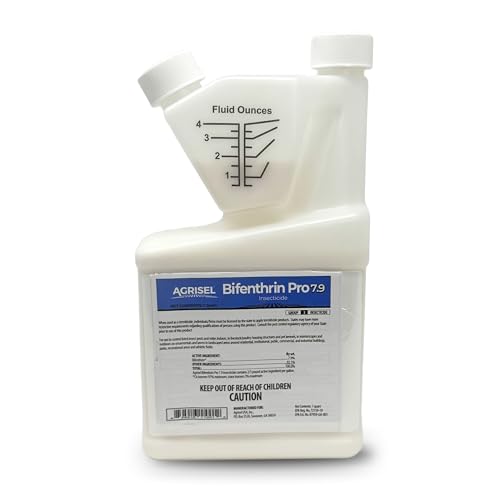
Agrisel Bifenthrin Pro 7.9 delivers the highest bifenthrin concentration in a ready-to-mix quart concentrate, and the pyrethroid chemistry clings tightly to pine bark—creating a long-lasting barrier that kills beetles on contact. The label covers more than 125 insects, but for pine beetle protection the real value is the residual activity that stretches six to eight weeks per application. One pint makes enough spray for a dozen mature pines when you coat the trunk up to the first major limbs.
The formula uses a microencapsulated suspension that resists rain wash-off better than standard emulsifiable concentrates. After the spray dries—typically one to two hours—the film remains active through light rain and overhead irrigation. This is critical for protecting trees during the humid pre-flight weeks when spring showers are frequent. Users report complete elimination of mosquitoes and yard pests after treatment, which confirms the bifenthrin is distributing evenly across the bark surface.
The quart bottle treats a large perimeter with low usage rates, making it highly economical per gallon of finished spray. It cannot be shipped to Hawaii or New York, so check local restrictions before ordering. For property owners who want one product that handles pine beetle prevention plus ant, tick, and mosquito control around the entire landscape, this bifenthrin concentrate is the strongest all-in-one pick.
What works
- Full 90-day residual control with two applications covering the flight season
- Rainfast after drying—holds up through spring downpours
- Safe for pets and birds once the spray layer is dry
What doesn’t
- High concentration requires precise mixing—overdosing wastes product
- Cannot purchase in New York or Hawaii due to state restrictions
2. Quali-Pro Imidacloprid T&O 2F

Quali-Pro Imidacloprid T&O 2F is a neonicotinoid systemic concentrate that works differently than contact sprays: the tree absorbs the active ingredient through its roots and distributes it throughout the vascular tissue. For ornamental pines attacked by soil-borne beetles or borers that feed on inner bark, this full-gallon jug provides enough product to treat dozens of specimens with a simple soil drench. The 21.8% imidacloprid is the same active ingredient used in the branded “Merit” formulation and carries full EPA registration for turf and ornamentals.
The systemic route delivers long-lasting protection because the chemical remains inside the tree rather than washing off the bark. Users report saved laurels and bougainvilleas from severe caterpillar and beetle damage. For pine beetles specifically, the imidacloprid works best as a preventive for trees that have not yet been attacked—once bark beetles have already bored in and introduced blue-stain fungus, the tree’s vascular system is already compromised and systemic transport becomes unreliable.
The label is clear that this product is not intended for edible crops, so keep it on ornamental pines, hedges, and turf. The mixing directions can feel confusing because the rates differ by target pest, so measure carefully. At this volume, the cost per tree is significantly lower than ready-to-use injectables, making it a smart choice for anyone managing a landscape with multiple pines.
What works
- Systemic action protects the whole tree from inside the vascular system
- One gallon makes a large volume of finished solution—very economical
- Fast-acting on grubs, chinch bugs, and wood-boring larvae
What doesn’t
- Less effective on bark beetles that feed only in the outer phloem
- Strong chemical odor during mixing requires a respirator and gloves
- Not labeled for edible fruit trees or vegetable gardens
3. Rockwell Labs LambdaStar UltraCap 9.7%

Rockwell Labs LambdaStar UltraCap uses a microencapsulated lambda-cyhalothrin formulation that releases the active ingredient gradually, extending residual effectiveness on pine bark beyond standard emulsifiable concentrates. At 9.7% lambda-cyhalothrin, it is one of the most potent pyrethroids available to non-licensed applicators. The recommended rate is just 0.2 fluid ounces per gallon of water, so this 16-ounce bottle yields 80 gallons of finished spray—enough to coat the trunks of a large stand of pines multiple times through the beetle flight season.
The capsule suspension technology means the insecticide sticks to vertical surfaces like pine bark better than wettable powders. Users report complete eradication of Arizona bark scorpions and earwigs with a perimeter spray, which confirms the formulation stays put even on rough, deeply furrowed bark. For beetle prevention, apply it to the lower 15 feet of the trunk and any branch stubs or cracks where beetles target. Initial applications need monthly re-spraying, but after the first season the residual extends to 90 days.
Cost per bottle sits above entry-level permethrin products, but the low use rate and triple-digit gallon yield make it one of the most efficient options for large properties. It cannot be sold to Connecticut or New York, so verify local restrictions. For property owners who want a premium pyrethroid that delivers professional-grade bark coverage with minimal mixing effort, this is the strongest performer.
What works
- Microcapsule design adheres to rough bark better than standard liquids
- Extremely low use rate—one bottle treats a very large area
- Proven to kill scorpions, roaches, and wood-boring pests
What doesn’t
- Cannot be shipped to Connecticut or New York
- Price per bottle is higher than generic permethrin concentrates
4. Wisdom Pro L&H 7.9% Bifenthrin

Wisdom Pro L&H 7.9% Bifenthrin hits the same active ingredient concentration as the Agrisel product but comes from Amguard and carries labeling for both indoor and outdoor use—including ornamentals, lawns, and landscaped areas. The bifenthrin mode of action targets the sodium channels in nerve axons, triggering paralysis and death within hours of contact. For pine beetle prevention, this product works best when you spray the trunk, branch collars, and any mechanical wounds where beetles initially land.
The quart bottle is small enough to mix single-gallon batches for spot treating a few high-value trees. Users report seeing dead critters within days and residual activity lasting at least two weeks, with longer protection when applied at the maximum rate. The product is effective against a huge spectrum including tent caterpillars, bagworms, and leaf-feeding pests, so it also protects the pine canopy from secondary defoliators.
One limitation is the quart volume: if you have dozens of large pines, you will need multiple bottles to coat all the trunks. The bifenthrin suspension mixes easily and does not clog backpack sprayer nozzles, but the milky white emulsion can leave a visible residue on darker bark. For homeowners who want a well-priced bifenthrin that can transition from ornamental spraying to perimeter foundation treatment, this is a reliable middle-ground option.
What works
- Effective on 125+ labelled pests including beetles, ants, and mosquitoes
- Easy mixing with no strong petroleum odor
- Label allows use on ornamentals, lawns, and inside structures
What doesn’t
- Quart size runs out quickly when spraying multiple large trees
- Bifenthrin leaves a visible white residue on dark bark surfaces
5. Martin’s 32 oz Permethrin 13.3%
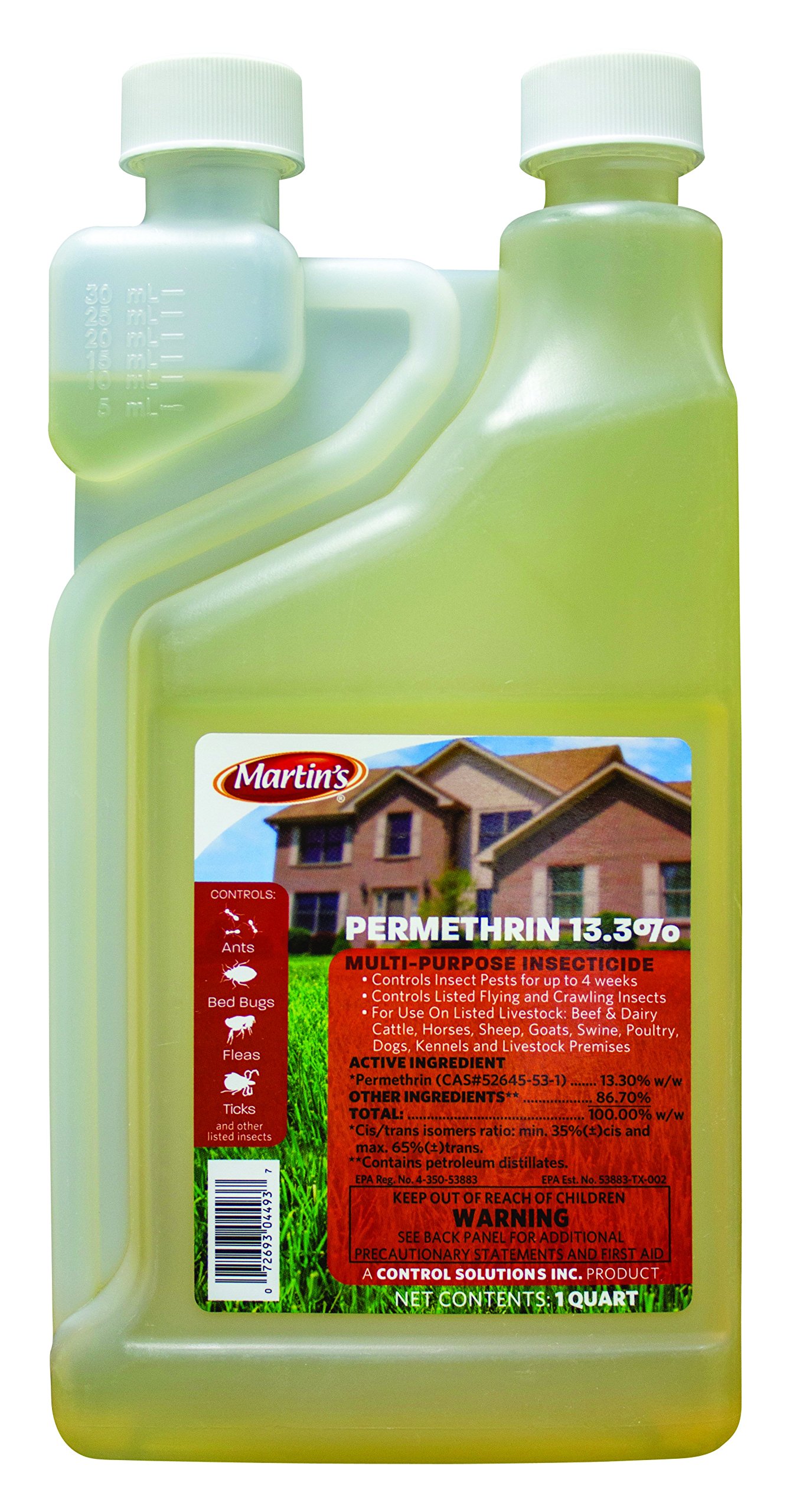
Martin’s 13.3% Permethrin concentrate is the highest permethrin percentage in this lineup, and permethrin has a long track record in forestry applications against pine bark beetles. The label says it controls insect pests for up to four weeks, but many users report effective residual closer to six weeks when applied at the 3-ounce-per-gallon rate. The 32-ounce bottle makes a substantial volume of finished spray—enough to treat a dozen mature trees with multiple passes.
Permethrin is specifically labeled for exterior use around homes, barns, and livestock areas, and the concentrated 13.3% blend handles tough bark beetle targets. Users report it kills ticks dead on contact when sprayed on clothing and perimeter brush. For pine trees, apply it to the trunk from ground level up to the first branch whorl. The product has a strong chemical odor—described as paint thinner or petroleum base—so always mix and spray outdoors with a respirator.
The main drawback is the odor, which lingers for hours and makes it unsuitable for spraying near well-ventilation intakes or occupied patios. The high permethrin concentration also means you must measure carefully; accidentally doubling the rate wastes product and increases run-off risk. For property owners who want a high-concentration permethrin that delivers forestry-grade protection at a competitive price, this Martin’s jug is a proven workhorse.
What works
- Highest permethrin percentage makes the concentrate stretch further
- Residual lasts 4-6 weeks—covers most of the beetle flight window
- Proven effective on ticks and bark beetles in field use
What doesn’t
- Strong chemical odor requires outdoor mixing and full PPE
- Not all bottles have the same smell profile—some users report batch variability
6. Bora-Care Termiticide & Fungicide Concentrate
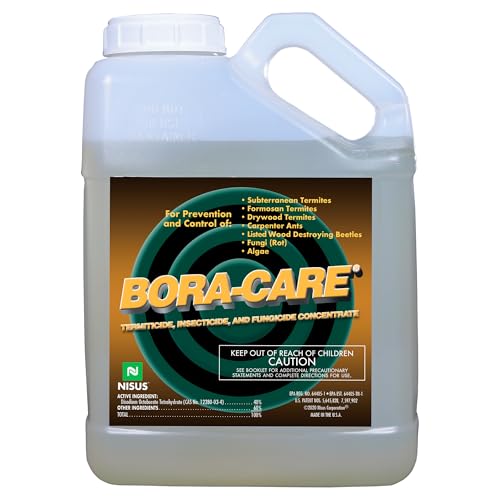
Bora-Care is a borate-based wood treatment designed specifically to penetrate deep into green or seasoned wood and remain active for the life of the structure. Unlike contact sprays that sit on the bark surface, borates diffuse through the moisture in wood fibers—killing beetle larvae, termites, carpenter ants, and decay fungi that are already tunneling inside. For pine beetle management, this is essential for treating wood that has been attacked but is not yet structurally compromised, as well as protecting stacked firewood, lumber, and structural timbers near infested trees.
The application method is different from trunk spraying: you mix the powder concentrate with water—ideally warm water for faster dissolution—and apply it to bare wood surfaces with a sprayer, brush, or roller. One gallon of concentrate covers approximately 800 square feet of wood surface. Users report it eliminated flying termites around wooded homes after a single application and that the protection lasts as long as the wood remains dry. The borate salts are low-toxicity to mammals and pets, making this safe for use around active living spaces.
The mixing process can be messy because the powder is thick and needs thorough agitation to fully dissolve. A separate bucket dedicated to pest control mixing is recommended. Bora-Care does not work as a topical knock-down spray for adult beetles—its strength is long-term prevention by making the wood itself toxic to boring insects. For property owners dealing with beetle-kill pines adjacent to structures, this is the product that stops re-infestation in the wood itself.
What works
- Penetrates wood fibers and stays active for the lifetime of the wood
- Effective against termites, beetles, carpenter ants, and fungi
- Very low mammalian toxicity—safe around pets and children once dry
What doesn’t
- Powder is thick and messy to mix—needs dedicated equipment
- Not a contact killer for adult beetles on the bark surface
7. GORDON’S Permethrin 10% Livestock & Premise Spray

GORDON’S Permethrin 10% is the most affordable entry point in this comparison, and despite being labeled primarily for livestock and premise use, the 10% permethrin chemistry is identical to many “tree & ornamental” sprays. The quart bottle is small, but the 10% concentration mixes at 2 ounces per gallon, yielding 16 gallons of finished contact spray—enough to coat the trunks of 15 to 20 mature pines. Users report effective results against flies, mites, mosquitoes, millipedes, and spiders around homesteads, and the no-gasoline-smell formulation makes it more pleasant to work with than some higher-concentration permethrin products.
The product mixes easily into a milky solution and sprays evenly with any standard garden sprayer. It dries without heavy residue on most surfaces. For pine beetle prevention, you will need to apply it pre-emptively and reapply every three to four weeks through the beetle flight season because the 10% concentration does not hold residual as long as the 13.3% Martin’s. The bottle is light-weight and easy to store, making it a good option for property owners with just a few ornamental pines who do not want to store large jugs of concentrate.
The primary limitation is the livestock label language, which does not explicitly list pine trees. While permethrin is broadly labeled for ornamentals in other brands, some users prefer a product with direct tree-and-shrub labeling for peace of mind. For the budget-conscious buyer who understands permethrin chemistry and wants a fast-working, cost-effective knock-down spray for beetle prevention, GORDON’S delivers reliable performance at the lowest price.
What works
- Low price per bottle—easy to try without a big investment
- Mixes easily with no strong chemical odor during application
- Effective on contact against a wide range of insects
What doesn’t
- Label is livestock-focused—not specifically for trees or ornamentals
- Requires more frequent reapplication than higher-concentration options
Hardware & Specs Guide
Active Ingredient & Mode of Action
Pyrethroids (permethrin, bifenthrin, lambda-cyhalothrin) attack the insect nervous system by modulating sodium channels, causing rapid paralysis and death—ideal for contact-kill on bark before beetles bore in. Imidacloprid acts systemically as a neonicotinoid, blocking nerve transmission after the tree absorbs it through its roots. Borates (disodium octaborate tetrahydrate) kill larvae by interfering with enzyme function once they ingest treated wood fibers. Choosing the right mode of action depends on whether you need surface protection, internal tree protection, or long-term wood preservation.
Residual Duration & Application Frequency
Standard pyrethroid concentrates provide 4 to 6 weeks of residual activity on pine bark, requiring monthly reapplication through the beetle flight season. Microencapsulated formulations (like Rockwell Labs LambdaStar) extend that window to 90 days after several initial monthly sprays. Systemic imidacloprid lasts a full growing season when applied as a soil drench because the tree stores the chemical internally. Borate wood treatments last indefinitely once the wood is treated. Match the residual duration to the beetle species in your region—mountain pine beetle flights can last 8 weeks, while southern pine beetle may have multiple overlapping generations.
FAQ
Can I save a pine tree that already has pitch tubes and red needles?
How close to water sources can I spray pyrethroid insecticides on pines?
Is imidacloprid effective against southern pine beetles or mountain pine beetles?
Final Thoughts: The Verdict
For most gardeners, the insecticide for pine beetles winner is the Agrisel Bifenthrin Pro 7.9 because its 7.9% bifenthrin concentration, rainfast microcapsule formulation, and broad-spectrum label provide the strongest preventive barrier on pine bark. If you want systemic protection that moves through the tree from the roots up, grab the Quali-Pro Imidacloprid T&O 2F. And for treating cut wood, lumber, or structural framing near beetle-kill pines, nothing beats the Bora-Care Termiticide & Fungicide for lifelong wood preservation.