
Raw synthetic fertilizer forces top growth while leaving the soil food web high and dry, leading to thatch buildup and nutrient runoff. A proper compost top-dressing feeds the microbiology that keeps grass dense, drought-tolerant, and deep green without the boom-and-bust cycle of chemical salts. The challenge is that the bag you grab off the shelf can be cured wood waste, raw manure that burns roots, or a precisely balanced blend with humic acids and mycorrhizae — three very different things that all get labeled “compost.”
I’m Rikta — the co-founder and writer behind Lawn Gear Lab. My buying guides are built from cross-referencing OMRI certifications, analyzing particle-size distribution and guaranteed analysis panels across dozens of SKUs, and filtering the long-term owner feedback that reveals which bags actually improve soil structure instead of just greening the tips for a month.
To help you cut through the misinformation, I’ve compared seven of the most popular options on the market to identify the single strongest compost for lawn top-dressing, soil amendment, and bio-stimulant applications money can buy today.
How To Choose The Best Compost For Lawn
Not every bag labeled “compost” belongs on a lawn. The key metrics are organic matter content, carbon-to-nitrogen ratio, particle size, and the presence of living biology. A quality compost should be dark, crumbly, and smell like earth — not ammonia or sour silage.
Organic Matter Content & C:N Ratio
Lawns thrive on a carbon-to-nitrogen ratio between 25:1 and 30:1. Compost that is too high in nitrogen (C:N under 20:1) can burn grass blades, while material that is mostly carbon (C:N over 40:1) will tie up soil nitrogen as it decomposes. Look for bagged products that list organic matter content above 50% on a dry-weight basis — this ensures you are adding humus, not just inert filler.
Particle Size & Uniformity
Compost intended for top-dressing should pass through a 3/8-inch screen. Large chunks of bark or undigested wood create an uneven surface and shade out grass crowns. The most lawn-friendly products are sifted to a fine, uniform texture that drops between the grass blades and reaches the soil surface quickly. Liquid concentrates bypass this issue entirely, but they lack the physical soil-structuring benefit of solid compost.
Microbial Inoculation
Mycorrhizal fungi and beneficial bacteria are the real engine behind nutrient cycling. Products that list endo- and ectomycorrhizae on the label, or that contain humic acid and kelp extracts, provide a biological boost that accelerates root development and drought tolerance. Without these microorganisms, compost is just slow-release fertilizer — still useful, but not transformative.
Quick Comparison
On smaller screens, swipe sideways to see the full table.
| Model | Category | Best For | Key Spec | Amazon |
|---|---|---|---|---|
| Espoma Organic Land and Sea | Lobster & Crab Meal | Established lawns & transplanting | Myco-Tone mycorrhizae blend | Amazon |
| The Andersons BioChar DG | Biochar + DG | Long-term soil remediation | Dispersible granule technology | Amazon |
| Michigan Peat Baccto Wholly Cow | Peat & Manure | General top-dressing & beds | 40-quart, odor-free screened mix | Amazon |
| GS Plant Foods Root Ruckus | Liquid Concentrate | Quick biological stimulation | Humic acid + seaweed + mycorrhizae | Amazon |
| FOOP Organic Liquid Compost | Liquid Concentrate | Large area nutrient boost | Treats up to 5,000 sq ft | Amazon |
| Brut Cow Compost | Pure Cow Manure | Budget-friendly soil amendment | OMRI listed, 10-quart bag | Amazon |
| R&M Organics Premium Compost | Dairy Manure | Indoor & outdoor versatility | 10 lb, fine screened texture | Amazon |
In‑Depth Reviews
1. Espoma Organic Land and Sea Gourmet Compost

Espoma’s Land and Sea sits at the top because it solves the two biggest problems with bagged compost — low microbial diversity and filler content — in a single 1-cubic-foot bag. The inclusion of lobster and crab meal provides natural chitin, which research has shown triggers systemic resistance in turfgrass against fungal pathogens. Combined with Espoma’s proprietary Myco-Tone blend of endo- and ectomycorrhizae, this compost delivers both a nutrient boost and a biological inoculation that continues cycling long after application.
The granular form spreads easily through a broadcast spreader or by hand for smaller areas. At 24 pounds per cubic foot, it is heavier than peat-based mixes but lighter than pure manure, indicating a balanced carbon-to-nitrogen ratio that won’t burn established lawns. Long-term users report denser root systems on hostas and fescues after three years of seasonal use, with noticeable improvement in drought recovery speed.
The premium price per bag is the primary friction point for large-acreage applications. Budget-minded homeowners covering more than 2,000 square feet may find the per-bag cost prohibitive compared to bulk options. However, for targeted renovation projects, transplanting, or container-grown ornamentals, the biological density justifies the investment.
What works
- Dual-source marine proteins deliver chitin for disease suppression.
- Myco-Tone mycorrhizae improve phosphorus uptake for three months.
- Zero synthetic chemicals — suitable for organic turf programs.
What doesn’t
- Cost per square foot runs high for broad lawn top-dressing.
- Granular form needs moist soil for best microbial activation.
2. The Andersons BioChar DG Organic Soil Amendment
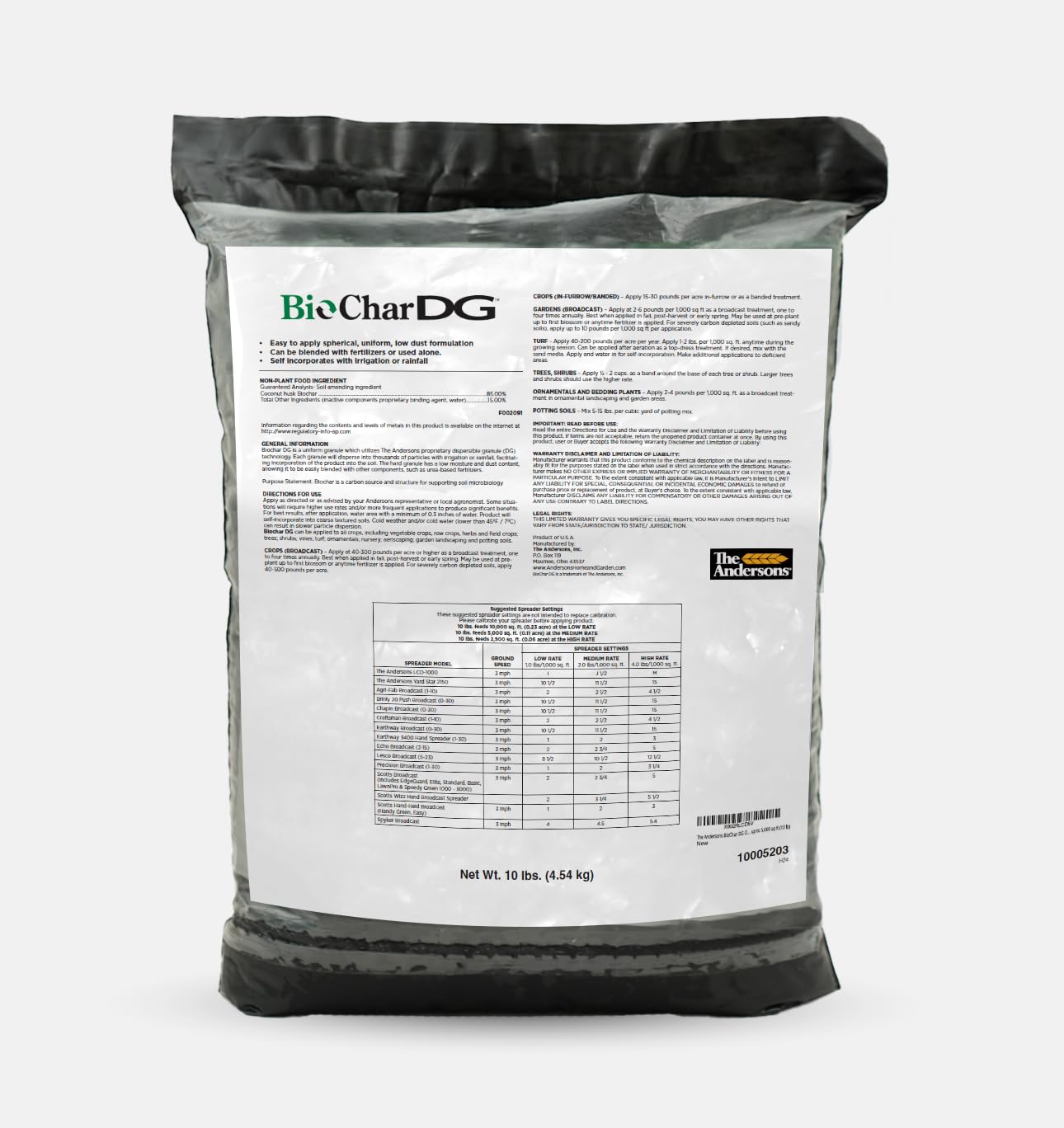
Biochar is not compost in the traditional sense, but The Andersons’ BioChar DG fills a critical gap that standard compost cannot: long-term carbon sequestration in the soil profile. The patented dispersible granule technology allows the biochar particles to break apart upon contact with water, infiltrating the top few inches of lawn rather than sitting on the surface. Once integrated, the porous char acts as a permanent habitat for beneficial bacteria and a reservoir for water and nutrients.
Owner reports from heavy clay soils in Texas and the Midwest show measurable changes in water permeability and bulk density after three to four applications over two years. The 10-pound bag covers up to 5,000 square feet, which makes it one of the most cost-effective soil conditioners on a per-acre basis. The pellets spread cleanly through a rotary spreader with virtually no dust, unlike raw charcoal fines that clog drop spreaders.
Biochar must be “charged” with nutrients before application, or it can temporarily bind soil nitrogen and stunt grass growth. The Andersons states their product is pre-charged, but some users have observed yellowing after initial use that required supplemental fertilizer. This is not a standalone compost — it works best as a one-time-per-year foundation treatment under a regular compost or humic acid program.
What works
- DG technology ensures deep soil penetration without surface residue.
- Stays active in soil for years — single application compounds benefits over time.
- Low dust, uniform pellets spread easily with standard spreaders.
What doesn’t
- Pre-charging may not be sufficient for nutrient-poor sandy soils.
- Not a direct NPK source — requires companion fertilization.
3. Michigan Peat Baccto Wholly Cow Horticultural Compost
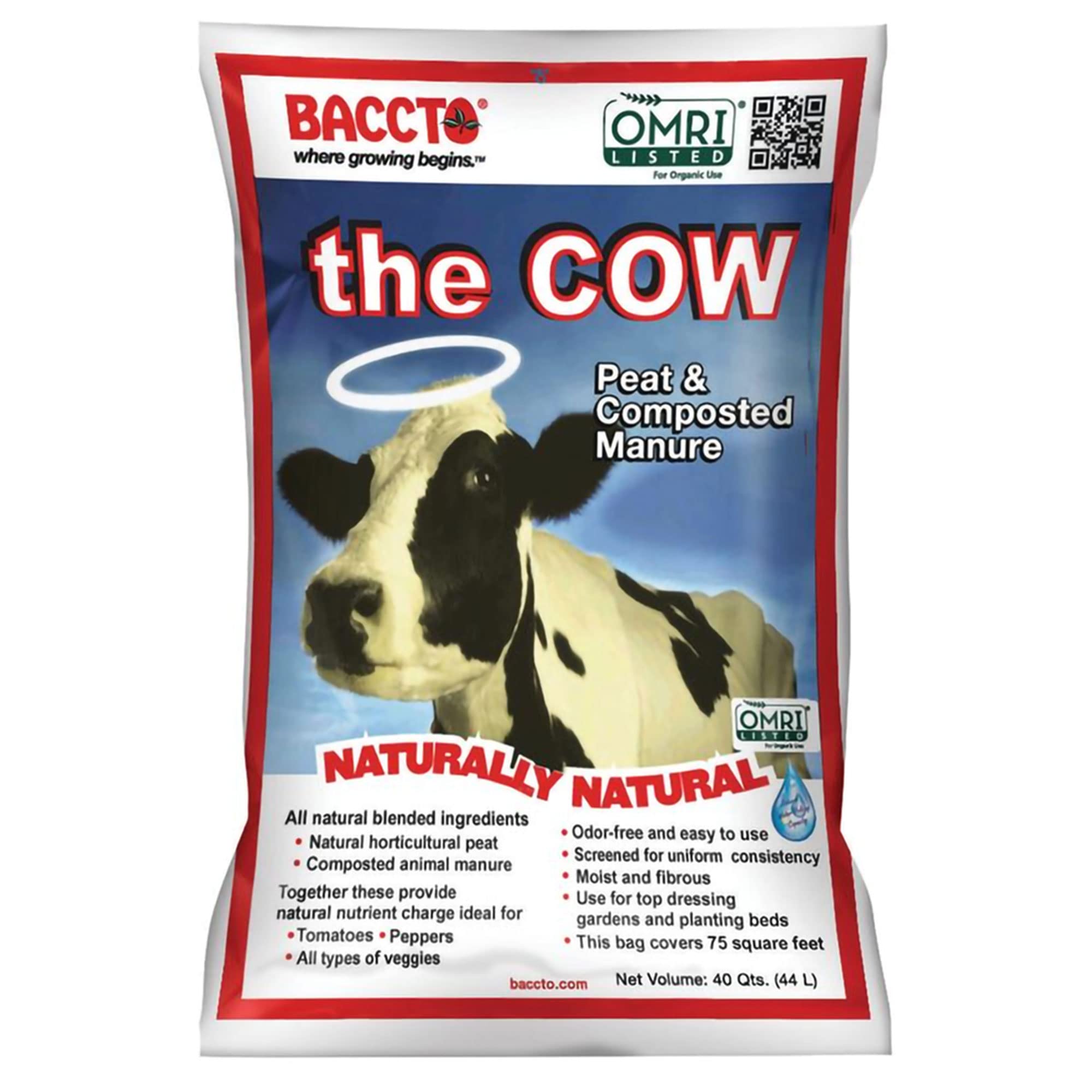
Michigan Peat’s Wholly Cow is the bag most homeowners should grab for that first annual top-dressing. The 40-quart bag is a screened blend of composted animal manure and natural peat, yielding a dark, fluffy texture with very few woody fragments — a direct result of their double-screening process. Users report that even 34-pound bags arrive without the ammonia smell typical of under-cured manure mixes, which makes it suitable for front-yard applications where odor is a concern.
The moisture retention advantage is measurable: the peat component holds roughly 20 times its weight in water, so lawns dressed with this compost require less frequent irrigation during dry spells. Mushroom cultivators and serious gardeners have adopted it as a clean substrate base, which speaks to its uniformity and low contaminant load. For straight lawn use, a half-inch layer applied in early spring feeds the soil food web through the entire growing season.
Some users have noted small sticks or bark fragments in a minority of bags — the screening is not perfect at this price point. The compost is also heavier than synthetic soil conditioners, so moving multiple bags across a large lawn can be physically demanding. Still, for the volume-to-quality ratio, Wholly Cow is the benchmark that budget alternatives need to match.
What works
- Massive 40-quart bag covers large areas without overspending.
- Peat component significantly reduces watering frequency.
- Essentially odorless — safe for close-to-house applications.
What doesn’t
- Occasional woody debris slips through the screening process.
- Heavy bag weight makes multiple-bag jobs labor-intensive.
4. GS Plant Foods Root Ruckus Compost Fertilizer
Root Ruckus is a liquid compost concentrate that short-circuits the traditional top-dressing process. Instead of hauling 40-pound bags, you dilute 3 to 4 ounces per gallon of water and spray or drench directly onto the lawn. The active ingredients — organic humic acid, liquid seaweed extract, and soluble mycorrhizae — work within days to chelate locked-up soil nutrients and stimulate root exudate production. Users have documented overnight recovery of cold-shocked plants and accelerated bloom set in ornamentals.
The 32-ounce bottle treats a significant area, though precise coverage depends on the dilution rate. For lawns suffering from compaction, thatch, or salt buildup from synthetic fertilizer, the humic acid component breaks down clay aggregates and improves cation exchange capacity without the manual labor of aeration. It is also miscible with most liquid fertilizer programs, so you can tank-mix it with your existing routine rather than adding a separate application day.
The primary limitation is that a liquid concentrate cannot build soil structure the way solid compost does. It feeds biology but does not add physical organic matter or improve soil porosity over time. Users relying solely on Root Ruckus without periodic solid compost top-dressing will see diminishing returns after the second season.
What works
- Fast-acting humic acid chelates nutrients within 24-48 hours.
- Liquid form requires no spreader — ideal for spot treatments.
- Works synergistically with any fertilizer program.
What doesn’t
- Does not add physical organic matter to the soil.
- Concentrate must be mixed accurately to avoid over-application.
5. FOOP Organic Liquid Compost
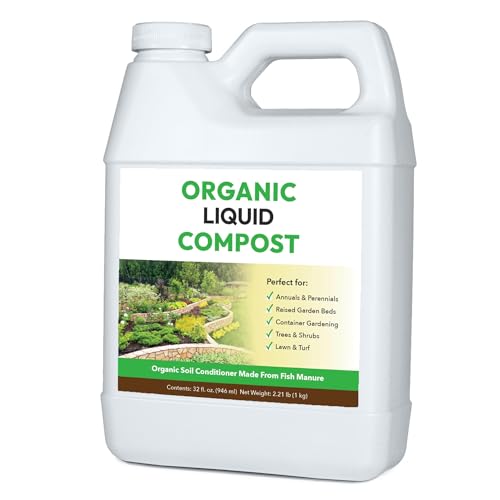
FOOP takes a different approach to liquid compost by sourcing its organic matter from fish manure, fish emulsion, sea kelp, volcanic ash, and mycorrhizal fungi. The result is a broad-spectrum nutrient solution that delivers nitrogen, phosphorus, potassium, calcium, magnesium, and silica in one pour. The label claims coverage of up to 5,000 square feet per 32-ounce bottle, which places it among the most concentrated liquid soil conditioners available.
Users on the border between organic and conventional care report that FOOP eliminated brown leaf tips on houseplants and revived heat-stressed garden vegetables after two weeks of twice-weekly application. The mild fish-based odor dissipates within hours after spraying, making it tolerable for residential use. For lawn-specific application, the silica content is a notable advantage — silica strengthens cell walls and reduces fungal disease pressure in tall fescue and Kentucky bluegrass.
Cost is the primary barrier to large-scale adoption. While the per-bottle price is reasonable, covering a full acre requires multiple bottles, and the cost advantage disappears compared to bulk humic acid powders. Additionally, a minority of users reported no visible difference in outdoor vegetable growth, suggesting that results depend heavily on existing soil conditions and the presence of microbial life to process the nutrients.
What works
- Fish manure provides a complete amino acid profile for rapid uptake.
- Silica from volcanic ash strengthens grass cell walls.
- Single bottle handles very large lawn areas without mixing equipment.
What doesn’t
- High per-bottle cost limits practicality for multi-acre turf.
- Mixed results on soils with very low existing microbial activity.
6. Brut Cow Compost

Brut Worm Farms markets this as 100% pure composted cow manure with no additives, fillers, or synthetic boosters. The OMRI listing confirms that the product meets organic input standards, which matters for strict organic turf programs and gardeners who want a single-ingredient soil amendment. The finely sifted texture means it can be worked into potting mixes at a 3:2 ratio with standard soil without creating drainage problems — first-time growers have successfully used it to germinate tomatoes and peppers in small containers.
For lawn use, the lack of odor is a significant practical advantage. Users describe the smell as clean earth rather than the barnyard funk that triggers neighbor complaints. The 10-quart bag is compact enough to store in a garage without attracting flies, though the small volume means you will need multiple bags for any lawn larger than a few hundred square feet. Application as a top-dressing at a quarter-inch depth provides a gentle nitrogen release over six to eight weeks.
The product is nitrogen-rich compared to blended composts, which requires careful application rates. Spreading too thickly — especially during hot, dry weather — can cause a temporary ammonia spike that discolors grass tips. The bag sizing is also mismatched for broad turf use: 10 quarts is better suited to a vegetable patch or flower bed than a standard suburban lawn.
What works
- OMRI certified for strict organic certification programs.
- Completely odor-free after thorough composting process.
- Fine texture integrates easily into heavy clay or sandy soils.
What doesn’t
- Small bag size requires multiple purchases for lawn coverage.
- Nitrogen content can burn grass if over-applied in hot weather.
7. R&M Organics Premium Organic Compost
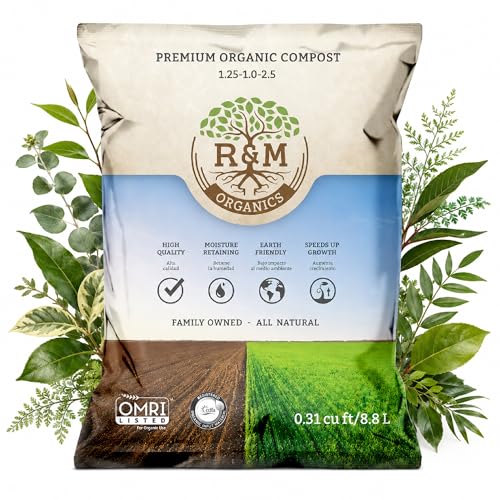
R&M Organics packs a surprising amount of practical utility into a 10-pound bag. The dairy cow manure base is fully composted and screened to a consistency that feels more like topsoil than traditional manure — it crumbles easily and contains no large clods or bedding material. This makes it the most user-friendly option for targeted rescue work: a Master Gardener used it to save azaleas that had been damaged by a roof-cleaning chemical, and another user reversed a tomato plant’s yellowing leaves within a week of mixing it into a 27-gallon planter.
The moisture retention claim holds up in practice. Users report that containers amended with this compost dry out more slowly, reducing the risk of wilt during workday absences. For lawn use, the 10-pound bag is best reserved for patching bare spots or top-dressing small ornamental beds rather than full-lawn renovation. A thin quarter-inch layer applied around established trees or shrubs provides a steady nutrient trickle without the risk of root burn.
The main drawback is the cost-per-pound relative to larger competitors. When you divide the bag size against the price, this is the most expensive option on a volume basis — you are paying for convenience and quality control rather than raw material. For gardeners who only need to amend a few containers or a small flower bed, that tradeoff is perfectly reasonable, but anyone covering significant lawn area should size up to the Michigan Peat or Espoma offerings.
What works
- Exceptionally fine, soil-like texture with zero barnyard odor.
- Proven ability to rescue chemically damaged or nutrient-starved plants.
- Improves moisture retention in fast-draining container mixes.
What doesn’t
- Small bag size works out to a high cost for lawn-scale projects.
- Not economical for full-lawn top-dressing compared to bulk alternatives.
Hardware & Specs Guide
Organic Matter vs. Inert Fillers
The most important number on any compost bag is the organic matter percentage. Premium products like Espoma Land and Sea score above 65% on a dry-weight basis, meaning the majority of the bag feeds soil biology rather than just adding bulk. Products on the lower end may contain peat moss or sand as cheap filler that provides structure but zero biological activity. Look for at least 50% organic matter on the guaranteed analysis panel.
Mycorrhizal Inoculation Density
Bag labels rarely list the number of propagules per gram, but products that include Myco-Tone (Espoma) or similar proprietary blends typically deliver 15-20 spores per gram of material — enough to colonize a root system within two weeks of soil contact. Straight manure-based products like Brut or R&M Organics rely on native soil microbes to supply fungi, which takes longer and depends on existing soil conditions.
Particle Size Distribution
Screened compost should pass through a 3/8-inch sieve. The Michigan Peat Wholly Cow and R&M Organics products both achieve this consistently, while loose-fill compost from bulk suppliers often contains 1-inch wood chips that must be raked off after top-dressing. Finer particles (< 1/4 inch) integrate into the soil faster and deliver nutrients to the root zone sooner, which is critical for thin or damaged lawns.
C:N Ratio and Nitrogen Availability
Compost with a carbon-to-nitrogen ratio between 25:1 and 30:1 is ideal for turf because it releases nitrogen slowly without microbial nitrogen tie-up. Pure cow manure (C:N ~ 20:1) provides a quicker green-up but risks burning if applied during summer heat. Blends that include peat or lobster meal tend to push the C:N higher, giving a gentler, longer-lasting nutrient release that aligns with the slower growth of cool-season grasses.
FAQ
Can I use bagged compost directly on my lawn or does it need to be mixed into soil?
How often should I apply compost to my lawn for best results?
What is the difference between compost and fertilizer for lawn care?
Will cow manure compost burn my lawn if applied during a hot summer?
Final Thoughts: The Verdict
For most gardeners, the compost for lawn winner is the Espoma Organic Land and Sea because its lobster-and-crab meal base delivers chitin-driven disease resistance alongside a diverse mycorrhizal inoculant that improves phosphorus cycling for months. If you want a budget-friendly bagged option that handles large lawns without breaking the bank, grab the Michigan Peat Baccto Wholly Cow. And for a liquid biological boost that works in a hose-end sprayer, nothing beats the GS Plant Foods Root Ruckus.