
Choosing the wrong container can leave your plants waterlogged and root-bound, stunting growth before they really get started. The shift from hard plastic nursery pots to fabric alternatives has been a game-changer for serious gardeners, but not all fabric pots deliver the same aeration, durability, or root-pruning results. Understanding the difference in material thickness, stitching quality, and handle reinforcement is the difference between a pot that lasts a single season and one that survives years of heavy use.
I’m Rikta — the co-founder and writer behind Lawn Gear Lab. This guide is built on deep market research, comparing material densities, stitch patterns, and handle load ratings across dozens of models, and analyzing aggregated owner feedback to separate products that truly deliver from those that just look the part.
Whether you are expanding a deck garden or starting your first raised bed alternative, here is everything you need before choosing the right fabric pots for your specific growing setup.
How To Choose The Best Fabric Pots
Fabric pots are deceptively simple — a flexible container with a handle — but the material grade, stitch pattern, and shape geometry determine whether your plants thrive or struggle. Here is what to check before you buy.
Fabric Weight (GSM) is Everything
Fabric weight is measured in grams per square meter (GSM). Entry-level pots typically use 200G to 250G material, which works for a single season but often degrades under UV exposure and frequent handling. Premium options start at 300G and go up to 500G, offering multiple seasons of reuse without fraying or tearing at the seams. Thicker fabric also holds its shape better when filled with damp soil, preventing sagging and uneven root distribution.
Handle Construction and Stitching
The handle is the most stressed part of any fabric pot. Basic pots use single-stitched fabric handles that rip under the weight of mature plants. Look for X-shaped reinforced stitching or polypropylene webbing handles that can handle full loads without tearing. For pots over 7 gallons, handles should be wide enough to distribute weight across your palm.
Shape: Round vs. Square
Round fabric pots are the standard and work well for most vegetables and flowers. Square fabric pots maximize soil volume for a given footprint — useful if you are placing them side-by-side on a balcony or in a greenhouse. Square pots also tend to hold their shape more consistently, reducing soil spillage when moving them.
Drainage and Airflow Needs
All fabric pots breathe, but the porousness varies. Some rely solely on the nonwoven fabric for drainage, while others incorporate plastic-coated mesh for additional airflow. If you garden in a humid climate, opt for pots with elevated drainage and a design that prevents water from pooling at the base. In hot, dry climates, thicker fabric retains moisture longer, reducing watering frequency.
Quick Comparison
On smaller screens, swipe sideways to see the full table.
| Model | Category | Best For | Key Spec | Amazon |
|---|---|---|---|---|
| AC Infinity Square 5-Pack | Premium | Root health & durability | 500G nonwoven fabric | Amazon |
| Gardzen 10-Pack 5 Gal | Mid-Range | Multi-season value | 300G nonwoven fabric | Amazon |
| Rain Science 10 Gal | Premium | Long-term reuse | Plastic-coated mesh | Amazon |
| ADORMA 7 Gal 20-Pack | Value | Large volume planting | 300G nonwoven fabric | Amazon |
| BN-LINK 5 Gal 5-Pack | Mid-Range | Budget-friendly starter set | 300G nonwoven fabric | Amazon |
| Sinimaka 5 Gal 7-Pack | Mid-Range | Color-coded garden beds | Double-stitched design | Amazon |
| Cavisoo 3 Gal 24-Pack | Budget | Herbs & small starts | 300G nonwoven fabric | Amazon |
In‑Depth Reviews
1. AC Infinity Square Heavy Duty Fabric Pots, 5 Gal 5-Pack

AC Infinity sets the benchmark with a 500G nonwoven fabric that is nearly twice as thick as standard entry-level pots. The square geometry provides true-to-size capacity — 5.39 gallons per bag — while offering more surface area for root air-pruning compared to round pots of the same volume. The nylon handles and reinforced stitching resist fraying after repeated seasons, and the integrated fabric loops allow plant stakes to pass through without puncturing the root zone.
Users consistently note the lack of side leakage, a common complaint with lighter fabric pots that weep water through the walls under pressure. The square shape also prevents the bag from rolling or collapsing when moved, which simplifies repositioning on patios and greenhouse benches. Washing and reusing these pots across multiple growing seasons is straightforward, and the material holds its structural integrity even after several wash cycles.
The higher upfront investment is offset by the extended lifespan, especially for gardeners who cycle through multiple crops per year. The 500G fabric resists UV degradation better than 300G alternatives, making these a strong choice for full-sun outdoor setups. For those prioritizing root health and long-term reuse, this is the most robust option in the lineup.
What works
- Thickest fabric (500G) in this comparison for multi-season durability
- Square shape maximizes soil volume per footprint and holds shape under load
- Integrated stake loops prevent damage to roots when staking
What doesn’t
- Premium price point over standard 300G options
- Limited to 5-pack configuration only
2. Gardzen 10-Pack 5 Gallon Grow Bags

Gardzen’s 10-pack uses a 300G thickened nonwoven fabric that hits the sweet spot between affordability and durability. Each bag measures 12.8 inches in diameter by 10 inches tall, providing a true 5-gallon capacity suitable for tomatoes, peppers, cucumbers, and potatoes. The X-shaped reinforced stitching on the handles is a meaningful upgrade over single-stitched designs, reducing the risk of handle separation when moving fully saturated soil.
Customer feedback highlights consistent drainage and airflow performance across multiple seasons, with many users reporting successful second-year reuse of the bags without significant wear. The fabric is BPA-free, which is important for organic vegetable growers concerned about chemical leaching. The 10-pack format makes it easy to manage a medium-sized garden without buying multiple small packs.
One area where the Gardzen bags fall slightly short of premium options is fabric thickness — 300G is durable for a season or two, but may show signs of fraying at the seams after extended UV exposure in full-sun environments. For shaded patios or partial-sun balconies, these bags deliver excellent longevity at a notably lower cost per bag.
What works
- Excellent value with 10 bags per pack at mid-range pricing
- Reinforced X-stitched handles hold up to heavy lifting
- True 5-gallon capacity with good drainage and airflow
What doesn’t
- 300G fabric may fray over multiple seasons in direct sun
- Round shape can sag slightly when soil is very wet
3. Rain Science 10 Gallon Grow Bag
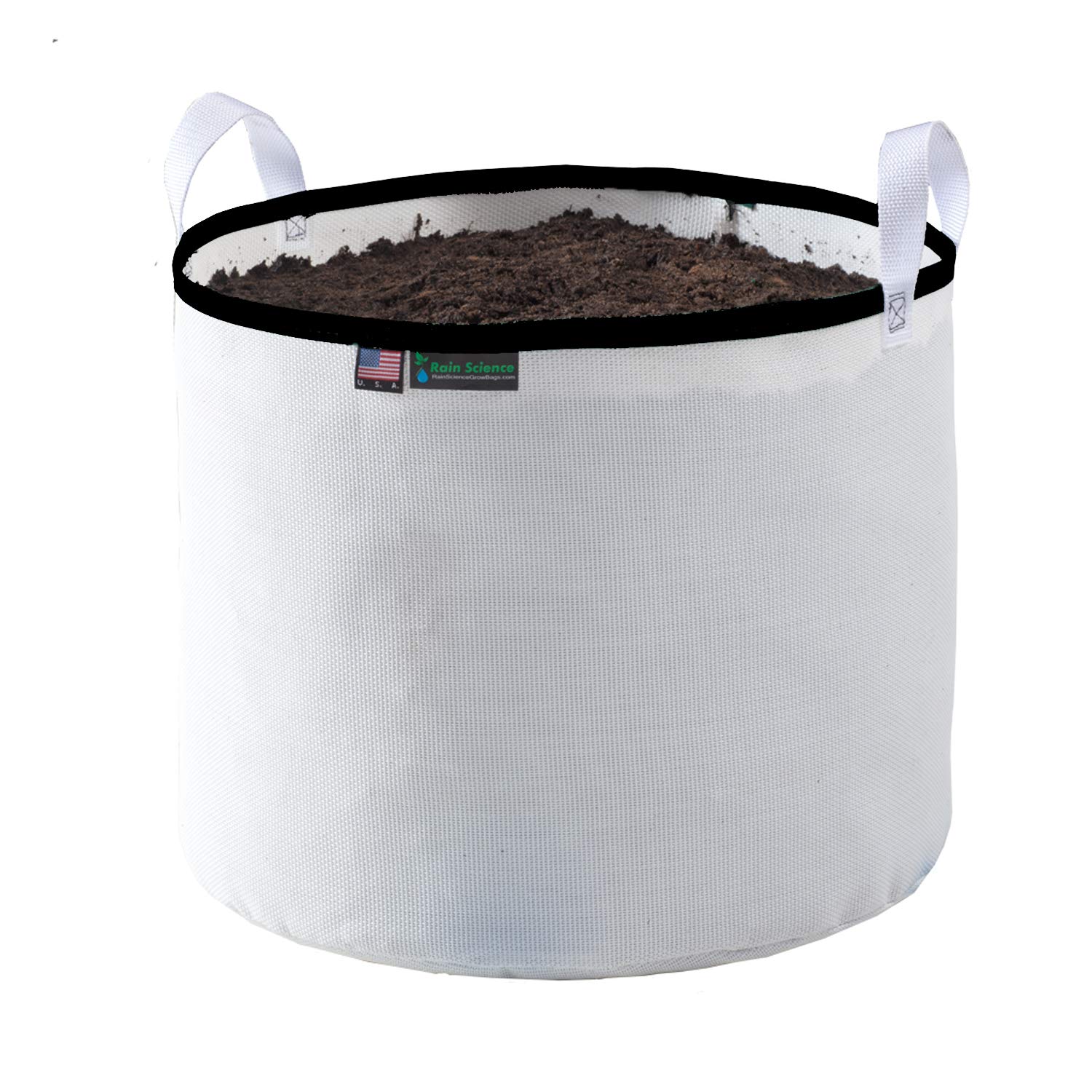
Rain Science takes a unique approach by using a plastic-coated mesh fabric instead of traditional nonwoven material. This construction delivers exceptional airflow and drainage while preventing water from leaking through the sides — a common irritation with standard fabric pots. The tapered shape and external seams simplify transplanting: you can slide the root ball out cleanly without tearing the bag or damaging the root system.
The white/black color scheme is functional as well as aesthetic; the white outer layer reflects sunlight to reduce heat absorption in hot climates, while the black interior promotes root growth. Reviews consistently mention that these bags outlast other types, with several users reporting five-plus years of reuse without structural failure. The mesh design also resists insect penetration better than nonwoven fabric.
The main trade-off is the premium cost per bag, especially in the 10-gallon size. These are not the most budget-friendly option for large-scale planting, but for gardeners who want a single pot that performs across multiple seasons without degradation, Rain Science justifies the investment. The machine-washable design adds to the long-term value.
What works
- Plastic-coated mesh prevents side leakage and resists UV damage
- Tapered shape with external seams simplifies root ball removal
- Reflective white exterior reduces soil temperature in full sun
What doesn’t
- Higher cost per bag compared to nonwoven alternatives
- Single-bag packaging, not a multi-pack value
4. Sinimaka 5 Gallon 7-Pack Colorful Grow Bags

Sinimaka brings visual variety with seven distinct colors, allowing gardeners to organize plant types by pot color — an underrated feature for efficiency in larger container gardens. The fabric uses a double-stitched design along the seams and handles, which adds structural integrity without significantly increasing weight. Each bag measures 11 by 11 by 9.7 inches, providing a true 5-gallon capacity that fits most standard grow saucers.
Users report that the bags survive rain, wind, and even hail without seam separation, and the handles hold up well when moving fully loaded pots. The colors remain vibrant through a full growing season, though fading may occur with prolonged direct sun exposure. The BPA-free material is safe for edible crops, and the bags fold flat for off-season storage.
Fabric thickness is not specified in GSM, and the material feels slightly lighter than the 300G competitors in this list. For a single season of use — especially for decorative deck or patio gardening — these bags deliver strong performance. For multi-year reuse, the lighter fabric may begin to show wear by the second season.
What works
- Variety of colors for easy plant identification and garden aesthetics
- Double-stitched seams improve durability over single-stitch bags
- Compact footprint fits standard saucers and tight spaces
What doesn’t
- Fabric GSM is not specified, likely lighter than 300G options
- Colors may fade under extended direct sunlight
5. ADORMA 7 Gallon 20-Pack Grow Bags
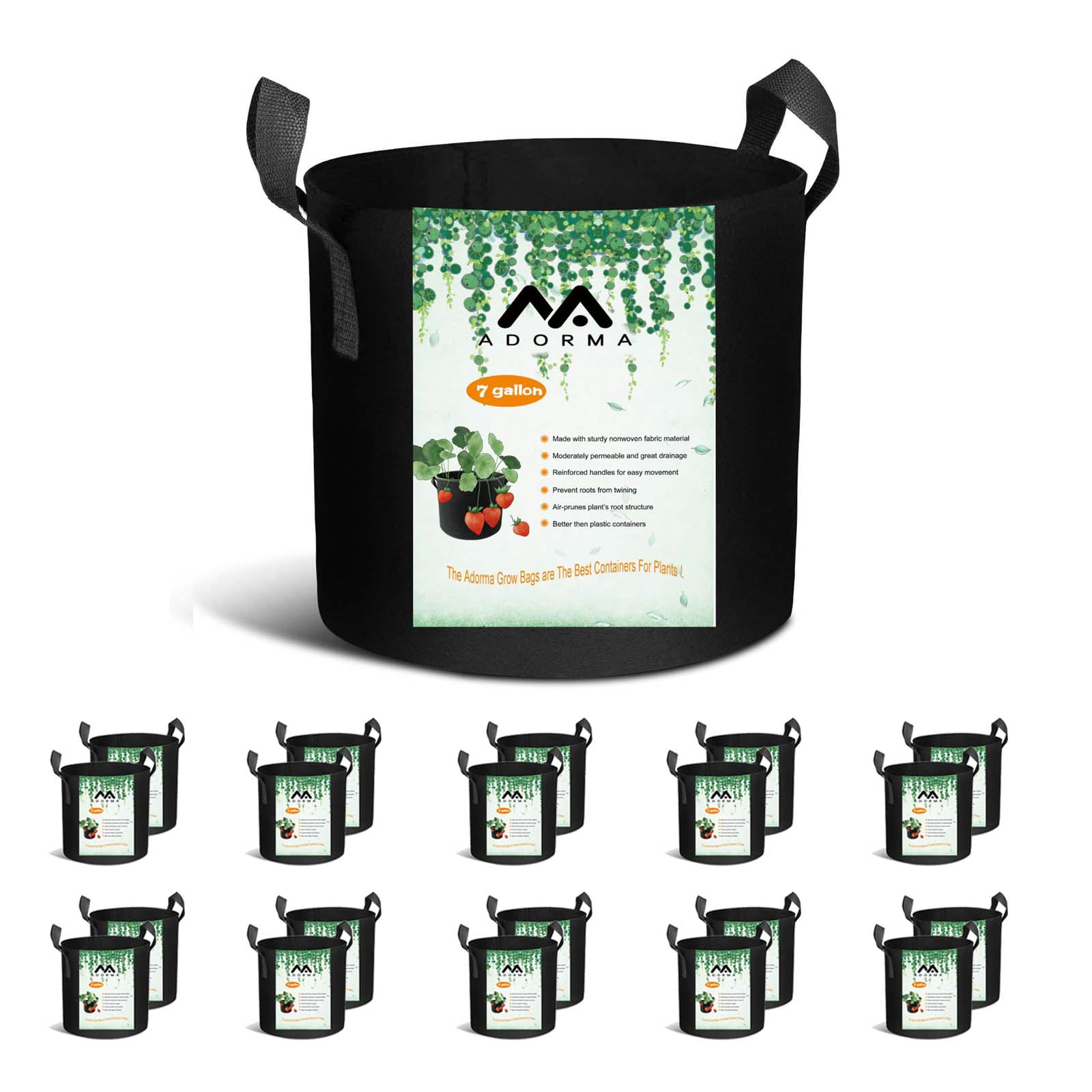
ADORMA’s 20-pack provides large-volume capacity with 7-gallon bags measuring 14 inches in diameter by 12 inches tall. The 300G nonwoven fabric is paired with five-line edging on the top rim and double sewing along the side seams, which prevents unraveling at stress points. The handles use polypropylene webbing with X-shaped reinforcement, offering ten times the weight-bearing capacity of standard fabric handles according to the manufacturer.
Users favor these bags for heavy root crops like potatoes and deep-rooted tomatoes, where the 7-gallon depth supports substantial growth. The wide diameter allows for multiple plants per bag in a mesclun or herb configuration, though spacing should account for competition. Drainage is effective, with the fabric wicking excess moisture away from the root zone without soil erosion through the sides.
One consideration is the sheer volume of the 20-pack — these bags take up significant storage space when not in use, even when folded flat. The 300G fabric is durable for several seasons, but users in high-UV environments may see degradation by year three. For large-scale seasonal planting, this pack delivers the lowest cost per gallon in the comparison.
What works
- High count 20-pack delivers strong value for large gardens
- Five-line top edging and double side seams reduce fraying
- Wide 14-inch diameter supports multiple plants per bag
What doesn’t
- Bulk pack is heavy to ship and store when not in use
- 300G fabric may show UV wear by season three
6. BN-LINK 5-Pack 5 Gallon Grow Bags
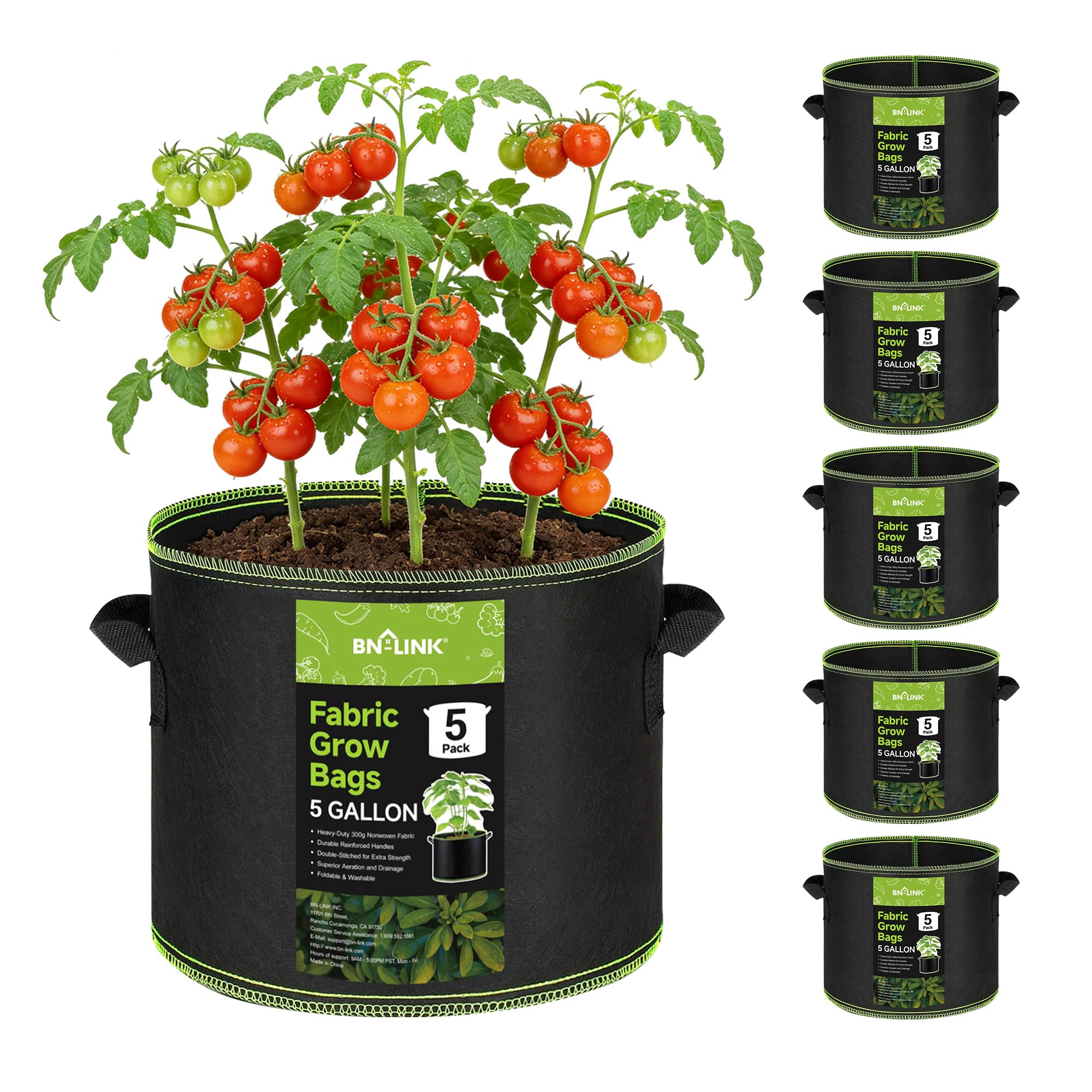
BN-LINK offers a straightforward 5-pack of 5-gallon grow bags using 300G nonwoven fabric with serger-stitched handles. The serger stitching is a notable detail — it prevents the fabric edges from unraveling, a common failure point in cheaper bags. Each bag measures 10 by 3 by 8 inches when flat, expanding to a full 5-gallon capacity that reviewers confirm is slightly closer to 4 gallons for practical use.
Users report strong performance across a range of crops including peppers, squash, lettuce, and tomatoes, with consistent drainage preventing waterlogging. The handles are reinforced enough for single-hand carrying when fully loaded, reducing strain during garden reorganization. Second-season reuse is common in reviews, with the fabric holding up to washing and folding without losing structural integrity.
The 5-pack format is ideal for beginners testing fabric pots for the first time without committing to a large multi-pack. The main limitation is the slightly undersized capacity — if you need exactly 5 gallons for specific root development, you may want to size up to a 7- or 10-gallon option. The black color also absorbs heat, which can raise soil temperature in direct sun.
What works
- Serge-stitched edges prevent unraveling at seams
- Practical 5-pack size for first-time fabric pot users
- Consistent drainage across multiple plant types
What doesn’t
- Actual capacity is closer to 4 gallons than 5
- Black fabric absorbs heat in direct sun exposure
7. Cavisoo 3 Gallon 24-Pack Grow Bags
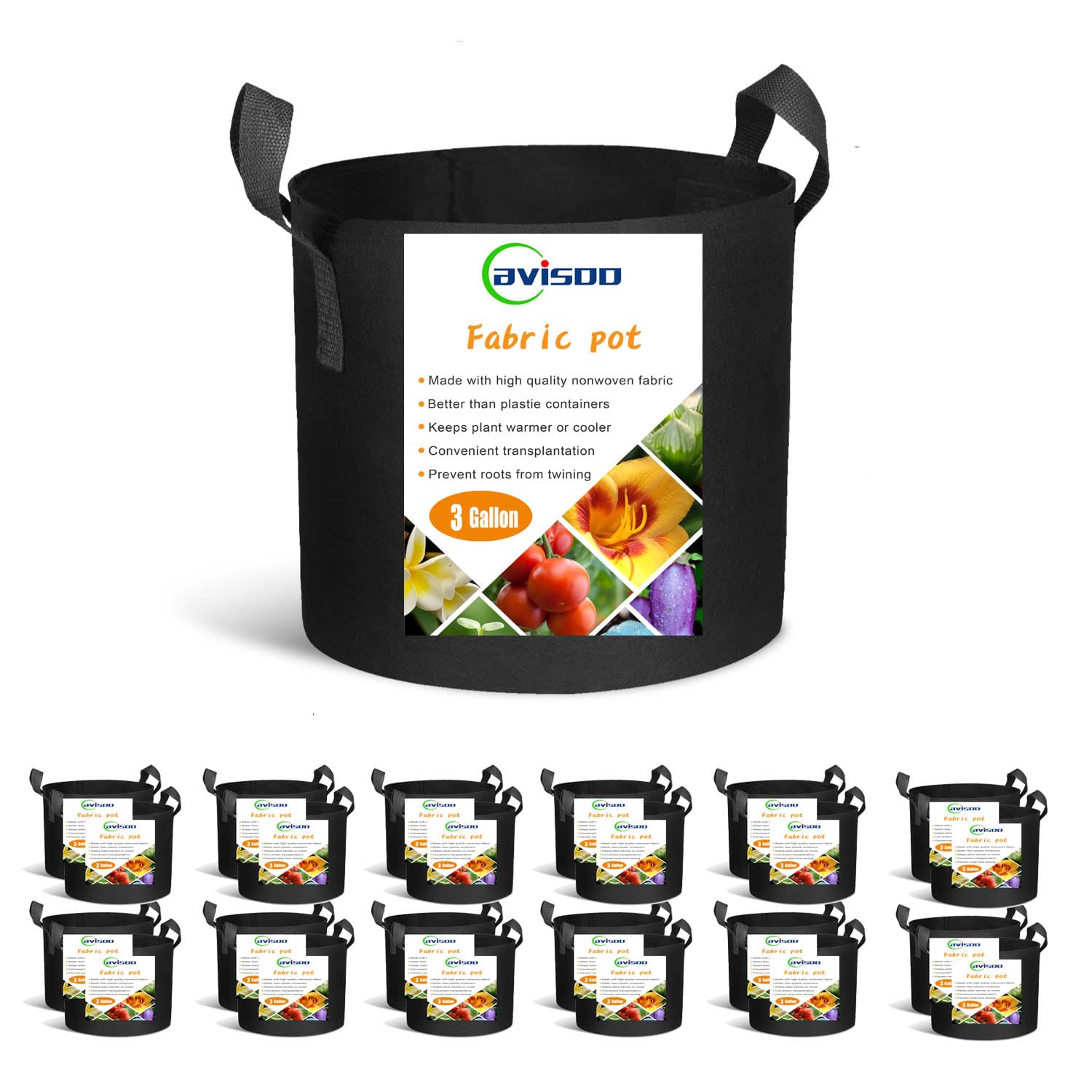
Cavisoo’s 24-pack targets gardeners who need many small pots for starts, herbs, and compact vegetables. Each bag uses 300G nonwoven fabric with polypropylene webbing handles that are X-stitched for load-bearing support. The 3-gallon capacity is well-suited for chili peppers, basil, lettuce, and other plants with modest root systems, and the small size reduces soil consumption compared to 5-gallon alternatives.
Users note that the bags dried out quickly in warm temperatures, requiring daily watering (and twice-daily in 80-90°F conditions), which is typical for small fabric pots. The material allows roots to air-prune effectively, preventing the circling common in plastic nursery pots. Some reviewers observed roots poking through the bottom fabric, creating a velcro-like grip that required gentle separation during harvest.
At this price tier, the 24-pack is the highest count option, making it attractive for community gardens or starting large seedling batches. The trade-off is that the 3-gallon size limits mature plant growth — tomatoes and squash will become root-bound by mid-season. For their intended use as starter or herb pots, these bags deliver solid performance at a low per-unit investment.
What works
- 24-pack provides the most pots per dollar in this comparison
- X-stitched handles with polypropylene webbing are durable for the size
- Effective air-pruning for small root systems
What doesn’t
- Small 3-gallon size limits use to herbs and starts
- Dries out very quickly in warm weather, requiring frequent watering
Hardware & Specs Guide
Fabric Weight (GSM)
GSM determines durability and reuse potential. Entry-level bags (200-250G) work for single-season use. Standard bags (300G) survive 2-3 seasons with moderate sun exposure. Premium bags (500G) from brands like AC Infinity resist fraying and UV damage for 5+ seasons. Thicker fabric also retains moisture longer, reducing watering frequency in hot climates.
Handle Reinforcement
Fabric handles tear at the stitching under heavy soil loads. X-shaped or cross-stitched reinforcement distributes weight across a wider area. Polypropylene webbing handles are stronger than fabric-only handles and resist moisture absorption. For bags over 7 gallons, handle width should be at least 1.5 inches for comfortable carrying.
Stitching Quality
Serge stitching (overlock) prevents raw fabric edges from unraveling. Double stitching on side seams adds structural integrity at the highest-stress points. Five-line top edging as seen on ADORMA bags reinforces the bag rim against folding and tearing. Inspect seam construction — bags that unravel at the seams are not repairable.
Shape Geometry
Round fabric pots are the standard shape and offer uniform root expansion. Square fabric pots maximize soil volume per square inch of surface area, which matters for tight balcony or greenhouse setups. Tapered designs with external seams (like Rain Science) simplify root ball extraction without tearing the bag during transplant.
FAQ
How many seasons will a 300G fabric pot last?
Do square fabric pots hold more soil than round ones?
Can fabric pots be used indoors without leaking water?
What is the best size fabric pot for tomatoes?
Final Thoughts: The Verdict
For most gardeners, the fabric pots winner is the AC Infinity Square 5-Pack because the 500G fabric density and square geometry deliver superior root health and structural durability that outperforms standard 300G bags. If you want high-volume value without sacrificing quality, grab the Gardzen 10-Pack for an excellent mid-range balance. And for large-scale seasonal planting where cost per gallon matters most, nothing beats the ADORMA 7 Gallon 20-Pack.