
Hosta growers know the frustration: you water diligently, the soil looks fine, yet your plants refuse to produce those massive, variegated leaves that define a mature shade garden. The real problem is almost always a nitrogen deficiency or a pH imbalance that blocks nutrient uptake. The wrong fertilizer can flush out soft growth that attracts slugs, while the right one builds dense cellular structure that pests simply can’t penetrate.
I’m Rikta — the co-founder and writer behind Lawn Gear Lab. My research evaluating hundreds of soil test reports and analyzing owner feedback across multiple growing zones has confirmed that the NPK ratio and release mechanism matter more for hostas than almost any other ornamental plant.
This guide compares seven of the most effective formulas to help you match your soil conditions with the right nutrient profile. Whether you’re aiming for deep green foliage or consistent growth across a large bed, the best fertilizer for hosta plants will depend on your specific soil’s existing nitrogen and sulfur levels as much as the plant’s seasonal needs.
How To Choose The Best Fertilizer For Hosta Plants
Hostas are heavy feeders that crave nitrogen for leaf production, but applying too much too fast causes soft tissue that attracts slugs and diseases. The trick is balancing immediate availability with sustained release, all while keeping the soil in the slightly acidic range of 6.0 to 6.5 where phosphorus and potassium remain soluble.
Nitrogen source and release speed
Quick-release synthetic nitrogen gives a rapid green-up but can scorch roots if the soil is dry. Slow-release formulas like Osmocote’s resin-coated granules or Espoma’s organic meals provide a steady 4-to-6-month feed that matches hosta’s natural growth curve from spring emergence through summer leaf expansion.
NPK ratio selection
A higher third number (potassium) like 4-10-10 supports root vigor and cold hardiness, which matters if your hostas face harsh winters. A balanced 6-4-5 or 6-3-6 favors foliage bulk. The key is reading your soil test first: if phosphorus is already sufficient, an all-purpose 10-10-10 can push the soil out of balance and lock up minor nutrients.
Organic certification and microbial content
OMRI-listed fertilizers like FoxFarm Happy Frog and Espoma’s Bio-tone include mycorrhizal fungi that extend root reach in dense clay or compacted shade beds. These microbes form a symbiotic network that helps hostas absorb water and trace minerals more efficiently, reducing the need for frequent reapplication.
Quick Comparison
On smaller screens, swipe sideways to see the full table.
| Model | Category | Best For | Key Spec | Amazon |
|---|---|---|---|---|
| Espoma Holly-Tone 4-3-4 | Premium Organic | Acidic soil hosta beds | 36 lb bag, 4-3-4 with 5% sulfur | Amazon |
| Osmocote Smart-Release Plus | Slow-Release Synthetic | Long-term no-fuss feeding | 6-month continuous release, 8 lbs | Amazon |
| Espoma Bio-tone Starter Plus | Organic Starter | Transplanting new hostas | 4-3-3 with endo & ecto mycorrhizae | Amazon |
| FoxFarm Happy Frog All Purpose | Organic Granules | Reviving weak or yellowing leaves | 6-4-5 with beneficial soil microbes | Amazon |
| Miracle-Gro Performance Organics Blooms | Organic Blooms | Encouraging flower scapes | 5-7-10, OMRI listed, 2.5 lbs | Amazon |
| Lilly Miller Bulb & Bloom Food | Entry-Level Granular | Budget-friendly spring feed | 4 lb, 4-10-10 slow release | Amazon |
| Espoma Berry-tone 4-3-4 | Specialty Organic | Hosta beds near acid-loving berries | 4 lb, 4-3-4 with Bio-tone | Amazon |
In‑Depth Reviews
1. Espoma Organic Holly-Tone 4-3-4

The Espoma Holly-Tone is the largest bag in this comparison at 36 pounds, and its 4-3-4 analysis with 5% sulfur is precisely what hostas need when planted under deciduous trees where soil tends toward neutral or alkaline. The sulfur gently lowers pH into the 6.0-6.5 sweet spot, unlocking iron and manganese that prevent the interveinal chlorosis that plagues shade-loving hostas. Gardeners in the Pacific Northwest and Northeast report consistent dark-green foliage after two spring applications.
The Bio-tone formula includes beneficial microbes and mycorrhizae but at a lower concentration than Espoma’s dedicated starter products, making this a maintenance feed rather than a rescue option. The granules are fine enough to scatter evenly around the drip line of mature clumps, and the organic breakdown releases nutrients over roughly 8-10 weeks — which aligns perfectly with hosta’s heavy feeding phase from May through July.
Homeowners managing large hosta collections will appreciate that a single 36-pound bag covers up to 900 square feet when applied at the recommended rate. The cost per square foot is among the lowest in this lineup, and the sulfur component eliminates the need for separate soil acidifiers in many cases. Just be prepared for the earthy, compost-like smell that comes with any manure-based organic fertilizer.
What works
- Massive 36 lb bag covers extensive hosta beds efficiently
- Built-in sulfur adjuster for alkaline soils
- OMRI-listed for organic production
What doesn’t
- Strong manure odor lingers for 24-48 hours after application
- Not a quick fix; takes 2-3 weeks for visible greening
2. Osmocote Smart-Release Plant Food Plus 8 lb

The Osmocote Smart-Release formula uses a resin coating that meters out 11 essential nutrients based on soil temperature, not time. For hosta growers, this means the granules release heavily during warm June and July when leaf expansion peaks, then taper off naturally in late summer as growth slows. The 8-pound container covers up to 300 square feet, and a single application in early spring covers the entire growing season without any need for reapplication.
The no-burn pledge is especially valuable around hosta roots, which are shallow and sensitive to salt buildup from synthetic fertilizers. Gardeners who have accidentally scorched hostas with water-soluble Miracle-Gro find the Osmocote’s protected delivery far more forgiving. The 11-nutrient profile includes magnesium and sulfur — two elements often missing from cheaper 10-10-10 blends that hostas need for chlorophyll production in deep shade.
Owners who travel frequently or prefer a set-and-forget approach will value the reduced labor. The granules are uniform and easily measured with the included scoop, and they don’t attract pests the way organic meals sometimes do. The trade-off is that Osmocote is not OMRI-listed, so gardeners committed to 100% organic inputs should look elsewhere in this list.
What works
- Temperature-controlled release matches hosta growth curve
- Safe on shallow hosta roots even in drought
- One application covers entire season
What doesn’t
- Not certified for organic gardening
- Resin-coated granules don’t improve soil biology
3. Espoma Organic Bio-tone Starter Plus 4-3-3
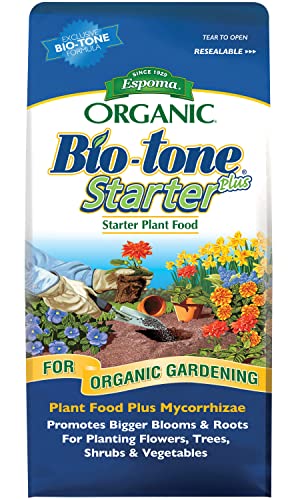
The Espoma Bio-tone Starter Plus delivers both endomycorrhizae and ectomycorrhizae, which form symbiotic partnerships with hosta roots to amplify water and nutrient absorption in compacted shade soil. The 4-3-3 analysis is deliberately lower in nitrogen than maintenance fertilizers because new transplants need root establishment more than leaf push. The 5% calcium content strengthens cell walls in young divisions, reducing the slug damage that often follows transplant shock.
Gardeners dividing overcrowded hosta clumps in early spring will find the 1:1 mixing ratio with backfill soil intuitive and effective. The granules are fine enough to blend evenly without settling at the bottom of the planting hole. Users report that divisions treated with Bio-tone show less wilting and establish full leaf size about two weeks faster than untreated controls, especially in heavy clay soils where root penetration is naturally restricted.
The two-pack format provides enough product for 30-40 medium-sized transplants, making it economical for gardeners overhauling a whole bed. The only real downside is the strong organic odor — several reviewers note the smell is potent enough to require gloves and holding your breath during mixing. The smell fades quickly once incorporated into moist soil, but it’s worth knowing before you open the bag indoors.
What works
- Dual mycorrhizae improve root-to-soil contact in dense beds
- Calcium strengthens cell walls against slug attack
- Approved for organic gardening
What doesn’t
- Very strong smell during application
- Best for transplanting, not established bed maintenance
4. FoxFarm Happy Frog All Purpose Fertilizer 4 lb

The FoxFarm Happy Frog All Purpose fertilizer is a 6-4-5 granular formula packed with beneficial soil microbes that replenish the biology in worn-out shade beds. Hostas exhausting the same spot for years often develop yellow, stunted leaves due to depleted microbial activity. The live microbes in this blend break down organic matter already in the soil, unlocking stored nutrients that synthetic fertilizers simply bypass.
Gardeners who see yellowing lower leaves on their hostas in midsummer can apply Happy Frog as a rescue feed — the fast-acting microbial activity often restores green color within 7-10 days, far quicker than the 2-3 week lag of purely organic slow-release products. The 6-4-5 analysis provides a moderate nitrogen push that supports leaf regrowth without the soft, floppy tissue associated with high-nitrogen synthetics.
The 4-pound bag is compact enough for small urban gardens but covers only about 80-100 square feet at the recommended rate. The product’s strong manure-like smell is a common complaint in reviews, and a few users mention white mold developing on the surface when applied too thickly in pots. Use gloves and avoid over-application for best results in hosta containers or raised beds.
What works
- Restores green color in yellowing hostas within 1-2 weeks
- Soil microbes unlock stored nutrients
- OMRI-listed and safe for organic gardening
What doesn’t
- Strong odor during and after application
- Small bag size requires multiple purchases for large beds
5. Miracle-Gro Performance Organics Blooms 5-7-10

The Miracle-Gro Performance Organics Blooms formula uses a 5-7-10 NPK ratio that is higher in phosphorus and potassium than nitrogen, making it a counterintuitive choice for hosta leaf growers — but a smart one for gardeners who want to maximize the tall flower scapes that hostas produce in late summer. The phosphorus encourages scape thickness, and the potassium supports the stem strength needed to hold flower heads upright through summer storms.
The OMRI-listed organic and natural ingredients make this acceptable for certified organic beds, and the granules are fine enough to broadcast evenly under mature hosta canopies. Gardeners report seeing more abundant and taller flower stalks within 2-3 weeks of application, especially on varieties like ‘Sum and Substance’ and ‘Empress Wu’ that are known for impressive scapes. The 2.5-pound bag covers up to 165 square feet, which is reasonable for a medium hosta collection.
The main limitation for hosta focus is the low nitrogen content — if leaf size is your primary goal, this formula won’t drive the same lush foliage expansion as a higher-first-number blend. It works best as a mid-season supplement after an early spring high-nitrogen feed, or as a dedicated flower-enhancer for collectors who prize bloom display over leaf mass.
What works
- Produces thicker, taller flower scapes on large hostas
- OMRI-listed organic formula
- Visible results within 2-3 weeks
What doesn’t
- Limited leaf size improvement due to lower nitrogen
- Bag size is small for extensive beds
6. Lilly Miller Bulb & Bloom Food 4-10-10

The Lilly Miller Bulb & Bloom Food uses a 4-10-10 ratio that emphasizes phosphorus and potassium over nitrogen, which is unusual for hostas but effective for root development and winter hardiness. The 4-pound bag is a budget-friendly entry point for gardeners who want to test a slow-release granular without committing to a larger or more expensive bag. The product is Made in the USA and the slow-release coating prevents the rapid nutrient flush that can burn shallow hosta roots.
Gardeners in colder zones (USDA 3-5) where hostas need extra root protection through freeze-thaw cycles will benefit from the high potassium content, which strengthens cell walls and improves cold tolerance in the crown. The phosphorus support also helps newly divided hostas establish faster in spring. The fine powder consistency makes it easy to work into the top inch of soil around the drip line of each clump.
The main compromise is that the low nitrogen won’t drive the large leaf expansion that many hosta enthusiasts prioritize. Users coming from a high-nitrogen 10-10-10 habit may find the initial growth rate slower, though leaf quality — thicker, more slug-resistant tissue — often improves over the season. This is a good maintenance feed for established plants but not the best choice if you’re trying to bulk up a young hosta as fast as possible.
What works
- High potassium improves hosta winter hardiness
- Slow-release formula is safe for delicate roots
- Budget-friendly entry price
What doesn’t
- Low nitrogen limits leaf size growth
- Powder form can be dusty during application
7. Espoma Organic Berry-tone 4-3-4
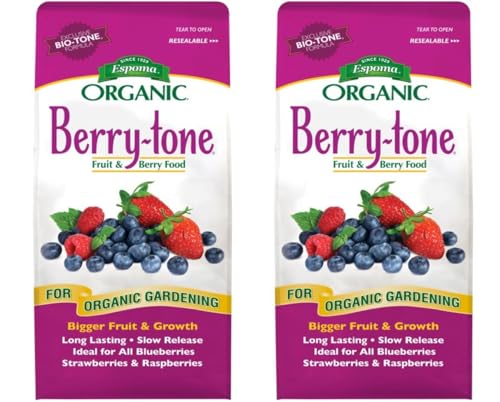
The Espoma Organic Berry-tone is marketed for blueberries and raspberries, but its 4-3-4 analysis with 5% sulfur makes it a viable option for hostas growing in beds adjacent to acid-loving shrubs. The sulfur gradually acidifies the soil, which is beneficial for hostas planted under pine trees where needle drop has already created an acidic microclimate. The Bio-tone formula includes beneficial microbes that support nutrient cycling in the organic matter that accumulates in shade beds.
Gardeners who already use Holly-tone for their rhododendrons and azaleas can stock the same brand for their hosta beds without needing a separate product. The granular form requires no mixing, and the 4-pound bag is easy to store alongside other Espoma products. The 5% sulfur content is slightly lower than the 8% sulfur in Espoma’s dedicated acid-lovers blend, so it’s better for maintaining existing acidity than correcting highly alkaline soils.
The main drawback is the smaller bag size and the fact that this product was specifically formulated for fruiting plants, so the calcium and sulfur percentages are tuned for fruit set rather than leaf mass. It works adequately for hostas but isn’t as targeted as Holly-tone or FoxFarm Happy Frog. Consider it a complementary product rather than a primary hosta feed.
What works
- Compatible with existing Espoma acid-lover fertilization routines
- Sulfur content supports acidic pH in pine-needle beds
- OMRI-listed organic formula
What doesn’t
- Small bag requires multiple purchases for large gardens
- Formulated for fruit production, not optimized for hosta foliage
Hardware & Specs Guide
NPK ratio interpretation for hostas
The three numbers on a fertilizer bag represent nitrogen (N), phosphorus (P), and potassium (K) by percentage weight. For hostas, the first number (N) drives leaf expansion and chlorophyll production — the primary visual goal for most growers. The second number (P) supports root development and flower scape formation, while the third (K) strengthens cell walls and improves disease and cold resistance. A soil test is the only reliable way to know which number needs boosting in your specific bed; adding high-phosphorus fertilizer to already phosphorus-rich soil can block iron uptake and cause yellowing.
Slow-release vs. organic granular release
Synthetic slow-release products like Osmocote use a polymer resin that breaks down via soil temperature and moisture, providing a steady nutrient supply over a defined period (usually 4-6 months). Organic granules, such as those from Espoma and FoxFarm, rely on soil microbes to break down the material — meaning release speed depends on microbial activity, which in turn depends on soil warmth and moisture. In cold, dry shade beds, organic release can be slower and less predictable than resin-coated synthetics, but it builds long-term soil fertility that synthetics can’t match.
FAQ
Should I use a high-nitrogen fertilizer on hostas for bigger leaves?
How often should I fertilize hostas during the growing season?
Can I use Espoma Berry-tone or Holly-tone on hostas?
Final Thoughts: The Verdict
For most gardeners, the fertilizer for hosta plants winner is the Espoma Organic Holly-Tone 4-3-4 because it combines pH-correcting sulfur with a balanced organic nutrient profile and enough bag size to cover a large bed economically. If you want zero-reef, set-and-forget feeding, grab the Osmocote Smart-Release Plus. And for transplanting new divisions or rescuing yellowing plants, nothing beats the FoxFarm Happy Frog All Purpose for its fast-acting microbial revival and rapid greening effect.