
Olive trees are stubborn survivors, thriving in rocky, arid soil where other fruit trees would sulk. But coaxing them into producing a heavy harvest of rich, oily fruit requires a completely different feeding philosophy than your typical backyard apple or peach tree. The wrong fertilizer forces lanky, frost-sensitive growth; the right one builds cold-hardy wood and concentrates flavor in the drupes.
I’m Rikta — the co-founder and writer behind Lawn Gear Lab. I spend my time buried in soil science reports, cross-referencing NPK ratios, analyzing micronutrient profiles, and combing through thousands of owner experiences to separate genuinely effective formulations from marketing hype in this narrow category.
After weeks of comparing slow-release granules against liquid concentrates and bio-capsules, I’ve narrowed down the options to deliver the definitive guide to the fertilizer for olive trees. This list prioritizes formulations that support root health, balance vegetative growth with fruiting, and avoid the over-stimulation that leaves Mediterranean trees vulnerable to cold damage.
How To Choose The Best Fertilizer For Olive Trees
Olive trees evolved in low-fertility, alkaline soils around the Mediterranean basin. They do not respond well to the heavy nitrogen doses meant for fast-growing deciduous fruit trees. Understanding a few key specification categories will steer you to the right formulation.
N-P-K Ratio: The Nitrogen Trap
Look for a fertilizer where the first number (nitrogen) is equal to or lower than the second number (phosphorus) and third number (potassium). A ratio around 4-6-8 or 5-10-10 is ideal. Excess nitrogen forces soft, succulent shoots that are highly susceptible to olive knot disease and winter frost kill. Potassium, on the other hand, directly improves fruit size, oil content, and the tree’s ability to regulate water stress.
Slow-Release vs. Liquid Feeding
For in-ground olive trees, a slow-release granular fertilizer with coated prills provides steady nutrition through the growing season with a single spring application. For container-grown olives, liquid fertilizers offer better control because potting mix flushes nutrients faster. The key is frequent, very dilute applications — never a concentrated blast that can burn sensitive feeder roots confined to a pot.
Micronutrient Profile: Beyond the Big Three
Olive trees are notoriously prone to boron deficiency, which causes poor fruit set and internal fruit corking. Zinc deficiency shows as small, narrow leaves and rosette clusters. Iron chlorosis (yellowing between green veins) is common in alkaline soils or potting mixes. A premium fertilizer should include chelated micronutrients — not just boron, zinc, and iron, but also manganese and copper for enzymatic functions tied directly to oil biosynthesis.
Quick Comparison
On smaller screens, swipe sideways to see the full table.
| Model | Category | Best For | Key Spec | Amazon |
|---|---|---|---|---|
| Olive Tree Fertilizer (TPS Nutrients) | Liquid Concentrate | Potted & Indoor Olive Trees | Custom NPK for Oleaceae | Amazon |
| EarthPods Bio-Organic Capsules | Slow-Release Capsules | Mess-Free Potted Feeding | 100 Caps per Tube | Amazon |
| Bloom City Organic Citrus & Fruit | Liquid Concentrate | High-Volume In-Ground Groves | 128 oz Gallon Size | Amazon |
| FoxFarm Happy Frog Citrus & Avocado | Granular | Established In-Ground Trees | 4 lb Bag with Mycorrhizae | Amazon |
| Soil Sunrise Olive Potting Mix | Soil Amendment | Container Repotting Base | 12 Qt with Pumice | Amazon |
| Fruit Tree Fertilizer (TPS Nutrients) | Liquid Concentrate | General Orchard Maintenance | 32 oz, 2 tbsp per gallon | Amazon |
| Tree Fertilizer (TPS Nutrients) | Liquid Concentrate | General Landscape Trees | 32 oz, 1:64 mix ratio | Amazon |
In‑Depth Reviews
1. Olive Tree Fertilizer (TPS Nutrients)
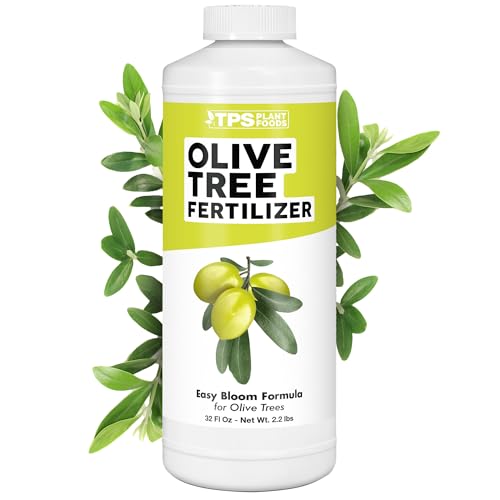
This is the most category-specific option on the market — a liquid formulation engineered exclusively for the Oleaceae family, not a repurposed citrus or all-purpose fruit tree feed. The NPK ratio is deliberately restrained to avoid forcing soft growth that would compromise cold hardiness or invite olive knot disease. Owners of 9-year-old potted trees reported the first-ever fruit set within two months of switching to this concentrate after years of generic fertilizers producing nothing but leaves.
The liquid format allows precise, low-dose feeding every two weeks, which is exactly what container-grown olives need because their potting mix lacks the buffering capacity of native soil. Users in challenging climates — from Middle Eastern heat to temperate decks — observed reversal of leaf yellowing, bunching, and overall decline within four weeks. The gentle formulation supports root uptake without salt buildup that typically stresses potted Mediterranean species.
One-liter covers a full season for several trees when mixed at the recommended dilution. For growers who want a formulation that was designed around olive physiology rather than adapted from commodity crops, this is the clear frontrunner. The only minor inconvenience is the need to mix concentrate with water, but the results justify the small extra step.
What works
- Formulated specifically for olive tree physiology, not a generic blend
- Visible recovery of sick, yellowing trees within four weeks
- Safe for potted, indoor, and in-ground applications without burn risk
What doesn’t
- Requires mixing with water before each application
- Smaller bottle size compared to bulk granular options for large groves
2. EarthPods Bio-Organic Fruit Tree & Citrus Capsules
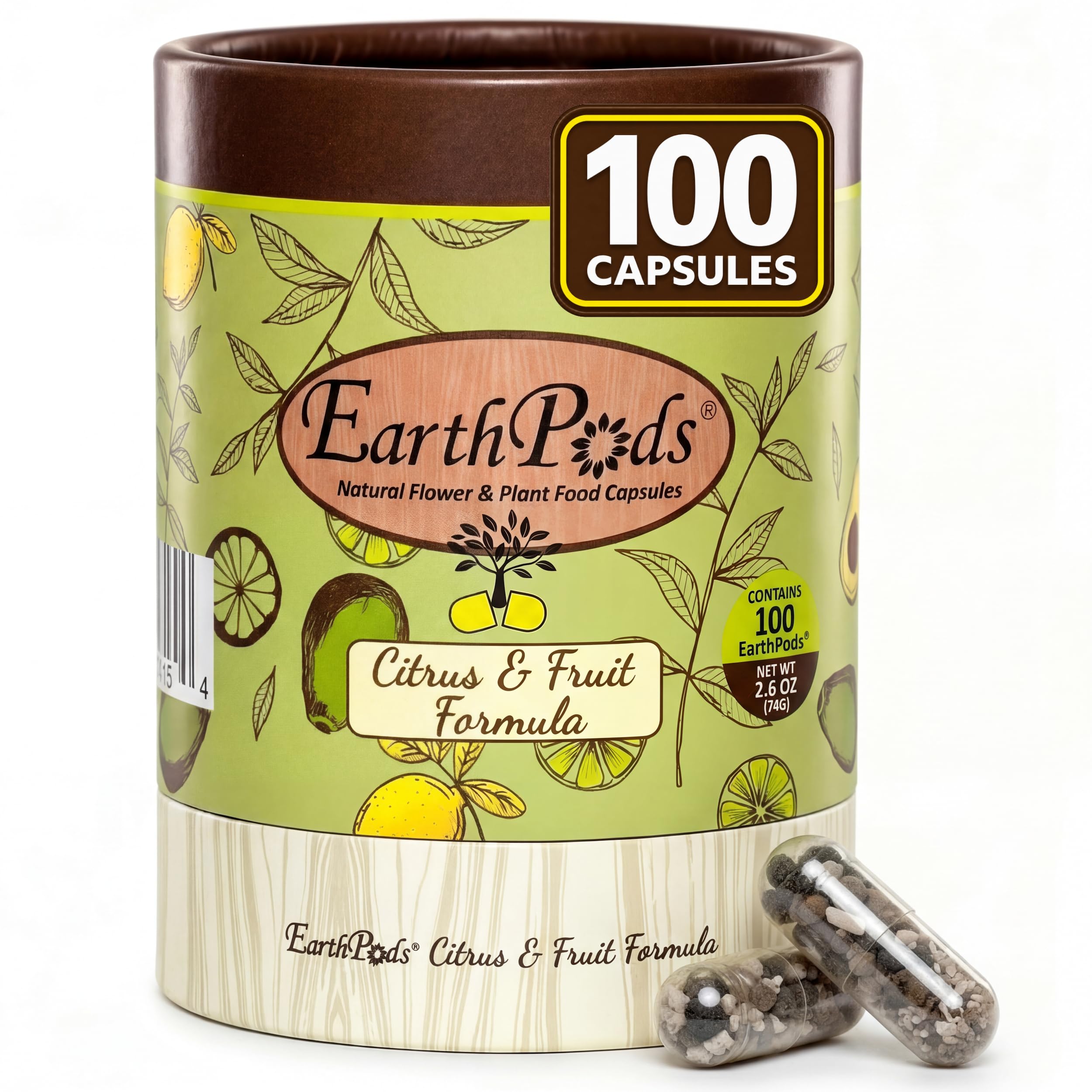
EarthPods eliminate the guesswork entirely — no measuring spoons, no mixing ratios, no liquid handling. Each highly concentrated capsule is pushed an inch into the moist soil near the root zone, where it dissolves and slowly releases organic nutrients over roughly two weeks. The bio-organic formulation includes humates and trace minerals that support soil microbiology, which is particularly valuable for containerized olive trees whose root systems depend entirely on the limited biology within the pot.
Citrus and avocado growers have reported dramatic branching response after the first application, and the same effect translates well to olive trees. The slow-release mechanism prevents the nutrient surge that liquid feeds can inadvertently create, making this a low-risk choice for less experienced olive owners. A single 100-capsule tube provides approximately a four-year supply for one mature potted tree, which brings the per-feeding cost down considerably despite the premium upfront investment.
The capsules work best in consistently moist soil — if the potting mix dries out completely, the capsule may not break down fully. Some users find the cost per capsule higher than bulk liquid alternatives, though the convenience and zero-mess application offset this for many. For anyone with a small collection of potted olive trees who values simplicity, this system is hard to beat.
What works
- Extremely easy application — push into soil and water, no mixing
- Slow-release organic formula prevents over-fertilization burn
- One tube lasts multiple seasons for a single tree
What doesn’t
- Higher cost per application compared to liquid concentrates
- Capsules may not fully dissolve in very dry potting mix
3. Bloom City Organic Citrus & Fruit Fertilizer

The full-gallon size of this liquid concentrate makes it the most economical choice for anyone maintaining a grove or a sizable collection of potted olive trees. Bloom City’s formulation leans on natural-sourced organic ingredients that feed soil microbes alongside the tree itself, creating a healthier rhizosphere over time. Owners report immediate improvement in leaf color and a surge in flowering within weeks of starting a regular feeding schedule — the kind of response that indicates good potassium and phosphorus availability for fruit development.
Despite being labeled for citrus and fruit trees, the NPK profile and micronutrient package (chelated iron, zinc, and manganese) align well with olive requirements. The organic certification means no synthetic salts that could accumulate in container soil. The slow-release nature of the organic compounds provides sustained feeding between applications, reducing the need for weekly schedules.
A small subset of users found the results underwhelming compared to synthetic alternatives, likely because organic liquid feeds require active soil biology to mineralize nutrients. If your olive tree is in a sterile potting mix without microbial life, the tree may not fully access the nutrients until the biology establishes. For in-ground trees with healthy soil, this is a top-tier volume value.
What works
- Best per-ounce value for large-scale olive tree feeding
- Organic formulation supports long-term soil biology and root health
- Proprietary micronutrient blend prevents common deficiencies
What doesn’t
- Requires active soil biology to fully mineralize nutrients
- Some users reported milder results than synthetic concentrates
4. FoxFarm Happy Frog Citrus and Avocado Fertilizer

FoxFarm Happy Frog has a cult following among citrus and avocado growers for good reason — the granular formula includes mycorrhizal fungi that colonize root systems and dramatically increase the tree’s ability to scavenge water and phosphorus from the soil. For in-ground olive trees, this biological boost is especially valuable in the lean, alkaline soils where olives typically struggle with micronutrient uptake. The slow-release nitrogen source prevents the leggy flush that would leave the tree vulnerable.
Customer reports on olive trees specifically are strong: yellowing leaves green up within weeks, and lateral branching increases, creating a fuller canopy that supports more fruiting wood. The OMRI listing confirms the inputs are approved for organic production, which matters for growers aiming for certified oil. The 4-pound bag covers several mature trees when applied at the recommended rate once in early spring and again in early summer.
One distinct drawback is that dogs find the alfalfa-meal base extremely attractive and may dig up freshly applied granules. The product is not toxic, but it can create a mess if you have curious pets. Also, the nitrogen content is slightly higher than ideal for olives, so users should apply at the lower end of the recommended dosage range.
What works
- Mycorrhizal fungi improve phosphorus and water uptake in poor soil
- OMRI-listed organic ingredients suitable for certified growers
- Slow-release granular format requires only two applications per season
What doesn’t
- Alfalfa-meal base attracts dogs who may dig up the granules
- Nitrogen content slightly above ideal olive ratio; use sparingly
5. Soil Sunrise Olive Tree Potting Soil Mix
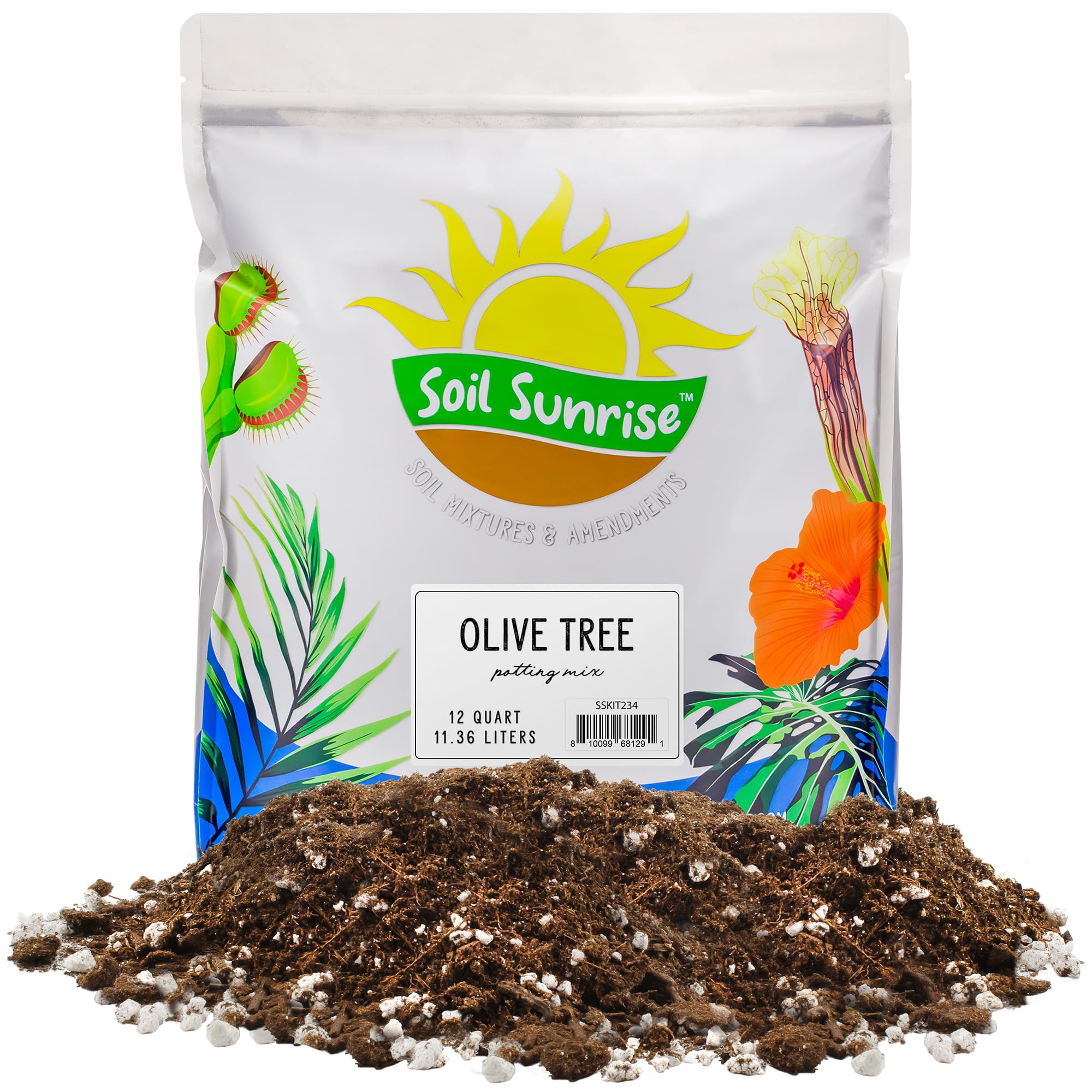
This is not a fertilizer in the traditional sense, but a purpose-built potting mix that serves as the critical substrate foundation for container-grown olive trees. What makes it stand out is the inclusion of pumice alongside perlite and peat moss — the pumice provides permanent pore space that prevents the soil from compacting and suffocating olive roots, which are notoriously sensitive to waterlogged conditions. The lime addition adjusts pH upward toward the alkaline range that olives prefer, unlike most general potting mixes that trend acidic.
Owners who repotted struggling olive trees into this mix saw transplant shock resolve within six weeks, followed by vigorous new growth. The blend holds enough moisture to prevent rapid drying but drains freely enough that even heavy winter rains on a covered patio won’t leave roots sitting in slurry. It can be used as a complete replacement medium or mixed 50/50 with the tree’s existing soil for a gentler transition.
The volume (12 quarts) fills one standard 14-inch pot, so larger planters will need multiple bags. Some users note that the peaty texture can be dusty when dry. For anyone starting a potted olive tree from scratch or repotting a declining specimen, this mix removes the guesswork of trying to engineer the right drainage and pH yourself.
What works
- Pumice and perlite provide permanent drainage for olive root health
- Lime buffering creates the alkaline conditions olives naturally prefer
- Specific custom blend eliminates soil-formulation guesswork
What doesn’t
- 12-quart bag only fills a single standard pot
- Dry texture can be dusty during handling
6. Fruit Tree Fertilizer (TPS Nutrients)
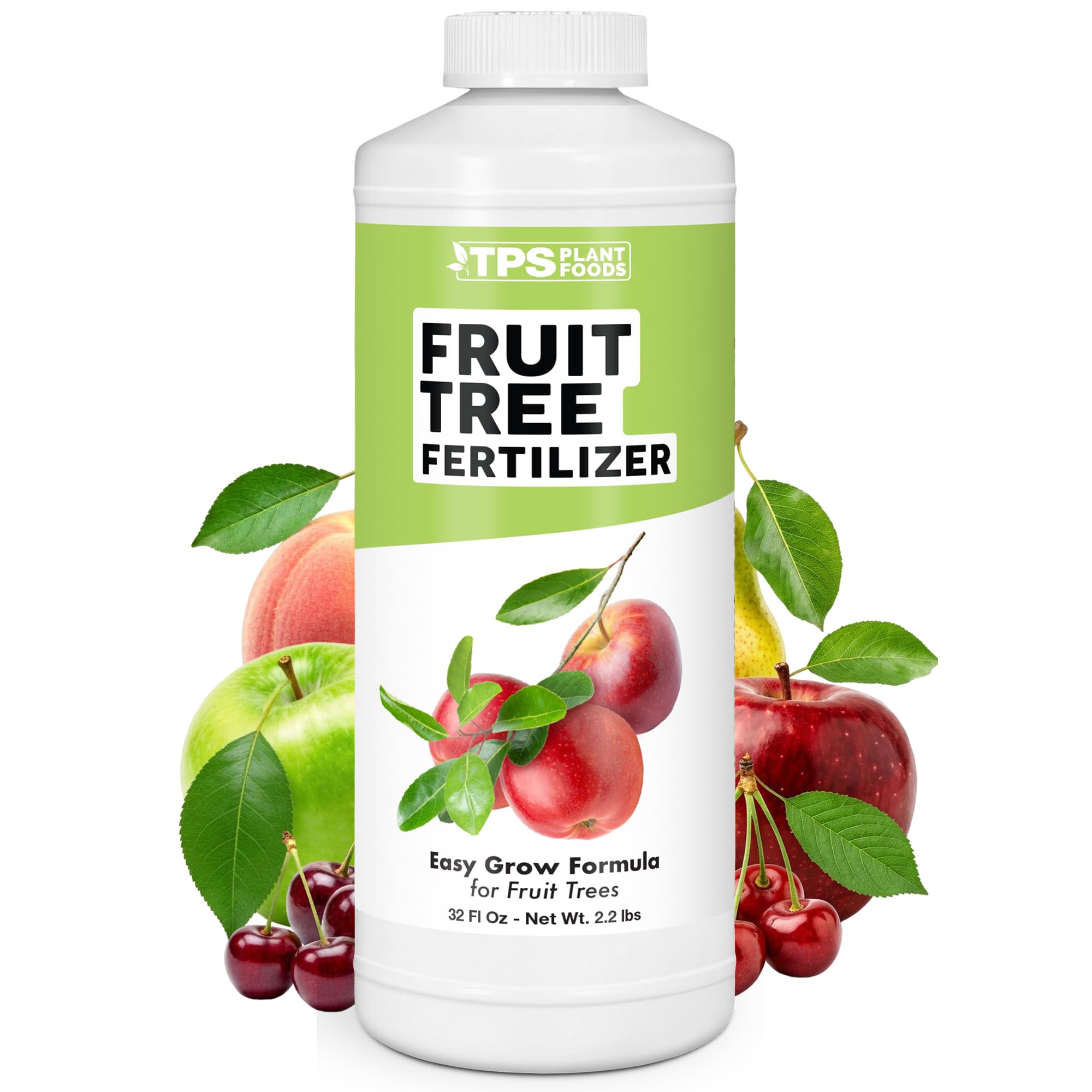
TPS Nutrients brings the same manufacturing quality from their species-specific olive formula into this broader fruit tree concentrate, making it a versatile backup for growers who manage multiple types of fruit trees alongside their olives. The NPK balance is generic enough to support stone fruits and pome fruits, but still restrained enough that a diluted application won’t throw an olive tree into uncontrolled vegetative growth. The 2-tablespoons-per-gallon mixing ratio is straightforward and easy to scale.
User reports on recovering crab apple and peach trees demonstrate that the formulation effectively corrects nutrient deficiencies and supports fruit development. For olive trees, the results will be less dramatic than with the dedicated olive formula, but as a maintenance feed for mixed-orchard growers, it avoids the hassle of storing multiple bottles. The liquid format allows foliar feeding as well, which can rapidly correct micronutrient deficiencies showing as leaf chlorosis.
The formulation is not optimized for the specific potassium and boron ratios that olive trees need for oil production and fruit set. If olive yield is your primary goal, the dedicated olive product from the same brand is a better choice. For casual growers with a single olive tree among other fruit trees, this offers convenience without sacrificing basic tree health.
What works
- Versatile formula works across multiple fruit tree species
- Simple mixing ratio with no complex calculations
- Suitable for both soil drench and foliar application
What doesn’t
- Not optimized for the specific potassium needs of olive fruiting
- Less effective than the dedicated olive formula for yield improvement
7. Tree Fertilizer (TPS Nutrients)
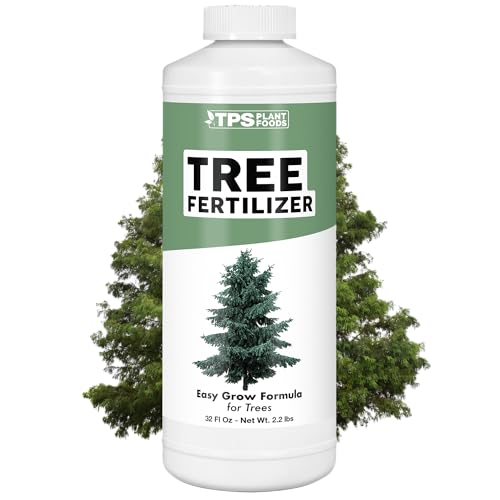
This is the most general formulation of the TPS line, designed for shade trees, ornamentals, and landscape specimens rather than fruit production. The NPK ratio is balanced to support root establishment and canopy density rather than flowering and fruiting, which makes it a poor primary choice for olive trees being grown for harvest. However, it excels in two specific scenarios: first, for very young olive trees that need to build structural wood before being allowed to fruit, and second, for olive trees recovering from transplant shock where root development is the immediate priority.
Owners of nearly-dead pine trees and stressed junipers reported dramatic comebacks after regular application, indicating that the formula effectively supports root regeneration and stress recovery. The high potassium content relative to nitrogen helps trees build drought tolerance, which is a genuine advantage for olives grown in hot, dry climates. The 1:64 mixing ratio is very dilute, making the bottle last through an entire growing season even for multiple trees.
The formulation lacks the dedicated micronutrient package that olive trees need for fruit set — boron and zinc levels are generic rather than optimized. For a landscape olive tree where fruit is secondary to aesthetics, this is a perfectly adequate maintenance feed. For anyone serious about harvests, use this only during the establishment phase and switch to a fruit-focused formula once the tree matures.
What works
- Excellent for root development during establishment and recovery
- Very dilute ratio provides economical coverage for multiple trees
- High potassium supports drought tolerance in hot climates
What doesn’t
- Generic NPK not optimized for olive flowering or fruit development
- Lacks the specific boron and zinc profile olives require for yield
Hardware & Specs Guide
NPK Ratio Decoding
The three numbers on any fertilizer label represent the percentage by weight of nitrogen (N), phosphorus (P), and potassium (K). For olive trees, a 4-6-8 or similar ratio where potassium exceeds nitrogen is ideal. High first numbers push leaf growth at the expense of fruit and hardiness. Compare the ratio on your chosen bottle to this benchmark — a 10-10-10 all-purpose feed is wrong for olives.
Chelated Micronutrients
Look for the words “chelated” before iron, zinc, and manganese. Chelation keeps these nutrients soluble and available to roots even in alkaline soil or potting mix where they would otherwise lock up. Without chelation, applying iron to high-pH soil is practically useless — the tree cannot access it. A quality olive fertilizer will specifically call out chelated forms on the guaranteed analysis panel.
FAQ
Can I use a general 10-10-10 fertilizer on my olive tree?
How often should I fertilize a potted olive tree?
My olive tree leaves are yellowing with green veins. What nutrient is missing?
Should I fertilize a newly planted olive tree?
Final Thoughts: The Verdict
For most gardeners, the fertilizer for olive trees winner is the Olive Tree Fertilizer (TPS Nutrients) because its formulation is built around olive physiology rather than adapted from citrus or general fruit tree feeds. If you want capsule-level convenience with zero mixing, grab the EarthPods Bio-Organic Capsules. And for large-scale in-ground groves where cost per feeding matters most, nothing beats the volume value of Bloom City’s Organic Citrus & Fruit Fertilizer.