
Throwing grass seed onto bare dirt or a tired lawn often leads to patchy results and wasted money if you haven’t addressed what’s actually under the seed. The soil needs a specific balance of organic matter, microbial life, and moisture retention to allow tiny grass blades to push through and establish deep roots before summer heat or winter chill sets in.
I’m Rikta — the co-founder and writer behind Lawn Gear Lab. I’ve spent countless hours digging into soil science, comparing nutrient profiles, and studying owner feedback from thousands of seeding projects to build a clear picture of what actually works when you need to cover bare patches or start a fresh lawn from scratch.
This guide breaks down the top options based on measurable organic content, application method, and real-world results to help you find the best compost for lawn seeding for your specific soil conditions and budget tier.
How To Choose The Best Compost For Lawn Seeding
Selecting a compost for seeding a lawn isn’t the same as grabbing a bag for your vegetable bed. New grass seed requires a fine, uniform texture free of large wood chunks, a balanced nutrient profile that won’t burn tender roots, and a moisture-holding capacity that keeps the seed bed damp without becoming waterlogged.
Organic Matter Content and Texture
Look for a compost with at least 40 percent organic matter by volume. For seeding, the particle size should be small and consistent — avoid products with visible sticks, bark, or uncomposted manure clumps. A fine, crumbly texture allows seed-to-soil contact, which is critical for germination. Coarse compost leaves air pockets that dry out seeds fast.
Nutrient Balance for Germination
Young grass seedlings need phosphorus for root development and nitrogen for leaf growth, but too much nitrogen too early can scorch emerging blades. A compost with a low, slow-release nitrogen source — ideally below 2 percent N — gives the seed a steady supply without the burn risk. Avoid hot manures unless they are fully composted and aged.
Application Method and Coverage
Consider whether you want a top-dressing product you can spread thinly over an existing lawn or a soil amendment to mix into bare dirt before seeding. Liquid concentrates work well for large areas when used with a hose sprayer, while bagged granular compost is easier to measure for small patches. Check the coverage rate on the label to avoid buying too little or too much.
Quick Comparison
On smaller screens, swipe sideways to see the full table.
| Model | Category | Best For | Key Spec | Amazon |
|---|---|---|---|---|
| GS Plant Foods Root Ruckus | Liquid Concentrate | Broadcast seeding with sprayer | 32 oz bottle covers 2000+ sq ft | Amazon |
| R&M Organics Premium Compost | Manure-Based | Small patch repair & top dressing |
10 lb bag, 0.31 cubic ft | Amazon |
| Coast of Maine Organic Soil | Potting Mix Blend | Container seeding & raised beds |
20 qt bag, lightweight mix | Amazon |
| Old Potters Organic Compost | Plant-Based | Heavy clay soil amendment | 25 lbs, 24 quarts bag | Amazon |
| Wiggle Worm Worm Castings | Worm Castings | Soil biology boost & seed starting |
40 lbs, granular, low NPK | Amazon |
| The Andersons BioChar DG | Biochar | Long-term soil structure improvement | 10 lb, covers 5000 sq ft | Amazon |
| Blue Ribbon Organics Compost | Premium OMRI Mix | High-value seed beds & container lawns |
7.9 gallons, 32-35 lb bag | Amazon |
In‑Depth Reviews
1. Wiggle Worm 100% Pure Worm Castings
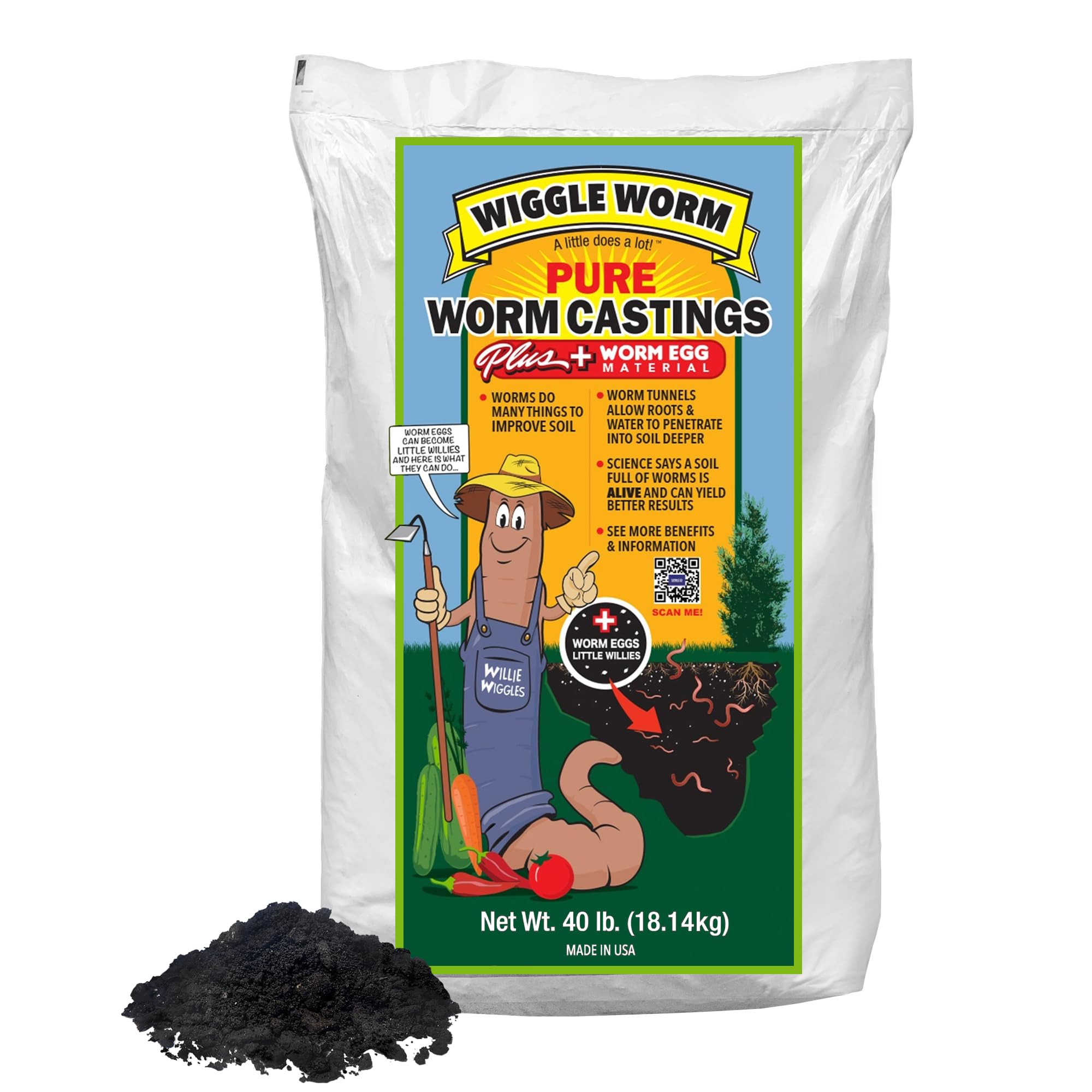
Worm castings deliver a concentrated dose of beneficial microbes and slow-release nutrients in a form that is nearly impossible to over-apply. This 40-pound bag of pure castings includes live worm egg material, which can hatch and establish a self-sustaining worm population that continues to aerate and enrich the root zone for years. The fine, odorless texture spreads easily over a seeded area without clumping or burning tender grass shoots.
For lawn seeding, this product shines because it provides a gentle 1-0-0 NPK profile that supports root development without forcing leafy growth too early. Users consistently report that seedlings emerge with better color and thicker stems compared to synthetic starter fertilizers. The castings also improve water infiltration in compacted or clay-heavy soils — a common pain point for new lawns.
The only real drawback is the upfront cost per bag, but the coverage is substantial and the biological benefits continue long after application. If you are establishing a new lawn or overseeding a large area, this is the most reliable single product to mix into your top-dressing or till into the top inch of soil before dropping seed.
What works
- Fine, uniform texture ensures excellent seed-to-soil contact
- Live worm egg material creates ongoing soil aeration
- Odorless and safe to use around pets and children
What doesn’t
- Heavy bag at 40 pounds may be cumbersome for small jobs
- Premium price per pound compared to manure blends
2. The Andersons BioChar DG Organic Soil Amendment
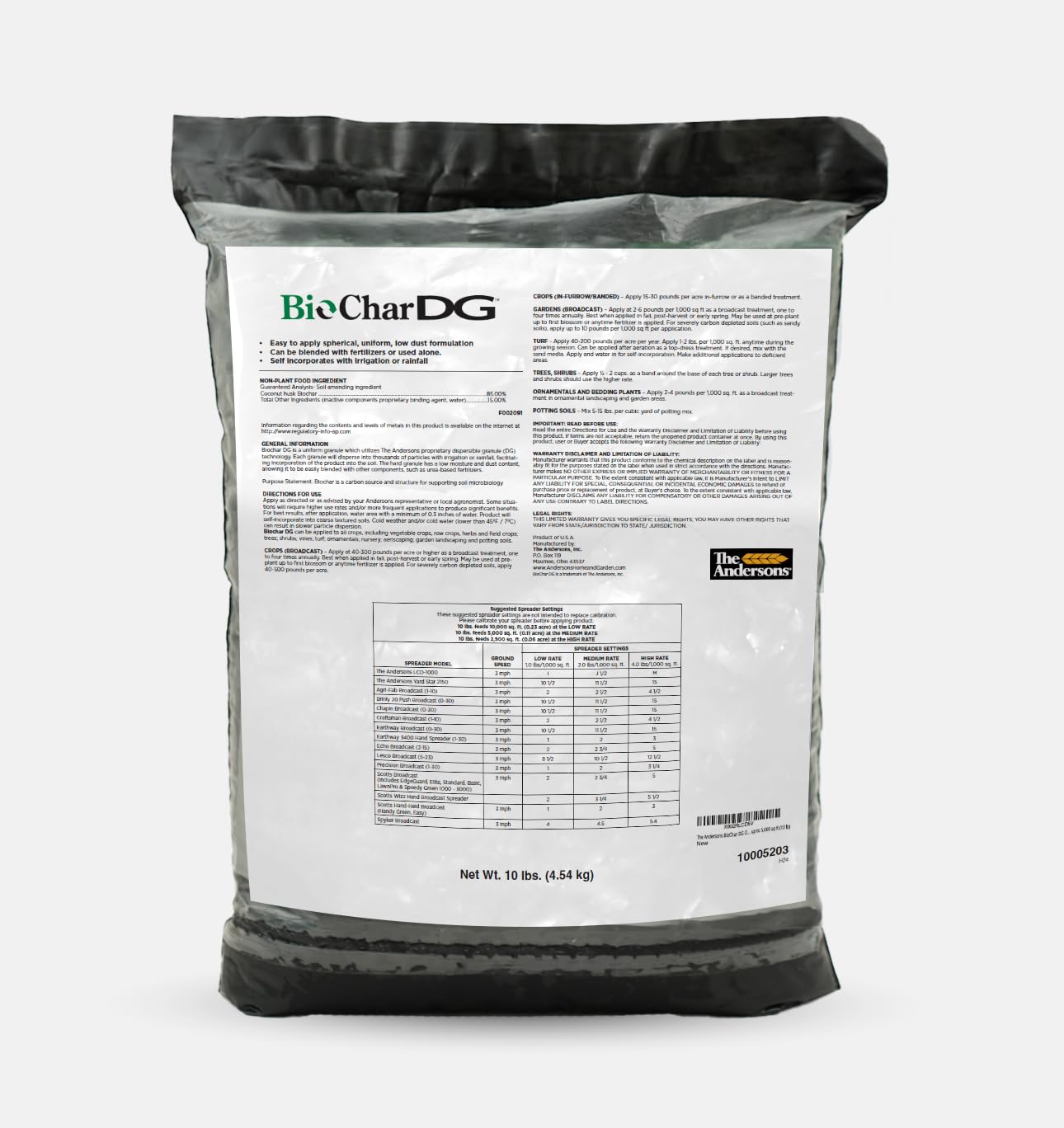
Biochar is a unique carbon-based amendment that acts like a sponge in the soil, holding onto nutrients and water that would otherwise leach away. The Andersons uses patented DG (dispersible granule) technology, so the small pellets break down quickly once watered, integrating into the soil profile faster than traditional charcoal chips. For seeding, this means the root zone stays consistently moist and nutrient-rich during the critical germination window.
Users with heavy clay or sandy soils report dramatic improvement in soil structure after repeated applications, though the product is designed to remain active in the ground for several years. It does not contain measurable NPK, so it should be paired with a nutrient source like worm castings or a balanced organic fertilizer for the best seed-starting results. The low-dust formula also makes it comfortable to spread with a broadcast spreader.
The main concern is that uncured biochar can temporarily tie up nitrogen as it integrates, so some users saw initial yellowing before the soil biology adjusted. Applying a liquid kelp or fish fertilizer alongside it resolves this issue quickly. For anyone committed to rebuilding poor soil for long-term lawn health, this is a solid foundational amendment.
What works
- DG pellets disperse rapidly with water for even soil integration
- Improves moisture retention in sandy and clay soils alike
- Stays active in soil for years, reducing repeat applications
What doesn’t
- Requires pairing with a nutrient source for immediate seedling needs
- May cause temporary nitrogen tie-up if not pre-charged properly
3. Blue Ribbon Organics OMRI Certified Compost

Blue Ribbon Organics produces what many experienced gardeners call “black gold” — a finely screened, dark, earthy compost free of sticks, plastic, or metal fragments. The OMRI certification guarantees that every pound meets strict organic standards, which matters if you are seeding a lawn that will be used by children or pets. The material rehydrates easily even after sitting on a shelf, and its moisture retention is noticeably better than standard nursery compost.
For lawn seeding, the uniform particle size creates an ideal seed bed that holds moisture against the seed without forming a crust. Users mixing it with perlite or sand for container seeding report nearly 100 percent germination rates. The high organic matter content feeds soil microbes that suppress common seedling diseases like damping-off, giving your new grass a fighting chance during wet spring weather.
The per-cubic-foot cost is steep compared to bulk alternatives, and the bag size (7.9 gallons) is better suited for patching small bare spots or seeding a small side yard than covering an entire acre. For a premium seed bed where failure is not an option — such as a front lawn renovation — this compost delivers consistent, predictable results.
What works
- Exceptionally clean, fine texture with no debris or large chunks
- Rehydrates easily and holds moisture against seed for germination
- OMRI certified for organic use in sensitive lawns
What doesn’t
- Small bag size limits use to smaller seeding projects
- Premium cost per cubic foot compared to bulk landscape compost
4. GS Plant Foods Root Ruckus Liquid Compost
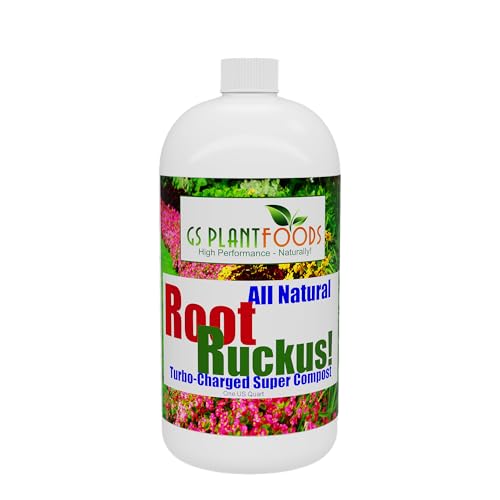
Root Ruckus takes a different approach — instead of spreading solid organic matter, you mix this liquid concentrate with water and spray it onto the soil or directly onto newly seeded areas. It combines humic acid, liquid kelp, and mycorrhizal fungi in a single bottle. For seeding, the mycorrhizae colonize the developing grass roots and extend their reach into the soil, accessing phosphorus and micronutrients that the seed would otherwise miss.
Users report visible recovery in stressed grass within days, especially after cold snaps or transplant shock. The hose-end sprayer application covers thousands of square feet quickly, making it a practical choice for large lawns where hauling bags of solid compost is impractical. It works synergistically with any granular fertilizer program, so you do not have to abandon your existing routine.
The main limitation is that liquid compost does not add bulk organic matter to the soil. If your soil is heavily compacted or lacks structure, you will still need to top-dress with a solid compost or aerate before seeding. For maintenance overseeding and giving existing turf a microbial boost, this is an efficient and cost-effective tool.
What works
- Fast liquid application covers large areas with a hose sprayer
- Mycorrhizal fungi enhance root access to phosphorus for seedlings
- Works alongside any existing fertilizer or soil amendment program
What doesn’t
- Adds no physical organic matter or structure to soil
- Requires reapplication every 2-3 weeks during establishment
5. R&M Organics Premium Organic Compost
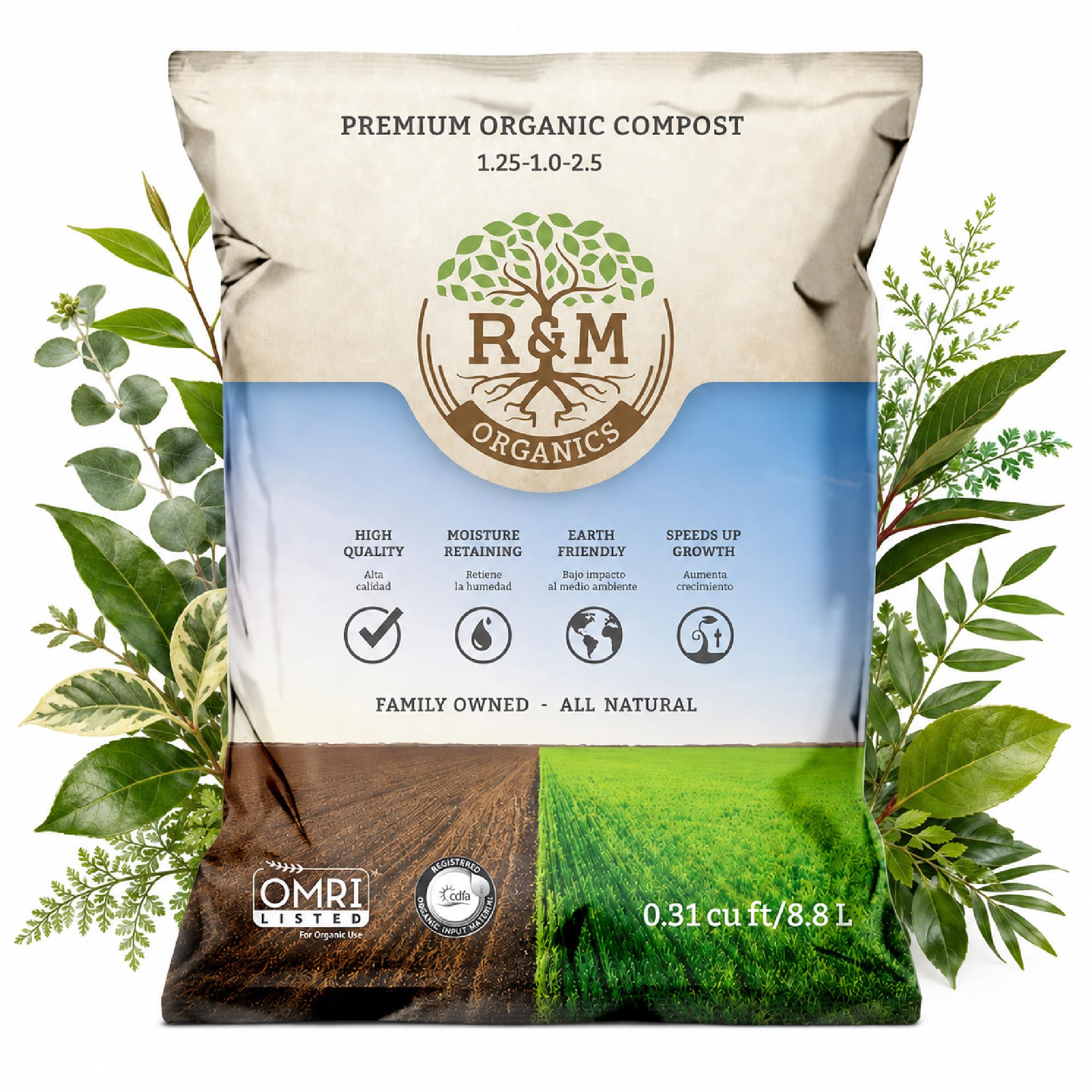
R&M Organics uses fully composted dairy cow manure that has been processed through a continuous aeration system to reduce odor and kill weed seeds. The result is a low-odor, soil-like material that can be spread directly over seeded areas or tilled into bare soil before planting. The 10-pound bag is manageable for small lawns and patch repair without requiring a wheelbarrow.
The texture is finer than standard bagged manure, with minimal clumping, and it integrates into the top soil layer without forming a barrier that blocks emerging shoots. Users note that it helped revive ailing plants within a week when mixed into the root zone, indicating a good supply of available nutrients. The moisture retention improvement is noticeable — top-dressed areas stay damp longer between waterings, which directly benefits seed germination.
The bag size limits coverage for larger projects, and the manure base means the NPK is slightly higher than plant-based composts, so it should not be over-applied directly onto fresh seed. For a budget-friendly option that delivers reliable results on small to medium patches, this is a strong middle-ground choice.
What works
- Low-odor processing makes it suitable for residential use
- Fine, clump-free texture spreads easily for top dressing
- Improves moisture retention in the seed zone noticeably
What doesn’t
- Small 10-pound bag covers only 50-100 square feet
- Slightly higher nutrient content requires careful application
6. Coast of Maine Organic & Natural Planting Soil
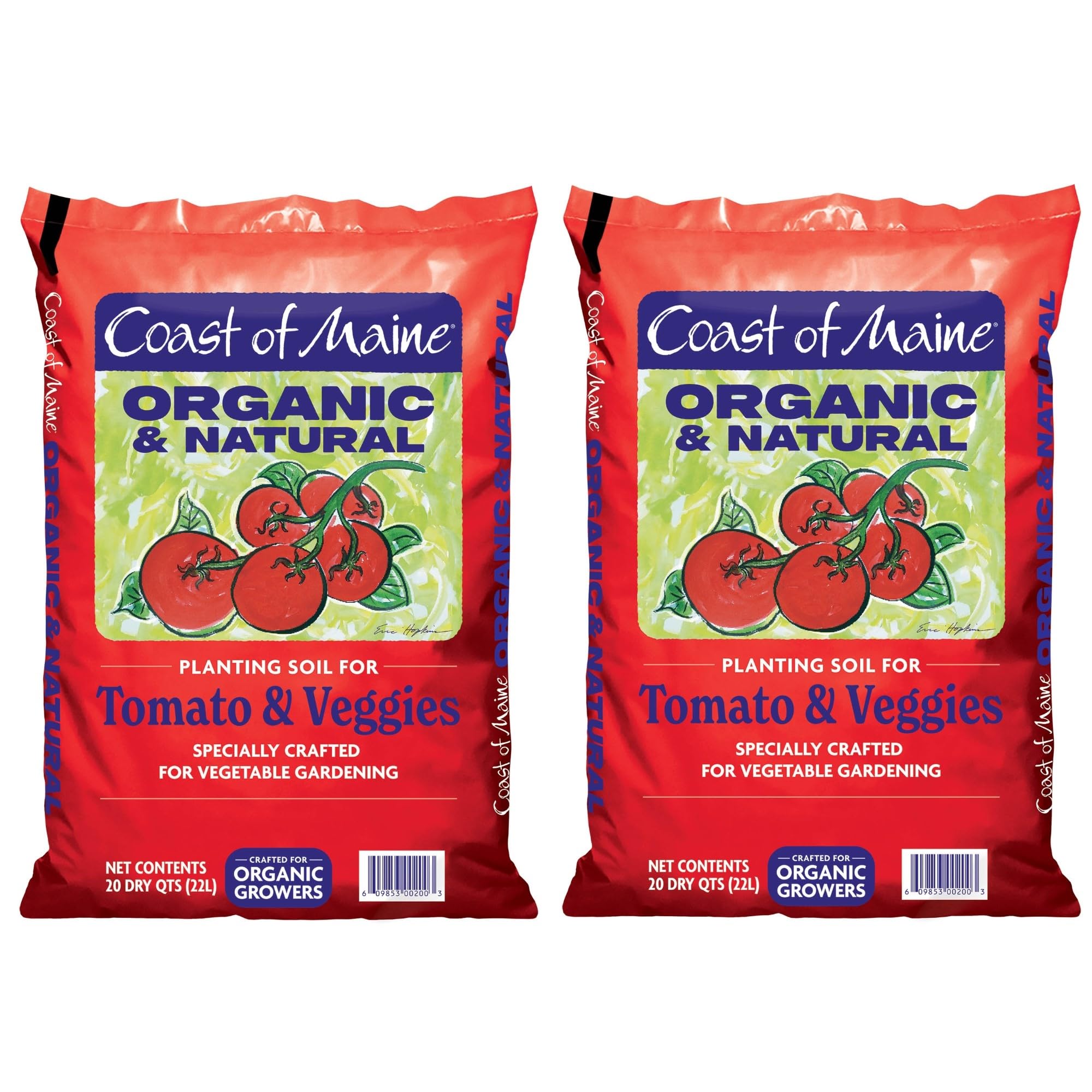
Coast of Maine blends composted manure with sphagnum peat moss and other organic ingredients to create a lightweight, well-draining medium that is especially useful for seeding in containers or raised beds. The 20-quart bag is bulky but not heavy, and the mix holds moisture well while allowing excess water to drain — a balance that prevents seeds from rotting in wet conditions.
The product is OMRI listed and includes cedar or aromatic wood fines that naturally deter some soil pests without chemical insecticides. Users growing vegetables and flowers indoors praise its lightweight texture for seed starting, and the same qualities apply to starting grass in trays or small patches. It is less dense than pure compost, so it works best when blended with native soil for direct seeding rather than used as a standalone top-dressing.
The main downsides are the price per quart compared to bulk compost and the presence of wood fines that can float to the surface after watering. For small container-seeding projects or topping off raised beds before seeding, this mix provides a consistent, nutrient-rich start with minimal guesswork.
What works
- Lightweight texture ideal for container and raised bed seeding
- Balanced moisture retention and drainage prevent seed rot
- Contains aromatic wood fines that naturally deter pests
What doesn’t
- Wood fines may float and create a surface crust after watering
- Higher cost per quart than standard soil amendments
7. Old Potters Organic Compost
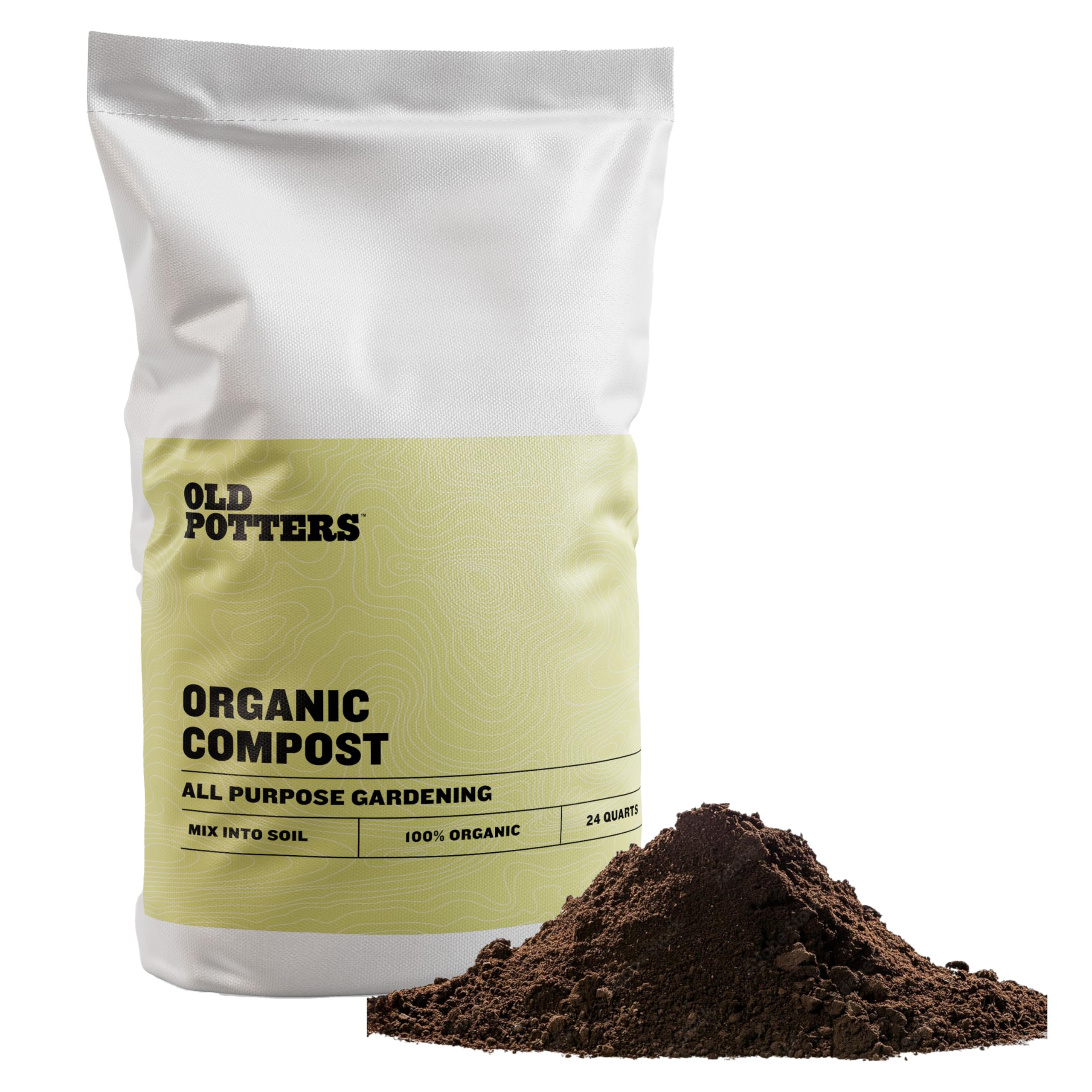
Old Potters offers a plant-based compost that is free of animal manure, making it a safe choice for gardeners who want to avoid any risk of introducing pathogens or excessive nitrogen into a seed bed. The 25-pound bag delivers 24 quarts of material, and the dark, rich appearance signals a well-decomposed product with high humus content.
Users in heavy clay soil zones report that mixing this compost into the top few inches dramatically improves soil texture, allowing water to penetrate instead of pooling on the surface. For seeding, this means the grass roots can push through the clay layer more easily and access moisture deeper in the profile. The compost also improves soil aeration, which is critical for root respiration during early growth.
The biggest issue is inconsistency in clumping — some bags arrive with clay-like clods that require manual breaking before spreading. Additionally, the product does not include any mycorrhizal additives or worm castings, so you may want to supplement those if your soil is particularly depleted. For the price point and bag size, it is a capable soil conditioner for seeding projects on tough clay ground.
What works
- Plant-based formula eliminates risk of manure burn or pathogens
- Improves drainage and aeration in heavy clay soils
- Large 25-pound bag offers good coverage for the price
What doesn’t
- Some bags contain clay-like clumps that need manual crumbling
- Lacks biological additives like mycorrhizae or worm castings
Hardware & Specs Guide
Organic Matter Percentage
For lawn seeding, the organic matter content of your compost directly determines how well the soil retains moisture and supports microbial activity. Look for products that list at least 40 percent organic matter by volume — this ensures the compost will improve soil structure rather than just adding bulk. Lower percentages often indicate the product is mostly inert filler like sand or partially composted wood.
Particle Size and Screening
A compost for seeding must be screened to a fine, uniform particle size — typically 3/8-inch or smaller. Large chunks of bark, twigs, or undecomposed manure create air pockets around the seed that dry out quickly and prevent germination. Products labeled as “screened” or “fine” are preferable. If the bag description mentions “mulch” or “landscape mix,” it is likely too coarse for direct seeding.
NPK and Salt Content
The nitrogen-phosphorus-potassium numbers on a compost bag indicate immediate nutrient availability. For seeding, a low nitrogen value (under 2 percent) is ideal — high nitrogen can burn tender grass roots. Also check for a soluble salt content below 2.0 mmhos/cm. High salt levels, common in some manure-based composts, can desiccate young roots and stunt germination.
Application Depth for Seeding
The correct application depth for compost on a seeded lawn is 1/4 to 1/2 inch. Any thicker and the emerging grass blade may run out of energy before reaching sunlight. For bare soil seeding, till the compost into the top 2-3 inches of soil. For overseeding an existing lawn, spread a thin layer as a top-dressing and rake it gently into the grass canopy so it contacts the soil surface.
FAQ
Can I use any bagged compost for lawn seeding or do I need a special type?
Should I apply compost before or after spreading grass seed?
How much compost do I need per square foot for seeding a new lawn?
Is worm compost better than manure compost for grass seed?
Final Thoughts: The Verdict
For most gardeners, the compost for lawn seeding winner is the Wiggle Worm Pure Worm Castings because it delivers a gentle, microbe-rich amendment that improves soil biology and moisture retention without any risk of burning young grass. If you want a long-term soil restructuring tool, grab the The Andersons BioChar DG. And for large-area applications where carrying bags is impractical, nothing beats the coverage speed of the GS Plant Foods Root Ruckus Liquid Compost.