
If your hydrangeas bloom pink when you desperately want blue, or your blueberries look yellow instead of lush green, the culprit is almost certainly a soil pH that’s too alkaline. Aluminum sulfate is the go‑to granular acidifier that unlocks the vibrant colors and vigorous growth your acid‑loving plants crave by making aluminum bioavailable in an acidic environment.
I’m Rikta — the co‑founder and writer behind Lawn Gear Lab. I spend countless hours dissecting granular analyses, comparing solubility rates, and cross‑referencing user reports to help you pick the right soil amendment without the guesswork.
Whether you are a hydrangea enthusiast chasing true blue blooms or a blueberry grower trying to keep your bushes thriving, this guide breaks down the top contenders so you can confidently choose the best aluminum sulfate for plants for your specific garden goals.
How To Choose The Best Aluminum Sulfate For Plants
Aluminum sulfate isn’t a one‑size‑fits‑all product. The right choice depends on how fast you need results, what plants you are treating, and whether you mind a dusty powder or prefer easy‑to‑sprinkle granules. Here are the three most critical factors to weigh before buying.
Form Factor: Powder vs. Granules
Powder dissolves almost instantly in water, giving you rapid pH drops — often within two to three days. That speed is great for container hydrangeas where you can see results fast, but it also increases the risk of over‑acidifying and stressing roots. Granules release more slowly and are safer for in‑ground beds because they require several waterings to break down. Choose powder for potted plants where you control the dose; choose granules for larger garden spreads where even release matters.
Purity and Additives
Look for “iron‑free” aluminum sulfate if your soil already has adequate iron, because added iron can cause leaf scorch in some acid‑lovers. Pure formulations (like the Pure Original Ingredients brand) have no fillers, making them ideal for non‑garden uses such as water flocculation or hide tanning, but they also work perfectly for pH adjustment. Bagged garden‑brand products (Southern Ag, Fertilome) often include a small amount of metallic aluminum — typically around 9% — which is the active ingredient that reacts with soil to lower pH.
Application Versatility
Some aluminum sulfate products are marketed strictly as soil acidifiers, while others double as general fertilizer enhancers. If your goal is simply turning hydrangeas blue, any standard grade will do. But if you are also trying to reduce nutrient runoff or improve fertilizer uptake in a lawn, a slightly different formula (such as sulfur‑based granules) might work better over the long term without the risk of aluminum toxicity. Always read the label to confirm the product is meant for your specific plant type — azaleas, blueberries, rhododendrons, and gardenias all have slightly different pH sweet spots.
Quick Comparison
On smaller screens, swipe sideways to see the full table.
| Model | Category | Best For | Key Spec | Amazon |
|---|---|---|---|---|
| Hoffman Blue Magic | Granules | Hydrangea color change | 4 lb bag | Amazon |
| Fertilome Premium | Powder | Fast pH drop | 4 lb bag | Amazon |
| Earth Science Fast Acting Sulfur | Granules | Lawn & bed acidifying | 5 lb bag | Amazon |
| Southern Ag Aluminum Sulfate | Solid | Acid‑loving shrubs | 5 lb bag | Amazon |
| Pure Original Ingredients | Powder | Multi‑purpose use | 1 lb bag | Amazon |
| Cz Garden Ammonium Sulfate | Granules | Nitrogen + sulfur feeding | 4 lb bag | Amazon |
| Fertilome 32175 (Original) | Powder | Budget acidifier | 4 lb bag | Amazon |
In‑Depth Reviews
5. Hoffman Blue Magic Aluminum Sulfate

Hoffman’s Blue Magic lives up to its name with a concentrated 4‑pound bag of granules that deliver consistent, visible results. Users report that pink hydrangeas begin shifting toward purple and then deep blue within one to two weeks of application, even when blooms are already open. The granular form makes it easy to either sprinkle dry around the root zone before rain or dissolve in water for a targeted drench.
The dustiness is the main trade‑off — reviewers note that pouring the granules produces a fine powder that can irritate if inhaled, so wearing a mask is smart. It also does not dissolve completely in water, which means you’ll want to stir thoroughly if you choose the liquid route. Despite these handling quirks, the rapid pH drop and large bag size (more than enough for multiple container plants or a row of garden hydrangeas) make this the most practical all‑around pick for gardeners focused on color change.
Hoffman recommends this product for hydrangeas, azaleas, rhododendrons, holly, begonias, camellias, fuchsias, gardenias, magnolias, and blueberries — essentially every common acid‑loving ornamental. The warranty backs the product, adding confidence for first‑time users.
What works
- Visible hydrangea color change within one week
- Large 4‑pound bag covers multiple plants
- Works on already‑blooming flowers
What doesn’t
- Very dusty when poured
- Does not dissolve fully in water
6. Fertilome Aluminum Sulfate Soil Conditioner Premium – 4 lb
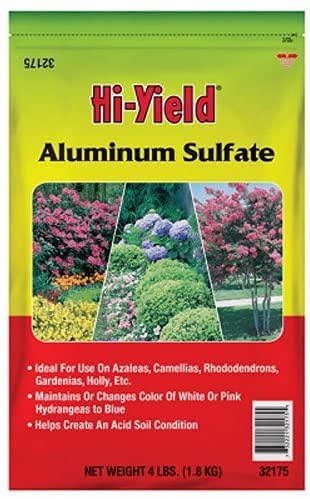
This premium version of Fertilome’s classic aluminum sulfate comes in a powdered form that dissolves quickly and starts lowering soil pH within two to three days. Gardeners using it on blueberries and other berry bushes report noticeable improvement in leaf color and fruit production after just a couple of applications. The 4‑pound bag is a practical size for a medium‑sized garden bed or a half‑dozen container hydrangeas.
The instructions are clear and detailed, which was a deciding factor for multiple buyers who chose this over competitors with vaguer labeling. One common criticism is that the label does not specify a per‑gallon mixing ratio for liquid applications — it only gives dry sprinkling guidelines. That forces users to experiment with dilution when they want a drench, which can lead to inconsistent results if you are not comfortable calculating your own ratio.
Fertilome Premium covers azaleas, gardenias, camellias, rhododendrons, blueberries, and hydrangeas. The powder format means you need to be careful about wind drift during application, but the fast acting speed is a genuine advantage for impatient growers.
What works
- Rapid pH drop in 2‑3 days
- Clear, user‑friendly instructions
- Effective on blueberries and berries
What doesn’t
- No per‑gallon mixing ratio provided
- Powder drifts easily in wind
7. Earth Science Fast Acting Sulfur Granules – 5 lb

Strictly speaking, this is elemental sulfur rather than aluminum sulfate, but it competes in the same pH‑lowering space and deserves attention for its unique benefits. Earth Science uses patented Nutri‑Bond Technology that bonds the granules to soil particles, reducing runoff and keeping the sulfur where it’s needed. The 5‑pound bag is the largest in this comparison, making it the most economical option for treating an entire lawn or a large garden bed.
Reviewers note that the granules are not truly “fast acting” — they require several waterings to break down, with visible pH changes appearing over weeks rather than days. That slower release is actually an advantage for in‑ground applications because it lowers the risk of over‑acidifying. Users report that hydrangeas perked up noticeably and strawberries grew bigger and stronger after application.
Earth Science emphasizes that the product is safe for people and pets immediately after application, and it works on any grass type. If you want a low‑maintenance, slow‑release option for broad areas and you don’t need the instant gratification of aluminum sulfate, this is an excellent alternative.
What works
- Nutri‑Bond technology reduces runoff
- Large 5‑pound bag covers wide areas
- Safe for people and pets immediately
What doesn’t
- Slow release, not instant pH change
- Pellets require multiple waterings to dissolve
2. Southern Ag Aluminum Sulfate (Acidifies Soil) – 5 lb
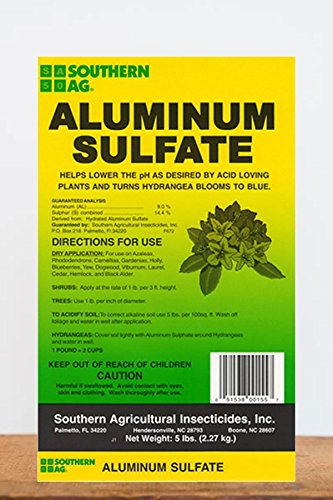
Southern Ag delivers a solid, no‑frills 5‑pound bag of fertilizer‑grade aluminum sulfate with a metallic aluminum content of 9.0%. This is the standard concentration for garden use, and it is explicitly formulated for acid‑loving shrubs including rhododendrons, hydrangeas, blueberries, dogwoods, holly, gardenias, camellias, and azaleas. The larger bag size makes it a strong value proposition for anyone with multiple beds or a collection of container plants.
User feedback is overwhelmingly positive, with multiple verified buyers reporting that it turned their pink hydrangeas blue exactly as advertised. One reviewer noted that it took a full growing season to see the full color shift, but the results were permanent for the remainder of the bloom cycle. The packaging is a basic plastic bag with no resealable closure — several customers wished for a zipper‑lock pouch to keep moisture out during storage. This is not a product you can pour from a spout, so you will need a scoop or measuring spoon.
The instructions recommend broadcasting evenly, washing off any granules that land on foliage, and watering thoroughly after application. For hydrangea enthusiasts chasing that deep blue pigment, Southern Ag is a reliable, straightforward choice that gets the job done without gimmicks.
What works
- Large 5‑pound bag for extended use
- Consistent 9% metallic aluminum content
- Proven hydrangea color change results
What doesn’t
- Bag is not resealable
- Slow onset of color change for some users
4. Pure Original Ingredients Aluminum Sulfate (1 lb) – Iron Free
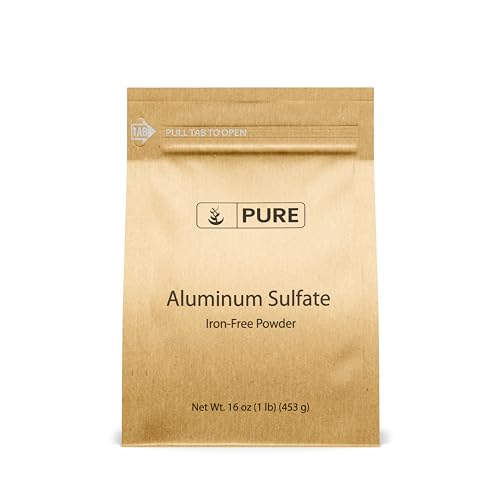
Pure Original Ingredients offers an iron‑free, additive‑free aluminum sulfate powder that serves dual duty in the garden and beyond. Beyond soil acidification for hydrangeas and blueberries, this 1‑pound bag is used by aquarium hobbyists for alum soaks to kill snails and planaria on new plants, by hikers for flocculating silt from muddy water, and by craftspeople for hide tanning and cloth dyeing. The versatility is unmatched among the products reviewed here.
However, the purity means you know exactly what you are applying, with no binders or fillers to throw off your measuring. Users who used it for hydrangea color change followed a 1/4 cup per gallon dilution applied monthly and reported good results in alkaline soil. One reviewer confirmed it is not the same as alum (potassium aluminum sulfate), so do not substitute it in pickling recipes.
For gardeners who also keep fish tanks or practice wilderness water treatment, this single product replaces several specialized chemicals, making it a smart space‑saving purchase.
What works
- Pure, iron‑free formula with no additives
- Versatile for gardening, aquariums, and water treatment
- Works for hydrangea blueing with monthly application
What doesn’t
- Small 1‑pound bag only
- Not suitable for large garden beds
1. Cz Garden Ammonium Sulfate Fertilizer AMS 21-0-0 – 4 lb

While this is technically ammonium sulfate (21‑0‑0 NPK with 24% sulfur) rather than straight aluminum sulfate, it serves a similar soil‑acidifying function while adding a significant nitrogen punch. The 21% nitrogen promotes lush, green top growth, making it ideal for vegetables like onions, leafy greens, and lawns that need both pH lowering and a vegetative boost. The resealable heavy‑duty pouch is a standout feature — far more practical than the open bags used by Southern Ag and Fertilome.
Users report that onions grown with this fertilizer become larger and more pungent, and it is also used by weed‑killer enthusiasts who mix it with herbicide to increase absorption (a common trick for stubborn broadleaf weeds). The granular form is easy to pour and store, and the 4‑pound size covers a large vegetable garden or a substantial lawn area. Because it is high in nitrogen, you need to be careful not to over‑apply, as excess nitrogen can burn roots in hot weather.
Cz Garden manufactures this product in the USA from premium ingredients. If your primary goal is acidifying alkaline soil while also feeding hungry crops or lawns, this dual‑action fertilizer is a smarter buy than straight aluminum sulfate.
What works
- 21% nitrogen + 24% sulfur for dual feeding/acidifying
- Resealable, easy‑pour pouch
- Excellent for onions, vegetables, and lawns
What doesn’t
- High nitrogen can burn plants if over‑applied
- Not for pure pH adjustment without nitrogen
3. Fertilome 32175 Aluminum Sulfate Soil Conditioner – 4 lb

This is the original Fertilome 32175 formula — the same 4‑pound powder as the Premium version but at a lower entry point. It creates acidic soil conditions and intensifies blue color in hydrangeas, covering the same list of acid‑loving plants (azaleas, gardenias, camellias, rhododendrons, blueberries). User reviews highlight its speed: one gardener with alkaline soil (pH 8.5) saw runoff drop to pH 5.0 after a single application of 1.5 tablespoons per 3‑gallon pot, with no plant damage.
The fast action is a double‑edged sword. Several reviewers caution that it works so quickly that small container plants can shed leaves if the dose is too high. One customer’s smaller hydrangea lost all its leaves after dry application, though the stems remained alive. For container gardens, it is wise to dissolve the powder in water at a reduced rate and test on a single plant first.
Manufactured in China, this is the most budget‑friendly option in the lineup. If you are on a tight budget and only need a small amount for a few pots or a single bed, the Fertilome 32175 delivers the fastest pH correction dollar‑for‑dollar — just respect its potency.
What works
- Extremely fast pH drop in 2‑3 days
- Very affordable per‑pound cost
- Effective on hydrangeas and blueberries
What doesn’t
- Easy to over‑apply; can damage sensitive plants
- Powder form is dusty and messy
Hardware & Specs Guide
Metallic Aluminum Content
The active ingredient in aluminum sulfate is metallic aluminum, typically listed as a percentage on the bag. Most garden‑grade products contain around 9% metallic aluminum — this is the standard concentration for safe, effective pH lowering. Lower percentages mean you need to apply more product to achieve the same pH drop. Products without this metric (like additive‑free powders) still work, but you lose the ability to calculate exact dosage. For precision work, especially in containers, choose a product that explicitly states the metallic aluminum content.
Solubility and Application Rate
Aluminum sulfate dissolves readily in water, making it suitable for both dry broadcasting and liquid drenching. The general guideline is 1 tablespoon per gallon of water for container plants, applied monthly during the growing season. For in‑ground beds, 1 to 3 pounds per 100 square feet is a typical starting point, depending on your starting pH. Always avoid getting the solution on foliage — it can cause leaf burn. After application, water deeply to move the aluminum into the root zone for best results.
FAQ
How fast does aluminum sulfate lower soil pH compared to elemental sulfur?
Can I use aluminum sulfate on vegetables and food crops like tomatoes or peppers?
What is the difference between aluminum sulfate and ammonium sulfate for acidifying soil?
Will aluminum sulfate kill moss in my lawn?
How much aluminum sulfate should I add to turn hydrangeas blue?
Final Thoughts: The Verdict
For most gardeners, the best aluminum sulfate for plants winner is the Hoffman Blue Magic because it combines fast visible results, a generous 4‑pound bag, and compatibility with the widest range of acid‑loving plants. If you want a rapid pH drop for container plants and you’re comfortable mixing your own ratios, the Fertilome Premium is your best bet. And for those who need both soil acidifying and a nitrogen feed for vegetables or lawns, the Cz Garden Ammonium Sulfate offers the best dual‑action value in the lineup.