
You’ve made the switch to composting, but every time you lift a full bag of coffee grounds and veggie scraps, you hold your breath — waiting for the bottom to give way. Standard compost bags can turn a virtuous habit into a sticky mess, splitting at the seams when you need them most. The difference between a frustrating cleanup and a seamless morning drop-off often comes down to a few key specs hidden in the product description.
I’m Rikta — the co-founder and writer behind Lawn Gear Lab. I spend my days comparing certified compostable materials, cross-referencing ASTM standards, and analyzing hundreds of owner reviews to isolate which bags actually hold up under real kitchen conditions without betraying their eco-mission.
The market is flooded with flimsy options, but this guide drills into the construction, thickness, and certification layers that separate true performers from the rest, helping you confidently pick the right compost bags for your kitchen routine.
How To Choose The Best Compost Bags
Not all green bags are created equal. The chemistry that allows a bag to break down in a commercial composter also makes it vulnerable to moisture and sharp edges. Understanding the critical specs ensures you don’t end up scrouting compost from under your sink.
Mil Thickness – The Strength Predictor
In the compost bag world, thickness is measured in mils (thousandths of an inch). Entry-level bags often hover around 0.5 mil and will tear if you look at them wrong. Bags at 0.75 to 1.0 mil offer a much better compromise between durability and compostability — they can handle coffee grounds, eggshells, and even the occasional glass jar lid without springing a leak. For kitchen use, aiming for at least 0.87 mil is a safe bet.
Certifications – Know Where It Will Compost
ASTM D6400 certification means the bag is designed to break down in an industrial composting facility where temperatures reach 140°F. OK Compost Home certification means it will also decompose in your backyard pile at lower temperatures. If you have municipal composting, BPI or TÜV Austria approval ensures your bag is accepted. Always check which certification applies — throwing a “commercially compostable” bag into your home pile will leave it intact for years.
Drawstring vs. Handles vs. Open Tops
Drawstrings let you cinch the bag shut and carry it without touching the contents, which matters when the bag is full of wet food scraps. Some bags have integrated handles that serve a similar purpose but can snap under weight. Open-top bags without ties require a knot, and the knot itself can create a stress point that leads to tearing. For daily kitchen use, a reinforced drawstring is the most reliable closure type.
Quick Comparison
On smaller screens, swipe sideways to see the full table.
| Model | Category | Best For | Key Spec | Amazon |
|---|---|---|---|---|
| Compostic 13 Gal | Home Compostable | Week-long kitchen waste | 1.0 mil plant-based biopolymer | Amazon |
| Primode 13 Gal | Heavy Duty | Soft organics & yard waste | 0.87 mil commercial & home cert | Amazon |
| BIOGRN 13 Gal | Certified Trio | Heavy loads & high moisture | 1.0 mil / 105 lb load capacity | Amazon |
| BEIDOU-PAC 13 Gal | Value Pack | High-volume multi-bin use | 100-count / 0.75 mil drawstring | Amazon |
| HECTOLIFE 13 Gal | Best Value | Everyday kitchen & office | 0.75 mil double-layer drawstring | Amazon |
| SUPERBIO 13 Gal | Eco Pick | Standard food scrap collection | 1.0 mil plant-based drawstring | Amazon |
| HoldOn 13 Gal | Premium Pick | Leak-resistant everyday use | Triple-ply / 40-count B Corp | Amazon |
In‑Depth Reviews
1. Compostic Compostable Trash Bags, 13 Gal
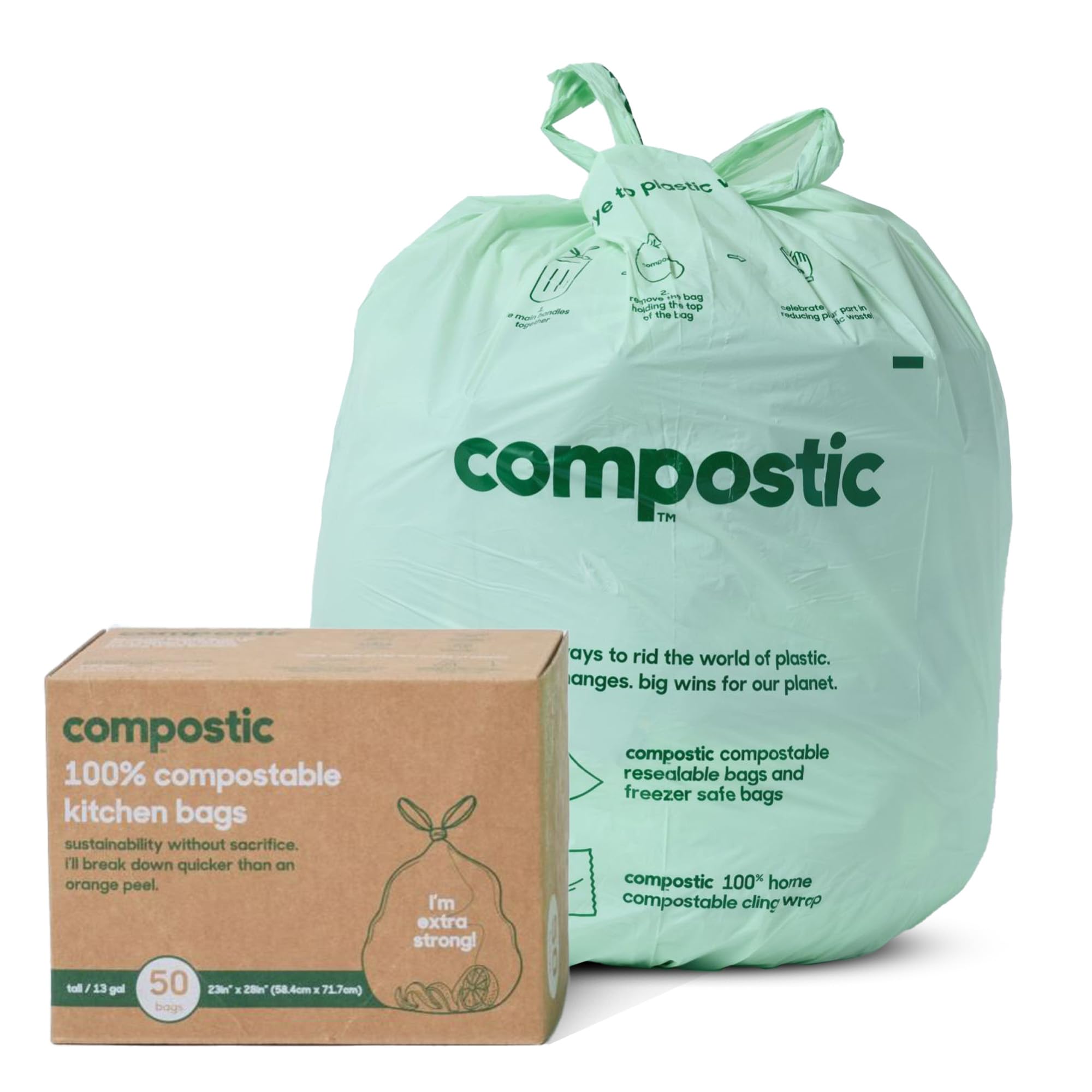
Compostic has engineered a 1.0 mil bag from plant-based biopolymers that feels closer to a conventional kitchen bag than most compostable options. Owners consistently report it surviving a full week of coffee grounds, eggshells, and vegetable peels without leaking — a rare achievement in this category. The bag is sized at 23 x 28 inches, which fits standard 13-gallon tall bins without sagging or slipping off the rim.
The standout feature is the DIN CERTCO home compostable certification, meaning this bag will actually break down in your backyard pile within 12 to 24 weeks rather than requiring an industrial facility. The material has a slight stretch that helps it grip the can rim and resist punctures from sharp food scraps. Users note that sitting liquids inside for extended periods will accelerate degradation, so the bags work best with a 2- to 3-day removal cycle for wet waste.
At 50 bags per package, the per-bag cost sits at a mid-range premium, but the combination of home composting capability and week-long durability makes it the most versatile option for households that generate moderate kitchen waste. The unscented, non-toxic composition also makes it safe for households with pets and children. For most composters, this is the bag that bridges the gap between eco-mission and daily practicality.
What works
- Genuinely home compostable with DIN CERTCO certification
- Thick enough to last a week without leaks or tears
- Good stretch lets it grip standard 13-gal bins securely
What doesn’t
- Wet waste sitting for more than 3 days may cause bottom degradation
- Sharp items like broken glass can still puncture through
2. Primode Compostable Bags 13 Gal
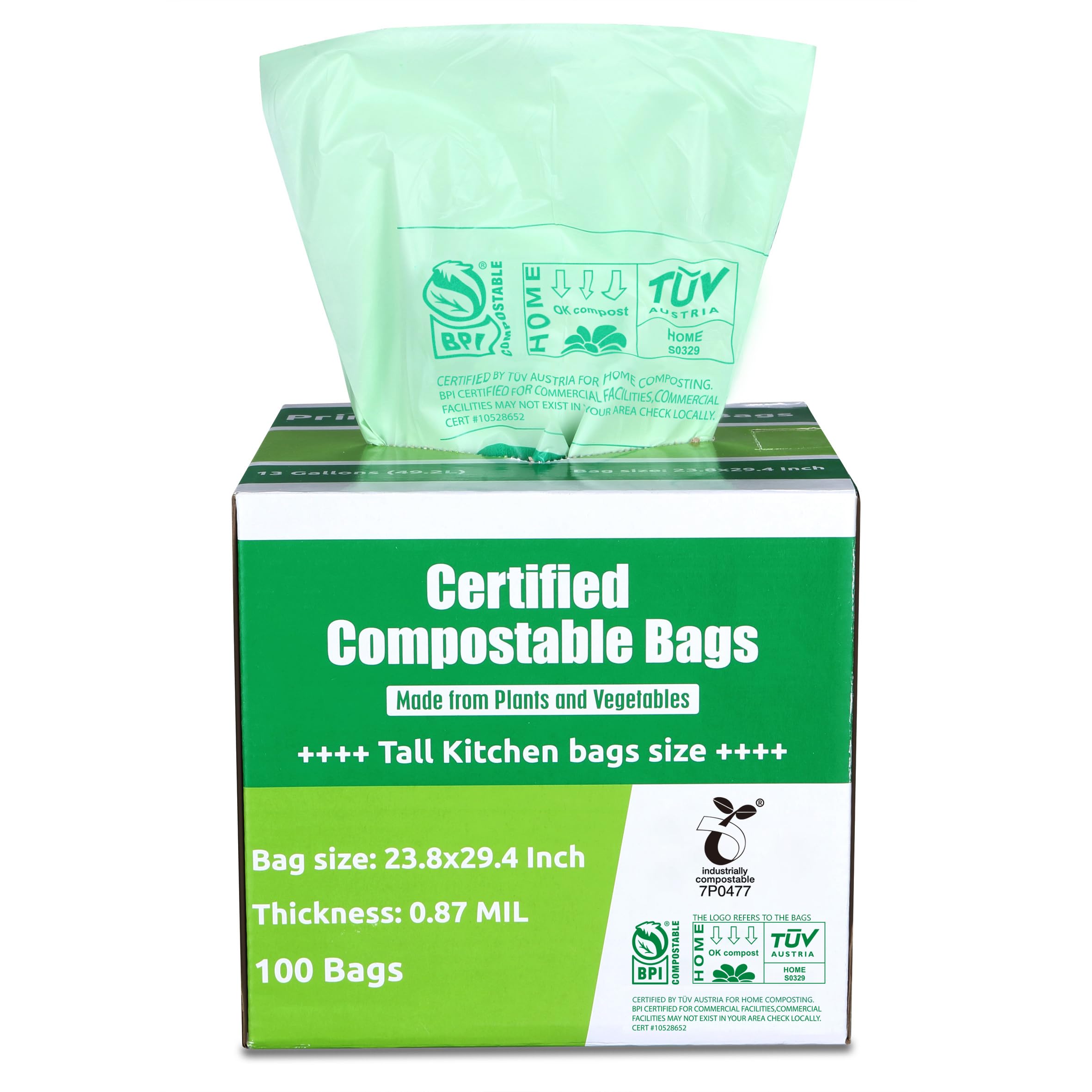
Primode delivers a 0.87 mil bag that multiple long-term reviewers describe as the thickest compostable option they have used. The material resists tearing under loads of up to 30 pounds of soft organic waste, and one owner reported the bag survived 10 days of rain in a truck bed without structural failure. This is a bag built for volume, not just kitchen scraps — the 100-count box supports high-turnover households and multi-bin setups.
Both BPI and TÜV Austria certifications confirm the bag meets ASTM D6400 standards for industrial composting, which means municipal programs will accept it. Owners caution that the bag is not puncture-proof: snags from sharp items like broken glass or thorny garden waste will create tears. The bag also lacks a drawstring, which means you need to leave enough material at the top to tie a knot, and that knot becomes the primary stress point when carrying a full bag.
For users who primarily compost soft food scraps and yard waste without sharp objects, Primode offers the highest raw tear resistance in this lineup. The 5.3-pound box weight also hints at the material density. The recommended 1- to 2-day change cycle aligns with most kitchen routines, and the shelf life of 10 months from purchase is reasonable for a 100-bag supply.
What works
- Exceptional tear resistance for soft organics and wet waste
- Dual certification ensures acceptance in most municipal programs
- High count per box reduces repurchase frequency
What doesn’t
- No drawstring — must tie knot, which risks tearing at the closure
- Not designed for sharp items like glass or thorny prunings
3. BIOGRN 10-13 Gal Compostable Trash Bags
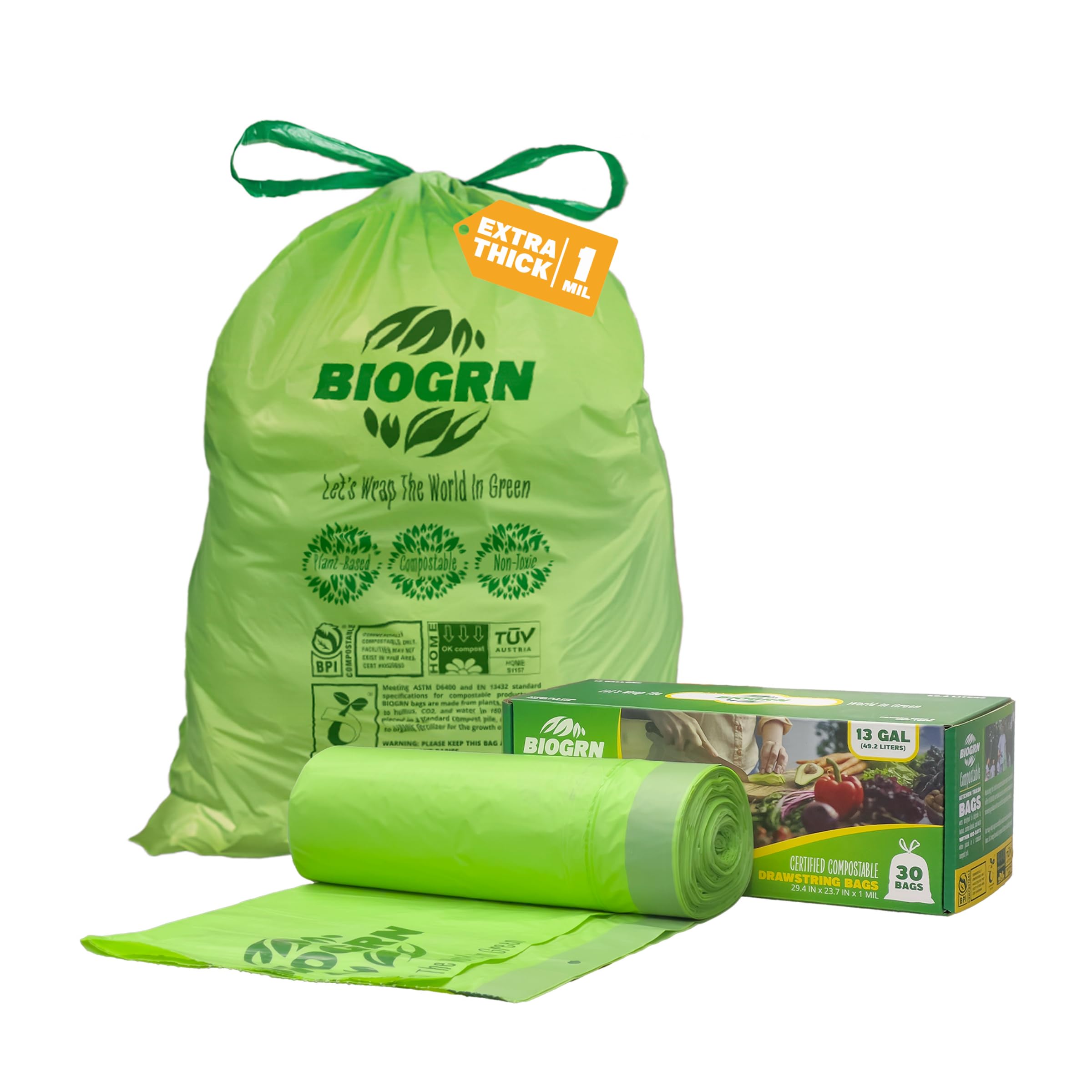
BIOGRN pairs a full 1.0 mil thickness with a factory-tested load capacity of 105 pounds, which is the highest weight rating in this comparison. The bag uses a blend of PLA and PBAT plant starches that give it a slightly more plastic-like feel than thinner alternatives, reducing the sense of fragility that turns many users away from compostable bags. The 30-count roll is compact, and the drawstring closure is reinforced at the seams to prevent snap-off during carry.
The certification suite is unusually comprehensive: BPI, OK Compost HOME, OK Compost INDUSTRIAL, and Seedling certification from DIN CERTCO. This means the bag is verified for both home backyard piles and industrial facilities, giving you flexibility regardless of your local composting infrastructure. Owners consistently report that the bag holds up well with wet kitchen scraps, meat trimmings, and coffee grounds without leaking for up to 3 days.
One nuance is the sizing: the bag dimensions are listed at 22.8 x 36.6 inches, which is slightly taller than standard 13-gallon bags. Make sure your bin has the vertical clearance to accommodate the extra length without the bag bunching at the bottom. The drawstring closure is well-reviewed for ease of use, though a few users mention that overfilling past the cinch line reduces security.
What works
- Home and industrial compost certifications for maximum flexibility
- 105-lb load rating provides peace of mind for heavy waste
- Drawstring closure is reinforced for reliable carrying
What doesn’t
- Taller bag dimensions may not fit compact under-sink bins
- Only 30 bags per roll — fewer cycles between repurchases
4. BEIDOU-PAC Compostable 13 Gal Trash Bags
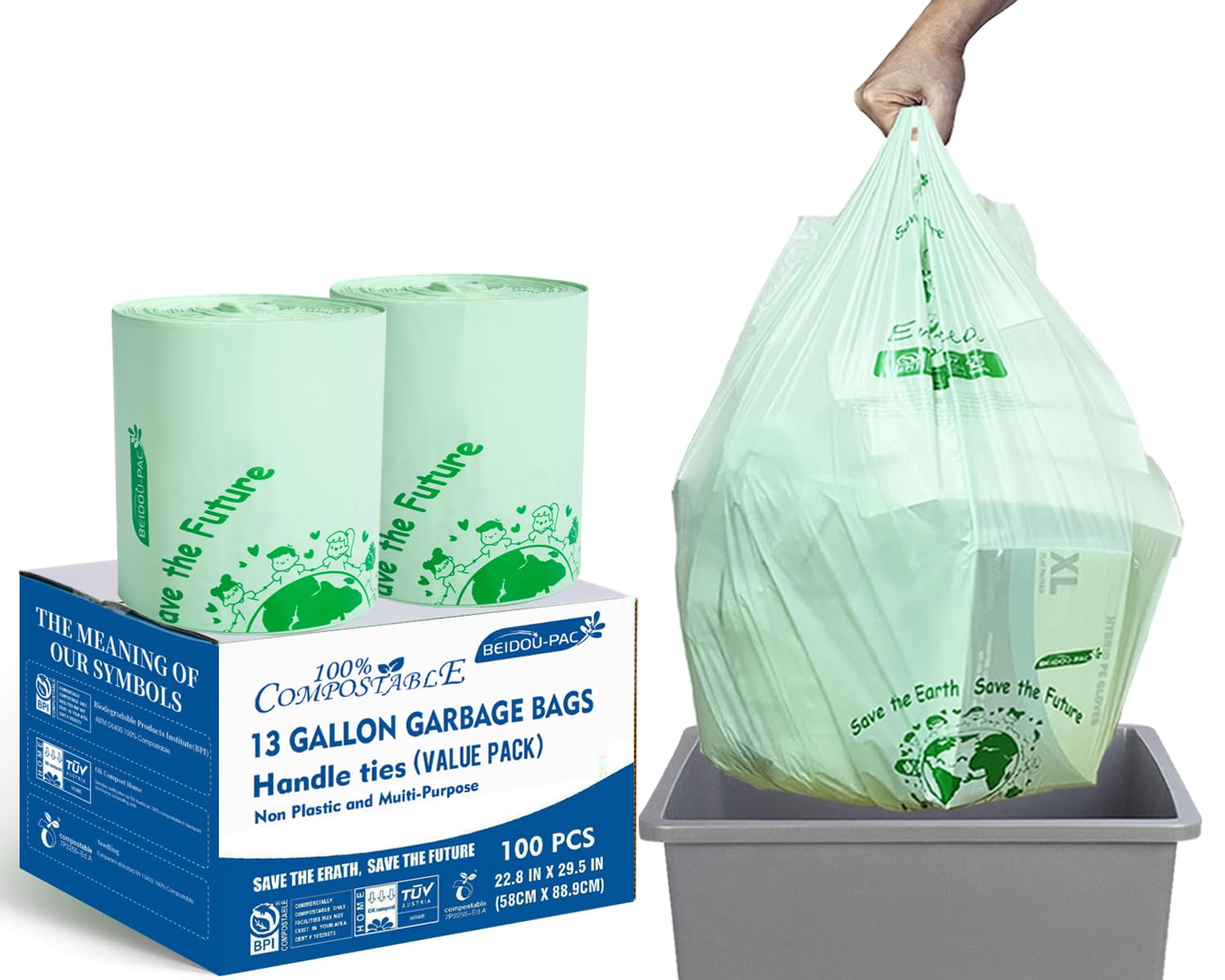
BEIDOU-PAC offers a compelling value proposition with 100 bags per box at a 0.75 mil thickness, making it one of the most cost-effective certified compostable options available. The material is a PLA/PBAT blend with a slight stretchiness that helps the bag conform to under-sink bins and 13-gallon tall cans without slipping. The drawstring handles are integrated into the bag body and allow for cinching and carrying without needing to tie a knot.
BPI certification to ASTM D6400 standards confirms industrial compostability, and the bags also hold OK Compost Home certification from Vinçotte and TÜV Austria, meaning backyard composters can use them with confidence. Owners who run high-turnover households appreciate the 100-count volume — it reduces the mental load of remembering to repurchase. The bags are unscented, which is important for indoor compost bins where artificial fragrances can be off-putting.
At 0.75 mil, the bags are thinner than the 1.0 mil leaders in this guide. Owners report that the material holds up well for standard kitchen waste but can develop tiny perforations when subjected to heavy cat litter or sharp-edged food containers. The drawstring attachment points are a known weak spot if you overload the bag past the cinch zone. For households that empty their kitchen bin every 2 days, this is a strong mid-range choice.
What works
- 100 bags per box offers the lowest per-bag cost among certified options
- Home compost certification adds backyard flexibility
- Drawstring closure enables quick, clean removal
What doesn’t
- 0.75 mil is prone to perforation with heavy or sharp loads
- Drawstring attachment can snap if bag is overfilled
5. HECTOLIFE 13 Gal Compostable Trash Bags
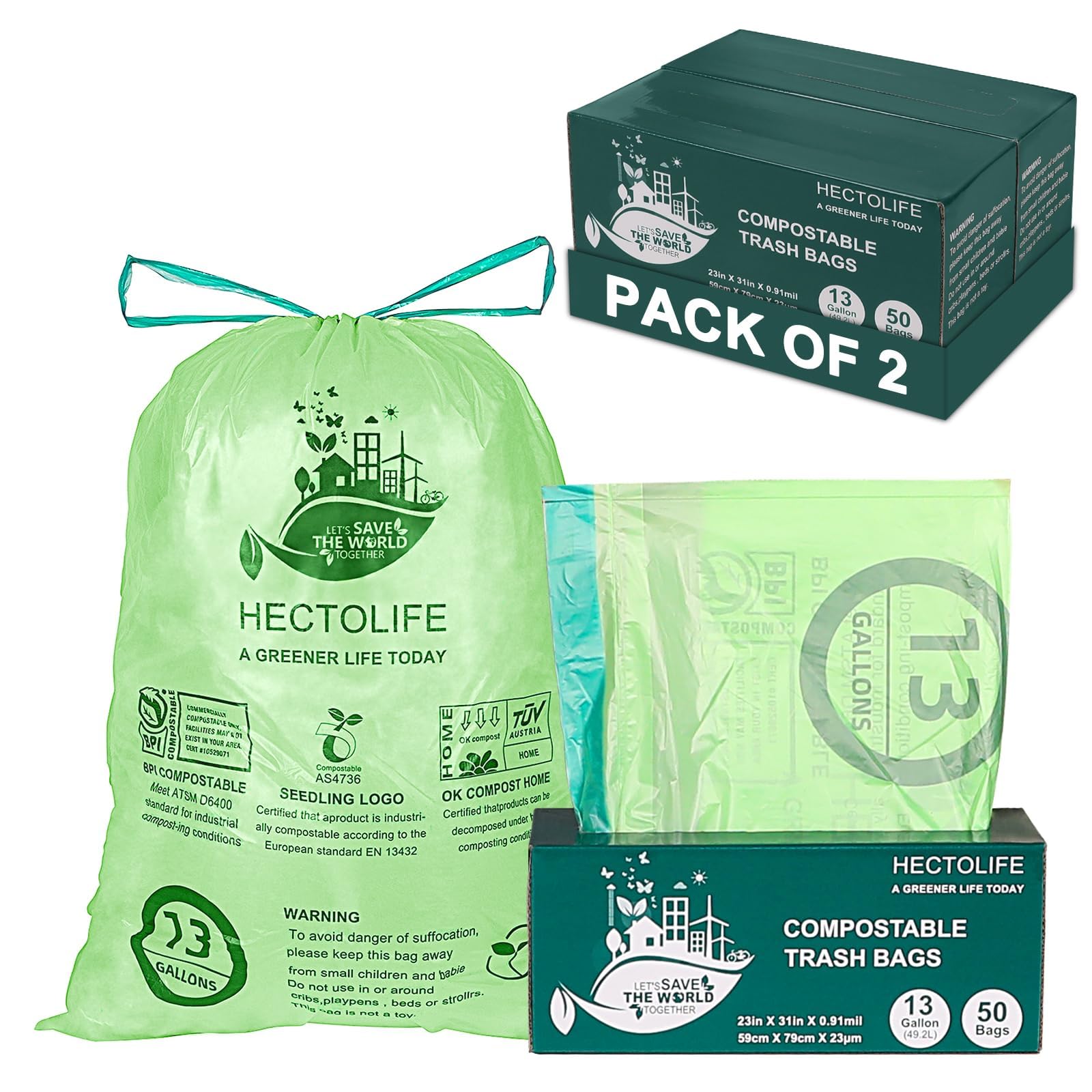
HECTOLIFE delivers a 100-count two-roll pack with a double-layer drawstring design that reinforces the closure zone, which is where most compostable bags fail under load. The bags are made from plant starch (corn) material and are BPI, OK Compost, and Seedling certified, covering both industrial and home composting scenarios. The sizing is 24 x 30 inches, fitting round cans up to 15.3 inches in diameter and rectangular cans with a perimeter under 48 inches.
Owners consistently praise the bags for matching the feel of conventional plastic trash bags during everyday use — they open easily, grip the bin rim without slipping, and resist tearing during removal. The double-layer drawstring is a practical detail that distributes stress across a wider area when cinching closed. Users do note that the top of the bag can bind against the bin lip on certain tall kitchen cans, occasionally causing a small rip at the rim during installation.
At a mid-range per-bag cost, this pack covers two months of daily kitchen waste for most households. The bags are lightweight but able to handle normal food scraps and household trash without issues. Owners recommend not overfilling past the drawstring line, as the material at the top is the thinnest section. For budget-conscious shoppers who still want triple certification, this is the most practical entry point.
What works
- Triple certification covers both home and industrial composting
- Double-layer drawstring reduces risk of handle snapping
- 100-count pack delivers strong value for daily use
What doesn’t
- Bag top can bind on certain bin rims and tear during install
- Thinner material may not hold up to heavy, wet loads for more than 2 days
6. SUPERBIO 13 Gal Compostable Drawstring Bags
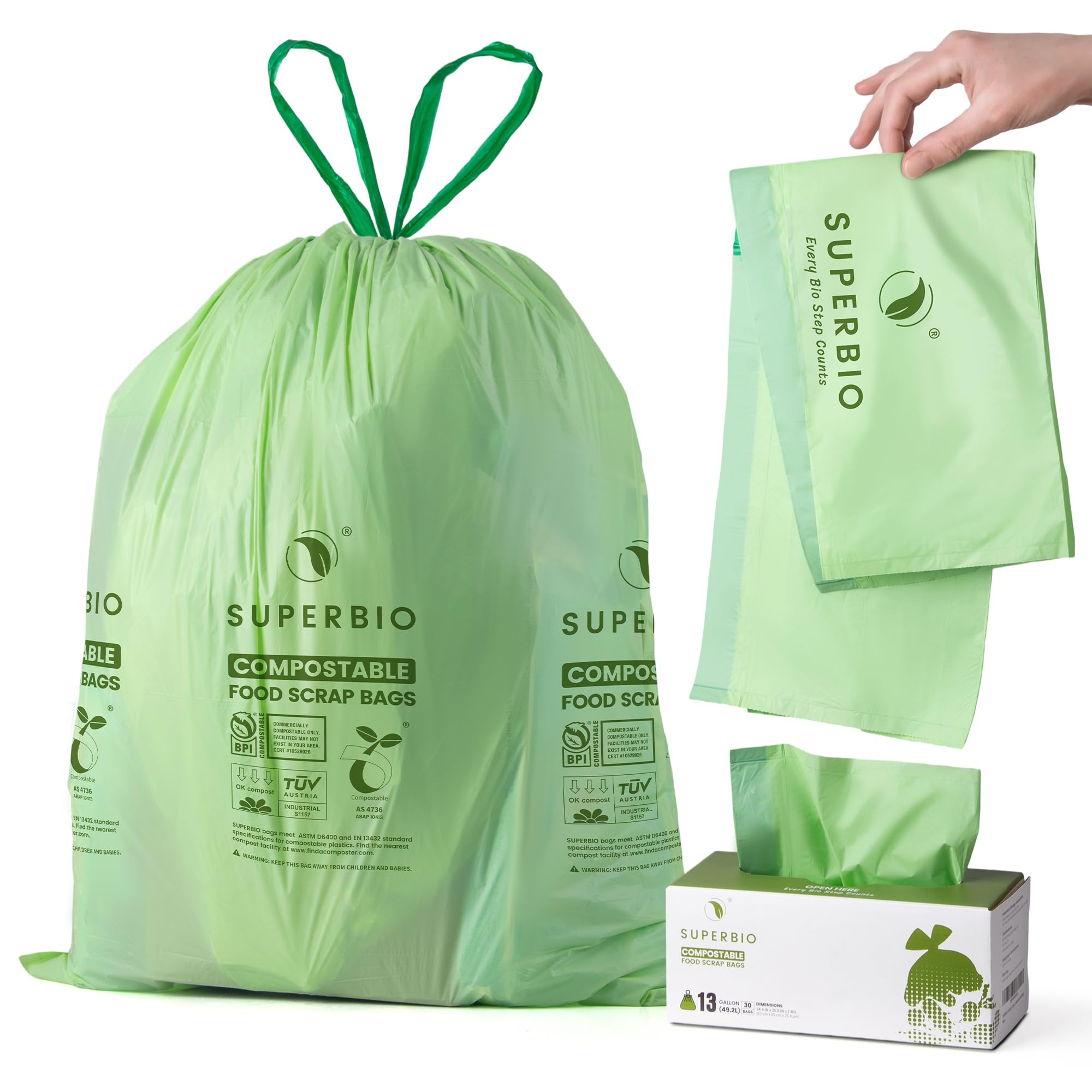
SUPERBIO brings a 1.0 mil thickness to a 30-count roll with BPI, Seedling, and OK Compost INDUSTRIAL certifications. The material is plant-based and designed to remain tear-resistant during normal use, with the manufacturer running quality checks on every production batch. The drawstring closure is integrated into the bag body and has proven reliable in owner testing, with multiple users noting the bags survived wet organic waste without leaking.
The key limitation is that this bag is certified for industrial composting only — not home composting. If you rely on a backyard pile or a municipal program that accepts home-compostable bags only, these may not break down as expected. Owners also report a shelf life of about one year, and the manufacturer advises disposing of organic waste within 3 days to maintain bag integrity, especially with acidic or alkaline food scraps.
For households that have access to an industrial composting service, SUPERBIO offers a dependable 1.0 mil option at a competitive price point. The bags fit standard 13-gallon bins, and the tear-free design holds up well against coffee grounds, fruit peels, and general kitchen waste. Just be aware that the industrial-only certification limits where you can send them for composting.
What works
- Full 1.0 mil thickness provides solid tear resistance
- BPI and Seedling certification meets municipal requirements
- Drawstring closure is reliable for daily kitchen use
What doesn’t
- Industrial composting only — not suitable for home piles
- 3-day waste hold limit means frequent bin emptying
7. HoldOn Compostable Tall Kitchen Drawstring Bags

HoldOn differentiates itself with a triple-ply construction that sandwiches compostable material between layers for leak resistance. The bag is made from a PBAT, PLA, and cornstarch blend, and the multi-way flex material is designed to prevent rips and tears during normal kitchen use. The drawstring handles are flexible and grip the bin rim tightly to prevent the bag from slipping down during filling. This is the only Certified B Corp in this lineup, reflecting a broader commitment to environmental standards beyond just the bag itself.
BPI certification confirms industrial compostability, but HoldOn does not carry a home-compost certification. Owners appreciate that the bag feels thicker and more substantial than typical 0.75 mil options, and multiple reviewers note it does not leak after a week of wet contents. The Achilles heel is the drawstring attachment: when the bag is full and heavy, the tie ribbon at the top can separate from the bag body, particularly if the bag is overfilled or if sharp items press against the closure seam.
At 40 bags per box, the per-bag cost is higher than the volume-focused options in this guide. However, the triple-ply construction genuinely reduces the risk of wet-bottom failure that plagues thinner bags. This makes HoldOn a solid choice for households that prioritize leak protection above per-bag cost and have access to an industrial composting facility. For users who need home compost certification or a higher bag count, other options in this guide are more aligned.
What works
- Triple-ply construction significantly reduces leak risk
- Drawstring grips the bin rim securely
- Certified B Corp with strong environmental commitments
What doesn’t
- No home-compost certification limits disposal options
- Drawstring tie can separate from bag body under heavy load
Hardware & Specs Guide
Mil Thickness and Load Capacity
Mil thickness is the most reliable predictor of a compost bag’s ability to hold wet food scraps without tearing. A 1.0 mil bag can typically support 30 to 50 pounds of soft organic waste, while 0.75 mil bags are better suited for lighter loads of 15 to 25 pounds. Always cross-reference the manufacturer’s load rating — BIOGRN claims 105 pounds at 1.0 mil, which is unusually high, indicating a denser material blend.
Certification Tiers
ASTM D6400 standards govern BPI certification in North America and Seedling certification in Europe — both require 90% degradation within 180 days in an industrial composting environment. OK Compost HOME is a stricter standard that tests at lower temperatures, ensuring breakdown in backyard piles. A bag carrying both industrial and home certifications gives you the widest disposal flexibility, while an industrial-only certification limits you to municipal or commercial composting facilities.
FAQ
Can I put compostable bags in my backyard compost pile?
Why do my compost bags leak at the bottom after a day?
Are drawstring compost bags stronger than open-top bags?
Final Thoughts: The Verdict
For most gardeners, the compost bags winner is the Compostic 13 Gal because it combines a true home compostable certification with 1.0 mil thickness that lasts a full week without leaking. If you want maximum tear resistance for heavy loads of soft organics, grab the Primode 13 Gal. And for the best value per bag with triple certification, nothing beats the HECTOLIFE 13 Gal.