
Container roses are notoriously finicky because their confined root zone dries out fast and the wrong mix holds water like a sponge, leading to root rot and yellowing leaves. A bag of cheap all-purpose topsoil will crush your chances of seeing those first buds open, while a properly structured, nutrient-dense blend with sharp drainage can mean the difference between a twiggy mess and a pot bursting with color all season.
I’m Rikta — the co-founder and writer behind Lawn Gear Lab. I’ve spent hundreds of hours cross-referencing bagged soil NPK ratios, analyzing buyer feedback on drainage performance, and studying how different organic amendments like lobster meal and aged forest products interact with the specific needs of rose root systems in containers.
After digging through the specs and real-world results, I’ve narrowed down the seven mixes that actually deliver on their promises for container-grown roses. This guide walks you through the critical factors to weigh so you can confidently choose the right potting soil for roses in containers for your patio, balcony, or garden.
How To Choose The Best Potting Soil For Roses In Containers
Container roses never get the massive root spread that in-ground roses enjoy, so the soil you pour into that pot must do double duty — hold enough moisture between waterings while never staying soggy. The wrong mix leads to suffocated roots, stunted growth, and fewer blooms. Here are three non-negotiable factors to check before you buy.
Drainage and Aeration Structure
The most common killer of potted roses is waterlogged soil. Look for mixes that list perlite, coarse sand, composted pine bark, or pumice as visible ingredients. These create air pockets that allow oxygen to reach the roots and excess water to leave the pot quickly. A mix that feels heavy and dense in the bag is a red flag — it will likely compact and turn into mud within a few weeks.
Nutrient Content and the NPK Ratio
Roses are heavy feeders, and containers leach nutrients faster than garden beds. The three numbers on the bag — nitrogen, phosphorus, and potassium — tell you what your roses will get early on. A balanced slow-release fertilizer pre-mixed into the soil (like 18-6-8 or a similar ratio) provides a steady supply over months. Organic amendments like kelp meal and worm castings add micronutrients that synthetic formulas skip.
Organic vs. Conventional Blends
Organic mixes often contain compost, lobster or crab meal, and beneficial microbes that improve soil structure over time. They feed the soil web, not just the plant. Conventional mixes typically rely on coated synthetic fertilizer pellets for immediate nutrient availability. Neither is automatically better — the right choice depends on whether you want a rapid growth push or a slower, more sustainable feeding schedule.
Quick Comparison
On smaller screens, swipe sideways to see the full table.
| Model | Category | Best For | Key Spec | Amazon |
|---|---|---|---|---|
| Coast of Maine Bar Harbor | Organic | Sustainable feeding | Lobster & crab meal | Amazon |
| FoxFarm Happy Frog | Premium | Root development | Mycorrhizae fungi | Amazon |
| FoxFarm Ocean Forest | Premium | Fast establishment | Aged forest products | Amazon |
| Perfect Plants Rose Mix (8qt) | Specialty | Long-term feeding | 12-month 18-6-8 | Amazon |
| Miracle-Gro Potting Mix (3-pack) | Conventional | General container use | Feeds up to 6 months | Amazon |
| Coast of Maine Roses & Flowers | Organic | In-ground & containers | Composted manure | Amazon |
| Perfect Plants Rose Mix (4qt) | Specialty | Single small repot | 18-6-8 slow release | Amazon |
In‑Depth Reviews
1. Coast of Maine Bar Harbor Blend Potting Soil (16 QT)
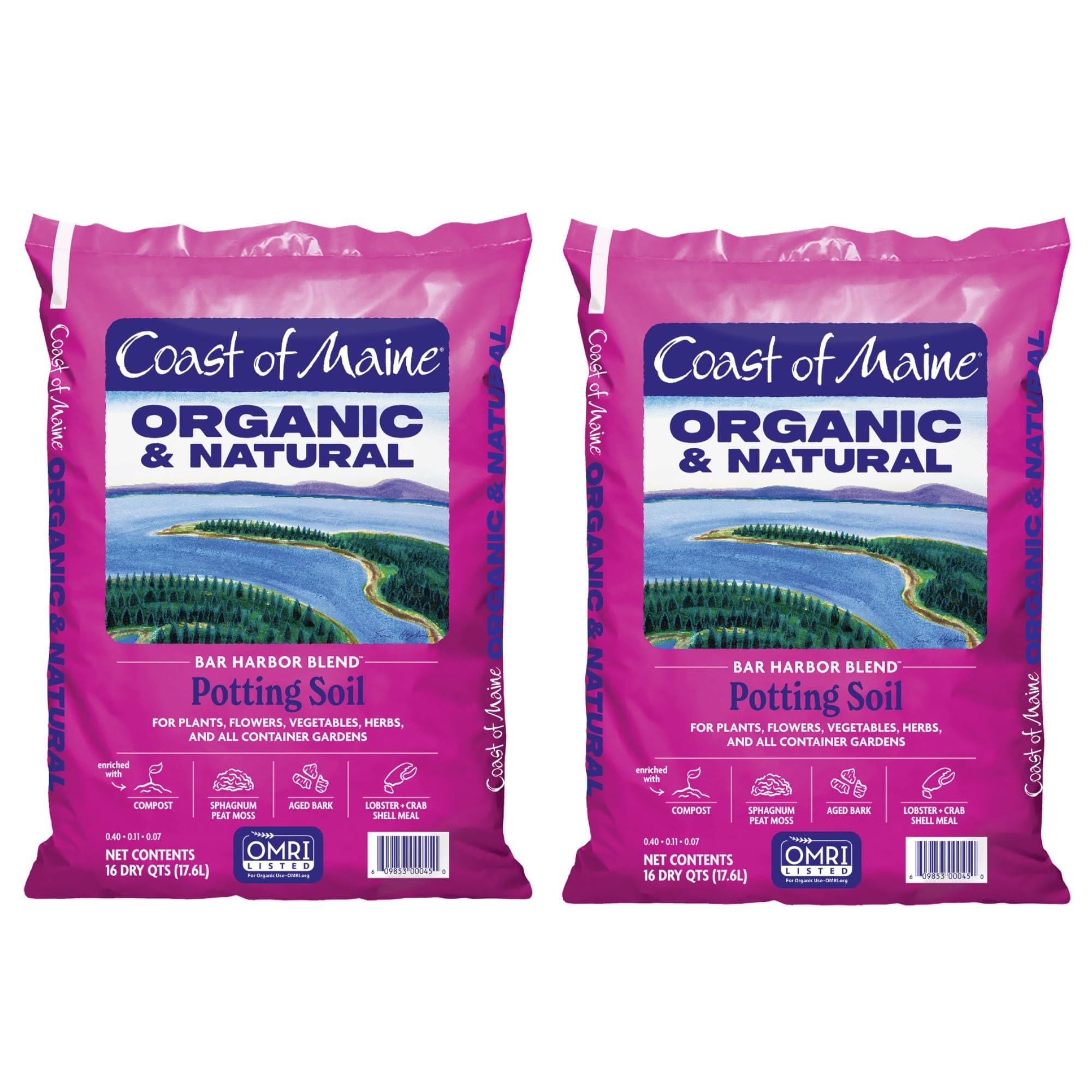
This mix from Coast of Maine brings a unique organic punch that rose roots in containers respond to immediately. The inclusion of lobster and crab shell meal provides a slow-release calcium and chitin boost that strengthens cell walls and helps roses resist common fungal diseases. The sphagnum peat moss and perlite create a loose, dark crumble that holds moisture without turning into a brick — critical for containers that sit in the sun.
User reports consistently mention that plants repotted into Bar Harbor Blend show noticeably greener leaves within two weeks. The kelp meal adds trace minerals that synthetic blends often miss, which translates to deeper flower color and more fragrance on repeat-blooming varieties. The 16-quart size is generous enough for two large patio pots or three medium containers.
The only trade-off is the lack of a pre-mixed synthetic fertilizer. You will need to supplement with a rose-specific liquid feed after six to eight weeks because the organic nutrients release more slowly. For growers who prefer a hands-off approach that still delivers rich soil biology, this is the top contender.
What works
- Seafood-based compost delivers unique micronutrients roses crave
- Loamy, well-draining texture resists compaction in pots
What doesn’t
- No added slow-release fertilizer; regular feeding required later
- Bag weight (14 lbs) is heavy for smaller gardeners
2. FoxFarm Happy Frog Potting Soil (2 cu ft)
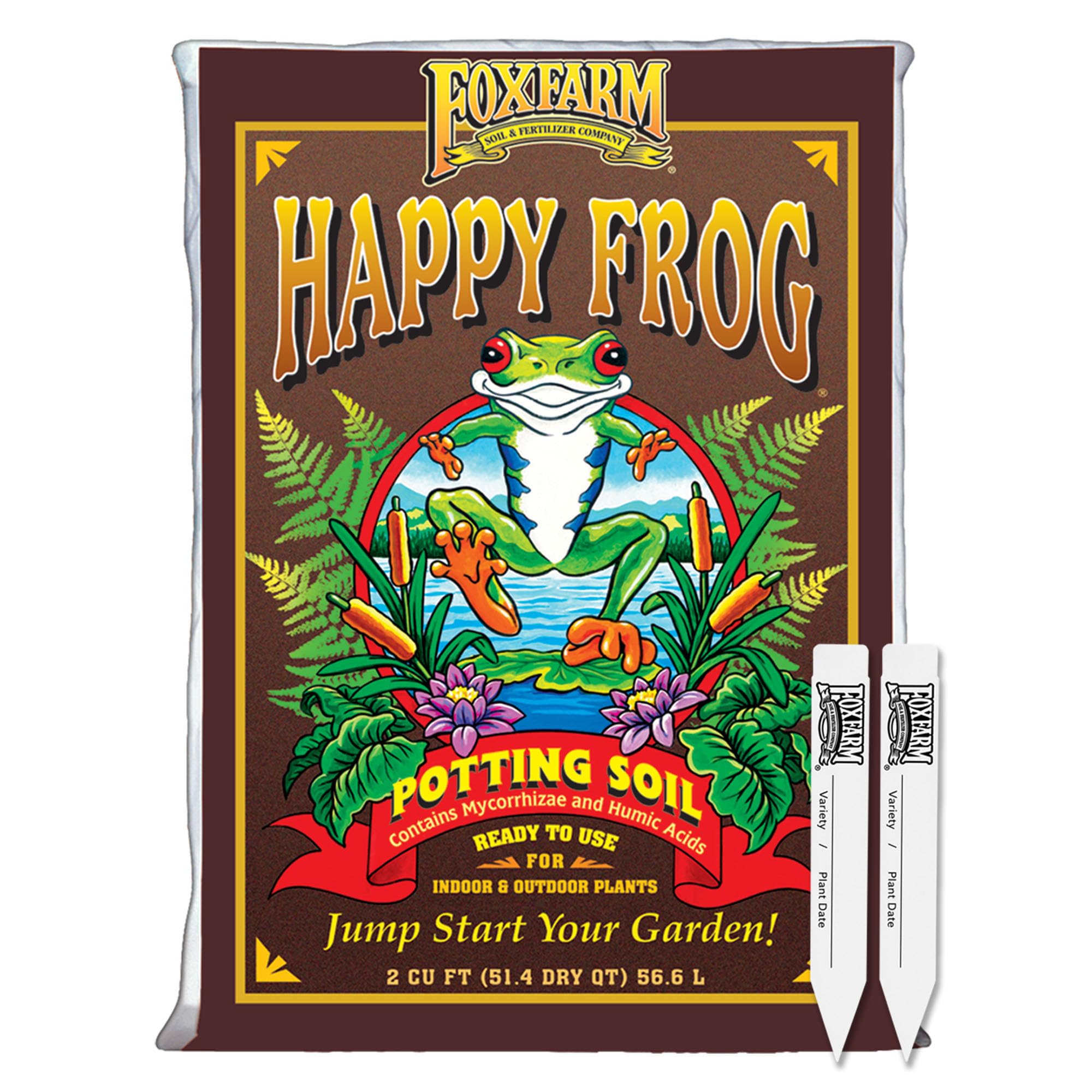
Happy Frog earns its name through a biological approach that changes how container roots interact with the soil. The mix is alive with mycorrhizal fungi and humic acids that expand the effective root zone dramatically, helping roses extract more water and nutrients from a limited pot volume. The texture strikes a fine line between light fluffiness and enough weight to anchor a mature rose bush without tipping.
Ingredients like bat guano and earthworm castings provide a steady, gentle nitrogen release that avoids the leaf burn risk of synthetic fertilizers. This makes it a safe choice for tender new transplants or bare-root roses. The 2-cubic-foot bag is bulky but covers multiple large containers, and the two plant tags included are a thoughtful touch for labeling varieties.
Some users note that the bag can arrive with minor tears during shipping, and the premium price per cubic foot is higher than many competitors. But for growers who prioritize root health and biological activity over quick nutrient hits, Happy Frog delivers visible results that justify the cost.
What works
- Mycorrhizae fungi dramatically boost root efficiency in confined pots
- Bat guano and worm castings provide gentle, organic feeding
What doesn’t
- Premium price tag makes it a bigger investment per bag
- Bag can arrive with small punctures from shipping
3. FoxFarm Ocean Forest Potting Soil (1.5 cu ft)
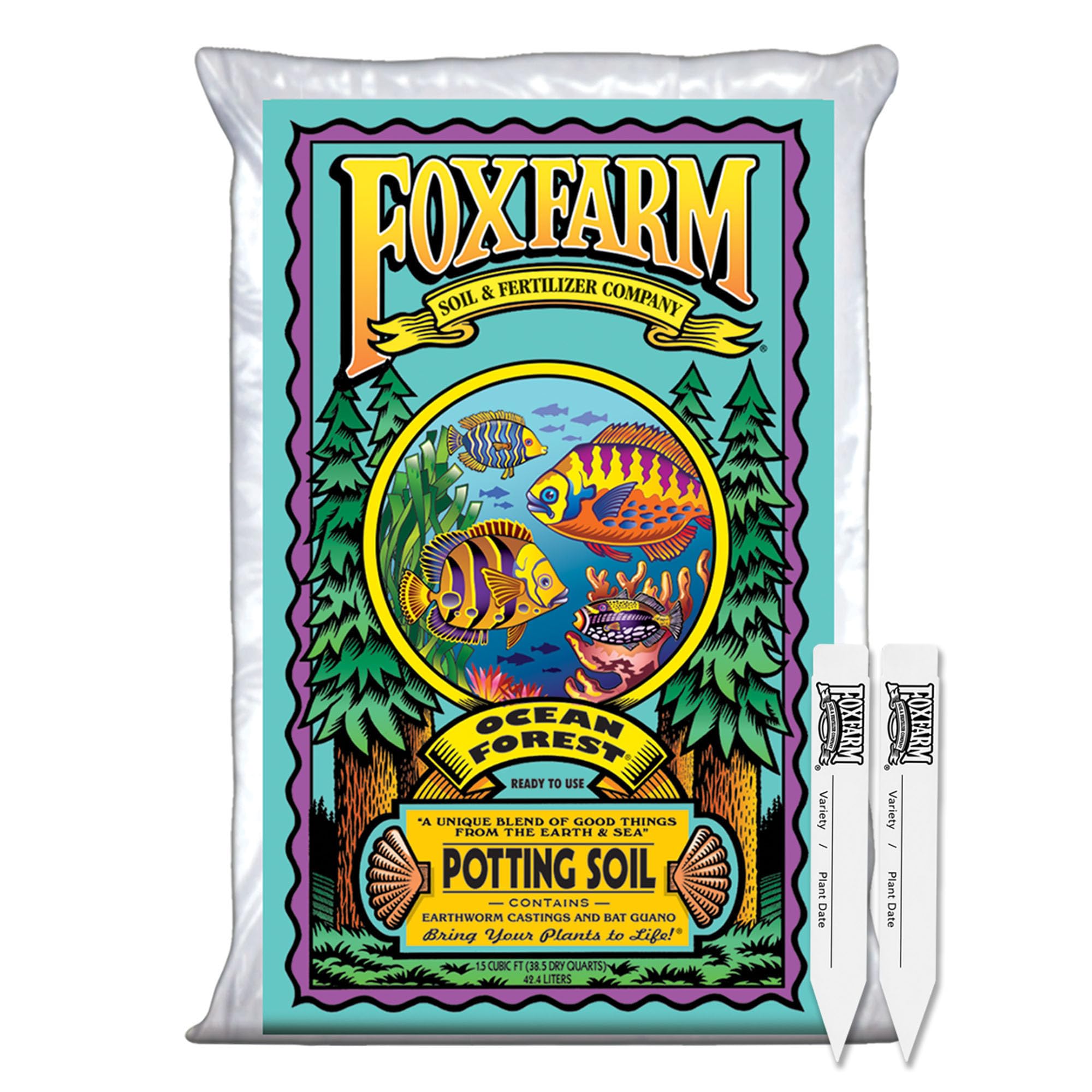
Ocean Forest is arguably the most well-known premium bagged soil among serious container gardeners, and the formula lives up to the reputation for roses. The sandy loam component gives it excellent drainage on day one — water flows through immediately without pooling — while the aged forest products and sphagnum peat moss hold just enough moisture between waterings. The oyster shell and crab meal provide natural calcium and chitin.
This mix shines when you need rapid establishment. Multiple side-by-side comparisons from users show roses potted in Ocean Forest outgrowing identical plants in conventional mixes within the first month. The texture is noticeably lighter than most big-box soils, which means less root resistance and easier digging when it is time to repot.
The primary downside is that the fertilizer charge is relatively light compared to specialty rose mixes. Heavy-feeding roses will need supplemental liquid fertilizer after three to four weeks. Some users also report small mushrooms sprouting from the organic matter, which is harmless but can surprise first-time users.
What works
- Sandy loam provides immediate, sharp drainage perfect for containers
- Light, fluffy texture helps roots spread quickly and easily
What doesn’t
- Limited built-in nutrients; need to supplement for heavy feeders
- Harmless mushrooms can appear from organic ingredients
4. Perfect Plants Rose Mix (8qt)
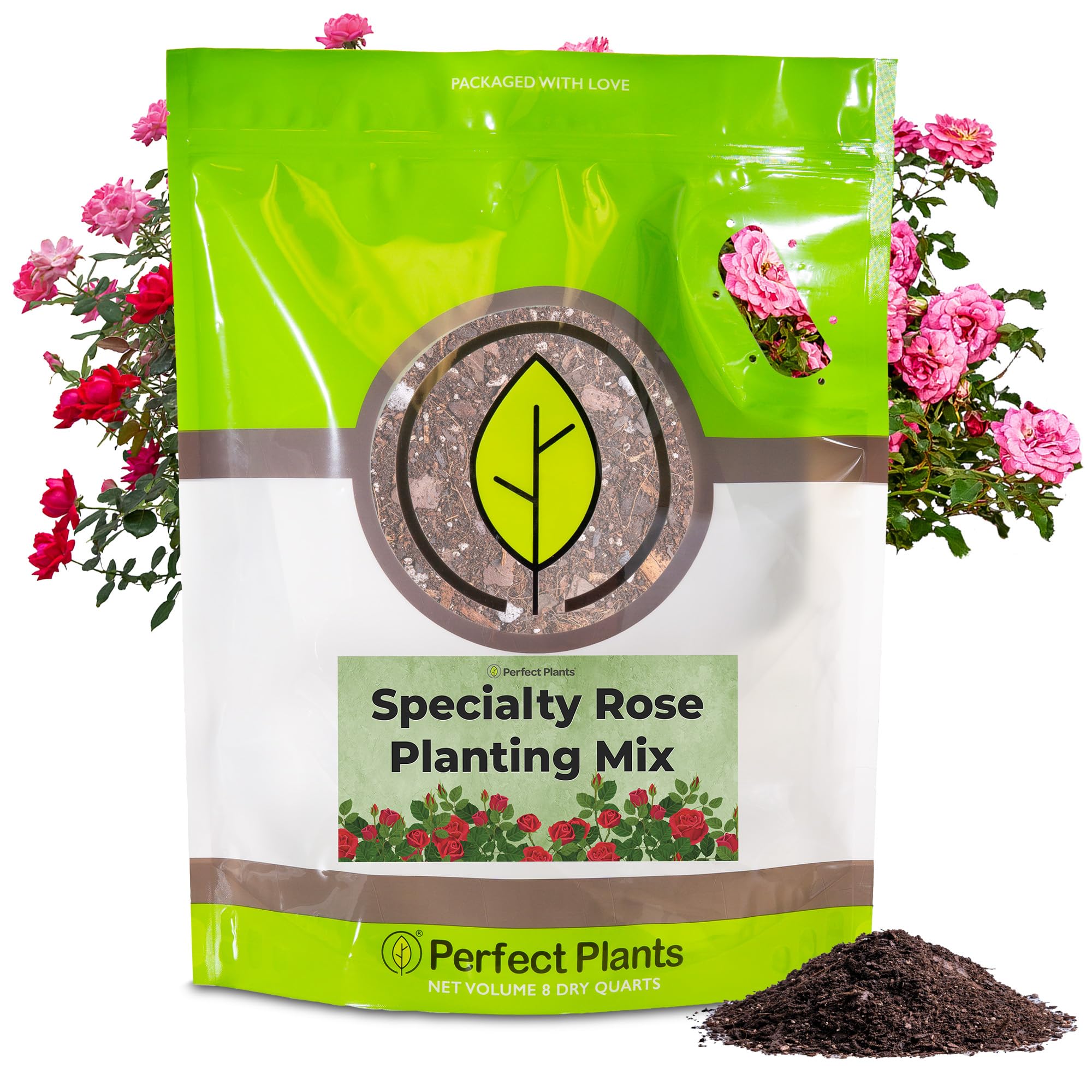
Perfect Plants formulated this mix specifically for rose needs, and it shows in the 18-6-8 slow-release fertilizer that continues feeding for a full twelve months. That is double the feeding duration of most standard potting soils, which means less worry about mid-season nutrient deficiencies for container roses that deplete resources fast. The composted pine bark chunks and sand create a coarse structure that drains well while still holding onto some moisture.
This mix works especially well for Knockout and Drift varieties that bloom repeatedly through the season. Multiple users report seeing new buds and fresh blooms within a few weeks of repotting sick or struggling roses. The resealable bag is a practical touch for those who do not use the entire 8-quart volume at once — it keeps the remaining mix fresh for later top-dressing.
The main limitation is the bag size. With only 8 quarts, you will need two bags for a single large patio pot, which pushes the total cost up. The sand content, while great for drainage, also means the mix is heavier than peat-based alternatives.
What works
- 12-month slow-release 18-6-8 feed reduces fertilization guesswork
- Coarse pine bark and sand give excellent drainage for pots
What doesn’t
- 8-quart bag is small; large pots need multiple bags
- Sand content makes bags heavier than peat-based mixes
5. Miracle-Gro Potting Mix (8qt 3-Pack)

Miracle-Gro Potting Mix is the most widely available option on this list, and the 3-pack delivers enough volume to fill multiple containers without a separate trip to the garden center. The formula feeds plants for up to six months with its built-in fertilizer, which covers most of the active growing season for spring-planted roses. The texture is consistent and fine, making it easy to work with for quick repotting.
Users consistently praise the convenience and reliability of this mix for general container plants. It holds moisture well, which helps in hot climates where pots dry out quickly. The 3-pack bundle is the smarter buy over single bags because the per-quart cost drops significantly.
The drawback for rose enthusiasts is that this is a general-purpose mix, not a rose-specific blend. The drainage is adequate but not as sharp as mixes containing sand or pine bark chunks. Roses that are sensitive to overwatering may need additional perlite mixed in. The synthetic fertilizer charge can also cause leaf burn if the mix is used straight for very young or delicate bare-root roses.
What works
- 3-pack offers excellent coverage for multiple containers at once
- Built-in feed lasts up to 6 months with minimal effort
What doesn’t
- General-purpose formula lacks rose-specific drainage amendments
- Synthetic fertilizer can be too strong for bare-root transplants
6. Coast of Maine Roses & Flowers Planting Soil (20 QT)
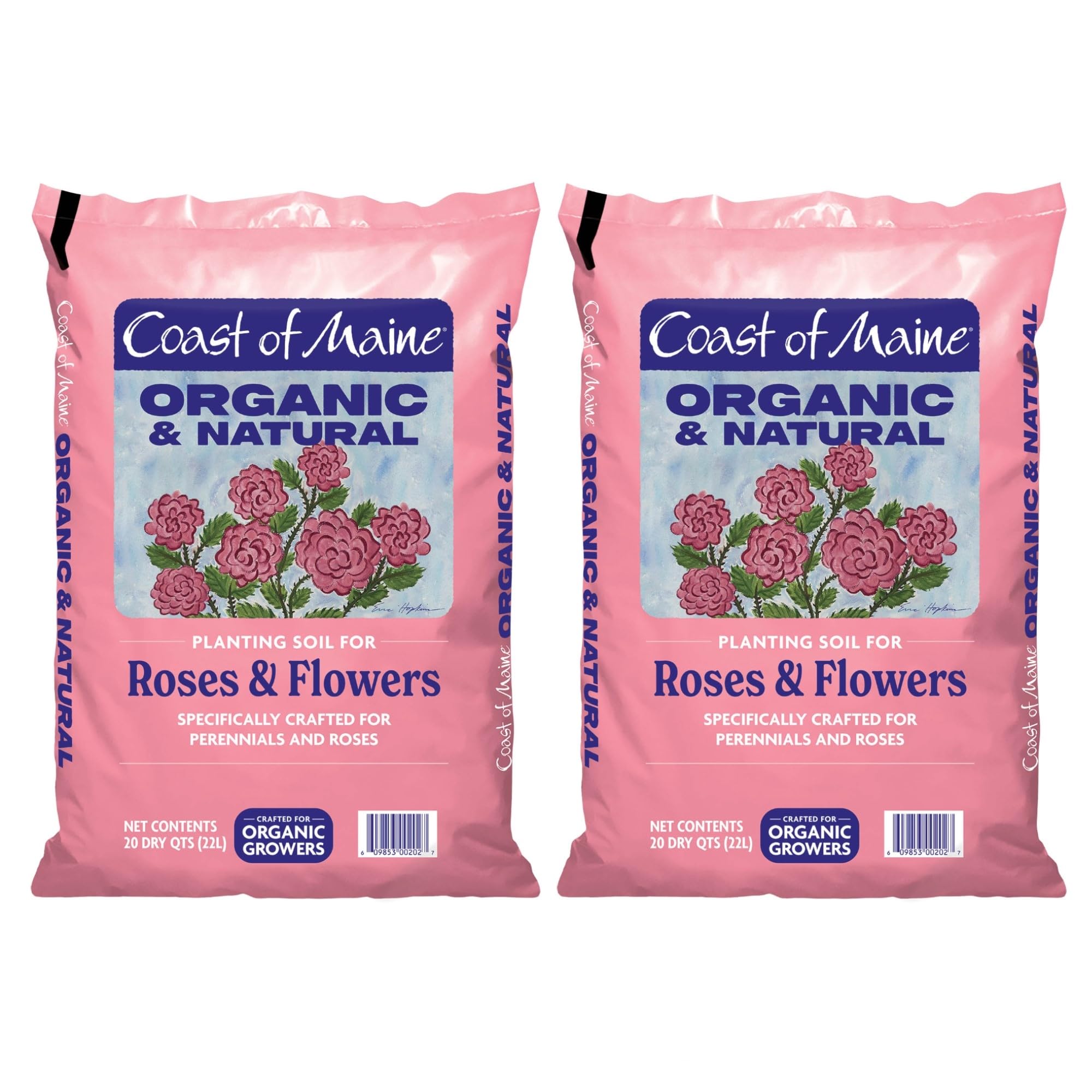
This Coast of Maine blend targets roses and flowers specifically, with composted manure as the primary organic amendment. The manure provides a rich nitrogen source that promotes dark green foliage and strong vegetative growth before blooming begins. The sphagnum peat moss balances the moisture retention so that the compost does not turn the pot into a swamp.
User reviews highlight how this mix revived roses that were on the brink of death from store-bought soils infested with pests or mites. The OMRI listing gives organic gardeners confidence that no synthetic chemicals are present. The 20-quart volume is one of the largest on this list, making it a practical choice for multiple containers or a single large planter box.
The main consideration is that the composted manure smell, while natural and not offensive, is more noticeable than in peat-based blends. The texture is also heavier than perlite-heavy mixes, so roses in smaller pots may need extra aeration material mixed in to prevent compaction over several months.
What works
- OMRI-listed organic compost formula with rich manure content
- 20-quart bag offers generous volume for multiple containers
What doesn’t
- Heavier texture may need extra perlite for small pots
- Natural manure smell is more noticeable than peat-based mixes
7. Perfect Plants Rose Mix (4qt)
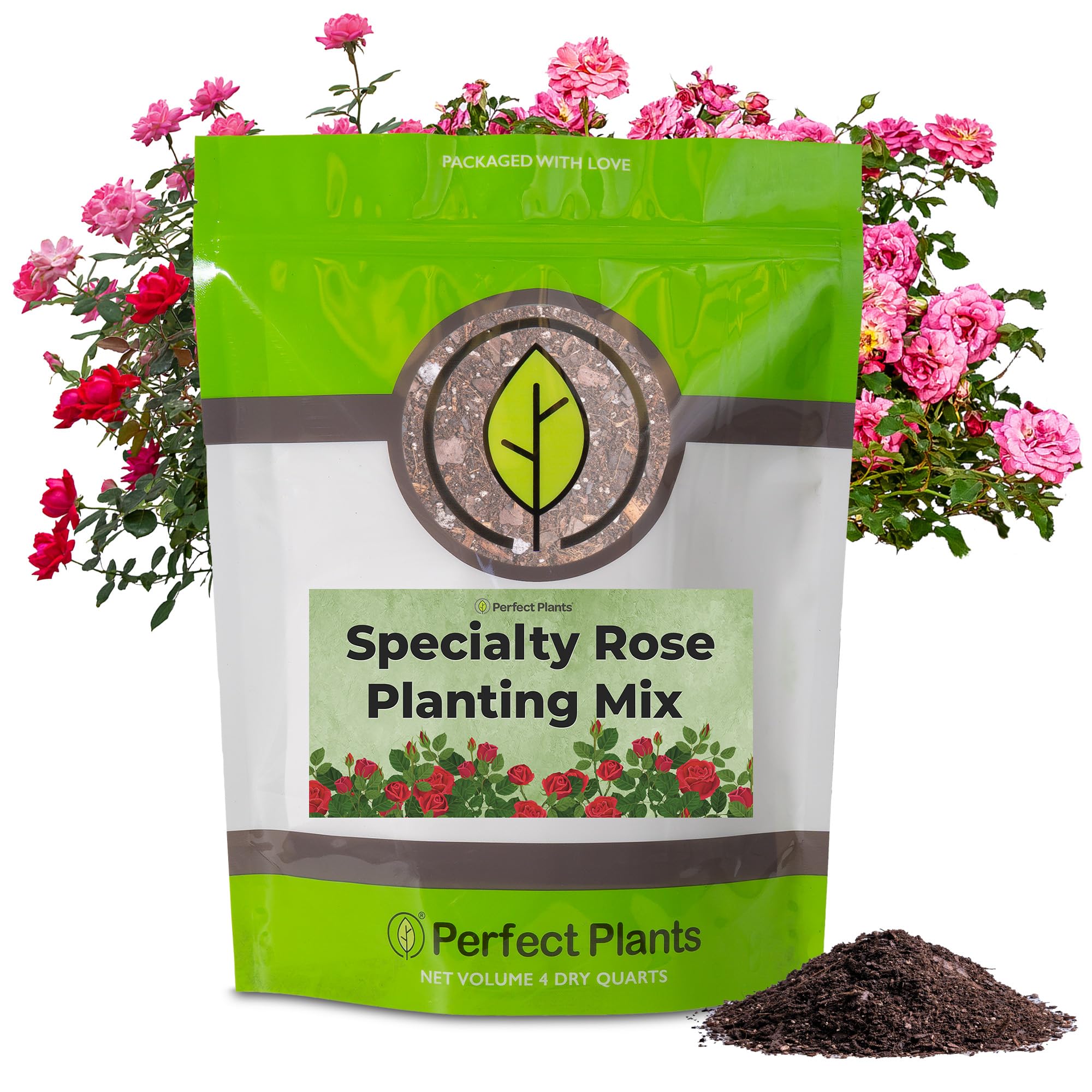
This smaller 4-quart bag of the Perfect Plants Rose Mix is ideal for a single small repot or for refreshing the top layer of soil in an existing container without buying a full 8-quart bag. It contains the same 18-6-8 slow-release fertilizer that feeds for a full year, giving you the same long-term nutrient support in a more manageable package. The resealable bag design is genuinely useful for keeping the remaining blend airtight and ready for use weeks or months later.
The mix includes granite sand for weight and drainage plus composted pine bark chunks for aeration. Users who repotted struggling single rose bushes report that the plant perked up within days, demonstrating that the nutrient profile is well-matched to rose requirements. The hand-mixed production on a family farm adds a level of quality control that large-scale commercial blends cannot always match.
The obvious limitation is that 4 quarts is only enough for one small or medium container. For larger patio pots or multiple roses, you will need to buy multiple bags, and the per-quart cost is higher than buying the 8-quart version. The sand makes the small bag feel heavier than its volume suggests.
What works
- Perfect size for a single repot or top-dressing an existing container
- Same 18-6-8 12-month feed as the larger bag in a smaller package
What doesn’t
- 4-quart volume is small; large pots need multiple bags
- Higher per-quart cost than the 8-quart option
Hardware & Specs Guide
Understanding NPK Ratios in Potting Soil
The three numbers on a bag — nitrogen, phosphorus, and potassium — represent the percentage of each macronutrient by weight. For container roses, a higher middle number (phosphorus) supports root development and flowering, while balanced nitrogen keeps foliage green without encouraging excessive leafy growth that sacrifices blooms. Slow-release granules coated with resin can extend feeding for 6 to 12 months, which is especially valuable in containers where frequent watering leaches nutrients faster.
Perlite vs. Sand vs. Pine Bark for Drainage
Perlite is a lightweight volcanic glass that creates air pockets but can float to the surface over time. Sand adds weight and sharp drainage but increases bag weight. Composted pine bark chunks provide both aeration and slow decomposition that feeds soil microbes. The best container rose mixes use a combination of two or three of these materials to create a structure that lets water flow through freely while retaining enough moisture between waterings.
FAQ
Can I use regular garden soil for roses in containers?
How often should I repot container roses with fresh soil?
What pH level is best for potting soil for roses in containers?
Should I add fertilizer to potting soil that already feeds for 6 months?
Final Thoughts: The Verdict
For most gardeners, the potting soil for roses in containers winner is the Coast of Maine Bar Harbor Blend because it combines organic lobster and crab meal with excellent drainage and a texture that does not collapse in pots. If you want a 12-month slow-release feed that removes the guesswork, grab the Perfect Plants Rose Mix (8qt). And for premium biological activity that supercharges root development, nothing beats the FoxFarm Happy Frog Potting Soil.