
A meandering flower bed, a vegetable patch that needs protection from foot traffic, or a corner of the yard that deserves a visual anchor — the right decorative wooden fence turns a vague outdoor plan into a defined, polished landscape. The choice between a low picket border, an expandable lattice trellis, or a solid privacy screen determines not just the look, but how your garden breathes, grows, and feels.
I’m Rikta — the co-founder and writer behind Lawn Gear Lab. I’ve spent hundreds of hours analyzing wood treatments, panel dimensions, and assembly requirements, cross-referencing owner reports to find which fences actually hold up across seasons without cracking, warping, or fading.
This guide helps you match the right height, wood type, and installation method to your specific garden layout, so you can confidently buy the best decorative wooden fence for your yard.
How To Choose The Best Decorative Wooden Fence
Picking the right wooden fence means balancing three things: the wood’s natural resistance to weather, the height and style that fits your garden, and the installation effort you’re willing to commit. Skip any of these, and you’ll end up with a fence that either rots, looks out of place, or falls over in a light breeze.
Wood Type and Treatment
Cedar is the gold standard — naturally rot-resistant, lightweight, and aromatic. Pine and fir can work well if carbonized or varnished, but untreated softwoods will warp and discolor within one season. Check whether the manufacturer specifies carbonization (high-temp treatment that reduces moisture absorption) or a varnish finish. Unfinished wood requires immediate sealing or staining to survive rain and UV.
Height, Panel Length, and Use Case
Fences under 16 inches are strictly for edging and low borders — they mark a boundary but offer zero privacy. Panels between 3 and 5 feet can hide trash cans and AC units. Lattice panels that expand to 7 feet support climbing vines like clematis or roses, but they need sturdy anchoring because the wider they stretch, the more wind they catch. Measure your actual garden space before deciding; a 13-foot continuous panel works for straight edges, while shorter modular sections let you curve around flower beds.
Assembly and Ground Anchoring
No-dig systems use stakes you hammer into the soil — ideal for renters or soft earth. Surface-mounted panels require drilling into concrete or decking. Freestanding screens need a broad enough base or ground stakes to resist tipping. Always check whether hardware (screws, stakes, nails) is included, as missing stakes are a common frustration in owner reports.
Quick Comparison
On smaller screens, swipe sideways to see the full table.
| Model | Category | Best For | Key Spec | Amazon |
|---|---|---|---|---|
| Enclo Concord Cedar Privacy Screen | Privacy Screen | Hiding AC units & trash cans | 5 ft height, cedar slats | Amazon |
| Enclo Louvered Privacy Screen | Louvered Screen | Freestanding patio privacy | 6.1 ft height, louvered design | Amazon |
| Bounmer Expandable Garden Trellis | Lattice Panel | Large climbing plant support | 0.35 in thick cedar slats | Amazon |
| Yaheetech Garden Picket Fence | Picket Border | Flower bed edging | Fir wood, varnish finish | Amazon |
| Alphatool Pine Wood Garden Fence | Continuous Edging | Long straight border runs | 13.1 ft length, carbonized pine | Amazon |
| Greenes Fence Cedar Picket Fence | Picket Border | Lightweight curved layouts | Cedar, 16 ft total coverage | Amazon |
| ANPHSIN Expandable Wood Trellis | Lattice Panel | Wall-mounted vine support | Expands to 78 in long | Amazon |
In‑Depth Reviews
1. Enclo Concord Cedar Wood Privacy Screen

The Enclo Concord hits the sweet spot between a functional privacy barrier and a natural wood aesthetic that vinyl panels simply cannot replicate. At 5 feet tall and 38.6 inches wide per panel, it’s tall enough to hide trash cans, AC units, or pool equipment without looming over the garden. The FSC-certified cedar boards arrive unassembled, but owners consistently report a straightforward 90-minute build using a mallet and the included ground stakes — no digging required.
Real cedar grain, wood knots, and natural color variation mean every panel looks slightly different, which avoids the sterile uniformity of plastic screens. The manufacturer recommends applying a transparent stain every six months to preserve the wood’s appearance, though several long-term owners note the screen retains its structural integrity and color well past a year of outdoor exposure. The no-dig stake system works best in soft soil; compacted or rocky ground may require pre-drilling pilot holes.
For anyone who needs a quick, attractive way to block an eyesore without pouring concrete, this is the most balanced option available. The only real compromise is the single-panel width — covering a larger area requires buying multiple units, but each panel stands independently and can be spaced to match your exact layout.
What works
- Easy no-dig stake installation
- Natural cedar grain with varied texture
- Ideal 5-ft height for hiding utility items
What doesn’t
- Requires periodic staining to maintain color
- Single panel covers only 3.2 ft of width
2. Enclo Louvered Privacy Screen
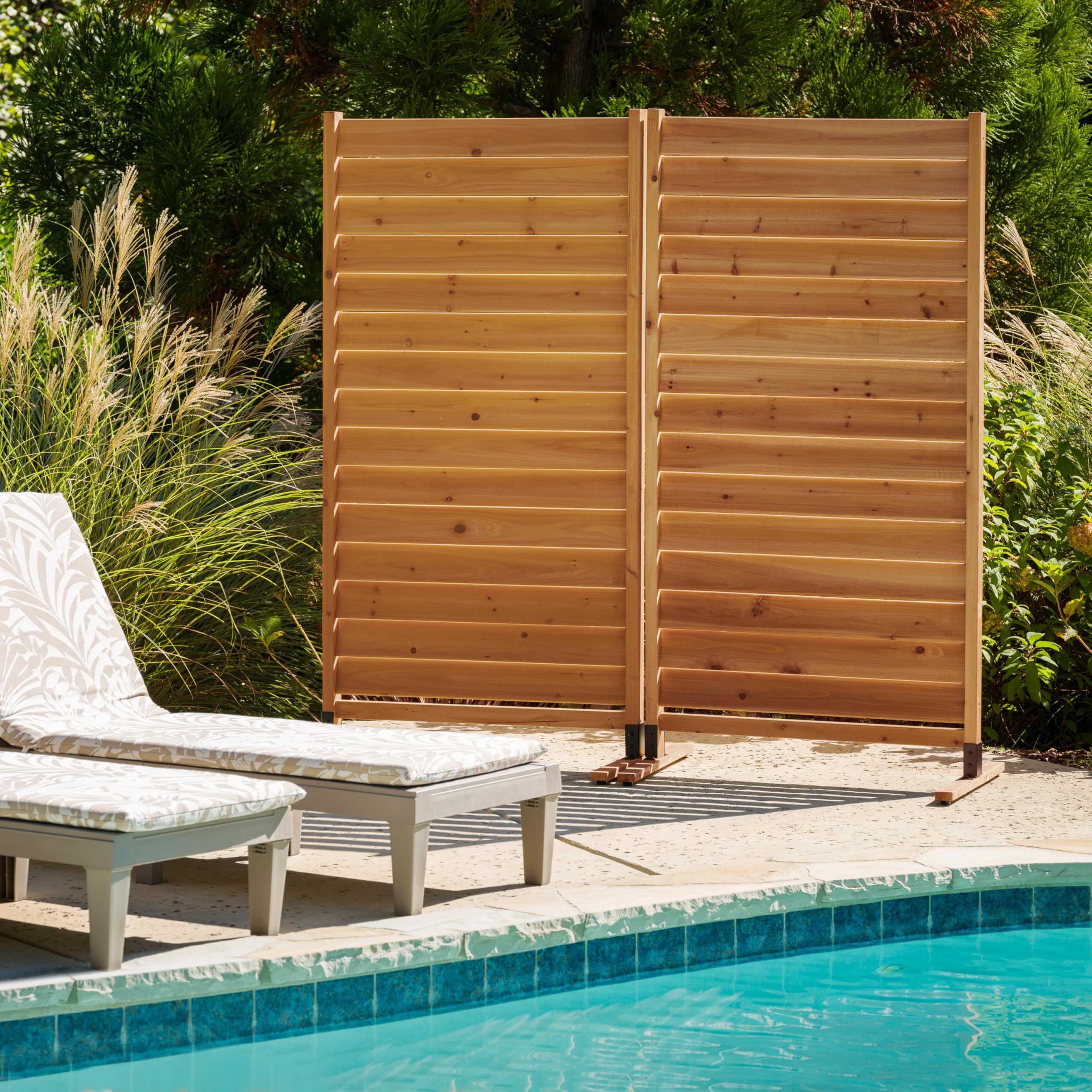
When you need total visual screening without building a full fence, the Enclo Louvered screen delivers over 6 feet of height in a design that feels less like a wall and more like architectural garden furniture. The louvered slats angle to block sightlines while still allowing airflow and light to pass through, which prevents the space from feeling boxed in. Assembly averages 30 minutes for the freestanding version using only a power drill — no digging, no concrete.
The panel can also be surface-mounted to wood or concrete surfaces, which opens up balcony and deck installations where hammering stakes isn’t an option. Owners praise the pre-drilled holes that align perfectly, the included extra hardware, and the overall fit-and-finish that rivals custom carpentry. At 30 pounds, it’s heavy enough to feel stable when freestanding but manageable for a single person to maneuver during assembly.
The trade-off is price: this is the most expensive option per panel in the lineup. But for a dedicated privacy solution that doubles as a decorative room divider on a patio or deck, the build quality and precise engineering justify the cost. Just watch the instructional video before starting — a few owners found the written directions ambiguous, but the video clarifies the louver alignment step.
What works
- 6-ft height blocks views effectively
- Freestanding or surface-mount flexibility
- Precise pre-drilled assembly fits perfectly
What doesn’t
- Highest price per panel in the guide
- Written instructions need a video supplement
3. Bounmer Expandable Garden Trellis (4-Pack)
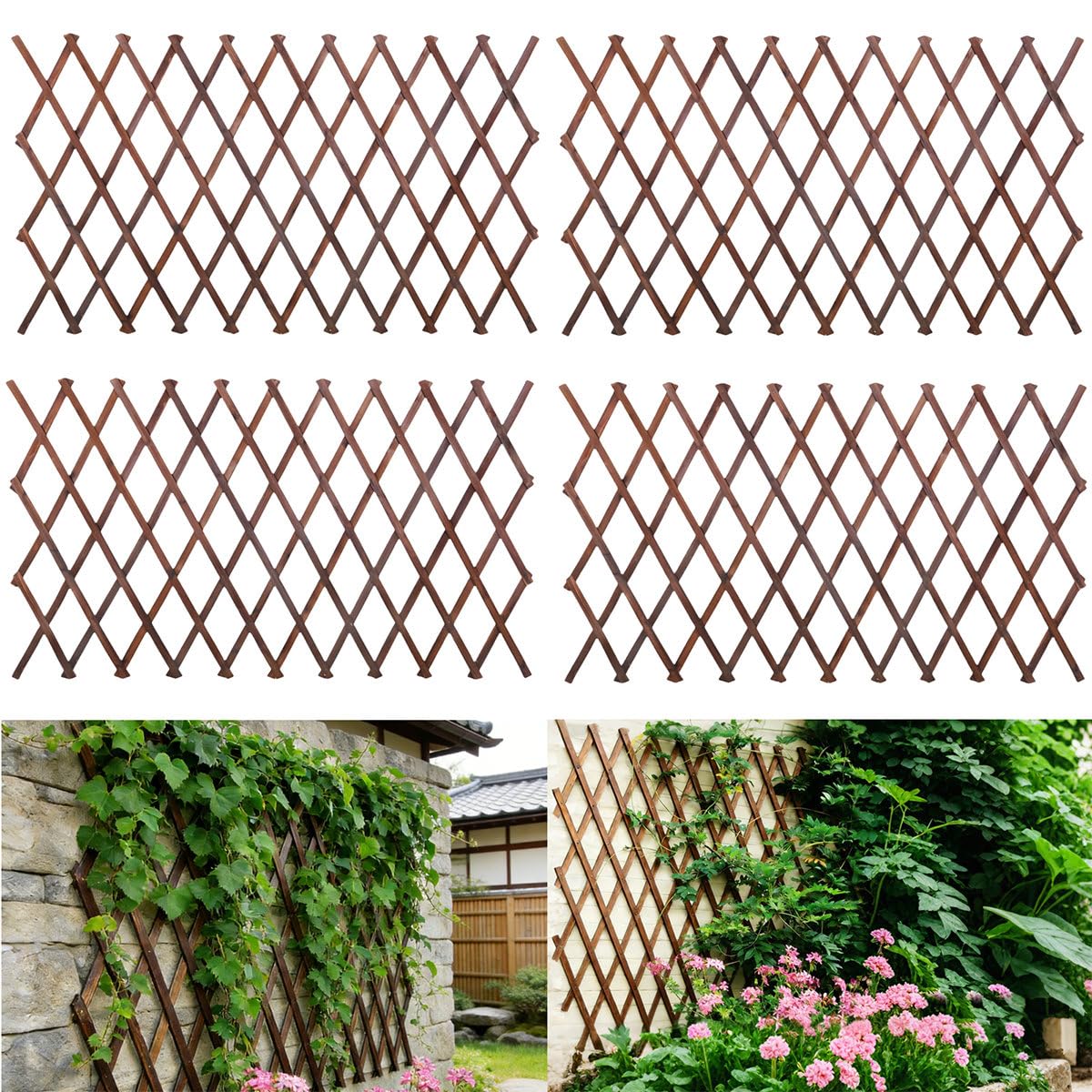
For gardeners with ambitious climbing plants — think grapevines, climbing roses, or fast-growing clematis — the Bounmer trellis pack offers the thickest lattice slats in this roundup at 0.35 inches. That 30% increase over standard trellis thickness translates directly into reduced warping and cracking over multiple seasons. The carbonized cedar wood arrives unfinished, which means you’ll want to seal or paint both sides before installation to prevent UV fading, but the natural wood grain is rich and attractive.
Each panel expands from a closed 45.3 x 11.2 inches up to 89 x 38 inches when fully opened, giving you flexibility to cover a large wall or fence section with a single panel. The diamond lattice pattern provides excellent ventilation and light transmission, so vine leaves don’t trap moisture against the wood. Owners consistently mention the value of getting four panels at this price point, and the reinforced expansion joints hold up to frequent repositioning without becoming loose.
The main caveat is stability at the far ends of the expanded lattice — the outer diamond points can dangle slightly loose if not secured to a frame or wall. The panels are best when mounted against a solid backing or attached to a wooden support structure. For a freestanding trellis, you’ll need to build a simple frame to tension the lattice properly.
What works
- Extra-thick 0.35-inch slats resist warping
- Four panels in one purchase provides great coverage
- Smooth expandable mechanism adjusts easily
What doesn’t
- Unfinished wood needs sealing before outdoor use
- Ends of expanded lattice can be loose without a frame
4. Yaheetech Garden Picket Fence
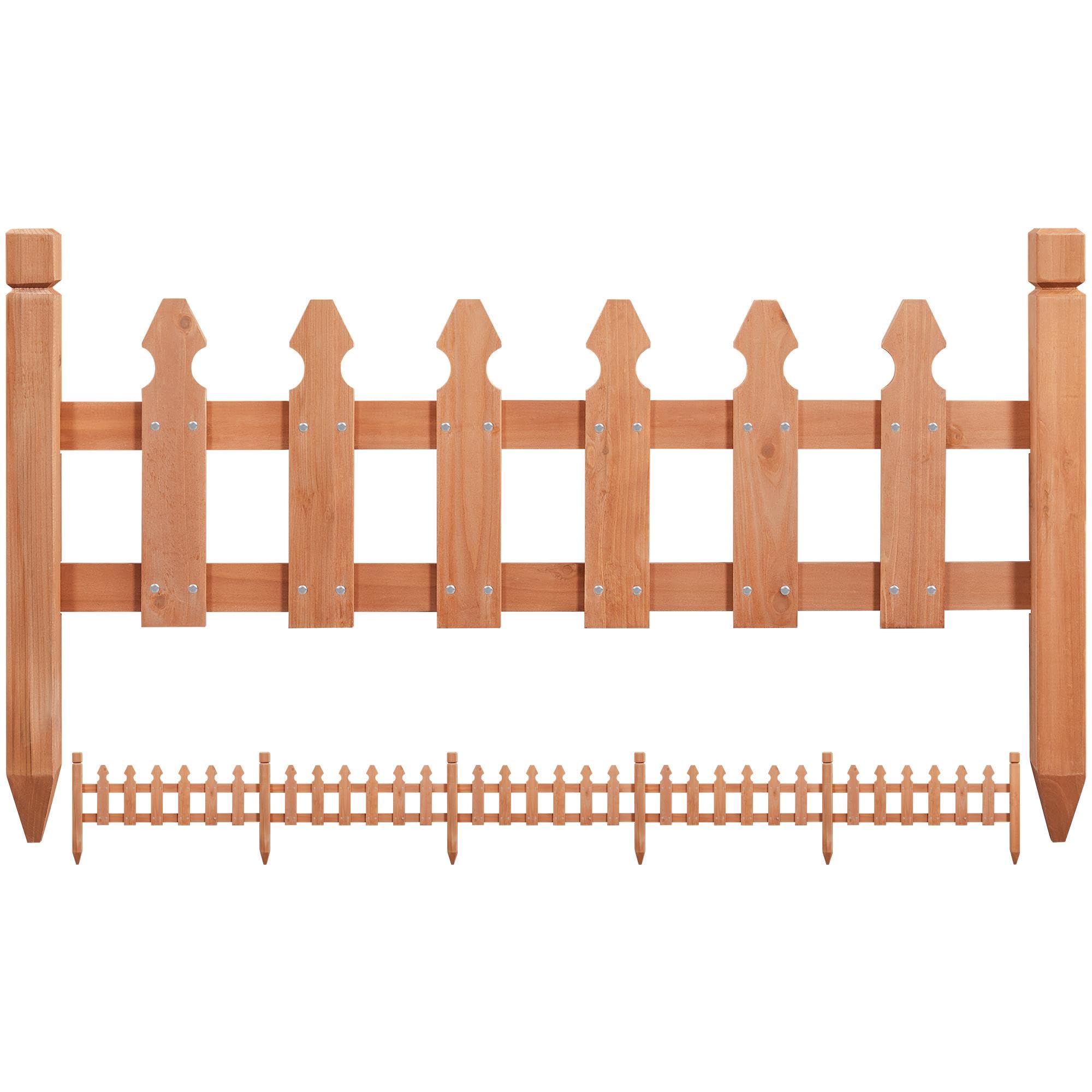
The Yaheetech picket fence offers a rare combination: firm carbonized fir wood with a pre-applied varnish finish at a price that undercuts most cedar alternatives. The varnish gives the panels a ready-for-weather appearance straight out of the box, and the 11.5-inch height is ideal for bordering flower beds and vegetable patches without blocking sunlight. Each unit contains five panels (35.5 inches wide each) and six posts, plus metal hardware for connecting them.
The wood smells pleasant when cut (for those who need to trim panels to fit), and the carbonization treatment adds noticeable rigidity compared to untreated pine. Several owners mention hammering stakes directly into the ground with a mallet without splitting the posts, a sign that the fir is well-cured.
The primary drawback is the reddish-brown color, which leans darker and warmer than the product images suggest. Buyers expecting a white or light gray fence will need to paint over the varnish. Additionally, the included screws are adequate, but upgrading to exterior-grade stainless steel fasteners adds long-term rust protection. For the price, however, this is the most solid picket border you can buy without switching to cedar.
What works
- Varnish finish ready for weather out of box
- Carbonized fir resists splitting during installation
- Complete kit with posts and hardware included
What doesn’t
- Color is darker red-brown than pictured
- Included screws benefit from upgrade to stainless
5. Alphatool Pine Wood Garden Fence
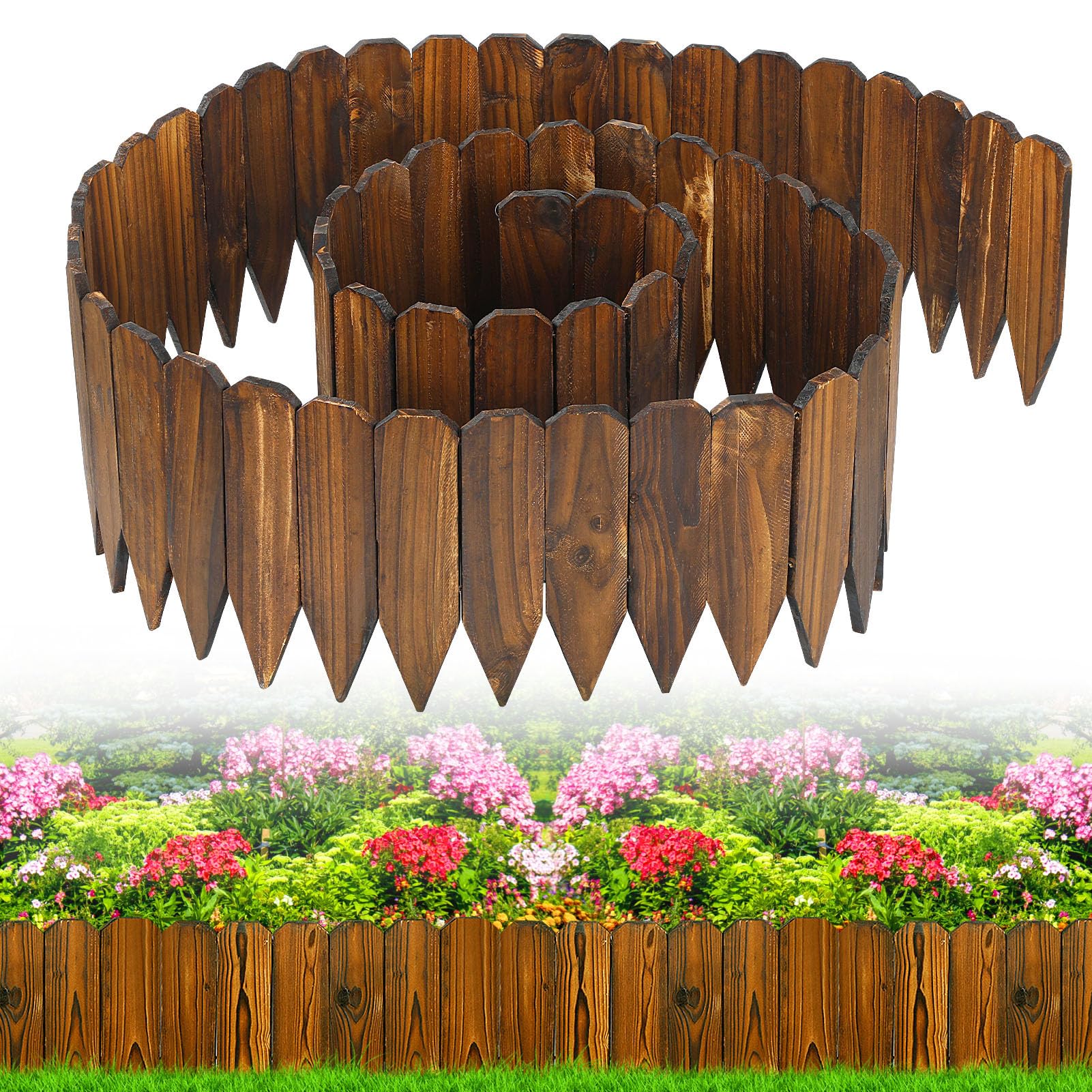
The Alphatool fence is built for speed — it arrives as a single continuous 13.1-foot panel of carbonized pine pickets, each with pointed ends that you hammer directly into the soil. No stakes, no screws, no post holes. For straight garden borders along driveways, sidewalk edges, or long flower beds, nothing in this guide installs faster. The 12-inch height is perfect for defining a boundary without blocking views or light.
The carbonization process gives the pine a dark, vintage appearance that won’t fade significantly in the sun, and the high-temperature treatment improves moisture resistance compared to raw pine. Owners note that the wood is hard enough to survive mallet blows without splitting, which is essential because you drive each picket individually. The panels are detachable from each other, so you can break the run into shorter sections for curved layouts or circle a tree base.
Installation gets tricky in compacted clay or rocky soil — the pointed ends can bend if you hit a stone, and you’ll lose some height if the pickets don’t sink fully. Using a rubber mallet instead of a steel sledgehammer reduces the chance of mushrooming the tops. For soft garden soil, this is a 15-minute fence; for hard ground, expect 30 minutes with some pre-soaking of the soil.
What works
- Instant installation — hammer directly into soil
- Detachable panels allow curved or circular layouts
- Carbonized pine resists moisture rot
What doesn’t
- Slightly loses effective height when fully sunk
- Difficult to install in rocky or clay-heavy ground
6. Greenes Fence Cedar Picket Fence (2-Pack)

The Greenes Fence is the most flexible picket option for curved garden beds. Made from real cedar with a natural unfinished look, each of the two included sections measures a true 9 feet (not the listed 8 feet, as multiple owners confirmed), giving you 18 feet of total coverage. The thin 0.38-inch width and low 16-inch height let the fence bend along gentle curves when you use anchor stakes every 3 feet to stabilize the line.
The cedar construction keeps the fence lightweight and naturally pest-resistant, which is important for vegetable gardens where chemical treatments aren’t welcome. Owners report using it around barrel gardens, tree rings, and along pathways, with several noting that painting or staining the raw wood transforms the appearance from rustic to formal. The flexible nature means you can create smooth arcs rather than rigid angles, a major advantage over solid panel fences.
The downside is visible from the reviews: the fence does not include ground stakes or attachment hardware. You’ll need to buy stakes separately and attach them yourself, which adds cost and effort. The thin cedar pickets also split more easily than thicker alternatives if you over-drive a nail. For a gentle, curving border around established plants, this is the right tool — just budget for stakes and paint.
What works
- Natural cedar resists rot without chemicals
- Flexible enough for curved garden layouts
- Actual 9-ft panels provide bonus coverage
What doesn’t
- No stakes or hardware included
- Thin pickets can split if nailed too aggressively
7. ANPHSIN Expandable Wood Trellis (4-Pack)
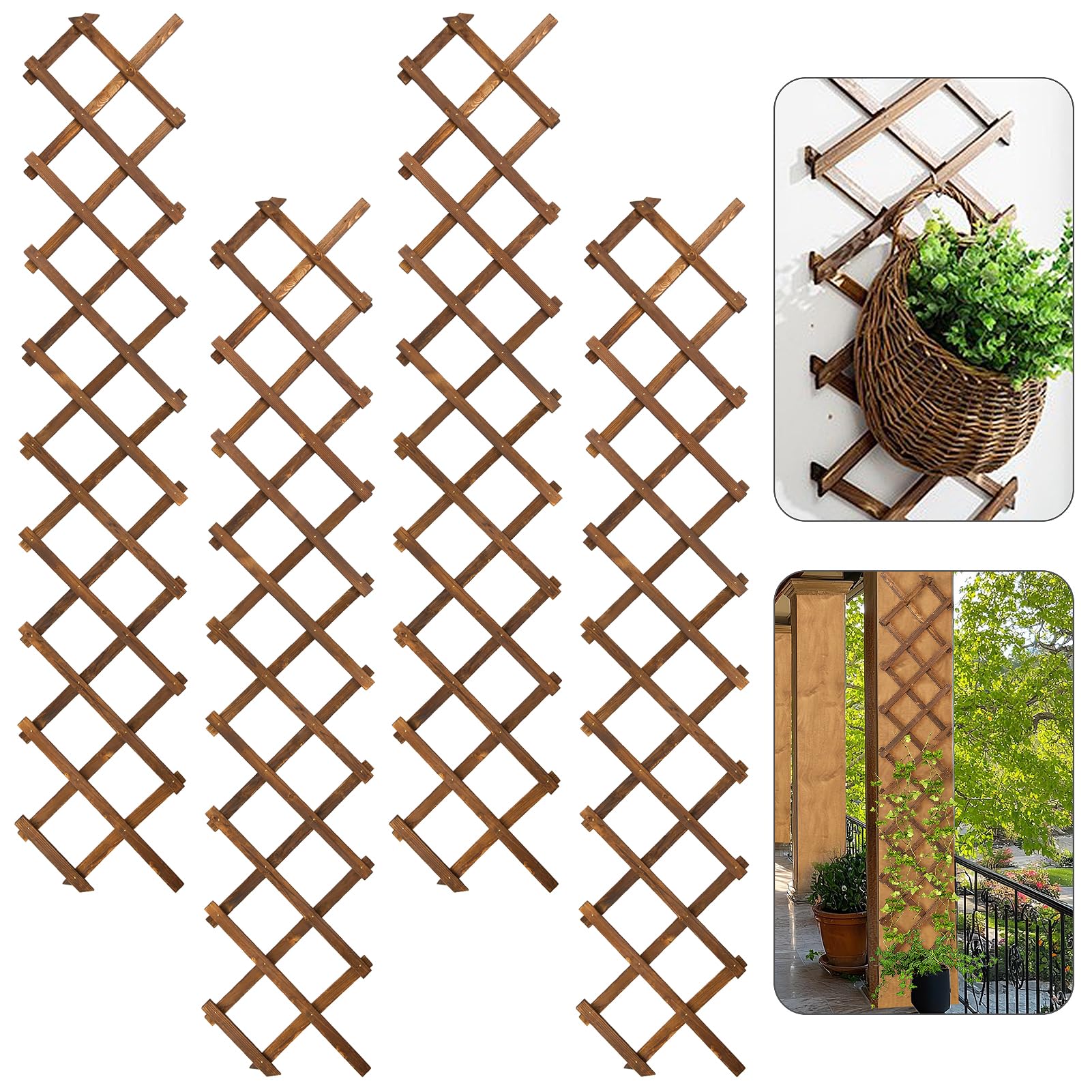
For budget-conscious gardeners who need a large climbing surface without the thickness of premium trellises, the ANPHSIN expandable lattice delivers four panels at a price that undercuts almost every competitor. Each panel expands from a compact 17 x 10 inches up to 78 x 13 inches, covering narrow wall spaces or fence sections with a diamond-pattern wooden grid that supports ivy, clematis, and morning glories.
The thickened anti-corrosion wood holds up well in humid environments — owners in Florida report it surviving daily rain and orchid spraying without immediate degradation. The reinforced connection joints allow smooth expansion and contraction without the lattice falling apart, which is the most common failure mode of cheap trellises. A pack of nails is included for mounting, though the nails are small and best suited for attaching to a wooden fence or post rather than masonry.
The trade-off for the low cost is the thin slat profile. These panels won’t support heavy grapevines or large climbing roses without additional framing. The unfinished wood also needs a coat of exterior sealant or paint if you want it to last beyond two seasons. For light-duty vine support or as an inexpensive privacy lattice on a balcony, the four-panel count gives you massive flexibility at a minimal investment.
What works
- Four panels for the price of one from premium brands
- Expandable design fits narrow spaces well
- Holds up to humidity without warping quickly
What doesn’t
- Thin slats unsuitable for heavy vine loads
- Unfinished wood needs sealing for long life
Hardware & Specs Guide
Carbonized vs Untreated Wood
Carbonization heats the wood in a low-oxygen kiln, darkening the color and reducing the wood’s ability to absorb moisture. This process improves resistance to rot and insect damage without chemical preservatives. Untreated wood, even cedar, will weather to a gray patina over time and may crack if not sealed. For decorative fences that touch the soil, carbonized pine or fir offers a longer lifespan than raw pine at a similar price point.
Panel Height and Visibility
Decorative fences under 16 inches serve as physical boundaries and visual borders without obstructing views — ideal for flower beds and pathways. Panels between 18 and 36 inches can obscure low-hanging plants or small utility items. Screens above 4 feet create genuine privacy barriers but require sturdier anchoring to resist wind loads. Lattice panels above 6 feet need a supporting framework to prevent the diamond points from sagging or detaching over time.
No-Dig vs Stake vs Surface Mount
No-dig systems rely on long ground stakes that you hammer vertically into the earth, with the fence panel attaching to the stakes. This works well in soft, loamy soil but struggles in clay or rocky terrain. Individual stake systems (where each picket has its own point) distribute the insertion force across many points but lose height if the ground is uneven. Surface mounting requires drilling pilot holes and using concrete wedge anchors or lag screws, making it the most secure for decks or concrete patios.
Varnish, Stain, and Sealant Intervals
Pre-varnished fences (like the Yaheetech) offer immediate UV and moisture protection but may need a top coat every 12-18 months depending on sun exposure. Unfinished wood should be treated with a transparent or semi-transparent exterior stain within a week of installation to prevent cracking. Solid stains hide the wood grain but last longer between reapplications — the manufacturer of the Enclo Concord recommends applying stain every six months to maintain the natural look.
FAQ
How long does a decorative wooden fence last outdoors?
Can I cut a wooden fence panel to fit a smaller space?
Do I need to anchor a freestanding privacy screen in concrete?
What screw or nail type works best for wooden fence installation?
Final Thoughts: The Verdict
For most gardeners, the decorative wooden fence winner is the Enclo Concord Cedar Privacy Screen because it combines real cedar aesthetics, a practical 5-foot height, and a no-dig installation that works for both privacy and decoration without needing concrete. If you want a flexible picket border for curving flower beds, the Greenes Fence Cedar Picket Fence gives you genuine cedar at a low entry point. And for supporting tall climbing vines on a budget, the Bounmer Expandable Garden Trellis offers the thickest lattice slats and four panels in one package.