
The difference between a tray of leggy, weak sprouts and a flat of stocky, vibrant seedlings ready for the garden often comes down to what’s inside the bag. Standard potting mixes, designed for established plants, are too dense and coarse for delicate root hairs, leading to poor germination and stunted early growth. A proper seed-starting mix must be fine-textured, pH-balanced, and disease-free to give tender sprouts the specific environment they need.
I’m Rikta — the co-founder and writer behind Lawn Gear Lab. I’ve spent countless hours researching horticulture data, comparing soil ingredient ratios, sifting through verified customer experiences, and analyzing the chemical and physical properties that define a winning potting soil for seedlings to assemble this definitive guide.
Whether you are germinating heirloom tomatoes in a basement grow station or starting a flat of peppers under a shop light, the right seed-starting medium is your first and most critical variable for success. This guide breaks down the best options on the market to help you choose the perfect mix for your specific setup and budget.
How To Choose The Best Potting Soil For Seedlings
Selecting a seed-starting mix is different from choosing a general potting soil. The wrong mix can lead to damping-off, poor root development, or slow germination. Focus on these three critical factors.
Texture and Particle Size
Seedling roots are thin and fragile. A mix with large bark chunks, wood chips, or coarse perlite can block root penetration and create air pockets that dry out rapidly. The ideal seedling mix has a consistently fine, almost powdery texture that allows tiny roots to explore freely while maintaining even moisture. Look for blends that are hand-screened or described as having a “fine” or “refined” texture.
Moisture Retention vs. Drainage
Seeds need constant, even moisture to germinate, but waterlogged conditions invite fungal diseases. A balanced mix uses ingredients like peat moss or coco coir for water-holding capacity, combined with perlite or vermiculite for aeration and drainage. The best mixes create a “sponge-like” environment that is damp but never soggy. A wetting agent can also help the mix rehydrate evenly after it dries out.
pH Balance and Nutrient Strategy
Most seeds contain enough stored energy to germinate and produce their first true leaves without added fertilizer. A pH range between 5.4 and 6.5 is ideal for nutrient availability and root health. Many quality mixes include lime to buffer pH away from the natural acidity of peat moss. Beginners should avoid mixes with high levels of synthetic fertilizer, which can burn tender roots; instead, look for a “light” or “starter” formula with minimal or no added nutrients, allowing you to control feeding after the first true leaves appear.
Quick Comparison
On smaller screens, swipe sideways to see the full table.
| Model | Category | Best For | Key Spec | Amazon |
|---|---|---|---|---|
| Espoma Organic Seed Starter | Premium Organic | Root health with mycorrhizae | 16 qt per bag (2-pack) | Amazon |
| Old Potters Germination Mix | Professional Grade | Large volume & fine texture | 24 Quarts | Amazon |
| Duspro Coco Coir Mix | Peat-Free | Eco-friendly wick watering | 8 Dry Quarts | Amazon |
| Gardener’s Supply SuperRoot Booster | High Nutrient | Vigorous seedling growth | 9 Quarts | Amazon |
| Hoffman Seed Starter | Classic Soilless | Budgets & consistent results | 10 Quarts | Amazon |
| Jiffy Natural & Organic Mix | Organic Value | Transplanting & moisture retention | 10 Quarts | Amazon |
| Black Gold 1311002 | Budget 2-Pack | Entry-level value buyers | 8 Quarts (2 Pack) | Amazon |
In‑Depth Reviews
1. Espoma Organic Seed Starter Premium Potting Soil Mix
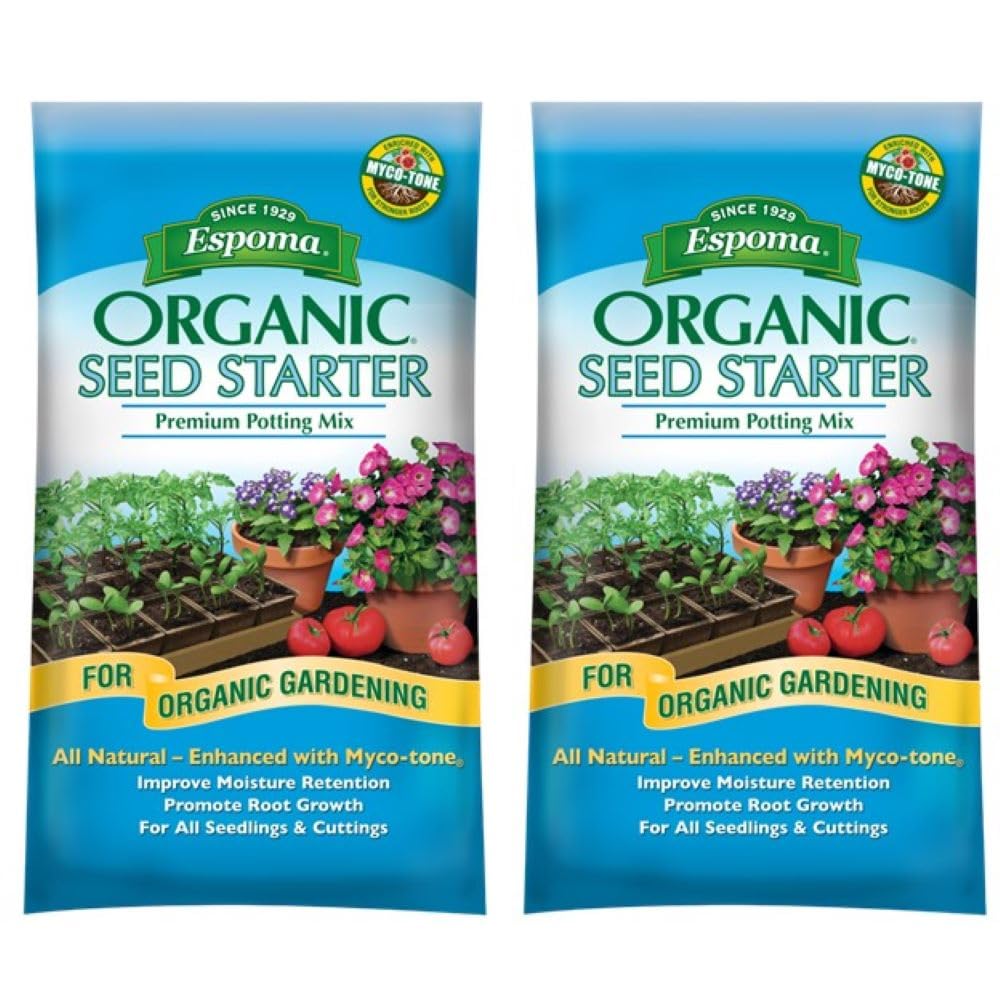
Espoma positions its Organic Seed Starter as a premium tool for serious growers, and the ingredient list backs up the claim. This mix combines sphagnum peat moss and perlite with yucca extract as a natural wetting agent, plus lime for pH correction. The standout feature is the inclusion of Myco-Tone, a proprietary blend of endo and ecto mycorrhizae that forms a symbiotic relationship with roots to drastically improve water and nutrient uptake from the moment of germination.
The texture is consistently light, airy, and well-draining while still holding enough moisture for reliable germination. Users consistently report exceptional germination rates, with many noting it outperforms Miracle-Gro mixes that often contain coarse fillers and wood chunks. The two-pack format provides substantial volume for multiple trays, though the bag count means you are investing in a larger upfront quantity.
This mix is OMRI-listed for organic gardening and contains no synthetic fertilizers, giving you complete control over feeding after the first true leaves emerge. For growers who prioritize root development and long-term plant health from the very first cell, this mix delivers professional-grade performance that justifies the higher price point.
What works
- Mycorrhizae significantly boost root colonization
- Light, fluffy texture with no large debris
- Yucca extract ensures even water absorption
What doesn’t
- Premium price per quart compared to budget mixes
- Two-bag minimum purchase may be too much for small projects
2. Old Potters Germination Mix
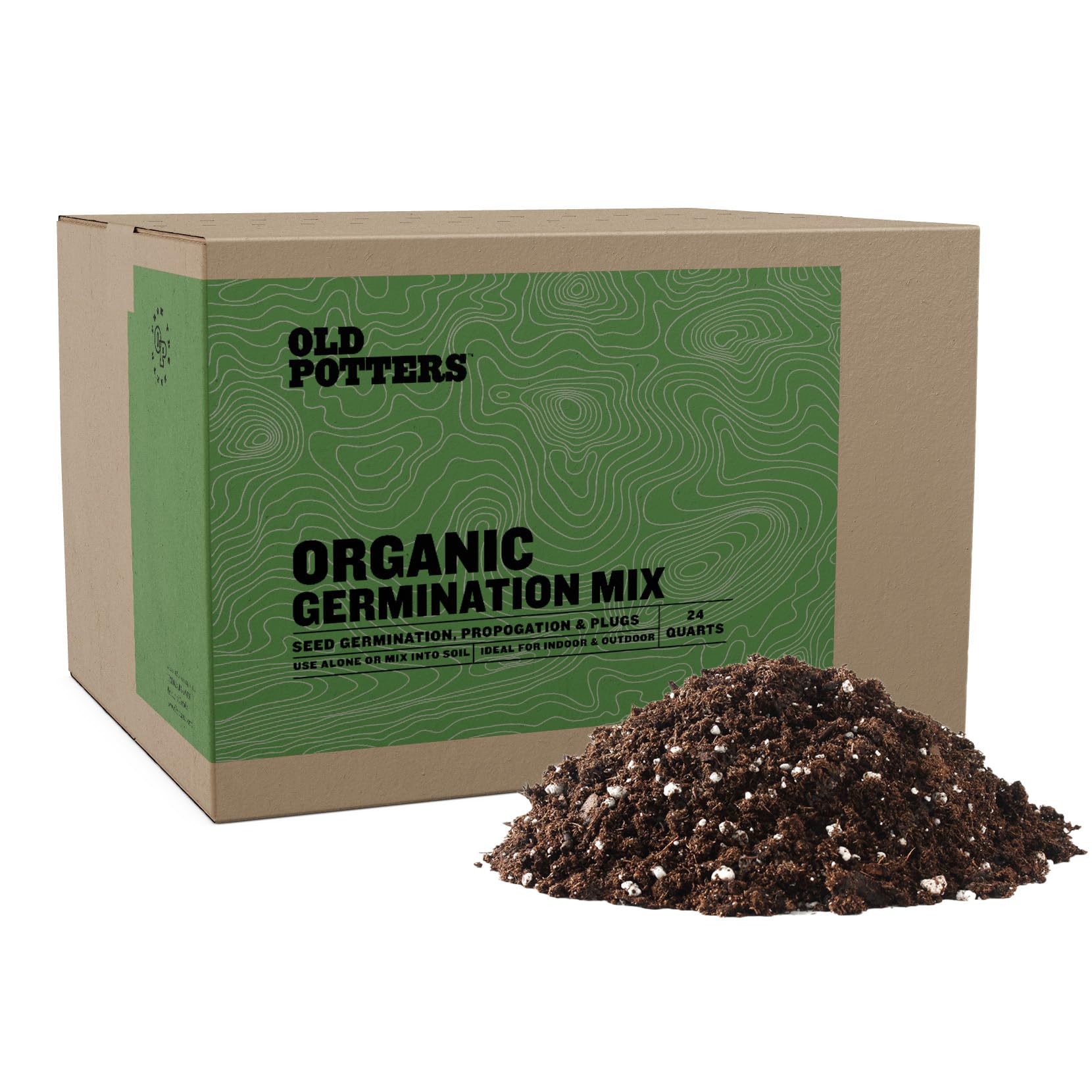
Old Potters is the most technically engineered mix in this roundup, boasting 80-90% fine Canadian sphagnum peat moss augmented with premium horticultural perlite and vermiculite. The addition of both calcitic and dolomitic limestone keeps the pH locked in the 5.4–6.3 sweet spot, while an integrated wetting agent guarantees uniform water distribution throughout the bag—a critical feature for growers using sub-irrigation or wicking systems.
The particle size is uniformly fine, with no coarse fillers or oversized pieces that plague mass-market commercial mixes. Users report a 90% germination rate across a wide variety of seeds, with many describing it as the “best success” they have ever had with a seed-starting medium. The 24-quart bag offers exceptional value for serious hobbyists or small-scale commercial growers running multiple flats.
The mix is designed for both amateur and professional environments, with an electrical conductivity of 1.0-1.5 mmhos/cm that supports healthy development without burning delicate roots. If you are running a large grow operation or want a single bag to cover an entire season of seed starting, this mix delivers consistent, repeatable results that rival professional greenhouse formulations.
What works
- Premium Canadian peat with fine perlite and vermiculite
- Large bag size offers best price per quart in premium tier
- Stable pH range optimized for nutrient availability
What doesn’t
- Peat-based, not suitable for eco-conscious gardeners avoiding peat
- May be too much volume for casual single-tray users
3. Duspro Seed Starter Potting Soil Mix
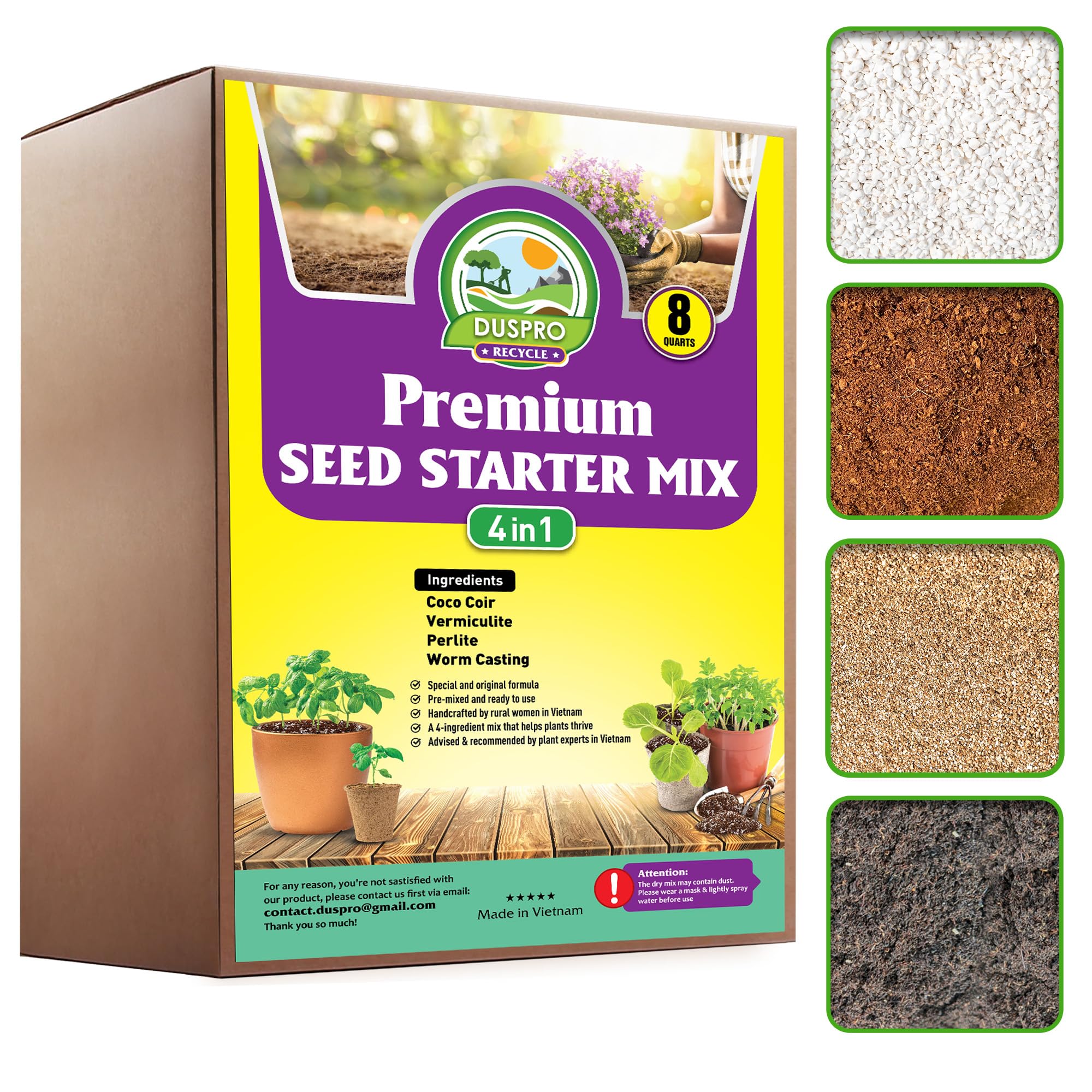
Duspro addresses the growing demand for peat-free alternatives with a 4-in-1 blend of coco coir, perlite, vermiculite, and worm castings. Coco coir offers excellent water-holding capacity and aeration while being a renewable resource harvested from coconut husks, making this mix a strong choice for environmentally conscious gardeners. The addition of worm castings provides a gentle, organic nutrient boost that supports early growth without the risk of synthetic fertilizer burn.
The texture is hand-screened for consistency, ensuring a fine particle size that promotes seed-to-soil contact for reliable germination. Users highlight its excellent performance in wick-watered seed-starting systems, where it avoids both sogginess and dry spots that plague coarser mixes. The blend works well for vegetables, herbs, and flowers, delivering strong root development from germination through the first transplant.
At 8 dry quarts, this is a smaller bag compared to some competitors, but the premium ingredients and peat-free formulation justify the price for growers who prioritize sustainability. If you have struggled with peat-based mixes drying out unevenly or want to avoid the environmental impact of peat harvesting, Duspro offers a refined, ready-to-use solution that performs on par with the best peat-based options.
What works
- Completely peat-free and renewable coco coir base
- Worm castings provide gentle, natural nutrition
- Ideal texture for plug trays and wick watering
What doesn’t
- Smaller bag size yields less volume per dollar
- Worm castings may be unnecessary for initial germination
4. Gardener’s Supply Company SuperRoot Booster Seed Starter Mix

Gardener’s Supply Company markets the SuperRoot Booster as a “high nutrients plant food” seed starter, which sets it apart from the lean soilless mixes that dominate this category. The fine-textured blend is designed to promote rapid germination and produce vigorous, stocky seedlings with thick stems and robust root systems. The nutrient charge is carefully balanced to avoid burning while still supporting accelerated early growth.
Users consistently report 100% germination rates and excellent early growth, with one grower noting it produced “excess plants to give away” after their first indoor run. The refined texture makes it ideal for plug trays, where consistent filling and easy root penetration are essential. Gardeners familiar with traditional seed-starting mixes will notice faster leaf development and less need for early supplemental feeding.
The 9-quart bag is a practical size for a few standard 1020 trays, though the price per quart is higher than bulk options. For first-time indoor gardeners or anyone who wants the highest possible success rate without mixing their own fertilizer schedule, this mix provides a complete, nutrient-charged solution that simplifies the process from seed to transplant.
What works
- High germination rates even for first-time growers
- Nutrient blend supports faster, stronger seedling growth
- Excellent texture for plug trays and cell packs
What doesn’t
- Added nutrients may be unnecessary for short-duration germination
- Premium price point for 9 quarts
5. Hoffman Seed Starter Potting & Planting Mix

Hoffman’s 30103 Seed Starter has been a staple in nurseries and greenhouses for years, and its longevity is a testament to its reliable performance. This soilless mix contains six components blended in proper proportions, including a wetting agent for improved moisture absorption. The fine consistency allows for excellent seed-to-soil contact, and the inclusion of lime helps buffer the pH away from the natural acidity of the peat base.
Users specifically note that this mix outperforms standard potting soil and even pure coco coir in controlled trials, producing higher germination rates and more robust early growth. The texture is described as having “minimal debris” with no large bark chunks, which is critical for preventing damping-off and ensuring even moisture distribution. One experienced gardener calls it their “top choice” after years of testing different mixes.
Hoffman’s 10-quart bag is priced competitively, making it an excellent value proposition for gardeners who need consistent results without paying a premium for branding or exotic ingredients. It is also useful for rooting cuttings and transplanting, adding versatility that extends beyond simple seed starting. For a proven, no-nonsense mix that delivers every time, this is the smart choice for budget-conscious growers.
What works
- Proven formula with decades of positive user feedback
- Fine, consistent texture without large particles
- Wetting agent ensures even rehydration
What doesn’t
- Some users find the price slightly higher than raw ingredients
- No added mycorrhizae or advanced amendments
6. Jiffy Natural & Organic Seed Starting Soil Mix

Jiffy is a household name in seed starting, known primarily for their peat pellets, and this bagged mix extends that expertise into a loose medium. The formula combines peat moss, vermiculite, and lime to create a light, fluffy texture that excels at water retention—peat can hold up to 20 times its weight in water, while vermiculite absorbs 3-4 times its volume. This makes the mix exceptionally forgiving for gardeners who struggle with keeping seed trays evenly moist.
Users praise the fine texture, noting the absence of “large bark chunks” that plague many competing products, and report excellent germination rates with seeds sprouting quickly and growing strong. The organic certification adds peace of mind for edible garden enthusiasts. The 10-quart bag is a standard size that fills several standard trays without excessive waste.
While the price per quart is slightly higher than some commodity mixes, the consistency and reliability of Jiffy’s formulation justify the cost for many home gardeners. The mix holds together well during transplanting, reducing root disturbance when moving seedlings to larger pots—a practical advantage that experienced growers appreciate.
What works
- Exceptional moisture retention reduces watering frequency
- Fine, uniform texture with no large debris
- Holds together well for transplanting
What doesn’t
- Peat-based, not ideal for peat-free gardeners
- Slightly more expensive per quart than some alternatives
7. Black Gold 1311002 8-Quart Seedling Mix (2 Pack)

Black Gold’s Seedling Mix offers a budget-friendly entry point for new gardeners, with a 2-pack of 8-quart bags providing ample volume for multiple trays. The mix is based on peat moss and is designed specifically for germinating seeds, with a fine texture that contains “no big chunks or twigs” according to satisfied users. It is an accessible option for beginners who want a dedicated seedling mix without investing in premium-priced formulations.
User experiences are mixed, which is common in the budget tier. Many report “very good germination rates” and vigorous growth, with all seeds sprouting successfully. However, some experienced gardeners note that compared to homemade mixes or premium brands, this ready-mix can produce “slower, smaller, less hardy seedlings” that dry out more quickly and do not hold together as well during transplanting.
The Black Gold mix is a perfectly functional starter medium that will get seeds to germinate, but serious growers may notice the difference in performance compared to higher-end options. For those on a tight budget or starting large quantities of seeds where minor differences in vigor are acceptable, this 2-pack provides good value. Just be prepared to monitor moisture levels more carefully and potentially supplement with your own perlite or vermiculite for improved structure.
What works
- Very low cost per quart in the 2-pack format
- Fine texture with no large debris
- Good entry-level option for beginners
What doesn’t
- Some users report slower growth compared to premium mixes
- Dries out quickly and may not hold together for transplanting
- Less consistent performance batch to batch
Hardware & Specs Guide
Base Ingredient: Peat Moss vs. Coco Coir
Peat moss is the traditional base for seed-starting mixes due to its high water-holding capacity and acidic pH that helps suppress certain pathogens. However, peat is a non-renewable resource harvested from sensitive bog ecosystems. Coco coir, a byproduct of coconut processing, offers similar water retention and aeration but is renewable and has a more neutral pH. Choose peat for proven performance and availability; choose coco coir for sustainability and easier pH management.
Amendments: Perlite vs. Vermiculite
Perlite is volcanic glass that has been expanded by heat, creating lightweight white particles that improve drainage and aeration. It is the standard amendment for preventing compaction. Vermiculite is a mica mineral that expands when heated and can absorb 3-4 times its volume in water, improving moisture retention. Premium seed-starting mixes often include both: perlite for drainage and vermiculite for water-holding capacity, creating an optimal balance for seedling roots.
pH and Limestone Buffering
Peat moss naturally has a pH between 3.5 and 4.5, which is too acidic for most seedlings. Quality mixes include calcitic and/or dolomitic limestone to raise the pH to the ideal range of 5.4 to 6.5. Dolomitic limestone also adds magnesium, an essential nutrient for chlorophyll production. Always check the pH range on the label; a mix without lime will likely stunt germination and cause nutrient lockout.
Mycorrhizae and Microbial Inoculants
Mycorrhizal fungi form a symbiotic relationship with plant roots, extending the root system’s reach and improving water and phosphorus uptake. Endo mycorrhizae colonize the inside of root cells, while ecto mycorrhizae form a sheath around the root exterior. Premium mixes like Espoma’s include these inoculants to give seedlings a head start. While not strictly necessary for germination, they can significantly improve transplant success and early growth vigor.
FAQ
Can I use regular potting soil for starting seeds?
How much seed-starting mix do I need for a standard 1020 tray?
Should I sterilize or pre-moisten my seed-starting mix before use?
When should I start fertilizing seedlings in seed-starting mix?
Final Thoughts: The Verdict
For most gardeners, the potting soil for seedlings winner is the Espoma Organic Seed Starter because its mycorrhizae-boosted formula delivers exceptional root development and transplant success. If you want the best price per quart in a large volume, grab the Old Potters Germination Mix. And for an eco-friendly peat-free option that performs beautifully in wick-watering systems, nothing beats the Duspro Coco Coir Blend.