
Squirrels shred bird feeders, dig up bulbs, and gnaw through vinyl siding and attic vents with relentless determination. The only real defense is a properly specified steel mesh with an opening small enough to deny entry yet durable enough to withstand continuous gnawing and weather exposure.
I’m Rikta — the co-founder and writer behind Lawn Gear Lab. I’ve spent countless hours analyzing mesh gauges, comparing galvanization methods, and cross-referencing thousands of owner reports to understand exactly what stops a squirrel and what doesn’t in this guide.
After comparing dozens of wire rolls, the most effective solution for long-term exclusion is a well-chosen wire mesh for squirrels with 1/4-inch or smaller openings and a hot-dip galvanized finish that resists corrosion underground and in wet weather.
How To Choose The Best Wire Mesh For Squirrels
Choosing a squirrel barrier is not about grabbing any hardware cloth off the shelf. You need to match three variables — mesh opening size, wire gauge, and galvanization quality — to the specific threat level of your property.
Mesh Opening Size — 1/4-Inch Is The Safety Line
Eastern gray squirrels can compress their skulls through openings as small as 1/2 inch. A mesh with 1/2-inch gaps will stop larger raccoons and rabbits, but a determined squirrel will either squeeze through or gnaw the wire apart. The proven stopping point is 1/4 inch or smaller. Every product recommended in this guide uses 1/4-inch squares unless explicitly noted for secondary exclusion purposes.
Wire Gauge And Chew Resistance
Gauge numbers are counterintuitive — higher means thinner. Most hardware cloth is 19 gauge (roughly 1.0mm) or 23 gauge (roughly 0.6mm). Nineteen gauge provides enough rigidity to resist persistent gnawing and holds shape against soil pressure when buried. Twenty-three gauge is lighter, easier to cut and bend, but less resistant to heavy chewing. For attic vents, soffits, and foundation gaps where squirrels work at the edge, 19 gauge is the safer floor. For raised-bed bottoms or gutter guards where there is less direct gnawing, 23 gauge is sufficient.
Galvanization Method — Hot-Dip After Welding
Zinc coating prevents rust, but the method matters. Electro-galvanized mesh (cold plating) has a thin coating that flakes or rusts within a year of soil contact. Hot-dip galvanizing after welding immerses the entire welded sheet in molten zinc, coating every weld joint. This is the only finish that survives being buried underground, exposed to rain, or touching damp wood year after year. Check the product description for the phrase “hot-dip galvanized after welding” — it is the only process that matters for outdoor squirrel barriers.
Quick Comparison
On smaller screens, swipe sideways to see the full table.
| Model | Category | Best For | Key Spec | Amazon |
|---|---|---|---|---|
| GoldPeak Hardware Cloth | Premium | Maximum rust protection | 1/4 inch mesh, 23 gauge | Amazon |
| VEVOR Hardware Cloth | Premium | Large coverage projects | 1/4 inch mesh, 48 inch width | Amazon |
| Nueve Deer Hardware Cloth | Premium | Heavy-duty garden barriers | 1/4 inch mesh, 36 inch width | Amazon |
| Gardeal Hardware Cloth | Mid-Range | Balanced strength and value | 1/2 inch mesh, 19 gauge | Amazon |
| TUOKS Hardware Cloth | Mid-Range | Chicken coop reinforcement | 1/2 inch mesh, 19 gauge | Amazon |
| AMAGABELI Hardware Cloth | Budget | Entry-level garden protection | 1/4 inch mesh, 23 gauge | Amazon |
| WURJHSONG Hardware Cloth | Budget | Small barrier patches | 1/4 inch mesh, 23 gauge | Amazon |
In‑Depth Reviews
1. GoldPeak Hardware Cloth 1/4 inch 36in x 50ft

GoldPeak runs a five-stage inspection process that catches weak welds and missing wires before the roll ever leaves the factory. The mesh is hot-dip galvanized after welding, which means every junction between wires is sealed with a thick zinc layer that prevents rust creep — critical when the mesh contacts wet soil or sits in a drip line under eaves. The 23-gauge wire is stiff enough to hold its shape against repeated squirrel gnawing yet pliable enough to bend around soffits and vents with hand pressure.
The roll delivers 36 inches of width, which is ideal for covering foundation vents and the bottom edges of wooden decks without needing to splice two pieces together. The reinforced cardboard packaging prevents the edge coils from getting crushed during delivery, so you are not fighting kinked wire on day one. For users building new raised beds, this mesh works well as a bottom liner stapled to the frame before adding soil.
Buyers consistently report that the mesh cuts cleanly with standard tin snips and that the zinc coating shows no signs of flaking or spotting after months of rain exposure. The included work gloves are a practical addition — the cut edges of 23-gauge wire are sharp and can draw blood if you handle the roll bare-handed. This is the reference standard for anyone who wants premium build quality without overbuying width they will not use.
What works
- Five-point quality inspection catches weld defects before shipping.
- Sturdy 23-gauge wire holds shape against persistent gnawing.
- Reinforced carton prevents transit damage to edge wires.
What doesn’t
- Thicker wire requires sharp shears; kitchen scissors will not cut it.
- Cut edges are very sharp and demand heavy-duty gloves during installation.
2. VEVOR Hardware Cloth 1/4 inch 48in x 50ft

VEVOR offers the widest single roll in this comparison at 48 inches, which changes how you approach large exclusion zones. You can cover a full 4-foot section of lattice skirting or a garden bed bottom panel using one continuous sheet rather than overlapping two narrower rolls. The 1/4-inch mesh is welded from low-carbon steel and then hot-dip galvanized — the manufacturer runs salt-spray pre-tests to confirm the coating withstands prolonged moisture without bubbling or peeling.
The welded structure is notably rigid. Owner reports from chicken coop builders and raised-bed gardeners confirm that the mesh holds up against raccoons, dogs, and persistent squirrel gnawing without welds snapping apart. The 23-gauge wire is slightly lighter than the 19-gauge alternatives, but the dense 1/4-inch opening pattern compensates by distributing force across many small squares. For buried barriers, this mesh survives soil contact without rusting because the galvanization penetrates the weld joints completely.
The five-layer reinforced box packaging is over-engineered in the best way — the roll arrives with plastic film and paper wraps that keep the steel dry during shipping. The main trade-off is the weight: at 21.2 pounds, the 48-inch roll is noticeably heavier to maneuver alone, and the sheer width makes it awkward to cut on a small workbench. If your project requires full-height exclusion panels, this is the most efficient option on the list.
What works
- Full 48-inch width eliminates overlapping in most garden and deck projects.
- Salt-spray tested galvanization resists corrosion in buried applications.
- Welded joints are strong enough to repel large predators and digging animals.
What doesn’t
- Heavy roll is difficult to handle alone and needs a large cutting surface.
- Wide width creates more waste if you only need narrow strips for vents or gutters.
3. Nueve Deer Hardware Cloth 1/4 inch 36 x 50ft

Nueve Deer publishes its quality-control metrics openly — less than 0.0003% weld defect rate and less than 0.1% for poor galvanization areas — which is a transparency level almost no other wire mesh manufacturer provides. The engineering improvements include a 15% larger weld area per intersection and a 10% increase in zinc coating coverage compared to standard hardware cloth, both of which translate directly into longer service life when buried or exposed to rain. The 1/4-inch mesh squares are consistent across the entire 50-foot roll, with no stretched or distorted openings near the edges.
The 23-gauge steel hits a sweet spot between workability and strength. It cuts smoothly with wire cutters or tin snips, bends around corners without kinking, and holds its shape once stapled or screwed into place. Gardeners report using this mesh as a gopher barrier under raised beds and as a trunk guard around young fruit trees where squirrels claw at the bark. The hot-dip galvanized finish shows no rust after multiple seasons of wet soil contact, and the included gloves are thick enough to protect against the sharp edges.
The 5-year warranty is a vote of confidence that most wire mesh brands do not offer. For the price per square foot, this roll delivers the best combination of mesh density, corrosion resistance, and long-term durability for serious squirrel exclusion. The only meaningful downside is that the 36-inch width may require two strips for taller crawl-space openings, but for standard garden beds and vent covers it is wide enough.
What works
- Published QC metrics and 5-year warranty provide exceptional buyer confidence.
- Engineered weld area and zinc coverage exceed typical hardware cloth standards.
- Flexible enough for curved applications like tree trunk guards and gutters.
What doesn’t
- 36-inch width is too narrow for full-height crawl-space fencing without splicing.
- Light 23-gauge wire may deform under heavy soil pressure if used as a deep underground barrier.
4. Gardeal Hardware Cloth 1/2 inch 16in x 50ft
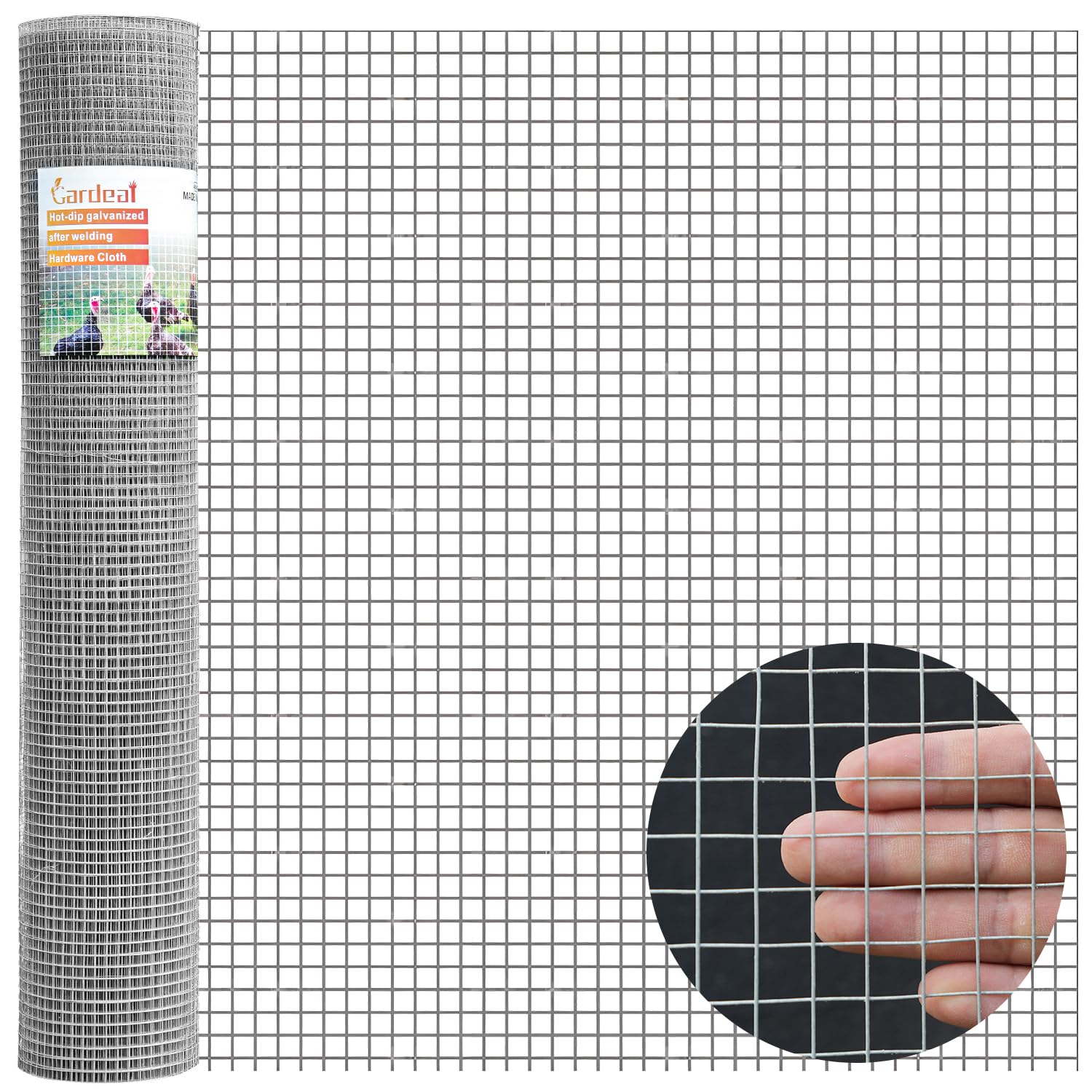
Gardeal uses a double-hot-dip galvanizing process that applies a second zinc layer over the already-coated welds, which gives the mesh extra insurance against rust in environments where moisture is constant. The 1/2-inch opening is not small enough to stop a determined squirrel from squeezing through, but for secondary barriers around chicken coops, rabbit hutches, and garden beds where the primary defense is a smaller mesh layer, this 19-gauge roll provides serious rigidity. At 0.7mm wire diameter, it is noticeably stiffer than 23-gauge alternatives and resists bending even under the weight of wet soil or snow.
The roll length is actually 50 feet plus an extra 19 inches — a small bonus that matters when you are cutting multiple panels and need every inch to avoid waste. The 16-inch width is narrow enough to install inside existing fence frames and along the bottom edge of wooden siding without folding. Builders who use this for chicken runs report that the double-galvanized surface stays corrosion-free even when the mesh touches damp bedding and manure.
The stiff wire does not cut as easily as thinner gauges — expect to use a dedicated set of aviation snips rather than household scissors. The edges are also extremely sharp after cutting, so gloves are mandatory. Given the combination of 19-gauge thickness and double-dip galvanization, this is a strong mid-range choice for projects where rigidity matters more than ultra-fine mesh density.
What works
- Double hot-dip galvanizing provides extra corrosion resistance for moist environments.
- 19-gauge wire is extremely rigid and resists deformation under load.
- Bonus length on the roll gives extra material for trimming and fitting.
What doesn’t
- 1/2-inch openings are too large for direct squirrel exclusion.
- Stiff wire is difficult to cut and leaves extremely sharp edges after trimming.
5. TUOKS Hardware Cloth 1/2 inch 24 x 25ft

TUOKS offers a 24-inch-wide roll at a substantially lower cost per foot than most 19-gauge hardware cloth on the market. The hot-dip galvanized finish is applied after welding, so the welds are coated with zinc rather than left exposed to rust — a critical detail that budget mesh from big-box stores often skips. The 1/2-inch opening pattern is welded from quality steel wire with a low defect rate, and the mesh lies flat out of the box without the persistent curl that makes some rolls hard to staple.
The 24-inch width is a practical size for covering the base of a standard 4-foot raised bed by running two strips side by side. Chicken and rabbit owners report that the mesh holds up well against raccoons and neighborhood dogs, though the 1/2-inch spacing means it is a secondary barrier rather than a primary squirrel stopper. For vent covers and foundation gaps where the opening is small enough to block physically, the heavy 19-gauge wire provides a gnaw-resistant surface that thin chicken wire cannot offer.
Buyers note that the mesh cuts easily with tin snips and that the galvanized coating does not flake off at the cut edges. The 25-foot length is sufficient for a single raised bed or a small chicken run panel but will run short for larger projects like wrapping a full deck perimeter. The shipping packaging could be more robust — some owners reported edge deformation from transit crushing.
What works
- 19-gauge wire provides strong gnaw resistance for secondary barriers.
- Hot-dip after welding ensures coated weld joints that resist rust.
- 24-inch width covers standard garden bed base without excessive waste.
What doesn’t
- 1/2-inch openings do not prevent squirrel entry.
- 25-foot length is too short for large perimeter projects.
6. AMAGABELI GARDEN & HOME Hardware Cloth 1/4 inch 16inx25ft
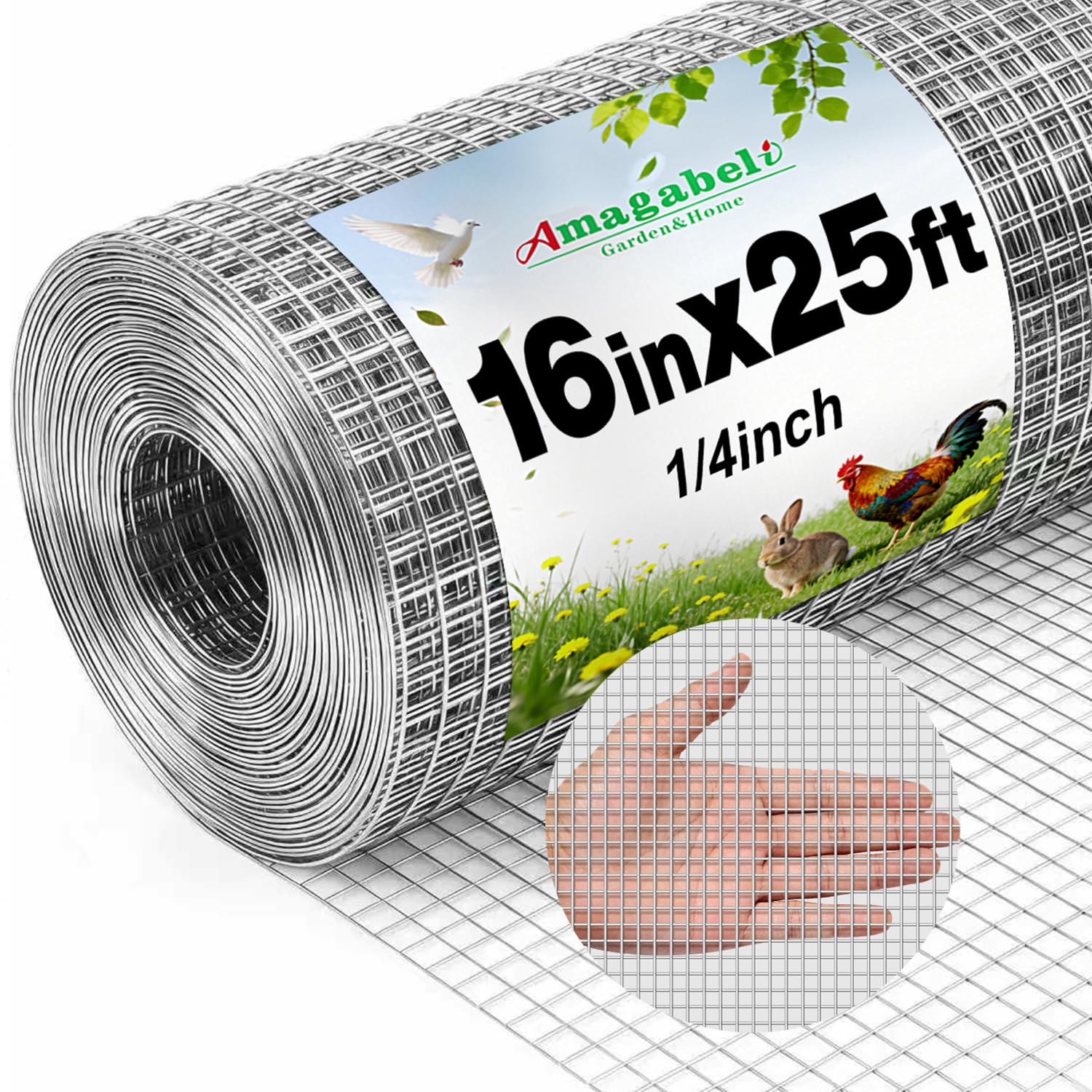
AMAGABELI packs 25 feet of genuine 1/4-inch mesh into a budget-friendly roll that undercuts most competitors on price per linear foot. The hot-dipped galvanized coating is applied uniformly, and the low-carbon steel core provides enough flexibility to shape the mesh around curved gutter guards and chimney caps. The 1/4-inch opening size is the correct specification for blocking squirrels, chipmunks, and even smaller snakes from entering protected areas.
The 23-gauge wire is lighter than premium options, which means it cuts easily with regular scissors and bends without requiring heavy tools. This makes it an accessible choice for homeowners who are not experienced with metalworking. Gardeners report using this roll as a bottom screen for raised vegetable beds and as a wrap around tree trunks to prevent squirrels from climbing. The galvanized finish holds up well in above-ground applications but may show wear faster than heavier-gauge alternatives if buried directly in acidic soil.
Some customers note that the advertised gauge measurement can be inconsistent — the wire runs closer to 22 or 23 gauge than the 19 gauge sometimes implied in marketing language. For light-duty exclusion where gnawing pressure is moderate, this is a perfectly capable mesh. For high-traffic areas where squirrels actively chew at the barrier night after night, consider stepping up to a 19-gauge option. The value proposition is strong for the cost-conscious buyer.
What works
- 1/4-inch mesh openings are small enough to block squirrel entry.
- Light 23-gauge wire cuts easily with household scissors.
- Hot-dipped galvanized coating resists rust in above-ground use.
What doesn’t
- Wire gauge is thinner than premium alternatives, reducing chew resistance.
- Gauge measurement claimed may not match actual wire thickness.
7. WURJHSONG Hardware Cloth 20 x 30ft 1/4 inch

WURJHSONG offers a narrower 20-inch width and a 30-foot length that is perfectly sized for patching specific problem areas — a single attic vent, a gap under a shed door, or the bottom of a single garden bed. The 1/4-inch mesh is hot-plated galvanized, which provides a dense zinc coating that resists rust in damp environments. The 23-gauge wire is easy to shape with basic hand tools, and the roll arrives in a box with protective wrap that minimizes kinks.
Homeowners have successfully used this mesh to line the base of porches and decks where squirrels and pack rats dig underneath. The 20-inch width fits neatly between standard joists and stud bays, reducing the need to trim the mesh down. Users report that the wire cuts cleanly with metal shears and that the galvanized coating does not peel at the cut edges. For buried applications around house foundations, the mesh holds up well when stapled to a wooden ledger and embedded in dirt.
At this price point, the main trade-off is the thinner wire compared to 19-gauge alternatives. Persistent chewing over many months could eventually deform the mesh, so it is best suited for locations where the barrier can be inspected periodically. The roll size is also limiting — 30 feet runs out fast when fencing a full garden perimeter. For targeted spot repairs and small exclusion zones, this is a convenient option that does not require ordering an oversized roll.
What works
- 20-inch width fits standard stud bays and joist spaces without trimming.
- 1/4-inch mesh blocks squirrels, mice, and rabbits at access points.
- Compact roll size is easy to transport and store.
What doesn’t
- 23-gauge wire is less resistant to heavy, long-term gnawing.
- 30-foot length is too short for large perimeter fencing projects.
Hardware & Specs Guide
Mesh Opening Size
The opening dimension is the single most important spec for squirrel exclusion. A 1/2-inch square opening appears small but squirrels can compress their skulls through it. All effective barriers use 1/4-inch or smaller openings. Some wire mesh labeled as “hardware cloth” uses 1/2-inch or even 1-inch openings — always verify the mesh size in the product specifications before purchasing. For true squirrel-proofing, 1/4-inch is the maximum acceptable gap.
Wire Gauge And Strength
Gauge numbers describe wire diameter inversely — 19 gauge is roughly 1.0mm thick, while 23 gauge is about 0.6mm thick. Thicker wire (lower gauge number) resists bending and gnawing better but is harder to cut and shape. For areas where squirrels can reach the mesh directly, 19 gauge provides meaningful physical resistance. For overhead or underground barriers where gnawing access is limited, the lighter 23 gauge is easier to work with and still stops chewing through its dense grid structure.
Galvanization Type
Electro-galvanized wire has a thin zinc layer applied before welding, which leaves the welds exposed to rust. Hot-dip galvanizing after welding immerses the entire finished mesh in molten zinc, coating every weld joint and cut edge. This is the only finish that survives soil contact and continuous outdoor moisture. The best products advertise “hot-dip galvanized after welding” or “double hot-dip galvanized.” Avoid products that simply say “galvanized” without specifying the process — they are likely the weaker electro-galvanized type.
Roll Width And Coverage
Standard roll widths are 16, 20, 24, 36, and 48 inches. The 16-to-20-inch widths are designed for gutter guards and narrow foundation gaps. The 36 and 48-inch widths are better for raised bed bottoms and full fencing panels. Taller widths reduce the number of seams and overlaps. Measure the height of your target area before ordering — a 48-inch roll can cover a full standard crawl-space opening with one piece, while a 36-inch roll requires a second strip to reach the top plate.
FAQ
Can squirrels chew through 1/4-inch hardware cloth?
Is 1/2-inch hardware cloth enough to keep squirrels out?
How do I attach wire mesh to prevent squirrels from pushing it open?
Final Thoughts: The Verdict
For most gardeners, the wire mesh for squirrels winner is the Nueve Deer Hardware Cloth because it delivers 1/4-inch mesh density with proven hot-dip galvanization, published quality metrics, and a 5-year warranty at a competitive price-to-coverage ratio. If you want maximum corrosion resistance with the most rigorous factory inspection process, grab the GoldPeak Hardware Cloth. And for large coverage areas where wide single-panel installation matters most, nothing beats the VEVOR Hardware Cloth with its full 48-inch width.