
Nothing derails a thriving vegetable bed or rose border faster than a sudden aphid bloom. One morning your leaves look clean; by evening they’re curling under a sticky mess of honeydew and tiny green bodies. The spray you reach for either stops the swarm in seconds or drives them deeper into the new growth — and the difference is usually one or two key ingredients you won’t find on a generic bottle.
I’m Rikta — the co-founder and writer behind Lawn Gear Lab. I built this guide by cross-referencing labels against aphid biology — contact kill speed, residual duration, systemic movement into treated foliage, and plant safety across flowering and edible crops — then mapped real owner reports onto every claim.
Whether you’re protecting indoor monsteras or a full outdoor kitchen garden, the right treatment for aphids acts fast, stays effective after rain, and never burns tender new leaves at the application site.
How To Choose The Best Treatment For Aphids
Aphids reproduce parthenogenetically — a single missed female can produce dozens of live nymphs every day. That means your spray choice determines whether you break the cycle or simply wash the current generation off the leaf. Three specs separate effective treatments from temporary relief.
Contact Kill Speed vs. Systemic Protection
Sprays that kill on contact stop the immediate feeding damage within minutes. Products using pyrethrins or clarified neem oil typically deliver knockdown in under 60 seconds. Systemic insecticides, by contrast, are absorbed into leaf tissue and protect for weeks — but they don’t kill on contact and require the aphid to ingest treated foliage. For a heavy infestation, a contact spray followed by a systemic follow-up is the most reliable sequence.
Residual Activity and Rainfastness
How long the active ingredient stays active on the leaf surface determines reapplication frequency. Oils and soaps degrade quickly under sunlight and wash off in rain — expect 24–48 hours of residual activity. Synthetic pyrethroids and neem-based fungicides can hold for 7–14 days. Check the label for “rainfast” claims if your garden is exposed to overhead irrigation or afternoon storms.
Plant Safety on Edible and Flowering Crops
Not all aphid sprays are safe on blossoms or near harvest. Neem oil and insecticidal soaps can be used up to the day of harvest on most vegetables, but they can burn open flowers. Pyrethrin-based products often have a 0–7 day pre-harvest interval, while synthetic options may extend to 21 days. Always verify the crop-specific PHI (pre-harvest interval) before treating anything you intend to eat.
Quick Comparison
On smaller screens, swipe sideways to see the full table.
| Model | Category | Best For | Key Spec | Amazon |
|---|---|---|---|---|
| Ortho Rose and Flower Insect Killer | Systemic Spray | Long-lasting rose protection | Up to 4 weeks systemic | Amazon |
| Bonide Japanese Beetle Killer | Contact Spray | Fast knockdown on vegetables | 32 oz RTU spray | Amazon |
| Grower’s Ally Crop Defender 3 | Organic Triple-Action | Indoor/organic gardens | OMRI listed, bee-safe | Amazon |
| Miracle-Gro Leaf Protect and Shine | Multi-Function Spray | Indoor houseplant care | 4-in-1: insect + fungicide + shine | Amazon |
| Natria Neem Oil Spray | Organic Neem RTU | Edible crop maintenance | 0.9% clarified neem oil | Amazon |
| Botanical Tradesman Neem Oil Concentrate | Concentrate Kit | Large garden coverage | Makes 320 fl oz spray | Amazon |
| Organic Insecticide & Fungicide Concentrate | Bio-Based Concentrate | Whole-garden prevention | 16 oz concentrate, multi-use | Amazon |
In‑Depth Reviews
1. Ortho Rose and Flower Insect Killer, 24-Ounce

The Ortho Rose and Flower Insect Killer stands apart because its dual-action formula combines contact knockdown with systemic protection that moves into new leaf growth. That means aphids feeding on buds and emerging foliage are killed even if you miss a spot during spraying — a critical advantage when aphids cluster in curled leaves where spray droplets rarely reach. Owners report that a single application every four weeks keeps Japanese beetles and aphids off rose bushes for the entire season.
At 24 ounces per bottle, the coverage is modest for large shrub borders, but the systemic residual means you apply far less frequently than contact-only sprays. The pre-harvest interval on edible crops is longer than organic alternatives, so this is best reserved for ornamental beds where long-term protection outweighs daily harvest access.
The formula won’t damage blooms or foliage when applied according to label rates, though the systemic nature means pollinators visiting freshly treated flowers may be affected. Apply during evening hours when bees are less active.
What works
- Systemic action protects new growth for weeks
- Contact kill visible within minutes on aphids
- Won’t burn rose blooms or tender leaves
What doesn’t
- Short-term residual on contact-only; weak systemic against mealybugs
- Not ideal for daily harvest of edible crops
2. Bonide Japanese Beetle Killer Ready-to-Use Spray, 32 oz

Bonide’s Japanese Beetle Killer delivers a broad-spectrum contact spray that works on aphids, leafhoppers, caterpillars, and Colorado potato beetles — making it a solid multi-pest option for a vegetable garden. The 32-ounce ready-to-use bottle covers a decent area for small to mid-sized beds, and the trigger nozzle produces a directed stream that hits aphid clusters on leaf undersides without heavy overspray.
Multiple owners confirm that aphids and Japanese beetles die within two to five minutes of contact. The formula is not systemic, so reapplication after rain is mandatory — several reviewers noted that a single storm washed away the residue, requiring a fresh spray the next morning. It is a contact-kill-only product: it does not prevent new arrivals from settling on the plant.
For aphid outbreaks in vegetable gardens where you want immediate knockdown without waiting for systemic absorption, this is a reliable pick. The lack of residual action means you’ll need to stay on a daily inspection and spray routine during peak infestations.
What works
- Fast contact kill on aphids and beetles
- Large 32 oz bottle covers more area
- Safe for vegetables when label directions followed
What doesn’t
- No residual protection; rain washes off immediately
- Not a preventative — must spray existing infestations
3. Grower’s Ally Crop Defender 3 – Ready-to-Use, 24 Oz
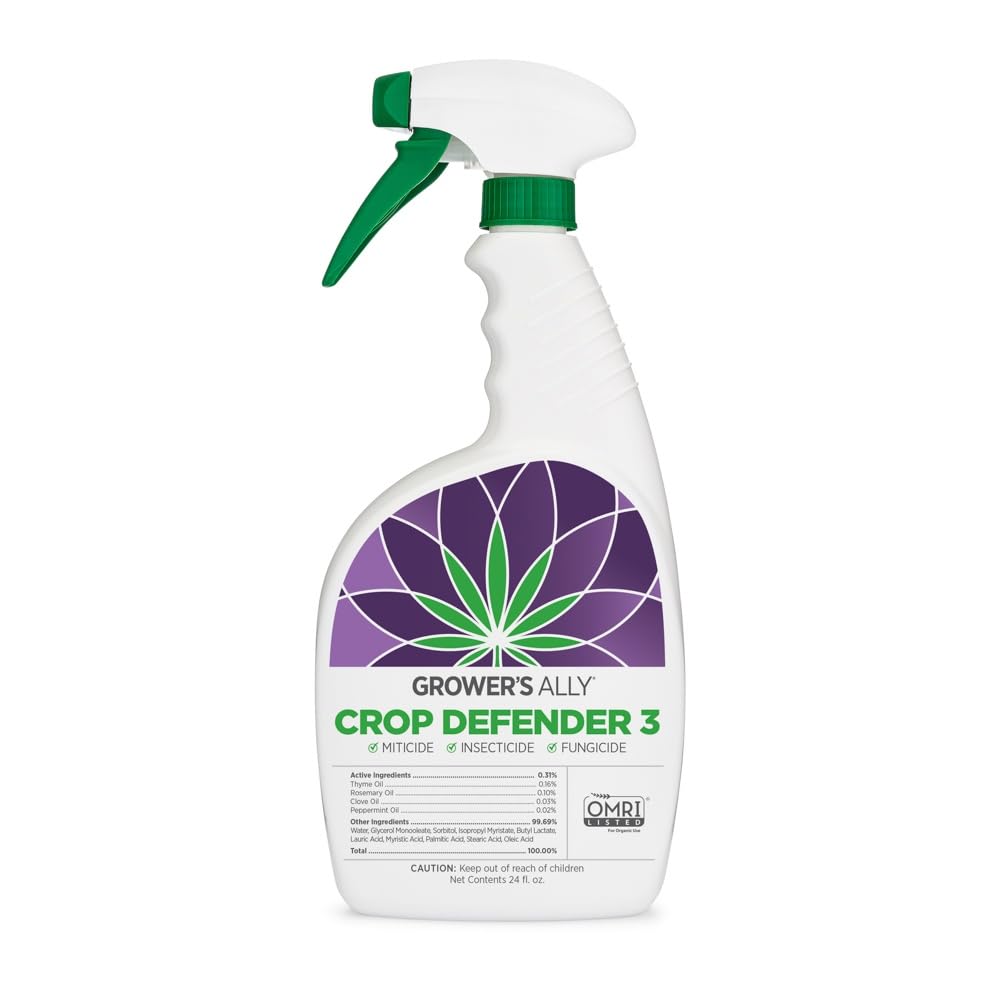
Grower’s Ally Crop Defender 3 uses a proprietary blend of botanical oils that acts as a miticide, insecticide, and fungicide in a single ready-to-use spray. For indoor gardeners and organic growers, the OMRI listing and FIFRA 25(b) exemption mean zero synthetic residues — you can spray up to the day of harvest on vegetables and herbs without worrying about chemical contaminants. Multiple reviewers specifically call it the best spray for aphids and spider mites, noting that it kills on contact without burning leaf tissue even on young seedlings.
The 24-ounce size runs out quickly if you’re treating a full outdoor vegetable patch, but for indoor houseplants, small greenhouse setups, and targeted spot treatments on high-value ornamentals, it’s hard to beat. Owners report that the spray also suppresses powdery mildew, which often follows aphid infestations due to honeydew promoting fungal growth.
The formula is bee-safe when dry, and the pleasant botanical scent is a welcome change from harsh synthetic chemicals. For organic gardeners prioritizing pollinator safety and zero-residue harvests, this is the most complete ready-to-use option available.
What works
- Kills aphids, mites, and mildew in one spray
- Zero synthetic residues — harvest same day
- Safe on seedlings; no leaf burn reported
What doesn’t
- Small bottle for large outdoor gardens
- Requires weekly application for full prevention
4. Miracle-Gro Plant Care Leaf Protect and Shine, 8 fl. oz., 2-Pack
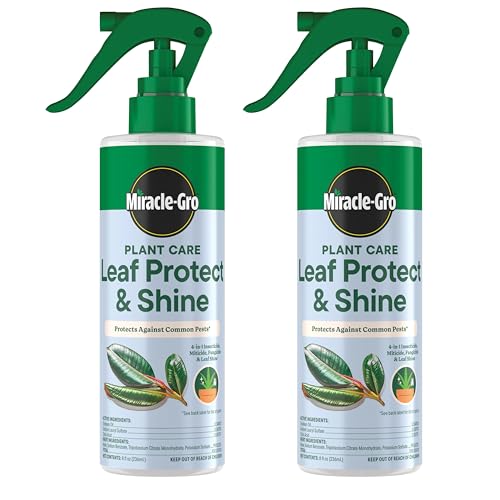
Miracle-Gro Leaf Protect and Shine combines aphid control, mite suppression, powdery mildew prevention, and a leaf-shine finish in a single ready-to-use spray. For indoor plant parents who want to clean up both the pest problem and the dust-covered leaves in one pass, this bundle delivers convenience. The formula leaves a natural-looking gloss without the greasy residue common with oil-based shines, and owners consistently note that leaves look visibly healthier after application.
The 8-ounce bottle is small — the two-pack helps, but you’ll still burn through it quickly on a collection of large monsteras or fiddle-leaf figs. The product is explicitly labeled for hard-leaved houseplants and is not safe for succulents, which can experience leaf damage. Many reviewers treat it as a weekly preventative, applying every 7–14 days to maintain both pest protection and leaf aesthetics.
For indoor gardeners dealing with light aphid or whitefly pressure who also want polished-looking foliage, this is the most efficient choice. It is not designed for heavy outdoor infestations or edible crops.
What works
- Cleans and shines leaves while killing pests
- No noticeable odor in indoor spaces
- Effective preventative for mild infestations
What doesn’t
- Not safe for succulents
- Small bottle size; requires frequent repurchase
5. Natria Neem Oil Spray for Gardening – Ready-to-Use, 24 oz
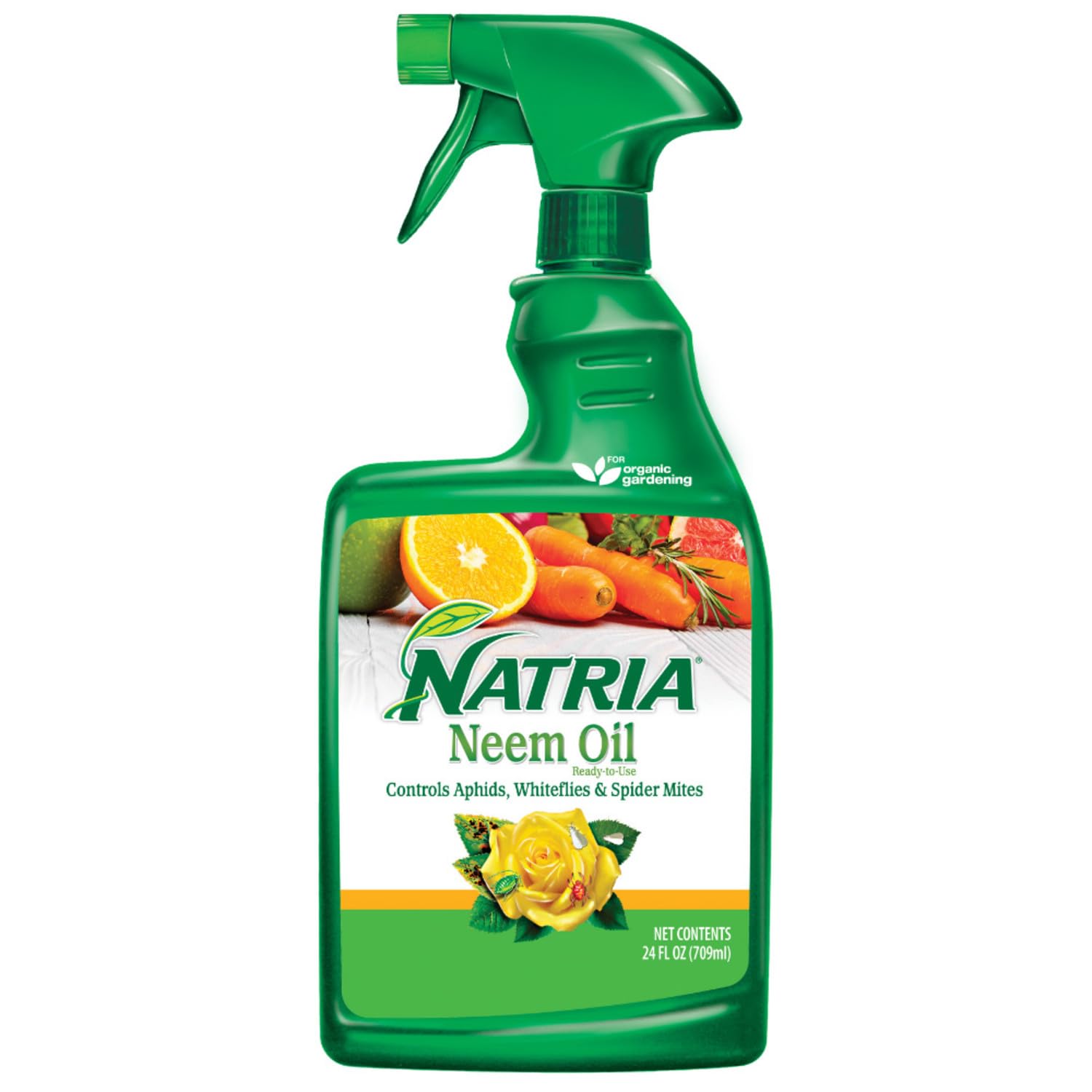
Natria Neem Oil Spray delivers a low-concentration (0.9%) clarified neem oil formula in a ready-to-use trigger sprayer that requires no mixing. For edible gardeners who want a simple, spray-and-go solution that controls both aphids and powdery mildew, this bottle performs reliably. The clarified neem oil acts as an antifeedant and growth regulator, so aphids that survive the initial contact gradually stop feeding and fail to reproduce — breaking the lifecycle over several applications.
The 24-ounce bottle covers a modest vegetable patch or a row of tomato plants, but heavy infestations may require twice-weekly applications until the population collapses. Owners appreciate that the spray can be used up to the day of harvest, though the strong neem odor lingers on leaves for a day or two. Washing produce thoroughly after harvest removes any residual smell or taste.
For gardeners who prefer a natural, OMRI-compatible solution with a proven mode of action against soft-bodied insects, this is a reliable entry-level neem spray. The ready-to-use format eliminates mixing errors and the risk of burning plants with overly concentrated oils.
What works
- Ready-to-use; no mixing required
- Controls both insects and fungal diseases
- Safe to use up to day of harvest
What doesn’t
- Strong neem odor that lingers
- May require frequent reapplication on heavy infestations
6. Botanical Tradesman Neem Oil Spray for Plants (Makes 320 Fl Oz)

The Botanical Tradesman Neem Oil Concentrate Kit delivers 3.4 fluid ounces of pure cold-pressed neem oil plus a 16-ounce spray bottle, yielding approximately 338 fluid ounces of finished spray across up to 20 refills. For large gardens, this is the most economical way to maintain a steady neem treatment schedule without buying disposable RTU bottles. The concentrate is 100% cold-pressed with no added water or vegetable oils, giving you full control over dilution ratios for different pest pressures.
Owners note that the oil is extremely thick at room temperature — warming the closed bottle in hot water before measuring makes dilution much easier. The required mixing with a mild liquid soap as an emulsifier adds a step compared to ready-to-use products, but the long-term cost savings are substantial. Fungus gnat populations dropped measurably over a four-week treatment cycle, and whitefly numbers on herb gardens showed steady reduction.
For the committed gardener who treats multiple beds weekly and wants to minimize per-application cost, this kit provides the raw material for consistent, organic aphid management. The neem odor is strong during mixing but dissipates after the spray dries.
What works
- Extremely economical for large-scale treatment
- Pure concentrate gives control over dilution strength
- Effective on fungus gnats and whiteflies after consistent use
What doesn’t
- Requires hot water bath to thin thick oil before mixing
- Needs mild soap as emulsifier; not a single-step spray
7. Organic Insecticide & Fungicide for Plants — Concentrate Spray, 16oz

This advanced bio-based concentrate from Evergreen Way is designed to stop soft-bodied pests like aphids, whiteflies, and thrips while simultaneously suppressing powdery mildew and other leaf diseases. The concentrated 16-ounce bottle dilutes into multiple gallons of finished spray, providing cost-effective coverage for entire garden beds, raised rows, and greenhouse benches. Users report that a single weekly application at 1 tablespoon per gallon eliminates aphids within a few treatments and visibly improves leaf color where fungal issues were present.
The formula is described as plant-safe on seedlings, established ornamentals, and vegetables, with no scent during application — a significant advantage for indoor use or enclosed greenhouse spaces. The concentrate mixes easily with water and works with pump sprayers, hose-end applicators, or battery-powered units. Multiple reviewers note that one full soaking eliminated all fungus gnats from their houseplant collection and the problem did not return with weekly maintenance sprays.
For the gardener who wants a single concentrate that handles both aphid outbreaks and the powdery mildew that often follows aphid honeydew, this product simplifies the spray schedule. The bio-based formulation aligns with organic gardening principles without the strong neem odor.
What works
- Concentrate format yields many gallons for whole-garden use
- No strong smell during or after application
- Controls aphids, fungus gnats, and powdery mildew in one product
What doesn’t
- Concentrate requires mixing; not as convenient as RTU
- May require weekly reapplication during peak infestation
Hardware & Specs Guide
Contact Kill Speed
The time from spray contact to aphid death directly affects how much feeding damage continues after application. Pyrethrin-based sprays like the Bonide Japanese Beetle Killer typically kill within 2–5 minutes. Neem oil sprays, while slower (hours to a day), stop feeding almost immediately through antifeedant compounds. For heavy infestations, a fast-contact spray followed by a neem maintenance schedule is the most effective approach.
Residual Duration
How long the active ingredient remains effective on leaf surfaces determines your reapplication interval. Systemic insecticides like Ortho Rose and Flower Insect Killer provide up to 4 weeks of protection because the formula moves into the leaf tissue. Contact-only sprays, including most neem and soap formulations, degrade within 24–48 hours and require reapplication after rain or heavy dew. Check the label for “rainfast” claims to avoid wasting product on outdoor applications.
FAQ
Can I spray aphid treatment on edible vegetables and still harvest the same day?
Why did my aphid infestation return a week after I sprayed?
Final Thoughts: The Verdict
For most gardeners, the treatment for aphids winner is the Ortho Rose and Flower Insect Killer because its systemic protection stops aphids from recolonizing new growth for a full month, eliminating the need for weekly reapplication. If you want pure organic coverage with zero synthetic residues, grab the Grower’s Ally Crop Defender 3. And for large gardens where cost per gallon matters most, nothing beats the Organic Insecticide & Fungicide Concentrate for whole-bed coverage in a single mixing session.