
Compacted soil is the silent killer of a healthy lawn. When your grass struggles to take in water, air, and nutrients even after regular watering and feeding, the culprit is often soil so dense that roots can’t breathe. A manual lawn aerator is the simplest, most cost-effective tool to solve this, breaking up that hardpan layer so your turf can thrive again.
I’m Rikta — the co-founder and writer behind Lawn Gear Lab. I’ve spent dozens of hours comparing spike lengths, core tine diameters, handle ergonomics, and build materials across the most popular manual aerators, cross-referencing owner feedback to separate tools that actually punch through clay from those that just bend on contact.
Whether you’re reviving a small patch of compacted Bermuda or tackling a whole yard’s worth of hard soil, this guide to the best cheap lawn aerator options will help you pick a tool that saves your back and actually gets the job done without breaking the bank.
How To Choose The Best Cheap Lawn Aerator
Not all manual aerators are created equal. The right choice depends on your soil type, yard size, and your tolerance for physical effort. Here are the critical factors to weigh before you buy.
Spike vs. Core (Plug) Aerator
Spike aerators punch solid tines into the ground, creating holes. They are simpler and generally cheaper, but they can actually compact the soil around the hole walls in heavy clay. Core aerators remove a small plug of soil, which is more effective at relieving compaction and is preferred by lawn pros for serious soil issues. For a budget buy, spike models are fine for routine maintenance; for reviving a dead lawn, invest in a plug aerator.
Tine Length and Thickness
Look for tines that are at least 2.5 inches long. Shorter tines won’t reach the compacted layer in many lawns. Thicker tines (around 0.5 inches in diameter for spikes) create bigger holes that admit more air and water. For core aerators, a 0.5-inch diameter plug is a good balance between removal volume and ease of pushing.
Handle Height and Foot Plate Design
A handle height of 36 to 40 inches is ideal for most adults to avoid bending. A wide, slip-resistant foot plate lets you transfer your full weight into the tines without your foot slipping off. For core aerators, a foot bar or step that is tall enough (5 inches or more) to clear your shoe is crucial for effective driving.
Quick Comparison
On smaller screens, swipe sideways to see the full table.
| Model | Category | Best For | Key Spec | Amazon |
|---|---|---|---|---|
| Dolibest Coring Aerator | Core Plug | Small to medium lawns with heavy clay | 4 stainless steel tines, 3.5” length | Amazon |
| Yard Butler IM-7C | Spike | General lawn maintenance, light soil | 4 powder-coated steel spikes, 3” length | Amazon |
| LawnVigor Core Aerator | Core Plug | Compacted soil, plug removal | 3 hollow tines, 3” depth | Amazon |
| Walensee Rolling Aerator | Rolling Spike | Medium lawns, easy pushing | 42 heat-treated spikes, 2” length | Amazon |
| Suchtale Push Aerator | Rotary Spike | Large open lawns, overseeding prep | 5 star wheels, 8” diameter | Amazon |
| Jardineer JARDI-36 | Spike | Small patches, budget entry | 12 heat-treated steel spikes, 2.75” length | Amazon |
| Colwelt C082 | Spike | Heavy compaction, small areas | 4 spikes, 3.5” length, 0.4” diameter | Amazon |
In‑Depth Reviews
1. Dolibest Lawn Coring Aerator
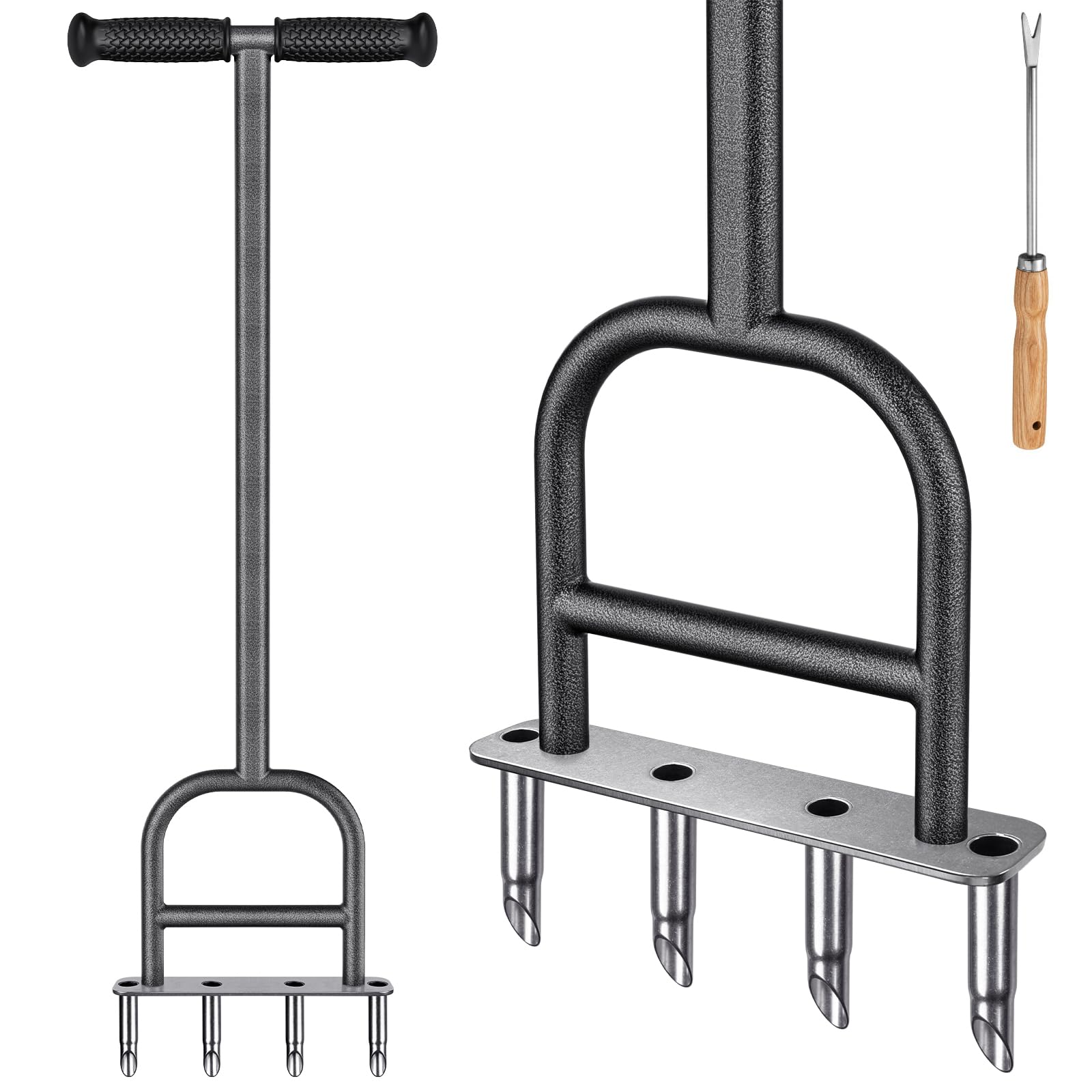
The Dolibest stands out in the budget core aerator category by delivering four stainless steel tines at a price point where most competitors offer only three. Each tine is 3.5 inches long and 0.5 inches in diameter, pulling clean plugs that actually relieve soil compaction rather than just poking holes. The all-steel construction with a powder-coated finish and stainless bottom section means this tool won’t rust out after a single wet season.
The soft rubber grip reduces hand fatigue, and the foot bar is positioned high enough to clear most shoes, allowing you to drive the tines deep without your foot slipping off. Owners consistently report that it handles heavy clay well when the soil is moist, and the included 12-inch weeder tool is a practical bonus for cleaning out the tines or transplanting seedlings.
The main trade-off is that the rounded foot step design limits leverage slightly compared to a flat stepping surface, which can make it harder to achieve full depth in extremely hard, dry soil. Some users also note that the tines can clog if the soil is too wet, requiring occasional clearing. Still, this is the most capable plug aerator you can buy without stepping up to professional pricing.
What works
- Four stainless steel tines pull clean 3.5-inch plugs
- Rust-resistant construction with powder-coated finish
- Comfortable rubber grip reduces hand fatigue
What doesn’t
- Rounded foot step reduces leverage for deeper penetration
- Clogs easily in overly wet soil
2. Yard Butler Spike Aerator IM-7C
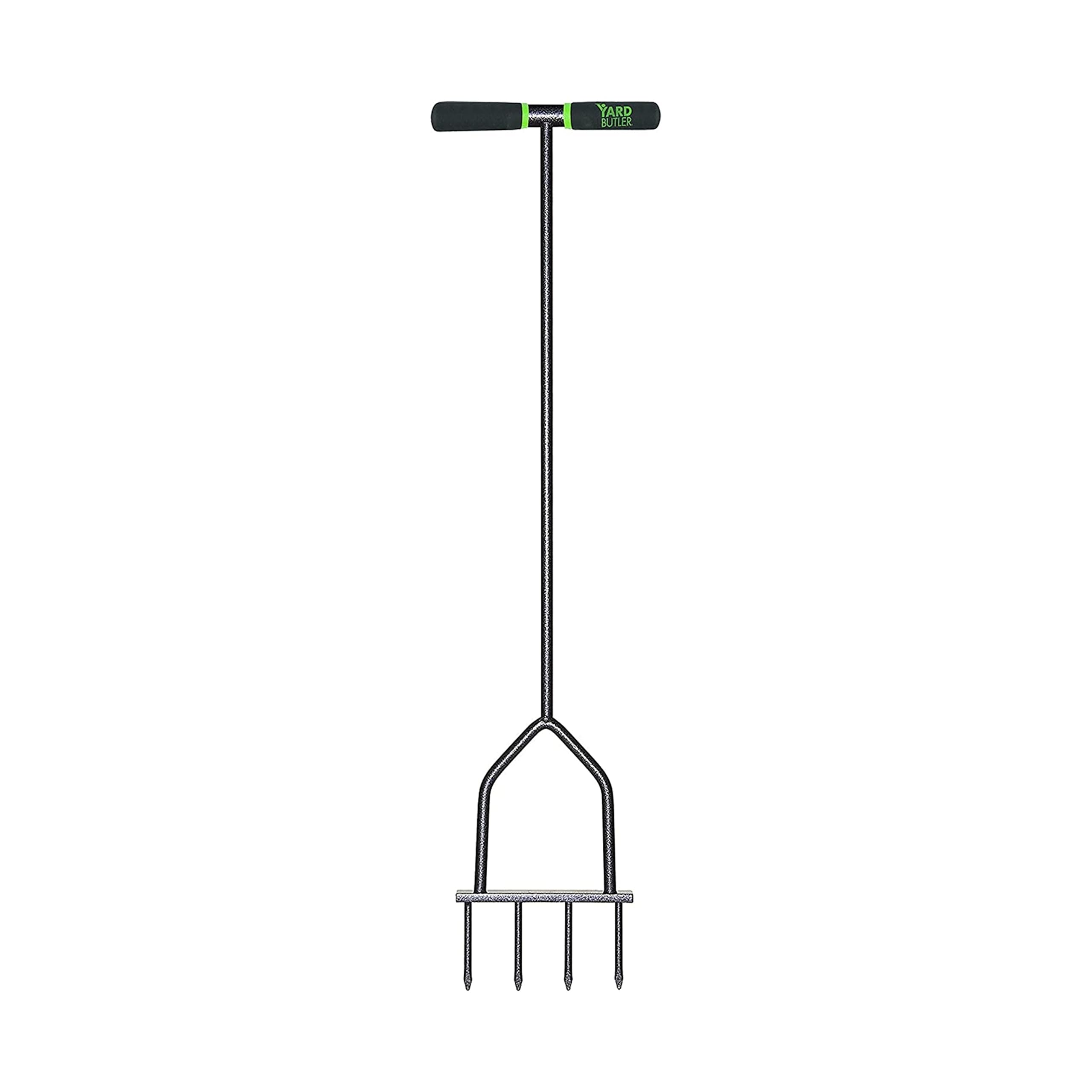
Yard Butler is a known name in manual garden tools, and the IM-7C spike aerator justifies its higher price with a robust powder-coated steel frame and four 3-inch spikes. The long handle provides good leverage, and the foot plate is wide enough to accommodate larger shoe sizes, making it easier to apply downward force. It is lightweight at just over two pounds, which reduces fatigue during extended use.
This is strictly a spike aerator, meaning it punches holes rather than removing cores. It works well in loamy or moderately compacted soil, especially after a light rain when the ground is soft. Users with clay soil in Texas report that it handles medium-hard conditions effectively, though you may need to rock the handle side-to-side to create slightly larger openings.
The primary complaint is handle length — at 36 inches, taller users over six feet find they have to bend slightly, which can cause back strain over a large lawn. The 37-inch total height is also a bit short for some. Otherwise, it is a very well-built tool that will last for years with basic care. It is best suited for regular maintenance rather than rescue aeration of severely compacted soil.
What works
- Durable powder-coated steel frame with 3-inch spikes
- Wide foot plate fits larger shoes
- Lightweight design reduces fatigue
What doesn’t
- Handle is short for users over six feet tall
- Spike design compacts soil walls in heavy clay
3. LawnVigor Manual Core Aerator
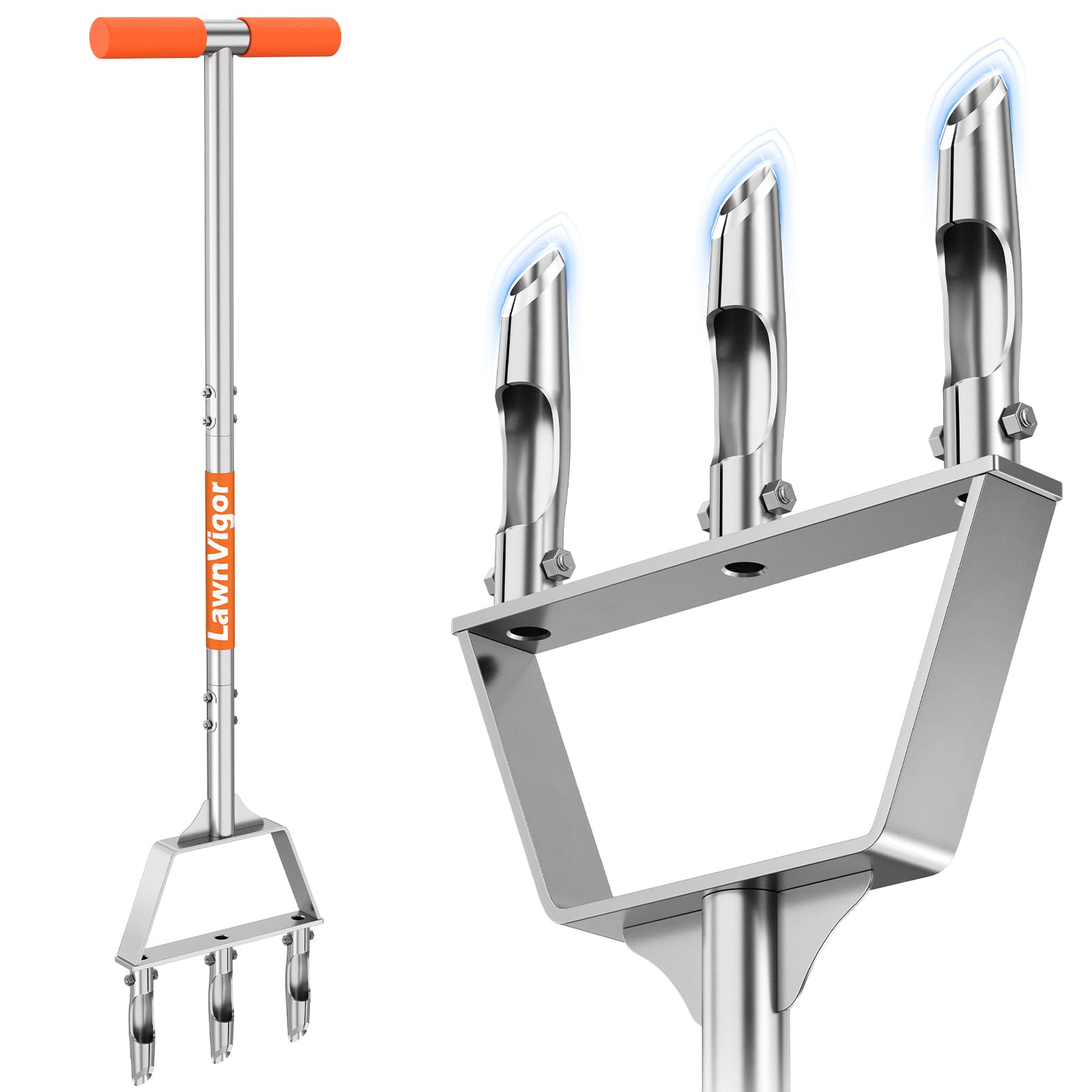
The LawnVigor core aerator is a well-engineered plug tool that punches above its mid-range price. It uses three heat-treated hollow tines that pull soil cores roughly 3 inches deep, effectively relieving compaction without the side-wall compression you get from spike tools. The powder-coated steel frame feels solid, and the wide T-handle with foam grips provides good comfort even during longer sessions.
Assembly is quick, and the tool arrives mostly put together. The design includes white plastic inserts inside the tines that help eject soil plugs cleanly — a clever feature that reduces clogging compared to basic hollow tines. Users report that it works great on compacted clay after watering, pulling consistent cores and leaving behind clean holes that accept water and seed readily.
The main drawback is that the tool requires some practice to use efficiently. If you rock or twist it side-to-side while it is in the ground, you can tear up surrounding grass. A few owners noted some looseness in the handle connection after heavy use, though nothing that affected performance significantly. It is also best suited for small to medium lawns; large areas will be a significant workout.
What works
- Hollow tines pull actual soil cores, not just holes
- Plastic inserts help eject plugs reliably
- Ergonomic T-handle reduces strain
What doesn’t
- Rocking motion can tear up surrounding grass
- Handle connection may develop slight looseness
4. Walensee Rolling Lawn Aerator
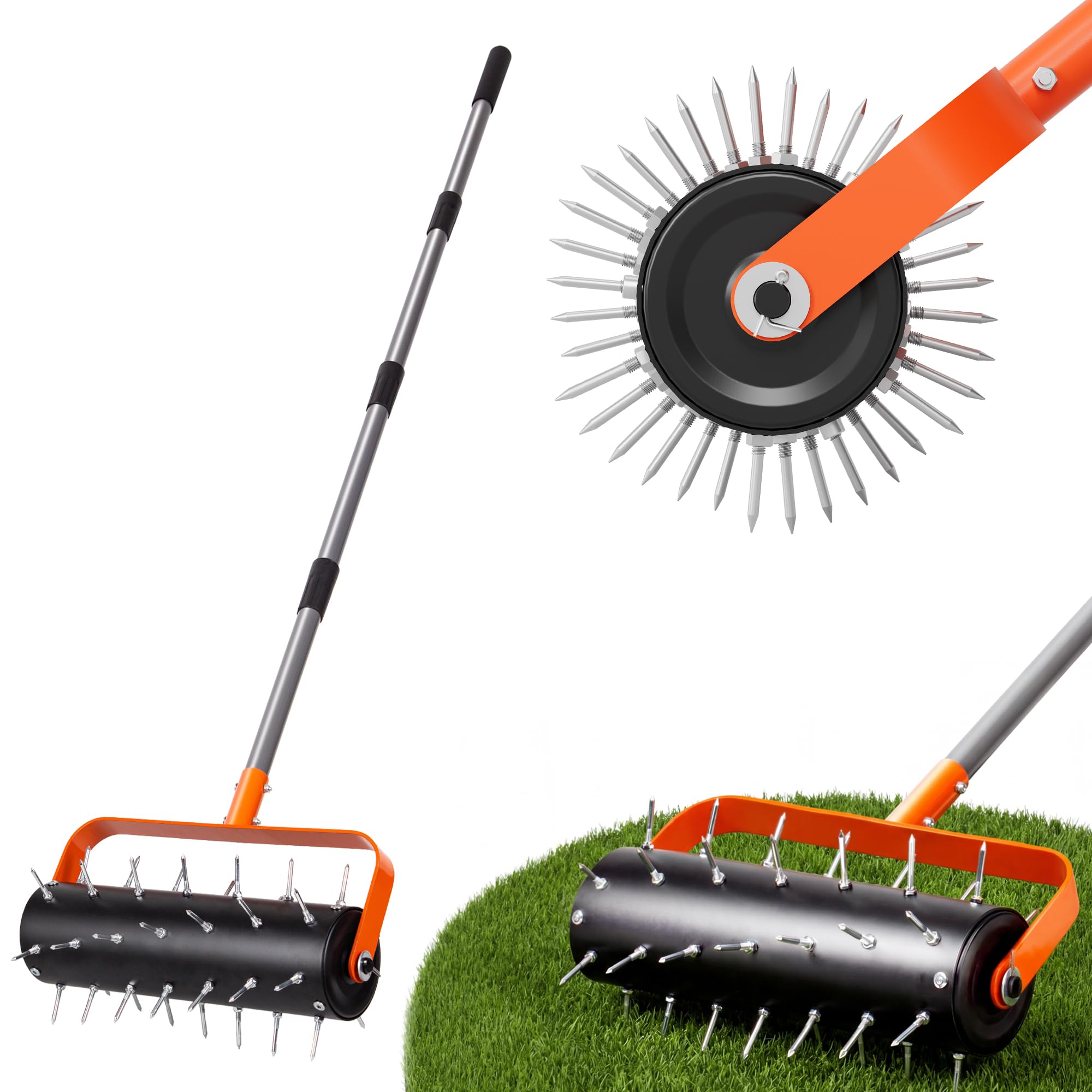
The Walensee rolling aerator takes a completely different approach to manual aeration — instead of a step-and-pull tool, it is a drum-style spike aerator that you push across the lawn. It features 42 heat-treated steel spikes arranged in a spiral pattern for smooth rolling, and the 71-inch adjustable handle means most users can stand fully upright while working. This eliminates the back strain of bending with a handheld tool.
The roller can be filled with sand or stones to add weight, which is critical for penetration in compacted soil. Many owners report adding about ten pounds of weight to get good results on their 2,000-square-foot lawns. The build quality is solid for the price, and the tool is surprisingly easy to push once the spikes engage. It is ideal for medium-sized lawns where a handheld unit would take too long.
However, the 2-inch spike length is shorter than most handheld spike tools, which may not reach deep compaction layers. Some users also note that the inner diameter of the roller is slightly mismatched with the end caps, causing sand to spill out unless sealed with caulk. Also, the drum design means it is best for even terrain — it can struggle on slopes or very bumpy ground.
What works
- Push design saves your back on medium lawns
- 42 spikes cover ground fast
- Adjustable handle fits tall users
What doesn’t
- 2-inch spikes are short for deep compaction
- Roller may leak sand if not sealed
5. Suchtale 18-Inch Push Spike Aerator

The Suchtale push aerator uses five star-shaped wheels with eight-inch diameters, each featuring ten uneven spike tips that can penetrate up to two inches deep. The rotating star design allows the spikes to pivot as they contact the ground, reducing the chance of tearing the grass. The frame is made from thick, powder-coated steel that feels much more substantial than many rolling aerators in this price range.
A standout feature is the built-in weight tray, which is designed to hold standard 16-inch bricks or cinder blocks. Adding just one block dramatically improves penetration in compacted soil. A landscape architect reviewer validated that the tool works well for overseeding preparation when the ground is saturated, though they recommend avoiding extra weight if the soil is already soft to prevent over-penetration.
The main complaint is that the tool is extremely labor-intensive on dry or hard-packed ground. Some users found that even with two cinder blocks, the spikes only penetrated half an inch, and the tool became very hard to push, actually ripping grass rather than aerating it. It works best on moist soil and relatively level ground. Assembly is straightforward, but the instructions could be clearer.
What works
- Rotating star wheels prevent grass tearing
- Weight tray accepts standard bricks for extra force
- Thick powder-coated steel frame is durable
What doesn’t
- Very hard to push on dry, compacted soil
- Spikes may only penetrate half an inch without heavy weight
6. Jardineer 36-Inch Spike Aerator
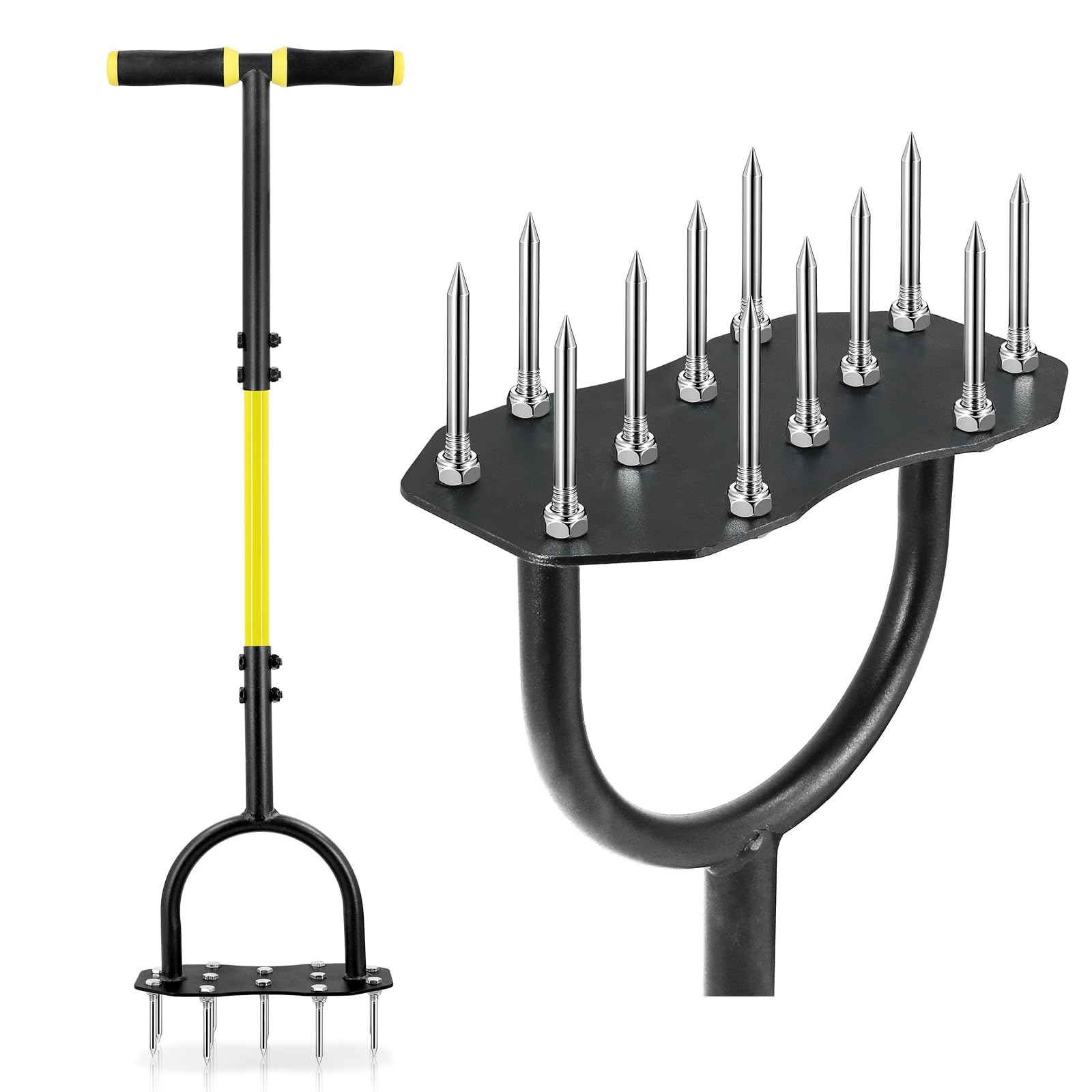
The Jardineer manual spike aerator is the most affordable entry in this list, yet it still delivers 12 heat-treated steel spikes that are 2.75 inches long. The 36-inch back-saving handle with a rubber grip reduces hand fatigue, and the thick steel foot plate is wide enough to handle your full weight without bending. It arrives pre-assembled, so you can start aerating immediately out of the box.
Owners praise it for being surprisingly effective on compacted clay soil. The 12 spikes working simultaneously cover more ground per plunge than 4-spike tools, making it faster for small lawns and garden beds. It is also detachable for easy storage. Several users noted that the tool feels sturdy and has held up well over multiple seasons without spike bending or rusting.
The main limitation is that the 36-inch handle is on the shorter side, which may cause taller users to stoop slightly. It is also best suited for small areas — using it on a large lawn would be a significant workout due to the number of plunges required. The spikes are also not as thick as some competing models (about 0.2 inches diameter), so they may not create large-diameter holes in very hard soil.
What works
- 12 spikes cover ground quickly for a hand tool
- Pre-assembled and ready to use immediately
- Strong steel foot plate for full weight transfer
What doesn’t
- Handle is short for taller users
- Spike diameter is smaller than premium models
7. Colwelt 38-Inch Lawn Aerator

The Colwelt spike aerator differentiates itself with exceptionally large spikes: each of its four tines is 3.5 inches long and 0.4 inches in diameter. This is significantly thicker and longer than most budget-friendly spike tools, which typically use 2.3-inch long spikes that are half the diameter. The result is a tool that creates noticeably bigger holes, allowing more air and water to reach the root zone in one pass.
The 38-inch total height is among the tallest in this category, reducing the need to bend for most users. The cushioned T-handle provides good grip comfort, and the anti-slip foot plate is 6 inches wide and 5.5 inches tall, making it easy to use with work boots. The steel construction feels heavy-duty, and owners consistently report that the tool is very sturdy and well-made for the price.
The primary downside is that with only four spikes, you need more passes to cover a given area compared to the 12-spike Jardineer. Also, the large spike diameter means you need to apply more downward force to push them into hard soil. Users recommend watering the lawn thoroughly before use for best results. It is an excellent choice for spot-treating compacted patches or working in smaller lawns where hole size matters more than speed.
What works
- Longest and thickest spikes in the budget tier (3.5 x 0.4 inches)
- Tall handle (38 inches) reduces back strain
- Heavy-duty steel construction feels robust
What doesn’t
- Only four spikes means slower coverage
- Thick spikes require more force in hard soil
Hardware & Specs Guide
Spike Length & Diameter
Spike length determines whether you reach the compacted root zone. Aim for at least 2.5 inches. Thicker spikes (0.4 inches or more) create larger holes that improve water infiltration. However, thicker spikes also require more downward force, so balance hole size with your soil’s hardness and your own strength.
Handle Height & Ergonomics
Manual aerators require repetitive stepping and pulling. A handle height of 36 to 40 inches is ideal for most adults to stand upright while working. Rubber or foam grips reduce hand fatigue, and a wide T-handle provides better leverage than a narrow straight handle. The foot plate should be at least 5 inches wide to accommodate work boots and prevent slipping.
Core vs. Spike Mechanism
Core (plug) aerators physically remove a soil plug, which is the most effective method for relieving compaction. Spike aerators just push soil aside, which can sometimes compact the walls of the hole in clay soils. For routine maintenance on loamy soil, spikes are fine. For severely compacted lawns, clay soils, or overseeding preparation, invest in a core aerator.
Build Material & Weight
Powder-coated steel is the standard for durability and rust resistance. Stainless steel tines are superior for core aerators because they resist corrosion and stay sharp longer. Tool weight matters: a heavier tool (5+ pounds) transfers more force into the ground but is more tiring to carry. Lightweight tools (under 4 pounds) are easier to handle but may require more downward effort from the user.
FAQ
Should I water my lawn before using a manual aerator?
How many passes do I need for effective aeration?
Can I use a manual aerator on a large lawn?
Final Thoughts: The Verdict
For most gardeners, the best cheap lawn aerator winner is the Dolibest Coring Aerator because it pulls actual soil plugs with four stainless steel tines at a price that undercuts most three-tine competitors. If you want a straightforward spike tool that punches deep holes for spot treatment, grab the Colwelt 38-Inch Aerator with its thick 3.5-inch spikes. And for covering a medium-sized lawn without back strain, nothing beats the Walensee Rolling Aerator.