
A wooden planter box isn’t just a container—it’s the foundation of your raised bed garden. The wrong choice means warped slats, split legs, and soil spilling out by mid-summer, while a well-built fir or cedar box turns balcony, patio, or backyard patches into thriving micro-gardens for herbs, flowers, and deep-rooted vegetables.
I’m Rikta — the co-founder and writer behind Lawn Gear Lab. I spend my days analyzing timber thickness, drainage layouts, capacity volumes, and hundreds of owner-verified reports to separate heirloom-quality planter boxes from season-long disappointments in this category.
Whether you need a tall ergonomic bed to protect your knees or a massive rectangular plot for a full vegetable lineup, this guide will help you lock in the right wooden planter box for your exact garden space and budget.
How To Choose The Best Wooden Planter Box
Not all wooden planter boxes age the same. Fir, cedar, and pine start with very different moisture resistance, and the thickness of the side panels and leg posts determines whether your bed lasts two seasons or a decade. Below are the three specifications that matter most for this category.
Timber Species and Treatment
Cedar naturally resists rot and insect damage without chemical treatment, making it the premium choice for direct-contact soil beds. Fir is a strong, affordable alternative that performs well when sealed with a food-safe oil or water-based stain. Avoid untreated pine for ground-contact beds unless you plan to line the interior completely and seal the exterior annually.
Panel Thickness and Leg Construction
A planter’s structural integrity comes from its board thickness and leg design. Budget units often use 0.4-inch slats that flex under wet soil. Mid-range models step up to 0.6-inch panels, while premium cedar boxes feature 0.7-inch frames with 2.4-inch thick corner legs. Heavier capacity ratings—150 pounds vs 300 pounds—directly reflect this difference.
Drainage Approach and Depth
Good drainage prevents root rot. Some planter boxes include pre-drilled holes and a fabric liner; others rely on an open-bottom design. Depth matters too: a 7-inch bed works for lettuce and herbs, while 10 to 12 inches supports tomatoes, peppers, and carrots. Taller elevated beds (30 inches) add ergonomic relief if bending is a concern.
Quick Comparison
On smaller screens, swipe sideways to see the full table.
| Model | Category | Best For | Key Spec | Amazon |
|---|---|---|---|---|
| SoliWood 48x24x30 | Cedar | Premium long-term use | 300 lb capacity, 0.7″ panels | Amazon |
| Giantex 48x24x10 | Fir | Large open-bottom planting | 6.35 cu ft capacity | Amazon |
| Yaheetech 34x18x30 | Fir + Shelf | Tool storage + ergonomic | 2-tier design, 2.2 cu ft | Amazon |
| Best Choice Products 34x18x30 | Fir | Entry-level elevated bed | 2.65 cu ft, 150 lb limit | Amazon |
| DUMOS 34x18x30 | Fir | Budget-friendly with liner | 1.9 cu ft, included liner | Amazon |
| Crownland 96x24x10 | Fir | Large ground-level beds | 96″ length, open bottom | Amazon |
| Piksedo Elevated 40x11x31 | Steel | Slim metal alternative | Alloy steel, painted finish | Amazon |
In‑Depth Reviews
1. SoliWood Raised Garden Bed with Legs (48x24x30)
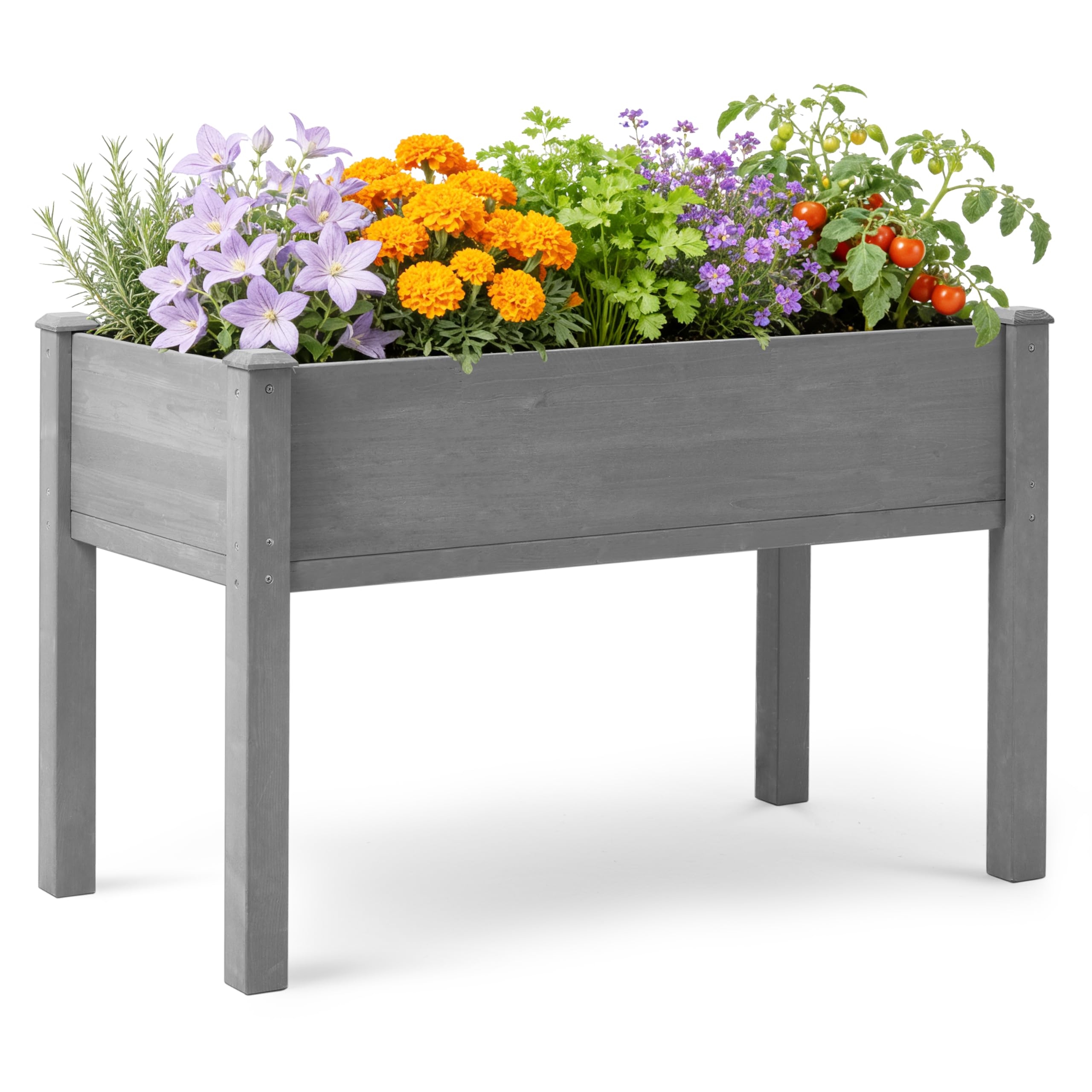
The SoliWood planter is the heaviest-duty wooden box in this lineup. It uses solid cedar with 2.4-inch thick corner legs and 0.7-inch frame panels, producing a 300-pound weight capacity that easily handles wet soil, dense clay amendments, and mature tomato plants. The water-based grey eco finish preserves the cedar’s natural rot resistance while eliminating the need for annual sealing.
At 48 inches long by 24 inches wide by 30 inches tall, this elevated bed offers 6 cubic feet of growing space. The included liner prevents soil from staining the wood and keeps the interior tidy during watering. Owner reports consistently praise the pre-drilled hole alignment and straightforward assembly, even for older gardeners assembling solo.
Wood splitting can occur if screws are overdriven near the panel edges, so a hand screwdriver or low-torque drill setting is recommended. The grey water-based paint matches fences and modern deck aesthetics well, and the 30-inch height eliminates back strain for extended gardening sessions. For anyone wanting a cedar planter that will outlast fir alternatives, this is the clear frontrunner.
What works
- Cedar construction with thick 0.7-inch panels for decades-long durability
- 300-pound capacity accommodates heavy soil mixes without bowing
- Water-based eco gray finish eliminates annual staining
- Included liner prevents soil loss and keeps wood dry
What doesn’t
- Wood can split if screws are over-torqued during assembly
- Heavier than fir counterparts at 38.9 pounds empty
2. Giantex Wooden Raised Garden Bed (48x24x10)

The Giantex open-bottom design covers a large 48×24 inch footprint, offering 6.35 cubic feet of loose growing space for vegetables, sprawling squash, or cut flowers. The 10-inch depth suits shallow to mid-root crops, and the open bottom allows excess water to escape directly into the ground while giving roots access to deeper soil nutrients.
This bed is crafted from unfinished fir with four legs reinforced by eight screws and top caps that prevent cracking at the joint. Owners report that assembly is straightforward with a power screwdriver, though driving screws manually is laborious due to the dense wood. Some units arrive with one slightly cracked panel, but liners or exterior sealing easily mitigate the gap.
Lightweight at 10.5 pounds, the Giantex is easy to reposition before filling, but the untreated fir requires weatherproofing if you expect more than two seasons of outdoor exposure. Several owners modified this bed by adding a plywood base and casters for indoor rolling use. It is a beginner-friendly rectangle that rewards DIY sealing efforts.
What works
- Large 6.35 cubic foot capacity for serious vegetable yields
- Open-bottom design prevents waterlogging and supports deep root access
- Lightweight and easy to relocate before filling
- Low 10-inch profile fits under deck railings and low eaves
What doesn’t
- Unfinished fir must be sealed for multi-season use
- Occasional cracked panel reported in some units
3. Yaheetech 34x18x30 Raised Garden Bed with Storage Shelf

The Yaheetech bed stands apart from typical elevated planters with its built-in lower shelf for storing trowels, watering cans, pots, and soil bags. The 2.2 cubic foot top box holds 34×18 inches of planting space, and the 29.5-inch standing height prevents back and knee strain during routine tending.
Manufactured from solid fir with polished surfaces and no rough burrs, this planter includes reinforced wooden crossbars under the bottom for added stability. Owners report that the natural stain finish looks attractive on front porches and that the shelf is sturdy enough for a small watering can and extra potting mix. Several users added caster wheels to make the unit mobile on wooden decks.
Assembly requires no power tools but takes longer than simpler elevated boxes due to the shelf frame. The planter held up well through winter exposure when sealed with a clear waterproof coating. If you want a clean, organized gardening corner without separate storage bins, this two-tier system delivers.
What works
- Integrated storage shelf keeps tools organized at planting height
- Smooth polished fir surfaces with no splinters or burrs
- Easy to add casters for portability
- Attractive natural wood finish suits front porches and patios
What doesn’t
- Longer assembly time due to shelf structure
- Unfinished wood still benefits from a protective sealant
4. Best Choice Products 34x18x30 Elevated Wood Planter Box

The Best Choice Products planter packs a lot of value into a mid-range price point. It offers a 2.65 cubic foot capacity—larger than many comparably sized elevated beds—and includes a liner that separates soil from wood while discouraging weeds and burrowing pests. The 30-inch ergonomic height is consistent with premium competitors at a lower investment.
Constructed from Chinese fir with a natural unfinished surface, this bed benefits from a DIY stain or food-safe oil treatment before soil is added. Owners report straightforward 30-minute assembly with clear instructions and a sturdy final structure that doesn’t wobble. The wood grain and color are attractive enough that some users skip painting entirely.
Several owners purchased a second unit after the first build, citing consistent part quality and no missing pieces. The 150-pound capacity is adequate for typical vegetable soil mixes, though heavier clay-based blends will push the frame’s limits. It’s a capable, well-proportioned elevated bed for patios and balconies.
What works
- Larger than expected 2.65 cu ft planting capacity
- Easy 30-minute assembly with no power tools needed
- Included liner simplifies setup and prevents soil staining
- Attractive natural wood grain requires no painting
What doesn’t
- Unfinished fir needs sealing to last more than 2 seasons
- 150-pound capacity limits very heavy wet clay soil mixes
5. DUMOS Raised Garden Bed 34x18x30 Inch
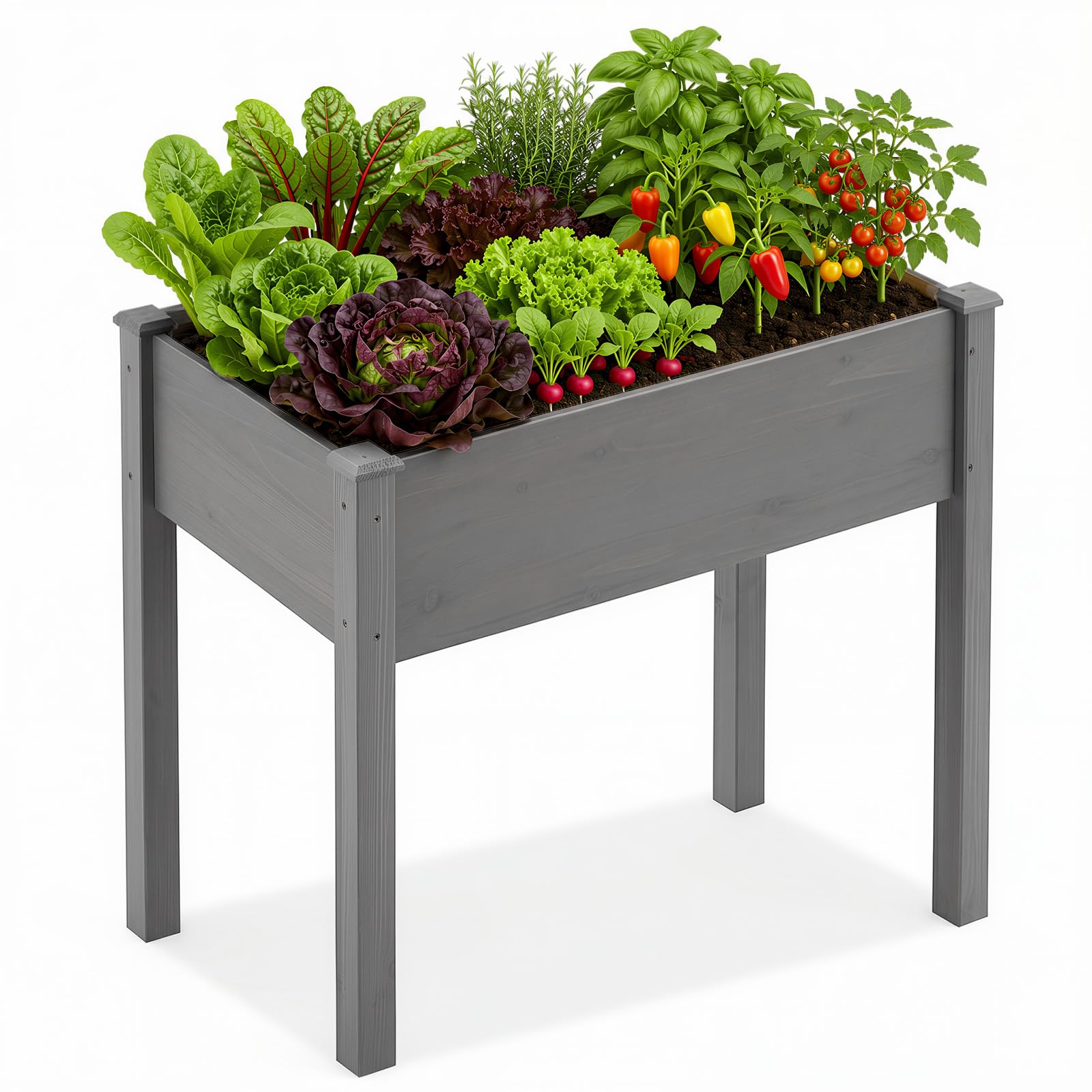
The DUMOS raised garden bed offers the most accessible entry point into elevated wooden planting without sacrificing critical features. It includes a fabric liner to prevent soil spillage, a generous 1.9 cubic foot planting space, and a fully assembled weight of 16.5 pounds that allows one-person repositioning. The dark grey stain finish gives it a modern look out of the box.
Built from weather-resistant fir with pre-drilled drain holes and gaps, this bed prevents water accumulation while maintaining healthy aeration for root systems. Owners emphasize the easy solo assembly, clear instructions, and sturdy build quality for the price. The 30-inch tall design is consistently praised by gardeners with back or knee concerns.
A few owners noted that the 7-inch soil depth is shallow for root vegetables like carrots or potatoes, making it best suited for leafy greens, herbs, and strawberries. The unfinished interior wood also benefits from a food-safe sealing oil applied before the liner is installed. For budget-conscious shoppers seeking an ergonomic raised bed that performs immediately, the DUMOS delivers.
What works
- Dark grey stain finish provides a premium look at a budget cost
- Included liner and drainage system prevent waterlogging
- Easy solo assembly with all hardware included
- Light enough to reposition before filling
What doesn’t
- 7-inch soil depth limits root-vegetable growing options
- Unfinished interior wood still requires sealing for longevity
6. Crownland Outdoor Gardens 8 ft Raised Garden Bed

The Crownland 96x24x10 bed offers the largest rectangular growing area in this list, spanning 8 feet long by 2 feet wide. This open-bottom design lets you plant continuous rows of vegetables, herbs, and flowers without the capacity restrictions of smaller elevated boxes. The 10-inch height keeps the bed ground-level, which is ideal for sprawling crop layouts.
Constructed from solid fir wood with a smooth natural surface, the kit includes dividers for separating plant varieties and maintaining moisture zones. Assembly typically takes about 30 minutes with a mallet for the slotted connections, though owners note that the legs may crack under heavy wet soil if braces aren’t added. Applying a weatherproofing stain before installation significantly extends the bed’s lifespan.
Durability reports are mixed: some owners report the bed lasting only one growing season before the wood degrades, while others who applied sealant and added corner brackets enjoyed multiple years. The thin slats and lack of pre-drilled holes for nails are the primary weak points. This is a high-value option for budget-focused gardeners willing to invest in reinforcement and sealing.
What works
- Massive 8-foot growing length for serious vegetable production
- Includes interior dividers for organizing different plant types
- Quick 30-minute assembly with mallet for slot connections
- Open-bottom design prevents water buildup and root rot
What doesn’t
- Thin slats and soft wood can crack under heavy soil weight
- Legs may split without corner bracket reinforcement
- Unsealed units may only last one season outdoors
7. Piksedo Elevated Planter Box (40x11x31, Black Metal)
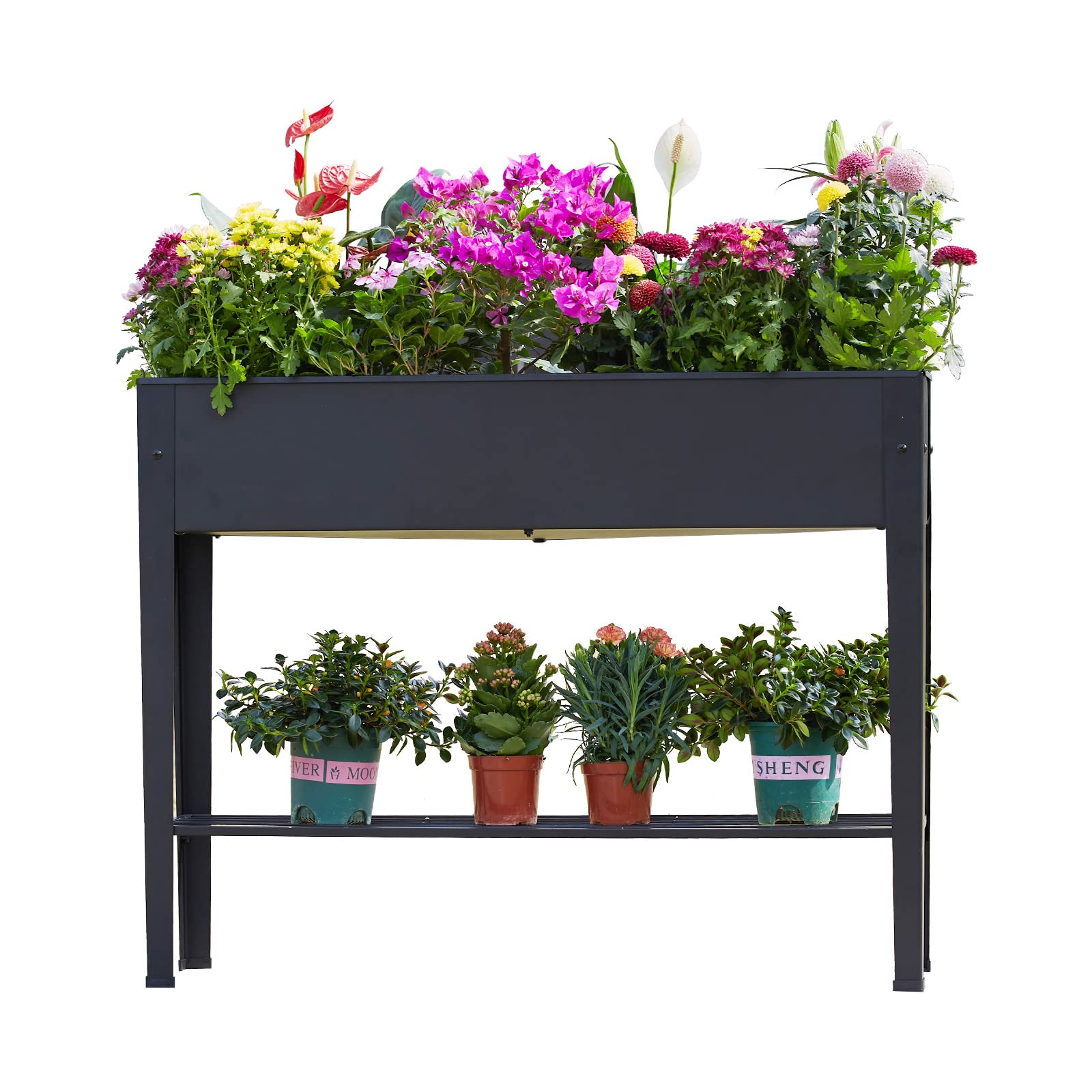
The Piksedo planter shifts away from wood entirely, using a heavy-duty alloy steel frame with an anti-rust painted finish. Its narrow 11-inch width and 31-inch height make it ideal for tight balcony corners, railing edges, or lining a walkway without blocking foot traffic. The single drainage hole keeps the 1.5 cubic foot soil volume fresh.
Owners report sturdy construction with easy assembly and no wobbling even during high winds on sloped surfaces. The plastic feet protect wooden decks from scratches, and the slim profile holds about 24 dry quarts of soil. Some owners added extra drainage holes to improve water flow, and a few noted minor finish spotting after three months of rain exposure.
This is not a wooden option, but it earns a spot for gardeners who need the upright form factor of a tall elevated box in a durable non-wood material. It works well for compact herbs, small flowers, and trailing plants. If absolute rust resistance is a priority over the natural wood aesthetic, the Piksedo is a capable alternative.
What works
- Narrow footprint fits tight balcony and railing spaces
- Alloy steel frame with anti-rust coating resists weather
- Plastic feet protect deck surfaces from scratches
- Easy assembly with included tools and hardware
What doesn’t
- Painted finish may develop water spots after extended rain exposure
- Single drainage hole may need user-added holes for heavy rain regions
Hardware & Specs Guide
Weight Capacity and Wood Thickness
The single most overlooked spec in a wooden planter box is the panel thickness measured in inches coupled with the rated weight capacity in pounds. A 150-pound limit with 0.5-inch fir panels is sufficient for standard patio potting mix, but a 300-pound limit with 0.7-inch cedar panels handles dense soil blends, water retention, and large root systems without the sides bowing outward. Inspect the leg thickness too—2.4-inch posts are dramatically more stable than 1.5-inch alternatives.
Drainage Design and Soil Depth
There are two primary drainage approaches in this category: pre-drilled base holes (often paired with a fabric liner) and open-bottom frames. Pre-drilled beds are better for elevated patio boxes where drainage water must be controlled. Open-bottom designs work best for ground-level rectangular frames placed directly on yard soil, allowing roots to extend downward. Soil depth (measured from the bottom of the box to the rim) is critical: 7 inches suits leafy greens, while 10 to 12 inches supports peppers, tomatoes, and root vegetables.
FAQ
Should I seal or stain a new wooden planter box before adding soil?
How many cubic feet of soil do I need for a 48x24x10 bed?
What is the difference between fir wood and cedar wood for planter boxes?
Can I place a wooden planter box directly on grass or concrete?
Final Thoughts: The Verdict
For most gardeners, the wooden planter box winner is the SoliWood Raised Garden Bed because it pairs thick cedar panels with a 300-pound capacity and a water-based eco finish that eliminates the need for annual sealing. If you want large open-bottom coverage for vegetables at ground level, grab the Giantex 48x24x10. And for organized small-space gardening with built-in tool storage, nothing beats the Yaheetech two-tier planter.