
Starting seeds in plastic means later wrestling with tangled roots and transplant shock that sets your plants back weeks. Cardboard plant pots solve this by letting you drop the entire pot into the ground, where it breaks down naturally and lets roots pass straight through the walls. The trade-off is picking pots with the right thickness and drainage to avoid soggy soil that stunts germination before it even starts.
I’m Rikta — the co-founder and writer behind Lawn Gear Lab. I spend my time comparing material blends, pulp densities, and drainage hole patterns across dozens of seedling pot brands so I can break down which ones actually hold up under real watering conditions without falling apart prematurely.
After analyzing thousands of owner reports and spec sheets, I narrowed the field to the seven best options that balance durability, root aeration, and biodegradation speed. This is your guide to finding the right best cardboard plant pots for your seed-starting setup.
How To Choose The Best Cardboard Plant Pots
Cardboard or peat-based pots look simple, but small differences in material density, shape, and drainage determine whether your seedlings thrive or struggle. Here are the three factors that separate great pots from disappointing ones.
Material Composition and Wall Thickness
Pots made from dense recycled pulp hold their shape longer under repeated watering but take more time to break down in the soil. Thinner pots made with lighter plant fibers degrade faster but can turn soggy and collapse if you overwater. Mid-range options balance enough structural integrity to last six to eight weeks indoors with a degradation rate that still allows root penetration by transplant time.
Shape and Tray Compatibility
Square pots pack more tightly into standard 1020 propagation trays compared to round pots, which waste space and let water pool unevenly. If you use a bottom-watering system, square pots wick moisture more uniformly. Round pots work fine for small batches but force you to leave gaps that dry out faster and encourage uneven germination.
Drainage Hole Design
Pots with at least four drainage holes at the base prevent waterlogged conditions that cause root rot and damping-off disease. Some budget pots lack any perforations, forcing you to drill your own. Pre-punched holes are a reliable sign of quality because they indicate the manufacturer designed the pot for actual seed starting rather than decorative use.
Quick Comparison
On smaller screens, swipe sideways to see the full table.
| Model | Category | Best For | Key Spec | Amazon |
|---|---|---|---|---|
| JERIA 200-Pack | Premium Bulk | Large seed-starting operations | 200 pots, 3.15″ diameter | Amazon |
| JERIA 100-Pack | Premium Standard | Durable everyday seedling pots | Thick peat wall construction | Amazon |
| FDGARDEN 100-Pack | Small-Size Premium | Succulents and small starters | 2.36″ diameter, moss/pulp mix | Amazon |
| JNYONG 120-Pack | Mid-Range Value | Balanced durability and price | 4 drain holes, 3.15″ diameter | Amazon |
| ModaSin 131-Pack | Mid-Range Bulk | High pot count with labels | 131 pots, 3.15″ diameter | Amazon |
| YESIACE 126-Pack | Entry-Level | Budget square pot option | Square shape, 3.15″ size | Amazon |
| Baxrou 120-Pack | Entry-Level | Low-cost starter kit | 3.15″ pots, includes tools | Amazon |
In‑Depth Reviews
1. JERIA 200-Pack 3.15 Inch Peat Pots
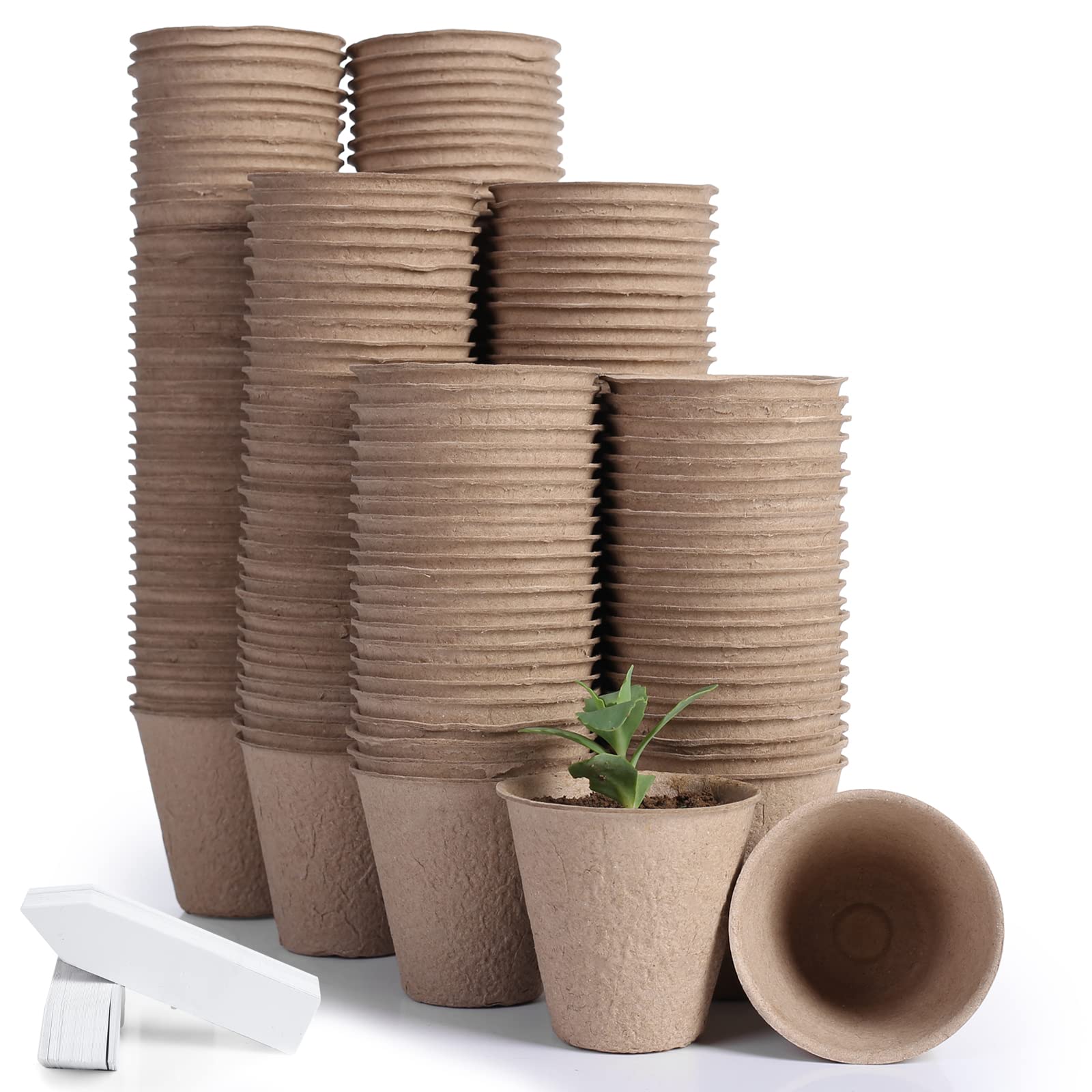
The JERIA 200-Pack delivers premium peat pot construction at a bulk quantity that serious gardeners need for large seed-starting sessions. The wall thickness is noticeably denser than most alternatives in this category, which means the pots hold their form even after weeks of daily bottom-watering in a propagation tray. Owner reports consistently mention that the pots refuse to crumble or turn mushy under standard seedling care, a common frustration with thinner pulp competitors.
Each pot measures 3.15 inches in diameter, a sweet spot for starting tomatoes, peppers, cucumbers, and most flower varieties. The material blend uses recycled pulp and binding agents that naturally biodegrade after transplant, allowing root systems to push through the walls without encountering a hard barrier. The included 200 plant labels are a practical bonus that keeps your trays organized when you are juggling multiple seed varieties simultaneously.
These pots also drain well, though a handful of owners advised against heavy overhead watering during the first week to prevent surface sogginess before the roots establish. For growers who want the largest reliable quantity with the sturdiest build, this kit eliminates the need to reorder mid-season.
What works
- Dense wall construction resists collapse under moisture.
- Generous 200-count covers large growing projects.
- Pot bottom breaks down at the ideal rate for direct ground planting.
What doesn’t
- Single-use design means no reuse after transplant.
- Initial overwatering can leave pots soggy before roots fill in.
2. JERIA 100-Pack 3.15 Inch Peat Pots

If you need the same thick-wall reliability as the 200-pack but in a smaller, more manageable quantity, the JERIA 100-Pack is the same premium formulation in a tighter count. The pots share the dense pulp blend that experienced seed starters praise for holding up in humid greenhouse conditions without losing structural integrity. Owners consistently describe these as having noticeably more heft than the paper-thin pots sold in big-box garden centers.
The 3.15-inch diameter works well for seedlings that need three to four weeks of indoor growth before hardening off. The pot walls breathe like clay, which reduces the risk of the stagnant moisture that encourages mold around the stem base. Multiple reviewers noted that they bought these repeatedly after being disappointed by cheaper alternatives that disintegrated during the first watering cycle.
One trade-off is the same single-use limitation that applies to all peat pots in this class. You plant the entire thing, so there is no recovering the pot after transplant. But for growers who prioritize pot stability and predictable degradation timing, this is the most reliable mid-size bundle available.
What works
- Superior thickness compared to standard entry-level pots.
- Drain holes allow excess water to escape efficiently.
- Labels included for every pot make organization simple.
What doesn’t
- Not reusable after transplant into the ground.
- Price per pot is slightly higher than budget bundles.
3. FDGARDEN 100-Pack 2.36-Inch Peat Pots

The FDGARDEN pots are the smallest contenders in this lineup at 2.36 inches in diameter, making them the right choice for succulent propagation, microgreens, or very early seedling starts before transplanting into larger containers. The material blend combines moss and recycled pulp, which gives these pots a slightly different texture than standard peat-only pots and a faster wicking action that pulls moisture upward from a bottom tray.
One issue that stands out in owner feedback is the difficulty of separating the individual pots without tearing the edges. The pots arrive nested tightly, and the lighter construction means you can easily damage the rim if you are not careful. The included plastic plant markers are also disproportionately large for the pot size, which some users found visually awkward in a standard seed tray.
Despite these quirks, the biodegradation performance is strong. Once transplanted, the pots break down quickly and integrate into the surrounding soil without leaving stubborn remnants. For gardeners who work primarily with small ornamentals or limited windowsill space, this compact format offers a specialized solution that the 3.15-inch options cannot match.
What works
- Small diameter suits succulents and tight spaces.
- Moss-based blend wicks moisture well from bottom trays.
- Biodegradation is fast and complete after transplant.
What doesn’t
- Pots tear easily when separating from the stack.
- Plastic markers are oversized relative to the pot size.
4. JNYONG 120-Pack 3.15 Inch Peat Pots
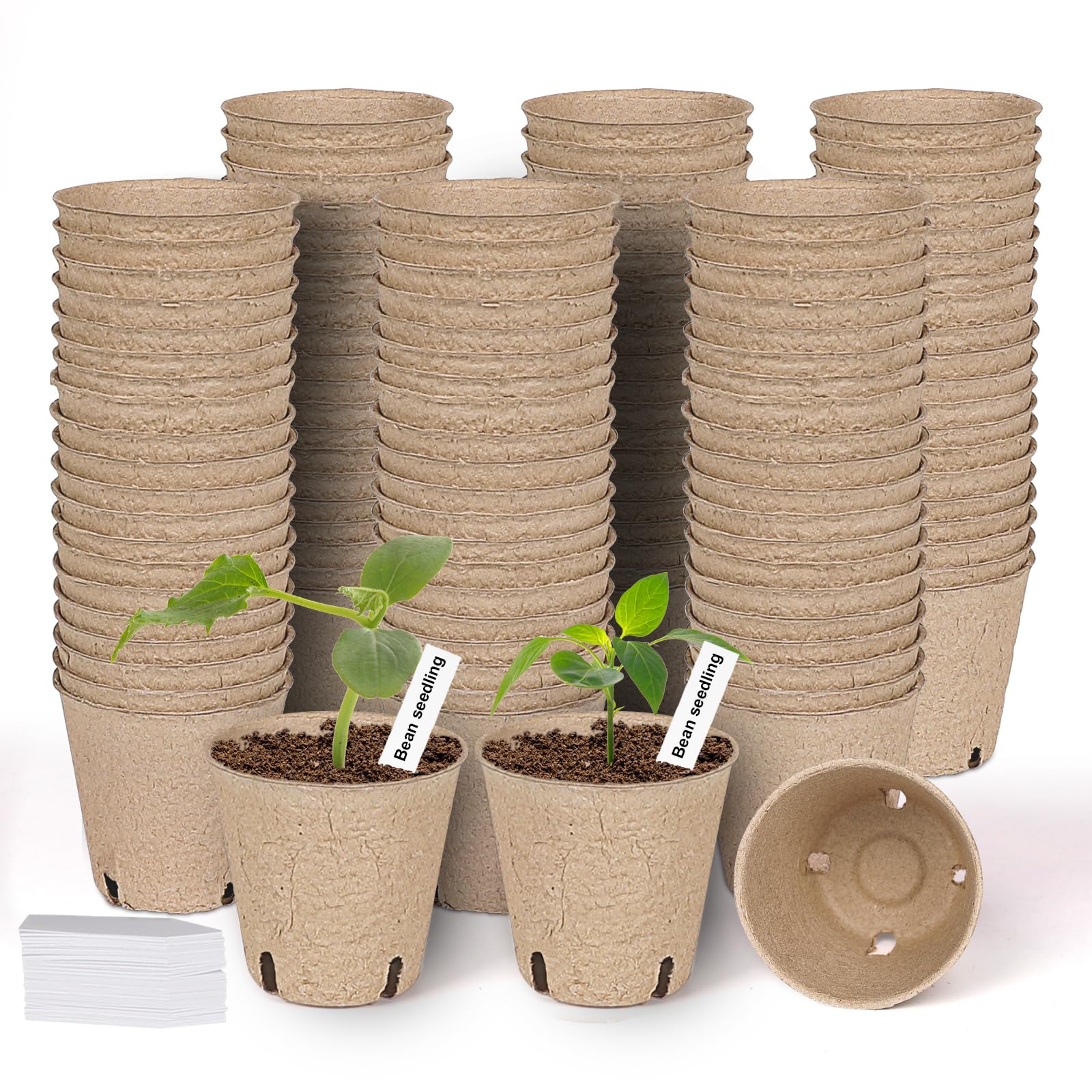
The JNYONG 120-Pack lands in the middle of the price spectrum while delivering four pre-punched drainage holes at the bottom of every pot, a design detail that saves you the hassle of manually poking holes through dense pulp. The 3.15-inch diameter matches the industry standard for fit in most plastic propagation trays, and the wall thickness sits between the ultra-thin entry-level options and the premium JERIA pots, offering a balanced compromise for general seed starting.
Owner reports highlight that these pots remain sturdy enough to survive four months of daily watering without structural failure. The biodegradable material composts reliably after transplant, with several gardeners noting that the pots nearly disappear by the end of the growing season.
One minor drawback is that the material feels slightly less dense than the JERIA alternatives, meaning heavy-handed watering can soften the walls faster. But for the per-unit cost, the JNYONG set is a strong mid-range choice for gardeners who want a large number of functional pots without paying a premium.
What works
- Four pre-punched holes provide reliable bottom drainage.
- Sturdy enough to hold up through months of watering.
- Great balance of cost and structural quality.
What doesn’t
- Only 100 labels for 120 pots leaves some unmarked.
- Wall density is lower than premium-tier options.
5. ModaSin 131-Pack 3.15 Inch Nursery Pots

ModaSin packs 131 pots and 131 labels into a single kit, making this the best candidate if you want every single pot labeled without needing to buy separate markers. The round shape deviates from the square trend, and that matters for tray fit — round pots leave gaps in standard propagation flats, so plan accordingly if you use bottom watering. The pots measure 3 inches in diameter and 2.8 inches deep, slightly shallower than the 3.15-inch standard.
The pulp construction is adequately thick to support seedlings through three sets of true leaves before transplant. Owners who used these for school projects and community gardening events appreciated the even sizing and the ease with which kids could handle the pots without crushing them. The 131 labels eliminate the need to scramble for popsicle sticks or masking tape.
Where these pots fall short is the actual dimensions. Several buyers noted that the advertised size overstates depth, and the round shape makes it difficult to pack trays efficiently. If you are starting a small batch and value the label-per-pot ratio, this kit works. If you maximize tray space, square pots are a better layout.
What works
- One label for every pot with no shortage.
- Adequate wall thickness for standard seedling timelines.
- Good value for group planting activities.
What doesn’t
- Round shape wastes space in standard trays.
- Actual depth is shorter than the spec suggests.
6. YESIACE 126-Pack 3.15 Inch Square Peat Pots
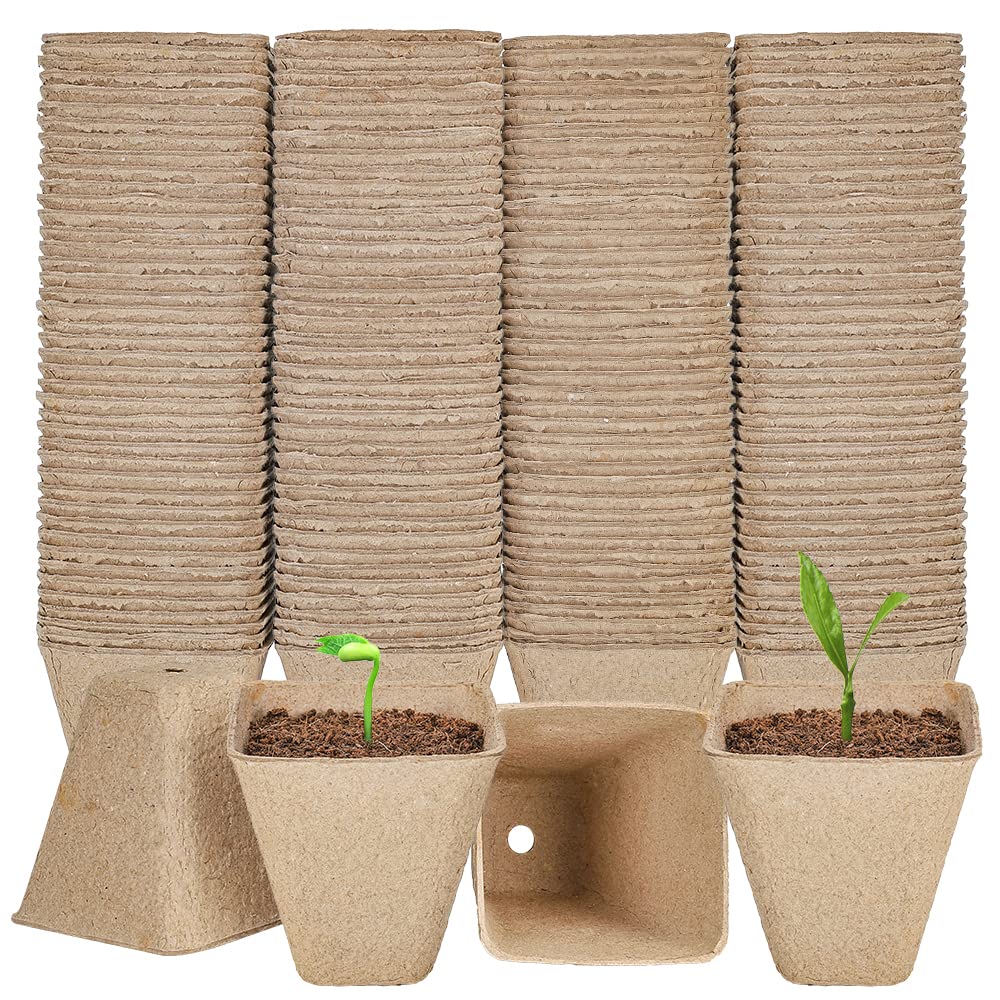
YESIACE offers a square pot design at an entry-level price point, making these a smart option if you prioritize tray-space efficiency over absolute wall thickness. The square profile fits snugly into 3.5-inch flat trays without the wasted gaps that round pots create, and the drainage hole at the bottom prevents standing water from accumulating inside the pot. The material is a blend of peat and plant fibers that absorbs water automatically, which helps keep the growing medium evenly moist.
Customers consistently report that these pots fit standard 18-cell propagation trays perfectly, a detail that matters when you are scaling up germination. The 126-count quantity gives you enough pots for several succession plantings without needing to reorder mid-season. Several reviewers mentioned that the pots slip out of plastic trays easily when wet, which simplifies the transplant process.
The downside is that the peat content feels lower than some competitors, and the walls are not as dense as the premium options. If you tend to water heavily, the bottom can soften and make the pot difficult to handle without tearing. For budget-conscious growers who use careful watering practices, these represent solid value.
What works
- Square design maximizes tray capacity.
- Fits standard 3.5-inch propagation flats well.
- Good price point for a high pot count.
What doesn’t
- Wall density is lower than premium alternatives.
- Bottom softens quickly under heavy watering.
7. Baxrou 120-Pack 3.15 Inch Peat Pots
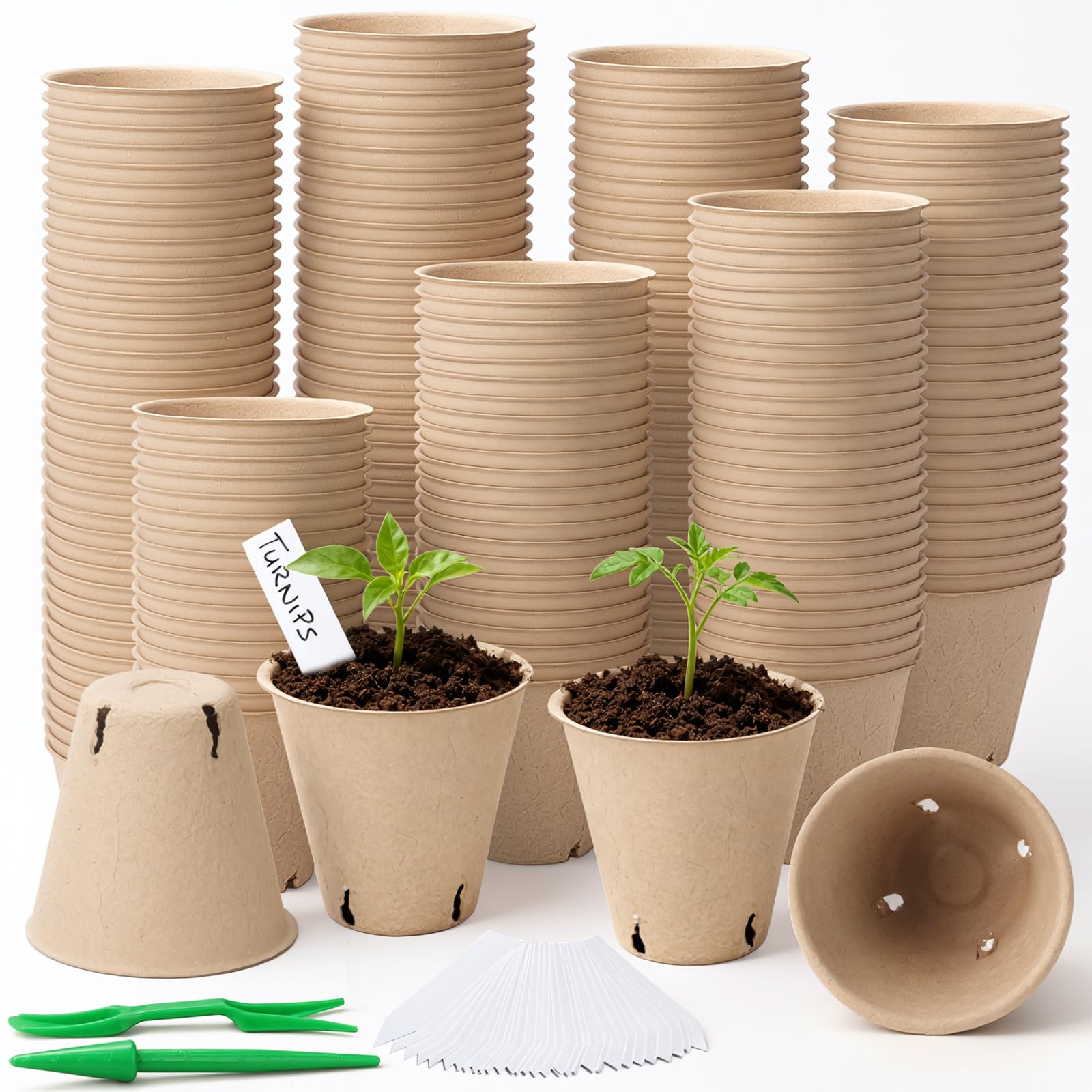
The Baxrou 120-Pack is the most affordable entry in this lineup, and it sweetens the deal with two mini transplant tools and 30 plant labels that go beyond the standard pot-only packaging. The pots are made from recycled pulp with a natural finish that breathes like clay, which helps prevent the root circling and nesting problems common with plastic containers. The 3.15-inch diameter gives seedlings enough room to develop a solid root ball before transplant.
Owner feedback reveals that these pots develop mold on the exterior in humid climates if airflow is restricted, though increasing ventilation resolves the issue. The mold is superficial and does not harm the seedlings, but it is worth noting for growers in damp basements or unventilated greenhouses. The pots drain well and prevent waterlogging, which one reviewer explicitly linked to healthier root development in their vegetable starts.
The biggest limitation is the label count. With only 30 labels for 120 pots, you will need to source additional markers if you germinate multiple varieties simultaneously. The transplant tools, while small, are genuinely useful for moving delicate seedlings into these pots without crushing the stems. For the lowest upfront cost, this kit provides everything a beginner needs to start 120 seedlings.
What works
- Very low cost for a complete starter kit with tools.
- Good drainage prevents root rot issues.
- Pulp material breathes well for healthy root development.
What doesn’t
- Only 30 labels for 120 pots is insufficient for mixed planting.
- Mold can appear on exterior in low-airflow environments.
Hardware & Specs Guide
Diameter and Depth Ratio
The 3.15-inch diameter is the most common size for cardboard plant pots because it accommodates the typical root ball size of vegetable and flower seedlings before they need transplanting. A shallower pot, like the 2.8-inch depth on some round models, can restrict root development for fast-growing crops like tomatoes or squash. Always match the depth to the anticipated grow time before transplanting into the garden bed.
Square vs Round Profiling
Square pots pack approximately 30 percent more units per tray compared to round pots of the same diameter. This density matters for bottom watering systems because the uniform contact surface allows even capillary action across the entire flat. Round pots leave open channels that accelerate evaporation at the tray edges, which can lead to dry pockets in some cells while adjacent pots stay saturated.
FAQ
How long do cardboard plant pots hold up before breaking down?
Can I reuse cardboard plant pots for a second round of seedlings?
Final Thoughts: The Verdict
For most gardeners, the best cardboard plant pots winner is the JERIA 200-Pack because it combines the thickest wall construction with a bulk count that covers large seed-starting sessions without mid-season reorders. If you want premium density in a smaller quantity, grab the JERIA 100-Pack. And for the best balance of drainage holes, durability, and price per pot, nothing beats the JNYONG 120-Pack.