
A black weed barrier that tears the first time you walk on it isn’t a solution—it’s just another chore. The real test isn’t how easily it unrolls from the box, but whether it still holds up after a season of rain, sun, and foot traffic. Cheap fabrics rot, fray at the cut lines, and let the same weeds sprout back through the gaps. The right woven polypropylene ground cover, matched to your specific soil and traffic load, changes that math entirely.
I’m Rikta — the co-founder and writer behind Lawn Gear Lab. I don’t claim decades of hands-on landscaping, but I’ve spent hundreds of hours cross-referencing fabric weights, weave densities, UV-stabilization claims, and owner feedback to build this guide.
After comparing tear resistance, water permeability, and real-world longevity across seven fabrics, I’ve narrowed the field to the best options for every common scenario. This is the definitive breakdown of the best black weed barrier for gardens, gravel paths, and commercial driveways.
How To Choose The Best Black Weed Barrier
Picking the right fabric starts with understanding the three trade-offs that matter: weight versus permeability, weave type versus installation ease, and UV life versus upfront cost. A 5 oz barrier is nearly bulletproof under gravel, but can slow drip irrigation in clay soil. A 3.2 oz fabric breathes better but needs careful anchoring in high-wind areas.
Fabric Weight and Density
Weight is measured in ounces per square yard. A 3 oz to 3.2 oz barrier is standard for flower beds and light foot traffic. A 5 oz barrier is considered heavy-duty and resists punctures from sharp rocks and repeated kneeling. Go heavier for driveways, play areas, or any surface that sees wheelbarrow loads.
Woven vs. Non-Woven Construction
Woven fabrics are made from polypropylene yarns that lock into a grid—stronger, more tear-resistant, and water-permeable through the mesh. Non-woven fabrics are bonded fibers that feel like felt; they filter well and resist unraveling, but can tear if snagged. Dual-layer fabrics combine a woven bottom for strength with a non-woven top for water wicking, giving you the best of both.
UV Stabilization and Lifespan
Bare polypropylene degrades in direct sunlight within months. Look for a barrier treated with UV inhibitors that extend its effective life to three, five, or even twelve years. The advertised years (like “12-Year”) assume the fabric is covered with mulch or gravel—exposed edges will still break down faster.
Quick Comparison
On smaller screens, swipe sideways to see the full table.
| Model | Category | Best For | Key Spec | Amazon |
|---|---|---|---|---|
| VIVOSUN Premium 5oz | Dual-Layer | Raised beds & garden paths | 5 oz/sq.yd dual-layer | Amazon |
| Snail Premium 5oz | Heavy Duty | Commercial ground cover | 5 oz/sq.yd woven PP | Amazon |
| Dewitt 12-Year | Non-Woven | Long-term flower beds | 3 oz non-woven, 12 yr UV | Amazon |
| VEVOR 5oz 3×100 | Woven | Driveways & gravel paths | 5 oz/sq.yd woven PP | Amazon |
| Winisok 3.2oz 4×100 | Woven | Vegetable gardens | 3.2 oz woven, 2-pack | Amazon |
| Pattiumo 3.2oz 3×300 | Dual-Layer | Large areas & row crops | 3.2 oz dual-layer, 300 ft | Amazon |
| AGGAFA 3.2oz 3×300 | Industrial Woven | Farming & orchard rows | 3.2 oz, virgin PP, 4 yr UV | Amazon |
In‑Depth Reviews
1. VIVOSUN Premium Weed Barrier 5oz
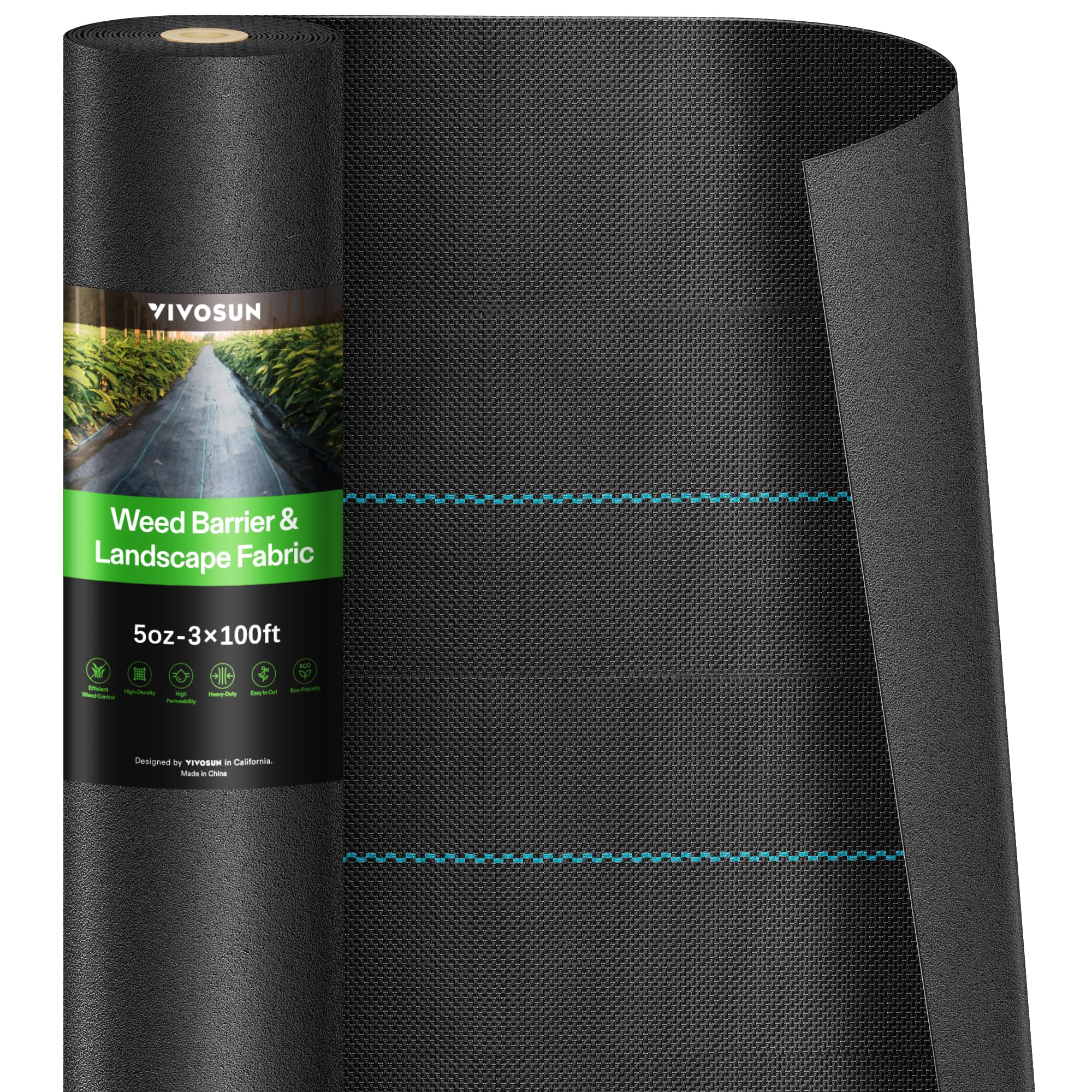
The VIVOSUN Premium 5oz is the benchmark for mid-sized garden projects. Its needle-punched dual-layer construction merges a woven polypropylene base with a non-woven top layer that uses molecular attraction to draw water down—offering six times the permeability of standard single-ply woven fabrics. At 5 oz per square yard, it resists punctures from kneeling and sharp gravel without feeling like a tarp.
The 3 ft by 100 ft roll includes green alignment guides every foot, which simplify spacing for tomato rows or flower transplants. Owners consistently report that cut edges fray less than traditional woven-only fabrics, thanks to the bonded non-woven fibers that lock the weave. Multiple reviews note the fabric has held up under daily foot traffic in garden pathways without tearing.
The only consistent negative is some unraveling at the cut edge when using scissors instead of a hot knife. This is common among dual-layer products. For vegetable gardens and raised beds that see regular traffic, this fabric hits the sweet spot between durability and breathability.
What works
- Exceptional water permeability compared to standard woven fabrics
- Thick 5 oz construction resists tears and root penetration
- Green alignment guides make plant spacing effortless
What doesn’t
- Cut edges can unravel if not sealed with a hot knife
- Premium price point relative to 3.2 oz options
2. Snail Premium Weed Barrier 5oz

Snail’s 5 oz woven polypropylene barrier is built for projects where you need width—the 4 ft by 100 ft roll covers 400 square feet in a single pass, cutting installation time for wide pathways, artificial grass bases, and playground underlayment. The fabric density blocks sunlight fully, while the woven grid allows water and air through at a rate that keeps soil from becoming anaerobic.
The material is UV-stabilized and designed to stay flexible in both freezing and hot conditions. Reviewers consistently call it “heavy duty” and note it holds up after a full growing season under river rock and wood mulch. The green parallel lines are printed every few inches to guide straight row plantings, and the fabric takes well to being burned with a torch for clean planting holes without fraying.
Some buyers mention the fabric is more plastic-like than felt-based alternatives, making it slightly slippery to anchor. It also dulls standard scissors quickly—a sharp utility knife is recommended. For commercial-scale landscaping that needs 4 ft width and 5 oz toughness, this is the most direct option available.
What works
- 4 ft width covers large areas faster than 3 ft rolls
- Torch-cut holes shrink cleanly without fraying
- Weather-proof and UV-stabilized for multi-season use
What doesn’t
- Plastic-feeling surface can slide if not pinned well
- Dulls standard scissors rapidly
3. Dewitt 12-Year Non-Woven Landscape Fabric

The Dewitt 12-Year fabric is the standard in non-woven barriers. At 3 oz per square yard, it’s lighter than the heavy-duty options, but the hydrophilic treatment actively wicks moisture into the soil rather than letting it pool on top. The non-woven construction also means cut edges don’t unravel—a significant advantage if you’re making irregular shapes around existing shrubs or curved beds.
Owner feedback from Florida and other high-humidity states reports the fabric remains intact after three-plus years in the ground, with no visible degradation. The material feels more like a thick felt than plastic, which helps it grip the soil and stay in place with fewer staples. Multiple reviewers mention using it under gravel pathways and noting zero weed breakthrough.
The trade-off is tear resistance. Because it’s non-woven, a sharp rock or aggressive weeding tool can snag and rip it. You also won’t find printed alignment guides, so you’ll need to measure spacing manually. For permanent flower beds and low-traffic areas where you want maximum lifespan, this is the proven choice.
What works
- 12-year UV warranty backed by decades of field use
- No fraying at cut lines—easy to shape around obstacles
- Hydrophilic treatment improves water flow into heavy soil
What doesn’t
- Lighter 3 oz weight tears more easily under sharp gravel
- No printed alignment guides for plant spacing
4. VEVOR 5oz Weed Barrier Fabric 3x100FT
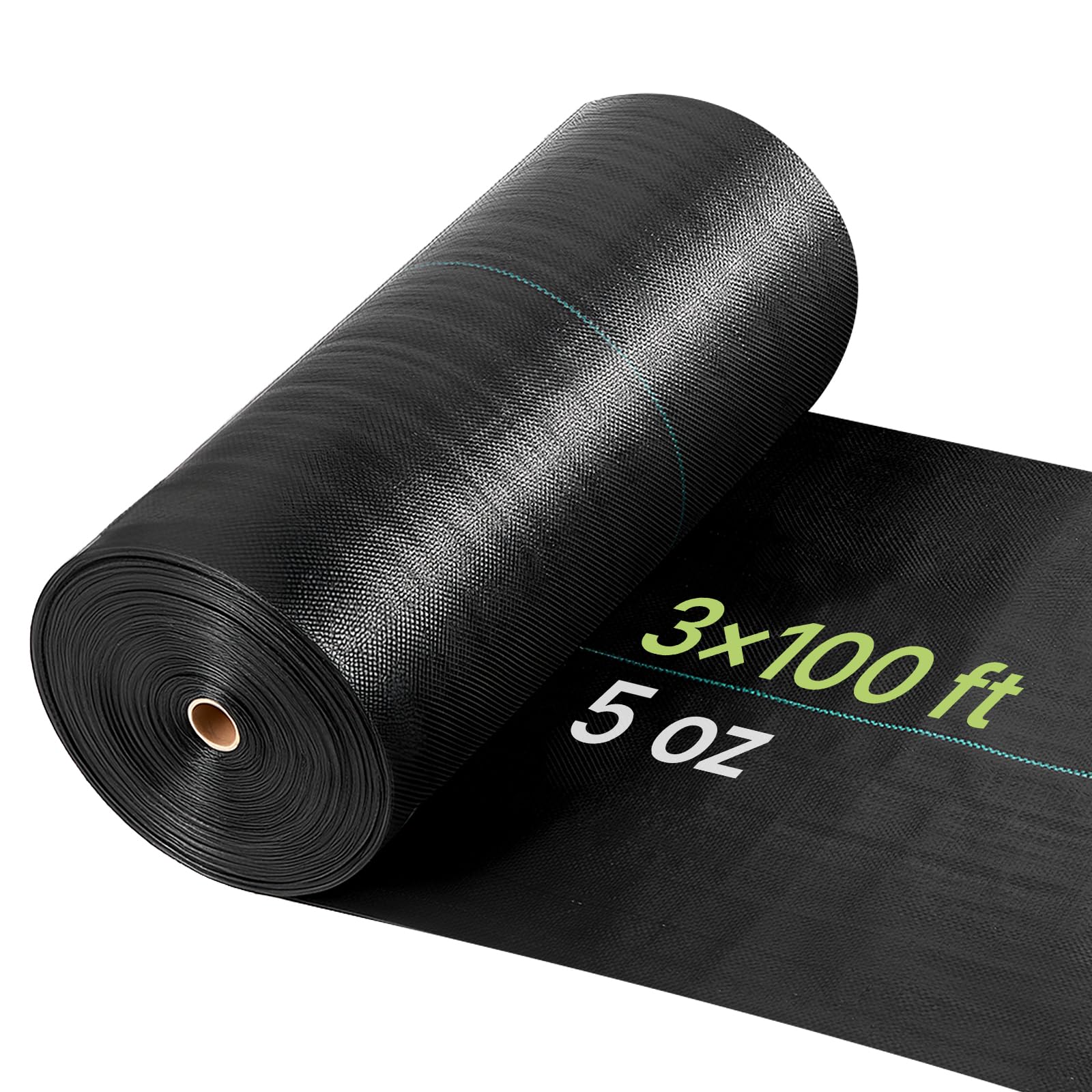
VEVOR’s 5 oz woven barrier is the entry point into true heavy-duty territory without jumping to ultra-premium price brackets. The high-density polypropylene weave is dense enough to block root penetration from aggressive weeds like Bermuda grass or bindweed, while the uniform micro-gaps maintain balanced airflow for soil bacteria. The 3×100 ft size covers standard garden beds and driveway underlayment with spare material.
The fabric includes green printed guidelines for planting alignment, and owners report it’s easy to cut with standard scissors despite the 5 oz thickness. Review feedback highlights that the material does not degrade after one season of full sun exposure when covered with mulch. Several customers mention doubling it in high-traffic zones for extra puncture resistance.
The downside is that the cut edges can fray slightly if not made cleanly. A few users also note that the weave can shift under heavy water flow if not pinned every 2-3 feet. For budget-conscious buyers who still need genuine 5 oz woven performance, this fabric delivers solid value without corners cut in thickness.
What works
- Genuine 5 oz density blocks aggressive root systems
- Green guidelines simplify plant spacing
- Balanced permeability prevents soil compaction
What doesn’t
- Cut edges may fray without clean scissor cuts
- Weave can shift in heavy rain without adequate pinning
5. Winisok 3.2oz Weed Barrier Landscape Fabric 4FT x 100FT

The Winisok 3.2 oz woven fabric is designed for gardeners who need width over thickness. The two 4 ft by 50 ft rolls give you 400 total square feet—enough to cover a substantial vegetable plot without seams. The polypropylene weave allows water and air to pass freely, and multiple reviewers confirm it keeps soil moist longer than uncovered beds while preventing weed germination.
The green alignment stripes make it easy to set up straight rows for corn, beans, or peppers. Owners note the material requires sharp scissors to cut cleanly; dull blades cause the weave to shred and leave plastic strands in the soil. When cut correctly, the edges remain stable and don’t degrade faster than the rest of the fabric.
Some feedback points out that the 3.2 oz weight, while adequate for annual beds, can be punctured by sharp tools or heavy foot traffic if used under rock instead of mulch. For seasonal vegetable gardens where you want a breathable, affordable barrier that covers wide beds, the Winisok 2-pack is a smart layout choice.
What works
- Two rolls cover 400 sq. ft without middle seams
- Water-permeable weave supports healthy root growth
- Green stripes simplify planting row alignment
What doesn’t
- 3.2 oz weight tears more easily under sharp gravel
- Shreds if cut with dull blades
6. Pattiumo Weed Barrier Fabric 3x300FT

The Pattiumo 3×300 ft roll is built for large-scale coverage. At 3.2 oz with a needle-punched dual-layer construction, it bridges the gap between standard woven fabrics and true heavy-duty barriers. The non-woven backing grips the ground to reduce shifting, while the woven top layer provides structural strength. A single roll covers 900 square feet, making it a strong choice for long driveways, large orchards, or community garden plots.
Owners report that the fabric has lasted three growing seasons under wood mulch and river stone without degradation. The material is permeable enough to handle drip irrigation without runoff, though some note that overhead watering can cause puddling if the fabric isn’t sloped. The green lines are printed every foot, allowing for consistent plant spacing across the entire 300 ft run.
The main drawback is that the 3.2 oz weight, while sufficient for soil stabilization, is not as puncture-resistant as a 5 oz barrier under sharp-edged decorative gravel. A few users also mention that the fabric arrives folded rather than rolled, which can create creases that take time to flatten. For budget-conscious large-area projects that need more than basic weed suppression, this roll delivers excellent coverage per unit cost.
What works
- 900 sq. ft of coverage from a single 300 ft roll
- Dual-layer construction resists shifting and root penetration
- Green alignment guides maintain row spacing across long runs
What doesn’t
- 3.2 oz weight not ideal for sharp-edged gravel
- May arrive folded, leaving creases that resist flattening
7. AGGAFA 3.2oz Weed Barrier Fabric 3x300FT
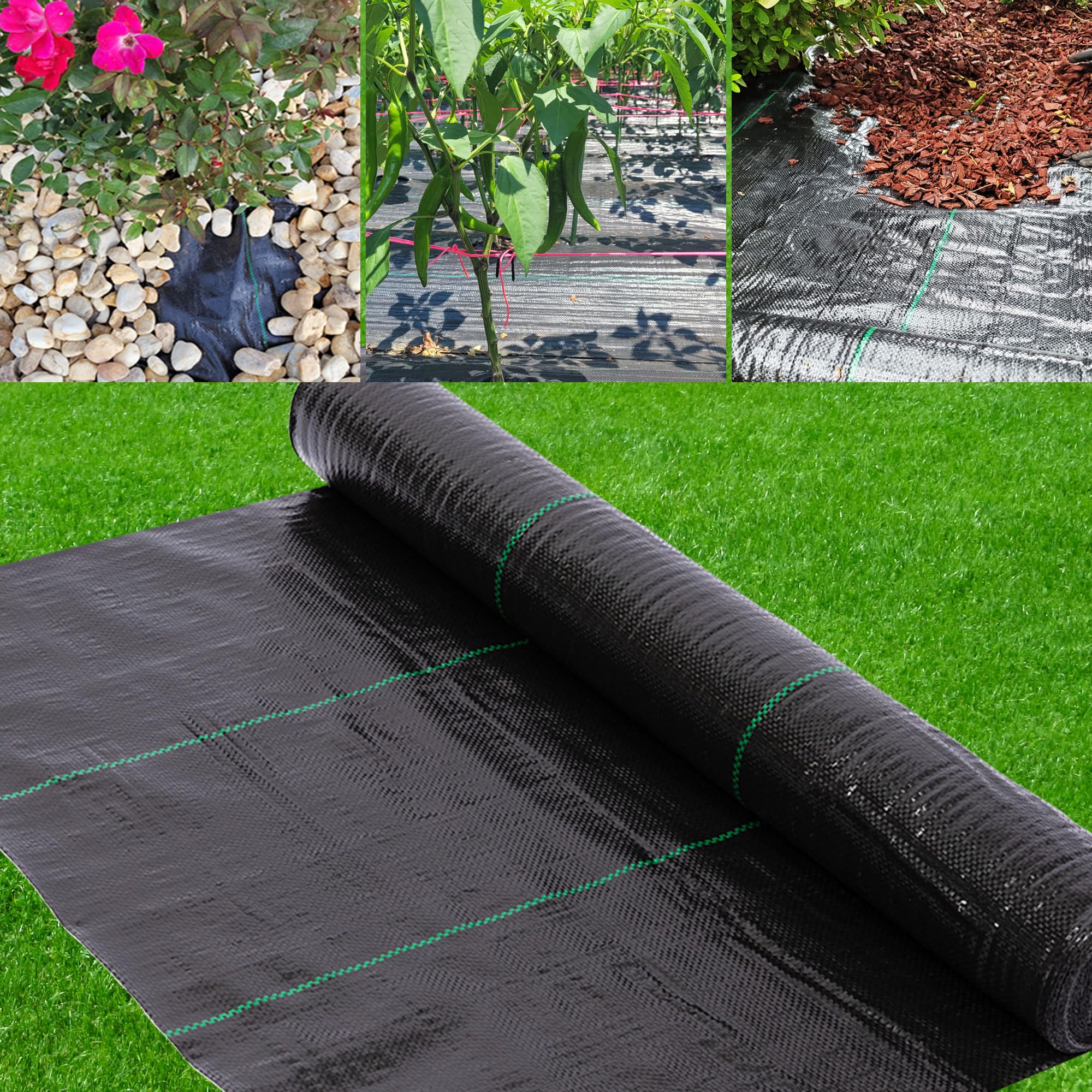
The AGGAFA 3.2 oz barrier sets itself apart with a material purity promise: 100% virgin polypropylene with no recycled content mixed in. Virgin fibers maintain consistent tensile strength and UV resistance, which matters for agricultural applications where fabric may stay exposed to direct sun for months. The “+” shaped yarn weave creates a tarp-like density that blocks light completely while still allowing airflow through cross-gaps.
Professional landscapers in the review pool note that AGGAFA’s fabric outperforms the standard material they normally use under rock. The UV coating is rated to keep the fabric intact for up to four years of sun exposure, and multiple owners report the material still looks new after a full season. The 3×300 ft size offers the same generous coverage as the Pattiumo, but with a notably stiffer, more plastic-like feel that holds its shape better under heavy loads.
The trade-off is water permeability. Because the weave is tighter, water infiltration is slower compared to needle-punched dual-layer fabrics. Several users mention needing to water very slowly or use drip irrigation to avoid runoff. Additionally, the fabric arrives flat rather than rolled, which can be awkward to deploy without a helper. For farm rows, orchard floors, and gravel driveways where UV stability and tear strength matter more than maximum permeability, this is a durable industrial option.
What works
- 100% virgin PP provides consistent tear strength and UV life
- “+” shaped weave creates a dense, tarp-like structure
- UV coating rated for up to 4 years of direct sun exposure
What doesn’t
- Slower water permeability can cause runoff under drip systems
- Arrives flat rather than rolled, requiring two-person setup
Hardware & Specs Guide
Fabric Weight (oz/sq.yd)
This is the single most important spec. A 3 oz fabric is suitable for decorative beds with light mulch; it blocks weeds but can tear under sharp rock. A 5 oz fabric is twice as puncture-resistant and appropriate for driveways, artificial grass bases, and high-traffic pathways that see wheelbarrows or foot traffic. Some dual-layer fabrics measure at 5 oz but combine woven and non-woven plies for improved water wicking versus a single-layer 5 oz woven.
Woven vs. Non-Woven vs. Dual-Layer
Woven fabrics lock polypropylene strands in a grid—strong and permeable, but prone to fraying at cut edges. Non-woven fabrics bond fibers into a felt texture—no fraying, better water wicking, but lower tear resistance. Dual-layer fabrics press a non-woven top onto a woven base, giving you fray resistance plus structural strength. For gravel underlayment, choose woven or dual-layer. For flower beds where you need irregular cuts, non-woven or dual-layer is safer.
FAQ
Can I use a 3.2 oz black weed barrier under heavy river rock?
How do I keep woven weed barrier cut edges from fraying?
Will a black weed barrier kill my existing plants if I lay it over the top?
Final Thoughts: The Verdict
For most gardeners, the best black weed barrier winner is the VIVOSUN Premium 5oz because its dual-layer construction balances tear resistance with six times the water permeability of standard woven fabrics. If you need maximum width for commercial coverage, grab the Snail Premium 5oz in 4 ft width. And for permanent flower beds where you want a 12-year UV guarantee and zero fraying, nothing beats the Dewitt 12-Year Non-Woven.