
The smell hits you the second you open the bottle—earthy, pungent, like burnt rubber and soil mixed together. That unmistakable aroma is your first signal that the most effective organic pest control is about to go to work. For every gardener who has watched aphids swarm a new rose bloom or found whiteflies clinging to the underside of tomato leaves, neem oil remains the reliable, non-toxic solution that treats the problem without destroying the beneficial insects your garden needs.
I’m Rikta — the co-founder and writer behind Lawn Gear Lab. I’ve spent hundreds of hours cross-referencing product formulas, reading through verified owner reports of pest infestations, and comparing the actual azadirachtin content claims and dilution ratios that separate a true cold-pressed extract from a diluted impostor.
Whether you are fighting powdery mildew on your squash or spider mites on your houseplants, finding the right neem oil for plants means matching your specific pest pressure to the correct concentration and application method.
How To Choose The Best Neem Oil For Plants
Not every bottle labeled “neem oil” delivers the same pest-killing power. The difference between a treatment that wipes out your spider mite colony and one that leaves sticky residue on your leaves comes down to three factors: how the oil was extracted, the concentration of the active compound azadirachtin, and whether you choose a concentrate or a ready-to-use spray.
Cold-Pressed vs. Solvent-Extracted
Cold-pressed neem oil is pressed from the seed kernel without heat or chemical solvents. This preserves the highest level of azadirachtin—the compound that disrupts insect hormones and stops larvae from maturing. Solvent-extracted oil is cheaper but loses potency, making it less effective as a plant treatment. Every product in this review is cold-pressed. Look for the words “100% cold-pressed” on the label, and avoid anything that says “neem oil blend” or “neem-based.”
Azadirachtin Content and Clarified vs. Unrefined
Azadirachtin is the active ingredient. A higher percentage means stronger pest control. Unrefined oil retains all the natural solids and azadirachtin, giving it the strongest odor and darkest color. Clarified or “hydrophobic” neem oil has been processed to remove the azadirachtin and is used primarily as a leaf shine or dormant oil—it won’t stop an active infestation. For serious pest pressure, always choose unrefined, high-azadirachtin oil.
Concentrate vs. Ready-to-Use
Concentrate requires you to mix a small amount of oil with water and an emulsifier (like liquid Castile soap) before spraying. A 12-ounce bottle of concentrate may yield up to 12 gallons of finished spray, making it far more economical for large gardens. Ready-to-use (RTU) sprays are pre-mixed and convenient for spot treatments on houseplants or small container gardens, but you pay a premium for the convenience and get fewer applications per bottle.
Quick Comparison
On smaller screens, swipe sideways to see the full table.
| Model | Category | Best For | Key Spec | Amazon |
|---|---|---|---|---|
| Verdana Pure Neem Oil | Premium Bulk | Large gardens & DIY use | 1 Gallon (128 fl oz) | Amazon |
| Monterey Neem Oil RTU | Premium RTU | Instant, no-mix application | 32 oz Ready-to-Use | Amazon |
| Bonide Neem Oil | Mid-Range Concentrate | Roses & ornamentals | 16 fl oz Concentrate | Amazon |
| Southern Ag Neem Oil | Mid-Range Concentrate | Fruit trees & vegetables | 8 oz Concentrate | Amazon |
| Harris Concentrated Neem Oil | Budget Concentrate | Multi-purpose (skin/plant) | 12 oz Concentrate | Amazon |
| Viagrow Neem Oil | Budget Entry | Starter & small gardens | 8 oz Concentrate | Amazon |
In‑Depth Reviews
1. Verdana Pure Neem Oil – 1 Gallon
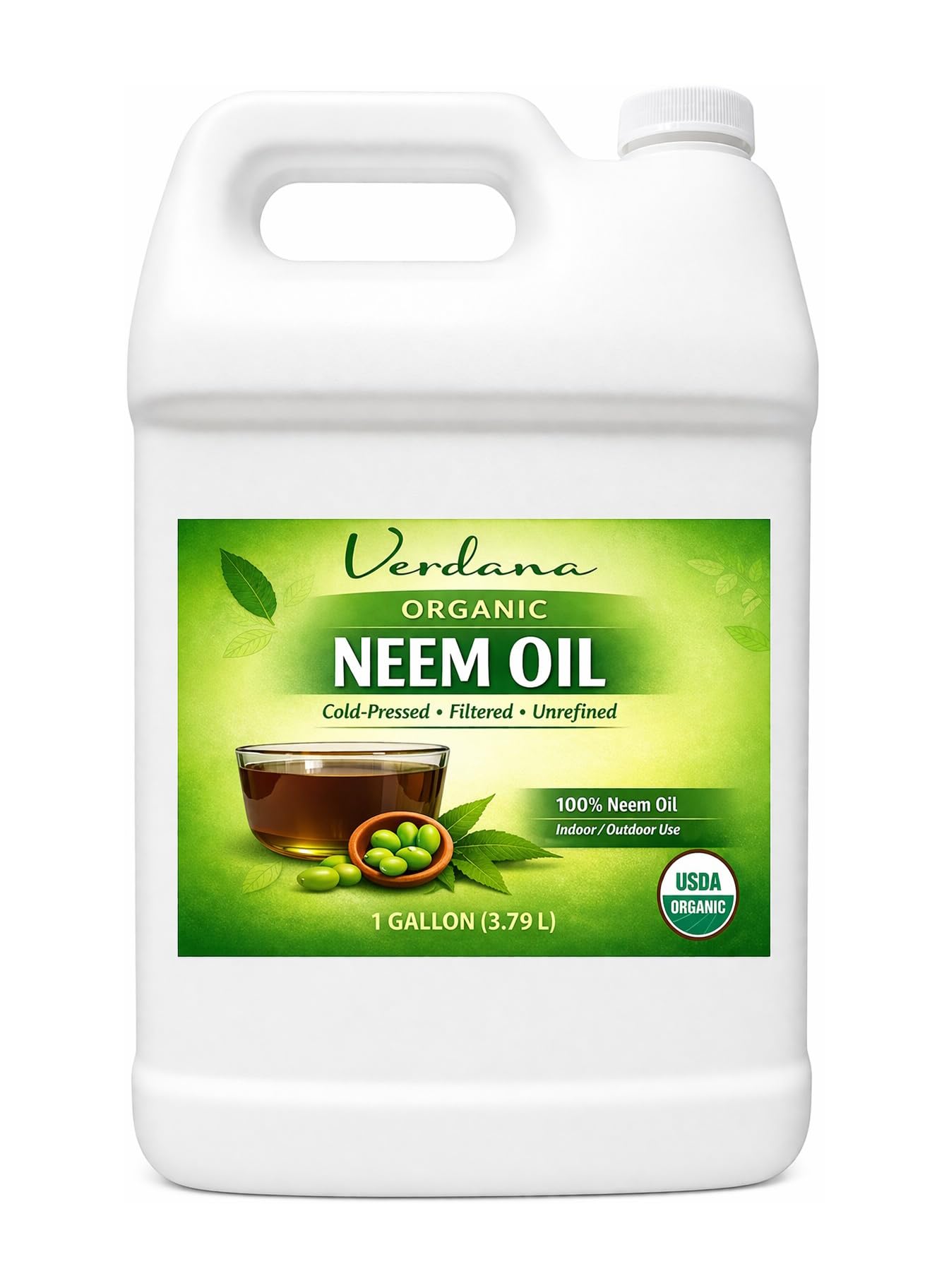
At a full 128 fluid ounces, this is the bulk powerhouse for gardeners who need to cover serious ground—or who want the freedom to mix custom dilutions for everything from whitefly control on ornamentals to deer repellent around hostas. Verdana uses cold-pressed, unrefined neem seed oil with no additives, preserving the full azadirachtin profile that makes neem effective against soft-bodied insects like aphids and whiteflies. Owner reports confirm it knocked down whitefly populations when applied with a boom sprayer at 1 ounce per gallon of water. The aroma is present but reported as milder compared to some competitors, and it fades within a day after drying.
The bulk jug makes cost-per-ounce extremely low, but the trade-off is handling: pouring from a one-gallon container requires a secondary sprayer bottle or a pump. The oil is thick and will separate in cold weather, so you must warm it and shake vigorously before mixing. Some users found that without enough emulsifier (dish soap), the oil did not dissolve properly and caused leaf burn or poor coverage. The recommended ratio of 1 tablespoon oil plus 1 tablespoon soap per gallon of warm water is the standard safest starting point. For large-scale spraying, this is the most economical choice in the entire lineup.
Beyond pest control, the unrefined composition makes this suitable for DIY skincare, soap making, and scalp treatments, which adds versatility if you want a single product for both garden and personal care. The 4.6-star average across nearly 200 ratings reflects consistent satisfaction among gardeners who have used it on vegetables, roses, and shrubs. If you need volume for a larger garden or want the highest purity for multiple uses, this is the clear winner.
What works
- Massive 1-gallon jug at the lowest cost per ounce in the review
- Cold-pressed, unrefined, and OMRI-listed for organic gardening
- Versatile for both plant spray and DIY skincare formulations
What doesn’t
- Requires precise emulsification with soap to avoid leaf damage
- Bulky container requires a secondary spray bottle for application
- One report of poor results when soap ratio was miscalculated
2. Monterey Neem Oil RTU – 32 oz
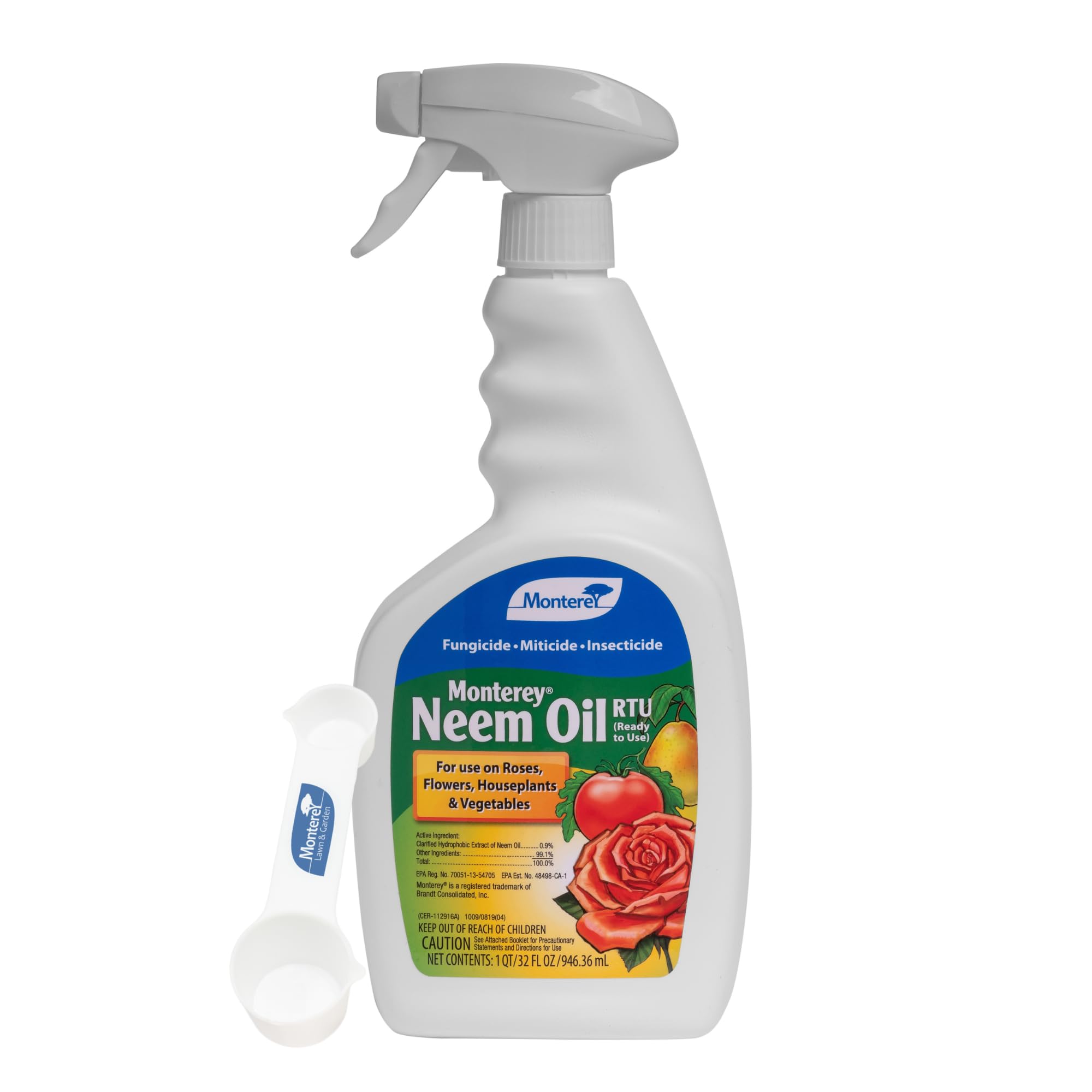
Monterey takes the guesswork out of dilution with this ready-to-use 32-ounce sprayer. The pre-mixed formula works as a fungicide, insecticide, and miticide, targeting black spot, powdery mildew, rust, aphids, and spider mites on contact. The customer feedback at 4.4 stars across 531 ratings shows strong approval for its effectiveness on caterpillars and powdery mildew in particular. Gardeners using it on tomatoes reported that the strong sulfur-like smell fades after drying, though you should avoid spraying right before spending time near the plants. The RTU format is ideal for houseplants, container gardens, and small vegetable patches where convenience matters more than volume.
The aerosol trigger sprayer provides a fine mist that coats both leaf surfaces efficiently. Monterey’s formulation is noted as well-balanced and half the cost per ounce of some competitors like Dyna-Gro. It is safe for use on edibles up to the day of harvest, which makes it a solid choice for herb gardeners who want immediate pest relief without waiting periods. However, the RTU format is not cost-efficient for large-scale spraying—you will run through the bottle quickly if you are treating an entire vegetable patch or multiple fruit trees.
One limitation mentioned by owners is that the RTU formula is less effective against spider mites than dedicated miticides, though it does disrupt their life cycle with repeated applications. The bottle comes bundled with a garden measure spoon, a small but practical addition for gardeners who also keep concentrate on hand. For quick, foolproof coverage on a small plot or indoor collection, this is the most convenient option available.
What works
- Zero mixing required—shake and spray directly on plants
- Effective against powdery mildew, caterpillars, and aphids
- Safe to use on edibles until the day of harvest
What doesn’t
- Runs out quickly on larger gardens or multiple plants
- Pungent odor lingers until spray dries completely
- Some reports of leakage during shipping
3. Bonide Neem Oil Fungicide Miticide Insecticide Concentrate – 16 oz

Bonide is a household name in garden chemicals, and their 16-ounce neem oil concentrate delivers the same reliability as their broader product line. The 16-ounce size splits the difference between the small 8-ounce bottles and the bulk gallon jug, giving you enough concentrate for several seasons of preventative spraying on a medium-sized garden. Owners report that it eliminated mite infestations in planters after every-other-day applications over a week and cured rose rust disease with just two sprays. The triple-action label means it works as a fungicide, miticide, and insecticide in one bottle, making it a straightforward choice for gardeners who want one product for multiple issues.
The concentrate requires mixing with water and a few drops of liquid soap to emulsify. One verified user accidentally used a too-strong concentration on a dwarf Meyer lemon tree and nearly killed it, highlighting the importance of following dilution instructions exactly. The standard mix is 2 tablespoons of neem per gallon of water for general use, but for sensitive plants, starting at half strength is safer. Bonide is banned in Washington, D.C., which suggests its formulation may include additional inert ingredients that differ from simpler cold-pressed oils.
For organic gardeners, this is a reliable preventative that deters fungus and harmful bugs before an infestation takes hold. It is not as instant-acting as synthetic fungicides, but multiple owners describe it as their favorite non-chemical fungus preventer for monthly maintenance. If you have a collection of roses, ornamentals, or a mixed vegetable bed and want a mid-size bottle with trusted brand backing, the Bonide concentrate hits the sweet spot.
What works
- Triple-action formula targets fungus, mites, and insects simultaneously
- 16-ounce size provides great value for medium gardens
- Proven track record curing rose rust and powdery mildew
What doesn’t
- Requires careful dilution to avoid leaf burn on sensitive plants
- Banned in Washington, D.C., due to inert ingredient concerns
- Stronger smell than some competitors during mixing
4. Southern Ag Neem Oil – 8 oz

Southern Ag’s 8-ounce concentrate is a compact workhorse for gardeners with targeted pest problems. The label lists control of black spot, powdery mildew, aphids, spider mites, scale, whiteflies, and beetles, including eggs, larvae, and adults. Owner reports highlight its effectiveness against Japanese beetles and lawn fungus, as well as green caterpillars on flowers and fruit trees after just two applications spaced three days apart. Users note that plants looked noticeably healthier and shinier within a week of starting biweekly applications. The small 8-ounce bottle is easy to store and pour, but for the price and bottle size, you pay a higher per-ounce cost compared to bulk alternatives.
Gardeners who dislike mixing their own solutions note the inconvenience as the primary drawback. You must combine the oil with water and a surfactant (dish soap works) in a garden sprayer, which adds a step compared to RTU sprays. Some owners mention that the small bottle runs out quickly if you are treating multiple fruit trees or a large vegetable patch. However, for a targeted infestation on a few rose bushes or a single citrus tree, the Southern Ag concentrate provides more than enough coverage for a season.
The brand is trusted by commercial growers and has a long history in the agricultural market. The formula is cold-pressed and designed for use on all fruits, nuts, vegetables, herbs, and ornamentals. It kills insects at every life stage, which is critical for breaking reproductive cycles. If you have a specific pest like leaf miners or green caterpillars and want a small, affordable bottle that goes a long way, this is a reliable pick.
What works
- Kills eggs, larvae, and adult insects in one treatment cycle
- Compact size ideal for small gardens or spot treatments
- Proven against Japanese beetles, caterpillars, and lawn fungus
What doesn’t
- Higher cost per ounce than larger concentrate bottles
- Small size requires frequent repurchase for large gardens
- Must be mixed with dish soap and water before spraying
5. Harris Concentrated Neem Oil – 12 oz

Harris offers a 12-ounce cold-pressed neem oil concentrate that is EPA-registered and marketed as both a garden treatment and a cosmetic-grade oil for personal care. This dual-use positioning makes it a versatile option for gardeners who also want to use neem on their skin, hair, or nails. Verified reviews confirm that it works well in a DIY spray mix of peppermint Castile soap and isopropyl alcohol to clean leaves and repel gnats, mites, and other soft-bodied pests. One user reported that aphids disappeared after daily spraying over a week. The bottle is also reported to last up to a year for light garden use, which makes the entry price very reasonable.
The oil is cosmetic-grade, meaning it is filtered for clarity and may have slightly lower azadirachtin content than agricultural-grade formulations. For serious infestations on fruit trees or large vegetable patches, this may require more frequent reapplication than a higher-potency oil. Several owners also note that the smell is intense—described as burning rubber tires or sweaty sewage—and that it clings to skin after handling. For those with sensitive stomachs, the odor may cause nausea during mixing, and it is not recommended for indoor infestations unless ventilation is excellent.
Despite the smell, the effectiveness against bugs and the added versatility for skincare make this a strong value proposition. The 12-ounce size is larger than the entry-level 8-ounce bottles but still compact enough for convenient storage. If you want a single neem oil that can handle mild garden pests and also serve as a skin-soothing treatment for bug bites or dry cuticles, the Harris concentrate delivers on both fronts.
What works
- Cosmetic-grade allows dual use for garden and personal care
- 12-ounce bottle lasts up to a year for light garden duties
- Effective against aphids, gnats, and mites with consistent spraying
What doesn’t
- Pungent, rubber-like odor can cause nausea during mixing
- Lower azadirachtin potential may require more frequent sprays
- Scent clings to skin and clothes after handling
6. Viagrow Organic Cold Pressed Neem Oil – 8 oz

Viagrow’s 8-ounce bottle is an entry-level, OMRI-certified cold-pressed neem seed oil that is a reliable starting point for gardeners new to organic pest control. The high azadirachtin content is ideal for indoor and outdoor use on roses, houseplants, vegetables, fruit trees, and hydroponic setups. Verified reviews show that it stopped leaf miners completely and effectively repelled bugs for about two months before needing reapplication. The formula is 100% neem seed extract with no added fillers, and it mixes easily at just one teaspoon per quart of water, which makes the small bottle stretch further than its size suggests.
The main limitation is the 8-ounce size. For gardeners with multiple raised beds, a large vegetable patch, or several fruit trees, the bottle runs out quickly and must be repurchased frequently. Some owners mention that using gloves and eye protection is essential because the concentrated oil can burn skin and eyes. One user reported a drop of concentrate in their eye caused significant irritation, so handle with care. The OMRI certification is a strong advantage for organic gardeners who avoid synthetic inputs, and the brand’s specific mention of hydroponic and raised bed use adds a layer of confidence for non-soil growing systems.
Owner feedback rates the product at a 4.4 average across 320 ratings, with most calling it a “quality product” that does exactly what it promises. The price-to-volume ratio makes this the most budget-friendly way to test whether neem oil fits your gardening routine. If you have a small balcony garden, a few houseplants, or a small herb bed and want an affordable, certified organic entry point, the Viagrow bottle is a solid start.
What works
- OMRI certified for certified organic gardening systems
- High azadirachtin content for effective pest life-cycle disruption
- Shrinks concentrate cost with 1 tsp per quart dilution ratio
What doesn’t
- 8-ounce bottle runs out quickly for large or multiple garden beds
- Concentrated oil can cause skin and eye burns if not handled carefully
- Smell is strong and lingers, similar to other pure neem oils
Hardware & Specs Guide
Azadirachtin Concentration
Azadirachtin is the active compound in neem oil that acts as an insect growth regulator, disrupts feeding, and repels pests. Higher concentrations (above 1,000 ppm) provide stronger and longer-lasting control. Oils labeled as “high azadirachtin” are extracted from the seed kernel rather than the whole seed, which concentrates the active ingredient. Always check the label for azadirachtin percentage; if it is not listed, assume a lower concentration.
Cold-Pressed vs. Clarified
Cold-pressed neem oil retains the full chemical profile of the neem seed, including azadirachtin, nimbin, and salannin, which work together as a natural pesticide and fungicide. Clarified or “hydrophobic” neem oil is processed to remove the solids and azadirachtin, leaving only the fatty triglycerides. Clarified oil is useful as a dormant oil for smothering eggs but will not stop an active infestation. For active pest control, always buy cold-pressed, unrefined neem oil.
FAQ
Can I use neem oil directly on edible vegetables and herbs?
How often should I spray neem oil to stop an active pest infestation?
Why does my neem oil spray not mix properly with water?
Final Thoughts: The Verdict
For most gardeners, the neem oil for plants winner is the Verdana Pure Neem Oil because it delivers the best cost-per-ounce for larger gardens and retains full azadirachtin potency with its cold-pressed, unrefined formula. If you want instant, no-mix convenience for a small container garden, grab the Monterey Neem Oil RTU. And for a mid-size, triple-action concentrate with a trusted brand name, nothing beats the Bonide Neem Oil.