
Citrus trees in the ground demand more from their soil than any bagged potting mix can casually deliver — they crave a specific acidity range (5.5 to 6.5 pH), relentless drainage to prevent collar rot, and a steady release of micronutrients like iron, magnesium, and manganese that standard garden soil often locks away. Without this precision underground environment, leaves yellow, fruit set stalls, and the tree’s immune system weakens against pests and disease.
I’m Rikta — the co-founder and writer behind Lawn Gear Lab. I’ve spent countless hours cross-referencing soil analyses, comparing ingredient lists, and studying aggregated owner feedback to determine which in-ground citrus soil formulations actually correct the common deficiencies that plague home-orchard plantings.
Whether you are planting a Meyer lemon, a Valencia orange, or a Bearss lime directly into your yard, the foundation of success starts beneath the surface with the right soil for citrus trees in ground.
How To Choose The Best Soil For Citrus Trees In Ground
Selecting a soil for in-ground citrus is fundamentally different from picking a general-purpose potting mix. The primary criteria are drainage speed, pH range, long-term nutritional profile, and the soil’s ability to integrate with your existing native earth without creating a “bathtub” effect that drowns roots.
Drainage & Texture: The Non-Negotiable Base
Citrus roots are obligate aerobes — they suffocate in standing water. A good in-ground citrus soil must contain perlite, coarse sand, or pumice in high enough proportion that water flows freely through the root zone within minutes. Avoid heavy loams or mixes dense with clay fines.
pH Stability: Keeping It Between 5.5 and 6.5
Iron chlorosis — the yellowing of leaves with green veins — is the most common symptom of citrus planted in alkaline soil (pH above 7.0). The best soil blends include components like sphagnum peat moss, elemental sulfur, or acidic compost to bring and hold pH in the 5.5–6.5 sweet spot. Dolomitic lime in some formulas prevents the pH from swinging too low.
Slow-Release Nutrition & Mycorrhizae
In-ground trees feed for years on the same soil volume, so a one-time nutritional boost matters. Look for blends that include slow-release nitrogen sources and mycorrhizal fungi. These symbiotic fungi extend the root’s reach, improving water and phosphorus uptake during dry spells.
Quick Comparison
On smaller screens, swipe sideways to see the full table.
| Model | Category | Best For | Key Spec | Amazon |
|---|---|---|---|---|
| Soil Sunrise Citrus Potting Soil Mix (12 Qt) | Pre-Mixed Soil | In-ground & container citrus | 12 quarts, peat moss + perlite | Amazon |
| Miracle-Gro Cactus, Palm & Citrus 3-Pack | Potting Mix | Containers & in-ground amending | 3 x 8 qt, fast-draining formula | Amazon |
| DUSPRO Citrus Tree Potting Soil Mix (10 Qt) | Pre-Mixed Soil | Indoor/outdoor potted citrus | 10 quarts, double-screened | Amazon |
| GARDENWISE Citrus Potting Soil (3 Qt) | Concentrated Mix | Small containers & spot amending | 3 quarts, pH 5.5–6.5 | Amazon |
| FoxFarm Happy Frog Citrus & Avocado Fertilizer (4 lb) | Granular Fertilizer | Soil amendment for in-ground | 4 lb, 7-3-3 NPK + mycorrhizae | Amazon |
| Coast of Maine Acid-Loving Planting Soil (20 Qt) | Compost Blend | In-ground amending for acid lovers | 20 qt, OMRI listed, low pH | Amazon |
| Soil Sunrise Avocado Tree Potting Mix (12 Qt) | Specialty Mix | Avocado & subtropical fruit trees | 12 qt, peat moss + perlite + sand | Amazon |
In‑Depth Reviews
1. Soil Sunrise Citrus Tree Potting Soil Mix (12 Quarts)

Soil Sunrise’s citrus-dedicated mix hits the critical balance that in-ground citrus needs: aeration from perlite, moisture retention from peat moss, and a neutral-to-slightly-acidic pH range. The 12-quart volume covers a substantial planting hole amendment, allowing you to blend it 50/50 with your native soil without running out halfway through the job.
Owner feedback consistently reports that lime, lemon, and guava trees respond with visible new leaf growth within two to three weeks after transplanting. The mix drains freely enough to prevent the soggy root zone that triggers root rot, yet holds enough moisture to reduce watering frequency during hot spells.
The only recurring critique is the bag-in-box packaging — once opened, resealing is awkward, so plan to use the entire bag or transfer it to a sealed container. For the volume and performance, this mix represents the best intersection of cost-effectiveness and citrus-specific formulation for in-ground use.
What works
- Ideal drainage + moisture balance for in-ground citrus
- Visible leaf greening reported within two weeks
- 12 quarts is generous for backfill amending
What doesn’t
- Packaging is not resealable once opened
- Slightly premium unit cost compared to bulk options
2. Miracle-Gro Cactus, Palm and Citrus Potting Mix (3-Pack)

Miracle-Gro’s fast-draining formula is a well-known benchmark for cactus, palm, and citrus container growing — and the 3-pack provides enough volume (24 quarts total) to backfill several in-ground planting holes or manage a collection of potted trees. The mix is enriched with Miracle-Gro Plant Food, giving a consistent nutritional baseline from the start.
For in-ground use, many experienced growers recommend blending this mix 50/50 with your native topsoil to avoid an overly lightweight rooting zone that could dry too quickly in hot climates. The perlite content is generous enough to break up heavy clay soils when incorporated deeply.
The biggest drawback is cost per quart compared to larger bulk bags. For small-scale projects (one or two trees), the convenience and trusted brand consistency justify the spend. For a full orchard, you would want a more economical source.
What works
- Fast-draining texture prevents water logging
- Three bags cover multiple planting holes
- Easy to find and consistent quality
What doesn’t
- Higher per-quart cost than bulk alternatives
- May need blending with native soil for in-ground use
3. DUSPRO Citrus Tree Potting Soil Mix (10 Quarts)
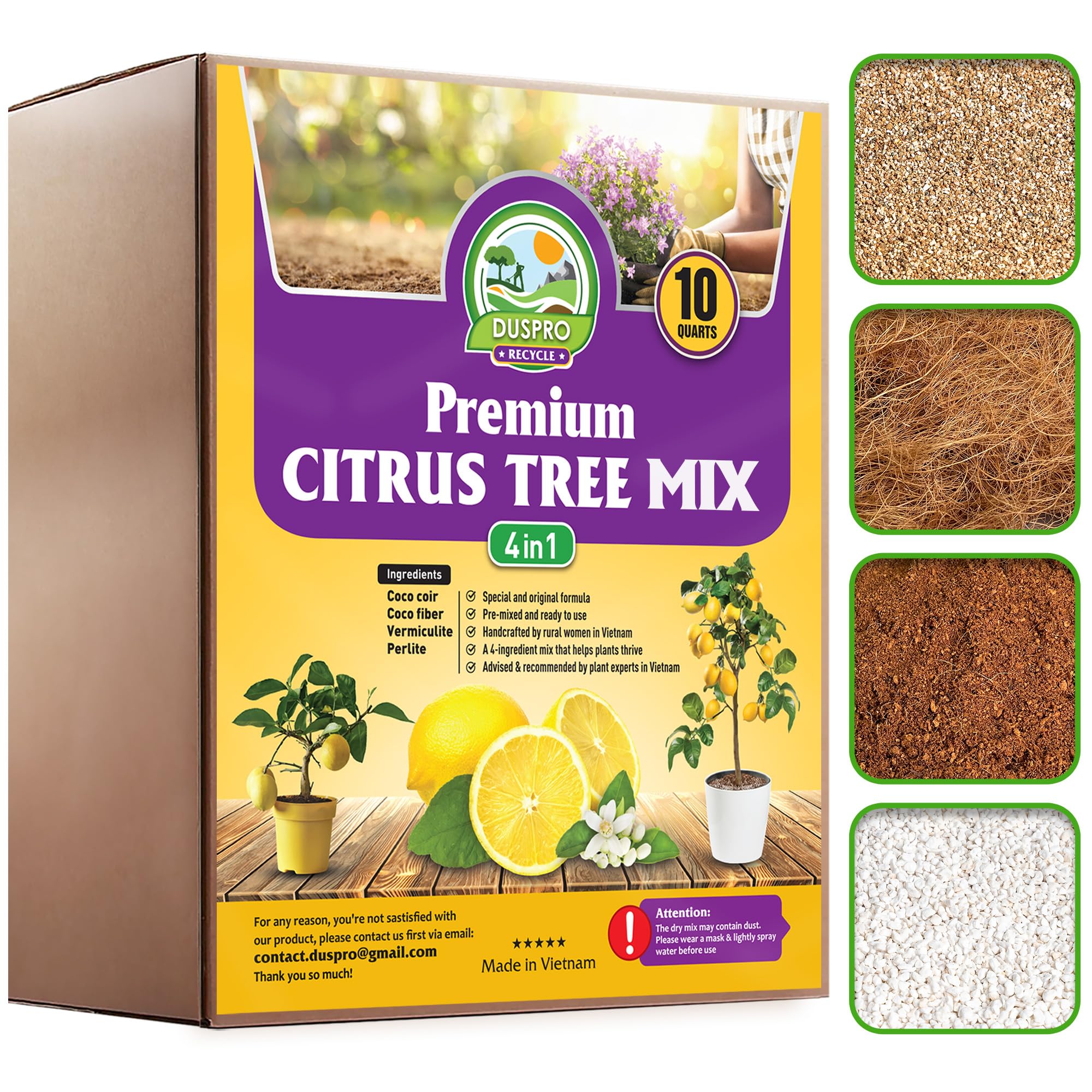
DUSPRO markets this mix as a 4-in-1 pre-mixed solution — drainage agents, pH buffers, slow-release nutrients, and structural components all combined. The double-screening process ensures uniform particle size, which means fewer clogs in the drainage layer and more consistent water flow through the root zone. Owners of indoor lemon and orange trees report immediate improvement after repotting.
For in-ground use, this works best as a soil amendment tilled into the top 12 inches of the planting hole rather than a standalone fill. The 10-quart size is adequate for a single medium-sized tree hole. A free tree care ebook is included, which novices will appreciate for guidance on watering frequency and fertilization timing.
Some reviewers note the bag is lightweight for its size, reflecting the high perlite-to-compost ratio. That is a net positive for drainage but means you will need more volume per hole than you might expect from heavier mixes.
What works
- Double-screened for consistent particle size
- Includes helpful care ebook for beginners
- Strong drainage performance for container citrus
What doesn’t
- Light bag volume requires more bags per hole
- Not designed as a standalone in-ground fill
4. GARDENWISE Premium Organic Citrus Potting Soil (3 Quarts)
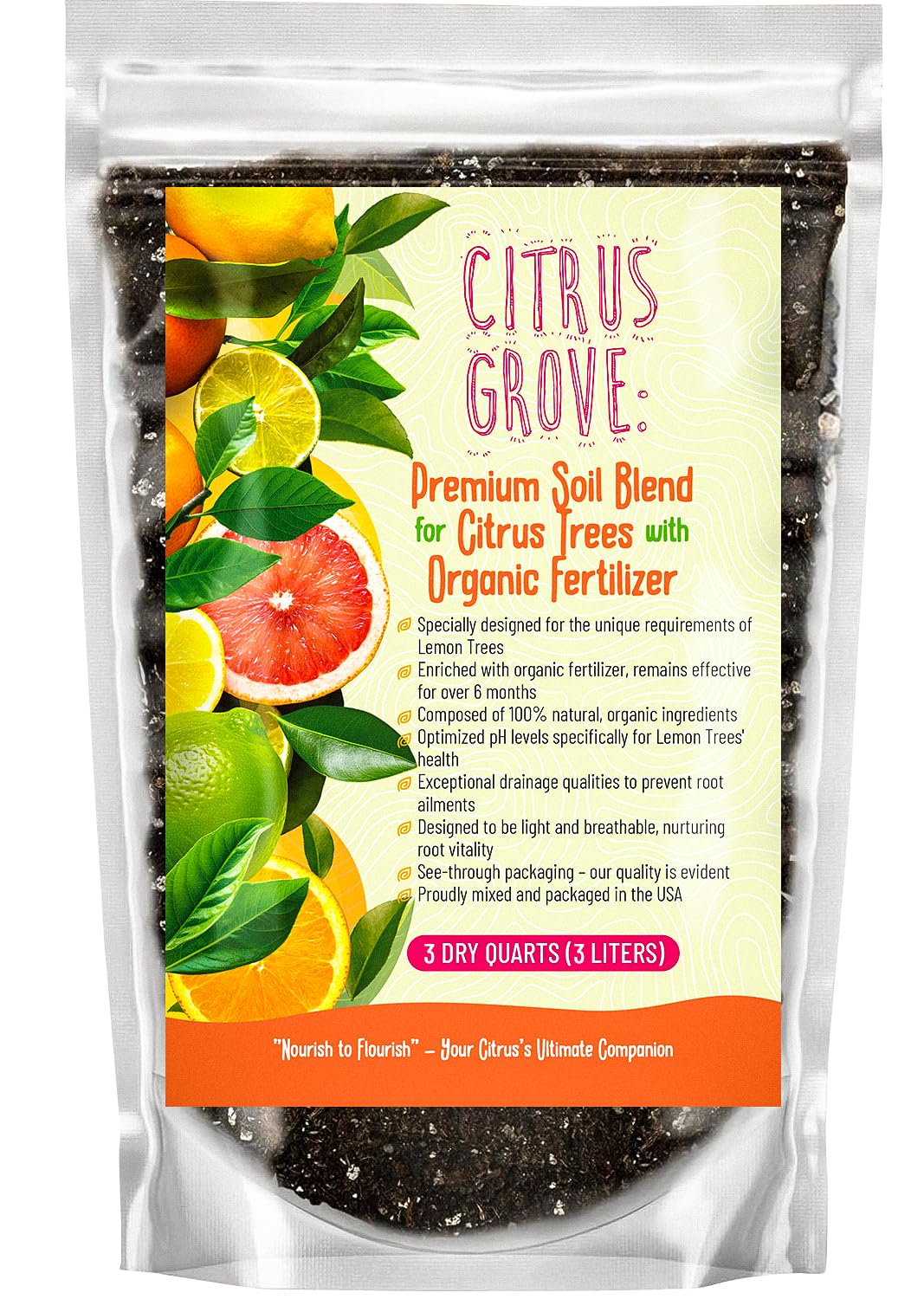
GARDENWISE packs a dense concentration of organic components into this 3-quart bag — perlite, coarse sand, coconut coir, vermiculite, garden compost, peat moss, and dolomitic lime — all calibrated to maintain a pH sweet spot of 5.5 to 6.5. This is not a bulk fill; it is a precision amendment designed to be mixed into potting containers or used as a top dressing for in-ground trees that need a pH correction boost.
The magnesium and manganese content addresses the micronutrient gap that causes leaf yellowing in citrus planted in alkaline native soil. Many grapefruit and lemon growers report that a single application reversed yellowing within weeks and promoted dark green foliage.
The 3-quart size is the main limitation for in-ground work. You would need several bags to amend a full planting hole, making this better suited for containerized trees or targeted spot treatments around established root zones.
What works
- pH-locked between 5.5 and 6.5 with dolomitic lime
- Rich micronutrient profile for greening leaves
- All-in-one organic ingredient list
What doesn’t
- Very small 3-quart bag for the price
- Designed more for containers than large in-ground holes
5. FoxFarm Happy Frog Citrus & Avocado Fertilizer (4 lb)

FoxFarm’s Happy Frog formula is not a soil — it is a granular slow-release fertilizer with a 7-3-3 NPK ratio, designed to be top-dressed or mixed into the top few inches of the root zone. It includes mycorrhizal fungi to enhance root efficiency, which is particularly valuable for in-ground citrus where the tree must compete with native soil biology.
Growers who applied this to yellowing citrus trees consistently report that leaf color returned within days and fruit yield increased significantly in the following season. The slow-release nitrogen fuels vegetative growth without the burn risk of fast-release synthetic fertilizers.
A few owners noted that the alfalfa-meal base attracts dogs, so watering it in immediately after application is essential. Others wished the bag were larger for the price, since a 4-pound bag covers a limited area — roughly two medium trees per application.
What works
- Mycorrhizal fungi boost root water/nutrient uptake
- Slow-release nitrogen prevents leaf burn
- Corrects chlorosis quickly in established trees
What doesn’t
- Alfalfa base can attract pets if not watered in
- Small bag size for orchard-scale application
6. Coast of Maine Acid-Loving Planting Soil (20 Quarts)

Coast of Maine’s planting soil is an OMRI-listed organic compost blend specifically formulated for acid-loving plants like azaleas, blueberries, and — relevantly — citrus. The low-pH formulation relies on sphagnum peat moss and composted manure to create a 20-quart volume that delivers solid value for in-ground amending projects where you need to lower the native soil’s pH across a broader area.
The blend balances moisture retention and drainage, making it suitable for mixing into the backfill of a citrus planting hole at a roughly 1:3 ratio with native soil. Growers report that their berry patches and citrus trees alike respond with healthier foliage after a single season of incorporation.
The main downside is that this soil is not a dedicated citrus mix — its pH is on the lower end of the citrus tolerance range (closer to 5.0), which is fine for most citrus but may require monitoring if your trees show signs of micronutrient lockout. Adding a handful of dolomitic lime can fine-tune it upward if needed.
What works
- Large 20-quart bag at a budget-friendly price point
- OMRI certified for organic gardening
- Effective at lowering pH in alkaline soil
What doesn’t
- pH may run slightly below citrus ideal range (5.0 vs 5.5)
- Not explicitly formulated for citrus nutrition
7. Soil Sunrise Avocado Tree Potting Soil Mix (12 Quarts)

This mix from Soil Sunrise is built around a recipe of peat moss, perlite, sand, and lime — targeted at avocados but perfectly suited for citrus trees in ground because both genera share a sensitivity to wet feet and a need for light, acidic soil. The sand component adds heft and macro-porosity that many lighter peat-based blends lack, anchoring the tree while ensuring rapid drainage.
Users transitioning avocado and citrus seedlings into the ground report that this mix minimized transplant shock and supported steady leaf expansion. The 12-quart bag is a practical volume for filling a single planting hole when blended with native soil at a 50/50 ratio.
The formula is intentionally simple, meaning it lacks the micronutrient boost or mycorrhizae found in pricier blends. For in-ground trees that will feed from the surrounding earth, this simplicity is a feature — you can add targeted fertilizer without worrying about over-amending.
What works
- Sand + perlite provides heavy, fast-draining texture
- Excellent for reducing transplant shock
- Lime component buffers pH swings
What doesn’t
- No built-in mycorrhizae or extra micronutrients
- Formulated for avocados, not strictly for citrus
Hardware & Specs Guide
Drainage Components (Perlite & Sand Ratio)
The most critical spec for in-ground citrus soil is its air-filled porosity. Look for bags that list perlite, pumice, or coarse sand among the first three ingredients. A mix that feels too light for its volume often means high perlite content, which is excellent for drainage but may require more frequent watering in sandy native soil. For heavy clay ground, lean toward a mix with visible sand grains to add physical structure.
pH Range & Lime Buffering
Every soil bag for citrus should either specify an intended pH range or include ingredients that actively adjust it. Sphagnum peat moss pulls pH down; dolomitic lime pushes it back up and buffers against sudden drops. The sweet spot printed on the bag should be 5.5–6.5. If the bag lists “sulfur” or “acidic compost” without a pH target, test your native soil first to confirm you need the acidification.
FAQ
Can I use ordinary garden soil for in-ground citrus?
How deep should I mix citrus soil into the planting hole?
Should I still fertilize if I used a fertilized citrus soil mix?
How do I know if my in-ground soil pH is wrong for citrus?
Final Thoughts: The Verdict
For most gardeners, the soil for citrus trees in ground winner is the Soil Sunrise Citrus Tree Potting Mix (12 Qt) because it delivers the ideal drainage, moisture balance, and neutral pH needed for in-ground planting without requiring extensive blending. If you need a fast-acting nutritional boost for an existing tree, grab the FoxFarm Happy Frog Citrus & Avocado Fertilizer (4 lb). And for budget-conscious projects covering multiple trees, nothing beats the volume and low-pH correction of the Coast of Maine Acid-Loving Planting Soil (20 Qt).