
Potted plants face a challenge that in-ground gardens don’t: confined roots sitting in a finite volume of medium that must manage every drop of water and every gram of nutrient on its own. A mix that suffocates roots or turns into a waterlogged brick will doom even the healthiest start, while the right blend delivers the aeration and moisture balance that container growing demands.
I’m Rikta — the co-founder and writer behind Lawn Gear Lab. I spend my time cross-referencing horticultural science, breaking down soil ingredient lists, and analyzing hundreds of verified buyer experiences to separate marketing claims from genuinely effective products.
The wrong choice leads to compaction, root rot, or nutrient starvation, which is why this guide focuses exclusively on finding the best soil for outdoor potted plants that actually performs in the real world of rain, sun, and confined root systems.
How To Choose The Best Soil For Outdoor Potted Plants
Container soil isn’t one-size-fits-all. The ideal blend depends on your plant type, local rainfall, and how much time you want to spend watering. Here are the key factors to weigh before you buy.
Aeration and Drainage
The number one killer of outdoor potted plants is root rot from poor drainage. A quality potting mix should contain perlite, pumice, coarse sand, or coco coir to create air pockets. These particles allow excess water to flow out freely while retaining enough moisture to keep roots hydrated between waterings. Dense garden soil holds too much water in a container and suffocates roots within days.
Nutrient Content and Organic Certification
Potted plants rely entirely on the nutrients in their limited soil volume. Many premium mixes include slow-release fertilizers, worm castings, kelp meal, or compost to feed plants for weeks or months. If you prefer organic gardening, look for OMRI-listed products that skip synthetic chemicals. Be aware that nutrient-rich soils can attract fungus gnats if not properly stored or used quickly.
Weight and Volume
Heavy soils are difficult to move and can compact more easily over time. Lightweight blends with peat moss, coco coir, or perlite are easier to handle and maintain their structure longer. Coco coir bricks are an extreme example of space-saving design—they expand dramatically with water. Consider how many pots you plan to fill and whether you’ll need to transport bags.
Quick Comparison
On smaller screens, swipe sideways to see the full table.
| Model | Category | Best For | Key Spec | Amazon |
|---|---|---|---|---|
| Espoma Organic Potting Soil | Organic | All-purpose container mix | 8 qt. bag (pack of 2) | Amazon |
| Miracle-Gro Potting Mix | Balanced | General outdoor potted plants | Feeds up to 6 months | Amazon |
| Coast of Maine Bar Harbor Blend | Premium Organic | Vibrant flowers & vegetables | 16 qt. (2-pack) | Amazon |
| Brut Organic Potting Soil | Organic | Root-level feeding | 1 cu ft (21 qt.) | Amazon |
| Michigan Peat General All Purpose | All-Purpose | High-volume filling | 50 lb bag | Amazon |
| Coast of Maine Tomato & Vegetable | Organic | Tomatoes & heavy feeders | 20 qt. bag | Amazon |
| Modellor Coco Coir Bricks | Alternative | Seed starting & custom mixes | Expands to 36 qt. | Amazon |
In‑Depth Reviews
1. Espoma Organic Potting Soil Mix

Espoma delivers a balanced organic blend that works for almost any outdoor container plant without needing immediate extra feeding. The mix combines sphagnum peat moss, humus, and perlite with earthworm castings, alfalfa meal, kelp meal, and feather meal for a slow-release nutrient profile. This is not a stripped-down base mix—it’s a complete solution that supports herbs, vegetables, and flowers from transplant through harvest.
User reports consistently praise the clean texture and the way roots take hold quickly. Some users noted that the soil can arrive too dry to absorb water immediately on a freshly potted plant, requiring a pre-moisten step. Despite that, plants showed strong growth and deep green leaves within days. The inclusion of Myco-Tone, a blend of endo and ecto mycorrhizae, gives this mix a biological edge that many competitors lack.
The 8-quart twin-pack covers several medium pots without committing to a huge bag. For gardeners who want a reliable, organic, all-purpose mix that reduces the guesswork around fertilizer schedules, this is the most balanced choice on the list.
What works
- Rich organic nutrient blend with multiple meal sources
- Myco-Tone mycorrhizae boost root development
- Clean, uniform texture with no large debris
What doesn’t
- Can arrive very dry and resist initial water absorption
- Higher cost per quart compared to entry-level mixes
2. Miracle-Gro Potting Mix (3-Pack)

Miracle-Gro’s fame in the potting world is earned through a formula that balances moisture retention with drainage while packing in a fertilizer charge that lasts up to six months. Users consistently report that container plants grow faster and fuller compared to unfed or lightly fed mixes. This blend is designed for outdoor annuals, perennials, vegetables, shrubs, and herbs—a wide net that covers most home gardeners.
The three 8-quart bag bundle covers multiple containers and eliminates the need to remember a feeding schedule for half the growing season. The mix stays loose and doesn’t compact into a hard mass, which is a frequent complaint with cheaper soils. Some users noted that small bags are easier to handle than lugging a 50-pound sack around the yard.
This is not an organic mix, so gardeners committed to certified organic practices will need to look elsewhere. But for sheer reliability and measurable growth results, Miracle-Gro remains the benchmark that others are compared against.
What works
- Built-in slow-release fertilizer feeds entire season
- Lightweight, loose texture resists compaction
- Proven track record with thousands of positive reviews
What doesn’t
- Not OMRI certified for organic gardening
- Some gardeners prefer customizing their own fertilizer
3. Coast of Maine Bar Harbor Blend Potting Soil
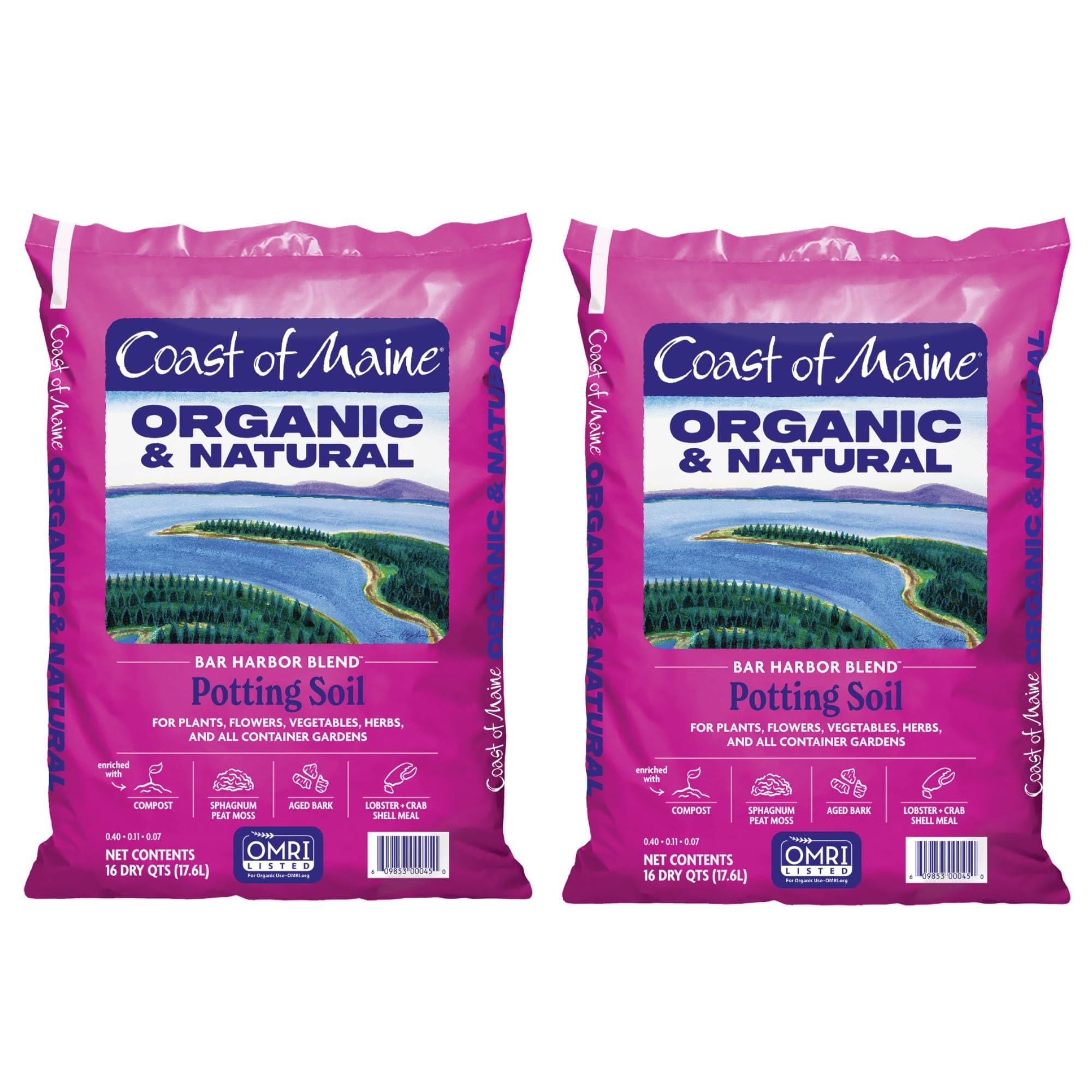
Coast of Maine’s Bar Harbor Blend stands out for its unique ingredient list: sphagnum peat moss, compost, perlite, lobster and crab shell meal, and kelp meal. This marine-infused mix delivers a slow-release nitrogen profile that produces remarkably deep green growth. Users consistently report that vegetables and flowers outperform expectations, with several mentioning that their tomatoes looked better than with “top brand” competitors.
The texture is noticeably rich and dark from the compost content, and the added perlite ensures drainage doesn’t suffer despite the nutrient density. Reviewers noted there were no unexpected weeds sprouting from the soil, a sign of careful processing. The 16-quart 2-pack provides enough volume to fill several large containers or a small raised bed without breaking the bank.
If you’re growing heavy feeders like tomatoes, peppers, or flowering annuals in containers, this blend delivers the sustained nourishment they crave without synthetic shortcuts.
What works
- Unique marine-based slow-release nutrients
- Excellent drainage with ample perlite content
- No weed seeds or large debris in the mix
What doesn’t
- Higher price per quart than bulk alternatives
- Can attract flies if stored uncovered outdoors
4. Brut Organic Potting Soil
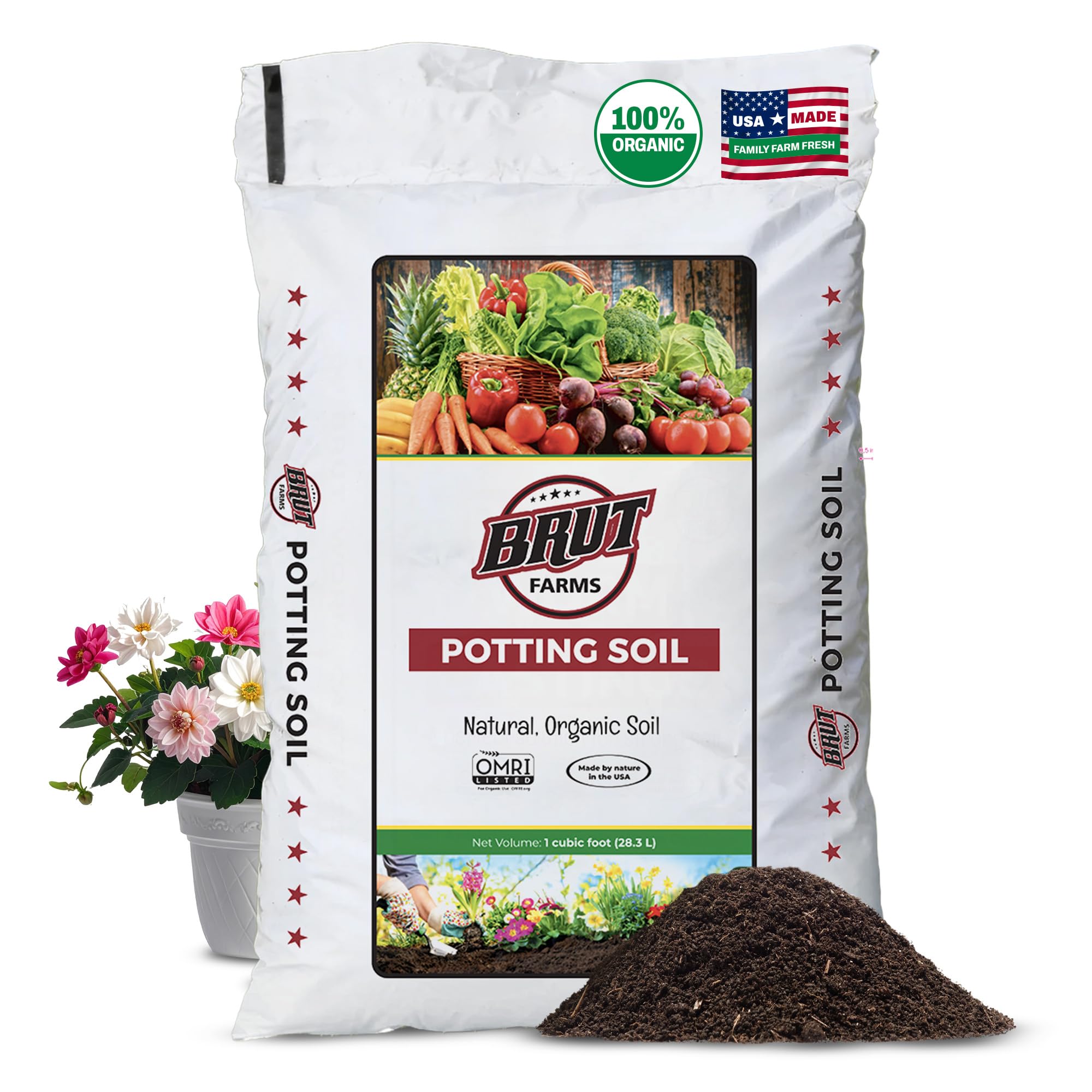
Brut takes a different approach by concentrating on root-level biology. The mix is packed with microbe-rich worm castings and trace minerals from Azomite and kelp, feeding the soil ecosystem rather than just the plant. The texture is fine and uniform—users consistently mention the absence of wood chips, sticks, or other filler materials that plague cheaper soils.
The pH is naturally balanced between 6.3 and 6.5, which hits the sweet spot for most vegetables, herbs, and flowers. Reviewers noted that plants showed new growth within days after transplanting, and the soil remained loose and easy to work with even after several waterings. The 1-cubic-foot bag is a generous size that fills several containers without needing to buy multiple packs.
Brut is OMRI listed, making it a solid choice for organic gardeners who want a filler-free mix with proven biological activity. The main drawback is the cost, which runs higher than general-purpose soils, but the ingredient quality justifies it for serious container growers.
What works
- Filler-free consistency with no sticks or wood chips
- Microbe-rich worm castings boost root-level health
- pH balanced between 6.3 and 6.5
What doesn’t
- Premium price point compared to base potting soils
- Organic matter can attract flies if left open
5. Michigan Peat General All Purpose Premium Potting Soil

Michigan Peat offers a no-frills workhorse soil that fills pots by the ton—literally, at 50 pounds per bag. The formula combines dark reed sedge peat, perlite, and sand with starter and slow-release fertilizers. It’s ready to use straight out of the bag with no mixing, which saves time when you have many containers to fill.
Users report that the consistency is perfect for potting and that plants respond well to the built-in nutrients. The soil arrives moist rather than bone-dry, which is convenient for immediate use. However, some reviewers noted that fungus gnats can emerge from the bag, likely due to the organic matter content. This is a common issue with high-moisture, organic-rich soils and can be managed with proper ventilation or a quick bake before use.
For the gardener who needs bulk volume for raised beds, large planters, or multiple containers without spending a premium, this is the most cost-effective option. The 50-pound bag is heavy to move, so plan ahead for transport.
What works
- Massive 50-pound bag covers many containers
- Includes starter and slow-release fertilizers
- Pre-moistened and ready to use immediately
What doesn’t
- Can harbor fungus gnats due to moist organic content
- Heavy bag is difficult to maneuver and store
6. Coast of Maine Organic Tomato & Vegetable Planting Soil

Coast of Maine’s tomato-specific blend leans into composted manure and sphagnum peat moss to create a mix that balances moisture retention and drainage specifically for heavy-feeding vegetables. The 20-quart bag is a generous serving for a few large tomato containers or a mix of vegetable pots. Users with heirloom tomatoes particularly praised the drainage, which is critical for varieties prone to root issues.
The soil smells earthy and rich—exactly what you want from a compost-based mix. One reviewer mentioned that the product attracted fungus gnats and recommended disinfecting it before use, a standard precaution with any compost-heavy soil. Once treated, the results were outstanding, with plants thriving and producing well.
The main limitation is the price. For a single tomato plant or a couple of vegetables, this bag is worth it. For a large garden with dozens of plants, the cost adds up quickly. It’s best suited for the dedicated vegetable grower who prioritizes quality over quantity.
What works
- Specifically formulated for heavy-feeding vegetables and tomatoes
- Excellent drainage prevents root rot in containers
- Rich in composted manure for natural nutrients
What doesn’t
- Can attract fungus gnats if not treated
- Pricey for large-scale container gardening
7. Modellor Premium Super Washed Coco Coir Bricks
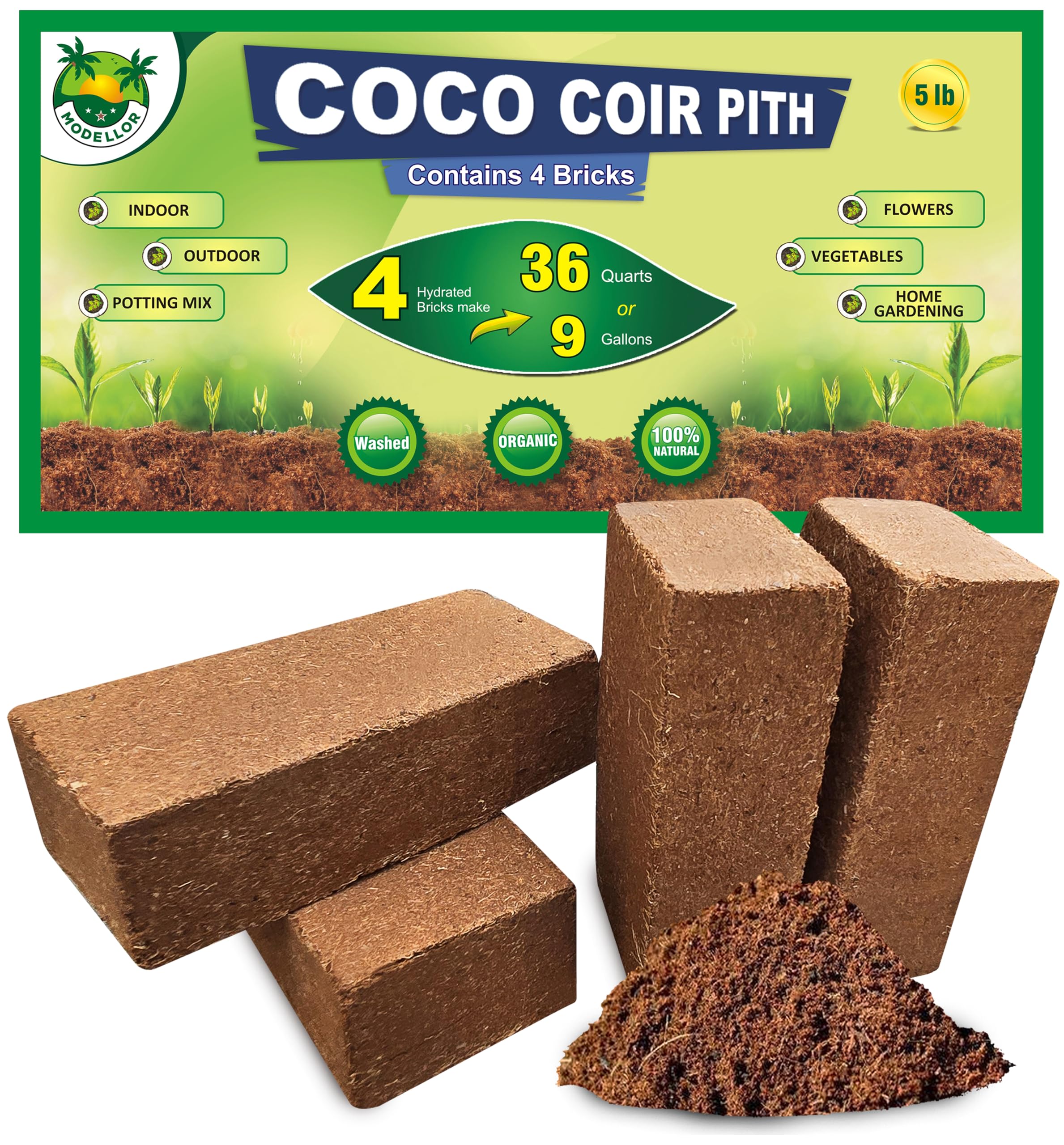
Modellor’s coco coir bricks are a blank slate that gives you total control over your potting mix. Each 1.25-pound brick expands into roughly 9 gallons of fluffy, pH-balanced coir when hydrated. The triple-washed, low-salt processing means you can use it straight away without the rinsing step that many other coir brands require.
Users love the versatility: seed starting, microgreens, houseplants, custom blends with perlite and compost, or as a standalone medium for plants that prefer excellent drainage. The structure balances air and water perfectly, leading to faster germination and stronger root development compared to denser soils. The 4-brick set yields 36 quarts total, which is a huge volume from a very compact package.
This is not a complete mix—it’s a base ingredient. You’ll need to add your own nutrients or mix it with compost and fertilizer for long-term container growing. But for gardeners who want to build their own blend or need a lightweight, space-saving medium, the Modellor bricks offer exceptional value and quality.
What works
- Expands to 36 quarts from a compact 5 lb package
- Triple-washed and low-salt—no rinsing needed
- Excellent aeration for root development
What doesn’t
- Requires adding nutrients for long-term plant health
- Bricks need soaking time before use
Hardware & Specs Guide
Perlite and Aeration
Perlite is the white, volcanic glass pebble you see in most potting mixes. It creates air pockets that allow oxygen to reach roots and excess water to drain. Mixes with higher perlite content are better for succulents and plants that hate wet feet. Blends with less perlite but more peat moss or coir retain moisture longer, suiting moisture-loving vegetables and annuals. Check the ingredient list: if you see “perlite” near the top, the mix is designed for drainage.
Slow-Release Fertilizer
Many potting soils include a fertilizer charge that feeds plants for weeks or months. Miracle-Gro’s blend feeds up to six months, while Espoma relies on natural meals like alfalfa and kelp for gradual release. Bags labeled “feeds for X months” typically use coated synthetic fertilizers. Organic blends use composted manures, worm castings, and meals that break down more slowly. If you prefer to control feeding yourself, choose a mix without added fertilizer.
FAQ
Can I use garden soil from my yard in outdoor pots?
How often should I replace potting soil in containers?
Why does my potting soil have fungus gnats and how do I stop them?
Final Thoughts: The Verdict
For most gardeners, the soil for outdoor potted plants winner is the Espoma Organic Potting Soil Mix because it combines a complete organic nutrient profile with Myco-Tone mycorrhizae for root health without requiring immediate feeding. If you want the proven growth boost of built-in slow-release fertilizer, grab the Miracle-Gro Potting Mix. And for building a custom blend from scratch with maximum aeration, nothing beats the Modellor Coco Coir Bricks.