
The difference between a good lawn and a great lawn almost always comes down to one number: the first digit in the NPK ratio. Nitrogen drives the green—it powers leaf production, chlorophyll synthesis, and that dense carpet look every homeowner chases. But apply the wrong source or the wrong release speed and you get burned tips, uneven growth, or a boom-bust cycle that leaves your turf weak. This guide breaks down the specific formulations, release mechanisms, and application methods that separate effective nitrogen feeding from wasteful guesswork.
I’m Rikta — the co-founder and writer behind Lawn Gear Lab. I spend my time comparing NPK ratios, studying slow-release coating technologies, cross-referencing soil science data, and analyzing thousands of verified owner experiences to find the lawn fertilizers that actually deliver measurable greening without damaging your turf.
After researching the top options on the market, these seven formulations stood out for their measurable impact on grass color, density, and root health. This is the definitive guide to the best nitrogen fertilizer for your lawn and garden.
How To Choose The Best Nitrogen Fertilizer
Not all nitrogen is created equal. The form—ammoniacal, nitrate, urea, or organic—determines how fast the nutrient reaches the roots. The release mechanism determines how long it lasts. Choosing a nitrogen fertilizer means matching these factors to your specific grass type, soil conditions, and seasonal goals.
Understand the Release Speed
Quick-release nitrogen delivers an immediate green-up within days, but it also carries a higher risk of burning the grass if overapplied. Slow-release nitrogen, often coated with sulfur or polymer, feeds the lawn steadily over 6 to 12 weeks. A blend of both—like a 70/30 split—offers the best balance of rapid color response and sustained nutrition without surge growth.
Check the NPK Ratio and Iron Content
The first number in the NPK ratio tells you the percentage of nitrogen by weight. A 28-0-0 formula is nearly pure nitrogen, while a 16-0-8 includes potassium for root strength and stress tolerance. Lawn fertilizers with 2% to 3% iron provide an extra color boost because iron supports chlorophyll production. For phosphorus-heavy soils, choose a phosphorus-free blend like 16-0-8 or 24-0-6 to avoid runoff and imbalances.
Match Coverage to Your Lawn Size
Granular fertilizers list coverage in square feet per bag. A 16.5-pound bag covering 5,000 square feet works for medium lawns, while a 45-pound bag covering 15,000 square feet suits larger properties. Liquid concentrates offer flexibility for spot treatments but require more frequent reapplication. Always calibrate your spreader or sprayer to prevent overlapping, which creates dark stripes and burns.
Quick Comparison
On smaller screens, swipe sideways to see the full table.
| Model | Category | Best For | Key Spec | Amazon |
|---|---|---|---|---|
| Yard Mastery 24-0-6 | Granular | Large lawns needing iron boost | 3% Iron, Bio-Nite slow release | Amazon |
| The Andersons Deep Green 24-0-11 | Granular | Summer heat stress prevention | 2% Iron + manganese | Amazon |
| Petramax Liquid 28-0-0 | Liquid | Quick green-up on deficient grass | 70% quick / 30% slow release | Amazon |
| The Andersons PGF 16-0-8 | Granular | Phosphorus-free feeding | Humic DG for soil health | Amazon |
| GreenView Fairway Formula 27-0-5 | Granular | Medium to large lawn spring feed | 63% slow release nitrogen | Amazon |
| Espoma Blood Meal 12-0-0 | Organic Granular | Targeted nitrogen boost for gardens | 100% natural blood meal | Amazon |
| Alaska Fish Fertilizer 5-1-1 | Organic Liquid | OMRI-certified organic gardens | Cold-pressed fish emulsion | Amazon |
In‑Depth Reviews
1. Yard Mastery 24-0-6 Flagship Granular Fertilizer

The Yard Mastery Flagship delivers a 24-0-6 NPK profile with 24% slow-release nitrogen, ensuring a steady supply of nutrients without the rapid flush that forces you to mow twice a week. The addition of 3% iron provides a deep-green color boost that neighbors notice—several verified buyers report being asked which lawn service they use after switching to this bag.
Each 45-pound bag covers up to 15,000 square feet, making it the most efficient option for large lawns. The Bio-Nite technology enhances soil microbial activity, improving root strength and overall turf density. Users consistently note that Bermuda grass thickens significantly after one application, choking out weeds that survived years of professional treatment.
The 6% potassium content strengthens drought resistance, which is critical for summer applications when heat stress is highest. The granular form works well with standard broadcast spreaders, though careful calibration is needed to avoid the dark stripes reported by a small number of users who overlapped passes.
What works
- 3% iron delivers visible greening within days
- 24% slow-release nitrogen prevents surge growth
- 45-pound bag covers 15,000 sq ft for large lawns
What doesn’t
- Overlapping passes can leave dark green stripes for weeks
- Premium price point compared to standard lawn foods
2. The Andersons Deep Green 24-0-11 Professional-Grade Fertilizer

The Andersons Deep Green pairs a 24-0-11 NPK with 2% iron and manganese to intensify chlorophyll production and prevent the yellowing that plagues lawns during midsummer heat stress. The 11% potassium content is notably higher than most competing blends, providing superior drought and disease resistance when temperatures climb into the 90s.
This 40-pound bag uses a combination of quick- and slow-release nitrogen that feeds uniformly for up to 8 weeks. The professional-grade granules are finely milled for even distribution, and the formulation is safe for all common turf types including Kentucky bluegrass, fescue, and Bermuda. Buyers report dramatic recovery from brown spots within three weeks of application.
The manganese content is a differentiator here—most high-nitrogen lawn foods skip this micronutrient despite its role in helping grass metabolize nitrogen efficiently. The bag is made in the USA and designed for use throughout the entire growing season, from spring green-up through late-summer maintenance.
What works
- High potassium (11%) strengthens turf against summer stress
- Manganese supports efficient nitrogen metabolism
- Recovers brown spots within 2-3 weeks
What doesn’t
- Overlapping creates very dark stripes that last 2 months
- 40-pound bag weight is heavy for some spreaders
3. Petramax Liquid Nitrogen Fertilizer 28-0-0

The Petramax 28-0-0 is an ultra-high nitrogen liquid that uses a 2-in-1 release technology: 70% quick-release for an immediate green response and 30% slow-release to sustain growth between applications. This makes it ideal for correcting nitrogen-deficient grass that has turned yellow, with visible results often reported within days of spraying.
One gallon of concentrate treats up to 25,600 square feet at the maintenance rate (5 ounces per gallon of water) or 12,800 square feet for deficient turf (10 ounces per gallon). The liquid form allows for precise spot treatment, which is particularly useful for patchy lawns where broadcasting granules would waste product on healthy areas.
PetraTools recommends using a dedicated sprayer for even coverage, and the company is a USA-based family operation with responsive customer support. The product works on both warm- and cool-season grasses, though the high nitrogen content demands careful mixing to avoid leaf burn on sensitive turf types during hot weather.
What works
- 70% quick-release nitrogen greens grass within days
- Liquid concentrate allows precise spot treatment
- Covers up to 25,600 sq ft per gallon
What doesn’t
- Requires careful mixing to avoid burning grass
- Needs a sprayer—not suitable for spreader application
4. The Andersons PGF 16-0-8 Fertilizer with Humic DG
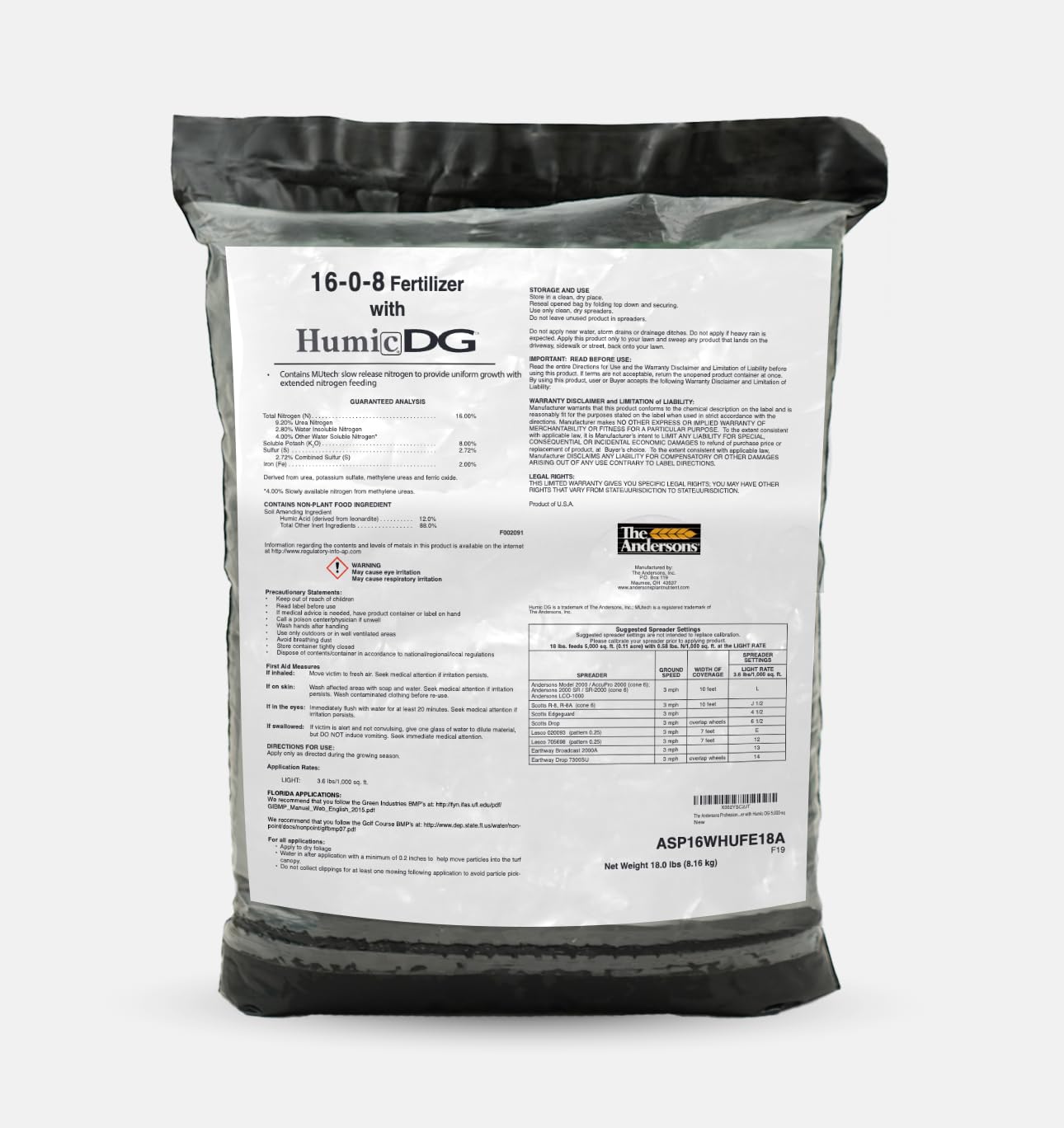
The Andersons PGF 16-0-8 is a phosphorus-free granular blend designed for lawns where soil tests have already revealed adequate or excessive phosphorus levels. The 16-0-8 ratio provides nitrogen for greening and potassium for root strength without contributing to phosphorus runoff, making it an environmentally conscious choice for established lawns.
The standout feature here is the Humic DG—humic acid delivered in dispersible granules that penetrate the soil quickly to improve nutrient uptake and microbial activity. The super-fine particle size provides twice the number of particles per square foot compared to conventional granules, ensuring even distribution and minimizing the risk of missed streaks or hotspots.
The 18-pound bag covers approximately 10,000 square feet at the standard application rate, and the combination of quick- and slow-release nitrogen feeds the lawn for up to 8 weeks. Buyers with high-phosphorus soil report significant improvement after switching from complete NPK blends, with greener grass and no signs of nutrient imbalance.
What works
- Humic DG improves soil biology and nutrient uptake
- Phosphorus-free design suits high-phosphorus soils
- Ultra-fine particles provide streak-free coverage
What doesn’t
- Not available for shipment to California or Oregon
- Higher cost per pound than standard lawn fertilizers
5. GreenView Fairway Formula 27-0-5 Lawn Fertilizer

GreenView Fairway Formula uses a 27-0-5 NPK with 63% of its nitrogen in slow-release form, providing consistent feeding for up to 12 weeks from a single application. That extended release window means one spring treatment can carry your lawn through the early growing season without requiring a second bag, reducing both labor and cost.
The 16.5-pound bag covers 5,000 square feet, positioning it as an ideal choice for medium-sized lawns. The formula is phosphorus-free to protect waterways, and it is safe for all common grass types including Bermuda and centipede. Verified buyers report visible greening within a few days after rainfall, with a deep, healthy color that persists without a rapid growth surge.
The granular form applies easily through any standard broadcast or drop spreader, with no clumping issues reported. Users transitioning from cheaper grocery-store brands consistently note that the slower release prevents the boom-bust cycle of rapid growth followed by yellowing, creating a more uniform lawn appearance throughout the season.
What works
- 63% slow-release nitrogen feeds for up to 12 weeks
- Phosphorus-free formula protects waterways
- Affordable price point for 5,000 sq ft coverage
What doesn’t
- 16.5-pound bag is small for large lawns
- Less iron content than premium blends for color
6. Espoma Organic Blood Meal Fertilizer 12-0-0
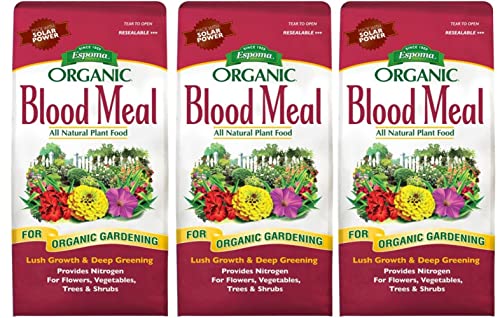
Espoma Blood Meal delivers nitrogen in its most concentrated organic form—12-0-0 from 100% natural domestic blood meal with no synthetic fillers or additives. The nitrogen releases as soil microbes break down the protein-based granules, providing a steady supply of nutrients that supports vigorous leaf growth and deep green color in vegetables, flowers, and shrubs.
This 3-pound bag (sold in a 3-pack) is best used as a targeted supplement rather than a full-lawn treatment. Sprinkle the granules onto the soil like seasoning, then water in thoroughly.
Gardeners who pair this with Espoma Bone Meal (for phosphorus) report excellent results with tomatoes, leafy greens, and heavy-feeding perennials. The product is OMRI-listed and meets organic production standards. Some users note that the smell can attract animals, and in certain cases dogs may dig where it is applied, so consider that when placing it near pet areas.
What works
- 100% natural blood meal with no synthetic additives
- OMRI-listed for certified organic gardening
- Safe, slow organic release with low burn risk
What doesn’t
- Pungent odor may attract dogs and wildlife
- 3-pound bag size suits gardens better than lawns
7. Alaska Fish Fertilizer OMRI Listed 5-1-1
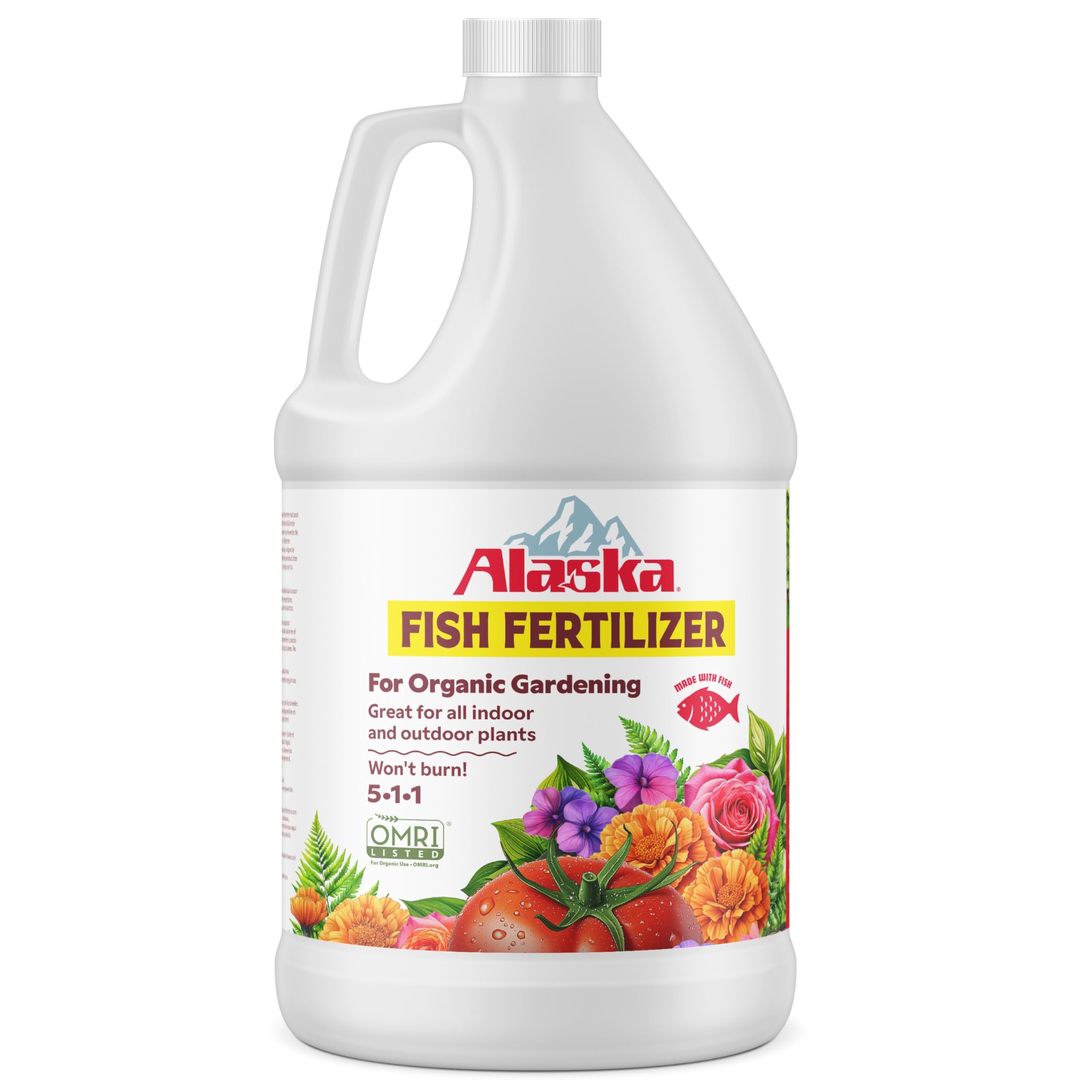
Alaska Fish Fertilizer is a cold-pressed fish emulsion that delivers a gentle 5-1-1 NPK profile, making it one of the safest nitrogen sources for indoor and outdoor plants. The liquid concentrate mixes with water for easy application—use it every three weeks during the growing season on vegetables, fruits, roses, trees, and container plants to promote strong stems, vibrant leaf color, and vigorous growth.
The 115-ounce bottle treats approximately 1,000 square feet and is OMRI-listed for organic production. The cold-pressing process preserves micronutrients and amino acids that support soil microbial life, which in turn helps plants access nutrients naturally. Verified buyers report that even struggling houseplants revived noticeably within weeks of regular feeding.
The primary trade-off is the distinctive fishy odor, though most users report it dissipates within a day after watering. The low phosphorus and potassium means this is best used for vegetative growth stages; gardeners growing flowering or fruiting crops may need to supplement with a bloom booster. The product is safe around pets and children once watered into the soil.
What works
- OMRI-listed and safe for organic vegetable gardens
- Cold-pressed formula preserves beneficial micronutrients
- Very low burn risk—safe for seedlings and houseplants
What doesn’t
- Strong fishy smell persists for about 24 hours
- Low NPK requires frequent reapplication every 3 weeks
Hardware & Specs Guide
NPK Ratio and Nitrogen Form
The NPK ratio tells you the percentage of nitrogen, phosphorus, and potassium by weight. For lawn greening, look for a first number between 24 and 28. High-nitrogen blends (28-0-0) deliver rapid results but require careful calibration. Blends with 24-0-6 or 16-0-8 include potassium for root strength and stress tolerance. The form of nitrogen matters too: urea-based sources release quickly, while polymer- or sulfur-coated urea provides extended feeding. Products listing “slow-release nitrogen percentage” on the label give you a direct measure of feeding duration—63% slow release means roughly 8 to 12 weeks of steady nutrition.
Coverage and Application Rate
Granular fertilizers are labeled by square footage per bag. A 16.5-pound bag covering 5,000 square feet works for medium lawns; a 45-pound bag covering 15,000 square feet suits larger properties. Liquid concentrates list coverage at specific dilution rates—maintenance vs. deficient—so you can tailor application to your lawn’s condition. Always set your spreader to the manufacturer’s recommended setting and avoid overlapping passes to prevent dark stripes and localized burning. For liquid products, use a dedicated sprayer with proper nozzle filters to ensure even droplet size and distribution.
Iron and Micronutrients
Iron content between 2% and 3% provides a visible color boost because iron is essential for chlorophyll synthesis. Turf that is yellow despite adequate nitrogen often has an iron deficiency. Manganese is another important micronutrient—it helps grass metabolize nitrogen efficiently, reducing the risk of nitrogen accumulation that can stress the plant. Some premium blends also include humic acid (Humic DG) to improve soil structure and nutrient uptake. These additives are particularly beneficial on sandy or compacted soils where nutrient availability is limited.
Organic vs. Synthetic Sources
Organic nitrogen sources like blood meal (12-0-0) and fish emulsion (5-1-1) release nutrients as soil microbes break them down. This process is slower and gentler, reducing the risk of burning even with moderate overapplication. Synthetic sources like urea and ammonium sulfate release quickly and require precise calibration. For lawns, a blend of quick- and slow-release synthetic nitrogen offers the best balance of fast green-up and sustained feeding. For vegetable gardens and sensitive ornamentals, organic sources provide consistent nutrition without the salt buildup associated with synthetic fertilizers.
FAQ
How often should I apply a high-nitrogen fertilizer to my lawn?
What is the difference between quick-release and slow-release nitrogen?
Can I use a lawn nitrogen fertilizer on my vegetable garden?
Why does my grass stay yellow even after I apply nitrogen fertilizer?
Final Thoughts: The Verdict
For most homeowners looking for a single bag that greens the lawn, thickens the turf, and feeds for weeks, the winner is the Yard Mastery 24-0-6 because its 3% iron and Bio-Nite slow-release technology produce visible results without the boom-bust cycle of cheaper fertilizers. If you need a phosphorus-free option with humic acid for soil health, grab the Andersons PGF 16-0-8. And for organic gardeners who want a gentle, OMRI-certified liquid source that won’t burn tender plants, nothing beats the Alaska Fish Fertilizer 5-1-1.