
Pulling weeds from between your vegetable rows is a losing battle that steals hours every week—a physical, repetitive chore that most gardeners hate but accept as inevitable. The right ground cover changes the equation entirely by creating a physical barrier that stops seeds from germinating in the soil beneath your plants, turning a season-long maintenance problem into a single weekend installation task.
I’m Rikta — the co-founder and writer behind Lawn Gear Lab. I’ve spent dozens of hours comparing woven and non-woven geotextile specs, studying water permeability rates, and analyzing thousands of owner reports to find the most effective weed-blocking foundation for a productive vegetable garden.
This guide ranks the top six ground covers that balance water flow, fabric weight, and durability so you can pick the right landscape fabric for vegetable garden without wasting time on layers that tear or hold too much moisture.
How To Choose The Best Landscape Fabric For Vegetable Garden
Selecting a ground cover for an edible garden is different from buying a roll for a decorative flower bed. The fabric has to let rain and irrigation reach the root zone while keeping weed seeds in the dark, and it must survive contact with garden tools, foot traffic, and decomposing mulch without unraveling after one season.
Fabric Weight and Weave Structure
The most common weight for woven polypropylene is 3.2 ounces per square yard—heavy enough to block light but still porous enough for water penetration. Lighter fabrics around 1.5oz tear when you pull them taut over uneven soil, while 8oz non-woven geotextiles provide maximum puncture resistance at the cost of slower water flow. For a typical vegetable garden with raised rows and bark mulch, 3.2oz woven strikes the right balance and remains the most widely available option.
Tensile Strength and UV Resistance
Tensile strength, measured in pounds per inch, tells you how much force the fabric can handle before ripping. Budget rolls often fall below 200 lbs, which means a sharp hoe or a misplaced shovel cuts through easily. Premium options with 400 to 800 lbs tensile strength support gravel paths and heavy wheelbarrow passes. UV resistance is equally critical because fabric edges exposed to sunlight degrade within one growing season if the polypropylene lacks a stabilizer—check for a manufacturer-stated UV rating before buying.
Water Permeability and Soil Breathability
Vegetables need consistent soil moisture and gas exchange. A fabric that blocks water—or causes it to bead up and run off the surface—leads to dry spots under the barrier. Look for cross-woven designs that pass water in gallons per minute per square foot. Most woven 3.2oz fabrics offer a flow rate around 20 to 30 GPM per square foot, while premium non-woven types can exceed 140 GPM. If you use drip irrigation, permeability matters less because water deposits directly under the fabric, but for overhead watering or rain-fed beds, it makes a real difference.
Quick Comparison
On smaller screens, swipe sideways to see the full table.
| Model | Category | Best For | Key Spec | Amazon |
|---|---|---|---|---|
| FYFMFER 4ft x 100ft | Woven | Mid-size vegetable rows | 3.2oz polypropylene | Amazon |
| Groweco 6ft x 50ft | Woven | Narrow or single-row beds | 3.2oz polypropylene | Amazon |
| Grassclub 3ft x 300ft | Woven | Large-scale coverage | 400 lbs tensile strength | Amazon |
| Rintea 4ft x 300ft | Woven | Extra-wide runs | 3.2oz polypropylene | Amazon |
| Sandbaggy 3ft x 25ft | Non-Woven | Drainage & heavy-traffic paths | 8oz / 205 lbs tensile | Amazon |
| DWALE 6ft x 300ft | Woven | Driveway & gravel-base gardens | 800 lbs tensile strength | Amazon |
In‑Depth Reviews
1. FYFMFER 4ft x 100ft Weed Barrier Landscape Fabric
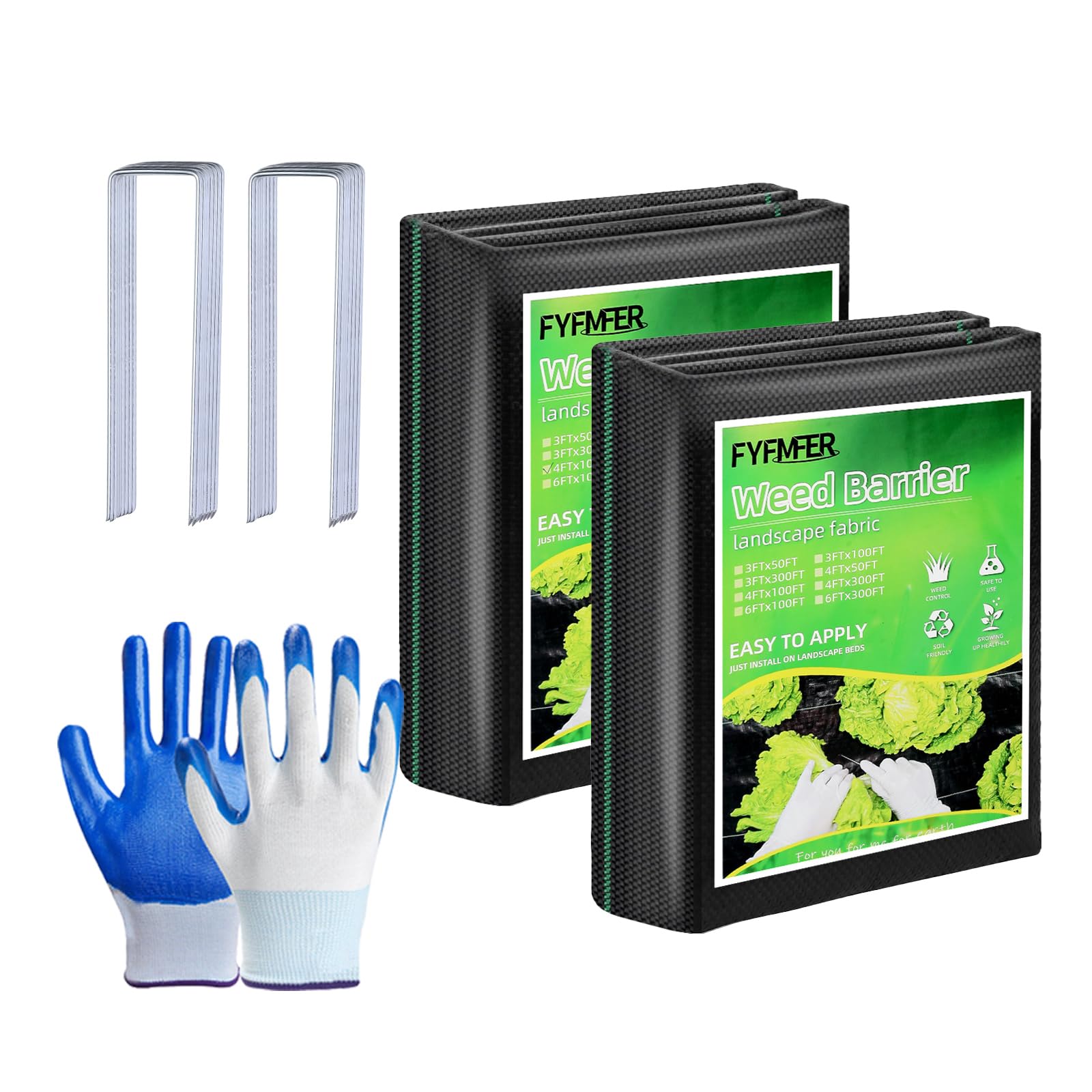
The FYFMFER roll delivers a tightly woven 3.2oz polypropylene surface that blocks sunlight effectively while letting water and air pass through to the root zone. Multiple owners report that the fabric survived a full season of kid and dog traffic without tearing, which points to a consistent weave density that cheap rolls lack. The included 20 U-shaped pegs and a pair of gloves make the first installation straightforward, though you will likely need extra pins if you cover a large area.
Green guide lines printed on the fabric speed up cutting and alignment, especially when you work around irregular bed shapes or curved walkways. The UV-resistant formulation matters here because many budget fabrics crack within months when exposed; reviews after one year of use show no visible degradation. For a standard vegetable garden laid out in 4ft-wide rows, this roll covers a substantial area without requiring multiple purchases.
The main trade-off comes with the staple count—owners consistently mention that the included pegs cover only about half of what a full installation demands. Buy a separate bag of landscape staples and this fabric becomes a near-perfect mid-range solution that outperforms its price tier.
What works
- Tough 3.2oz weave holds up to foot traffic and garden tools
- Clear green grid lines simplify cutting and alignment
- Includes gloves and enough staples to get started quickly
What doesn’t
- Supplied pegs fall short for full-coverage staking
- No stated tensile strength in pounds for heavy-load areas
2. Groweco 6ft x 50ft Weed Barrier Landscape Fabric
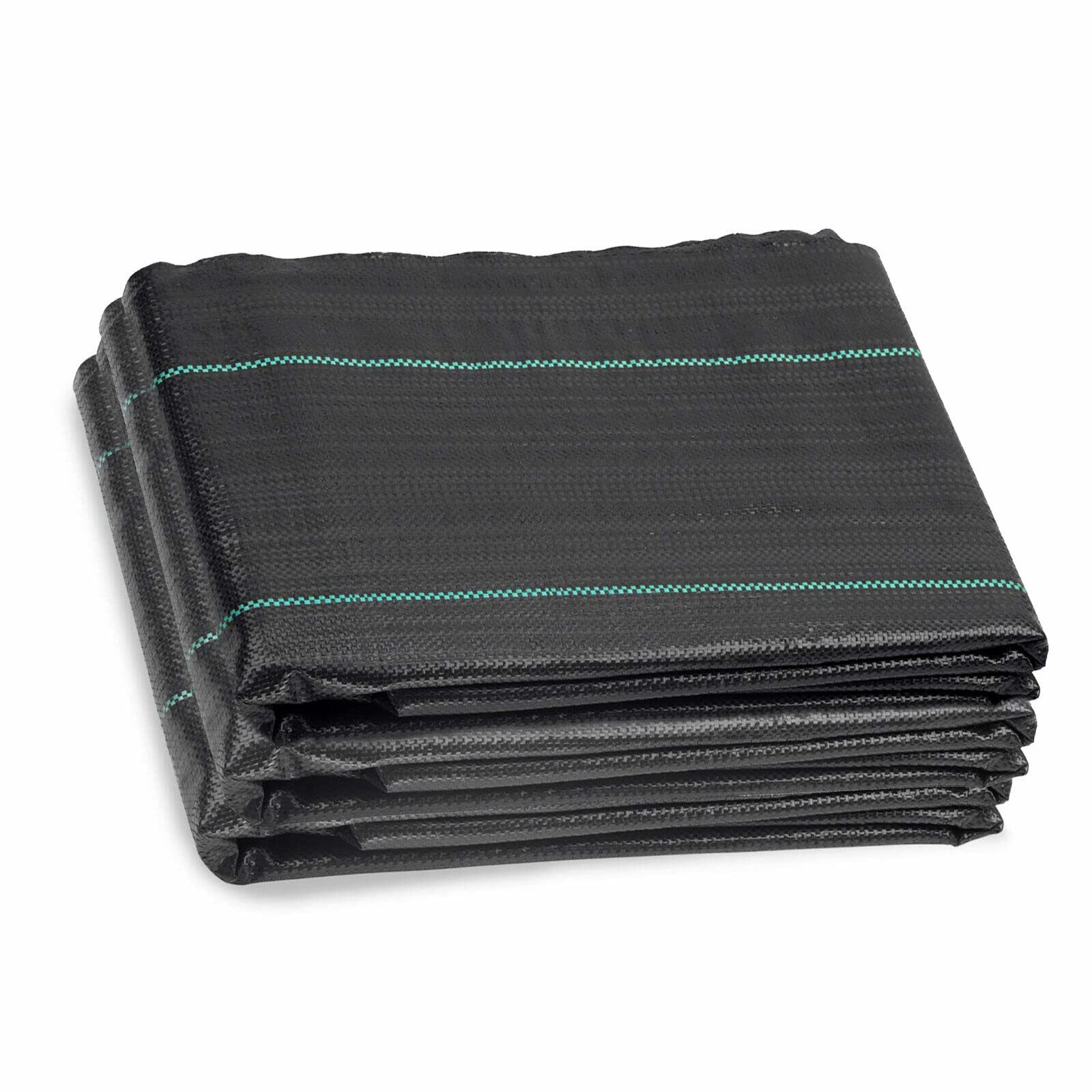
Groweco’s 6ft x 50ft roll is the shortest length in this comparison, but its 6ft width makes it ideal for covering wide single-row beds without seaming two strips together. The fabric uses the same 3.2oz woven polypropylene construction as the FYFMFER roll, and owners specifically note that the material feels more like a durable plastic barrier than a soft cloth—a characteristic that keeps aggressive rhizomes from pushing through.
Water drainage performance earns consistent praise from reviewers who installed it under gravel walkways and bark mulch. The green alignment lines help you cut straight edges, and the 50ft length keeps the total weight manageable for a single person to unroll and position. Multiple gardeners report zero weed breakthroughs after a full summer, which confirms that the light-blocking density is sufficient for typical vegetable garden weeds.
The shorter length means this roll works best for small to medium plots or for gardeners who prefer to buy a fresh roll each year rather than store a large surplus. The edges do require clean cuts with sharp scissors—ragged edges fray quickly if you use dull blades—but that is standard for woven polypropylene at this weight.
What works
- Wide 6ft coverage eliminates the need for overlapping seams
- Dense plastic-like weave resists breakthrough from roots
- Drains well under gravel and mulch with no pooling
What doesn’t
- 50ft length runs out quickly on larger garden plots
- Edges fray noticeably unless cut with a very sharp blade
3. Grassclub 3ft x 300ft Weed Barrier Landscape Fabric

The Grassclub roll stands apart from the standard 3.2oz crowd by publishing a 400 lbs tensile strength rating—double what many entry-level fabric rolls manage. That strength translates into a fabric that supports heavy loads like stone walkways and wheelbarrow traffic without stretching or tearing. The 3ft width keeps the coil manageable for a single person, but the 300ft length covers a massive 900 square feet, which suits gardeners laying out a full no-till system across multiple beds.
Water permeability works well once the fabric is fully saturated; some initial water beading occurs on the surface, which is common with fresh polypropylene, but reviewers confirm that moisture moves through after the first rain. The eco-friendly polypropylene construction resists UV damage when buried under at least a couple of inches of mulch, and several owners report the fabric performed strongly into a second growing season with no visible holes or shrinkage.
The primary downside involves the width. At 3ft, you need two parallel strips to cover a standard 4ft or 6ft raised bed, which creates a seam where weeds can push through if you do not overlap the edges by at least four inches. Plan your layout carefully or use this roll for narrower pathways between planting rows.
What works
- 400 lbs tensile strength supports gravel and foot traffic
- 900 square feet of coverage for large-scale projects
- Survives multiple seasons under mulch with minimal wear
What doesn’t
- Water beads initially before the fabric fully saturates
- 3ft width requires overlapping strips for wider beds
4. Rintea 4ft x 300ft Weed Barrier Fabric

Rintea’s 4ft x 300ft roll gives you 1,200 square feet of 3.2oz woven fabric, making it the largest single-roll option in this lineup. The extra width lines up perfectly with standard 4ft raised beds, so you can run a single continuous sheet down the entire length of a row without piecing sections together. Owners who used it for no-till vegetable gardening praise the fabric’s ability to suppress weeds reliably over two growing seasons.
The included 20 securing pegs are clearly meant as a starter pack; for a 300ft run you will need many more staples to hold the edges down firmly, particularly in windy areas. Rintea recommends burning the cut edges with a torch or lighter to prevent fraying—a step that adds a few minutes to installation but dramatically improves longevity along the perimeter. The woven material handles wheelbarrow passes and kneeling without tearing, and water flows through without puddling on the surface.
At 24.2 pounds for the full roll, this is a heavy item to maneuver. Unrolling it solo takes some effort, and the folded packaging can create stubborn creases that flatten out only after a few warm days in direct sun. Order a helper or lay it out on a warm afternoon to make installation smoother.
What works
- 4ft width matches standard raised bed dimensions perfectly
- Large 1,200 square feet of coverage for expansive gardens
- Withstands foot traffic and tool drops without puncturing
What doesn’t
- Heavy roll is awkward for a single person to handle
- Cut edges must be flame-sealed to prevent unraveling
5. Sandbaggy 8 oz Non-Woven Geotextile Fabric – 3×25 ft
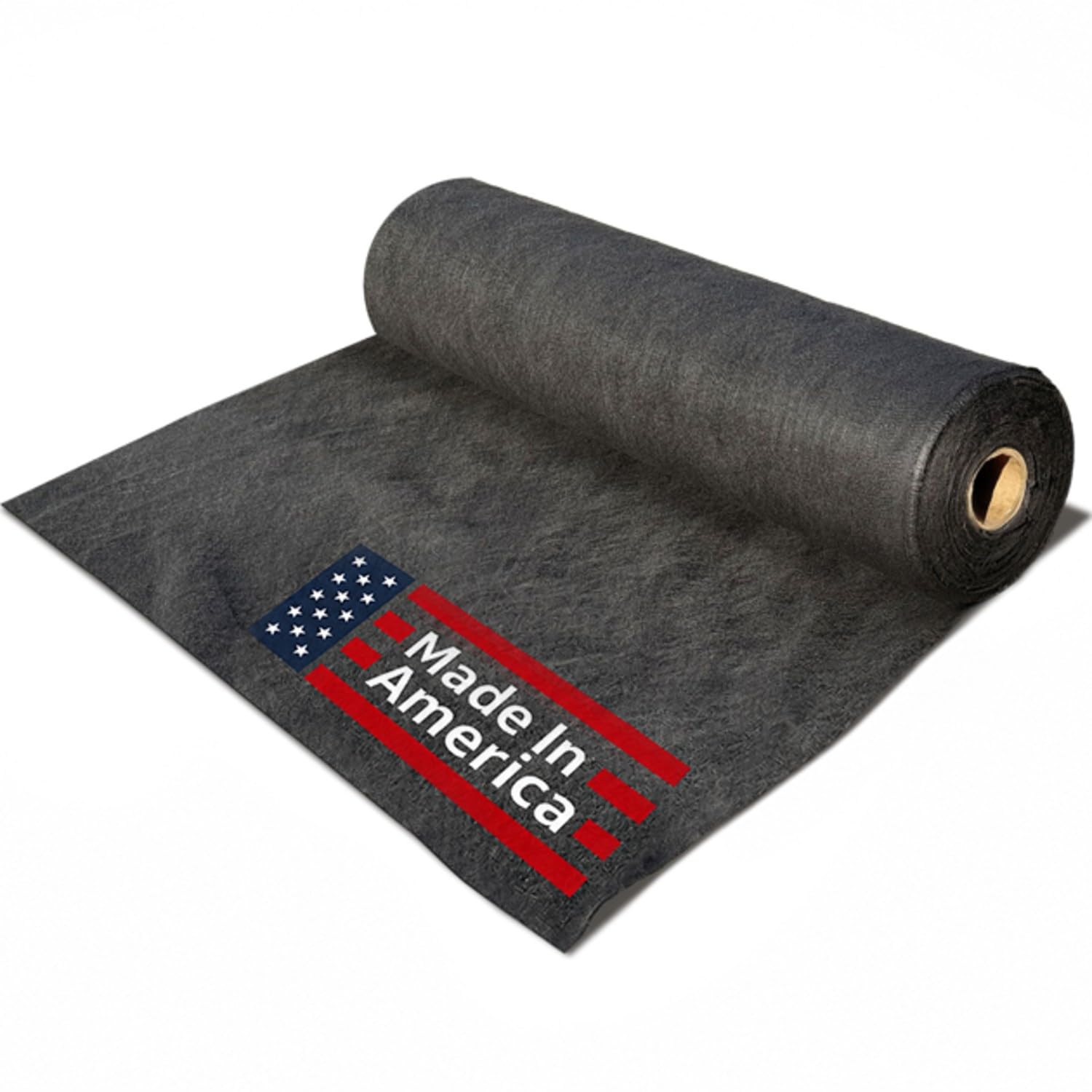
The Sandbaggy 8oz non-woven geotextile operates in a different weight class than the woven 3.2oz fabrics above. At more than double the thickness, this felt-like material provides 205 lbs of tensile strength and a claimed 50-year lifespan when buried under at least three inches of gravel or mulch. The non-woven construction means water flows through at an exceptional 140 gallons per minute per square foot, making this the top choice for french drains, erosion-prone slopes, or any vegetable bed where drainage is the primary concern.
Owners consistently rave about the puncture resistance—sharp rocks, shovel blades, and heavy wheelbarrow loads do not damage the fabric. The flexible, soft texture conforms tightly to uneven soil surfaces, eliminating the air gaps that sometimes plague rigid woven fabrics. The 3ft x 25ft roll is short, but the American-made quality justifies the premium price for gardeners who want one-and-done durability rather than annual replacement.
The short 25ft length limits this fabric to small beds, pathway accents, or critical drainage areas. You will not cover a full 100ft row with a single roll, and the per-square-foot cost is significantly higher than the 3.2oz woven options. Use it where maximum longevity and water flow matter most, not for blanketing an entire garden.
What works
- 8oz non-woven construction resists punctures from rocks and tools
- 140 GPM flow rate is ideal for wet or poorly draining soil
- Flexible material conforms tightly to uneven ground contours
What doesn’t
- 25ft length covers only small areas or focused drainage zones
- Higher per-square-foot cost than standard woven alternatives
6. DWALE Driveway Fabric 6×300 ft Commercial Weed Barrier

The DWALE 6ft x 300ft fabric is a commercial-grade woven geotextile with an 800 lbs tensile strength rating—the highest in this comparison by a wide margin. This is not a fabric for light mulching; it is designed to stabilize gravel driveways, animal stable floors, and construction access paths. For a vegetable garden, it works best as a permanent no-till base layer where you cut planting holes and leave the fabric in place for multiple years.
Owners confirm that the heavy woven polyethylene blocks all weed growth even under extreme conditions, including quack grass and Bermuda grass rhizomes. The 6ft width unfolds from a folded 3ft package—a note worth reading carefully before installation to avoid confusion. Water drains through the material without pooling, and the fabric stays intact after three years of continuous exposure under gravel and bark. The 10-year warranty for covered installation backs up the durability claims.
The biggest drawback is the fraying around cut edges. The high-tensile weave unravels significantly when cut with scissors unless you seal each edge with heat. Additionally, the folded packaging can make the first spread-out step frustrating as the fabric wants to hold its creases. Plan to lay it flat under direct sun for an hour before installing to relax the folds.
What works
- 800 lbs tensile strength handles heavy gravel and machinery
- 10-year covered warranty for long-term peace of mind
- Wide 6ft roll covers large areas with minimal seams
What doesn’t
- Unravels significantly at cut edges without heat sealing
- Folded packaging creates stubborn creases that resist flattening
Hardware & Specs Guide
Woven Polypropylene Fabric
Woven fabrics are constructed by interlacing polypropylene threads into a tight grid. This structure provides excellent tear resistance in one direction and is the standard choice for vegetable gardens because the gaps between threads allow water and air to pass while blocking light. The typical weight of 3.2 ounces per square yard delivers sufficient density for most garden applications. Woven rolls are rigid and hold their shape during installation, but they can fray along cut edges if you do not seal them with heat or leave a wide overlap at the seams.
Non-Woven Geotextile Fabric
Non-woven geotextiles are made by bonding polypropylene fibers together through heat or chemical processes, creating a felt-like mat with uniform permeability in every direction. These fabrics excel in drainage applications because water flows through the entire surface rather than only through the weave gaps. The Sandbaggy 8oz option demonstrates 140 GPM flow rate, which is critical in clay-heavy soil or areas prone to standing water. Non-woven fabrics are softer and conform better to irregular ground, but they lack the directional strength of woven fabrics and are more expensive per square foot.
Tensile Strength and Load Capacity
Tensile strength measures the force required to pull the fabric apart, expressed in pounds per square inch or pounds per inch of width. Budget 3.2oz wovens typically fall between 200 and 300 lbs, which is sufficient for bark mulch and light foot traffic. The Grassclub fabric at 400 lbs and the DWALE fabric at 800 lbs support gravel paths, retaining wall backfill, and frequent wheelbarrow use without tearing. If you plan to walk on your vegetable beds or drive equipment over the fabric, choose a roll with a published tensile rating of at least 400 lbs.
Water Permeability and Flow Rate
Water permeability is measured in gallons per minute flowing through one square foot of fabric under standard pressure. Woven 3.2oz fabrics typically allow 20 to 30 GPM per square foot, which handles normal rainfall and drip irrigation. The Sandbaggy non-woven fabric reaches 140 GPM, making it suitable for french drains and erosion control. For overhead watering in a vegetable garden, standard woven permeability is adequate; the key is to avoid fabrics coated with a waterproof layer, which causes water to run off the surface rather than soak through to the roots.
FAQ
Can I plant vegetables directly through landscape fabric?
How long does 3.2oz woven fabric last under mulch in a vegetable garden?
Do I need to remove landscape fabric every year to add compost?
What causes water to bead up and run off the fabric surface?
Final Thoughts: The Verdict
For most gardeners, the landscape fabric for vegetable garden winner is the FYFMFER 4ft x 100ft because it delivers proven 3.2oz woven durability, UV resistance, and clear installation guides at a cost that makes covering a full garden affordable without sacrificing quality. If you need maximum water drainage for a wet site, grab the Sandbaggy 8oz non-woven. And for large no-till plots that demand commercial-grade tensile strength, nothing beats the DWALE 6×300 ft.