
Yellowing leaves, stunted blooms, and disappointing harvests often signal a pH mismatch between your soil and what you’re feeding it. Acid-loving plants like blueberries, azaleas, and hydrangeas can’t absorb nutrients properly when the pH drifts too high, no matter how much generic fertilizer you apply.
I’m Rikta — the co-founder and writer behind Lawn Gear Lab. I’ve spent hours comparing NPK ratios, sulfur percentages, and organic certifications while analyzing thousands of verified owner experiences to pinpoint which formulas actually lower soil pH and keep acid-loving plants thriving.
Whether you are nurturing a row of blueberries or a bank of camellias, this guide breaks down the top contenders for the title of best fertilizer for acidic soil, matching each option to a specific garden scenario and plant type.
How To Choose The Best Fertilizer For Acidic Soil
Selecting an acid-specific fertilizer requires more than grabbing a bag labeled “gardenia food.” You must verify the sulfur content, the iron source, and the release speed to match your soil’s current pH and your plant’s growth stage.
NPK Ratio and Sulfur Content
Standard balanced fertilizers (10-10-10) often raise soil pH over time. Acid-loving plant foods feature a lower first number or include elemental sulfur. A ratio like 17-6-6 or 4-3-4 paired with 5% sulfur signals a genuine acidifying formula. The sulfur microbes oxidize into sulfuric acid, gradually dropping pH.
Form Matters: Granules vs. Water-Soluble vs. Liquid Concentrate
Granular organics like cottonseed meal or Holly-tone release nutrients slowly over weeks, improving soil structure alongside pH. Water-soluble powders (Miracle-Gro Acid, Jack’s Classic) deliver an immediate nitrogen boost and are ideal for container plants or quick green-up. Liquid concentrates like Fertilome Soil Acidifier act fastest for correcting acute iron chlorosis but require careful dilution to avoid root burn.
Target Plant Specificity
Blueberries and azaleas respond best to formulas with chelated iron and a pH below 5.5. Japanese maples benefit from mycorrhizal fungi additives that aid nutrient uptake in low-pH conditions. Lawns with a pH above 7 often need straight sulfur granules rather than a complete NPK fertilizer to avoid excess nitrogen runoff.
Quick Comparison
On smaller screens, swipe sideways to see the full table.
| Model | Category | Best For | Key Spec | Amazon |
|---|---|---|---|---|
| Espoma Organic Holly-Tone | Granular Organic | Large shrub & tree beds | 4-3-4 NPK, 5% Sulfur, 36 lb bag | Amazon |
| Jack’s Classic Acid Special | Water-Soluble | Blueberry & container feeding | 17-6-6 NPK, elevated iron & sulfur | Amazon |
| Fertilome Soil Acidifier Plus Iron | Liquid Concentrate | Quick pH correction | Liquid, high iron & sulfur content | Amazon |
| FoxFarm Happy Frog Japanese Maple | Specialty Organic | Japanese maples & ornamentals | 4-3-4 NPK with mycorrhizal fungi | Amazon |
| Miracle-Gro Acid-Loving Plant Food | Water-Soluble | Quick green-up, all acid plants | 5 lb powder, feeds every 7-14 days | Amazon |
| Earth Science Fast Acting Sulfur | Granular Elemental | Lowering lawn & garden pH | 5 lb sulfur granules, Nutri-Bond tech | Amazon |
| Down To Earth Cottonseed Meal | Organic Granular | Organic blueberries & azaleas | 6-2-1 NPK, slow-release, OMRI listed | Amazon |
In‑Depth Reviews
1. Espoma Organic Holly-Tone 4-3-4

The Espoma Organic Holly-Tone is the single most versatile acidifying fertilizer for large-scale use. Its 4-3-4 NPK ratio combined with 5% sulfur provides a consistent pH-lowering effect that supports hollies, azaleas, rhododendrons, blueberries, and evergreens. The 36-pound bag offers exceptional coverage for mature shrubs and foundation plantings.
The Bio-tone formula feeds soil microbes, slowly breaking down organics to create a long-lasting nutrient reservoir. Owners consistently report denser foliage, deeper bloom color, and improved fruit set on blueberries after just one season of spring-and-fall application. The granular texture spreads easily by hand or with a broadcast spreader.
Because it requires no mixing, Holly-Tone saves significant labor on large properties. The smell is earthy but not offensive, and the organic certification means it is safe around children and pets after watering. For gardeners managing multiple acid-loving species across a landscape, this bag delivers the broadest compatibility.
What works
- Massive 36 lb bag covers large areas with fewer refills.
- Organic Bio-tone formula supports long-term soil health.
- Trusted by owners of magnolias, hydrangeas, and evergreens alike.
What doesn’t
- Not suitable for immediate correction of severe iron chlorosis.
- Can attract animals if not watered in thoroughly.
2. Jack’s Classic 17-6-6 Acid Special

Jack’s Classic Acid Special delivers a precise 17-6-6 NPK ratio with elevated sulfur and iron levels specifically calibrated for blueberries, azaleas, camellias, and citrus. The water-soluble powder dissolves completely and can be applied as a root drench or foliar spray, giving you flexibility in how you address nutrient deficiencies.
The included measuring spoon takes the guesswork out of mixing: one teaspoon per gallon yields a safe, effective solution. Owners of blueberry bushes report noticeable new whip growth after three biweekly applications. The lower nitrogen concentration compared to some mainstream acid foods reduces the risk of salt buildup in containers.
This formula excels in container gardening and soilless mixes where pH control is critical. The added micronutrients (iron, manganese, zinc) target chlorosis more aggressively than generic plant food, making it a go-to for growers who demand precise nutritional control without resorting to liquid concentrates.
What works
- 17-6-6 ratio with sulfur drives strong vegetative growth.
- Works as both root feed and foliar spray for fast uptake.
- Blueberry and citrus growers report excellent results.
What doesn’t
- Small 1.5 lb bag covers fewer plants than granular options.
- Requires weekly mixing for sustained feeding schedules.
3. Fertilome Soil Acidifier Plus Iron
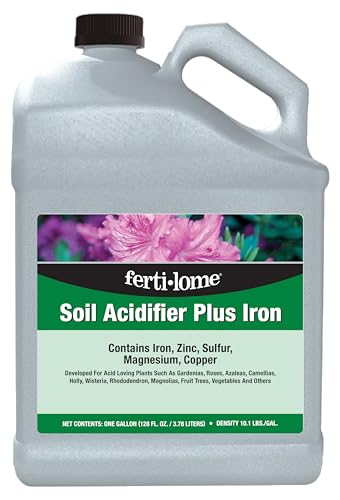
When a soil test reveals a pH reading of 7.5 and your hydrangea leaves are yellow with green veins, Fertilome Soil Acidifier Plus Iron acts faster than any granular amendment. This liquid concentrate delivers chelated iron, sulfur, zinc, magnesium, and copper in a form that plants can absorb within days of application.
The mixing ratio is a conservative 2 tablespoons per gallon of water, and owners emphasize starting with half-strength for potted plants to avoid shocking roots. Multiple verified reviews describe reversing iron chlorosis on citrus, blueberries, and lemon trees after just two treatments. The one-gallon bottle goes a long way for spot treating individual shrubs.
Because it works quickly, this product requires careful pH monitoring. Over-application can drop pH too far, too fast, especially in small containers. For gardeners who need an emergency intervention for established acid-loving plants, this is the most responsive tool available.
What works
- Corrects iron chlorosis visibly within one to two weeks.
- Liquid form penetrates root zone immediately after watering.
- Contains trace elements missing from straight sulfur.
What doesn’t
- Risk of pH overshoot if dosage is not measured carefully.
- Not a complete fertilizer — lacks balanced NPK for growth.
4. FoxFarm Happy Frog Japanese Maple Fertilizer

Japanese maples, dogwoods, and junipers present a unique challenge: they need acidic soil but respond poorly to high-nitrogen formulas that push soft, vulnerable growth. FoxFarm Happy Frog Japanese Maple Fertilizer solves this with a 4-3-4 NPK supplemented by beneficial soil microbes and mycorrhizal fungi.
The microorganisms colonize the root zone, enhancing water and nutrient absorption specifically in low-pH conditions. Owners of container red maples report that the slow-release powder brought struggling trees back from the edge, producing fuller foliage and stronger branch structure over a single growing season.
The application cadence is monthly, making it low-maintenance once incorporated. The bag weighs 4 pounds, which is appropriate for a handful of ornamental trees or a small shrub border. It is not economical for large lawns or mass plantings, but for specimen trees that demand targeted nutrition, it is hard to beat.
What works
- Mycorrhizal fungi improve nutrient uptake in acidic media.
- Safe for sensitive ornamentals like Japanese maples.
- Monthly feeding schedule reduces chore frequency.
What doesn’t
- Higher cost per pound than general acid fertilizers.
- Limited to low-pH feeders, not a broad-spectrum lawn food.
5. Miracle-Gro Water Soluble Azalea, Camellia, Rhododendron Plant Food

Miracle-Gro Acid-Loving Plant Food is the entry-level standard for a reason: it is widely available, dissolves instantly, and produces visible greening within a week. The 5-pound bag feeds both indoor and outdoor acid lovers including azaleas, camellias, rhododendrons, gardenias, and even orchids.
The mixing ratio varies by use — 1 tablespoon per gallon for outdoor plants and a weaker 1:144 ratio for indoor pots. Owners report that rhododendrons bounce back from chlorosis and produce more abundant blooms when fed every 10 to 14 days. The formula is gentle enough to avoid foliage burn when used as directed.
The resealable bag has a polarizing design: the Velcro closure works reliably only when kept completely dry. Some users resort to wooden clothespins to seal it. Despite this packaging quirk, the product’s rapid action and predictable results make it a staple for gardeners who want a no-fuss liquid feed schedule.
What works
- Water-soluble powder mixes instantly with no clumping.
- Safe for indoor and outdoor use across many species.
- Fast results improve leaf color and bloom count quickly.
What doesn’t
- Bag reseal mechanism fails if any moisture enters.
- Requires frequent reapplication every one to two weeks.
6. Earth Science Fast Acting Sulfur Granules

Earth Science Fast Acting Sulfur is not a complete fertilizer. It is a straight elemental sulfur amendment designed for one job: lowering soil pH. The patented Nutri-Bond Technology coats each granule to reduce leaching, keeping the sulfur active in the root zone longer than traditional pelletized sulfur.
Gardeners use it to turn hydrangea blooms blue, green up chlorotic lawns, and boost the effectiveness of existing fertilizer programs. Verified reviews note that while the granules dissolve over several watering cycles, the pH shift becomes measurable within two to three weeks. The 5-pound bag offers good coverage for a small garden or a lawn patch.
Because it contains no NPK, you must pair it with a balanced plant food during the growing season. It excels as a pre-plant soil amendment for new blueberry beds or as a maintenance tool to counteract alkaline irrigation water. It is safe for all grass types and for people and pets immediately after application.
What works
- Nutri-Bond technology keeps sulfur in the soil longer.
- Safe on lawns and around pets with zero wait time.
- Effective pH reduction for hydrangea color control.
What doesn’t
- Not a complete fertilizer — requires separate NPK feeding.
- Granules dissolve slowly over multiple waterings.
7. Down To Earth Organic Cottonseed Meal 6-2-1
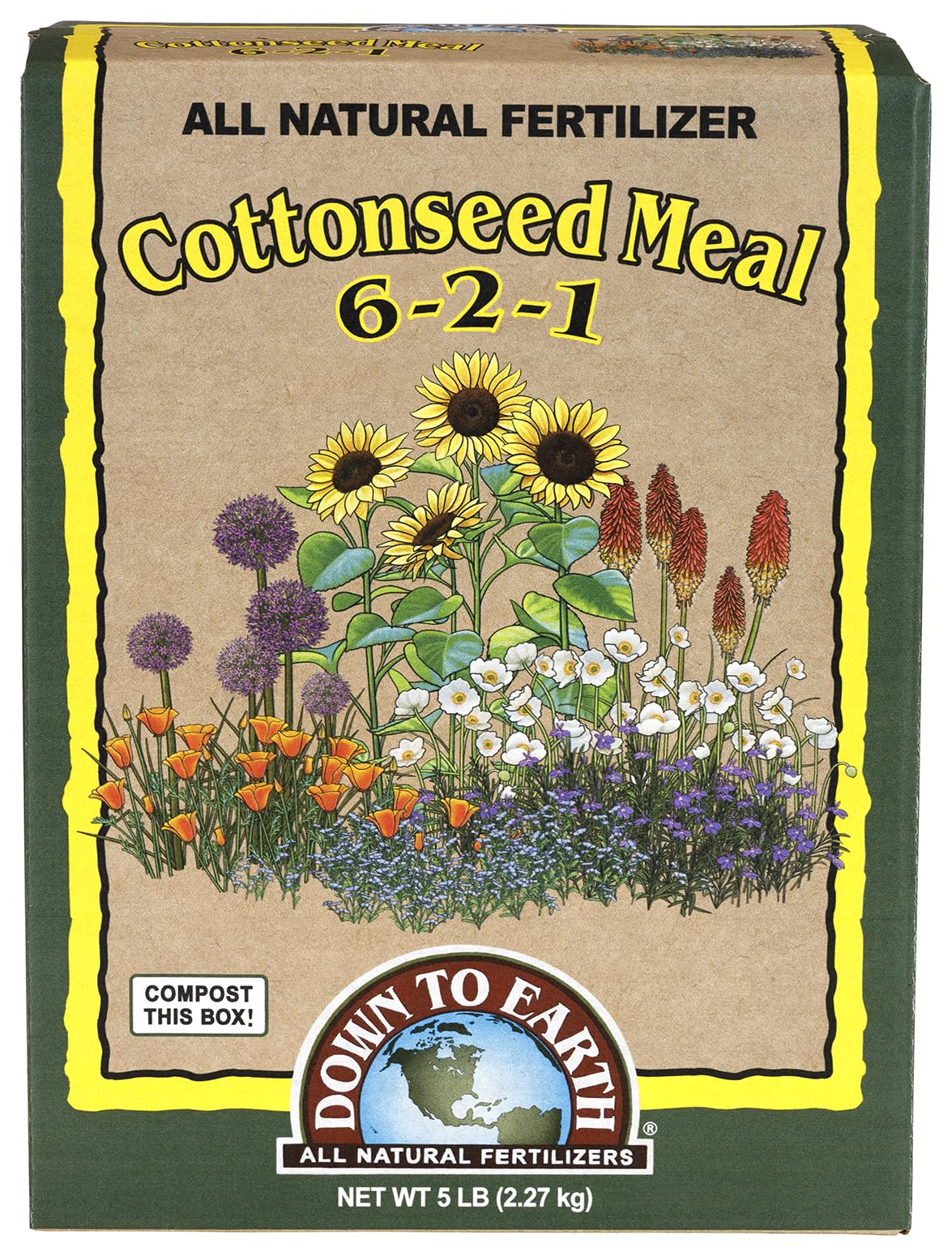
Down To Earth Cottonseed Meal is an OMRI-listed organic granular fertilizer with a gentle 6-2-1 NPK ratio. Cottonseed meal naturally acidifies soil as it decomposes, making it a traditional favorite for blueberries, azaleas, and rhododendrons in organic beds. The slow-release action improves soil texture over time rather than forcing rapid growth.
Owners of highbush blueberries rely on it as their exclusive fertilizer source, mixing it into the topsoil in early spring and again after fruit set. It also works well combined with bone meal and blood meal in custom tea bags for bonsai feeding. The low nitrogen and phosphorus numbers mean virtually zero risk of burning young roots.
The 5-pound bag is modest, reflecting the product’s premium organic status. Gardeners looking for a cheap bulk solution may prefer synthetic alternatives, but those committed to organic production and long-term soil stewardship will appreciate its predictable, gentle acidification and lack of sludge or synthetic fillers.
What works
- OMRI listed for certified organic gardens.
- Low burn risk makes it safe for transplants.
- Improves soil structure alongside pH.
What doesn’t
- Slow release is not effective for urgent chlorosis correction.
- Attracts squirrels and other wildlife if not watered in.
Hardware & Specs Guide
Sulfur Content
Elemental sulfur is the primary driver of pH reduction. Organic meals like cottonseed produce mild acidity through decomposition, while products like Earth Science Fast Acting Sulfur deliver concentrated elemental sulfur. For a drop of one full pH point, apply roughly 1 pound of elemental sulfur per 100 square feet on loamy soil. Water-soluble acid foods rely on ammonium forms of nitrogen that leave an acidic residue after nitrification.
NPK Ratio and Micronutrients
Acid-loving plants need lower phosphorus and higher iron and manganese availability. A ratio with a low middle number (e.g., 4-3-4 or 6-2-1) prevents phosphorus buildup that can lock up iron. Jack’s Classic 17-6-6 uses ammonium nitrogen to maintain low pH, while FoxFarm adds mycorrhizal fungi to enhance micronutrient absorption in pH-stressed root zones.
FAQ
What NPK ratio is best for acid-loving plants?
Can I use coffee grounds as a fertilizer for acidic soil?
How often should I apply Holly-tone to established shrubs?
Final Thoughts: The Verdict
For most gardeners, the best fertilizer for acidic soil winner is the Espoma Organic Holly-Tone because it combines a proven 4-3-4 NPK with 5% sulfur in a large, cost-efficient bag that works on dozens of acid-loving species. If you want a water-soluble formula for fast green-up and container control, grab the Jack’s Classic Acid Special. And for correcting acute iron chlorosis with liquid precision, nothing beats the Fertilome Soil Acidifier Plus Iron.