
Canadian thistle doesn’t die from gentle sprays. Its root system runs deep, and many common formulas only singe the leaves, forcing a repeat cycle that wastes time and money. A true solution requires a specific active ingredient at a proven concentration.
I’m Rikta — the co-founder and writer behind Lawn Gear Lab. I’ve spent dozens of hours digging through agronomy data, comparing active ingredient percentages, and cross-referencing owner reports to separate the formulas that actually translocate to the root from those that just burn the top growth.
After analyzing the chemistry and real-world results, this guide distills down the top performers to help you choose a canadian thistle weed killer that delivers lasting control without guesswork.
How To Choose The Best Canadian Thistle Weed Killer
Canadian thistle (Cirsium arvense) is a perennial broadleaf weed with a deep, creeping root system. Contact-only herbicides burn the top but leave the roots alive, allowing regrowth within weeks. The best formulas use systemic, translocated active ingredients that move through the plant’s vascular system down to the root nodes.
Active Ingredient Selection
Look for products with 2,4-D, dicamba, triclopyr, or aminopyralid as the primary active. These auxin-mimicking compounds disrupt growth hormones and travel to the root system. Glyphosate also translocates well but is non-selective and will kill grass. For lawns, a 2,4-D + dicamba blend is the standard.
Concentration and Coverage
Higher active ingredient percentages mean fewer ounces per gallon to hit the label rate. A 46.8% 2,4-D concentrate like the Alligare product requires only a few ounces per gallon, while a 0.48% pre-emergent granule is a completely different tool for prevention, not active control.
Application Timing
Canadian thistle is most vulnerable in the early bud stage before flowers open, typically late spring to early summer. At this stage, the plant is actively moving nutrients to the roots, pulling the herbicide down with them. Fall applications also work well as the plant stores energy for winter.
Quick Comparison
On smaller screens, swipe sideways to see the full table.
| Model | Category | Best For | Key Spec | Amazon |
|---|---|---|---|---|
| SpeedZone EW | Liquid Concentrate | Cool-weather speed | Visible effects in hours | Amazon |
| Fertilome Weed Free Zone | Liquid Concentrate | Creeping Charlie control | Dicamba-based formula | Amazon |
| PBI/Gordon Trimec | Liquid Concentrate | Large lawn coverage | Covers 32k-64k sq ft | Amazon |
| Compare-N-Save Glyphosate | Non-Selective | Total vegetation kill | 41% glyphosate concentrate | Amazon |
| Alligare 2,4-D Amine | Farm-Grade | Intensive broadleaf control | 46.8% active ingredient | Amazon |
| The Andersons Barricade | Pre-Emergent Granular | Season-long prevention | 0.48% prodiamine | Amazon |
| Dow GrazonNext HL | Pasture Herbicide | Large acreage/rangeland | 2-gallon professional jug | Amazon |
In‑Depth Reviews
1. SpeedZone EW Lawn Weed Killer

SpeedZone EW is a fast-acting liquid concentrate formulated with a blend of 2,4-D, dicamba, and MCPP. It targets over 90 broadleaf weeds including dandelion, clover, ground ivy, and spurge. The real advantage is its cool-weather performance — most weed killers stall below 60°F, but SpeedZone remains effective at lower temperatures, making early spring thistle applications more reliable.
Users report visible wilting within hours of application, and the formula is rainfast in as little as three hours. It’s labeled for use on common turfgrasses like Kentucky bluegrass, tall fescue, and Bermuda. Reseeding can happen as soon as seven days after spraying, which minimizes lawn downtime.
The primary downside is the cost per ounce compared to generic 2,4-D concentrates. For a heavy thistle infestation on a large lawn, the price adds up quickly. Also, it may require a second application for deeply established thistle patches, especially if applied before the plant is actively growing.
What works
- Visible results in hours, not days
- Effective in cooler spring temperatures
- Low rainfast window — 3 hours
What doesn’t
- Higher price per application than generic alternatives
- May need a follow-up spray for deep-rooted thistle
2. Fertilome Weed Free Zone
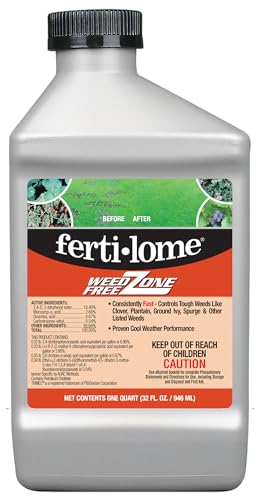
Fertilome Weed Free Zone controls over 80 broadleaf weeds, with thistle and creeping charlie listed on the label. The active ingredient dicamba provides strong systemic action, moving through the plant to attack root tissue. Users consistently report that this is one of the few products that truly stops creeping charlie overnight, a notoriously difficult weed, which speaks to its translocation strength.
The 32-ounce bottle mixes with water at the label rate and covers a moderate lawn area. It’s safe on Kentucky bluegrass, Bermuda, Bahia, and Zoysia. Some users note that increasing the concentration slightly above the recommended rate (around double for clover) improves results, but always check the label for your specific turf type first.
The primary criticism is the small bottle size relative to the price per ounce. For large infestations spanning several thousand square feet, you may need multiple bottles. Also, the formula works best on young, actively growing weeds — mature thistle with a thick waxy cuticle may need a non-ionic surfactant added to the tank.
What works
- Proven dicamba translocation reaches root systems
- Safe on most common cool and warm season turf
- Fast visual injury on sprayed weeds
What doesn’t
- Small 32 oz bottle — limited coverage for large yards
- May require surfactant for mature thistle leaves
3. PBI/Gordon Trimec Lawn Weed Killer

Trimec is a classic three-way herbicide blend (2,4-D, MCPP, and dicamba) known for reliable broadleaf control. The one-gallon jug provides massive coverage — 32,000 to 64,000 square feet depending on the weed pressure. For a homeowner with a standard 5,000 to 10,000 square foot lawn, one jug will likely last an entire season or more.
Users report it kills creeping charlie in 2-3 days and tougher weeds like Virginia buttonweed within two weeks. The formula is safe on cool-season grasses like tall fescue and Kentucky bluegrass. Some long-time users note that you may need to double or triple the recommended portion for especially stubborn weeds like thistle, but the volume in the jug makes this feasible without running out.
The main drawback is inconsistency in product received — some buyers report getting a different brand (Ferti-lome Weed-Out) instead of the PBI/Gordon bottle. While the substitute still works, it’s not what was ordered. Additionally, the Trimec blend is slower to show results compared to SpeedZone, requiring more patience between application and visible dieback.
What works
- Excellent value per gallon for large lawns
- Proven three-way active ingredient synergy
- Safe on cool-season turfgrasses
What doesn’t
- Slower visual results than fast-acting formulas
- Possible brand substitution upon delivery
4. Compare-N-Save Glyphosate
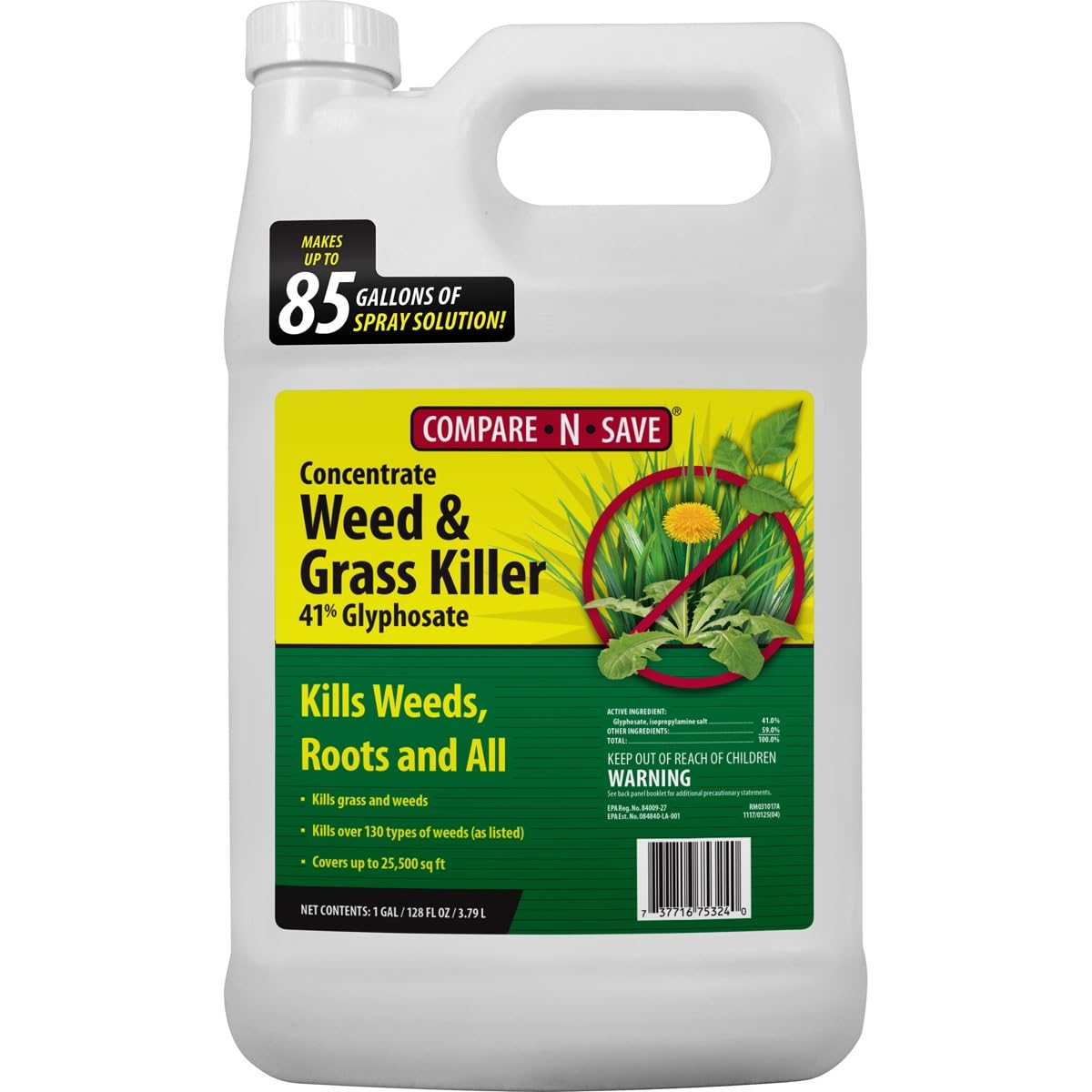
Compare-N-Save is a 41% glyphosate concentrate, the same active ingredient as Roundup, at a fraction of the cost per gallon. It is non-selective — it kills any green plant it touches, including grass. This makes it ideal for spot-treating thistle in garden beds, along fence lines, or in areas where you plan to re-sod or reseed bare ground.
The 1-gallon jug makes up to 85 gallons of ready-to-use spray, covering over 25,000 square feet. Users report visible yellowing within 2-4 days, with full root kill taking around 2-4 weeks. The glyphosate translocates to the root system, ensuring thistle doesn’t resprout from underground nodes. It’s rainproof in just 2 hours.
The major limitation is that it kills everything — you cannot use it on a lawn without destroying the turf. For targeted thistle control in a mixed lawn, you need a selective broadleaf herbicide instead. Also, some users report price increases over time, making it less cost-effective than it once was.
What works
- Strong systemic translocation to root system
- Excellent value vs. brand-name glyphosate
- Makes 85 gallons of spray from one jug
What doesn’t
- Non-selective — kills grass and desirable plants
- Slow visible results — full kill takes weeks
5. Alligare 2,4-D Amine Weed Killer Concentrate
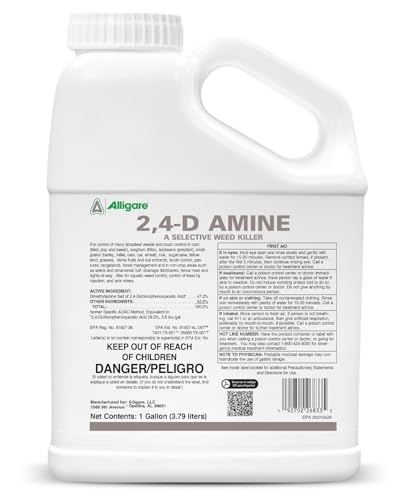
Alligare 2,4-D Amine is a farm-grade formulation with an industry-leading 46.8% active ingredient concentration. This means you need only a few ounces per gallon of water to achieve the label rate, making the 1-gallon jug last a very long time. It’s labeled for use on lawns, pastures, crops, forests, and even aquatic sites, giving it exceptional versatility.
Users report that it kills thistle, pigweed, ragweed, and other broadleaf weeds within a few days when mixed correctly. The high concentration requires careful measurement — too much on a lawn can kill the grass, especially in hot weather. Using a tank dye helps track coverage and avoid over-application. One user noted it works perfectly on Bermuda grass lawns.
The biggest potential issue is state restrictions. Some states (like Texas) restrict the sale of concentrated 2,4-D online, and buyers in those areas may not be able to complete the purchase. Also, the product is a straight 2,4-D amine formulation — it lacks the dicamba or triclopyr component that helps with thistle that has developed resistance to 2,4-D alone.
What works
- Extremely high active ingredient for maximum potency
- Very economical — ounces per gallon, not cups
- Versatile with multiple site labels including aquatic
What doesn’t
- May be restricted in certain states
- No complementary actives for resistant weeds
6. The Andersons Barricade Pre-Emergent
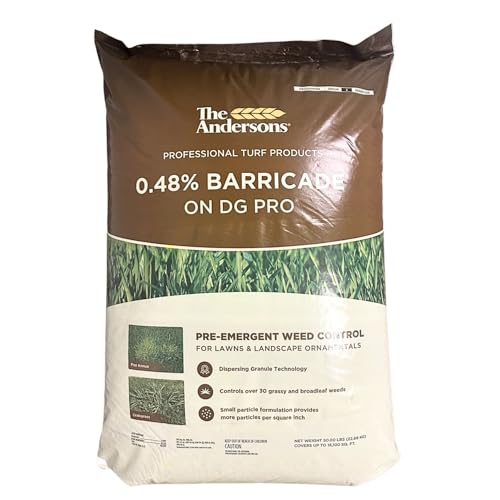
The Andersons Barricade is a professional-grade pre-emergent granular herbicide containing prodiamine. It is designed to PREVENT weeds from germinating, not kill existing ones. This product is a critical component of a two-part strategy: use a post-emergent like SpeedZone or Trimec to kill active thistle now, then apply Barricade in early spring and fall to prevent new seedlings from emerging.
The 50-pound bag covers 14,200 square feet at the standard rate. The DG Pro formulation creates more particles per square inch, providing more uniform coverage. Users report the effects can last up to 2 years in some areas, significantly reducing the need for repeated applications. It targets over 30 grass and broadleaf weeds.
The most common mistake is expecting Barricade to kill established thistle — it won’t. It only stops seeds from germinating. For existing thistle patches, you need a post-emergent product first. Also, the bag is heavy (50 lbs) and requires a broadcast spreader for even application. Hand-scattering is not effective.
What works
- Prevents thistle and other weed seeds from sprouting
- DG Pro formulation provides uniform coverage
- Long-lasting control — up to 2 years in some cases
What doesn’t
- Does not kill existing thistle plants
- Heavy bag — requires a spreader, not practical for small spots
7. Dow AgroSciences GrazonNext HL

GrazonNext HL is a professional herbicide from Dow AgroSciences containing aminopyralid and 2,4-D. This combination is specifically formulated for pastures, rangelands, and non-crop areas. Aminopyralid is highly effective against thistle and other composite family weeds at very low rates, making it one of the most powerful tools for large-scale thistle infestations.
The 2-gallon jug is designed for large acreage — mix rates are ounces per 100 gallons of water. Users report excellent control on 4-acre properties, with 85-90% thistle kill on a single application. It is safe for use around horses and livestock when used according to the label, which is critical for pasture applications.
The primary challenge is the volume and cost — this is not a product for a suburban lawn. The 2-gallon jug costs significantly more and is overkill for anything less than half an acre. Also, aminopyralid is persistent in soil and can damage vegetable gardens if composted manure from treated pastures is used. Careful application and manure management are essential.
What works
- Professional-grade aminopyralid for severe thistle infestations
- Safe on pastures for horses and livestock
- Long-lasting residual control
What doesn’t
- Overkill and expensive for small lawns
- Persistent in soil — manure from treated areas can damage gardens
Hardware & Specs Guide
Active Ingredient Types
2,4-D is the most common broadleaf herbicide, effective on thistle when applied at the bud stage. Dicamba expands the weed spectrum and improves root translocation. Triclopyr (not present in this roundup, but common in brush killers) works well on woody weeds. Glyphosate is non-selective but highly effective for spot-treating thistle in non-lawn areas.
Concentration and Mixing
Products with higher active ingredient concentrations (like 46.8% 2,4-D) require fewer ounces per gallon of water. Always measure precisely — over-application can damage turf, while under-application wastes time. A good spreader-sticker or non-ionic surfactant helps the herbicide penetrate the thistle’s waxy leaf cuticle, improving results by up to 30%.
Pre-Emergent vs Post-Emergent
Canadian thistle is a perennial — it spreads both by seed and by creeping roots. A post-emergent herbicide (liquid concentrate) kills actively growing plants by translocating to the roots. A pre-emergent (granular, like prodiamine) prevents new seedlings from germinating but does nothing to existing plants. A complete program uses both types.
Application Equipment
For small patches, a hand-pump sprayer (1-2 gallon) works well. For lawns over 5,000 sq ft, a hose-end sprayer or backpack sprayer provides better coverage. For pastures, a boom sprayer or towed tank sprayer is needed. Always calibrate your sprayer to deliver the label rate per 1,000 sq ft — uneven application leads to streaks and missed patches.
FAQ
Why does my thistle keep coming back after spraying?
What’s the best time of year to spray Canadian thistle?
Can I spray thistle killer on my lawn without killing the grass?
Should I add dish soap to my thistle spray?
Final Thoughts: The Verdict
For most gardeners, the canadian thistle weed killer winner is the SpeedZone EW because it combines fast visual results with cool-weather tolerance and a rainfast window of only three hours. If you want the best value per gallon and have a large lawn, grab the PBI/Gordon Trimec. And for severe infestations on pasture or rangeland, nothing beats the Dow GrazonNext HL.