
Compacted clay that turns into concrete in the summer, soil that drains so fast nutrients never stick, or a garden bed that just refuses to produce — the root cause is almost always a missing soil structure. A targeted soil amendment doesn’t just feed plants; it physically rebuilds the growing medium so roots can breathe, water can infiltrate, and microbes can thrive.
I’m Rikta — the co-founder and writer behind Lawn Gear Lab. I spend my time cross-referencing horticultural data, breaking down NPK ratios and particle sizes, and analyzing hundreds of owner experiences to find which soil amendments actually deliver measurable improvement in texture and fertility.
A great amendment targets a specific deficiency — be it aeration, calcium content, or microbial life — and this guide walks through the top performers to help you find the best soil amendments for garden based on your existing soil type and plant goals.
How To Choose The Best Soil Amendments For Garden
Not all soil amendments are interchangeable. Some are designed to correct physical structure, while others deliver a precise NPK boost or inoculate the soil biology. Understanding your starting soil type is the critical first step before buying any bag.
Identify Your Soil’s Primary Deficiency
If water pools on the surface after rain, you likely have heavy clay that needs aeration—gypsum or composted manure will help open pore spaces. If water runs straight through, sandy soil needs organic matter like peat or compost to improve moisture retention. Conduct a simple jar test to see your soil’s sand/silt/clay ratio before choosing an amendment.
Match the NPK and Nutrient Source
Amendments with a balanced NPK like 4-6-2 are ideal for flowering and fruiting plants, while a near-zero NPK (like gypsum at 1-0-0) is strictly for structure. Organic sources (worm castings, fish bone meal, kelp) feed soil microbes, whereas synthetic salts can damage microbial populations over time. Always check the NPK and the ingredient list for OMRI certification if organic gardening is your goal.
Consider Application Form and Speed
Pelleted or granular amendments (gypsum, granular compost) are easy to spread with a broadcast spreader and release nutrients over weeks to months. Fine powders or meals work faster but require thorough incorporation into the topsoil. Liquid amendments act within hours but don’t improve long-term soil structure. For a single application that rebuilds the entire growing medium, choose a solid organic amendment with a mix of particle sizes.
Quick Comparison
On smaller screens, swipe sideways to see the full table.
| Model | Category | Best For | Key Spec | Amazon |
|---|---|---|---|---|
| Wiggle Worm Castings | Worm Castings | Living soil & microbial health | 40 lbs / 640 oz bag | Amazon |
| BuildASoil Fertilizer | Organic Granules | Living soil & rapid growth | NPK 3-5-2 / 15 ingredients | Amazon |
| Michigan Peat Baccto Wholly Cow | Compost & Manure | General bed prep & moisture retention | 40 quart bag / 34 lbs | Amazon |
| Old Potters Organic Compost | Plant-Based Compost | Clay soil & heavy feeding crops | 24 quarts / 25 lbs | Amazon |
| Sustane All Natural Food | Organic Granules | Blooms & fruit production | NPK 8-2-4 / 5 lbs | Amazon |
| Earth Science Fast Acting Gypsum | Gypsum | Clay soil & salt damage repair | 5 lb / Nutri-Bond tech | Amazon |
| Down To Earth All Purpose Mix | Organic Granules | Vegetables & container plants | NPK 4-6-2 / 5 lbs | Amazon |
In‑Depth Reviews
1. Wiggle Worm 100% Pure Worm Castings Plus Worm Egg Material
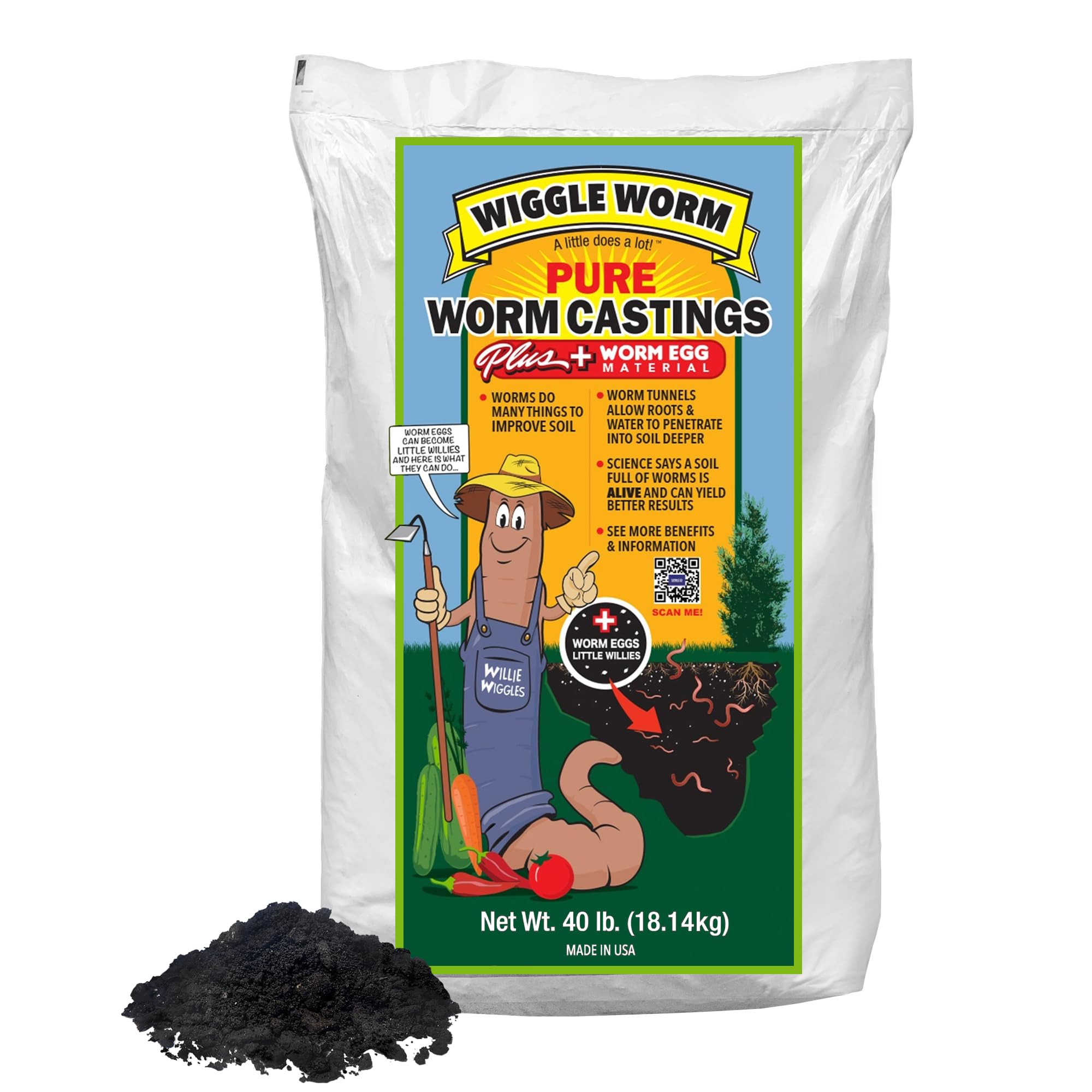
The Wiggle Worm bag delivers 40 pounds of pure worm castings blended with worm egg material — a living soil powerhouse that improves aeration, drainage, and microbial diversity in one application. Users consistently report that this product transforms heavy clay and sandy soil alike, with finer-than-expected texture and no filler debris. The included egg material gives it a biological edge by introducing live worm cocoons that can hatch and continue cycling nutrients.
In extreme climates — triple-digit Mojave desert heat and freezing winters alike — gardeners report that gardenias, hibiscus, and strawberries not only survive but bloom and fruit prolifically after incorporating this amendment. The 40-pound bag provides heavy coverage for large raised beds and in-ground plots, and the castings mix easily without clumping or burning roots.
This is the single most versatile amendment for anyone serious about building living soil from the ground up. It functions as both a nutrient source and a physical structure improver, making it the one bag that can cover multiple deficiencies at once.
What works
- Pure castings with no filler or trash; finely sifted texture
- Worm egg material promotes ongoing biological activity
- Safe for containers, seed starts, and heavy feeders without burn
What doesn’t
- Some small rocks may pass through sifting process
- Premium price per pound compared to composted manure
2. BuildASoil Fertilizer for Vegetable Garden (3 LB)

BuildASoil’s 3-pound bag punches far above its weight thanks to a hand-crafted blend of 15 premium ingredients including rock dust, calcium sources, and a 3-5-2 NPK ratio specifically designed for flowering and fruiting stages. This is a specialized top-dress for living soil systems, not a generic filler. Users report visible greening and growth surges within 24 hours of application when used as a microbial tea or surface top-dress.
The formula includes expensive trace minerals (rock dust, langbeinite, kelp) that are typically missing from commodity fertilizers, yet the price per application remains reasonable because a little goes a long way. Gardeners using living soil or no-till systems find this blend integrates seamlessly without burning delicate root systems. The 3-pound bag covers several grow cycles for a small to medium vegetable patch.
This is the go-to pick for the grower who wants a complete organic nutrient profile from a single bag rather than mixing multiple amendments. Its rapid visible results and microbe-friendly formulation make it a standout for experienced gardeners who value ingredient transparency and craft-level quality.
What works
- Includes rock dust and calcium for micronutrient density
- Odorless and easy to apply as top-dress or tea
- Visible improvement in plant vigor within 24 hours
What doesn’t
- Small 3-lb bag limits coverage for large in-ground beds
- Premium price per pound relative to all-purpose blends
3. Michigan Peat Baccto Wholly Cow Horticultural Compost and Manure
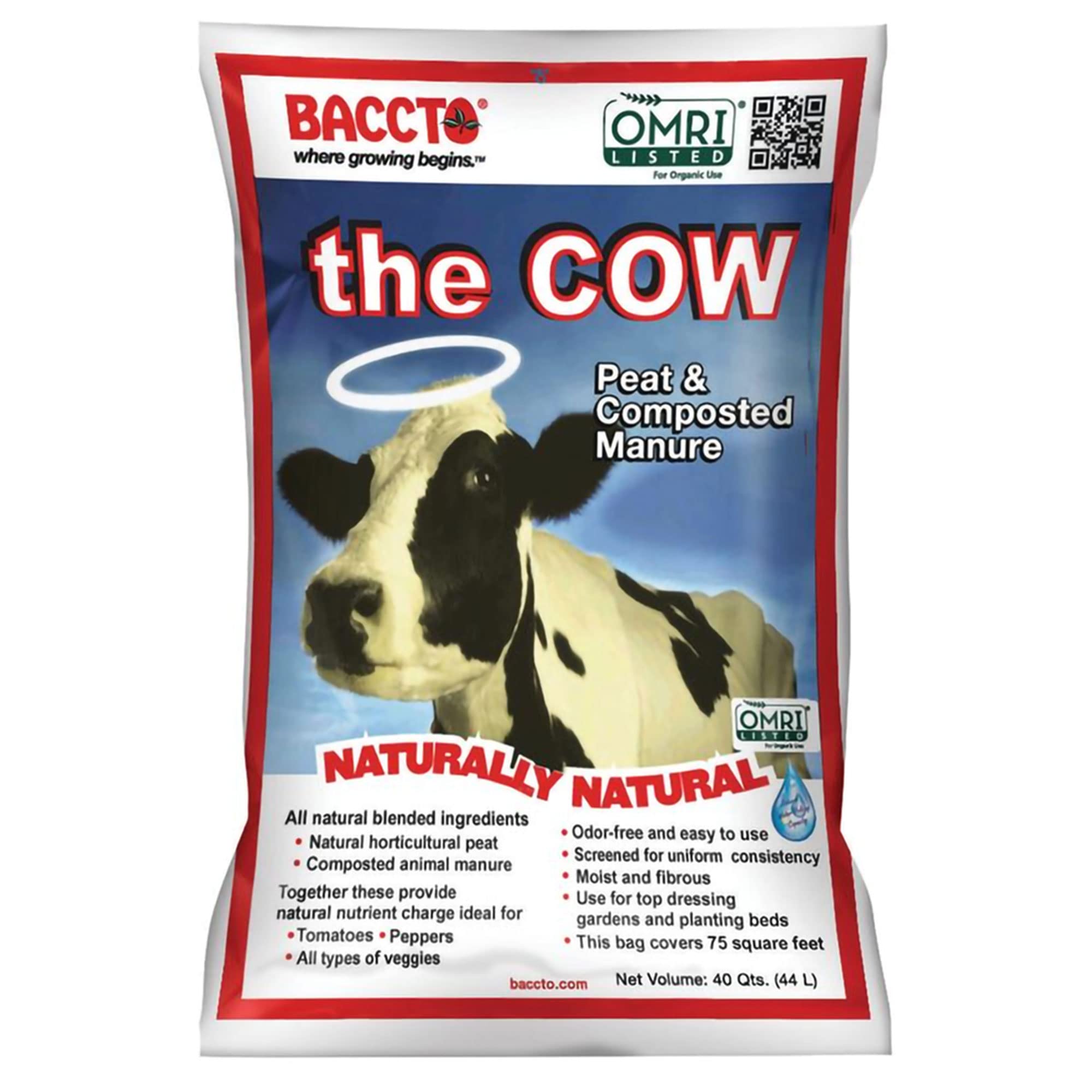
Michigan Peat’s Wholly Cow is a 40-quart blend of natural peat and composted animal manure that delivers a substantive organic boost for a massive area at a surprisingly low per-quart cost. The formula is screened for uniform consistency — users report finding very few sticks or debris — and the compost is completely odor-free, making it pleasant to work with for top-dressing lawns or mixing into vegetable beds.
The peat component gives this amendment a notable advantage for moisture retention in sandy or river-bottom soil, while the manure supplies a broad spectrum of nutrients without the risk of burning. Gardeners using it as a mushroom substrate (mixed 1:1 with coco coir) report bumper crops with zero contamination, demonstrating the cleanliness of the production process. For general bed preparation, a single bag covers roughly 4-6 square feet at a 2-inch depth.
This is the ideal bulk amendment for the budget-conscious gardener who needs to improve a large area without spending heavily on premium bagged products. It works reliably for vegetables, flowers, and roses, and its neutral smell makes it suitable for suburban gardens where odor is a concern.
What works
- Odor-free and clean with minimal debris
- Excellent moisture retention for sandy soils
- Large 40-quart bag offers strong value per cubic foot
What doesn’t
- Peat content lowers pH, not ideal for alkaline-loving plants
- Nutrient concentration is lower than pure castings or guano
4. Earth Science Fast Acting Gypsum Granules (5 lb)
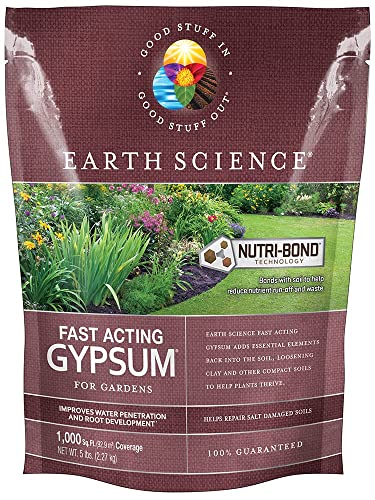
Earth Science’s gypsum granules are formulated with Nutri-Bond technology that bonds nutrients to soil particles and reduces runoff by up to 50%. These finely ground pellets dissolve much faster than the large, rock-like gypsum chunks found at big-box stores, penetrating compact clay within days rather than months. Users report that a single annual application rock-hard clay from sewer line trenches into workable soil capable of supporting grass root growth.
The primary role here is structure correction — gypsum adds calcium without altering pH and displaces sodium in salt-damaged soils. Gardeners battling blossom-end rot in tomatoes will appreciate the immediate calcium availability, while lawn owners dealing with dog urine spots see noticeable recovery after application. The 5-pound bag covers roughly 200 square feet at the recommended rate, and the pellets flow easily through any broadcast spreader.
This is the specialized tool for anyone fighting heavy clay or saline soil. It won’t feed your plants like compost, but it will physically open the soil so roots can reach the nutrients already present. For compacted clay that refuses to drain, this is the most effective starting point.
What works
- Fast-dissolving pellets work faster than standard gypsum rocks
- Nutri-Bond technology reduces nutrient leaching
- Safe for pets and kids immediately after application
What doesn’t
- Zero NPK — provides no direct plant nutrition
- Requires annual reapplication for sustained clay improvement
5. Old Potters Organic Compost (24 Quarts)
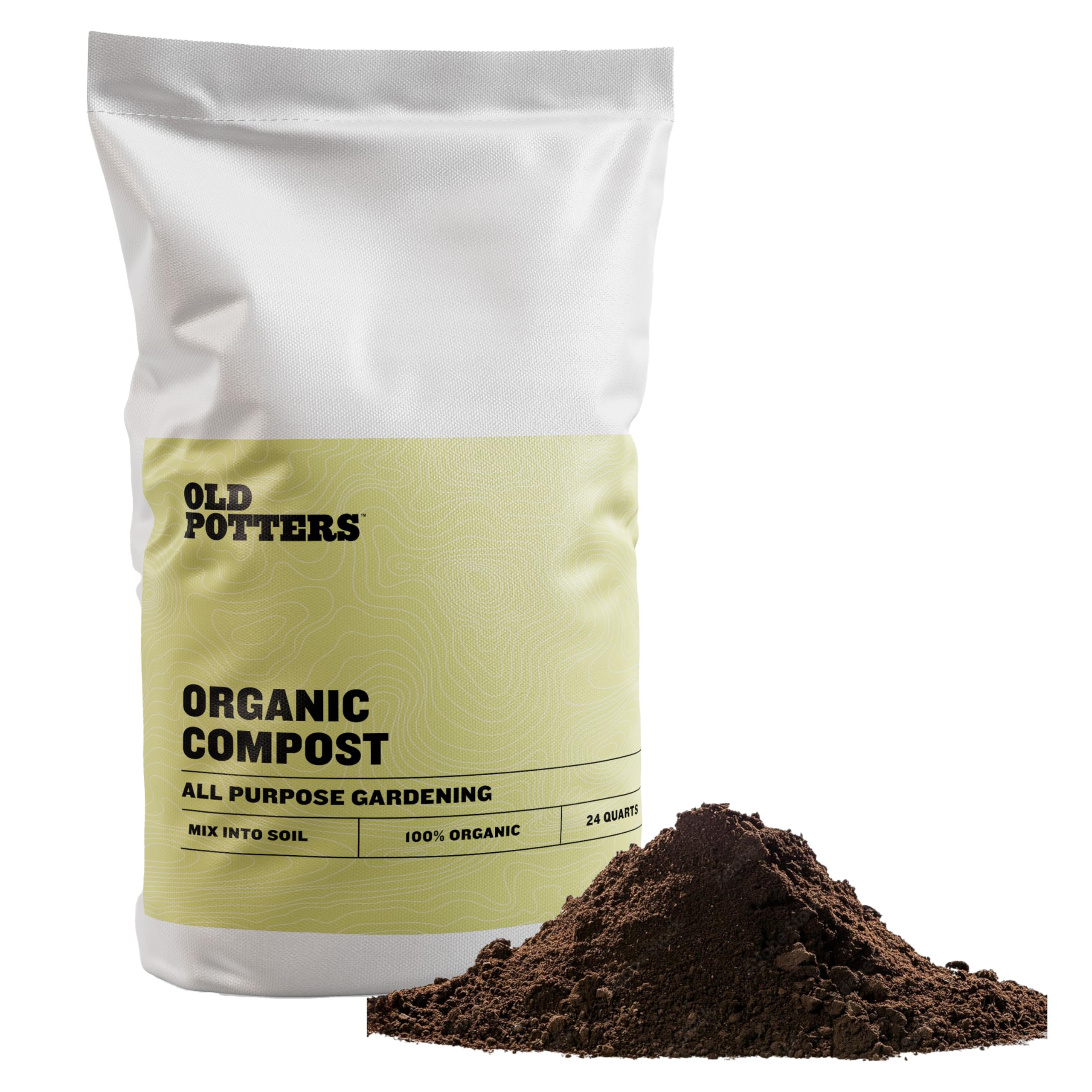
Old Potters delivers a 100% plant-based compost that is fully organic and chemical-free, making it a clean option for organic vegetable gardens and container mixes. The compost improves aeration while providing a slow-release nutrient profile that supports heavy feeders like roses, tomatoes, and peppers without risk of root burn. Users in zone 7a mixed it with worm castings and mycorrhizae to transform heavy clay into a thriving rose bed with early blooms and no salt damage.
The 24-quart bag is relatively dense at 25 pounds, indicating minimal air space and a high concentration of decomposed organic matter. Some users noted that the material arrives slightly clumpy with small clay-like aggregates that require manual crumbling before incorporation — this is consistent with a minimally processed, natural compost. The plant-based source means no manure odors or concerns about herbicide carryover from animal feed.
This is the best choice for organic growers who want a single-source compost that won’t introduce unwanted chemicals or synthetic residues. Its plant-based composition makes it particularly suitable for indoor container gardening and seed starting where purity matters most.
What works
- 100% plant-based, chemical-free, and OMRI-compatible
- Excellent for clay soil improvement via aeration
- No risk of manure-borne herbicide damage
What doesn’t
- Clumpy texture may require manual crumbling before use
- Limited bag size for large-scale in-ground projects
6. Sustane All Natural Flower and Vegetable Plant Food (5 lb)

Sustane’s 5-pound bag packs an 8-2-4 NPK ratio that delivers a substantial nitrogen punch for leafy growth while still supporting bloom and root development. Independent research cited by the manufacturer claims this formulation produces more fruits and blooms than other organic and synthetic fertilizers. The pelletized form integrates easily into potting mixes and topsoil, and users report explosive growth in raised beds when combined with a soilless mix of perlite, compost, and coir.
Gardeners using this product in wicking tubs and 5-20 gallon containers note that it promotes healthy, vigorous growth without the salt buildup common with synthetic fertilizers. The organic pelleted chicken manure base feeds microbial populations in the soil, building long-term fertility rather than just providing a quick green-up. A half-cup per 2’x6′ raised bed mixed into the top 6 inches is a typical effective rate.
This is the pick for the vegetable gardener who wants strong vegetative growth early in the season followed by heavy fruiting. The 8-2-4 ratio is higher in nitrogen than many organic options, so it’s best reserved for heavy feeders like corn, squash, and leafy greens rather than established perennials.
What works
- High nitrogen (8-2-4) for strong leafy growth
- Pelleted form integrates easily into soil mixes
- Independent research shows higher bloom/fruit yields
What doesn’t
- Strong smell during application from chicken manure base
- Higher nitrogen may cause excessive foliage on fruiting crops if overapplied
7. Down To Earth All Natural Organic All Purpose Tomato & Vegetable Mix (5 lb)

Down To Earth’s 4-6-2 formula is a gentle, non-burning organic blend made from fish bone meal, blood meal, feather meal, rock phosphate, langbeinite, greensand, humates, and kelp meal. This eight-ingredient roster covers primary nutrients plus trace minerals that synthetic fertilizers omit, and the OMRI listing makes it suitable for certified organic production. The 5-pound box is a manageable size for container gardeners and small raised beds.
Tomato growers report that this amendment transforms pale, flimsy transplants into robust plants within two weeks, and the 4-6-2 ratio — higher in phosphorus than nitrogen — specifically supports strong root development and flower set. Users note that the fish-based ingredients produce a noticeable smell for the first few days after application, but it dissipates quickly once incorporated into soil. The granules are fine enough to mix into potting soil for container vegetables and herbs.
This is the best introductory organic amendment for the gardener transitioning from synthetic fertilizers. The ingredient list is transparent, the NPK is appropriate for most fruiting vegetables, and the price point makes it easy to experiment without a large commitment.
What works
- OMRI listed for organic production
- Eight-ingredient blend provides trace minerals
- Gentle formula won’t burn transplants or seedlings
What doesn’t
- Fish-based odor noticeable for first few days
- Small 5-lb bag insufficient for large garden beds
Hardware & Specs Guide
NPK Ratio Interpretation
The three numbers on any fertilizer bag — Nitrogen (N), Phosphorus (P), and Potassium (K) — indicate the percentage by weight. Nitrogen fuels leafy green growth, phosphorus supports root development and flowering, and potassium aids overall plant health and disease resistance. For fruiting vegetables like tomatoes and peppers, a higher middle number (like 4-6-2) is ideal. For leafy greens and lawns, a higher first number (like 8-2-4) works better. Gypsum (1-0-0) and pure worm castings (~1-0-0) provide near-zero NPK and are used strictly for soil structure and biology.
Organic vs. Synthetic Carriers
Organic amendments (compost, manure, bone meal, rock phosphate) release nutrients slowly as soil microbes break them down, building long-term soil fertility and structure. Synthetic fertilizers deliver nutrients in water-soluble salt form that plants can absorb immediately, but they can damage microbial populations and cause salt burn if overapplied. OMRI-listed products guarantee the inputs are allowed in certified organic systems. For home gardens focused on soil health, organic amendments are nearly always the better long-term investment.
Coverage Rate and Bag Size
A 5-pound bag of granular amendment typically covers 50-100 square feet at a light maintenance rate. A 40-quart bag of compost or manure covers roughly 4-6 square feet at a 2-inch depth. Always calculate your garden area in square feet before purchasing — buying too little means ineffective coverage, while buying too much leads to nutrient runoff. A soil test kit (~) can tell you exactly which nutrients your soil is missing, saving money on unnecessary amendments.
Physical Structure Additives
Gypsum (calcium sulfate) flocculates clay particles, creating pore spaces for water and air movement without changing soil pH. Composted manure adds organic matter that binds sandy particles and improves water retention. Worm castings inoculate soil with beneficial microbes and improve crumb structure. Plant-based compost provides aeration without introducing manure-borne pathogens. Choosing the right structural amendment depends entirely on whether your soil is compacted clay, loose sand, or something in between.
FAQ
Can I use gypsum and worm castings together?
How do I know if my soil needs an NPK amendment or a structure amendment?
How often should I reapply organic soil amendments?
Final Thoughts: The Verdict
For most gardeners, the soil amendments for garden winner is the Wiggle Worm Castings because it simultaneously improves soil structure, inoculates biology, and provides gentle nutrients without any risk of burn. If you need to break up dense clay soil quickly, grab the Earth Science Fast Acting Gypsum. And for the organic vegetable grower who wants a complete nutrient profile from a single bag, nothing beats the BuildASoil Craft Blend.