
Bahia grass is a tough, drought-resistant warm-season staple across the coastal South, but its coarse texture and rapid seed-head production frustrate homeowners who want a dense, uniform lawn. The wrong fertilizer either scorches the blades or feeds the weeds, so matching the nitrogen source and release rate to bahia’s growth cycle is the only way to get the deep color and slow vertical growth you actually want.
I’m Rikta — the co-founder and writer behind Lawn Gear Lab. I spend my time dissecting NPK ratios, comparing slow-release polymer coatings, and cross-referencing hundreds of verified owner reports to separate real results from marketing claims in the turf-fertilizer space.
This guide breaks down the specific nitrogen forms, iron content, and coverage economics that matter most for bahia, then puts the top granular and liquid options head-to-head so you can confidently pick the best fertilizer for bahia grass for your yard’s schedule and soil.
How To Choose The Best Fertilizer For Bahia Grass
Bahia grass has a deep taproot and thrives in sandy, low-fertility soils, but it responds poorly to fast-release nitrogen that leaches below the root zone before the plant can use it. The right fertilizer delivers nitrogen steadily, supplies iron for color, and avoids phosphorus unless a soil test shows a deficiency.
Slow-Release Nitrogen Source
Polymer-coated urea (PCU) or methylene-urea sources release nitrogen over 8 to 16 weeks, matching bahia’s steady summer growth. Quick-release urea or ammonium sulfate greens the lawn in 48 hours but fades fast and forces reapplication every 3–4 weeks. For bahia, a bag with at least 50 percent slow-release nitrogen prevents the sawtooth pattern of flush-and-fade that weakens the stand over time.
NPK Ratio for Bahia
Bahia needs a high first number (nitrogen) and a low middle number (phosphorus). A ratio around 25‑0‑5 or 27‑0‑5 is ideal because phosphorus is rarely needed in established southern lawns and can actually encourage broadleaf weed pressure. Potassium (the third number) helps drought tolerance, which matters for bahia’s deep-root survival through dry spells.
Iron Content for Color
Bahia’s natural color is a yellow-green that many homeowners find disappointing. Granular or liquid fertilizers that include chelated iron or ferrous sulfate darken the blades without triggering excessive leaf growth. Products advertising 4 to 7 percent iron will visibly deepen the green within a week of application.
Quick Comparison
On smaller screens, swipe sideways to see the full table.
| Model | Category | Best For | Key Spec | Amazon |
|---|---|---|---|---|
| Supply Solutions 25-7-12 | Granular | Balanced feeding with polymer-coated urea | 15% slow-release N | Amazon |
| GreenView Fairway Formula 27-0-5 | Granular | Large lawns needing 12-week constant feed | 63% slow-release N | Amazon |
| Scotts Turf Builder Lawn Food | Granular | Fast greening for any grass type | 5,000 sq ft bag | Amazon |
| Greenway Biotech Nitroform 39-0-0 | Granular | Nitrogen-only supplement for pure feeding | 28.5% insoluble N | Amazon |
| Pennington Full Season 32-0-5 | Granular | Single-application convenience with iron | 5% iron content | Amazon |
| Petramax Liquid 28-0-0 | Liquid | Quick green-up with spray-on ease | 70% quick + 30% slow N | Amazon |
| Jonathan Green Green-Up 29-0-3 | Granular | Southern lawn specialist formula | 29-0-3 NPK | Amazon |
In‑Depth Reviews
1. Supply Solutions 25-7-12 Lawn & Turf Fertilizer

Supply Solutions uses polymer-coated urea as its slow-release nitrogen source, which is exactly the technology bahia responds to best. The 25-7-12 ratio provides a strong nitrogen kick while keeping phosphorus low enough to avoid feeding broadleaf weeds in sandy southern soils. The 5-pound bag covers roughly 1,250 square feet, making it a good fit for small to medium bahia lawns that need a controlled release without the risk of burn.
Multiple verified owners report that the granules dissolve steadily without clumping, and the 15 percent slow-release nitrogen extends greening for several weeks between applications. The sulfur addition helps lower soil pH in alkaline spots, which matters for bahia’s iron uptake. One reviewer noted that the polymer coating allows late-fall application that carries color into early spring — a useful trick for extending bahia’s green season.
The main criticism involves value perception: the bag is small compared to big-box options, and one owner found it less effective than a national brand on a per-dollar basis. Still, for a homeowner who wants a low-phosphorus, slow-release granular that won’t scorch bahia during peak heat, this formula delivers consistent results.
What works
- Polymer-coated urea minimizes burn risk on bahia’s shallow roots
- Low phosphorus level fits southern soil profiles
What doesn’t
- Small 5-pound bag requires frequent reordering for larger lawns
- Some owners found the greening slower than quick-release alternatives
2. GreenView Fairway Formula 27-0-5 Lawn Fertilizer

GreenView’s 27-0-5 formula delivers 63 percent of its nitrogen in slow-release form, which means a single application feeds bahia for up to 12 weeks without the surge-and-fade cycle. The zero-phosphate label protects waterways and prevents feeding bahia’s common weed competitors like dollarweed. The 16.5-pound bag covers 5,000 square feet, so it works well for medium to large lawns that need consistent color through the summer.
Owners report that the nitrogen release stays steady even through heavy rain events, which is critical for bahia growing in sandy soil where fast-release nitrogen leaches below the root zone. The iron-free formula relies on the high nitrogen percentage for color, and several southern users noted the grass took on a deep green within two weeks. One owner with carpet grass centipede reported excellent results, confirming the 27-0-5 works across warm-season types.
The primary trade-off is the lack of iron: if your bahia has that washed-out yellow look, you may need to supplement with a liquid iron product to get the dark color you want. A few buyers mentioned that the granules can clump if stored in humidity, so resealing the bag after opening is advised.
What works
- High percentage of slow-release N matches bahia’s growth rhythm
- Large coverage area reduces the number of applications per season
What doesn’t
- No added iron for color correction on pale bahia lawns
- Granules can clump in humid storage conditions
3. Scotts Turf Builder Lawn Food

Scotts Turf Builder is the most recognized name in lawn food, and its standard 29-0-5 formula works on bahia as a solid mid-range option. The granular powder dissolves quickly on contact with moisture, producing visible green-up in about three days. The 12.5-pound bag covers 5,000 square feet, and the brand’s widespread availability makes it the easiest product to find at local retailers.
Bahia owners should note that this formulation relies on a higher proportion of quick-release nitrogen than the specialty slow-release products. That means more frequent applications — typically every 6 to 8 weeks — to maintain color through the growing season. Several long-time reviewers mention using Turf Builder for decades with consistent results, and the strong root-building claim holds up for bahia’s deep crown system.
The downside is the lack of slow-release polymer technology, which increases the risk of leaching in sandy bahia soil and may require a split-application strategy to avoid a mid-season fade. A few owners also noted that the powder can create a dust cloud during spreading if the lawn is dry.
What works
- Proven fast green-up in three days for immediate visual results
- Widely available at a price point that suits frequent reapplication
What doesn’t
- High quick-release N requires more frequent applications on bahia
- Powder form can become dusty during dry-spreader use
4. Greenway Biotech Nitroform 39-0-0
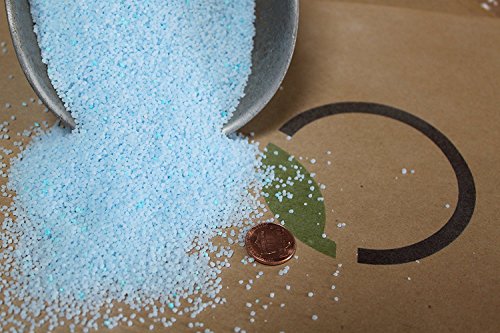
Greenway Biotech’s Nitroform is a straight nitrogen source with a 39-0-0 analysis, where 28.5 percent is water-insoluble nitrogen that releases through microbial activity. This mimics the natural soil-food web that bahia thrives on, feeding the grass without the sudden flush that causes thatch buildup. The 1-pound bag is small, but the concentrated formulation means a little goes a long way when mixed into a balanced fertilizer program.
Long-time users recognize the Nitroform name as “blue chip nitrogen,” a product that has been a specialty standard for decades. The low-salt index reduces burn potential even in sandy soils, and the microbial-release pattern aligns perfectly with bahia’s preference for steady, gentle feeding. One owner specifically called out its effectiveness on sandy Florida soil, where straight urea tends to volatilize or leach before the grass can use it.
The small bag size is the main limiting factor for larger bahia lawns: covering a full acre would require multiple bags, making it an expensive nitrogen source on a per-pound basis. Some buyers also reported shipping damage that left granules loose inside the packaging.
What works
- Microbial-release nitrogen feeds bahia without surge growth
- Low-salt formula reduces burn risk on shallow-root turf
What doesn’t
- Small package size is impractical for large bahia lawns
- Higher cost per pound compared to blended granular products
5. Pennington Full Season 32-0-5 Lawn Fertilizer
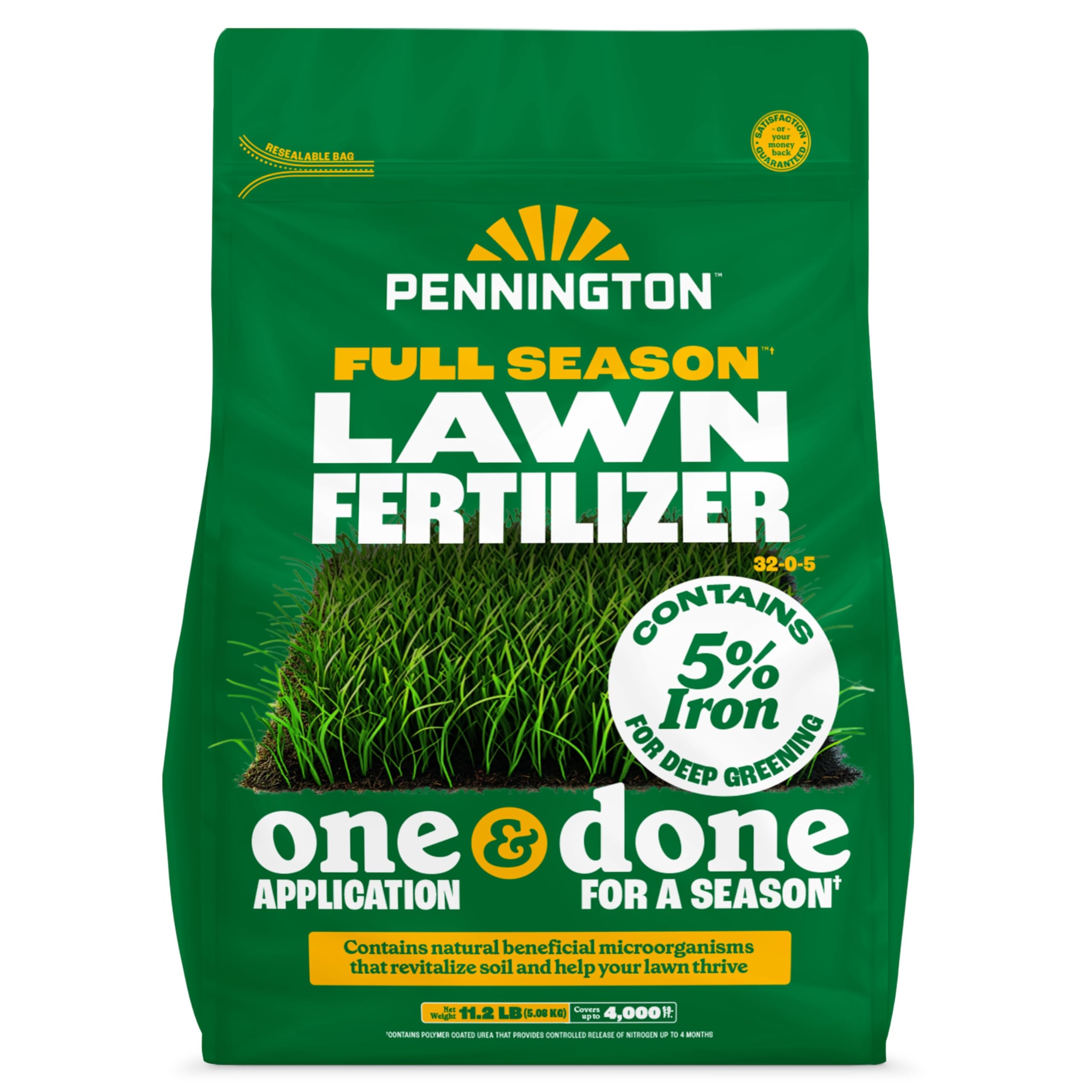
Pennington’s Full Season fertilizer combines a 32-0-5 ratio with 5 percent iron and polymer-coated urea that releases nitrogen for up to four months. The iron content addresses bahia’s biggest cosmetic weakness — yellow-green blades — by pushing the lawn toward a dark, golf-course green that persists through the hottest weeks. The 11.2-pound bag is marketed for 4,000 square feet, though several owners report effective coverage closer to 2,500 square feet.
The formula includes natural beneficial microorganisms that support soil biology, which is a useful addition for sandy bahia soil that lacks organic matter. Owners saw visible greening within a week, and the Bermuda-focused reviews confirm the high-iron, high-nitrogen profile works across warm-season grasses. The single-application promise is realistic for bahia in climates with a defined summer growing window.
The coverage discrepancy is the most common complaint: if you have a 5,000-square-foot lawn, you will need two bags to maintain the recommended rate. Some users also noted that the product is restricted in Hawaii and South Dakota, so check local availability before ordering.
What works
- Five percent iron creates deep, dark color bahia typically lacks
- Polymer-coated urea provides four months of steady feeding
What doesn’t
- Advertised coverage is optimistic for dense bahia stands
- Not available for shipping to Hawaii and South Dakota
6. Petramax Liquid Nitrogen Fertilizer 28-0-0

Petramax offers a liquid alternative to granular feeding with a 28-0-0 analysis that splits into 70 percent quick-release nitrogen for immediate color and 30 percent slow-release nitrogen for residual feeding. The 32-ounce bottle concentrates cover up to 12,800 square feet at maintenance rates, making it the most efficient option for large bahia lawns where carrying a spreader across the acreage is impractical.
The liquid form penetrates the soil surface faster than granules during dry spells, which helps on sandy bahia ground where moisture is inconsistent. Owners report rapid green-up, with some noting visible results within 48 hours. The brand recommends using a hose-end sprayer, and the company is USA-based with responsive customer support, which adds peace of mind for first-time liquid users.
Since liquid fertilizers require more frequent application than slow-release granules — about every 4 to 6 weeks — the total season cost can climb if you are covering a large area. A few users also mentioned that the bottle’s measuring lines can be hard to read, making precise dilution a minor challenge.
What works
- Dual quick-and-slow release formula gives rapid plus sustained effect
- High coverage per bottle reduces total product needed for big lawns
What doesn’t
- Liquid feeding requires more frequent reapplication than granulars
- Measuring lines on the concentrate bottle could be more precise
7. Jonathan Green Green-Up 29-0-3 Lawn Food

Jonathan Green has built a reputation for region-specific lawn products, and the Green-Up 29-0-3 formulation is designed for the warm-season grasses common across the South, including bahia. The 15.6-pound bag covers 5,000 square feet with a high-nitrogen, low-potassium profile that pushes green growth without excess potassium that sandy soil rarely needs. The granular form spreads evenly through a rotary spreader and activates with a half-inch of rain or irrigation.
Owner reports consistently mention a lush, dark-green color that holds for several weeks after application. The product carries no iron, but the 29 percent nitrogen in a fast-and-slow-release blend provides enough feeding density to overcome bahia’s natural pallor. One long-term user noted that careful timing with cooler temperatures and forecast rainfall is essential to avoid burning, since the quick-release portion can scorch if applied during a dry heat wave.
The main caution is the burn potential: multiple reviewers warned that this formula must be watered in thoroughly, especially on bahia lawns that are already stressed by drought. The lack of a spreader setting guide on the bag also means you will need to calibrate your own equipment.
What works
- Targeted NPK for warm-season southern grasses like bahia
- Large bag provides full coverage for a standard suburban lawn
What doesn’t
- Higher burn risk if not watered in immediately after application
- No spreader-setting reference printed on the bag
Hardware & Specs Guide
Nitrogen Release Type
Polymer-coated urea (PCU) and methylene-urea are the two slow-release forms found in bahia-friendly products. PCU uses a semi-permeable membrane that releases nitrogen as soil temperature rises, matching the grass’s metabolic demand. Methylene-urea relies on soil microbes to break the nitrogen free, which works well in warm, moist southern soil but slows during cool spring or fall windows. Quick-release urea provides a green flush within days but requires frequent reapplication — it works best as a supplement between slow-release feedings.
Fertilizer Coverage Math
Coverage is calculated by bag weight divided by the recommended pounds of nitrogen per 1,000 square feet. A 15-pound bag of 29-0-3 delivers roughly 4.35 pounds of actual nitrogen. At a typical application rate of 1 pound of nitrogen per 1,000 square feet, that bag covers about 4,350 square feet. Understanding this math lets you match bag size to lawn square footage without guesswork and avoid under- or over-applying based on the bag’s raw weight alone.
FAQ
How often should I fertilize bahia grass in the summer?
Can I use a high-phosphorus fertilizer on bahia grass?
What does the iron in bahia fertilizer actually do?
Will liquid fertilizer work on bahia as well as granular?
Final Thoughts: The Verdict
For most gardeners, the best fertilizer for bahia grass winner is the Supply Solutions 25-7-12 because its polymer-coated urea and low-phosphorus profile match bahia’s root behavior and soil conditions perfectly. If you want full-season convenience with iron-driven color, grab the Pennington Full Season 32-0-5. And for a quick liquid boost between granular applications, nothing beats the Petramax Liquid 28-0-0.