
Rhubarb is a heavy feeder that demands a consistent supply of nutrients to push up those thick, tangy stalks year after year. Getting the nitrogen-potassium balance wrong leads to spindly growth or a disappointing harvest, so picking a fertilizer that matches the crop’s unique needs is essential.
I’m Rikta — the co-founder and writer behind Lawn Gear Lab. I’ve spent hours cross-referencing NPK ratios, studying soil science data for perennial vegetables, and analyzing hundreds of verified owner reports to identify which products actually deliver for rhubarb patches.
This guide breaks down seven top-tier options so you can confidently choose the best fertilizer for rhubarb based on your soil type, organic preference, and feeding style.
How To Choose The Best Fertilizer For Rhubarb
Rhubarb thrives on a steady diet of nutrients, but the wrong balance can encourage leafy growth at the expense of stalk thickness. The three numbers on the bag — nitrogen (N), phosphorus (P), and potassium (K) — tell you exactly what your patch will get. Rhubarb responds best to a moderate NPK with potassium slightly elevated, such as a 5-10-10 or a balanced 10-10-10, though organic options with a gentler release work equally well when applied consistently.
NPK Ratio — The Stalk and Root Connection
Nitrogen drives leaf production, which is critical for photosynthesis, but too much creates lush foliage and thin, soft stalks. Phosphorus supports root establishment for young crowns, while potassium strengthens cell walls and boosts disease resistance — directly improving stalk firmness. For established rhubarb beds, a fertilizer with a middle or high third number (potassium) relative to the first (nitrogen) is ideal.
Organic vs. Synthetic — Release Speed and Soil Health
Granular organic fertilizers like fish bone meal or feather meal break down slowly, feeding soil microbes and building long-term fertility without burning tender roots. Liquid fish emulsions provide a quick green-up in early spring but require more frequent reapplication. Synthetic water-soluble options deliver immediate nutrients and are useful for a mid-season boost, but they do little to improve soil structure over time.
Micronutrients and Soil pH — The Overlooked Factors
Rhubarb prefers a soil pH between 6.0 and 6.8. Below 6.0, calcium and magnesium become less available, leading to poor stalk development. Many all-purpose organic blends include calcium (often listed on the bag) which helps regulate pH in mildly acidic soils. Kelp meal and humates, common in premium organic mixes, add trace elements like zinc and boron that support overall vigor.
Quick Comparison
On smaller screens, swipe sideways to see the full table.
| Model | Category | Best For | Key Spec | Amazon |
|---|---|---|---|---|
| FoxFarm Happy Frog All Purpose 6-4-5 | Granular Organic | Balanced slow-release | 6-4-5 NPK + microbes | Amazon |
| Down To Earth All Purpose 4-6-2 | Granular Organic | Soil building | 4-6-2 NPK, OMRI listed | Amazon |
| Espoma Garden-Tone 3-4-4 | Granular Organic | Vegetable-specific feeding | 3-4-4 NPK + Bio-tone | Amazon |
| GS Plant Foods 20-20-20 | Water-Soluble | Quick boost | 20-20-20 NPK + kelp | Amazon |
| Alaska Fish Fertilizer 5-1-1 | Liquid Organic | Early spring green-up | 5-1-1 NPK, OMRI listed | Amazon |
| Espoma Plant-Tone 5-3-3 | Granular Organic | Perennial beds | 5-3-3 NPK + 5% calcium | Amazon |
| The Grow Co Fish Emulsion 2-3-1 | Liquid Organic | Gentle frequent feeding | 2-3-1 NPK, 128 fl oz | Amazon |
In‑Depth Reviews
1. FoxFarm Happy Frog All Purpose Fertilizer 6-4-5

Happy Frog’s 6-4-5 analysis hits the sweet spot for established rhubarb crowns — higher potassium than many all-purpose organics, which supports stalk firmness and disease resistance. The inclusion of beneficial soil microbes and mycorrhizal fungi gives it an edge for improving nutrient uptake in beds that have been cultivated for several seasons.
Gardeners report visible greening within a week on yellowing plants, and the slow-release granules feed for roughly four to six weeks per application. The organic ingredients produce a noticeable earthy odor, but reviewers note it fades quickly after watering and doesn’t linger near the harvest area.
OMRI listing confirms it meets organic production standards, making it a solid choice for anyone who wants a ready-to-use granular feed that doubles as a soil amendment. The 4-pound bag covers roughly 40 to 50 square feet, which aligns well with a medium-sized rhubarb patch.
What works
- Balanced 6-4-5 NPK with elevated potassium for stalk strength.
- Contains live soil microbes and mycorrhizae.
- OMRI listed for organic gardening.
- Gentle formula won’t burn roots when applied as directed.
What doesn’t
- Strong odor during application, best used outdoors.
- Bag size is modest; large patches may need multiple bags per season.
2. Down To Earth All Natural Fertilizers 4-6-2

Down To Earth’s 4-6-2 formula is built around whole-food ingredients — fish bone meal, blood meal, feather meal, rock phosphate, langbeinite, greensand, humates, and kelp meal. This diversity of nutrient sources provides a slow, steady release that feeds rhubarb roots without a sudden nitrogen spike that could soften stalks.
The 5-pound box offers generous coverage for the price point, and the OMRI listing makes it a reliable option for certified organic beds. The gentle, non-burning nature of the granules is especially helpful for new rhubarb crowns, where root systems are still developing and sensitive to hot synthetic salts.
Several reviewers have noted that the smell, while present for a couple of days after top-dressing, dissipates quickly and doesn’t attract pests. The 4-6-2 ratio works best when paired with a separate potassium boost in late summer for next year’s crown development.
What works
- Rich blend of eight organic ingredient sources.
- OMRI listed and safe for organic production.
- Non-burning formula ideal for young crowns.
- Large 5-pound box offers solid coverage per application.
What doesn’t
- Potassium (2) is low for long-term stalk firmness.
- Odor is noticeable for a couple of days after application.
3. Espoma Organic Garden-Tone 3-4-4

Garden-Tone’s 3-4-4 analysis features a notably low nitrogen level and equal phosphorus and potassium — a profile that suits rhubarb in its second or third year, when you want to prioritize root and crown strength over excessive leaf growth. The 5% calcium content is a standout, helping to buffer soil pH and prevent blossom-end rot issues in nearby companion crops.
The Bio-tone formula includes beneficial microbes that aid nutrient cycling in cool spring soils, which is exactly when rhubarb emerges and begins its rapid growth. This pack of two 4-pound bags gives you a full season’s supply for a typical 4×6-foot bed without needing to reorder mid-summer.
Reviewers consistently mention that even accidental over-application doesn’t burn plants, and the results — thicker stalks, darker foliage — are visible within two to three weeks. The smell is typical of organic blends (poultry-based), so outdoor application and light incorporation into the soil surface are recommended.
What works
- Low nitrogen (3) prevents soft, leafy growth.
- 5% calcium supports pH buffering and cell wall strength.
- Bio-tone microbes are active in cool spring soil.
- Two-pack provides excellent seasonal coverage.
What doesn’t
- Odor is strong and poultry-like during application.
- Slow release may require a liquid supplement for a mid-season boost.
4. GS Plant Foods All Purpose 20-20-20
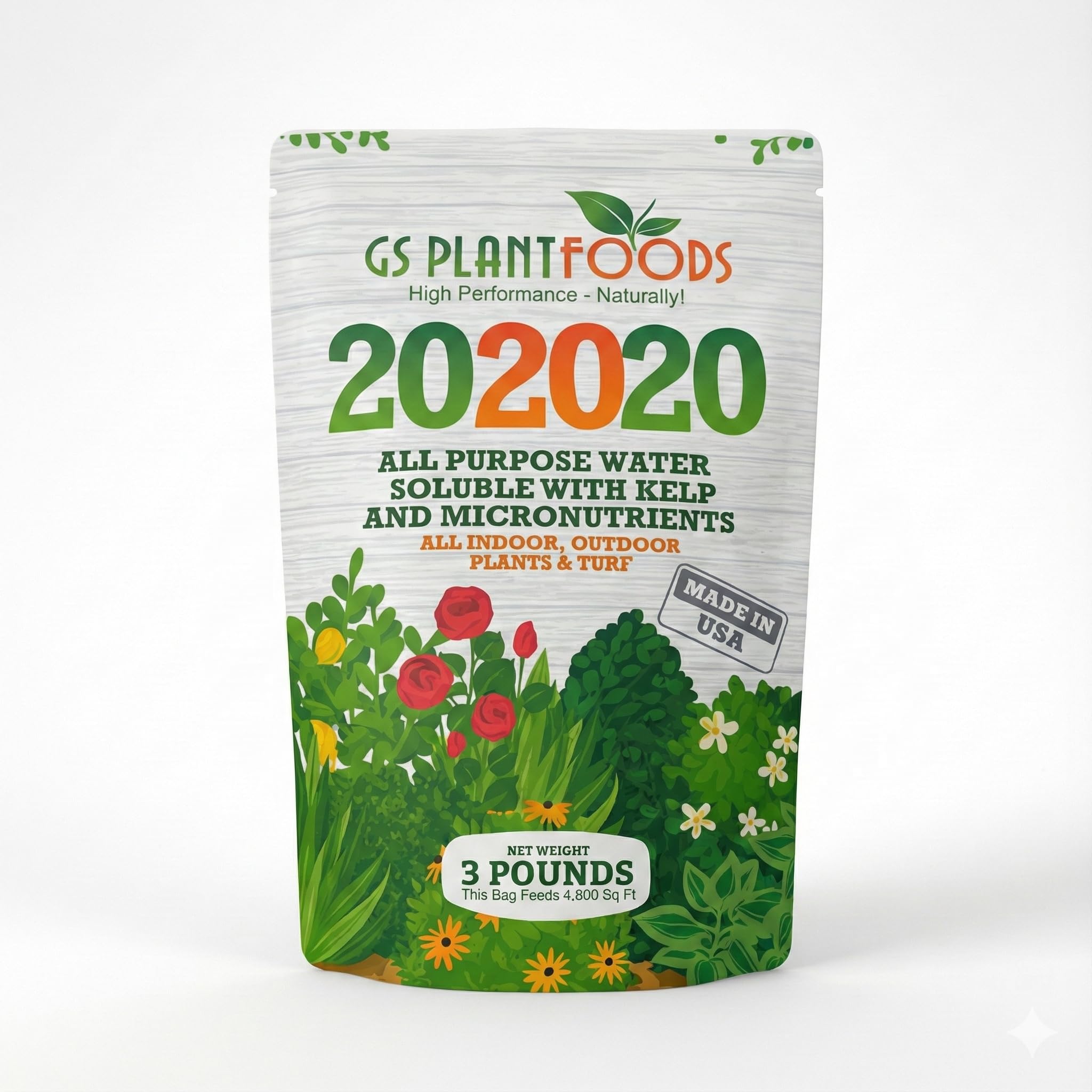
The 20-20-20 balanced NPK from GS Plant Foods is a synthetic water-soluble option designed for a rapid nutrient hit. For rhubarb, this is best reserved for an early spring application when the soil is still cool and organic granules are slow to break down. The inclusion of kelp (Ascophyllum nodosum) adds a small amount of natural growth stimulants.
This bag covers up to 4,800 square feet when used at the recommended dilution rate for turf, but for a rhubarb bed you’ll apply it at a lower concentration — roughly one tablespoon per gallon of water — making the bag last multiple seasons. The formula dissolves completely and is compatible with hose-end sprayers for easy drenching.
Reviewers note that plants respond within days, with dark green leaves and a visible vigor boost. However, because this is a synthetic fertilizer, it does not build soil organic matter. Pair it with annual compost top-dressing to maintain long-term bed health.
What works
- Immediate nutrient availability for cool-spring feeding.
- Contains kelp extract for added micronutrients.
- Dissolves completely and works with hose-end sprayers.
- Extremely high coverage per bag.
What doesn’t
- Synthetic formula doesn’t improve soil microbiology.
- High nitrogen (20) can encourage leafy growth if overused.
5. Alaska Fish Fertilizer 5-1-1
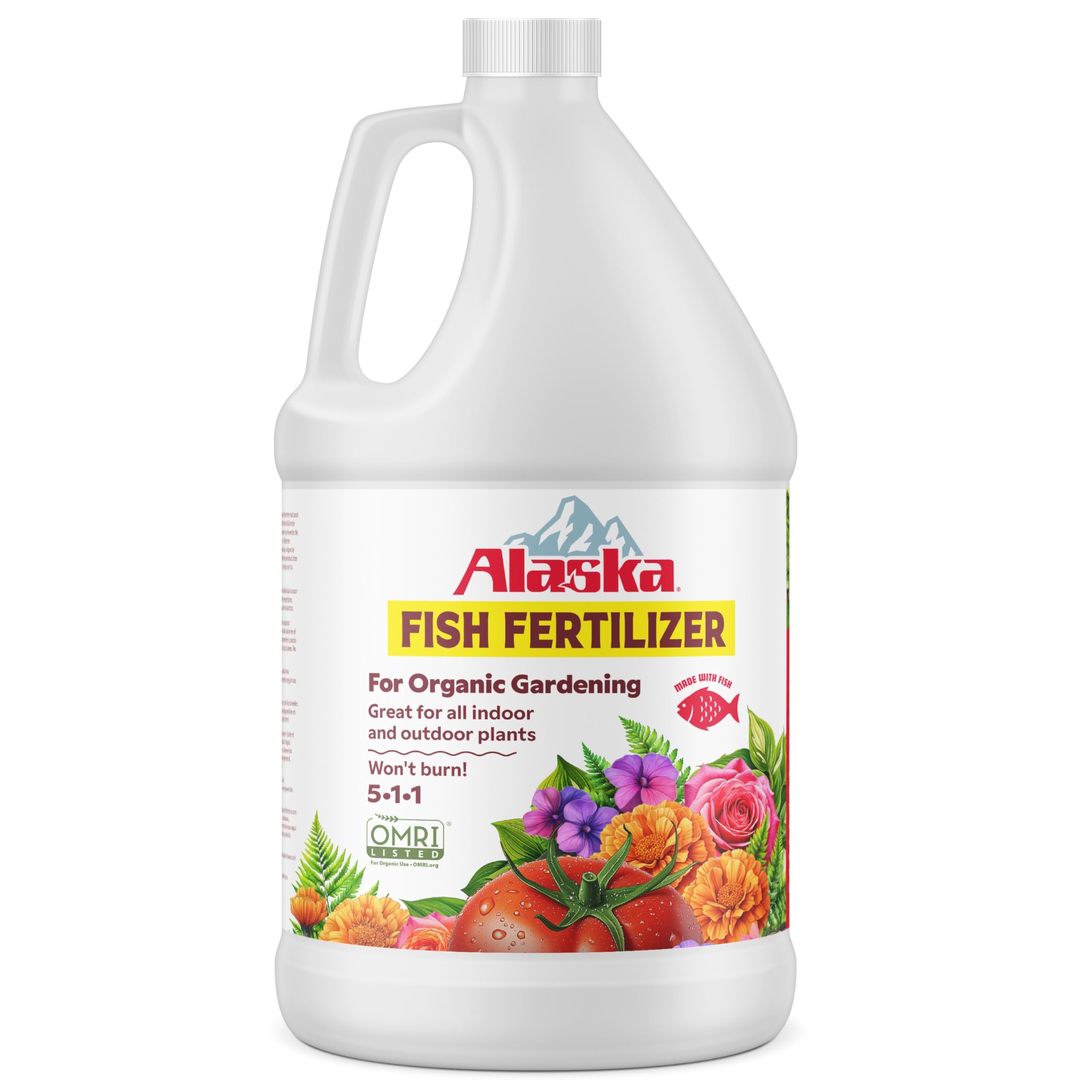
Alaska 5-1-1 is a classic fish-based liquid fertilizer with a high nitrogen content that’s ideal for giving rhubarb a strong start as the crowns break dormancy. The OMRI-listed formula is cold-processed to preserve amino acids and micronutrients, and the liquid form allows for even distribution around the drip line without disturbing shallow roots.
The recommended schedule — every three weeks during the growing season — aligns well with rhubarb’s nutrient demand pattern. The nitrogen (5) drives vigorous leaf production, which in turn fuels thick stalk growth through increased photosynthesis. However, the low potassium (1) means you should alternate with a potassium-rich granular feed once stalks begin elongating.
Users consistently praise the visible results on rhubarb and other perennials, with stronger stems and deeper green color appearing within a week. The fishy odor is unmistakable during mixing but dissipates after watering, typically within 24 hours when applied outdoors.
What works
- Cold-processed fish retains natural micronutrients.
- OMRI listed and widely trusted for organic gardens.
- Liquid form gives even root-zone coverage.
- Safe for seedlings and established crowns alike.
What doesn’t
- Low potassium (1) requires supplemental feeding for stalk firmness.
- Strong fish smell lingers for up to a day after application.
6. Espoma Organic Plant-Tone 5-3-3

Plant-Tone is Espoma’s original all-purpose organic blend, formulated with a 5-3-3 analysis and 5% calcium. While it’s designed for a broad range of plants, the moderate nitrogen and calcium content make it a strong candidate for rhubarb beds where you want steady foliage growth without sacrificing stalk quality. The Bio-tone microbial enhancer is especially active in the 50–70°F range that rhubarb prefers.
This two-pack provides enough material to feed a medium rhubarb patch from early spring through fall with a monthly application schedule. The granules are ready to use — no mixing required — and you simply sprinkle them around the drip line and water in. The 5% calcium provides a buffer against soil acidification from repeated organic matter additions.
Long-time gardeners on the review stream consistently call Plant-Tone their go-to for perennials, citing the way it “doesn’t burn plants” even when applied generously. The smell is present during application (poultry-based) but fades once incorporated into the soil surface.
What works
- 5% calcium helps maintain soil pH for rhubarb.
- Gentle organic formula safe for repeated use.
- Bio-tone microbes are active in rhubarb’s preferred temperature range.
- Two-pack covers a full growing season.
What doesn’t
- Potassium (3) is only moderate; may need supplement for heavy feeders.
- Pungent smell during spreading, best done on calm days.
7. The Grow Co Organic Fish Emulsion 2-3-1

The Grow Co’s fish emulsion stands out for its 2-3-1 NPK profile — lower nitrogen than most fish products, with slightly elevated phosphorus that supports early root development in newly planted rhubarb crowns. The sustainably sourced, hydrolyzed fish retains natural enzymes and amino acids that gentle feed the soil food web without overwhelming the plant.
This gallon bottle makes over 160 gallons of diluted fertilizer, giving exceptional value for gardeners with multiple beds. The thin consistency mixes instantly in water, and you can apply it as a soil drench or foliar spray. The manufacturer emphasizes that if it doesn’t smell strongly of fish, it’s not authentic — and reviewers confirm this. The odor is intense but fades within hours when applied to moist soil.
Experienced organic gardeners in the reviews note that this product works extremely well when combined with a kelp supplement, producing dense growth and higher yields. For rhubarb specifically, use it every two to three weeks through the harvest period, then switch to a potassium-rich granular feed in late summer.
What works
- Low nitrogen (2) ideal for gentle, frequent feeding.
- Hydrolyzed fish preserves amino acids and enzymes.
- 1 gallon makes over 160 gallons of diluted feed.
- Versatile — works as soil drench or foliar spray.
What doesn’t
- Strong fish odor during mixing and application.
- Low potassium (1) requires a separate potassium source for stalk firmness.
Hardware & Specs Guide
NPK Ratio — What the Numbers Really Mean
The three hyphenated numbers on a fertilizer bag represent the percentage by weight of nitrogen (N), phosphate (P₂O₅), and potash (K₂O). Nitrogen drives leafy top growth, phosphorus supports root and crown development, and potassium strengthens cell walls and boosts disease resistance. For rhubarb, a ratio where the third number (potassium) is equal to or higher than the first (nitrogen) is ideal for producing thick, sturdy stalks. Products like Espoma Garden-Tone (3-4-4) exemplify this, while high-nitrogen fish fertilizers (5-1-1) excel as early-season green-ups but need potassium supplementation.
Granular vs. Liquid — Delivery Method Matters
Granular fertilizers release nutrients slowly as soil microbes and moisture break them down, providing a steady supply over four to eight weeks. They’re ideal for a single spring application followed by a mid-summer top-dress. Liquid fertilizers are absorbed immediately, making them useful for correcting deficiencies or giving a quick boost in cool spring soil. For rhubarb, a common strategy is to apply a granular organic feed in early spring and follow with liquid fish emulsion every three weeks through the harvest window.
FAQ
Should I use a high-nitrogen fertilizer on rhubarb in spring?
How often should I fertilize rhubarb during the growing season?
Can I use tomato fertilizer on my rhubarb patch?
Final Thoughts: The Verdict
For most gardeners, the fertilizer for rhubarb winner is the FoxFarm Happy Frog All Purpose 6-4-5 because its balanced NPK with elevated potassium matches rhubarb’s specific stalk-strengthening needs, and the added soil microbes improve long-term bed health. If you want a dedicated vegetable blend with calcium support, grab the Espoma Garden-Tone 3-4-4. And for an affordable organic granular that covers a large area, nothing beats the Down To Earth All Natural 4-6-2.