
Choosing the wrong dimensions for a raised bed is the single fastest way to waste soil, water, and square footage in your yard. Depth dictates root development, width determines reach from both sides, and length decides whether you maximize or squander your garden footprint. Each inch of height changes what you can grow and how much you need to bend.
I’m Rikta — the co-founder and writer behind Lawn Gear Lab. I’ve spent hundreds of hours comparing product specifications, studying horticultural data, and analyzing aggregated owner feedback to isolate the exact dimensions that deliver the best results for every type of gardener and budget.
Whether you’re planting shallow herbs or deep-rooted tomatoes, the right planter box changes everything. This guide breaks down the size for raised bed garden choices that balance soil volume, accessibility, and long-term durability for real growing conditions.
How To Choose The Best Size For Raised Bed Garden
The three dimensions — length, width, and depth — work together to define your planting capacity, ease of access, and structural stability. Getting any one wrong forces compromises for years.
Depth is the non-negotiable starting point
A 6-inch deep bed limits you to shallow greens and radishes. A 12-inch depth opens up peppers, beans, and bush tomatoes. Once you cross 17 to 24 inches you can grow indeterminate tomatoes, carrots, potatoes, and small fruit shrubs. Depth also determines how much soil volume you need and how often you have to water. Shallow beds dry out faster. Deep beds retain moisture longer and give roots room to spread. Always start with the deepest plants you intend to grow and work backward.
Width dictates reach and layout
Four feet is the maximum width for a bed accessible from both sides without stepping into the soil. Anything wider forces you to stretch, lean, or walk on the growing area, which compacts soil and damages roots. For beds placed against a wall or fence, limit width to 2 to 2.5 feet so you can reach the back without strain. The length of the bed is the least constrained dimension — it depends entirely on your available space — but longer beds require more cross-bracing or internal supports to prevent bowing over time.
Material dictates longevity and stability
Vinyl beds resist rot, fading, and yellowing for decades but can flex under heavy wet soil if the panels are thin. Galvanized steel with a minimum thickness of 0.8mm resists rust, holds its shape, and handles temperature extremes without warping. Fir wood offers a natural aesthetic and good strength if sealed properly, but untreated wood will crack and rot after a few seasons. The material you pick has nothing to do with size per se, but it determines whether your chosen dimensions hold up under the soil weight you fill them with.
Quick Comparison
On smaller screens, swipe sideways to see the full table.
| Model | Category | Best For | Key Spec | Amazon |
|---|---|---|---|---|
| A ANLEOLIFE 8x4x2ft | Premium Metal | Deep roots & durability | 24″ depth, 478 gallon capacity | Amazon |
| Vego Garden 6-in-1 | Modular Metal | Custom configurations | 17″ depth, modular 6-in-1 design | Amazon |
| AMERLIFE 8x4x15in Wood | Premium Wood | Natural look & large area | 15″ depth, 44 cubic feet capacity | Amazon |
| AMERLIFE 4×2 Elevated | Elevated Wood | No-bend gardening | 16″ depth, 30″ table height | Amazon |
| Kdgarden Vinyl 4×4 | Vinyl Plastic | Quick assembly, weatherproof | 13.3″ depth, screwless assembly | Amazon |
| Land Guard Galvanized 8x4x2ft | Mid-Range Metal | Budget deep bed | 24″ depth, thickened galvanized metal | Amazon |
| Ohuhu 8x4x1ft with Cover | Metal + Greenhouse | Season extension & protection | 12″ depth, PE greenhouse cover included | Amazon |
In‑Depth Reviews
1. A ANLEOLIFE 8x4x2ft Galvanized Raised Garden Bed
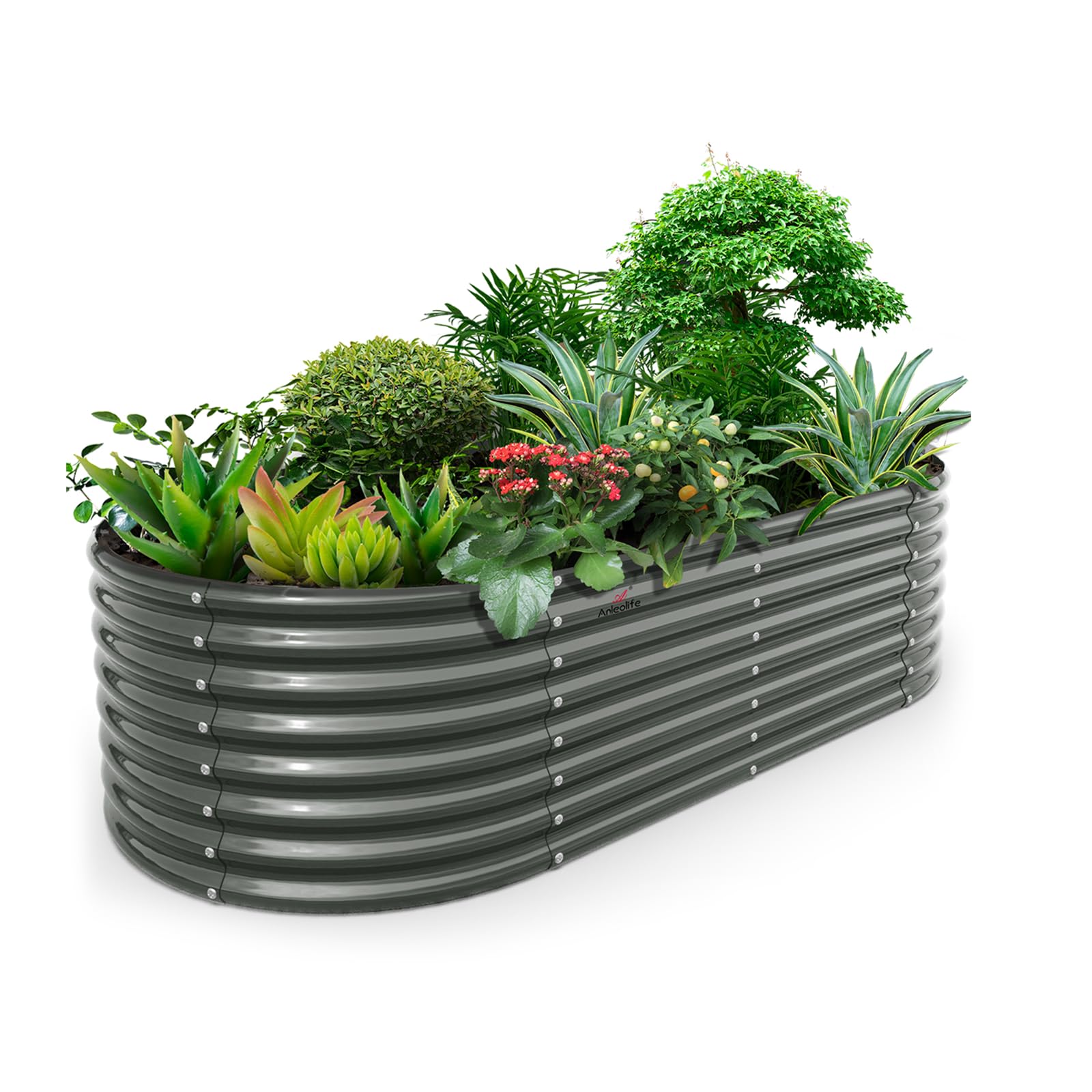
The 24-inch depth on this bed is the standout spec for serious vegetable growers. At 478 gallons of soil capacity, it handles deep-root crops like tomatoes, carrots, and potatoes without restriction while also raising the planting surface high enough to spare your back and knees during long sessions. The 22-gauge galvanized steel with a multi-layer powder coating resists rust and dents far better than thinner 26-gauge alternatives common in this price bracket.
Assembly feedback from owners consistently praises the rolled, smooth edges — the rounded R-angle design and included garden gloves reduce the risk of cuts that sharp metal beds often cause. The bottomless structure allows natural soil integration and worm activity, which improves drainage and nutrient cycling compared to beds with solid floors. Multiple buyers reported replacing rotting wooden beds with this unit and described it as visibly sturdier.
One recurring note is that the center support rods included with the kit are somewhat thin. While the planter remains stable once filled with soil, adding your own heavier-duty cross braces provides extra insurance against bowing over time. For the combination of depth, material gauge, and safety design, this bed delivers premium-grade construction at a price point that undercuts comparable wood and metal options.
What works
- Full 24-inch depth for deep-root vegetables and ergonomic access
- 22-gauge steel with rolled edges resists rust and prevents cuts
- Oval shape eliminates sharp corners and looks clean in any yard
What doesn’t
- Center support rods are flimsy and may need replacement for heavy soil loads
- Two-person assembly recommended despite straightforward instructions
2. Vego Garden Raised Garden Bed 6-in-1 Kit
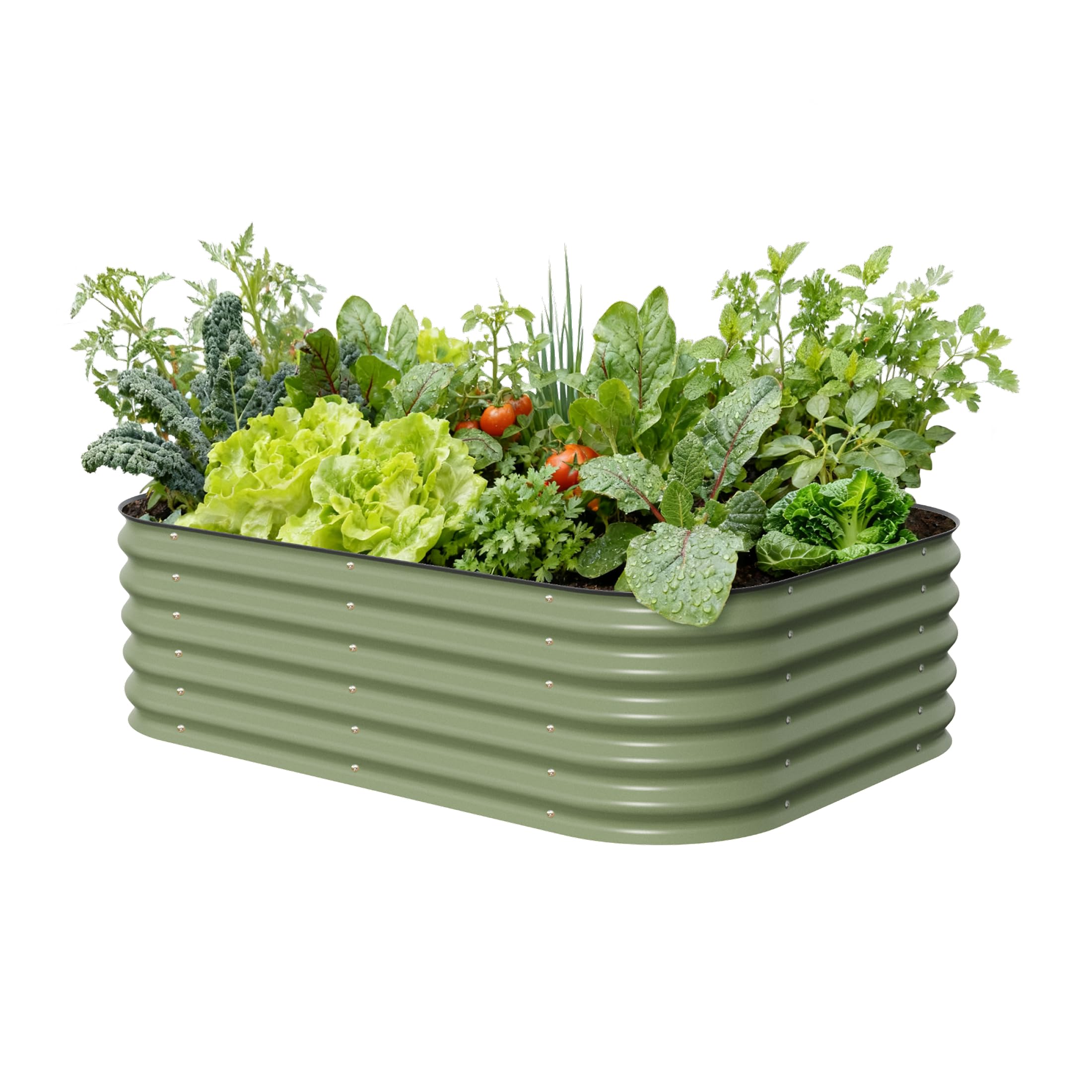
The Vego Garden kit solves the single biggest pain point for gardeners who aren’t sure of their ideal layout: you can assemble one of six configurations from the same set of panels. You can build a standard rectangle, an L-shape for corner spaces, or split the panels into multiple smaller beds. This flexibility means you don’t have to commit to a permanent footprint before you understand your space and sunlight patterns.
The proprietary VZ 2.0 material combines a zinc, magnesium, and aluminum core with an AkzoNobel coating, which earned verification at the Texas A&M National Corrosion Lab. That matters for longevity — this bed is rated for a 20-plus year lifespan even in wet climates. The 17-inch depth hits the sweet spot for ergonomics: tall enough to reduce bending significantly and deep enough for most vegetables, but not so deep that filling it requires a truckload of soil.
Owners frequently mention the heavy-duty rubber edging that covers all metal edges, which makes this kit one of the safest options for households with children or pets. Assembly is solo-friendly according to multiple reviews, though a helper speeds up the process. The olive green finish blends into landscapes without the industrial look of bare galvanized metal, and the oval shape avoids the sharp-corner hazard that rectangular beds present.
What works
- Six different configurations from one kit suit any yard shape
- Corrosion-resistant VZ 2.0 steel with rubber edging for safety
- 17-inch depth balances root space and soil volume requirements
What doesn’t
- Many screws to tighten during assembly can be tedious
- Panel connectors feel snug but require careful alignment
3. AMERLIFE 8×4 Ft Wood Raised Garden Bed
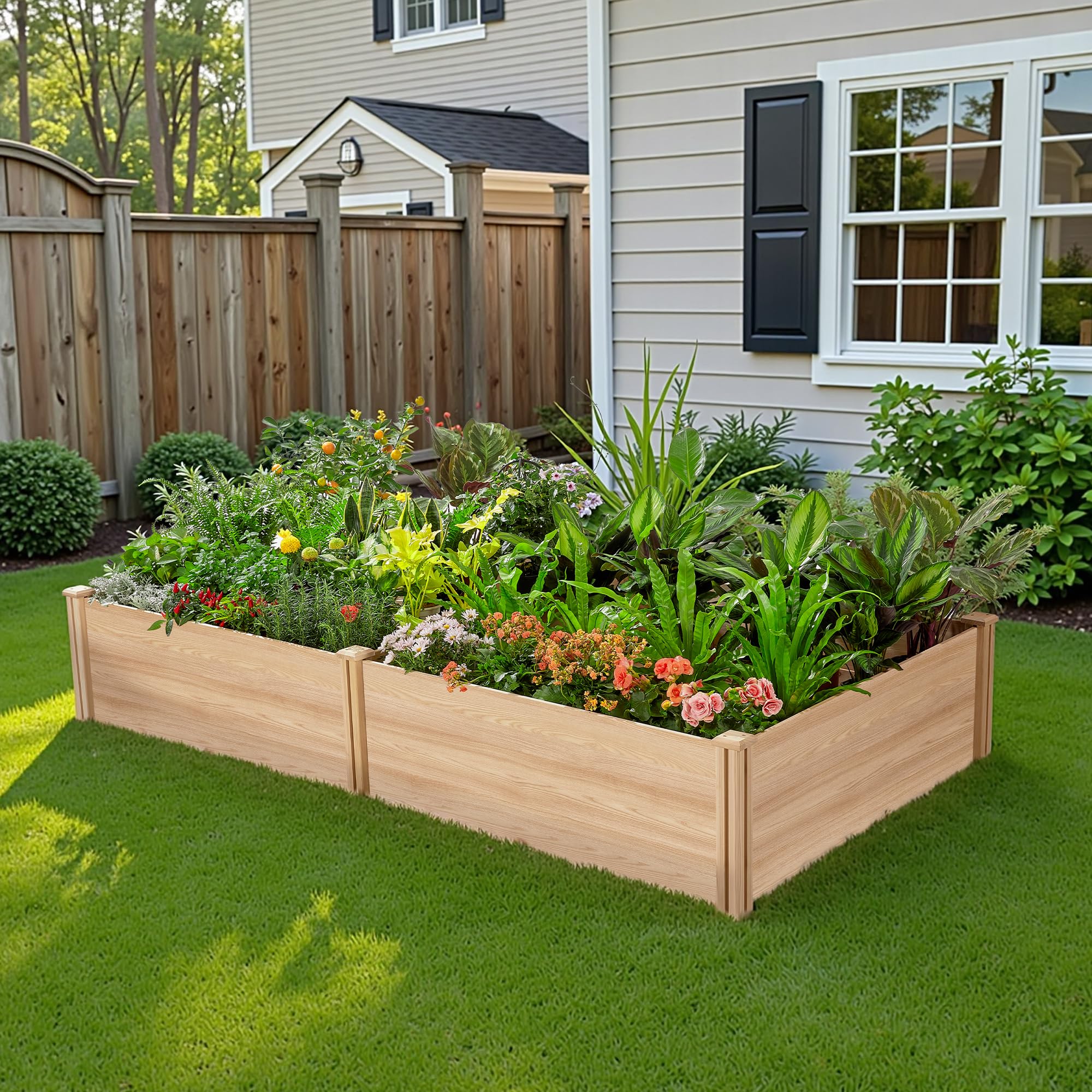
This 8×4-foot bed with 15 inches of depth offers the largest solid-wood planting area in this lineup. At 44 cubic feet of capacity, it holds enough soil to support a serious vegetable garden — think multiple rows of tomatoes, peppers, squash, and herbs without feeling cramped. The fir wood construction provides a natural grain appearance that ages better visually than metal beds in traditional cottage-style gardens.
The mortise-and-tenon joinery eliminates the need for tools during assembly, a feature that owners consistently highlight as a time saver. The bed includes a central divider that lets you separate plant types or manage crop rotation within the same structure. The open-base design drains freely and allows earthworms to move between the bed and native soil below, which improves aeration and nutrient availability over time.
Multiple reviewers note that the wood arrives unfinished and recommend applying a weatherproof sealer before filling with soil. Without treatment, the fir will absorb moisture and can develop surface cracks after a season of rain and sun. The center poles can also crack if the side panels are forced into alignment. For the cost and sheer growing capacity, this bed rewards a little upfront maintenance with years of productive use.
What works
- Massive 44 cubic foot planting area in solid fir wood
- Tool-free mortise-and-tenon assembly takes under 30 minutes
- Central divider enables organized planting and crop rotation
What doesn’t
- Requires weatherproof sealer application before first use
- Center poles can crack if side boards are forced during assembly
4. AMERLIFE 4×2 Ft Elevated Raised Garden Bed

This elevated bed solves a specific problem that floor-level beds cannot touch: it brings the entire planting surface to 30 inches high, eliminating the need to bend or kneel. For gardeners with mobility limitations, back issues, or simply a preference for comfortable standing-height work, this dimension shift transforms gardening from a physical chore into an accessible daily activity. The 4×2-foot footprint fits on patios, balconies, and small yards where ground space is tight.
The 16-inch soil depth is generous for an elevated unit, accommodating peppers, bush tomatoes, and most herbs without restricting root development. The fir wood construction with a support leg system adds stability that prevents rocking or tipping when the bed is full of moist soil. Drainage holes at the base prevent waterlogging, and the gaps between bottom panels are deliberately sized to allow wood expansion in wet weather without buckling.
Assembly feedback is mixed — some owners report a smooth experience with clear instructions, while others describe misaligned screw holes and warped bottom planks that required sanding and a drill to correct. Pre-drilling all holes before driving screws is strongly recommended to avoid splitting the fir. Applying a protective sealant before filling with soil extends the life of the bed significantly, as the wood is untreated from the factory.
What works
- 30-inch working height eliminates bending for comfortable gardening
- 16-inch depth is deeper than most elevated planters on the market
- Compact 4×2 footprint fits balconies, patios, and small urban spaces
What doesn’t
- Wood splits easily without pre-drilling screw holes
- Bottom planks can arrive warped, requiring sanding to fit
5. Kdgarden Vinyl Raised Garden Bed 4×4

The Kdgarden 4×4 bed stands out for its screwless assembly — the vinyl panels snap together without any tools, which is a genuine time saver for anyone who wants a garden up and running in minutes rather than hours. The 13.3-inch depth is sufficient for shallow-root crops like lettuce, spinach, strawberries, and most flowers, though root vegetables and full-size tomatoes will find the soil column restrictive.
The vinyl material carries a 20-year warranty against yellowing, fading, and rotting, which outlasts any wood bed on the market without the rust risk of steel. It is UV-protected and fire-resistant, and the manufacturer states it can remain outdoors year-round in freezing and hot climates without degradation. The whitewashed appearance adds a clean, bright aesthetic that contrasts nicely with greenery, but it will show soil splashes more readily than darker materials.
The open-bottom design with a molded grow grid helps organize planting patterns and keeps soil contained while allowing drainage. Owners praise the build quality and ease of assembly, though several noted that the 4×4 size requires a large volume of soil for its footprint relative to the limited depth. The included connectors allow stacking two beds to create a deeper unit, which is a useful upgrade path if you decide you need more root room later.
What works
- Tool-free screwless assembly takes minutes to complete
- 20-year warranty against fading, yellowing, and rotting
- Stackable design with included connectors for future depth upgrade
What doesn’t
- 13.3-inch depth limits root vegetables and tall tomato varieties
- White vinyl surface shows dirt and splashes quickly
6. Land Guard Galvanized Raised Garden Bed 8x4x2ft

The Land Guard bed delivers the same 8×4-foot footprint and 2-foot depth as the top-tier ANLEOLIFE model at a noticeably more accessible price point. The material is thickened galvanized metal with reinforced corner and frame bracing, which gives it enough structural integrity to hold wet soil without bowing. The oval shape eliminates sharp corners, and the open bottom provides unimpeded drainage and worm access from the ground below.
The assembly process involves a large number of screws, and several owners mention that the support braces are tedious to install and feel somewhat weak compared to the main panels. Combining two of these beds allows you to create custom configurations like a 12×4-foot rectangle plus a separate 4-foot round planter, which extends the value proposition significantly. The silver galvanized finish is functional but utilitarian — it won’t win any landscape design awards on its own.
Customer feedback emphasizes the durability of the main panels and the ease of hand-tightening the nuts and bolts once you get past the volume of fasteners. Multiple buyers purchased two or more units and reported satisfaction with how the beds hold up through rain and sun exposure. For budget-conscious gardeners who need the full 24-inch depth for deep-root plants, this is the most cost-effective path to that spec, with the trade-off being a more labor-intensive assembly.
What works
- Full 24-inch depth at one of the lowest price points available
- Thickened galvanized metal resists rust and corrosion well
- Multiple units can be combined for custom layout configurations
What doesn’t
- Many screws make assembly more time-consuming than advertised
- Support braces feel flimsy and should be reinforced for heavy soil
7. Ohuhu Raised Garden Bed 8x4x1ft with Greenhouse Cover
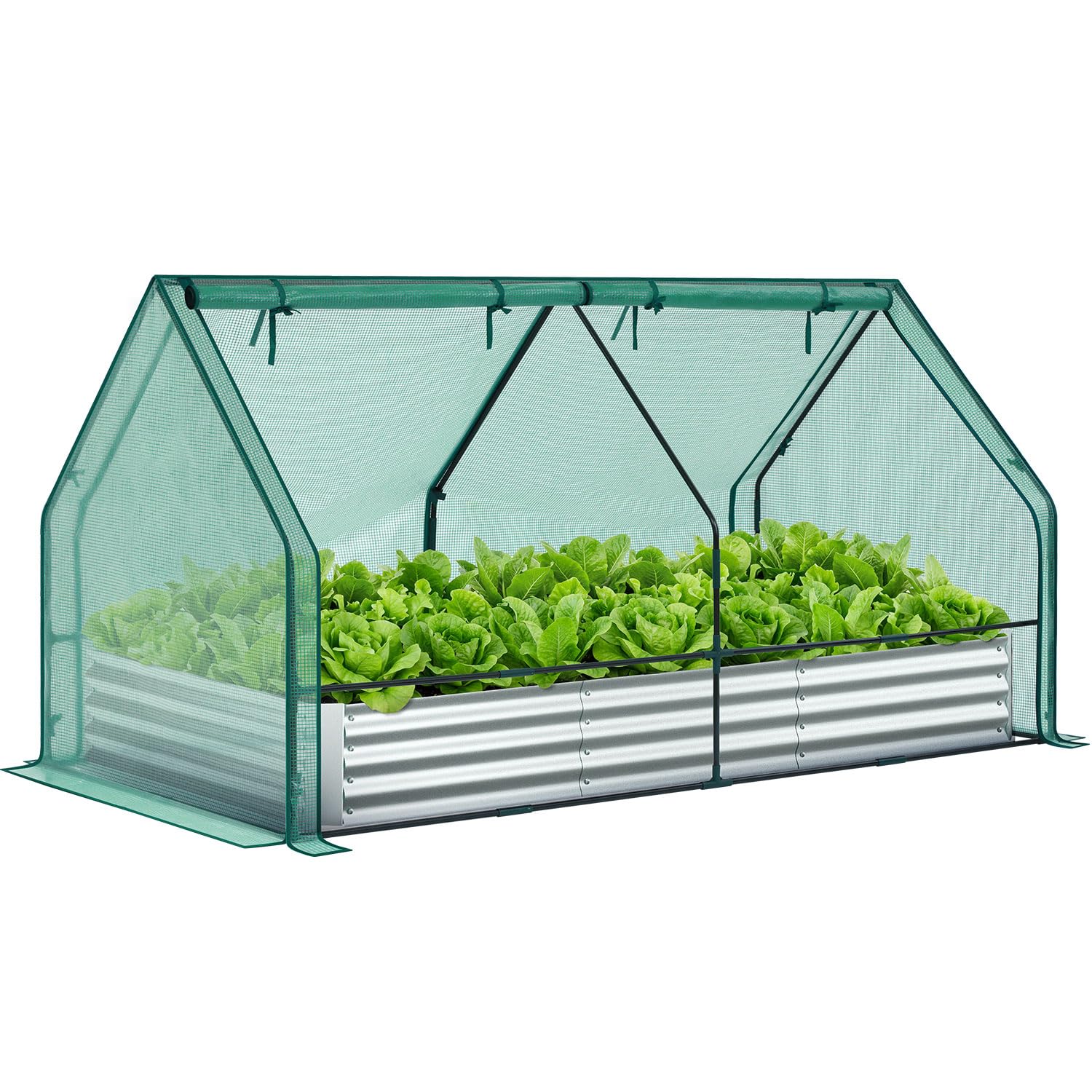
The Ohuhu kit bundles a standard 8x4x1-foot galvanized steel bed with a detachable PE greenhouse cover, making it the only option here that addresses both soil containment and season extension in one package. The cover features a sloped roof that sheds rain and snow, four zippered doors for ventilation access, and a 10-centimeter skirt at the base that you weigh down with stones or bricks to prevent wind lift. For gardeners in climates with late frosts or heavy pest pressure, the integrated cover eliminates the need to buy a separate hoop house.
The planter itself is 12 inches deep, which places it firmly in the shallow-to-moderate depth category. This works well for greens, herbs, strawberries, and compact flowers, but root vegetables and large tomato plants will hit the bottom. The galvanized steel panels resist rust, and metal support rods inside the bed prevent side walls from bowing outward under soil pressure. The greenhouse frame uses plastic connectors that make assembly and disassembly simple for off-season storage.
Several owners note that the PE cover material is functional but feels thin and may only last one or two seasons before needing replacement. The bed dimensions are roughly 2 inches shorter than the advertised 8×4 feet, which frustrates square-foot gardening enthusiasts who rely on precise measurements for planting grids. Staking the frame to the ground with U-shaped metal stakes is strongly recommended based on reports of the cover structure blowing away in high winds when not secured properly.
What works
- Integrated greenhouse cover provides frost and pest protection
- Galvanized steel panels with internal support rods resist bowing
- Four zippered doors allow easy access and ventilation control
What doesn’t
- 12-inch depth is too shallow for deep-root vegetables
- PE cover material feels flimsy and may need replacing after one season
Hardware & Specs Guide
Depth & Soil Volume
Depth is the single spec that determines what you can grow. A 12-inch bed supports greens, herbs, and compact flowers. A 15-to-17-inch bed handles peppers, tomatoes, and bush squash. A 24-inch bed allows indeterminate tomatoes, carrots, potatoes, and small fruit shrubs. Soil volume follows depth directly — an 8×4 bed at 12 inches holds roughly 32 cubic feet, while the same footprint at 24 inches holds 64 cubic feet. Deeper beds also retain moisture longer and require less frequent watering.
Material Thickness & Longevity
Galvanized steel beds are measured in gauge — lower numbers mean thicker metal. A 22-gauge panel (roughly 0.8mm) resists dents and rust significantly better than 26-gauge panels that flex under soil weight. Vinyl beds offer a 20-year warranty against fading and rot but can flex if panels are thin. Fir wood beds need a weatherproof sealer from day one; without it, surface cracks appear within a year and structural rot can set in by year three. The material thickness directly affects whether the bed holds its shape after a season of wet soil and freezing temperatures.
FAQ
What is the minimum depth for a raised vegetable bed?
Should I choose a 4×4 or 8×4 raised bed?
Does a deeper raised bed need more soil than a wider one?
Final Thoughts: The Verdict
For most gardeners, the size for raised bed garden winner is the A ANLEOLIFE 8x4x2ft Galvanized Bed because it combines the full 24-inch depth with heavy-gauge steel, safe rolled edges, and a build quality that outlasts wood and thinner metal alternatives. If you want modular configuration freedom and a comfortable 17-inch depth, grab the Vego Garden 6-in-1 Kit. And for an elevated no-bend experience on patios or small spaces, nothing beats the AMERLIFE 4×2 Elevated Bed.