
That sudden browning, wilting, and rapid dieback of your ground cover isn’t just bad luck — it’s pachysandra blight, a disease complex driven by the fungus Volutella pachysandrae. Left untreated, it can erase entire plantings in a single season. The right fungicide stops the spread and protects healthy tissue, but choosing one requires understanding how these products penetrate the plant’s waxy leaf surface and target the specific pathogen.
I’m Rikta — the co-founder and writer behind Lawn Gear Lab. I’ve spent countless hours analyzing product labels, cross-referencing active ingredients against disease pathology for pachysandra, and sorting through owner feedback to separate what actually halts blight from what merely wets the leaves.
This guide breaks down the chemical and biological options, covering modes of action, rainfastness, and organic compatibility, so you can confidently select the most effective fungicide for pachysandra blight for your specific planting situation.
How To Choose The Best Fungicide For Pachysandra Blight
Pachysandra blight is caused primarily by the fungus Volutella pachysandrae, which thrives in humid, poorly ventilated conditions. Choosing the correct product depends on whether you need a curative treatment for an active infection or a preventive barrier for healthy plants. The following factors will help you match the right chemistry to your situation.
Active Ingredient: Systemic vs. Contact
Systemic fungicides like propiconazole and chlorothalonil are absorbed into the plant’s vascular system, offering longer-lasting protection from the inside out. Contact fungicides, including copper-based or bacillus subtilis products, coat the leaf surface and must be reapplied after rain. For established blight, a systemic option is generally more reliable for reaching hidden fungal colonies.
Application Method: Concentrate vs. Ready-to-Use
Concentrates require mixing with water and a sprayer but provide greater coverage per dollar and allow you to adjust the dose. Ready-to-use (RTU) spray bottles are convenient for small patches or spot treatments but cost more per application and may not achieve the penetration needed for dense ground cover.
Rainfastness and Residual Duration
Blights often appear during wet weather, so rainfastness — how quickly a product dries and resists wash-off — is critical. Microemulsion concentrate (MEC) formulations like propiconazole 14.3% form stable suspensions that adhere to foliage even after rain. Some biofungicides offer shorter residual windows but pose no threat to pollinators or soil biology.
Label Compliance and Safety
Always confirm the product label lists pachysandra or “ornamental ground covers” as a registered use site. Over-application can cause phytotoxicity (leaf burn), especially in hot sun. Organic options like bacillus subtilis have zero re-entry interval but require diligent reapplication schedules.
Quick Comparison
On smaller screens, swipe sideways to see the full table.
| Model | Category | Best For | Key Spec | Amazon |
|---|---|---|---|---|
| Atticus Gunner 14.3 MEC | Systemic | Long-term curative control | 14.3% Propiconazole | Amazon |
| Bonide Fung-onil | Broad-spectrum | Multi-symptom disease control | Chlorothalonil 29.6% | Amazon |
| Fertilome Systemic II | RTU Systemic | Quick, no-mix application | Ready-to-Use 32 oz | Amazon |
| Bonide Revitalize | Biofungicide | Organic preventive care | Bacillus subtilis | Amazon |
| Monterey Complete | Organic Systemic | Root-zone drench & leaf spray | Bacillus amyloliquefaciens | Amazon |
| Bonide Captain Jack’s | Multi-purpose | Blight + insect control | 32 oz Concentrate | Amazon |
| Garden Safe Fungicide3 | Neem-based | Budget-friendly maintenance | 1 Gal RTU + Neem oil | Amazon |
In‑Depth Reviews
1. Atticus Gunner 14.3 MEC Propiconazole Fungicide
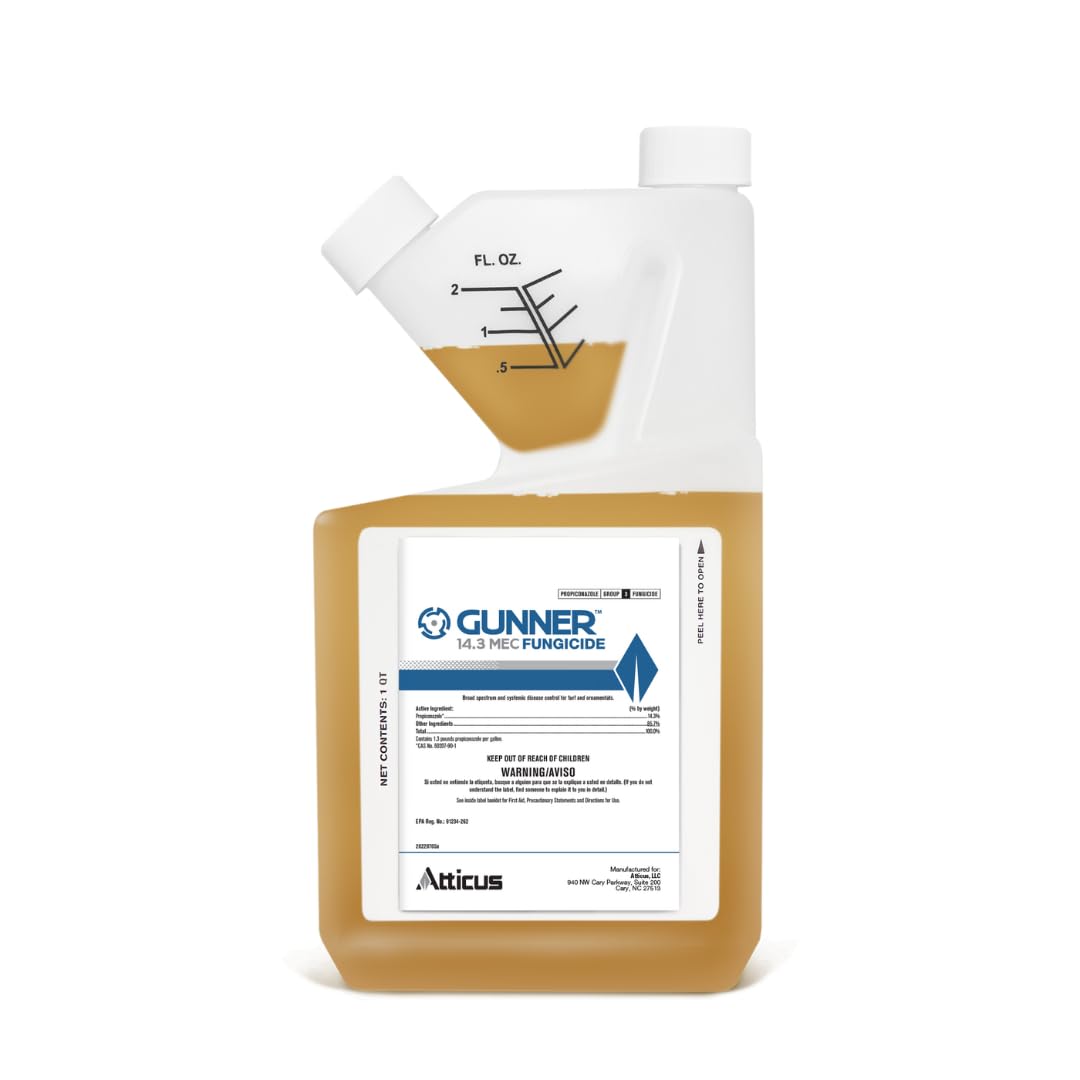
The Atticus Gunner delivers the same active ingredient — propiconazole — used by professional turf managers, in a microemulsion concentrate (MEC) formulation. The tiny droplet size ensures thorough coverage on pachysandra’s dense, overlapping foliage, and the suspension won’t separate in the tank, meaning consistent dosing from first spray to last. Once dry, this product resists rain wash-off, which is critical during the wet spring and fall periods when blight flares up.
Users report visible suppression of powdery mildew and leaf blights within a week of application, with residual protection lasting up to 28 days per treatment. The low-odor formula makes it comfortable to apply even in tight garden beds without the harsh chemical smell typical of older fungicides. For large pachysandra plantings, the 32-ounce concentrate yields a cost-effective volume of finished spray.
The six-page label covers more than 20 fungi including Volutella and anthracnose, and it is tank-mix compatible with other products if you need to target multiple pathogens simultaneously. Proper calibration and timing are essential — apply at first sign of disease or as a preventive when nighttime temperatures stay above 50°F.
What works
- Professional-grade propiconazole with proven Volutella activity.
- MEC formulation ensures even coverage and rainfast adherence.
- Up to 28 days of residual protection per application.
What doesn’t
- Not approved for sale in AK, DC, HI, PR, or VT.
- Label instructions printed very small — requires a magnifying glass.
2. Bonide Fung-onil Multi-Purpose Fungicide Concentrate

Chlorothalonil has been a heavy-hitter in the ornamental disease world for decades, and Fung-onil packs 29.6% of it into a 16-ounce concentrate. This product is a broad-spectrum contact fungicide that forms a protective barrier on the leaf surface, preventing spore germination and halting the spread of established blight. It is labeled for use on a wide range of ornamentals, shrubs, and ground covers including pachysandra.
Gardeners dealing with multiple disease symptoms — leaf spots alongside blight — will appreciate that Fung-onil controls rust, scab, and mildew in addition to Volutella. The milky white concentrate mixes easily with water and clings to foliage without burning plants, even when applied during cooler weather. A 16-ounce bottle makes up to 8 gallons of finished spray, covering several hundred square feet of mature planting.
Because chlorothalonil is a contact fungicide, coverage must be thorough — missed spots remain vulnerable. The white residue it leaves after drying is cosmetic and washes off with rain, but some users find it visible on dark green pachysandra leaves immediately after application. Rotate with a systemic product to avoid resistance buildup over multiple seasons.
What works
- Proven chlorothalonil chemistry stops blight and leaf spots.
- Cost-effective concentrate treats large areas quickly.
- Controls multiple fungal diseases beyond just Volutella.
What doesn’t
- Leaves a visible white residue on foliage after drying.
- Contact-only mode requires complete coverage to be effective.
3. Fertilome Liquid Systemic Fungicide II RTS

For homeowners who want to skip the mixing step entirely, Fertilome’s ready-to-use systemic fungicide is a practical choice. The 32-ounce trigger spray bottle is pre-diluted and works straight out of the box — ideal for spot-treating blight patches in a small pachysandra bed without hauling out a tank sprayer. The systemic active ingredient moves through the plant tissue, providing interior protection against fungal invasion.
The label covers a solid range of ornamental diseases including leaf spot, powdery mildew, and blights. Users with Live Oaks and maples report success against fire blight, signaling that the systemic action is genuinely effective. For pachysandra, apply the spray to the point of runoff, ensuring the dense canopy is wetted thoroughly. Early-season application, just as new growth emerges, yields the best preventive results.
The ready-to-use format comes at a higher cost per gallon compared to concentrates, so it is best suited for smaller plantings or targeted follow-up treatments. The sprayer’s wand is short, making it slightly awkward to reach the center of a wide bed without stepping into the planting. Overall, it is a low-friction option for gardeners who prioritize convenience over raw volume.
What works
- Zero mixing required — spray directly from the bottle.
- Systemic formula provides interior plant protection.
- Effective against leaf spot and fire blight in ornamentals.
What doesn’t
- Higher per-application cost than concentrate alternatives.
- Short spray wand limits reach in dense ground covers.
4. Bonide Revitalize Biofungicide Concentrate

Bonide Revitalize uses a beneficial bacterium (Bacillus subtilis) to trigger the plant’s own immune defenses — a biological approach rather than a chemical kill. This 16-ounce concentrate is OMRI listed for organic gardening and can be applied as a foliar spray or soil drench up to the day of harvest. For pachysandra blight, it works best as a preventive treatment applied early in the season before symptoms appear.
The biofungicide colonizes the leaf surface and root zone, outcompeting pathogenic fungi and inducing systemic resistance. Users report noticeable improvement on tomatoes with septoria leaf spot, and houseplant owners find it effective for general fungal issues. The product has a strong odor during mixing (described by some as “smelly”) but the smell dissipates quickly after drying. It is safe for pollinators, pets, and beneficial soil organisms, making it a strong choice for environmentally sensitive areas.
Because biological products rely on living organisms, storage matters — do not freeze or expose to extreme heat. For curative control of an active blight infection, a synthetic systemic may still be necessary. Revitalize should be reapplied every 7 to 14 days during wet weather to maintain protective levels on new growth.
What works
- Organic, OMI listed — safe for edibles and pollinators.
- Useful as both foliar spray and soil drench.
- Induces plant immune response for systemic protection.
What doesn’t
- Strong odor during mixing and application.
- Less effective for curative treatment of established blight.
5. Monterey Complete Disease Control w/ Measuring Spoon
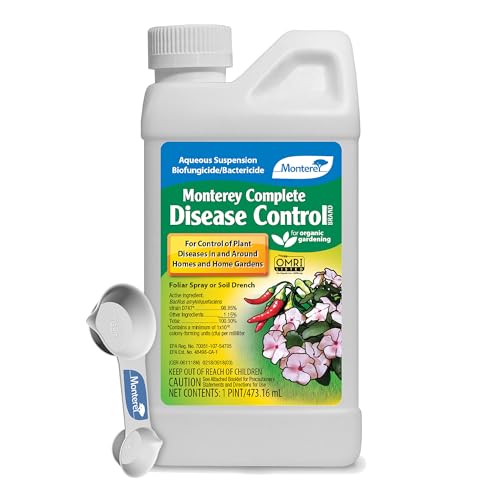
Monterey Complete Disease Control takes the biological approach a step further by colonizing actual root hairs with Bacillus amyloliquefaciens. This bacterium establishes a living barrier in the rhizosphere, preventing fungal pathogens from accessing the root system while also producing metabolites that suppress foliar disease. It is OMRI listed and approved for organic production, covering vegetables, ornamentals, and ground covers.
The 1-pint concentrate includes a measuring spoon for easy mixing — use as a foliar spray for leaf blight or as a soil drench for root-level protection. Gardeners in humid southern climates report this as their go-to fungicide for tomatoes, especially during rainy periods when blight pressure is extreme. For pachysandra, applying a drench in early spring before the canopy fills in gives the bacteria a head start on colonizing the root zone.
Users note that while it slows disease progression significantly, it does not completely eliminate an advanced infection. Multiple applications on a 7-day schedule are necessary during active disease periods. Storage temperature must stay between 32°F and 100°F to keep the bacteria viable — an important consideration for garden sheds that freeze in winter.
What works
- Colonizes root hairs for systemic biological protection.
- OMRI listed and safe for organic gardens.
- Versatile as both spray and soil drench.
What doesn’t
- Will not fully cure advanced blight infections.
- Temperature-sensitive storage limits winter viability.
6. Bonide Captain Jack’s Citrus, Fruit & Nut Orchard Spray

Captain Jack’s Orchard Spray is a 3-in-1 concentrate that functions as a fungicide, insecticide, and miticide. While its name emphasizes citrus and fruit trees, the label covers a wide range of ornamentals and ground covers, making it a viable option for pachysandra beds that also suffer from scale or spider mite pressure. The active ingredient combination targets blight, powdery mildew, and rust alongside soft-bodied insects.
Users with mixed garden spaces appreciate the convenience of a single bottle that handles both disease and pest issues. The 32-ounce concentrate yields up to 6.4 gallons of finished spray, and it can be applied up to one day before harvest on edible crops. For pachysandra specifically, the fungicide component provides broad protection, though it is not a dedicated systemic — reapplication is needed after heavy rain.
The product has a slight sulfur-like odor during mixing and leaves a faint powdery residue on foliage. It is non-persistent in the environment, which is good for soil health but means you must stay on schedule during humid weather. For the price per ounce of concentrate, this is one of the most budget-friendly multi-purpose options on the list.
What works
- Three-in-one formulation saves shelf space and money.
- Covers blight, rust, powdery mildew, and common pests.
- Economical concentrate yields large volume of finished spray.
What doesn’t
- Not a systemic — reapplication needed after rain.
- Leaves a powdery residue on leaf surfaces.
7. Garden Safe Brand Fungicide3 with Neem Oil Extract
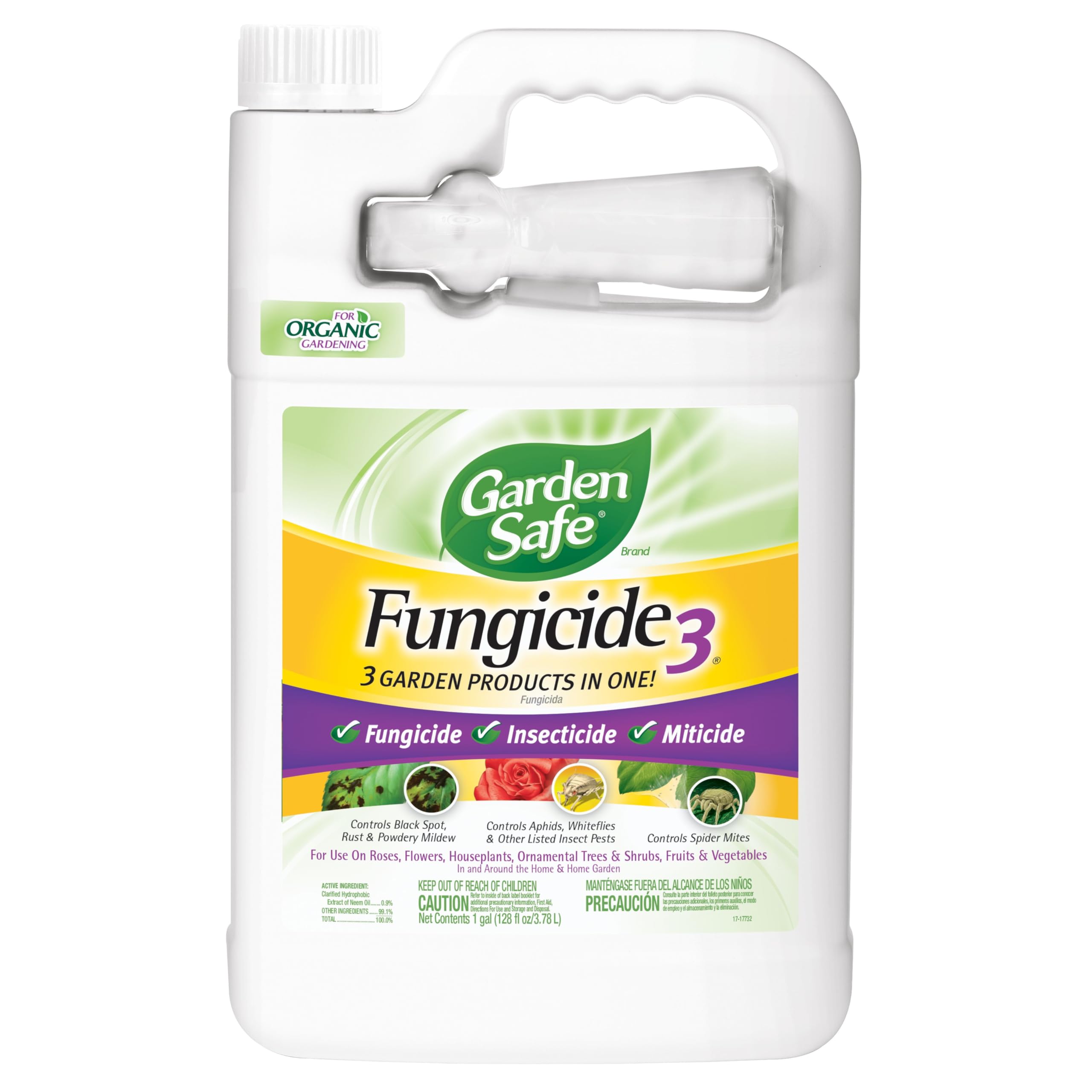
Garden Safe Fungicide3 uses clarified hydrophobic extract of neem oil as its active ingredient, offering a plant-based option for those who prefer to avoid synthetic chemistry. This 1-gallon ready-to-use spray covers both fungal diseases (black spot, rust, powdery mildew) and common insect pests including aphids and spider mites. For a pachysandra planting that is only beginning to show marginal leaf spots, this can serve as a gentle maintenance spray.
The attached sprayer is convenient for small beds but received criticism for its short, coiled hose that limits reach — you may need to hold the bottle close to the target or transfer the liquid to a different applicator. Users recommend applying at half the labeled dose to avoid leaf burn, especially on hot, sunny days. When used correctly, it effectively halts mildew and blight on ornamentals and edibles without toxic residue.
Neem oil works by smothering fungal spores and disrupting insect life cycles, so coverage must be thorough. It has a noticeable garlic-sulfur smell that fades after drying. Because it is a contact product, it washes off in rain and requires weekly reapplication during wet seasons. The one-gallon size is generous, making it a low-cost entry point for casual gardeners.
What works
- Plant-based neem oil with fungicide, insecticide, and miticide action.
- Large 1-gallon RTU bottle for immediate use.
- Organic and safe for vegetables and herbs.
What doesn’t
- Integrated sprayer has poor reach and hose design.
- Can burn leaves if applied at full strength in direct sun.
Hardware & Specs Guide
Active Ingredient Chemistry
The fungicide’s active compound determines its mode of action. Propiconazole (a DMI triazole) moves systemically through xylem tissue, making it ideal for deep-seated infections. Chlorothalonil is a multi-site contact fungicide that prevents spore germination on the leaf surface. Biological agents like Bacillus subtilis colonize the phylloplane and induce host resistance. Always match the chemistry to the infection stage — systemic for curative, contact for preventive.
Concentration and Dilution Ratio
Concentrates are measured in fluid ounces per gallon of water. A product with 14.3% active ingredient typically requires 1 to 2 fluid ounces per gallon for foliar application. RTU products skip dilution but contain lower active percentages. For pachysandra’s dense canopy, a higher concentration within label limits ensures coverage reaches the lower leaves where blight often starts. Over-dilution is the most common cause of perceived fungicide failure.
Rainfastness and Residual Period
Rainfastness refers to the time a fungicide needs to dry before it resists wash-off — typically 2 to 6 hours depending on formulation. MEC formulations dry faster and resist rain better than emulsifiable concentrates. The residual period (how long protection lasts) ranges from 7 days for contact biofungicides to 28 days for systemic products. Shorter residuals demand stricter scheduling during the blight season.
Application Equipment Needs
Concentrate fungicides require a pump sprayer — either a 1-gallon handheld or a larger backpack unit for extensive plantings. Use a fan nozzle to achieve even coverage across the pachysandra canopy. RTU bottles are self-contained but work best for patches under 50 square feet. A soil drench application requires mixing the concentrate and pouring it at the base of plants, which is most efficiently done with a watering can for small areas.
FAQ
How do I identify pachysandra blight versus other leaf diseases?
Can I use a all-purpose garden fungicide on pachysandra?
What time of year should I apply fungicide for pachysandra blight?
How long does it take for a fungicide to stop blight from spreading?
Final Thoughts: The Verdict
For most gardeners, the fungicide for pachysandra blight winner is the Atticus Gunner 14.3 MEC because its microemulsion propiconazole provides deep systemic control, resists rain wash-off, and lasts up to 28 days per application — the full package for stopping Volutella in dense ground cover. If you prefer an organic approach, the Monterey Complete Disease Control colonizes root hairs for systemic biological protection that integrates with natural gardening practices. And for a budget-friendly maintenance spray on small beds, the Garden Safe Fungicide3 offers neem-based triple action at a low per-gallon cost.