
Bird of Paradise plants are dramatic statement pieces indoors, but they’re notoriously fussy about their roots. A heavy, waterlogged mix leads straight to root rot and yellowing leaves, while a mix that’s too sandy won’t anchor their thick rhizomes or hold enough moisture between waterings. Finding that specific sweet spot — where drainage meets moisture retention and stable pH — is the difference between a plant that merely survives and one that unfurls those iconic paddle-shaped leaves every few weeks.
I’m Rikta — the co-founder and writer behind Lawn Gear Lab. For this guide, I’ve cross-referenced bag composition data, owner reviews across dozens of houseplant forums, and horticultural guidelines on aroid and tropical plant cultivation to isolate the formulas that truly match a Bird of Paradise’s root physiology.
The goal is to help you bypass trial-and-error and land on the right mix immediately. This analysis narrows the market to the best soil for bird of paradise based on aeration, drainage, pH level, and proven owner results.
How To Choose The Best Soil For Bird Of Paradise
Bird of Paradise (Strelitzia reginae) grows from a thick rhizome root system that demands high oxygen levels around the roots. Selecting the right mix means evaluating three core variables: texture/aeration, moisture behavior, and pH chemistry. Generic potting soil almost always fails on at least one of these fronts, leading to the most common complaint — yellowing leaves from root suffocation.
Texture and Aeration (The Chunky Factor)
A successful mix for BoP needs visible structure — bark fines, pumice, lava rock, or coarse perlite that creates air pockets. Without these, the mix compacts under the weight of the rhizome, water pools in the bottom third of the pot, and anaerobic bacteria proliferate. Look for blends marketed as “chunky” or “tropical” that explicitly list pine bark, coco husk chunks, or volcanic rock high in the ingredient order.
Moisture Retention vs. Drainage Speed
Bird of Paradise prefers consistent moisture during the growing season but absolutely refuses to sit in water. The ideal mix holds enough moisture in its organic components (peat moss, coco coir, or tree fern fiber) to sustain the plant for 4-5 days between waterings, while the inorganic fraction (pumice, perlite, biochar) ensures excess water exits the drain holes within seconds. A mix that is “dries quickly” on reviews from other tropical plant owners is actually a green flag for BoP.
pH and Nutrient Foundations
Strelitzia thrives in a slightly acidic to neutral range between 5.5 and 7.0. Blends containing dolomite lime (added by several Bird of Paradise-specific formulations) help buffer the pH against the natural acidity of peat or coir. Additionally, slow-release nutrients in the form of worm castings, mycorrhizae, or biochar provide steady feeding without the risk of fertilizer burn that comes with synthetic time-release prills.
Quick Comparison
On smaller screens, swipe sideways to see the full table.
| Model | Category | Best For | Key Spec | Amazon |
|---|---|---|---|---|
| Soil Sunrise Bird of Paradise Mix | Specialty | Direct BoP use, large pots | 8 qt, peat + perlite + lime | Amazon |
| Professional BoP Soil by Leaves and Soul | Specialty | All BoP varieties, beginners | 8.2 qt, peat + coir + dolomite | Amazon |
| Craft Houseplant Mix by Grow Queen | Peat-Free | Sensitive roots, gnat control | 4 qt, bark + biochar + pumice | Amazon |
| Craft Aroid Mix by Grow Queen | Peat-Free | Airflow maximization | 2 qt, bark + tree fern + lava rock | Amazon |
| Rosy Soil Aroid Mix | Biochar | Carbon-negative, living soil | 4 qt, bark + biochar + worm castings | Amazon |
| AROID Mix by Top Tier Genetics | Premium | Root and foliage explosion | 4 qt, orchid bark + coco husk + biochar | Amazon |
| Miracle-Gro Potting Mix (3-Pack) | General | Budget bulk, outdoor containers | 3x 8 qt, feeds 6 months | Amazon |
In‑Depth Reviews
1. Soil Sunrise Bird of Paradise Potting Soil Mix

Soil Sunrise formulated this mix specifically around the Strelitzia root system, blending peat moss for moisture retention, perlite for drainage, and lime to buffer pH in the ideal 6.0-6.5 range. The 8-quart size fills a standard 12-inch nursery pot completely, making it a convenient one-bag solution for repotting mature plants without needing to buy multiple bags or mix amendments yourself.
Owner reports consistently highlight how this mix helped plants bounce back from early-stage root rot — the soilless structure drains quickly enough to prevent standing water while holding enough moisture to sustain the plant through a normal weekly watering schedule. Several reviewers with large indoor Strelitzias note their plants produced new leaves within weeks of transplanting from denser, synthetic-heavy mixes.
The only functional limitation is the reliance on peat moss, which some growers prefer to avoid for sustainability reasons. Additionally, the bag includes only the bare essentials — no mycorrhizae, worm castings, or biochar — so heavy feeders might want to supplement with a light liquid fertilizer during the active growing season.
What works
- Precisely formulated for Bird of Paradise pH and drainage needs
- Resealable bag keeps unused mix fresh for future repots
- 8-quart volume covers large containers without needing multiple bags
What doesn’t
- Contains peat moss, which some growers avoid
- Lacks slow-release nutrients like worm castings or mycorrhizae
2. Professional Bird of Paradise Soil by Leaves and Soul
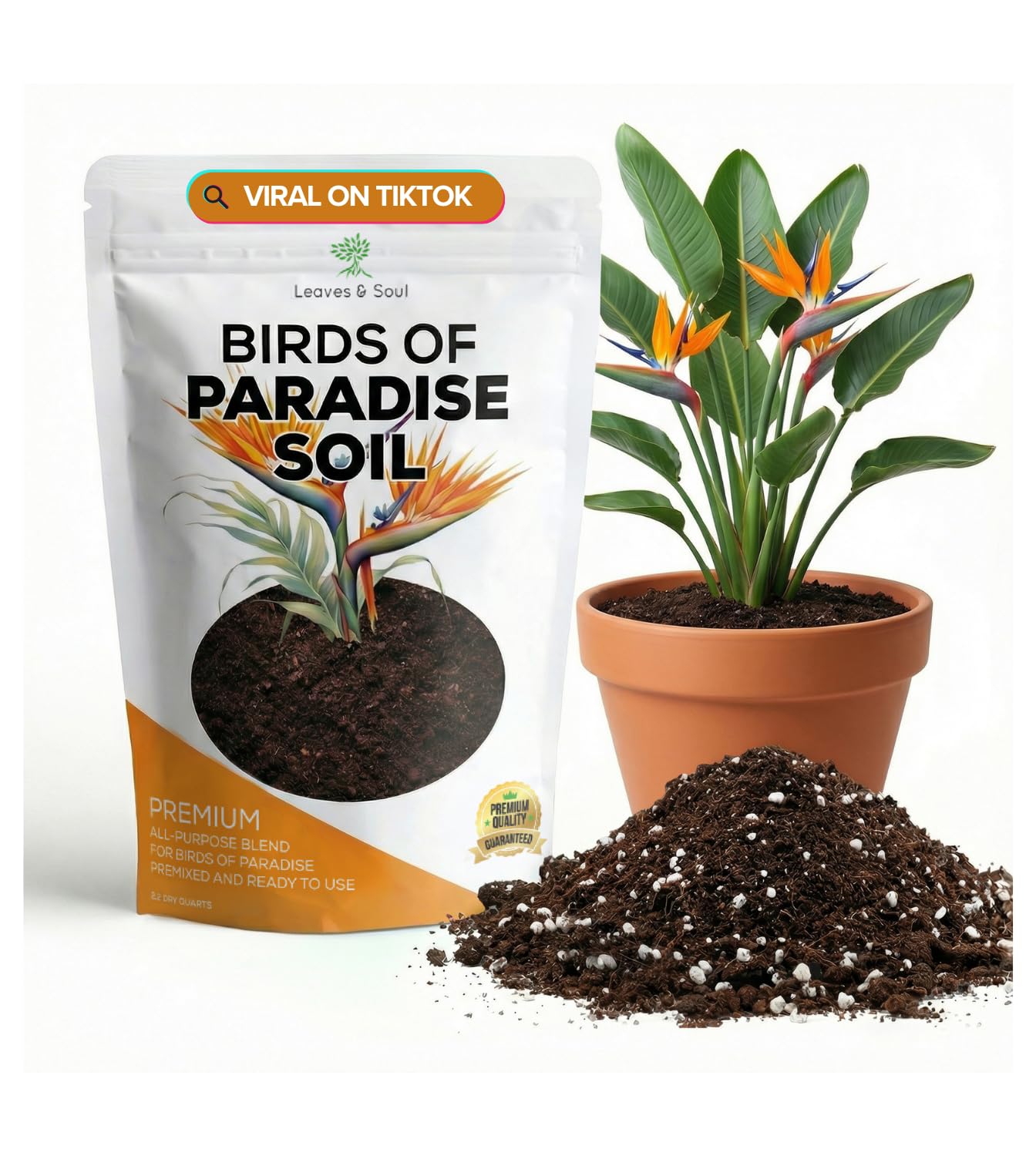
Leaves and Soul takes a more comprehensive approach than the pure base mix, incorporating both peat moss and coco coir for dual-source moisture management, plus dolomite lime for pH stabilization and added perlite for drainage. The inclusion of both peat and coir gives this blend a broader moisture curve — the peat holds water against gravity while the coir adds capillary action that keeps the upper root zone hydrated longer.
Owner feedback across multiple plant types — including African violets, orchids, and bonsai — indicates the mix consistently supports healthy root establishment. For BoP specifically, the balanced aeration prevents the root compaction that leads to stalled growth, and the dolomite prevents the pH from swinging too acidic as the peat breaks down over time.
One minor issue reported is that the soil can separate during shipping, with the denser perlite settling to the bottom. This is easily remedied by shaking or gently mixing the contents before use, but it’s worth noting for anyone expecting a fully homogenous pour.
What works
- Dual peat + coir base for balanced moisture across the root zone
- Dolomite lime maintains stable pH between 6.0 and 7.0
- Resealable packaging stores cleanly between uses
What doesn’t
- Denser components may separate during transit
- No added mycorrhizae or biochar for long-term soil biology
3. Craft Houseplant Potting Mix by Grow Queen
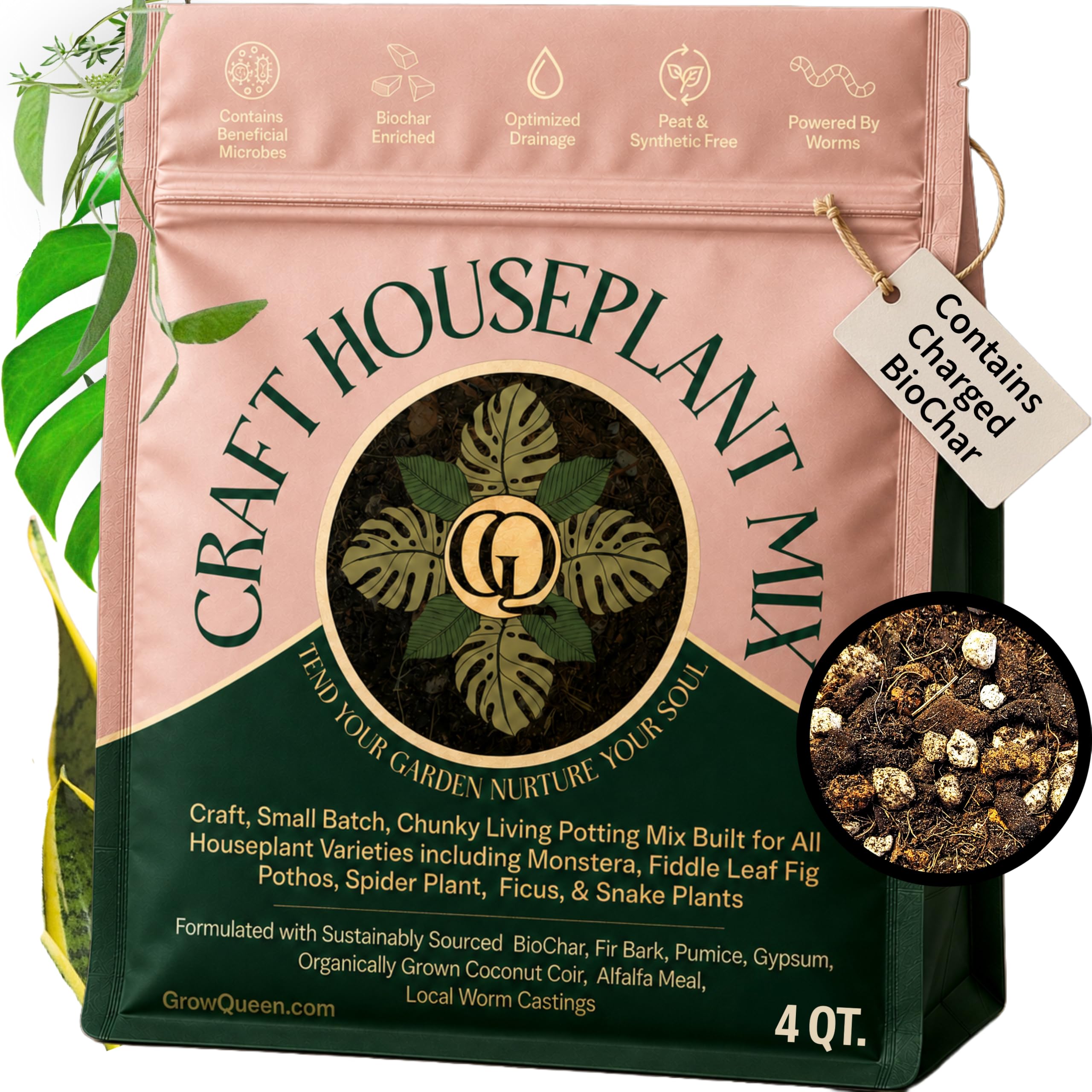
Grow Queen’s Craft Houseplant Mix is effectively the same chunky aroid formula as their Craft Aroid blend but packed with a higher density of worm castings and charged biochar for a more nutrient-dense environment. The structure relies on Douglas fir bark fines, lava rock, and pumice, creating the same instant-drainage profile that prevents overwatering. The pre-moistened arrival is a genuine advantage — it eliminates the hydrophobic dry spots that plague many peat-based bags, allowing roots to establish contact with moisture from day one.
Multiple owners report using it successfully for BoP after having struggled with fungus gnat infestations in traditional peat mixes. The open, fast-drying texture breaks the gnat life cycle because the top inch of soil doesn’t stay wet long enough for eggs to hatch. Monstera and Thai Constellation owners also swear by this mix, which aligns well with the similar root requirements of Strelitzia.
The 4-quart size is well-suited for smaller BoP specimens or single repots, but owners of large floor plants (5+ feet tall) will need two or three bags. The premium ingredients also place it at a higher per-quart cost than the entry-level mixes.
What works
- Peat- and perlite-free structure resists compaction permanently
- Pre-moistened formula eliminates transplant shock and hydrophobic soil
- Charged biochar and worm castings provide months of steady nutrition
What doesn’t
- Small bag size requires multiple bags for large BoP plants
- Premium ingredient cost is higher than base peat mixes
4. Craft Aroid Potting Mix by Grow Queen
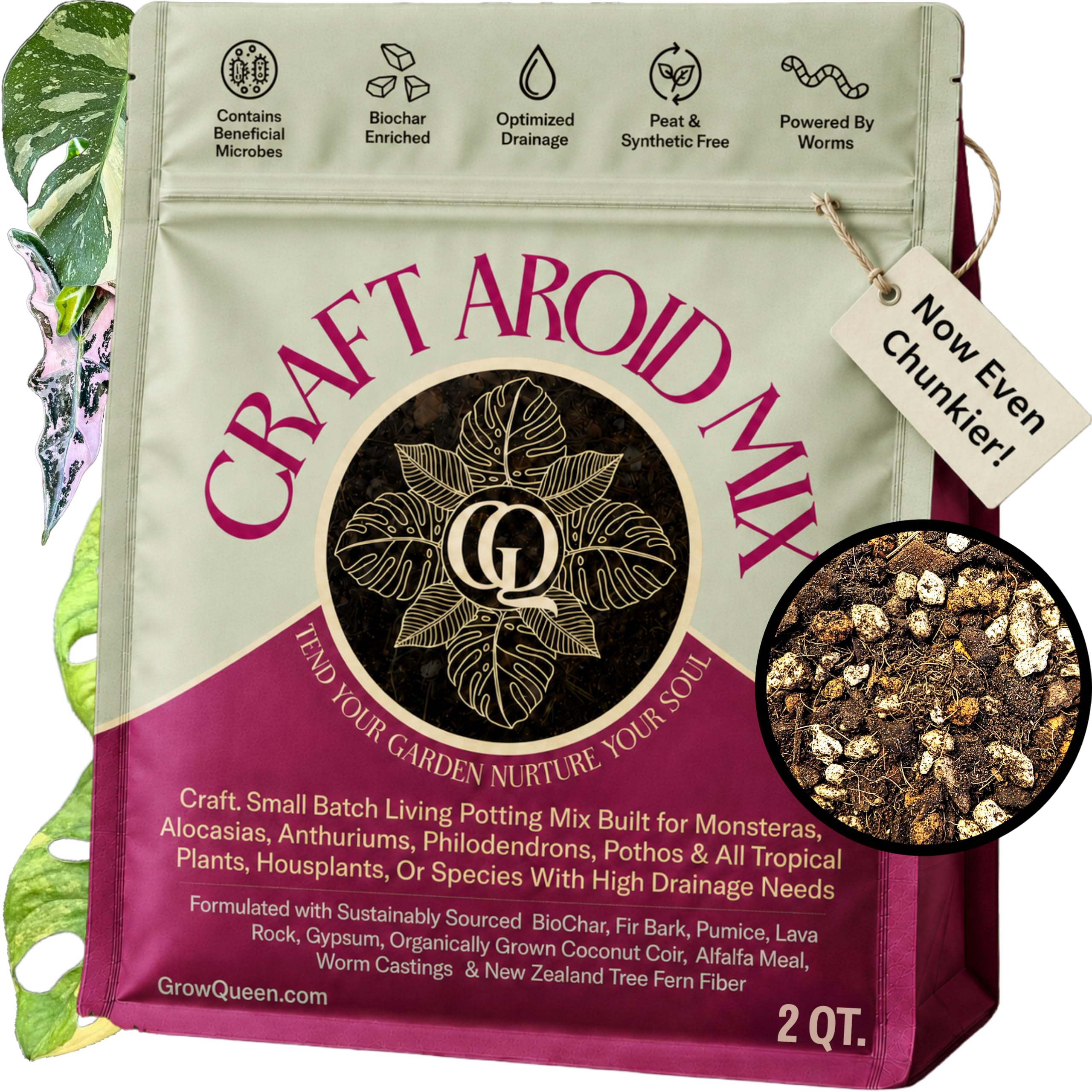
This is the 2-quart entry from Grow Queen in the same Craft series, with the same Douglas fir bark, lava rock, and pumice base, plus New Zealand tree fern fiber. The tree fern fiber is the standout component — it acts as a natural pH buffer that pulls the mix toward the acidic side (around 6.0), which mimics the forest floor pH where tropical plants naturally grow. For Bird of Paradise, this means iron and manganese uptake improves, showing up as darker green foliage and faster leaf expansion.
Customers ordering repeats (some on their fifth bag) consistently praise the absence of mold, bugs, and sour smells. The mix arrives ready to use and has universal positive feedback across aroids, palms, and tropical plants. The fast drainage is almost impossible to override, making it ideal for anyone who tends to overwater or uses pots without perfect drainage holes.
The primary drawback is the small 2-quart volume which is really only sufficient for small BoP plants in 6-inch pots or for refreshing topdressing. Mature specimens will need this in combination with the 4-quart Craft Houseplant Mix or multiple bags.
What works
- New Zealand tree fern fiber buffers pH to optimal 6.0 range
- Chunky lava rock and pumice structure provides instant drainage
- Consistently pest- and mold-free across multiple customer orders
What doesn’t
- 2-quart size is too small for mature floor-plant BoP
- Lacks worm castings or mycorrhizae found in the Houseplant version
5. Rosy Soil Aroid Soil Mix
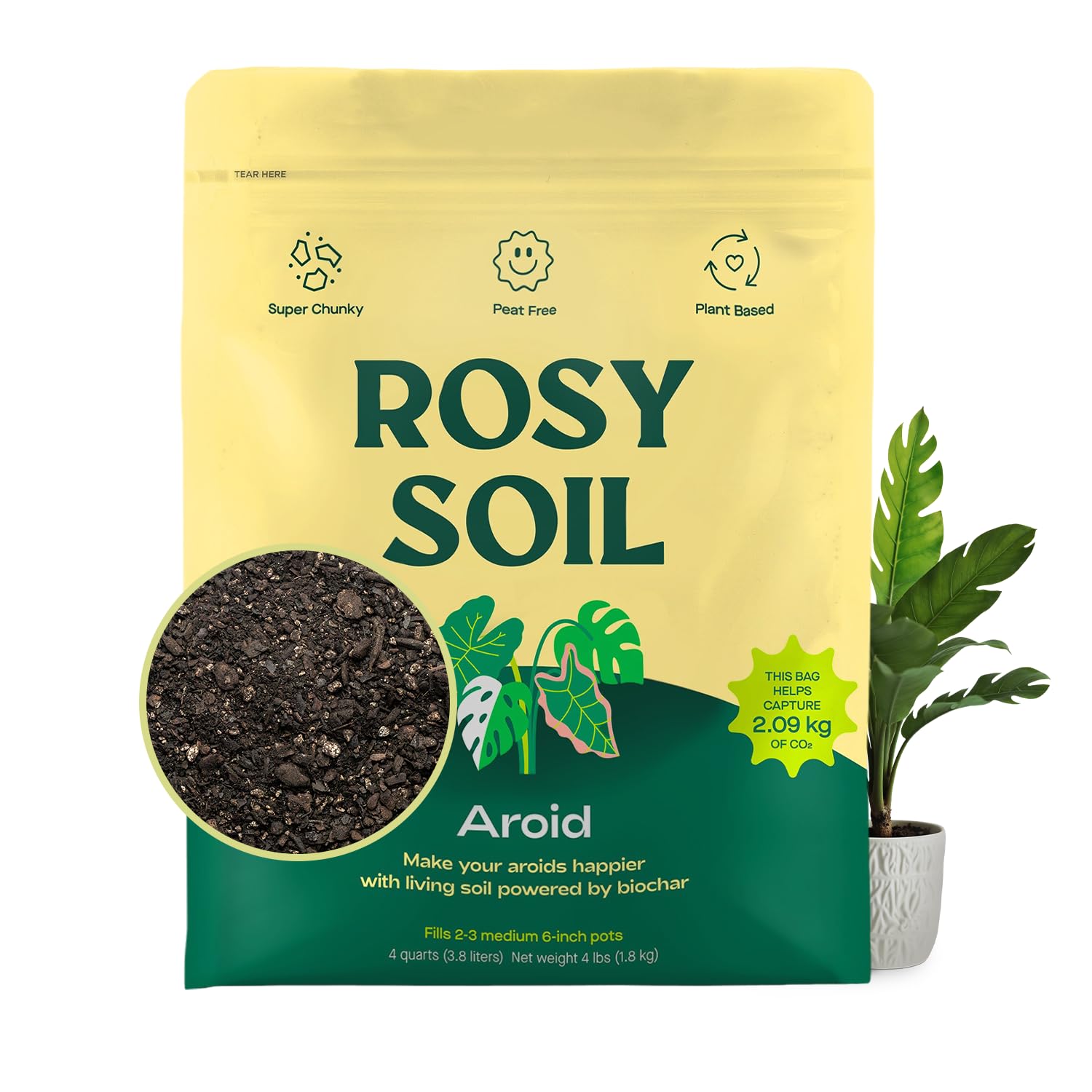
Rosy Soil differentiates itself through a carbon-negative ingredient philosophy, replacing peat with horticultural biochar (a pyrolyzed organic carbon) and natural pumice. The biochar serves multiple functions: it creates permanent pore structure that never compacts, houses beneficial microbial colonies, and stores nutrients that would otherwise leach out during watering. For BoP, this translates into a mix that doesn’t degrade structurally even after a year of regular watering cycles.
Owner feedback highlights a rapid growth response — multiple users report stalled philodendrons and alocasia pushing new growth within a week of transplanting, and the same effect applies to Bird of Paradise. The mix dries quickly enough to prevent overwatering issues, and the mycorrhizae present in the blend help the roots extract phosphorus and micronutrients more efficiently.
Some owners note that the texture feels less “chunky” than specialty bark-heavy blends like the Grow Queen Craft series — it’s closer to a premium potting soil than a chunky aroid mix. Also, the 4-quart bag covers only 2-3 medium 6-inch pots, so large BoP owners will need to stock up.
What works
- Biochar provides permanent aeration structure that never compacts
- Carbon-negative production avoids peat bog depletion
- Mycorrhizae and worm castings promote explosive root development
What doesn’t
- Less chunky than bark-heavy blends — closer to standard soil density
- Small bag size drives higher per-quart cost for large repots
6. AROID Potting Mix by Top Tier Genetics
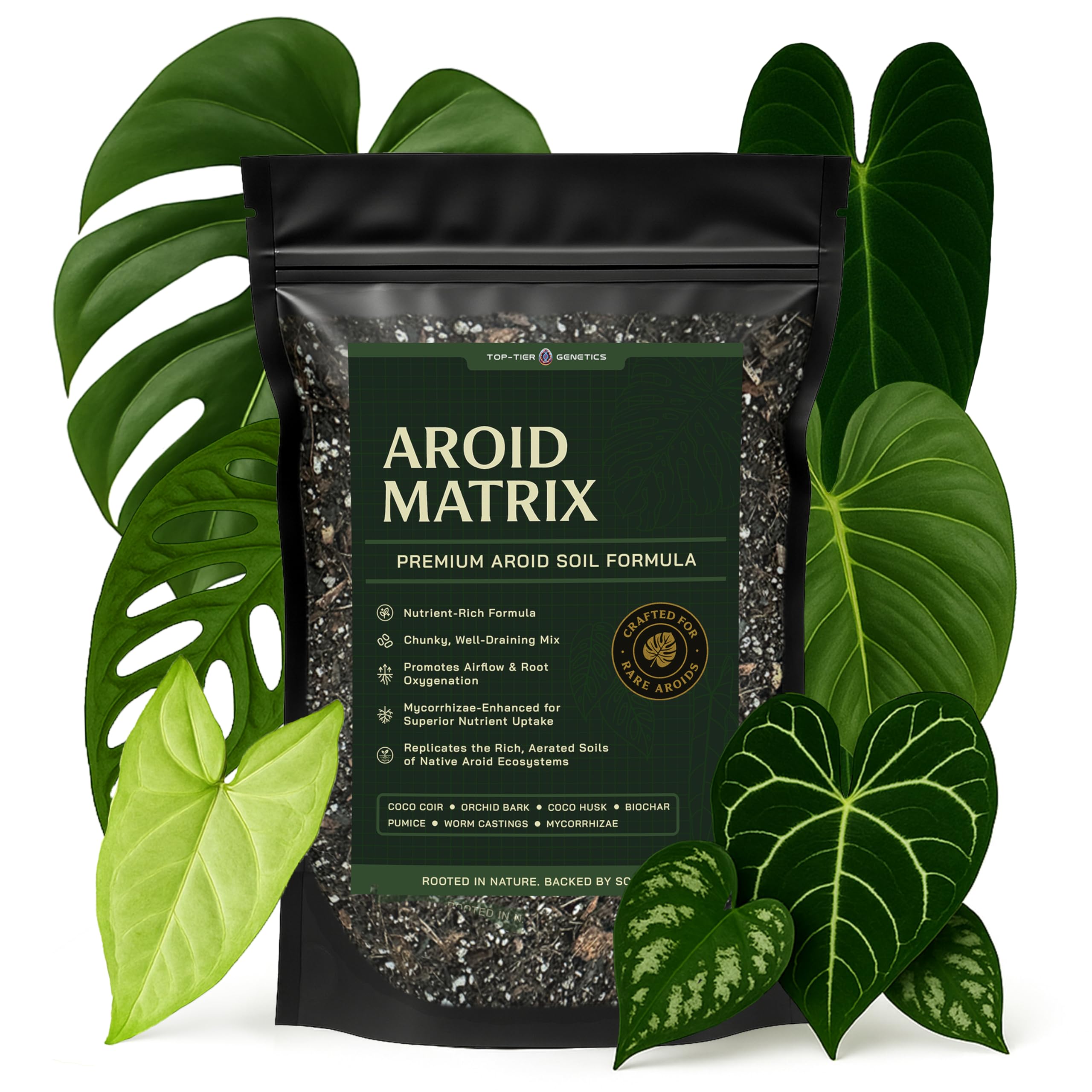
Top Tier Genetics built this mix specifically around aroids but loaded it with three nutrient-dense components — worm castings, mycorrhizal fungi, and biochar — that give it a higher baseline fertility than most aroid blends. The structure uses orchid bark fines, coco husk chunks, and pumice, creating the chunkiest texture in this lineup. For Bird of Paradise, this means the roots can weave through large air pockets while the worm castings provide consistent nitrogen for leaf production.
Owner reviews describe plants “taking off” after repotting, with multiple reports of explosive root growth and visibly healthier foliage. The ready-to-use nature eliminates the need to mix in extra bark or perlite, and the bag arrives fresh and moist without being soggy. The 4-quart size is ideal for small to medium BoP in 8- to 10-inch pots.
The main constraint is the same across premium aroid mixes — large plants will need multiple bags. Also, several users mention that heavy foliage plants in this mix should still receive supplemental liquid fertilizer every 4-6 weeks during the growing season, as the slow-release nutrients will deplete faster in very active specimens.
What works
- Orchid bark + coco husk creates the chunkiest, most aerated texture
- Worm castings and mycorrhizae deliver rapid root and foliage growth
- Biochar maintains long-term nutrient retention and microbial life
What doesn’t
- Large mature plants require multiple bags
- Active growers may need supplemental liquid feeding after 4-6 weeks
7. Miracle-Gro Potting Mix (3-Pack)

Miracle-Gro Potting Mix is the broad, affordable option that most gardeners already know. It’s a standard sphagnum peat and perlite blend fortified with a synthetic slow-release fertilizer that feeds container plants for up to six months. For Bird of Paradise, this works best as an emergency or budget-friendly soil when the specialty blends are unavailable — the aeration is adequate for small plants in pots under 8 inches if drainage is managed carefully.
Owner feedback for general container use is overwhelmingly positive, with thousands of ratings noting reliable growth for annuals, perennials, vegetables, and shrubs. The 3-pack provides 24 total quarts of soil, which is enough to repot multiple BoP plants or a very large floor specimen into a 14- or 16-inch pot with room to spare.
The significant limitation for BoP is that this mix is denser and retains more water than the plant’s roots prefer. Over time, the peat can break down into finer particles that fill the air pockets, leading to soil compaction and reduced oxygen around the rhizome. Owners using this for tropical plants should mix in 30-40% extra perlite or orchid bark to bring the drainage speed closer to what a BoP needs.
What works
- Excellent value with three bags providing 24 total quarts
- Built-in slow-release fertilizer covers 6 months of feeding
- Widely available at garden centers and online retailers
What doesn’t
- Retains too much moisture for BoP in its standard form
- Peat structure breaks down over time, reducing aeration
- Requires amendment with perlite or bark for Bird of Paradise use
Hardware & Specs Guide
Bag Volume and Coverage
The amount of soil you need depends entirely on the pot size. A standard 6-inch nursery pot holds roughly 1.5 quarts. An 8-inch pot takes about 3 quarts. A 12-inch pot (typical for a 3-4 foot BoP) needs 7-9 quarts. Large floor specimens in 16-inch or larger pots require 14-18 quarts. Specialty packs like the 2-quart Grow Queen Craft Aroid are perfect for small repots or topdressing, while the 8-8.2 quart options from Soil Sunrise and Leaves and Soul cover the medium-large range in one bag. The 3-pack of Miracle-Gro is the only option designed for volume (24 quarts), but requires amendment.
Peat vs. Peat-Free Composition
Peat moss is the most common water-retention component in potting mixes, but it is non-renewable, acidic (pH 3.5-4.5), and compresses over time. Coco coir is a renewable alternative that has better capillary action and a neutral pH around 6.0, but it holds water longer than peat. Biochar, used by Rosy Soil and the Grow Queen Craft blends, is a carbon-negative alternative that never decomposes, provides permanent pore structure, and houses beneficial microbes. For Bird of Paradise, which needs consistent oxygen, peat-free or biochar-based blends maintain aeration longer than peat-heavy mixes.
FAQ
Can I use regular potting soil for Bird of Paradise?
What pH should soil for Bird of Paradise be?
How often should I repot Bird of Paradise with fresh soil?
Why is my Bird of Paradise soil staying wet for a week?
Do I need to add fertilizer to Bird of Paradise potting mix?
Final Thoughts: The Verdict
For most gardeners, the soil for bird of paradise winner is the Soil Sunrise Bird of Paradise Mix because its peat-perlite-lime formulation hits the specific pH and drainage sweet spot recommended for Strelitzia without requiring extra amendments. If you want a peat-free, living-soil approach that rewards your plants with accelerated growth, grab the Rosy Soil Aroid Mix. And for the budget-conscious grower with multiple plants or a very large BoP, nothing beats the value of the Miracle-Gro Potting Mix 3-Pack provided you mix in extra perlite or bark fines.