
Yellowing needles, stunted growth, and sparse branches are the first signs your pine tree is starving — not from a lack of general fertilizer, but from missing the specific acidic nutrients conifers crave. Standard lawn feeds with high nitrogen and neutral pH chemistry actually worsen the problem by pushing soil alkalinity further out of range.
I’m Rikta — the co-founder and writer behind Lawn Gear Lab. I’ve spent hundreds of hours analyzing soil chemistry data, comparing NPK ratios and sulfur content across dozens of acid-loving plant foods, and cross-referencing owner feedback to pinpoint which formulations actually rebuild needle density and root vigor in pines, spruces, and firs.
Every guide on this site is built from that research. If you want to restore dark green color and dense growth to your conifers, this analysis of the best pine tree fertilizer will show you exactly which formula matches your soil conditions and tree size.
How To Choose The Best Pine Tree Fertilizer
Feeding a pine tree isn’t about dumping any bag of plant food at its base. Pines are shallow-rooted acidophiles that depend on a narrow soil pH range to access nutrients. Choose wrong and you’ll either burn the roots or lock out the micronutrients the tree needs to produce chlorophyll.
Prioritize an Acid-Loving Formula with Sulfur
Pine trees require a soil pH between 4.5 and 6.0. The single most important ingredient in a pine fertilizer is elemental sulfur or ammonium sulfate, which lowers soil pH. Products like Espoma Holly-Tone and Earth Science Fast Acting Sulfur are built around this principle. A fertilizer without a sulfur component will not correct the alkaline soil conditions that cause yellow needles.
Match the NPK Ratio to Your Tree’s Growth Stage
Nitrogen is the dominant nutrient for evergreens — look for a first number (N) between 10 and 16 for mature pines. The middle number (phosphorus) should be lower, since pines don’t need heavy bloom support. A ratio like 10-5-10 or 16-4-4 works well. Avoid formulas with a second number above 10 unless you are correcting a specific phosphorus deficiency confirmed by a soil test.
Choose the Right Application Method for Your Setup
Spike fertilizers (Jobe’s, Old Farmer’s Almanac) deliver nutrients directly to the root zone without runoff and are ideal for established trees on slopes or near paved areas. Granular formulas (Espoma, Andersons) provide broader coverage for multiple trees and allow you to control the application rate. Water-soluble powders (Carl Pool) work best for potted pines or young transplants where you need fast correction of chlorosis.
Quick Comparison
On smaller screens, swipe sideways to see the full table.
| Model | Category | Best For | Key Spec | Amazon |
|---|---|---|---|---|
| Espoma Organic Holly-Tone | Granular Organic | Established pines needing pH correction | 4-3-4 + 5% Sulfur | Amazon |
| Jobe’s Tree Spikes 16-4-4 | Spikes | Mess-free feeding of mature pines | 16-4-4 Time Release | Amazon |
| The Old Farmer’s Almanac TruSpikes | Spikes | Hard clay soil feeding | 13-3-3 Shatter-proof | Amazon |
| The Andersons PGF 16-0-8 | Granular Synthetic | Large pine stands with high phosphorus soil | 16-0-8 + Humic DG | Amazon |
| Earth Science Fast Acting Sulfur | Soil Amendment | Lowering soil pH before feeding | 90% Elemental Sulfur | Amazon |
| Carl Pool BR-61 9-58-8 | Water-Soluble | Quickly green up chlorotic potted pines | 9-58-8 Bloom Booster | Amazon |
| Jobe’s Palm Spikes 10-5-10 | Spikes | Ornamental conifers in landscape beds | 10-5-10 + Micro-nutrients | Amazon |
In‑Depth Reviews
1. Espoma Organic Holly-Tone 4-3-4

Espoma Holly-Tone is the gold standard for acid-loving plants because it combines a low 4-3-4 NPK with 5% elemental sulfur — the exact chemistry pines need to absorb iron and manganese in alkaline soils. The 36-pound bag covers roughly 18 mature trees when applied at the drip line in spring and fall. It is OMRI-listed for organic gardening, contains no sludges or synthetic fillers, and relies on a slow-release Bio-tone microbial blend that won’t burn shallow feeder roots.
Owner reports consistently note dark green needle color appearing within two to three weeks after spring application, and many users with magnolias, azaleas, and rhododendrons also use it on their pines with equal success. The granular form requires some manual spreading and watering-in, but that minor effort is offset by the reservoir of nutrients that persists for months. For a homeowner with multiple pines or a mixed acid-loving landscape, this is the most cost-effective and biologically sound option available.
The only limitation is the lower nitrogen content compared to synthetic spikes — if your pine is severely nitrogen-deficient, you may need a supplemental boost. But for routine annual feeding that fixes soil pH first, Holly-Tone is unmatched.
What works
- Contains 5% sulfur to actively lower soil pH for pine health
- Certified organic with Bio-tone microbes for sustained release
- Large 36-pound bag provides excellent coverage for multiple trees
What doesn’t
- Granular form requires raking into soil and thorough watering
- Nitrogen (4) is low for correcting advanced needle yellowing quickly
2. Jobe’s Tree Fertilizer Spikes 16-4-4

Jobe’s 16-4-4 spikes are the closest thing to a “set it and forget it” solution for pines. Each spike delivers a high-nitrogen, time-release feed directly to the root zone through a pre-measured stick format that eliminates runoff, measuring, and mixing. The 16-4-4 ratio is heavily weighted toward nitrogen — exactly what established conifers need to push dense needle growth — while the 4% phosphorus keeps root development steady without overstimulating blooms.
Real-world feedback from owners of drought-stressed pines and shrubs shows visible recovery within one growing season. Users hammer the spikes into damp soil around the drip line, and the 30-count package (two packs of 15) covers a surprising number of trees. The spikes are formulated to avoid burning roots, which is critical for pines since their feeder roots run close to the soil surface.
The trade-off is the lack of sulfur or any pH-lowering amendment. If your soil is already alkaline, you will need to pair these spikes with a sulfur treatment like Earth Science Fast Acting Sulfur to get full nutrient uptake. But for pines growing in naturally acidic soil, this is the easiest and most effective spike option on the market.
What works
- Pre-measured spikes eliminate guesswork and chemical runoff
- High 16-4-4 nitrogen ratio drives rapid needle greening
- Won’t burn shallow pine roots when used per instructions
What doesn’t
- Contains no sulfur to address high soil pH
- Requires pre-drilling or hammering in hard or clay soil
3. The Old Farmer’s Almanac Tree & Shrub Fertilizer Spikes 13-3-3
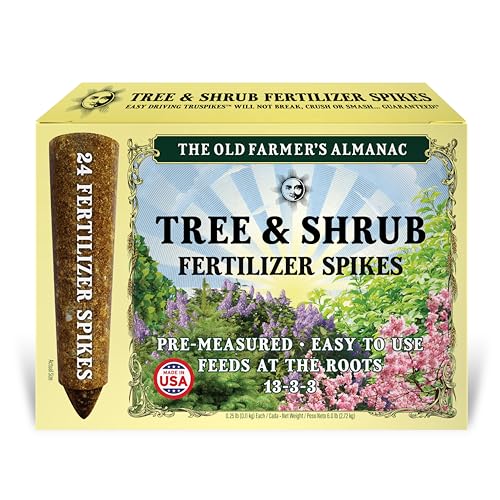
The Old Farmer’s Almanac TruSpikes are engineered specifically for tough soil conditions. The 13-3-3 formula is balanced for both deciduous trees and conifers, with 13% nitrogen to restore green color and the company’s patented shatter-proof design that holds together even when hammered into dense clay. Each 5-inch spike is packed with molasses-based organics that feed soil microbes while releasing nutrients directly into the root zone.
Owners hammering these into rocky or clay-heavy ground report that the spikes do not crumble or crack, unlike many competing brands that break apart during installation. The 24-spike box provides two full seasonal feedings (early spring and late fall) for a medium-sized yard with several pines and shrubs. Multiple reviewers noted that their Japanese Stewartia and beech trees produced more flowers and denser foliage after just one application.
The primary downside is the absence of sulfur or iron for direct pH correction. For pines growing in neutral or alkaline soils, this spike will need to be supplemented with a soil acidifier. Also, the 13-3-3 ratio, while solid for general tree health, is slightly lower in nitrogen than Jobe’s 16-4-4 for rapid chlorosis reversal.
What works
- Shatter-proof design handles clay and rocky soil without breaking
- 13% nitrogen provides strong seasonal needle greening
- Contains molasses organics to stimulate beneficial soil bacteria
What doesn’t
- No sulfur or iron for correcting alkaline soil pH
- NPK ratio is not optimized for heavy nitrogen-demanding conifers
4. The Andersons Professional PGF 16-0-8 with Humic DG
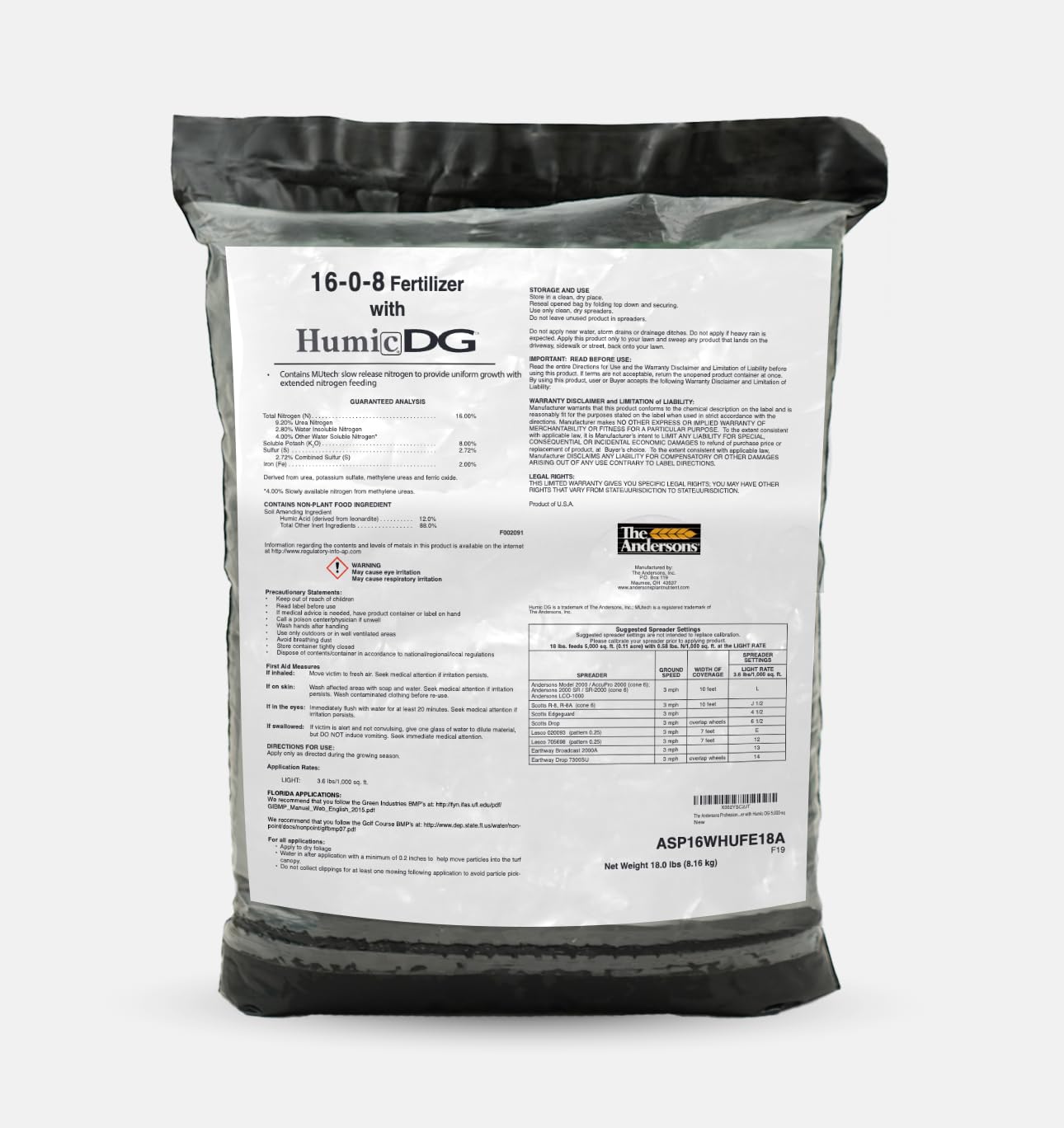
The Andersons PGF 16-0-8 is a professional-grade granular fertilizer designed for precision feeding of large landscapes. Its phosphorus-free composition makes it ideal for pines planted in soil already rich in phosphorus — a common condition in older suburban yards. The super-fine particles deliver twice the coverage per square foot compared to standard granules, while the combination of quick-release and slow-release nitrogen provides an immediate green-up and sustained feeding for up to eight weeks.
Humic DG is integrated into every granule, chelating micronutrients so pine roots can absorb iron and zinc more effectively even in alkaline conditions. Owners with large pine stands or multiple conifers consistently report that this is the most uniform fertilizer they’ve ever spread, with no streaking or burn patches. The bag covers roughly 10,000 square feet, making it a strong choice for homeowners managing a substantial property.
On the downside, this product is not available in California or Oregon due to state regulations, and it does not contain added sulfur. You will need to manage soil pH separately. It is also the most expensive entry in this guide, though the per-square-foot cost is competitive for the coverage it provides.
What works
- Phosphorus-free design prevents runoff where soil P is already high
- Humic DG chelates micronutrients for better uptake in alkaline soil
- Dual-release nitrogen greens pines fast and feeds for 8 weeks
What doesn’t
- Not available in California or Oregon
- Requires separate sulfur application for pH correction
5. Earth Science Fast Acting Sulfur Granules

Earth Science Fast Acting Sulfur is not a fertilizer — it is a soil amendment that addresses the root cause of pine decline: high soil pH. Packed with 90% elemental sulfur and featuring the company’s patented Nutri-Bond Technology, these granules bond with soil particles to prevent leaching and begin lowering pH within days of application. For pines showing chlorosis due to alkaline soil, this product is the single most effective first step you can take.
Owners growing hydrangeas, blueberries, and evergreens report that a single application per season keeps blooms colorful and needles dark green. The 5-pound bag is small enough to store easily but potent enough to treat several mature trees when applied at the manufacturer’s recommended rate. The granules are safe for people and pets immediately after watering in, which is convenient for properties with dogs or children.
The limitation is clear: this product provides no NPK nutrition. Use it as a companion to Jobe’s 16-4-4 spikes or Espoma Holly-Tone for a complete feeding program. And while it is labeled “fast acting,” some users note the pellets require multiple waterings to fully dissolve in dry clay.
What works
- 90% elemental sulfur rapidly lowers soil pH for acid-loving pines
- Nutri-Bond Technology reduces runoff and keeps sulfur in the root zone
- Safe for pets and children immediately after watering
What doesn’t
- Contains zero NPK — must be paired with a nitrogen fertilizer
- Granules dissolve slowly in dry, compacted clay soil
6. Carl Pool BR-61 Plant Food 9-58-8
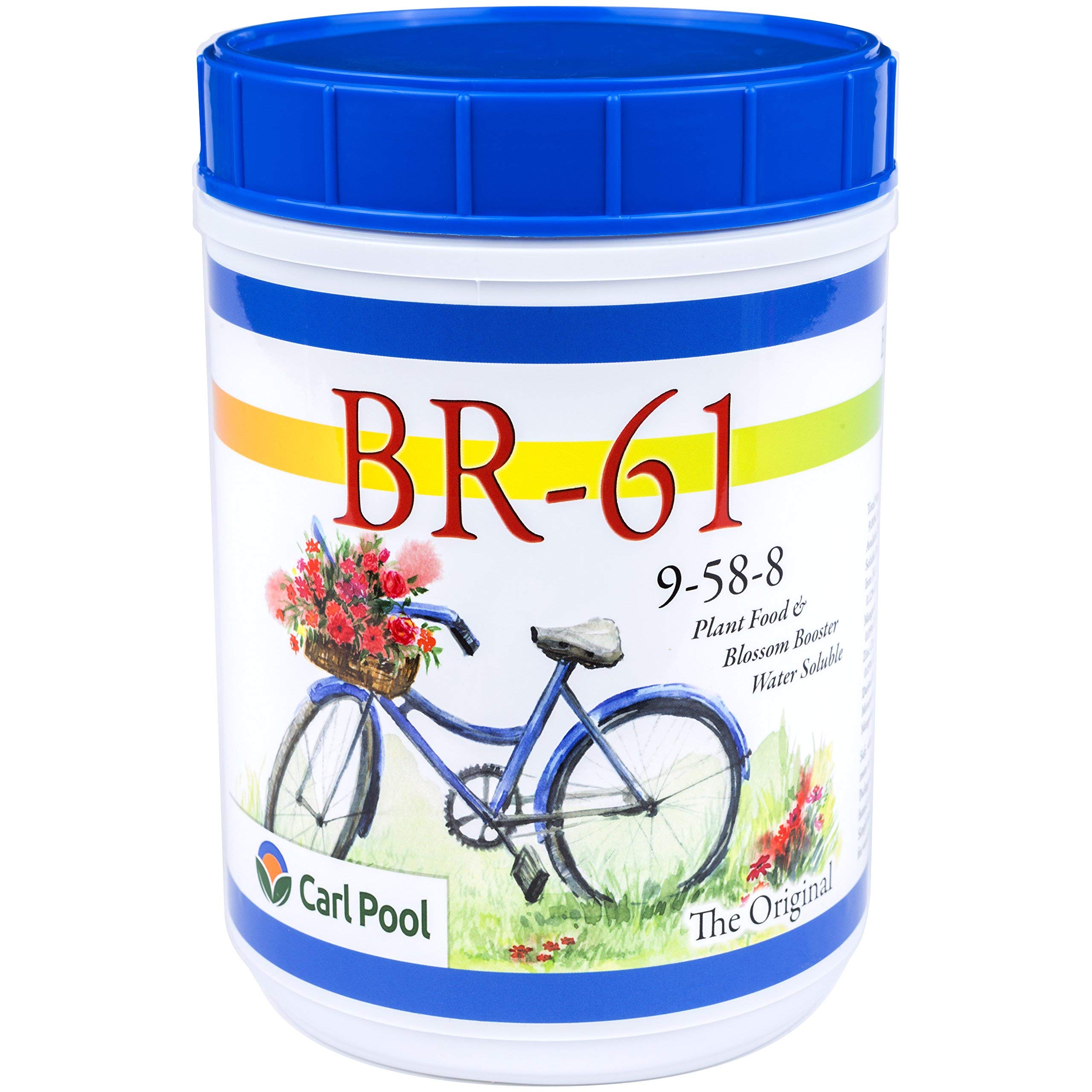
Carl Pool BR-61 is a water-soluble bloom booster with a 9-58-8 NPK ratio that is extremely high in phosphorus. While pines do not need heavy phosphorus for flowering, the 58% phosphorus content makes this product uniquely useful for correcting severe phosphorus deficiencies confirmed by a soil test in potted pines or bonsai specimens. The powder mixes at a rate of one tablespoon per gallon of water and is immediately available to the roots.
Enthusiasts growing plumeria, flowering shrubs, and container evergreens report that BR-61 produces dramatic results within weeks, with more blooms and deeper leaf color. For pine trees planted in soil that tests deficient in phosphorus, this can jump-start root development and overall vigor faster than any granular product. The 3-pound bag stores compactly and lasts many seasons if used sparingly.
However, the extremely high phosphorus content is unnecessary and potentially counterproductive for most pines in normal garden soil. Over-application can inhibit the uptake of iron and zinc, worsening chlorosis. This product is not intended as a general-purpose pine feed — it is a targeted corrective tool for a specific deficiency.
What works
- Water-soluble powder provides instant nutrient availability for potted pines
- Extremely high phosphorus corrects severe P deficiencies quickly
- Compact 3-pound bag with a long shelf life
What doesn’t
- 58% phosphorus is excessive for most pine soil conditions
- Requires a soil test before use to avoid micronutrient lockout
7. Jobe’s Palm Tree Fertilizer Spikes 10-5-10

Jobe’s Palm Tree Spikes 10-5-10 are formulated for palms but work well for ornamental conifers, including dwarf pines, junipers, and cypress, because they contain sulfur, magnesium, iron, and zinc — the exact micronutrient package acid-loving evergreens need. The 10-5-10 ratio provides moderate nitrogen for green needles while the secondary nutrients prevent common deficiencies that cause tip burn and yellowing between needles.
Owners of royal palms, sago palms, and landscape conifers consistently describe the spike format as a “miracle product” for trees that were struggling. The spikes are hammered into the ground around the drip line, and users report visible results within days — upright fronds, new growth pods, and deeper coloration. The 15-count package is well-suited for small properties with a few specimen trees.
The main drawback is that the 10-5-10 ratio is lower in nitrogen than dedicated pine spikes like Jobe’s 16-4-4, so large nitrogen-hungry pines may need more frequent applications. Additionally, the packaging can overstate how many spikes one tree needs, leading to faster-than-expected depletion of the box.
What works
- Contains sulfur, magnesium, iron, and zinc for micronutrient correction
- Spike delivery is clean and easy with no mixing or measuring
- Quick visible results on ornamental conifers and palms
What doesn’t
- 10-5-10 ratio is lower in nitrogen than dedicated pine spikes
- Packaging may overstate coverage per box for larger trees
Hardware & Specs Guide
NPK Ratio
The three numbers on a fertilizer bag represent Nitrogen (N), Phosphorus (P), and Potassium (K). For pines, nitrogen is the primary driver of needle density and color, so the first number should be the highest — typically between 10 and 16. Phosphorus should stay below 10 to avoid bloom stimulation and micronutrient lockout. Potassium in the 4–10 range supports root strength and disease resistance.
Sulfur Content
Pine trees are obligate acidophiles that require a soil pH of 4.5–6.0. Sulfur (elemental or ammonium-based) is the ingredient that actively lowers soil pH. Look for a guaranteed sulfur percentage of 3% or higher on the label, or pair a neutral fertilizer with a sulfur amendment like Earth Science Fast Acting Sulfur to achieve the correct growing environment.
Application Method
Spike fertilizers (Jobe’s, Old Farmer’s Almanac) deliver nutrients directly to the root zone with zero runoff, making them ideal for sloped properties and areas near hardscaping. Granular fertilizers (Espoma, Andersons) require spreading and watering but provide even coverage for larger tree stands. Water-soluble powders (Carl Pool) are best for small potted pines or precision corrective feeding where the tree shows acute deficiency symptoms.
Micronutrients
Iron, magnesium, manganese, and zinc are critical for chlorophyll synthesis in pines. A fertilizer that includes chelated iron and magnesium sulfate will correct interveinal chlorosis (yellowing between needle veins) faster than nitrogen alone. The Espoma Holly-Tone and Jobe’s Palm Spikes both include these secondary nutrients as standard.
FAQ
Can I use regular lawn fertilizer on my pine trees?
How often should I fertilize a mature pine tree?
What does yellowing pine needles mean nutritionally?
Final Thoughts: The Verdict
For most gardeners, the best pine tree fertilizer winner is the Espoma Organic Holly-Tone 4-3-4 because its 5% sulfur content and organic Bio-tone slow-release formula directly address the two biggest problems pines face: alkaline soil and shallow root feeding. If you want mess-free convenience for a single mature tree, grab the Jobe’s Tree Fertilizer Spikes 16-4-4. And for correcting severe yellowing in a potted pine or ornamental conifer, nothing beats the targeted micronutrient profile of the Earth Science Fast Acting Sulfur paired with a balanced feed.