
A 25-gallon plant pot is a serious commitment of soil, water, and patio space — and the wrong choice means cracked plastic, collapsed fabric, or roots that circle into a death spiral before your tomatoes ever set fruit. Whether you are raising a single dwarf fruit tree or a dozen tomato plants across a raised deck, the container’s material, drainage system, and handle integrity determine whether your summer harvest thrives or drowns. Fabric pots have mostly won this category, but the variation in fabric density, stitching, and waterproofing layers creates a wide gulf between a pot that works for one season and one that lasts five.
I’m Rikta — the co-founder and writer behind Lawn Gear Lab. I’ve spent hundreds of hours comparing nonwoven fabric weights, studying aeration hole patterns, and cross-referencing owner feedback on handle durability to identify the seven best 25-gallon plant pot options available today.
Below I break down the real-world differences in material thickness, reinforcement, and drainage design to help you select the right 25 gallon plant pot for your specific growing conditions and plant type.
How To Choose The Best 25 Gallon Plant Pot
Selecting a 25-gallon pot means balancing moisture management, structural integrity, and mobility. The wrong call on fabric density or waterproofing can force you to water twice daily or leave you unable to move the pot once filled. Focus on three variables: material weight, drainage architecture, and handle construction.
Fabric Weight and Density
The gram-per-square-meter (GSM) rating of nonwoven fabric directly controls how long the pot holds its shape and resists tearing under wet soil loads. Entry-level 180G fabric works for one season and may sag. The sweet spot for multi-season use is 300G — sturdy enough to stand upright when filled yet still breathable. For hot, dry climates, 500G fabric with a waterproof liner can cut watering frequency by half, but reduces airflow to the root zone.
Drainage and Aeration Design
Standard fabric pots allow water to weep through the entire sidewall. Some newer designs use a waterproof upper liner combined with a breathable bottom — this keeps soil moisture consistent while still providing air pruning at the root tips. PE plastic pots rely on 8 to 12 pre-cut holes for drainage. Plastic retains moisture longer, which helps in arid regions but risks root rot if overwatered. Fabric pots naturally prevent circling roots; plastic pots require dimpled walls or root-pruning features to achieve the same effect.
Handle Construction and Mobility
At 25 gallons, a fully saturated pot can weigh over 200 pounds. Handles that are merely folded fabric strips tear under that load. The strongest handles are serger-stitched or double-stitched to the bag body, creating a load-bearing seam that can survive dragging across concrete. Reinforced handles with cross-stitching or extra fabric layers allow you to tip, drag, or lift the pot without structural failure.
Quick Comparison
On smaller screens, swipe sideways to see the full table.
| Model | Category | Best For | Key Spec | Amazon |
|---|---|---|---|---|
| Gardzen 500G Liner 6-Pack | Fabric | Hot & Dry Climates | 500G fabric + waterproof liner | Amazon |
| Garden4Ever 12-Pack | Fabric | Large Plantings / Trees | 300G nonwoven, reinforced handles | Amazon |
| Gardzen 10-Pack | Fabric | Best Value 10-Pack | 300G fabric, double-stitched handles | Amazon |
| FEED GARDEN 8-Pack | Fabric | Heavy Vegetables | 300G fabric, 23.6-inch wide base | Amazon |
| JERIA 12-Pack | Fabric | Multi-Plant Variety | 300G fabric, includes plant labels | Amazon |
| VIVOSUN 5-Pack | Fabric | Budget 5-Pack Starter | 300G fabric, serger-stitched handles | Amazon |
| SPONDWILD 7-Pack | Plastic PE | Moisture Retention & UV | 180G PE plastic, 8 aeration holes | Amazon |
In‑Depth Reviews
1. Gardzen 6-Pack 25 Gallon Grow Bags, 500G Thick Nonwoven with Waterproof Liner
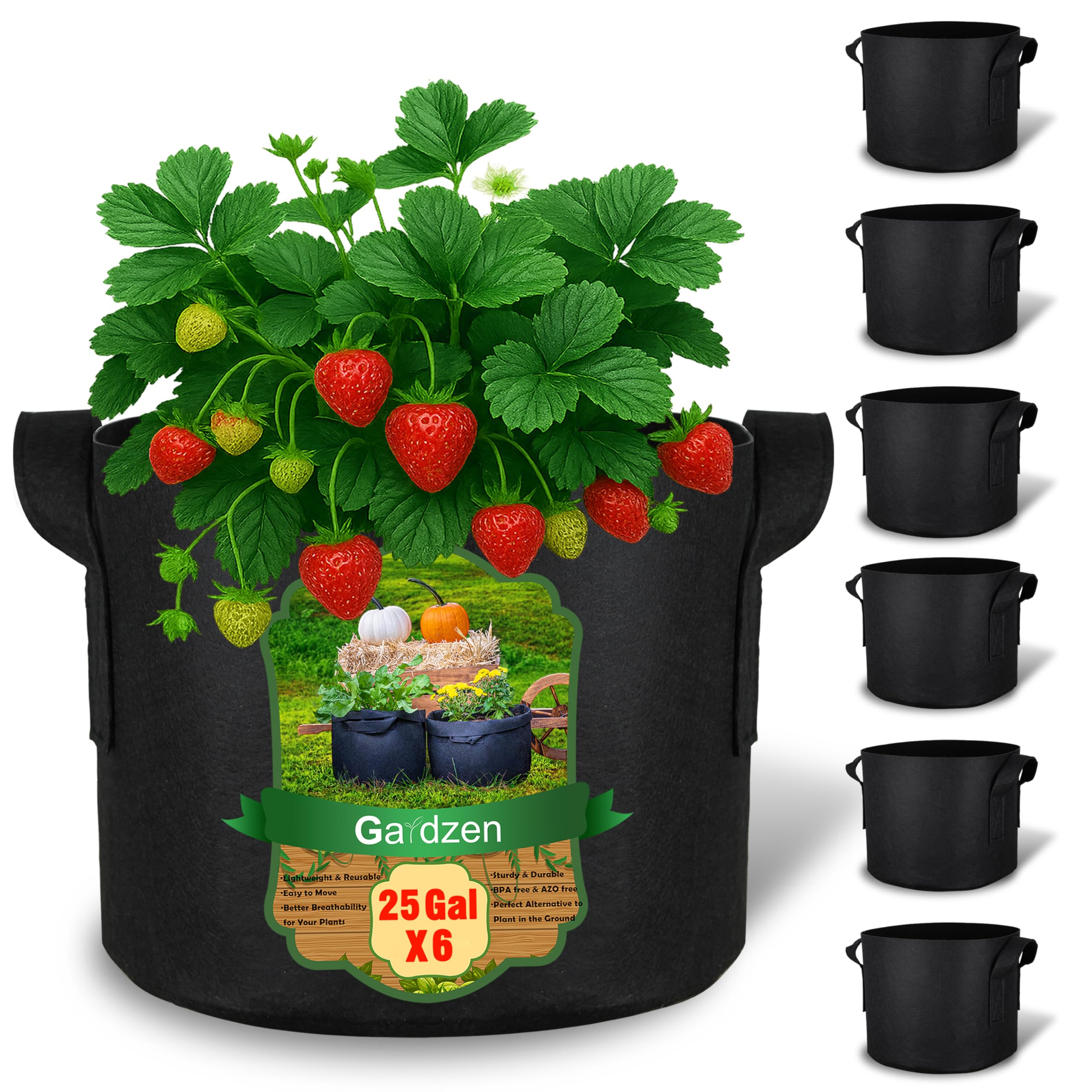
The Gardzen 6-pack uses the heaviest fabric in this lineup at 500G, combined with a built-in waterproof liner on the upper sidewalls. This design cuts evaporative water loss by roughly half compared to standard open-weave fabric pots. For gardeners in Arizona, Texas, or California who fight daily soil drying, this single feature eliminates the need for drip irrigation or twice-daily hand watering. The breathable bottom panel still provides air pruning and prevents waterlogging, so roots don’t suffocate.
The reinforced stitching along the side seams and the handles gives the bags structural confidence. Owner feedback notes that the 25-gallon size handles hold up well when dragging across a patio, though a few users report handle separation under extremely heavy wet loads — something to watch if you plan to move pots after heavy rain. The fabric has good UV resistance, though the 500G density means the bag does not dry out as fast as lighter fabric for those in humid climates where drainage speed matters more.
At a 6-pack count, this is the premium choice for gardeners who want to minimize maintenance time without switching to plastic. The cost per pot is higher than thinner alternatives, but the water savings and extended season of use justify the investment for serious vegetable or fruit growers in arid zones.
What works
- 500G fabric with waterproof liner dramatically reduces watering frequency
- Breathable bottom prevents root rot while locking in moisture
- Reinforced stitching improves structural life over standard fabric pots
What doesn’t
- Heavy fabric reduces airflow compared to open-weave 300G pots
- Handle stitching can separate under extreme saturated loads
- Higher per-pot cost than basic 300G alternatives
2. Garden4Ever 12-Pack 25 Gallon Grow Bags, Thickened Nonwoven Fabric with Handles
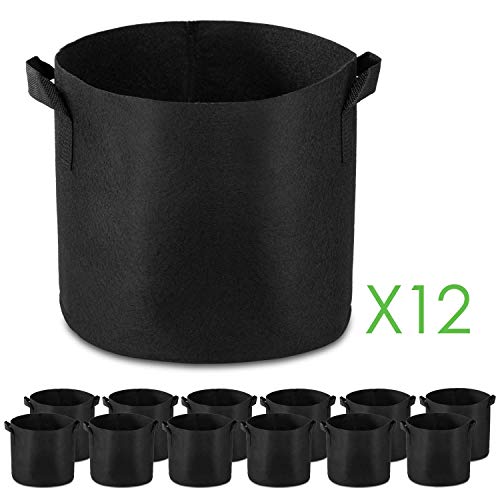
The Garden4Ever 12-pack delivers the highest unit count of any premium 300G fabric pot on this list. Each bag measures approximately 22 inches in diameter and 15 inches tall, providing the volume necessary for containerized fruit trees, massive tomato plants, or a full crop of potatoes. The fabric weight sits at a solid 300G — dense enough to hold its shape without collapsing outward when filled, but still breathable enough to promote air pruning and prevent circling roots.
The handle reinforcement is the standout feature here. Heavy-duty stitching runs through the handle base and into the bag body, creating a load path that can handle tipping and dragging across grass or concrete. Owner reports from multiple seasons confirm that the seams hold up after reuse, unlike budget 180G bags where handles tear within one season. The fabric also maintains structural integrity after washing, allowing the bags to be stored flat and redeployed the following year.
One consideration: the bag height is slightly shorter than some competing 25-gallon fabric pots, which means the soil column is wider and shallower. This works well for plants with spreading root systems like squash or strawberries, but deep-rooted plants like indeterminate tomatoes may benefit from a taller pot. Overall, the 12-pack count makes this the best option for gardeners establishing a large container garden in a single purchase.
What works
- 12 pots per pack offers the best premium-tier value for large gardens
- 300G fabric stands upright when filled, no sagging sidewalls
- Heavy-duty stitching on handles survives multiple seasons of dragging
What doesn’t
- Shorter soil column limits depth for very deep taproots
- No waterproof liner, requires more frequent watering in dry heat
- Fabric color may fade after prolonged UV exposure
3. Gardzen 10-Pack 25 Gallon Grow Bags, 300G Thickened Aeration Fabric Pots with Handles

The Gardzen 10-pack sits in the sweet spot of the fabric pot market: a 300G nonwoven material that breathes well enough for air pruning, double-stitched handles that handle wet soil without tearing, and a 10-pot count that covers a serious container garden without forcing you into a budget 180G product. Each bag measures 22.5 inches in diameter and 15 inches tall, providing the full 25-gallon volume you need for large root crops like potatoes or sprawling tomato varieties.
This is the same brand that produces the premium 500G liner pots, but the standard 300G version is the more versatile choice for gardeners in moderate climates. The open fabric weave allows excellent water drainage — owners report that even after heavy rain, plants show no signs of waterlogging. The double-stitched handles are attached with cross-stitching at the stress points, and multiple user reports confirm these handles hold up for years of reuse. The bags also wash well and fold flat for off-season storage with no visible seam degradation.
The trade-off for the high aeration is faster soil drying. In hot summer weather, these pots will require daily watering, especially if used for moisture-loving plants like cucumbers or peppers. For gardeners in humid or temperate zones, this drainage speed is actually beneficial, preventing fungal issues and promoting vigorous root growth. If you water daily or use a drip system, the Gardzen 10-pack delivers the best balance of durability, drainage, and per-pot cost.
What works
- 10-pack provides excellent value for large-scale container gardening
- 300G fabric with double-stitched handles holds up through multiple seasons
- Excellent drainage prevents waterlogging even in heavy rain
What doesn’t
- No waterproof liner; requires daily watering in hot climates
- Fabric dries faster than PE plastic, increasing irrigation needs
- Lacks UV-stabilization data for year-round sun exposure
4. FEED GARDEN 8-Pack 25 Gallon Grow Bags, 300G Heavy Duty Fabric with Reinforced Handles
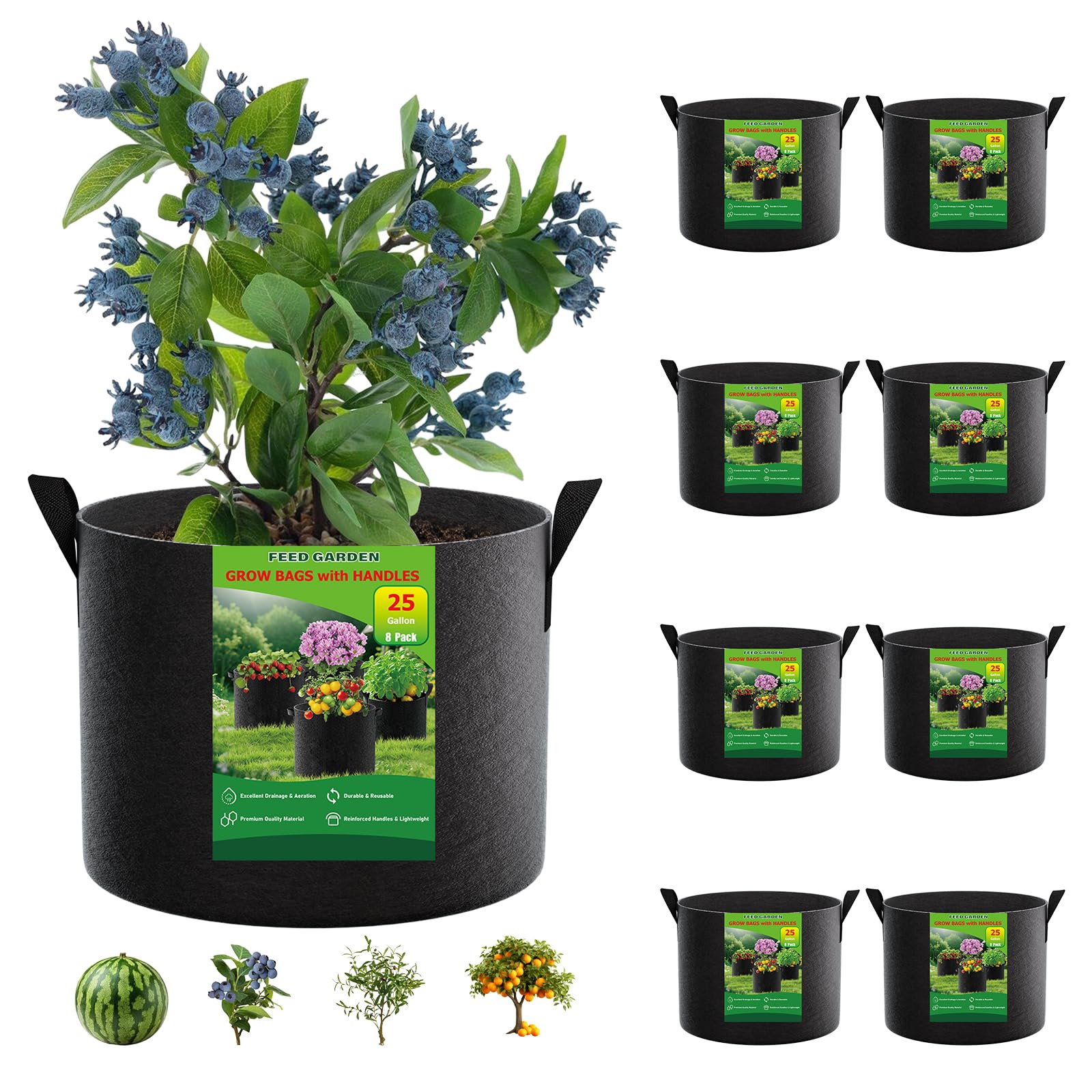
The FEED GARDEN 8-pack differentiates itself with a wider base diameter of 23.6 inches, giving each pot an extra 1 to 2 inches of lateral space compared to standard 22-inch fabric pots. This wider footprint provides more stability for top-heavy plants and spreads the root zone over a larger area, which is particularly useful for large-fruiting vegetables like eggplants, indeterminate tomatoes, and bush squash. The 300G fabric feels dense and structured, holding its cylindrical shape even when filled with moistened potting mix.
The reinforced handles use a wide-base stitching pattern that distributes load across a larger area of the bag body rather than a single stitch line. Owner feedback notes that these handles allow safe relocation of fully saturated pots without seam separation, a common failure point on grow bags in this price tier. The drainage is consistent across the entire fabric surface, promoting healthy air pruning and preventing the waterlogged conditions that lead to root rot.
The one potential downside is the bag height at 13.7 inches — the shortest soil column of any 300G 25-gallon pot in this review. While the extra width compensates for some volume, deep-rooted plants like indeterminate tomatoes or tree saplings may find the shallow depth restrictive. This bag is best suited for plants with broad, spreading root systems rather than deep taproots. For pepper, cucumber, and squash growers, the wide base is a clear advantage.
What works
- Wide 23.6-inch base provides excellent stability for top-heavy plants
- 300G fabric with reinforced handles holds up to heavy wet loads
- Consistent drainage prevents waterlogged soil and root rot
What doesn’t
- Shorter 13.7-inch soil column limits deep taproot development
- Open fabric weave requires frequent watering in hot weather
- 8-pack count is less economical than 10 or 12 pack options
5. JERIA 12-Pack 25 Gallon Grow Bags, 300G Thickened Nonwoven with Reinforced Handles
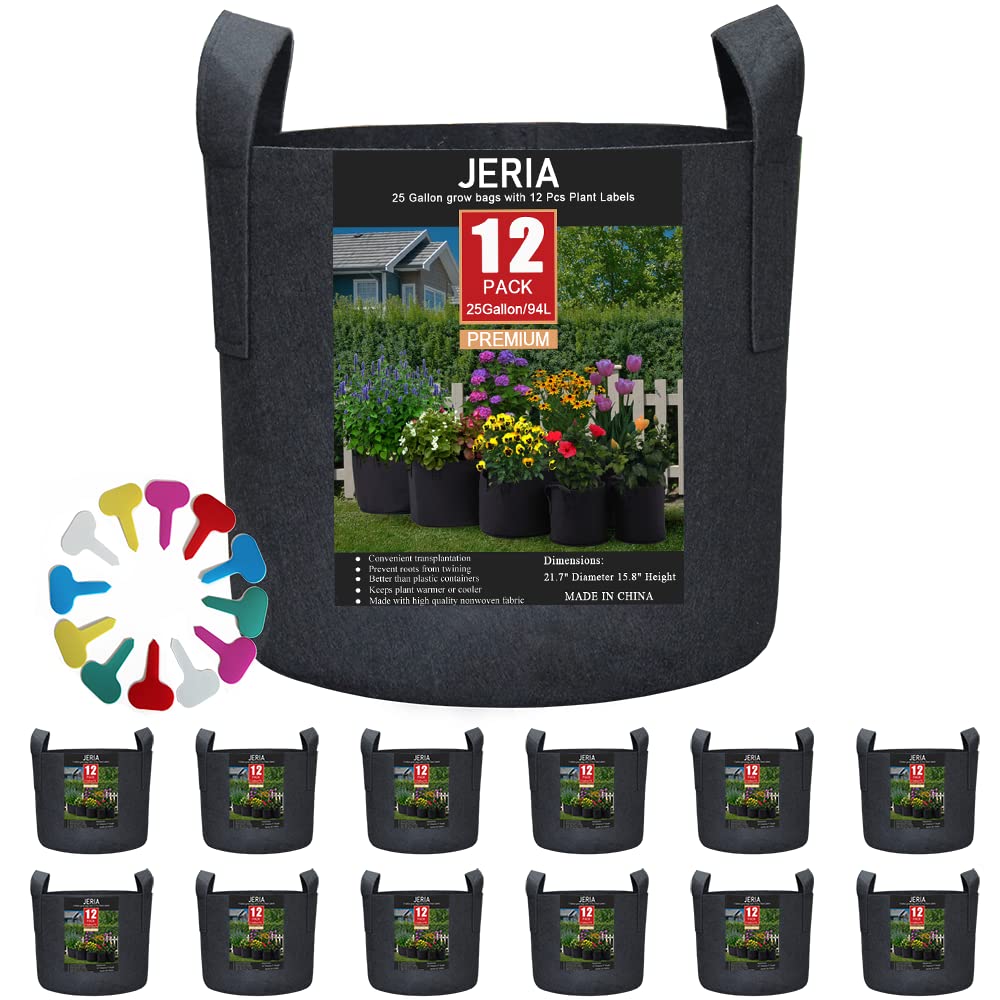
The JERIA 12-pack offers the same 300G nonwoven fabric and reinforced handles as other mid-tier options, but includes 12 plant labels in the package — a small detail that matters when you are running a multi-variety garden and need to track which pot holds Brandywine tomatoes versus San Marzano. The bags measure 21.7 inches in diameter and 15.8 inches tall, providing the full soil depth for deep-rooted plants while maintaining a compact footprint that fits standard patio layouts.
Owner reports from multiple seasons confirm that the fabric holds up to washing and reuse without fraying or seam separation. The handles are integrated into the bag body with heavy stitching, and several users note that the handles survived two full growing seasons of dragging across concrete and grass. The drainage is consistent across the fabric surface, and the breathability promotes the air pruning effect that prevents root circling — a common issue with plastic pots at this volume.
The main consideration is that the 300G fabric, while durable, is not UV-stabilized to the degree that it can sit in full sun year-round without gradual degradation. Storing the bags indoors or in partial shade during the off-season extends their life significantly. For gardeners rotating crops seasonally and storing pots flat between uses, the JERIA 12-pack provides an excellent cost-per-pot ratio and the added convenience of included labels for organization.
What works
- 12-pack with included plant labels simplifies multi-variety garden organization
- 15.8-inch height provides sufficient depth for deep-rooted plants
- Fabric holds up to washing and reuse over multiple seasons
What doesn’t
- Fabric not UV-stabilized for continuous year-round sun exposure
- No waterproof liner, requires regular watering in dry climates
- Handles adequate but not as heavily reinforced as premium options
6. VIVOSUN 5-Pack 25 Gallon Plant Grow Bags, 300G Thickened Nonwoven with Serger Handles

The VIVOSUN 5-pack uses 300G nonwoven fabric with a notable difference in handle construction: serger stitches that sew the handle onto the bag body rather than folding fabric over itself. This creates a stronger load-bearing joint that resists tearing when the bag is filled with saturated soil. For a 5-pack at an entry-level price point, this handle reinforcement is a meaningful upgrade over basic fabric pots where the handle is merely a cutout of the bag fabric.
The fabric itself is BPA-free and moderately permeable, providing adequate drainage for most vegetables and flowering plants. Owner reports consistently note that the bags hold their shape when filled and do not develop bulging sidewalls. The 21.8-inch diameter and 15.9-inch height provide a balanced soil column for both spreading and deep-rooting plants. Multiple users report using these bags for multiple consecutive seasons with no degradation in fabric integrity.
The trade-off for the low entry cost is the 5-pack count. At 25 gallons each, five pots provide enough space for a small kitchen garden but may not be sufficient for gardeners planning large-scale plantings. The fabric also lacks the waterproof liner or UV stabilizers found on premium options, so drying rates are faster and fabric life is shorter in constant full-sun conditions. For first-time grow bag users or those with limited patio space, the VIVOSUN 5-pack is a reliable starting point.
What works
- Serger-stitched handles provide stronger load-bearing than basic fabric handles
- 300G fabric holds its shape and resists bulging when filled with wet soil
- Consistent drainage promotes air pruning and prevents root circling
What doesn’t
- 5-pack is the smallest count, limited for large garden setups
- No waterproof liner or UV stabilizers for extended sun exposure
- Fabric dries faster than PE plastic alternatives
7. SPONDWILD 7-Pack 25 Gallon Grow Bags, 180G Thickened PE Plastic with 8 Breathable Holes
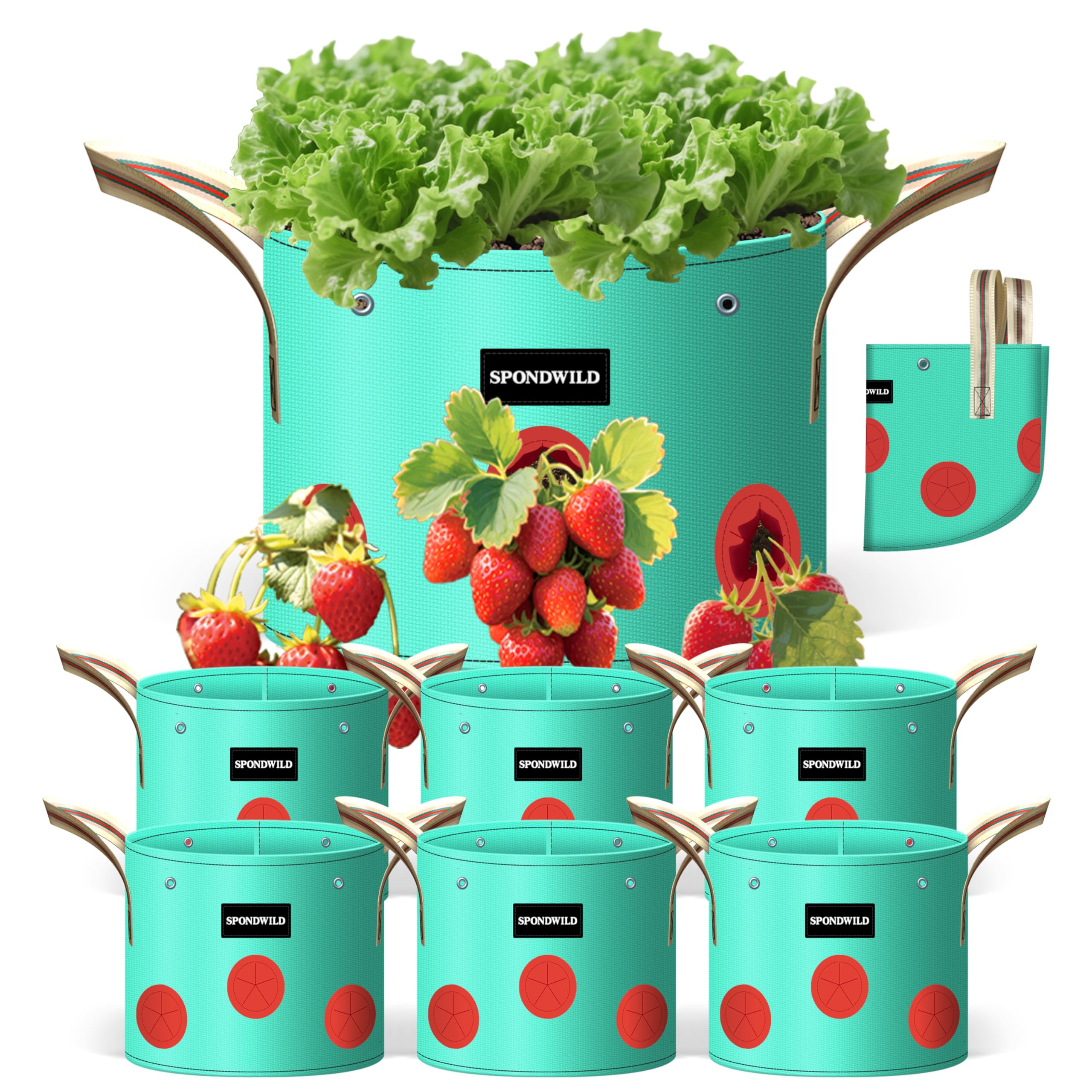
The SPONDWILD 7-pack represents the plastic alternative in this lineup, using 180G polyethylene (PE) material rather than nonwoven fabric. PE pots excel at moisture retention — the solid plastic walls slow evaporation dramatically, which means plants in hot, dry climates need water less frequently than those in fabric pots.
The UV resistance of PE material is a genuine advantage for gardeners who leave pots in full sun year-round. The plastic does not degrade or fray like nonwoven fabric under continuous UV exposure. The integrated metal rings around the rim allow for low-stress training (LST) plant ties, a feature missing on fabric pots. The 22-inch by 16-inch dimensions provide a standard 25-gallon volume with a soil column deep enough for taproot development.
The main limitation is the reduced aeration. Without the full sidewall breathability of fabric, roots are more likely to circle the interior perimeter unless the plant is regularly root-pruned or transplanted. The PE material also lacks the fold-flat convenience of fabric — these pots retain their shape and take up more storage space. For gardeners who prioritize water conservation and UV durability over maximum root aeration, the SPONDWILD 7-pack is a functional alternative to fabric.
What works
- PE plastic retains moisture much longer than fabric in hot weather
- UV-resistant material withstands full sun without degradation
- Metal rings enable low-stress training tie-downs for plant shaping
What doesn’t
- Limited aeration increases risk of root circling without intervention
- Green color in photos may differ from actual bag appearance
- Does not fold flat for compact storage like fabric pots
Hardware & Specs Guide
Fabric Weight (GSM)
Grams per square meter determines both breathability and structural life. 180G PE plastic is the lightest — it retains water but provides minimal air exchange. 300G nonwoven is the standard for multi-season fabric pots. 500G is the heaviest fabric used here and is typically paired with a waterproof liner for dry-climate gardening. Thicker fabric costs more but resists sidewall collapse and handle-tearing much better over repeated use.
Air Pruning and Root Health
Nonwoven fabric pots naturally air-prune roots when root tips reach the pot wall and are exposed to air, preventing circling. PE plastic pots lack this feature and require dimpled walls or manual root trimming to avoid root binding. For long-term container plants like fruit trees, fabric pots with at least 300G density offer the best root health outcomes. Plants in PE plastic pots benefit from annual root inspection and pruning.
Handle Attachment Methods
Three handle types appear across these pots: serger-stitched handles sewn onto the bag body (strongest), double-stitched folded fabric handles (good), and simple cut-fabric handles (weakest, common on 180G bags). For a 25-gallon pot that can exceed 200 pounds when saturated, serger or double-stitched handles are essential for safe mobility. Reinforced handles with cross-stitching at stress points provide the best load distribution.
Waterproof Liners and Moisture Management
Standard fabric pots lose moisture through the entire sidewall. Some pots now incorporate a waterproof liner on the upper portion of the bag, keeping soil moisture in while allowing a breathable bottom section for drainage. This hybrid design reduces watering frequency by up to 50% compared to open-weave fabric. The trade-off is reduced air pruning in the upper root zone, which matters less for established plants than for seedlings.
FAQ
How many cubic feet of potting mix does a 25-gallon pot need?
Why do handles on 25-gallon grow bags sometimes tear when full?
Can I use a 25-gallon fabric pot indoors for a dwarf tree?
How long do fabric 25-gallon grow bags typically last outdoors?
Final Thoughts: The Verdict
For most gardeners, the 25 gallon plant pot winner is the Gardzen 6-Pack with Waterproof Liner because it bridges the gap between moisture retention and root aeration better than any other pot in this category — the 500G fabric and liner cut watering frequency dramatically while the breathable bottom prevents root rot. If you need the highest pot count for an expanding garden, grab the Gardzen 10-Pack for proven 300G durability and double-stitched handles at an unbeatable per-pot cost. And for gardeners in humid climates who prioritize drainage above all else, nothing beats the FEED GARDEN 8-Pack with its wide 23.6-inch base and consistent aeration for sprawling root systems.