
Nothing ruins a season of careful tomato staking, consistent watering, and daily observation faster than discovering your prized produce has been hollowed out by birds or riddled with cabbage worms. The gap between a successful harvest and a heartbreaking loss is often no thicker than a single layer of properly selected mesh. Choosing effective Bug Netting For Garden use means understanding mesh density, material tear resistance, and how a barrier interacts with sunlight and airflow — three factors that separate netting that works from netting that becomes a tangled, failed experiment.
I’m Rikta — the co-founder and writer behind Lawn Gear Lab. My mornings are spent comparing mesh weave densities, analyzing tensile strength data of polyethylene versus nanocomposite substrates, and loading up shopping carts to study how real-world gardener feedback aligns with manufacturer claims across netting, covers, and pest barrier products.
This guide consolidates dozens of hours of spec comparisons and verified owner experiences to help you skip the trial-and-error phase and land on the right bug netting for garden protection that fits your specific crop setup and local pest pressure without overpaying for unnecessary features.
How To Choose The Best Bug Netting For Garden
Selecting bug netting involves more than grabbing the first roll off the shelf. You need to match the mesh to the specific threats in your area — a fine 40-mesh barrier that blocks thrips will also block bee access, while a wide 5/8-inch bird netting allows all insects through. Understanding how each spec interacts with your garden reality is the difference between protection and frustration.
Mesh Density and Pest Type
Mesh is measured by the number of openings per linear inch. A 40-mesh netting (common in “ultra-fine” products) stops carrot flies, aphids, and even tiny thrips, but it also prevents pollinators from reaching blossoms. For crops that self-pollinate or for wind-pollinated vegetables, this is fine. For squash, cucumbers, and fruiting plants, you must remove the netting during flowering or choose a larger mesh (5/8 inch to 1/4 inch) that blocks birds and squirrels while admitting bees. Always identify your primary pest first — then choose the mesh density that targets it without over-blocking.
Material Tear Resistance and UV Stability
The substrate determines how many seasons the netting survives. Standard polyethylene (PE) netting is the most affordable but becomes brittle after one summer of direct UV exposure. Nylon offers better elasticity but can fray at cut edges. High-density polyethylene (HDPE) and polypropylene (PP) resist UV degradation longer and hold up against wind whipping. The newest option — nanometer PPT (nanocomposite polypropylene) — offers the highest tear resistance and can withstand accidental snags on branch stubs or staple punctures without propagating a tear. If you intend to reuse netting year after year, UV-stabilized HDPE or nano-PPT is the practical long-term choice.
Shade Factor and Airflow
Many dark-colored netting products reduce light transmission by 30% to 33%, providing a cooling effect that can prevent bolting in heat-sensitive crops like lettuce and spinach. This same shade factor, however, can slow growth in full-sun crops like tomatoes and peppers if left on for the entire season. White netting typically transmits more light and reflects some heat, making it better for warm climates where you want maximum photosynthesis. Check the product’s listed shade rating — anything above 30% is primarily a shade cloth, not a simple pest barrier. Airflow is generally good across all fine meshes, but heavy dew can stick to ultra-dense fabrics, raising humidity inside the cover and potentially promoting fungal issues in humid climates.
Quick Comparison
On smaller screens, swipe sideways to see the full table.
| Model | Category | Best For | Key Spec | Amazon |
|---|---|---|---|---|
| Abimars Thicker Mesh Netting | Ultra-Fine | Heavy-duty tear resistance + 30% shade for heat-prone crops | Nano PPT, 30% shade, 10’x33’ | Amazon |
| Garden Tailor Netting | Fine Mesh | Large raised beds needing UV-stabilized HDPE coverage | 40-mesh, HDPE, 10’x25’ | Amazon |
| RIFNY Bird Netting | Bird Barrier | Large fruit trees needing bird/squirrel exclusion without insect blocking | 5/8” mesh, HDPE, 13’x40’ | Amazon |
| ANPHSIN Nano-PP Netting | Ultra-Fine | Patio enclosures or large gardens needing 33% shade and visibility | Nano PP, 33% shade, 10’x50’ | Amazon |
| RIFNY 2-Pack Netting | Ultra-Fine | Covering multiple beds with extra material for custom fits | PE, 0.04” mesh, 2 x 10’x33’ | Amazon |
| GonLei Garden Netting | Ultra-Fine | Long-row protection for vegetables, flowers, and raised beds | 60-mesh, PE, 10’x50’ | Amazon |
| GonLei 4-Pack Bags | Drawstring Bag | Individual bush or container plant protection with drawstring closure | Nylon, drawstring, 2 sizes | Amazon |
In‑Depth Reviews
1. Abimars Thicker Garden Mesh Netting
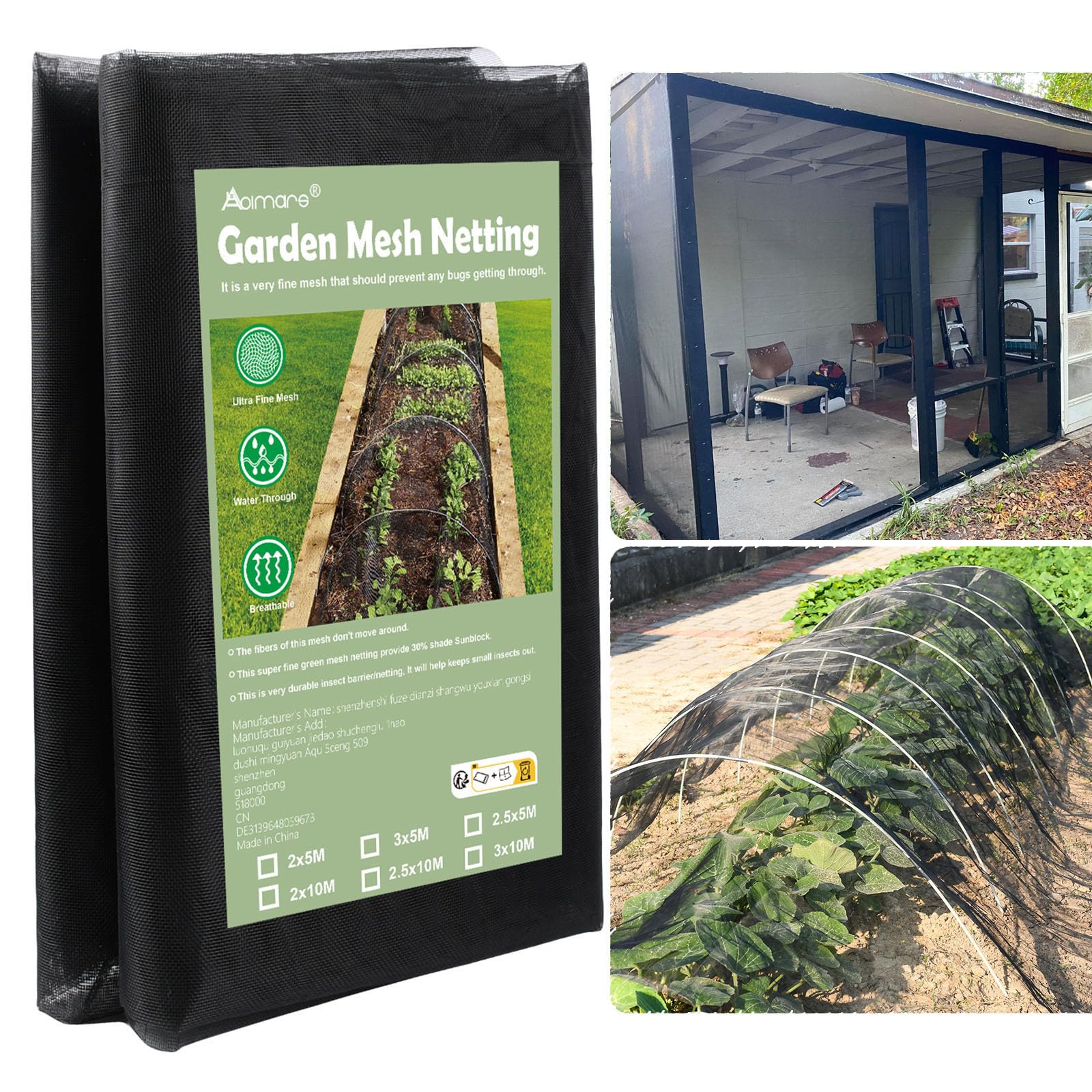
The Abimars netting sits in a league above standard PE options because its nanometer PPT material resists tearing even when snagged on rough wood or staple edges. At 10 feet by 33 feet with a 30% shade rating, it doubles as a pest barrier and a heat shield for crops prone to bolting in midsummer. The ultra-fine weave blocks Japanese beetles, caterpillars, and the tiniest worms while allowing air and water through without removal. Owner feedback consistently highlights that the cross-threads stay locked in place — cutting it to size produces a clean edge that does not unravel.
The black color provides visual clarity through the mesh, making it easy to inspect plant health without lifting the cover. At 1.33 ounces per square yard, it is lightweight enough to drape over trellises or PVC hoops without bending plant stems, though support stakes are still recommended for tall crops. The 2-year warranty from the manufacturer adds confidence that this netting will outlast cheaper alternatives across multiple growing seasons in full sun exposure.
Gardeners using this netting for raised bed protection report that it stays intact through heavy rain and wind, with no fraying even after contact with concrete or rough ground. The dual function as an insect barrier and shade cloth makes it especially valuable for lettuce, spinach, and brassica growers in hot climates where sun stress is as big a threat as pests. For anyone wanting one roll of netting that handles both sun and bugs without degrading, this is the benchmark choice.
What works
- Nano PPT material resists tearing far better than standard PE or nylon
- 30% shade rating helps prevent bolting in heat-sensitive vegetables
- Cut edges do not fray; holds shape after cutting
- Blocks very small insects like thrips and vine borers effectively
- 2-year manufacturer warranty signals long-term durability
What doesn’t
- Black color absorbs heat if used in already-hot climates without adequate ventilation
- Requires support structure to prevent weight from bending tender plants
- Only available in one size; no smaller trial roll for small gardens
2. Garden Tailor Garden Insect Netting

The Garden Tailor netting uses 100% virgin HDPE — a material choice that resists UV degradation significantly longer than basic PE netting sold at big-box retailers. At 10 feet by 25 feet, it provides 250 square feet of coverage, which is enough to fully enclose a standard 4×8 raised bed with a PVC hoop frame. The 40-mesh density stops cicadas, carrot flies, and most aphid species while passing rain and overhead irrigation without pooling. The tight selvedge edge construction means this netting will not unravel along the factory-cut sides during installation.
The silver color reflects some sunlight and keeps internal temperatures slightly lower than black netting would — a subtle advantage for cool-season crops. The material is light enough to drape over plants without crushing leaves, though it benefits from being suspended on hoops or stakes for airflow underneath. The 40-mesh density is fine enough to block insects but open enough to allow some smaller beneficial insects through, unlike denser 60-mesh fabrics.
Customer feedback notes that this netting is thick enough to deter small birds and turkeys from pecking through, yet pliable enough to cut with standard scissors when custom sizing is needed. For gardeners covering multiple beds or needing a durable, UV-stable roll that can be cut to exact dimensions, this HDPE netting offers the best balance of longevity and price within the mid-range tier. The only trade-off is the slightly heavier weight compared to disposable PE netting, but the durability payoff justifies it.
What works
- UV-stabilized HDPE resists sun damage better than standard polyethylene
- 40-mesh density effectively blocks cicadas, carrot flies, and aphids
- Tight selvedge edges prevent unraveling during cutting and installation
- Silver color reflects heat, keeping covered beds cooler
- Proven to last over a full year in direct sunlight without degradation
What doesn’t
- Too fine for pollinator access during flowering season
- Relatively narrow width may require stitching two pieces together for extra-wide beds
- Can be slightly stiff when first unrolled; needs a day to relax
3. RIFNY Bird Netting for Garden
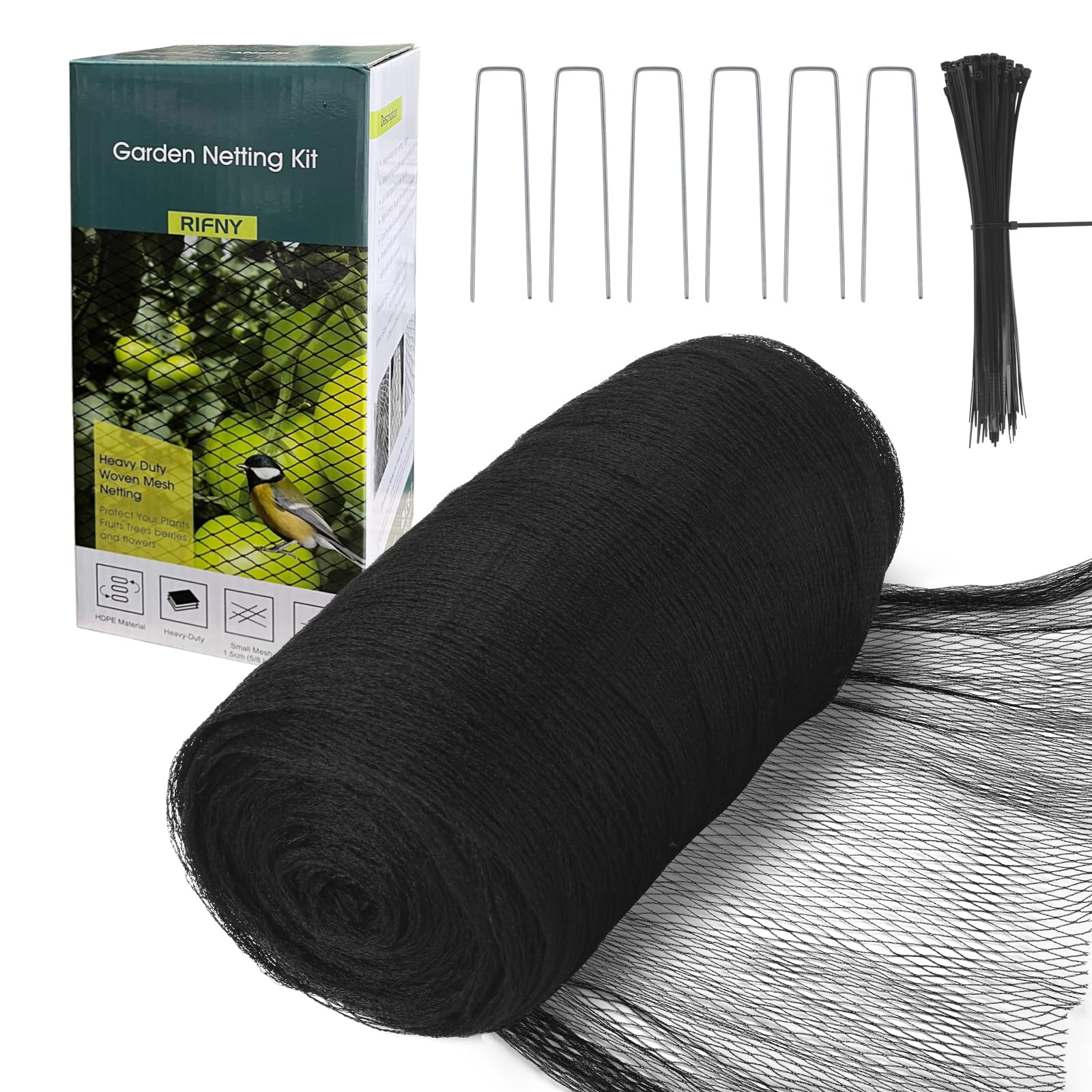
RIFNY’s bird netting is built for a different job than fine-mesh insect barriers — it targets birds, deer, squirrels, and poultry using a 5/8-inch hexagonal mesh that is too large to block insects but wide enough to keep vertebrates from reaching fruit. Made from HDPE with anti-UV and anti-rot properties, this netting operates across an extreme temperature range from -58°F to 212°F without becoming brittle. At 13 feet by 40 feet, it provides massive coverage for fruit trees, grape arbors, and large vegetable patches. The included 7-inch landscape staples and twist ties make ground anchoring immediate without additional purchases.
The 5/8-inch mesh size is safe for birds and small animals because it prevents entanglement — a critical ethical and legal consideration in many regions. The material does not tangle during unrolling, a common complaint with cheaper plastic bird netting that twists into unusable knots. Users report that this netting drapes over 28-foot grape arches without tearing and stays flexible enough to wrap individual tree canopies. Unlike ultra-fine netting, this barrier allows full bee and pollinator access, making it ideal for fruiting crops that need insect visitation.
Owner reviews consistently mention that this netting is noticeably thicker and more durable than local hardware store alternatives, with multiple users reordering for subsequent seasons. The included ties and staples add practical value, though users on hard-packed soil may need to supplement with heavier ground anchors. For any gardener whose primary threat is birds or deer rather than aphids and caterpillars, this HDPE netting delivers vertebrate exclusion with minimal hassle.
What works
- HDPE material resists UV degradation and operates in extreme temperatures without cracking
- 5/8-inch mesh prevents bird and squirrel entanglement while blocking fruit access
- Unrolls without tangling — a major improvement over cheap plastic alternatives
- Large 13×40-foot size covers multiple fruit trees or large arbors in one piece
- Includes landscape staples and twist ties for immediate installation
What doesn’t
- Mesh too wide to stop insects or tiny pests like aphids and thrips
- Lightweight fabric may require extra anchoring in high-wind areas
- Cutting to size still requires careful measuring; no pre-marked grid
4. ANPHSIN Strong PP Nanocomposite Mosquito Net
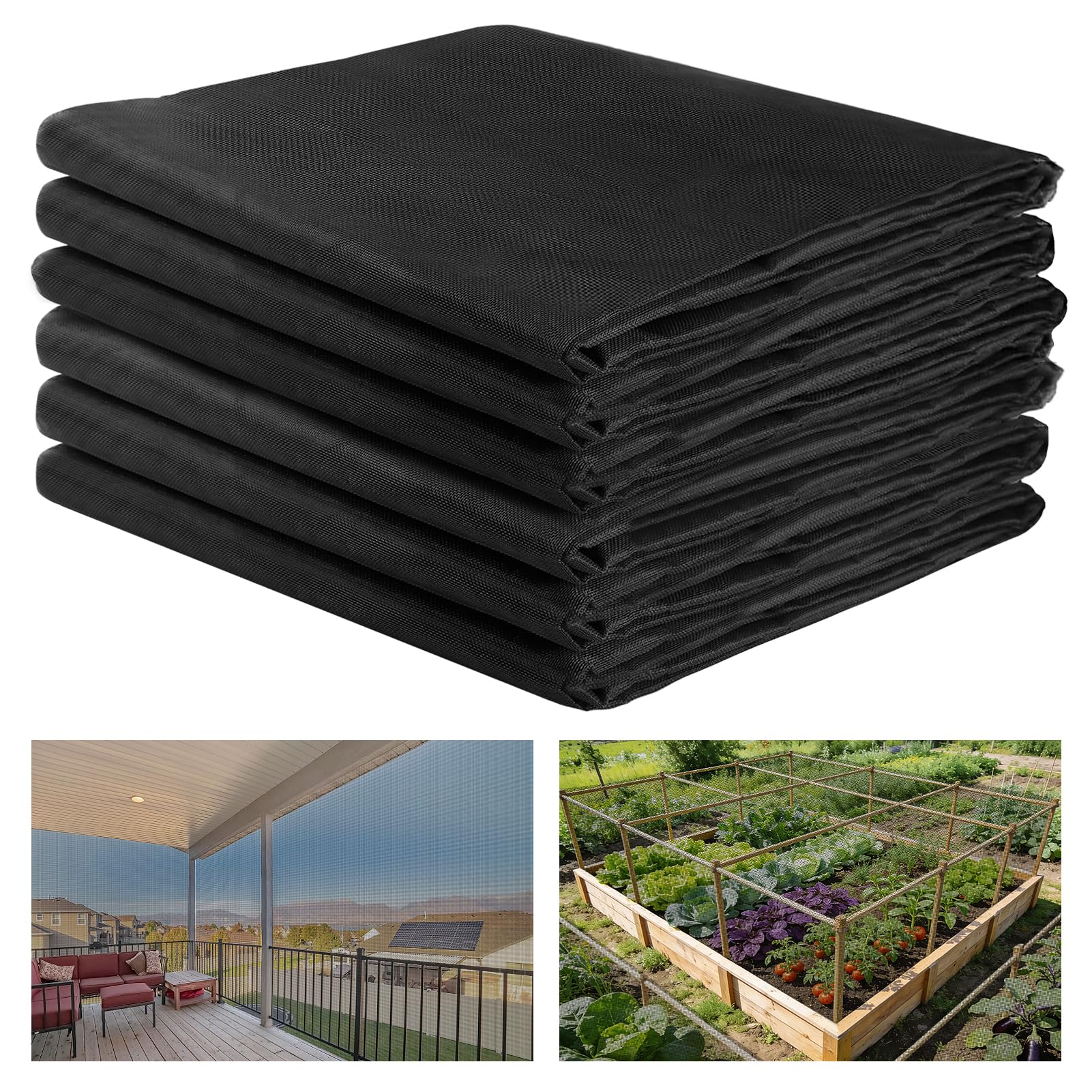
The ANPHSIN netting pushes into premium territory with its nano-PP composite construction that offers tear resistance significantly above standard PE or basic nylon. At 10 feet by 50 feet, it is the largest single-roll option in this roundup, providing enough material to screen an entire patio, enclose a large greenhouse section, or cover multiple raised beds with leftovers. The 33% shade rating delivers substantial heat relief for plants during peak summer afternoons, and the ultra-fine mesh blocks mosquitoes, flies, and small airborne pests without obstructing the clear view through the fabric.
The material density at 4.62 pounds per roll is heavier than most netting, which reflects the thicker nano-PP substrate. This weight translates to better wind resistance once anchored, though it also makes the netting slightly harder to drape delicately over fragile seedlings without support. Owner feedback from apartment gardeners shows this netting works well as a patio screen nailed to wooden railings, keeping mosquitoes out while maintaining visibility from the street. The black color is aesthetically discreet, making it suitable for visible garden boundaries where netting would otherwise look intrusive.
Multiple users report the nano-PP material withstands repeated wind gusts without tearing at staple or nail points — a common failure mode for standard PE netting. The main downside reported is tangling during initial setup; the thin, flexible nature of the nanomaterial requires careful unfolding to avoid frustrating knots. For gardeners who prioritize maximum coverage area, tear strength, and integrated shade protection in a single roll, the ANPHSIN delivers premium-level performance that should last multiple seasons with proper storage.
What works
- Nano-PP composite provides superior tear resistance compared to standard PE
- Massive 10×50-foot coverage for large gardens or patio enclosures
- 33% shade rating offers meaningful heat protection for sun-sensitive plants
- Clear visibility through fine mesh allows easy plant inspection
- Holds up well against wind when properly anchored
What doesn’t
- Tends to tangle during unfolding; requires patient setup to avoid knots
- Heavier weight makes it less suitable for direct draping over delicate seedlings
- Only available in black, which absorbs heat in already-hot environments
5. RIFNY Garden Netting 2-Pack

RIFNY’s 2-pack provides exceptional raw square footage at a budget-friendly price point, giving you two separate 10×33-foot rolls of ultra-fine PE netting. The 0.04-inch oblong mesh holes allow sunlight, rain, and air to pass freely while blocking most flying insects and small birds. The white color reflects light rather than absorbing it, keeping covered plants in a bright environment that supports photosynthesis. The total combined coverage of 660 square feet is enough to cover a large garden divided into multiple sections or to double-layer netting over high-pressure beds.
The PE material is lightweight at 1.08 kilograms per pack, making it easy to handle and drape over hoops or simple stakes. The oblong hole geometry is a thoughtful design choice — it creates a slightly larger opening for airflow while keeping the effective insect-blocking area dense enough to stop most small pests. Gardeners using this netting over raised beds report that it pins down easily with stones or soil and requires no removal when watering via overhead sprinklers. The see-through nature of the white mesh allows daily visual inspection of plant health and fruit ripening without lifting the cover.
Owner feedback notes that squirrels can tear this netting if they claw at it persistently, and that the PE material will show UV degradation after a full season of direct sun exposure, making it effectively a single-season product in high-sun regions. The value proposition is clear — you get massive coverage at a low upfront cost, with the understanding that replacement may be needed next year. For gardeners with large areas to protect on a tight budget, or for those trying netting for the first time, this 2-pack is the most cost-effective entry point available.
What works
- Two 10×33-foot rolls provide 660 square feet of total coverage at low cost
- White color reflects light and supports plant photosynthesis under cover
- Oblong mesh holes improve airflow compared to circular weave designs
- Lightweight and easy to cut, drape, and pin down without tools
- Can be watered through directly without removing the netting
What doesn’t
- PE material degrades in UV over one season; not a multi-year solution
- Squirrels and determined rodents can tear through the fine mesh
- Ultra-fine weave blocks pollinators; must be removed during flowering
6. GonLei Garden Netting 10 x 50 FT

GonLei’s 10×50-foot roll offers one of the longest continuous lengths in the mid-range tier, making it ideal for covering extended row gardens or wrapping the perimeter of a larger plot. The 60-mesh density (0.04-inch openings) is slightly finer than standard 40-mesh netting, providing an extra layer of protection against very small pests like flea beetles and young aphids. The PE material is lightweight and cuts easily with household scissors, though the manufacturer explicitly warns against sharp contact that can puncture the fine weave. The white color keeps the growing environment bright and reflective, similar to the RIFNY 2-pack.
Owner reports are mixed on durability — some users note that the material is thinner than expected and tears easily if snagged on rough wood or pulled taut over sharp corners. Other users who handle it carefully report that it lasts a full season and effectively keeps birds and squirrels from harvesting their tomatoes. The key difference appears to be installation method: netting laid gently over hoops with smooth edges holds up well, while netting pulled tight over untreated lumber tends to tear at contact points. The “one season use” comment from several owners aligns with the PE substrate’s expected UV lifespan.
GonLei positions this netting as a guard against lizards, squirrels, chipmunks, and rabbits in addition to birds and insects. At 1.79 kilograms, the roll is heavier than the RIFNY 2-pack but provides 50 feet of continuous length, reducing the need for splicing multiple pieces. For gardeners whose primary need is maximum linear coverage at a mid-range price point, and who are willing to handle the material carefully during installation, this GonLei roll delivers good value for single-season protection.
What works
- 60-mesh density blocks very small insects like flea beetles effectively
- 50-foot continuous roll reduces the need for splicing multiple pieces
- White reflective color keeps the growing environment bright
- Lightweight enough to drape over hoops without extra support
What doesn’t
- PE material tears relatively easily when snagged on rough or sharp edges
- Single-season UV lifespan limits long-term value for repeated use
- Some owners report uneven weave consistency across the roll
7. GonLei 4 Pack Garden Mesh Netting Bags
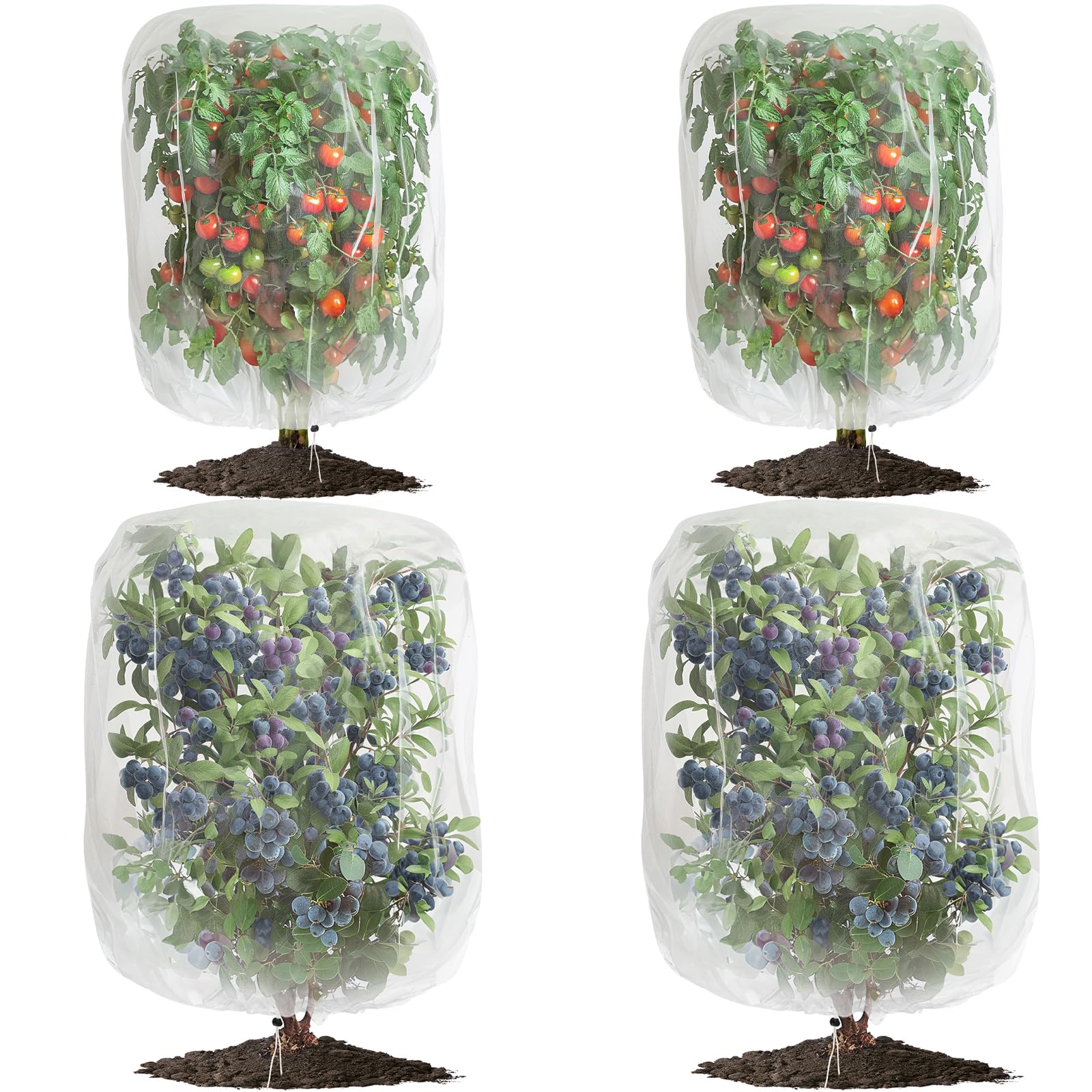
This product takes a completely different approach — instead of a roll of sheeting, you get four ready-to-use drawstring bags in two sizes: 2.6×3.3 feet and 3.3×4.9 feet. The nylon material is soft, elastic, and ultra-dense, providing excellent ventilation while retaining the humidity plants need. The drawstring closure lets you cinch the bag around a branch base or pot rim, preventing animals from entering through the bottom — a common weak point in draped netting. This bag format is specifically designed for individual bushes, container plants, or small fruit trees rather than entire raised beds.
Owner experiences highlight the bags’ effectiveness on blueberry bushes and small citrus trees in containers, with several users noting that the material quality exceeded expectations for the price point. The 31.2×39.6-inch smaller bag fits standard 5-gallon pots well, while the larger 3.3×4.9-foot bag can cover a small blueberry bush or a dwarf Meyer lemon tree. One reviewer noted that the included drawstring cord may degrade in direct sun and recommended replacing it with ribbon or paracord for longer use — a simple upgrade that significantly extends the bag’s lifespan.
The nylon material offers better elasticity than PE netting, allowing the bag to stretch over irregular branch shapes without tearing. This flexibility makes it easier to install on established plants with thorny or complex structures. The bag format is also much faster to deploy than cutting and pinning sheet netting — you simply slip it over the plant and pull the drawstring. For container gardeners or those with a few specific plants needing protection rather than full bed coverage, this 4-pack offers a targeted, convenient solution that eliminates the need for structural support hoops.
What works
- Ready-to-use drawstring bags install in seconds without cutting or pins
- Nylon material stretches over irregular branch shapes without tearing
- Ultra-dense mesh blocks insects while retaining humidity for plant health
- Two size options in one pack cover both small pots and medium bushes
- Drawstring closure prevents animals from entering through the bottom
What doesn’t
- Drawstring cord may degrade in UV; recommend replacing with thicker ribbon
- Bag format limits use to individual plants; not suitable for raised bed coverage
- Smaller bag size may not fit larger mature bushes without compression
Hardware & Specs Guide
Mesh Density and Opening Size
Mesh density determines the size of pest that gets blocked. 40-mesh allows roughly 40 openings per linear inch, blocking carrot flies and most aphids. 60-mesh blocks flea beetles and thrips but restricts airflow and light more. 5/8-inch mesh (used in bird netting) stops only vertebrates — insects pass freely. Always match mesh density to your smallest target pest. Finer is not always better: if your crop needs pollinators, a mesh over 1/4-inch will admit bees, while any finer weave requires removal during bloom.
Material UV Tolerance and Tear Strength
Standard polyethylene (PE) has the shortest UV lifespan, often degrading after one full season of direct sun. HDPE and polypropylene (PP) extend use to two or three seasons under normal conditions. Nanometer PPT composites offer the highest tear resistance and UV stability, surviving multiple seasons with proper off-season storage. Nylon stretches and resists tearing better than PE but can fray at cut edges. For permanent or semi-permanent installations, choose HDPE or nano-PPT. For temporary or single-season use, standard PE provides adequate protection at the lowest cost.
FAQ
Can I water my plants without removing the bug netting?
Will bug netting prevent bees from pollinating my plants?
How do I secure bug netting so it doesn’t blow away in wind?
Final Thoughts: The Verdict
For most gardeners, the bug netting for garden winner is the Abimars Thicker Garden Mesh Netting because its nanocomposite PPT material combines exceptional tear resistance, a useful 30% shade rating, and ultra-fine mesh density in one versatile roll that outperforms standard PE netting across multiple seasons. If you want dedicated bird and squirrel exclusion for fruit trees, grab the RIFNY Bird Netting for its large 5/8-inch HDPE mesh and included installation accessories. And for container gardeners or those with a few specific bushes needing quick drawstring protection, nothing beats the convenience of the GonLei 4 Pack Garden Mesh Netting Bags.