
For urban gardeners, renters, or anyone with poor native soil, the main hurdle to a productive vegetable patch isn’t skill — it’s space and setup. Traditional in-ground beds require tilling, weeding, and a commitment to a single patch of land. Containers to grow vegetables solve this by offering a controlled environment where you dictate the soil quality, drainage, and placement, letting you raise tomatoes, peppers, and root crops on a balcony, patio, or a small corner of the yard without breaking ground.
I’m Rikta — the co-founder and writer behind Lawn Gear Lab. I specialize in comparing the engineering and material specs of outdoor growing systems, analyzing hundreds of customer reports to find which planters actually hold up under soil pressure, weather exposure, and repeated use.
After comparing steel gauge, fabric density, and assembly hardware across seven top-selling models, I’ve compiled this guide to the best containers to grow vegetables for every garden size and budget.
How To Choose The Best Containers To Grow Vegetables
Selecting the right container comes down to material durability, volume, and drainage. Here are the critical factors to evaluate before you buy.
Material: Metal vs. Fabric vs. Plastic
Galvanized steel planters offer rigidity and a long lifespan, resisting rust and corrosion when properly coated. They hold their shape under heavy, wet soil without slumping. Fabric grow bags, made from non-woven polypropylene, excel at drainage and root aeration — they prevent the circling roots common in hard-sided pots — but they dry out faster and may slump if not fully filled. Plastic containers are lightweight and cheap but often degrade in UV exposure and lack the structural integrity of metal or the breathability of fabric.
Volume and Depth for Root Development
Shallow-rooted greens like lettuce need only 6-8 inches of soil, while tomatoes, peppers, and carrots require at least 12 inches. For heavy feeders, look for containers with a soil volume of at least 7 cubic feet or a 15-gallon capacity per plant. Depth is more critical than footprint — a 12-inch deep bed supports robust root vegetables far better than a shallow 6-inch tray.
Drainage and Aeration
Waterlogged soil leads to root rot, the number one killer of container vegetables. Open-bottom metal beds allow excess water to percolate into the ground below while also giving roots access to native soil nutrients. Fabric bags provide passive aeration through their entire surface. Both approaches work — the key is avoiding containers with a solid base and no drainage holes.
Quick Comparison
On smaller screens, swipe sideways to see the full table.
| Model | Category | Best For | Key Spec | Amazon |
|---|---|---|---|---|
| Tegarbed 4x2x1ft (2-Pack) | Metal Raised Bed | Heavy-duty stability | 1mm thick steel panels | Amazon |
| zizin 6x3x1ft (2-Pack) | Metal Raised Bed | Large growing area | 6×3 ft footprint | Amazon |
| TATAANTY 4x2x1ft (2-Pack) | Metal Raised Bed | Quick clamp assembly | Q195 steel construction | Amazon |
| Gartist 4x2x1ft (2-Pack) | Metal Raised Bed | Tool-free setup | Butterfly nut assembly | Amazon |
| Tegarbed 6x3x1ft | Metal Raised Bed | Large single bed | 18 cubic foot capacity | Amazon |
| BIRDSINYARD 4x2x1ft | Metal Raised Bed | Compact patio use | Powder-coated avocado green finish | Amazon |
| PAMAZY 15-Gallon Bags (4-Pack) | Fabric Grow Bag | Root aeration & portability | 15-gallon non-woven fabric | Amazon |
In‑Depth Reviews
1. Tegarbed 4x2x1ft Galvanized Raised Garden Bed (2-Pack)
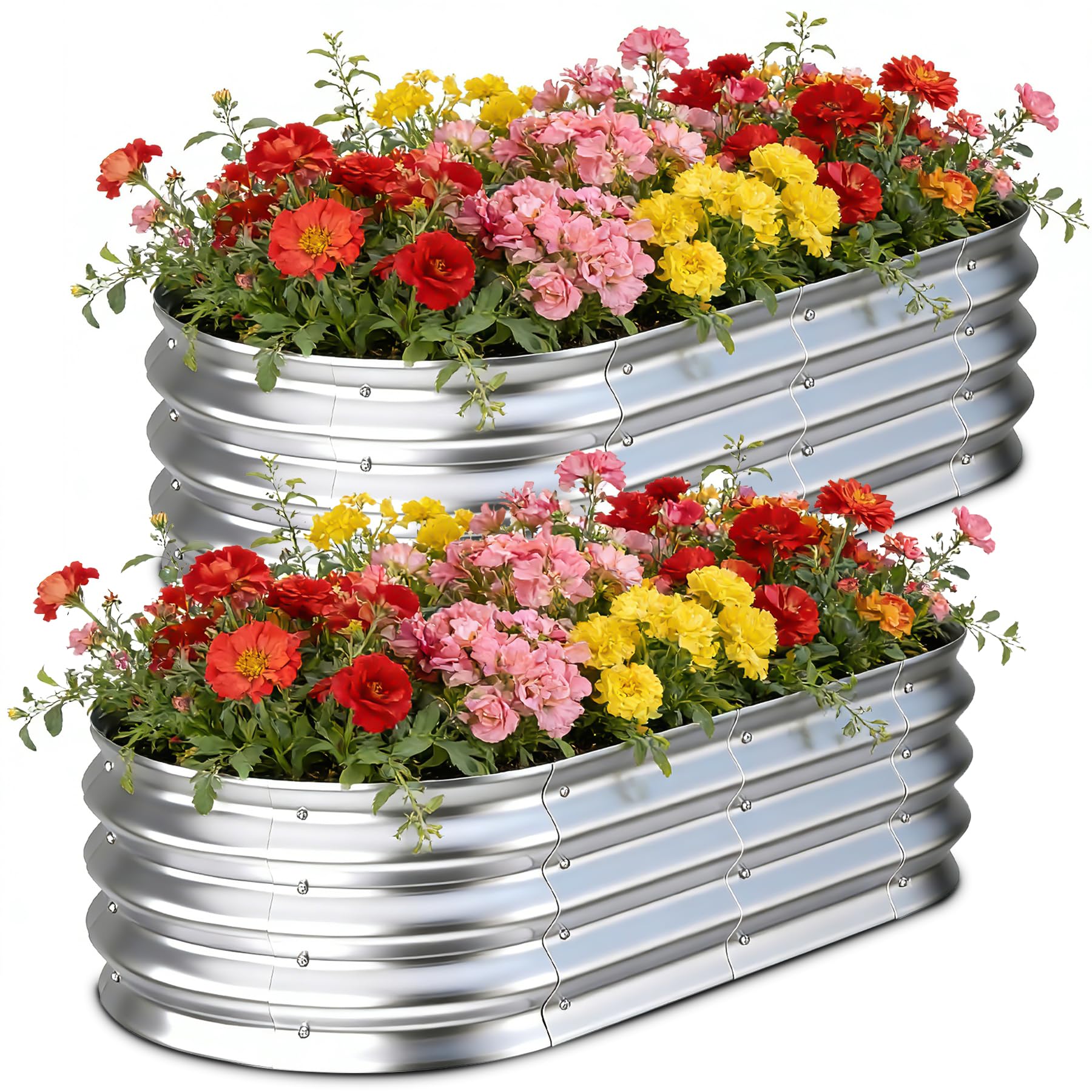
The Tegarbed 2-pack earns the top spot because it solves the single biggest issue with budget metal planters: thin, flimsy walls. With an average steel thickness of 1mm — roughly triple the 0.3mm found on many competing beds — these planters resist bowing and warping even when filled with saturated soil. The 4x2x1-foot footprint is practical for reaching plants from both sides, and the open-bottom design prevents waterlogging while letting roots tap into ground nutrients.
Assembly requires patience with the screw-and-slot system — some reviewers noted the seams require firm pressure to align — but the included hardware is complete, and the result is a rigid, wobble-free structure. The galvanized finish with smooth edges means no sharp corners or rust spots after a season of rain. At a combined 8 cubic feet of soil capacity, this kit provides enough volume for a serious vegetable crop without dominating your patio space.
For gardeners who want a permanent, sturdy growing structure that will outlast cheaper alternatives, this is the set to buy. The 1mm steel is the differentiator — it simply does not flex under load the way thinner panels do.
What works
- Thick 1mm steel provides unmatched rigidity for the price
- Open base prevents root rot and soil compaction
- Easy to assemble with clear manual and no sharp edges
What doesn’t
- Seam alignment can be fussy during installation
- Panels are heavy to move once assembled
2. zizin 6x3x1ft Galvanized Raised Garden Bed (2-Pack)

The zizin 2-pack offers the largest total growing area in this guide, with each bed measuring 6 feet by 3 feet. This footprint gives you room for sprawling tomato plants, multiple pepper rows, or even a small corn patch. The multi-corrugated metal panels and included support rods help distribute soil pressure along the long sides, reducing the bowing that plagues wider beds. The galvanized anti-corrosion finish holds up well against direct sun and rain.
Assembly is quick — several owners reported finishing each bed in under ten minutes — but the metal panels themselves feel notably thinner than the Tegarbed 1mm steel. Some users noted a flimsy quality when empty, though the structure firms up once filled with soil. The kit includes all necessary hardware, though a few reports mentioned missing nuts, so check your package upon arrival.
If your primary need is maximum planting surface for a large backyard setup, and you can work around slightly thinner walls, this 2-pack delivers tremendous value per square foot. For smaller patios, the 6×3 size may be overkill.
What works
- Huge 6x3ft plot provides ample room for deep-rooted vegetables
- Corrugated panels and support rods minimize side-wall bowing
- Very quick and intuitive assembly process
What doesn’t
- Metal gaugae is thinner than premium competitors
- Some kits arrive with missing hardware pieces
3. TATAANTY 4x2x1ft Galvanized Raised Garden Bed (2-Pack)
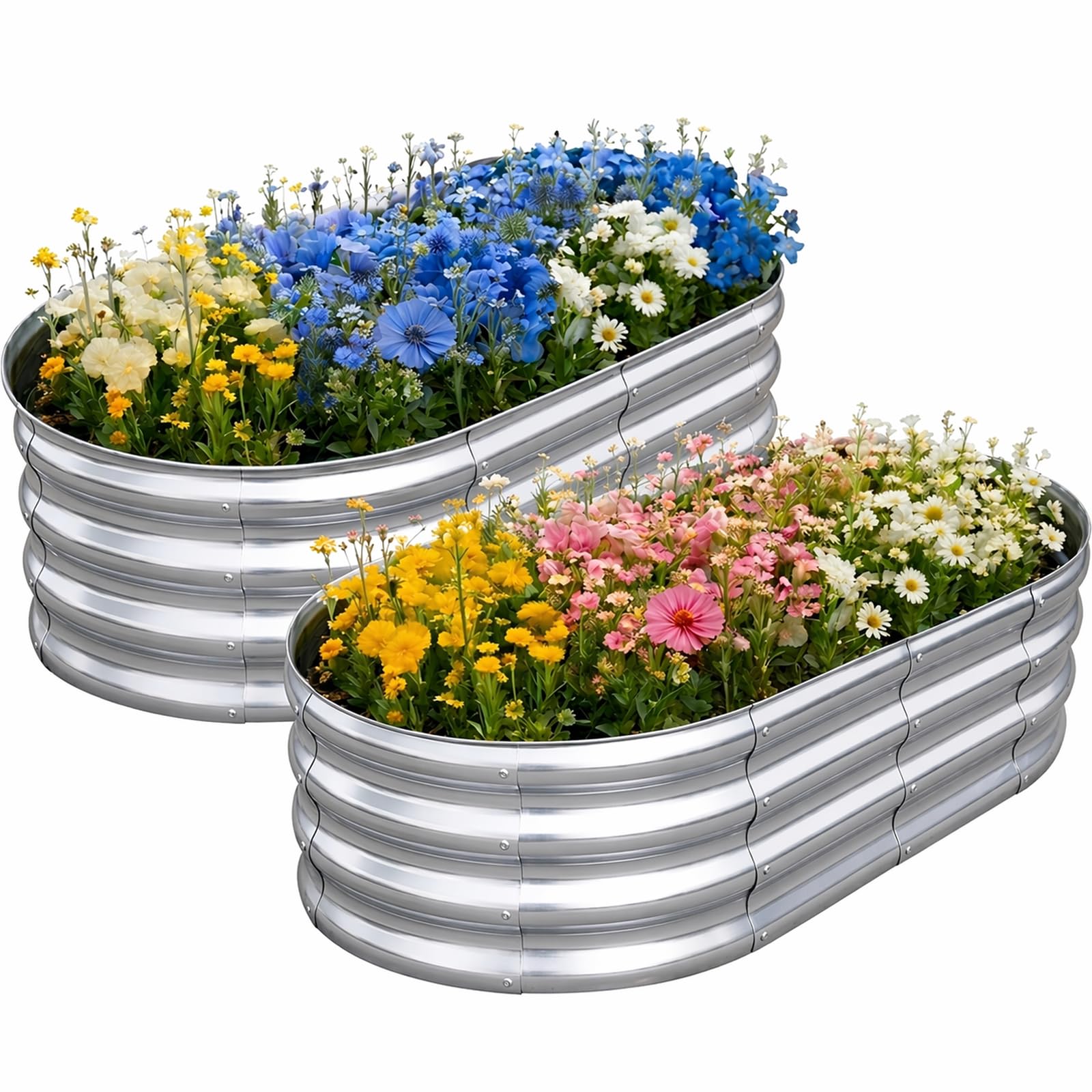
TATAANTY takes a different approach to convenience with a clamp-and-bolt fastening system that eliminates the need to align multiple screw holes. The result is a genuine five-minute assembly per bed — you set the panels together, secure the clamps, and tighten the bolts. The construction uses Q195 steel, which reviewers consistently describe as thicker than expected, giving the planter a reassuring heft once assembled.
The open base works exactly as advertised, allowing excess water to drain freely. The oval shape is ergonomic, reducing the need for deep bending when tending plants. However, the bare metal surface absorbs significant heat in direct sunlight — several owners noted that soil dried out faster and required shading or heavy mulching to maintain moisture. This is a common tradeoff with galvanized beds in hot climates.
For beginners or seniors who dread complicated hardware, the tool-free clamp system makes this the most accessible kit here. Just be prepared to manage soil moisture more carefully during summer heat waves.
What works
- Clamp-and-bolt assembly is the fastest and most intuitive on this list
- Thicker Q195 steel provides good structural integrity
- Oval shape is comfortable to reach and work with
What doesn’t
- Metal heats up quickly in direct sun, drying soil faster
- Some units missing a few wing nuts in the package
4. Gartist 4x2x1ft Raised Garden Bed (2-Pack)
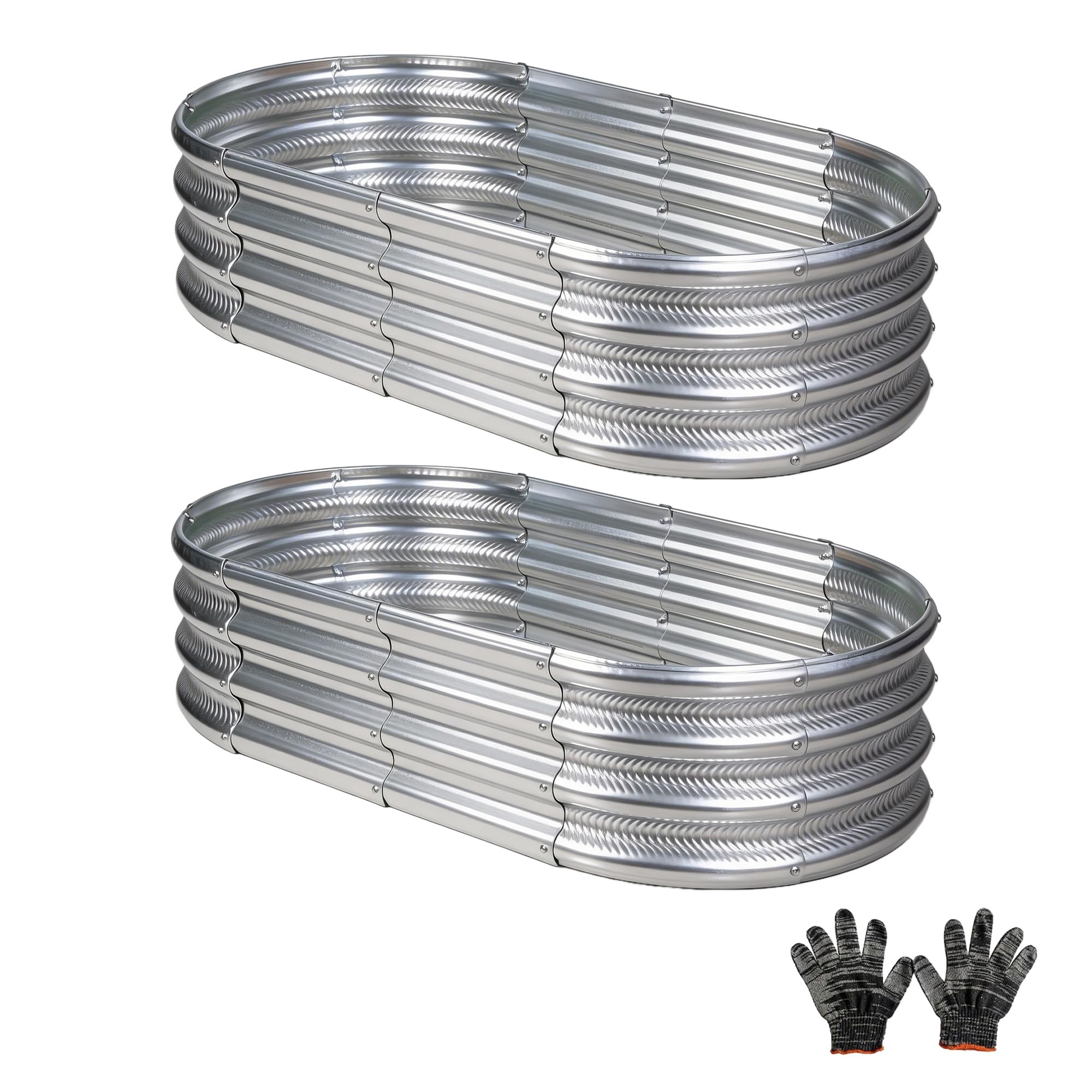
The Gartist 2-pack delivers a no-fuss entry into metal raised bed gardening at a very accessible price point. Assembly requires no tools — just hand-tighten the butterfly nuts — and the included instructions are straightforward enough for a single person to complete each bed in about 20 minutes. The rolled edges are a thoughtful safety feature, preventing cuts during installation and use.
The alloy steel panels feel adequate for the price, though some recent batches have received reports of thinner metal with a ripple effect and less precise alignment. This appears to be a manufacturing consistency issue rather than a design flaw. The 4x2x1-foot size holds roughly 2.5 cubic feet of soil per bed, which is enough for a solid mix of greens, peppers, and herbs. The open bottom ensures excess water drains cleanly into the ground.
If you need a quick, inexpensive way to start container vegetable gardening and can tolerate slightly inconsistent panel quality, this 2-pack is hard to beat on cost per bed. Just inspect the panels upon delivery and exchange if the alignment is off.
What works
- Tool-free butterfly nut assembly saves time and frustration
- Rolled edges enhance safety during handling
- Excellent price point for a twin-pack of planters
What doesn’t
- Occasional quality variation in panel thickness and alignment
- Smaller footprint limits depth for large root vegetables
5. Tegarbed 6x3x1ft Galvanized Raised Garden Bed
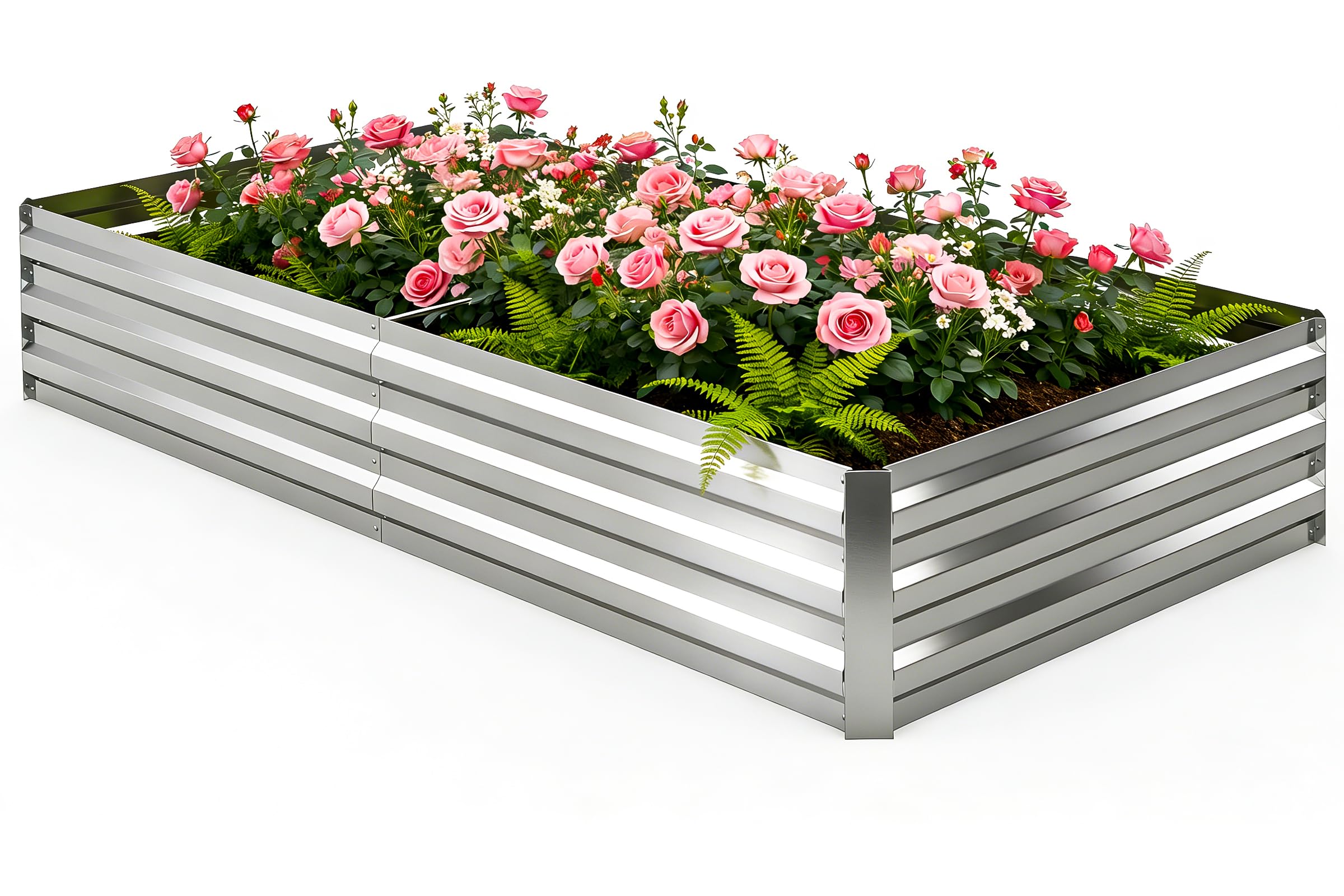
The single-bed Tegarbed 6x3x1 offers a 18-cubic-foot soil capacity — enough to support a serious vegetable garden including sprawling squash and indeterminate tomatoes. Like its smaller sibling, this unit uses 1mm galvanized steel and includes a reinforced center brace that prevents the long 6-foot sides from bowing outward under soil pressure. The galvanized finish with smooth edges holds up against the elements without rust concerns.
Assembly is rated as simple by most reviewers, though the longer panels make the process a two-person job for easier alignment. The open-bottom design works directly on lawn or patio, providing natural drainage. Some users noted the metal feels thin when handling empty panels, but once filled with soil, the center brace stabilizes everything into a rigid unit. The 1-foot depth is adequate for most vegetables, though very deep-rooted crops like burdock might need more.
This is the ideal choice if you want a single, large, long-lasting bed with no compromises on steel gauge, but you don’t need the modularity of a multi-pack system.
What works
- Massive 18-cubic-foot soil volume for serious vegetable production
- Center brace prevents side-wall bowing in the long span
- 1mm steel provides durable, rust-resistant construction
What doesn’t
- Panels feel thin and flimsy when empty before assembly
- 12-inch depth may limit the tallest root vegetables
6. BIRDSINYARD 4x2x1ft Galvanized Raised Garden Bed
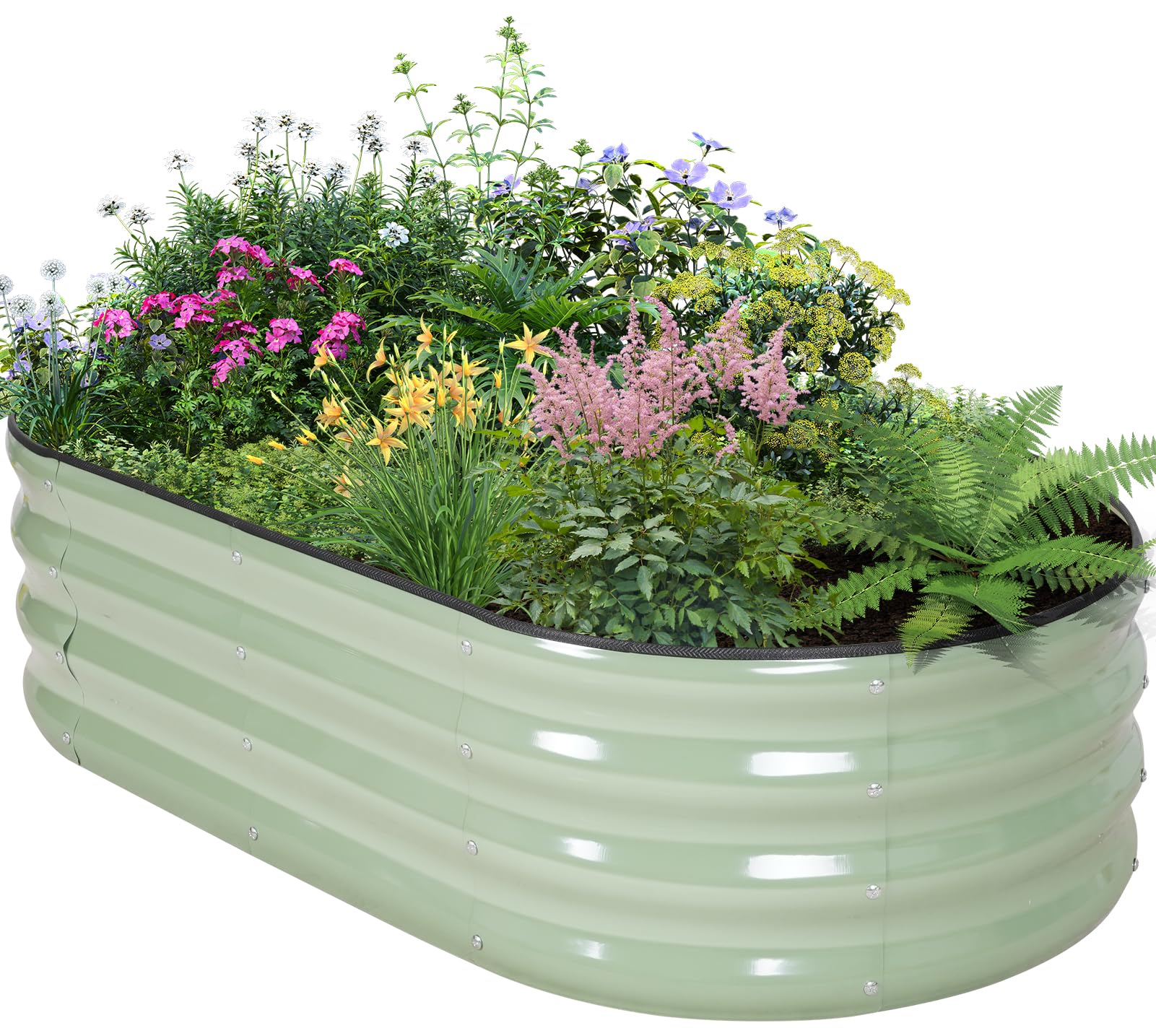
The BIRDSINYARD bed stands out for its powder-coated avocado green finish, which adds a decorative touch to patios and small yards that bare galvanized beds lack. The rubber sealing edge along the top rim serves a dual purpose: it reinforces the structure and eliminates the risk of sharp metal cuts. The galvanized steel core with powder coating provides two layers of rust and corrosion protection for outdoor exposure.
Assembly is straightforward with included tools, and the one-piece design means no multi-panel alignment headaches. The 4x2x1 size is compact enough for a balcony yet deep enough for root vegetables like carrots and beets. The open-base design prevents water accumulation. Some reviewers noted minor scratches on the painted surface during shipping, but the overall build quality is solid for the price tier.
If aesthetics matter as much as function — and you want a bed that looks intentional rather than industrial — this avocado green planter delivers both visual appeal and reliable performance in a compact footprint.
What works
- Powder-coated finish with avocado green color enhances garden aesthetics
- Rubber edging on top rim improves safety and durability
- Compact 4x2ft footprint fits tight spaces
What doesn’t
- Paint may show minor scratches from shipping handling
- Single-bed purchase means less value per bed than multi-packs
7. PAMAZY 15-Gallon Potato Grow Bags (4-Pack)

For gardeners who need flexibility and portability, the PAMAZY fabric grow bags offer a completely different approach from rigid metal beds. Each bag holds 15 gallons of soil and features a dual-window design: a clear viewing panel lets you check root development and soil moisture, while a hinged harvest flap at the bottom allows you to pull potatoes or carrots without dumping the entire bag. The non-woven polypropylene fabric promotes air pruning of roots, preventing the circling that stunts growth in plastic pots.
The reinforced handles are double-stitched from the bag’s base, allowing you to move a fully loaded bag without tearing. The fabric drains freely, eliminating the risk of waterlogged soil, though this also means the bags dry out faster and may need more frequent watering in hot weather. The 15-gallon capacity is ample for potatoes, tomatoes, or a mix of peppers and herbs. When not in use, the bags fold flat for compact storage.
If portability, root health, and harvest convenience are your priorities — or if you’re growing in a rental where permanent beds aren’t an option — these bags outperform rigid containers. Just stay on top of watering during dry spells.
What works
- Harvest window lets you collect root vegetables without digging up the plant
- Breathable fabric prevents root circling and improves aeration
- Folds flat for storage and is lightweight when empty
What doesn’t
- Fabric dries out faster than rigid containers in direct sun
- Bag walls may slump if not fully filled with soil
Hardware & Specs Guide
Steel Gauge and Panel Thickness
Thicker steel resists bowing, rust penetration, and deformation under saturated soil. The Tegarbed models use 1mm panels, while many budget beds use 0.3mm to 0.5mm sheets that can warp by mid-season. For permanent installations, prioritize a 1mm or thicker galvanized steel bed — it will hold its shape and last for years without needing reinforcement.
Fabric Density and Aeration
Non-woven polypropylene grow bags are rated by weight per square yard (typically 200-300 gsm). Higher density fabrics hold their shape better and resist tearing when moved. The PAMAZY bags use reinforced stitching and a sturdy fabric that withstands repeated filling and folding. The key advantage of fabric is passive air pruning — roots hit the fabric edge and stop, forcing lateral branching instead of circling.
FAQ
How deep should a container be for growing tomatoes?
Can I use fabric grow bags indoors for vegetables?
Do galvanized steel planters get too hot for plant roots?
Final Thoughts: The Verdict
For most gardeners, the containers to grow vegetables winner is the Tegarbed 4x2x1ft 2-Pack because it combines thick 1mm steel, a practical footprint, and an affordable per-bed cost into a durable system that will last for years. If you need maximum growing area for a large backyard, grab the zizin 6x3x1ft 2-Pack. And for portability, root health, and the convenience of a harvest window, nothing beats the PAMAZY 15-Gallon Grow Bags.