
Foxtail is one of the most aggressive and persistent grassy weeds in warm-season and transition-zone lawns, invading bare patches and thin turf with bristly seed heads that are tough on mower blades and dangerous for pets. A successful control strategy requires a selective post-emergent herbicide that targets foxtail without harming your desired grass type. Many general-purpose weed killers fail because they are formulated for broadleaf weeds, leaving the grassy foxtail to thrive.
I’m Rikta — the co-founder and writer behind Lawn Gear Lab. My recommendations here are based on hours of cross-referencing product labels against university turfgrass extension bulletins and analyzing hundreds of verified owner reports to identify which herbicides actually deliver on their foxtail claims.
This guide breaks down the top-performing options to help you select the right herbicide for foxtail based on your turf type, infestation level, and application preference.
How To Choose The Best Herbicide For Foxtail
Foxtail is a summer annual grass that germinates in spring and sets seed by mid-summer. A successful herbicide strategy depends on timing, active ingredient selection, and matching the product to your specific lawn grass species. Here are the three most critical factors to consider before buying.
Active Ingredient: Quinclorac vs. Mesotrione vs. MSMA
Quinclorac is the first-line defense against foxtail in cool-season grasses like tall fescue and perennial ryegrass, and it is also safe on bermudagrass and zoysia. Mesotrione offers both pre- and post-emergent activity and can be used on a wider range of turf including centipede and St. Augustine (sod only). MSMA is a potent option for warm-season turf but requires careful handling and is restricted in some states. Always verify that the active ingredient is listed on the label for your specific foxtail species (green, yellow, or giant).
Turfgrass Tolerance
Not all herbicides are safe on every lawn. Bentgrass, fine fescue, and certain varieties of St. Augustine or zoysia can be severely injured by broadleaf-focused formulas. Herbicides containing dicamba or 2,4-D are effective on broadleaf weeds but often have little to no effect on foxtail. Look for labels that explicitly list “foxtail” in the controlled-weed section and confirm your turf type is listed under tolerant species.
Application Method and Coverage
Foxtail typically grows in patches, making spot-spraying with a pump sprayer or hose-end attachment the most efficient method. Concentrate formulas require careful mixing — always use a surfactant to improve leaf adhesion and penetration. For large infestations, a larger jug (64 oz or 2.5 gallons) provides better value per square foot treated, but you must store concentrates properly to maintain efficacy.
Quick Comparison
On smaller screens, swipe sideways to see the full table.
| Model | Category | Best For | Key Spec | Amazon |
|---|---|---|---|---|
| Primesource Quinclorac 1.5L | Quinclorac | Selective post-emergent control | Quinclorac 18.92% | Amazon |
| Select Source Quinclorac 75 | Quinclorac | Dry concentrate for large areas | Quinclorac 75% | Amazon |
| Target 6 Plus (MSMA 48.2%) | MSMA | Heavy-duty weed control | MSMA 48.3% | Amazon |
| Liquid Harvest Mesotrione (16 oz) | Mesotrione | Pre & post-emergent versatility | Mesotrione | Amazon |
| Liquid Harvest Mesotrione (8 oz) | Mesotrione | Budget-friendly starter | Mesotrione | Amazon |
| Quali-Pro Negate 37WG | Sulfonylurea | Warm-season turf guru | Rimsulfuron 16.67% + Metsulfuron 20% | Amazon |
| SpeedZone EW Lawn Weed Killer | Multi-Ingredient | Fast-acting broadleaf control | 2,4-D + Dicamba + Carfentrazone | Amazon |
In‑Depth Reviews
1. Primesource Quinclorac 1.5L Select Liquid Crabgrass Killer
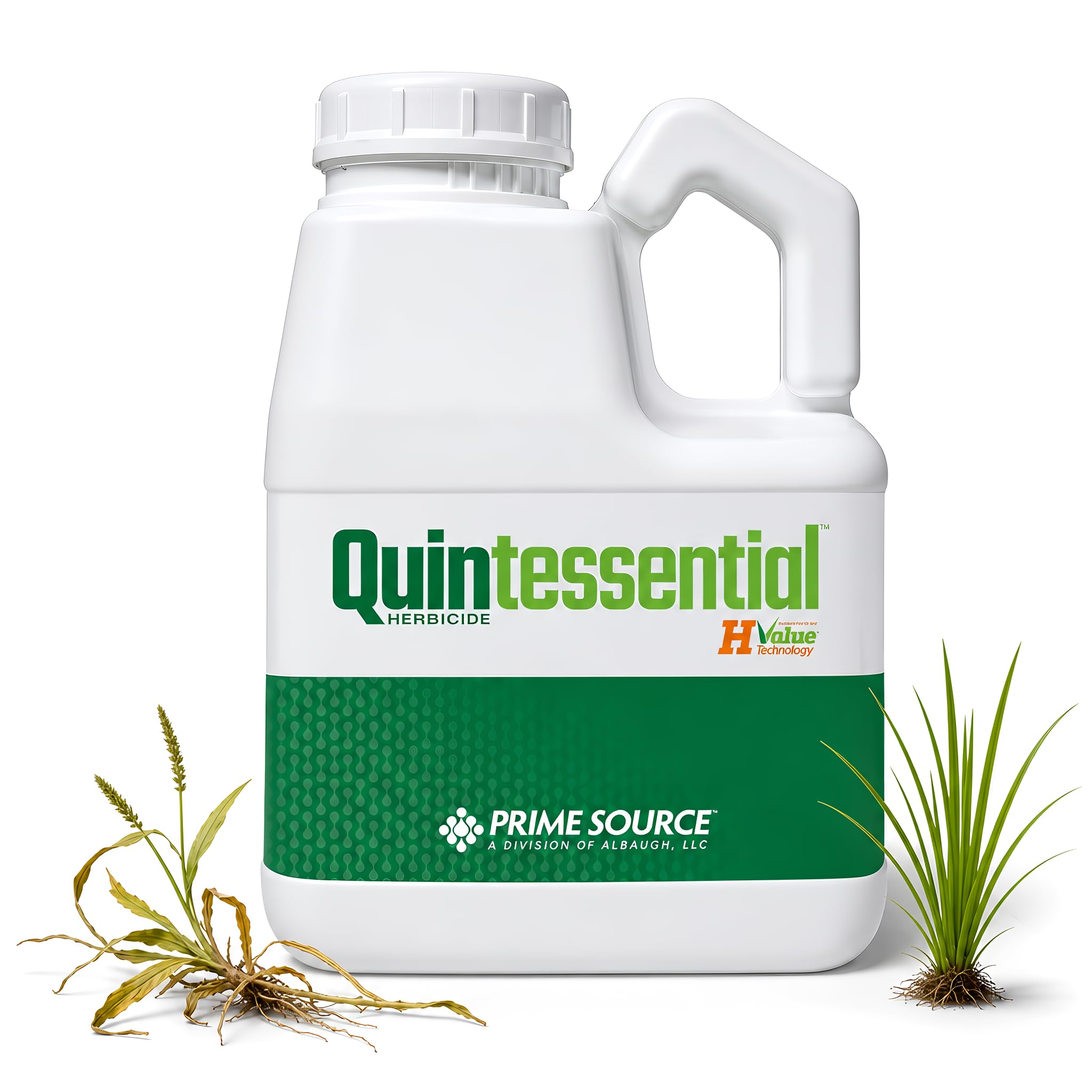
This selective, post-emergent concentrate is specifically labeled for giant, green, and yellow foxtail — making it one of the most targeted products on the market for this exact weed. Quinclorac works by disrupting cell growth in susceptible grasses, and user reports consistently show visible wilting within 24-72 hours on foxtail and crabgrass when applied with a non-ionic surfactant at 1-2 teaspoons per gallon of water.
The 64-ounce jug covers approximately 500 square feet at the highest label rate, which is ideal for moderate to heavy infestations in tall fescue, bermudagrass, and zoysia lawns. Owners note that mixing with a surfactant and a spray dye is critical for even coverage and preventing runoff, as Quinclorac requires strong leaf adhesion to translocate effectively through the plant.
Many users report a near-total kill (95-98%) in one application on actively growing foxtail, with missed patches from poor coverage being the primary reason for a second pass. The lawn grass remains unharmed, and overseeding can proceed 7-10 days after application per the label.
What works
- Labeled specifically for all three foxtail species
- Safe on most cool-season and warm-season turfgrasses
- Fast visible results within 24 hours
What doesn’t
- Requires a surfactant for best results
- Large container may be excessive for small lawns
2. Select Source Quinclorac 75 Herbicide
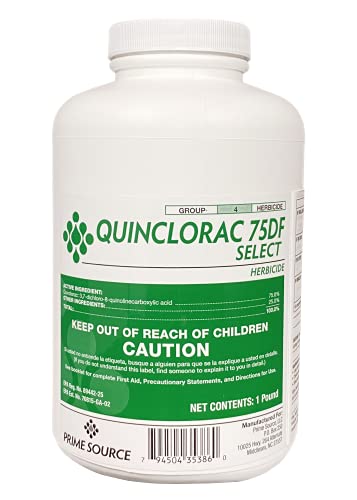
This dry flowable formulation packs 75% Quinclorac by weight, making it significantly more concentrated than liquid alternatives. At the maximum mix rate of 0.367 ounces (about 1.4 teaspoons) per gallon of water, a single 1-pound jar can treat thousands of square feet over multiple seasons, making it a cost-effective choice for large properties or commercial-grade applications.
Users report rapid foxtail and crabgrass death within 3-5 days when applied with a surfactant, and the formula is particularly praised for its safety on bermudagrass and zoysia even during the germination window. The dry powder mixes easily into water with agitation, though precise measurement requires a small scale or careful volumetric conversion.
One area where this product stands out is its versatility beyond foxtail — it also controls signalgrass, kikuyugrass, torpedograss, and several broadleaf species. The concentrated nature means a single purchase lasts for years, but owners caution that mixing errors can lead to over-application and temporary turf stress, especially during heat waves above 90°F.
What works
- Extremely concentrated — one bottle lasts for years
- Safe on Bermuda and zoysia during germination
- Fast-acting on foxtail with visible results in 3 days
What doesn’t
- Requires precise measurement tools
- May stress turf if applied at high temperatures
3. Target 6 Plus (MSMA 48.2%) Turf Herbicide

MSMA (Monosodium acid Methanearsonate) is one of the most powerful post-emergent herbicides available for grassy weeds, and this 2.5-gallon jug from Luxembourg-Pamol delivers a high concentration of 48.3% active ingredient. At a mix rate of 2 ounces per gallon of water, it provides rapid burndown on foxtail, crabgrass, dallisgrass, and johnsongrass in warm-season turf like bermudagrass and zoysia.
Owner reports consistently highlight the speed of action — foxtail begins curling and browning within 24-48 hours after application. The sheer volume of concentrate in this jug is suited for commercial applications, large rural properties, or shared community projects. A single purchase can last multiple seasons even with heavy use, as one user noted buying it five years ago and still having product remaining.
It is critical to follow mix instructions exactly, as over-application can cause severe turf injury — several reports mention temporary browning or dormancy in bermudagrass when the concentration exceeded the label rate. MSMA is also restricted in some states due to arsenic content, so always verify local regulations before ordering.
What works
- Extremely fast acting on foxtail and tough grassy weeds
- Massive volume for large acreage
- Highly concentrated — low cost per application
What doesn’t
- Restricted in some states; check local laws
- Can brown turf if mixed too strong
4. Liquid Harvest Mesotrione – 16 Ounces

Mesotrione is unique in that it provides both pre-emergent and early post-emergent activity — it inhibits photosynthesis, causing susceptible weeds to bleach white before dying. This 16-ounce bottle from Liquid Harvest targets 46 broadleaf and grass species including foxtail, crabgrass, and barnyardgrass, and is labeled for use on Kentucky bluegrass, tall fescue, perennial ryegrass, centipede, and St. Augustine (sod only).
Users report that mesotrione takes 2-3 weeks to fully kill foxtail, but the bleaching effect is unmistakable and satisfying to watch. The product requires water activation — if no rain falls within 10 days, you must irrigate with 0.15 inches of water. Several owners note that the temporary whitening of the turf (lasting 3-4 weeks) is a cosmetic trade-off that many find acceptable for the level of weed control achieved.
The 16-ounce bottle covers approximately 2,000 square feet, offering better value than the smaller 8-ounce version. Owners also frequently recommend mixing with a non-ionic surfactant and a spray dye for even application and to avoid streaks.
What works
- Pre and post-emergent activity in one product
- Safe on many cool and warm-season turf types
- Visible bleaching effect confirms uptake
What doesn’t
- Temporary whitening of grass can be alarming
- Requires rain or irrigation within 10 days
5. Quali-Pro Negate 37WG Herbicide
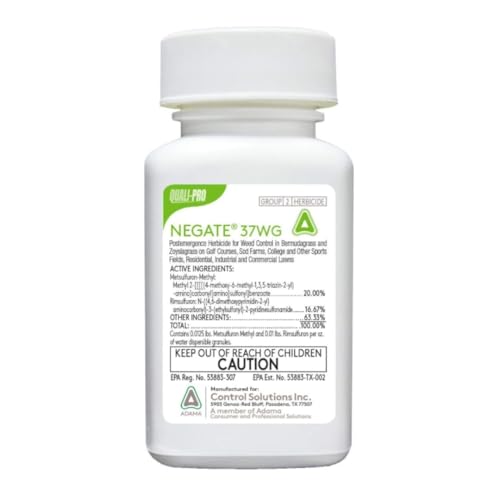
This sulfonylurea herbicide combines rimsulfuron (16.67%) and metsulfuron methyl (20%) into a potent dual-action formula that targets both grassy and broadleaf weeds. It is labeled specifically for warm-season turfgrasses like bermudagrass and zoysia, and users report excellent control of poa annua, bentgrass, ryegrass, and foxtail — though foxtail is not always explicitly listed on the label, the active ingredients are proven effective against it.
The entire 1.5-ounce bottle must be mixed with 1 gallon of water to create a stock solution, which is then used at a rate of 3-4 ounces per 1,000 square feet. This makes the product ideal for users who plan multiple applications over a season. Owners report visible decline in foxtail within 5-7 days, with complete control in 2 weeks after a second spot treatment.
One critical limitation is the 30-day shelf life of the mixed concentrate, which means unused stock solution must be discarded. The product is priced per 1.5 ounces, which is enough for approximately 8,000-10,000 square feet of total coverage depending on mixing rate.
What works
- Extremely concentrated — small bottle covers large area
- Effective against both grassy and broadleaf weeds
- Low odor, suitable for public and residential use
What doesn’t
- Mixed stock solution only lasts ~30 days
- Not labeled for all cool-season turfgrasses
6. Liquid Harvest Mesotrione – 8 Ounces

This is a smaller, more accessible entry point into mesotrione-based foxtail control. At 8 fluid ounces, it covers approximately 1,000 square feet, making it ideal for small lawns or spot treatment of isolated foxtail patches. The same active ingredient as the 16-ounce version, it targets 46 species including foxtail, crabgrass, and clover, and is safe on centipede, buffalo, tall fescue, and St. Augustine (sod only).
User feedback is overwhelmingly positive, with many reporting successful foxtail and crabgrass elimination in a single application when applied at 1 teaspoon per 2 gallons of water. The product is particularly praised for its safety on centipede grass, which is notoriously sensitive to many other herbicides.
The main trade-off is the smaller volume — for larger infestations exceeding 1,000 square feet, the 8-ounce bottle will run out quickly, and the per-ounce cost is higher than buying the 16-ounce jug. Owners also emphasize that careful measurement is critical because mesotrione can damage St. Augustine if over-applied.
What works
- Affordable entry point for small lawns
- Safe on centipede and St. Augustine (sod only)
- Effective at low application rates
What doesn’t
- Small bottle limited to ~1,000 sq ft coverage
- Higher cost per ounce compared to larger size
7. SpeedZone EW Lawn Weed Killer

SpeedZone is a fast-acting post-emergent that targets over 90 listed weeds, including goosegrass and nimblewill — but it is primarily a broadleaf herbicide. While some users report incidental control of grassy weeds, the active ingredients (2,4-D, Dicamba, Carfentrazone, Mecoprop-p) are not specifically formulated for foxtail, and its effectiveness on this particular weed is inconsistent.
Where SpeedZone excels is in visible speed — weeds begin curling within hours and are fully brown in 2 days. It is rainfast in 3 hours and allows reseeding in just 7 days, making it a strong option for general lawn weed cleanup. Owners who have used it for broadleaf weeds like clover, dandelion, and spurge report excellent results, but those expecting foxtail-specific control are often disappointed.
For lawns where foxtail is the primary target, this product falls short compared to quinclorac or mesotrione formulations. Its best use case is in conjunction with a dedicated foxtail herbicide for comprehensive weed management, rather than as a standalone foxtail solution.
What works
- Extremely fast visible results on broadleaf weeds
- Rainfast in 3 hours
- Reseed in 7 days
What doesn’t
- Inconsistent on foxtail — not the primary target
- Broadleaf formula not ideal for grassy weed control
Hardware & Specs Guide
Active Ingredient Chemistry
Quinclorac disrupts cellulose synthesis in susceptible grasses, making it highly selective for foxtail, crabgrass, and signalgrass while safe on established cool-season and warm-season turf. Mesotrione inhibits the HPPD enzyme, bleaching the weed before death — it is absorbed by both roots and leaves, giving it pre- and post-emergent flexibility. MSMA targets the shoot meristem and is extremely fast-acting but carries handling restrictions due to its organic arsenic content.
Mixing and Surfactant Requirements
Most concentrated herbicides require a non-ionic surfactant at 0.25-0.5% of the spray volume (about 1-2 teaspoons per gallon) to reduce surface tension and improve leaf adhesion. Without a surfactant, droplets bead up and roll off waxy foxtail leaves, reducing efficacy by up to 50%. Spray dye is recommended for even coverage and to avoid missing patchy spots.
Timing and Temperature Considerations
Post-emergent foxtail herbicides are most effective when foxtail is actively growing and less than 6 inches tall. Ideal air temperatures are between 60-85°F — applications above 90°F can stress turfgrass, while applications below 50°F reduce herbicide uptake. Avoid applying before heavy rain or within 24 hours of mowing to maximize leaf surface area for absorption.
Turfgrass Compatibility
Quinclorac is safe on bermudagrass, zoysia, tall fescue, perennial ryegrass, and Kentucky bluegrass. Mesotrione is safe on centipede, buffalo, St. Augustine (sod only), and fine fescue but can temporarily discolor them. MSMA should only be used on established bermudagrass and zoysia — avoid St. Augustine and centipede entirely. Always check the label for your specific turf variety before mixing.
FAQ
Can I use a broadleaf weed killer for foxtail?
How often should I reapply foxtail herbicide?
What is the best time of year to treat foxtail?
Will foxtail herbicide kill my lawn grass?
Final Thoughts: The Verdict
For most gardeners, the herbicide for foxtail winner is the Primesource Quinclorac 1.5L because it is explicitly labeled for all three foxtail species and delivers fast, reliable results on most common turfgrasses. If you want a dual-purpose product with pre-emergent power, grab the Liquid Harvest Mesotrione (16 oz). And for heavy infestations in warm-season bermudagrass or zoysia, nothing beats the Target 6 Plus (MSMA 48.2%) for raw knockdown speed and volume coverage.