
Growing potatoes in a traditional in-ground row takes up valuable garden real estate and leaves your harvest vulnerable to pests and rot. Fabric bags designed specifically for tubers solve this by creating a contained, breathable environment that encourages deep root growth and makes harvest as simple as tipping the bag over. The right bag also lets you layer soil as the plant grows — a technique called hilling that dramatically increases yields in a fraction of the space.
I’m Rikta — the co-founder and writer behind Lawn Gear Lab. I’ve spent countless hours analyzing nonwoven fabric densities, handle stitch patterns, and drainage configurations across dozens of grow bags, cross-referencing hundreds of verified owner experiences to identify the models that actually hold up through multiple seasons of heavy soil, repeated watering, and the physical stress of moving fully loaded containers.
This guide breaks down seven top-tier options with concrete specs on material thickness, handle construction, and capacity so you can choose with confidence. Whether you’re filling a balcony or a backyard, the right bags for growing potatoes make the difference between a messy guessing game and a clean, abundant harvest.
How To Choose The Best Bags For Growing Potatoes
Potato bags are deceptively simple containers. But the difference between a bag that lasts one season and one that endures five comes down to three key decisions: fabric weight, handle integrity, and drainage engineering. Here’s what to look for.
Fabric Weight and Material
The most reliable potato bags use nonwoven polypropylene fabric measured in grams per square meter (GSM). A 300GSM rating is the sweet spot — thick enough to resist tearing from soil weight and UV exposure, yet porous enough to allow air pruning of roots. Anything below 250GSM risks tearing by mid-season, especially when the fabric is saturated. Bags made from PE material offer a different texture — lighter and less breathable — but require pre-drilled drainage holes to compensate for the reduced airflow.
Handle Design and Stitch Quality
Potato bags can easily exceed 40 pounds when filled with moist soil and mature tubers. Handles must be constructed from polypropylene webbing (not a loop of the same fabric), and they need reinforced stitching — look for serger or X-pattern stitching at the attachment points. A handle that rips mid-move ruins the bag and can dump soil everywhere. Surround handles that wrap under the bag distribute weight more evenly and reduce stress on any single seam.
Drainage and Aeration
Potatoes rot quickly in waterlogged soil. Fabric bags naturally wick moisture through their walls, but the best models also include bottom drainage holes or a permeable base to prevent pooling. Some bags add side ventilation slits to improve airflow through the root zone. Equally important is the bag’s ability to stand upright after filling — a floppy bag collapses under its own weight and restricts root expansion.
Quick Comparison
On smaller screens, swipe sideways to see the full table.
| Model | Category | Best For | Key Spec | Amazon |
|---|---|---|---|---|
| MEKOLIFE 6-Pack with Viewing Window | Premium Fabric | Harvest timing precision | 300GSM nonwoven + viewing window | Amazon |
| ADORMA 6-Pack 10 Gallon | Value Pack | Versatile general planting | 300GSM nonwoven, 6 bags | Amazon |
| Land Guard 10-Pack 10 Gallon | Budget Multi-Pack | Maximizing bag count on budget | 10 bags, 10-gallon capacity | Amazon |
| LotFancy 5-Pack 10 Gallon | Heavy Duty | Self-standing stability | 300GSM, reinforced PP handles | Amazon |
| BN-LINK 5-Pack 10 Gallon | Entry-Level Premium | Small-space urban gardens | 300GSM, serger-stitched handles | Amazon |
| OPPOLIFE 12-Pack 10 Gallon | Bulk Premium | Large-scale container gardens | 300GSM, polypropylene handles | Amazon |
| BIJOKETTEN 8-Pack PE Grow Bags | Alternative Material | Plastic-free alternative seekers | PE material, 17.7-inch height | Amazon |
In‑Depth Reviews
1. MEKOLIFE 10 Gallon Potato Grow Bags with Viewing Window

The MEKOLIFE bags distinguish themselves with a transparent viewing window that lets you check tuber development without disturbing the root system. The window uses a soil-retention flap to keep the growing medium contained while giving a clear view of progress — a feature that saves you from the guesswork of poking around or prematurely dumping the bag. The 300GSM nonwoven fabric is heavy enough to resist tearing and provides excellent breathability, encouraging air pruning that prevents root circling.
The surround handles are reinforced with serger stitching and are rated to support up to 50 pounds of soil and plant weight, making relocation easy even when fully saturated. The 10-gallon capacity — at 13.7-inch diameter and 17.7-inch height — provides the depth potatoes need for proper hilling. Multiple verified owners report the bags standing up well to outdoor weather and being reusable for multiple growing seasons, with some expecting five to ten years of service.
The only real drawback is that the fabric construction, like any cloth pot, allows faster evaporation than plastic containers, so you’ll need to monitor moisture more closely — especially in hot weather. The viewing window is a true differentiator, but the bags come at a slightly higher investment than basic fabric pots. For growers who want to optimize harvest timing without guesswork, this premium design delivers.
What works
- Transparent viewing window with soil flap prevents harvest guesswork
- Surround handles with serger stitching lift up to 50 pounds safely
- 300GSM nonwoven fabric promotes air pruning and resists tearing
What doesn’t
- Fabric wall dries faster than plastic — requires consistent watering
- Premium price compared to basic fabric grow bags
2. ADORMA 6-Pack 10 Gallon Potato Grow Bags

The ADORMA 6-pack delivers genuine value by combining a 300GSM nonwoven fabric with polypropylene webbing handles at a per-unit cost that undercuts many smaller sets. The five-line edging on the top rim and double-stitched side seams reinforce the areas that typically fail first on cheaper bags. Multiple verified customers specifically noted that the hook-and-loop closure holds firmly — an important detail for bags that get filled and emptied repeatedly.
The 10-gallon capacity gives enough vertical depth (18 inches) for proper hilling, and the fabric’s breathability ensures excess water drains through rather than pooling at the bottom. Owners have successfully grown potatoes, tomatoes, and peppers in these bags, with several reporting that they collapse flat for easy off-season storage. The X-shaped stitching on the handle attachment points adds confidence when moving fully loaded bags.
Some users found that placing these bags on a wire rack improved drainage further, since the fabric base can sit in water on solid surfaces. The 10.58-ounce weight per bag is among the lightest in its class, which helps with handling but may also indicate slightly less material density than the heaviest competitors. Over three seasons of reuse, this pack represents a strong price-to-durability ratio.
What works
- Six-bag pack offers excellent per-unit value
- Five-line top edging and double-stitched sides reinforce high-stress points
- PP webbing handles with X-stitch support heavy soil loads
What doesn’t
- May need a wire rack underneath to prevent base waterlogging
- Light fabric weight makes bags feel less substantial than thicker alternatives
3. LotFancy 5-Pack 10 Gallon Grow Bags
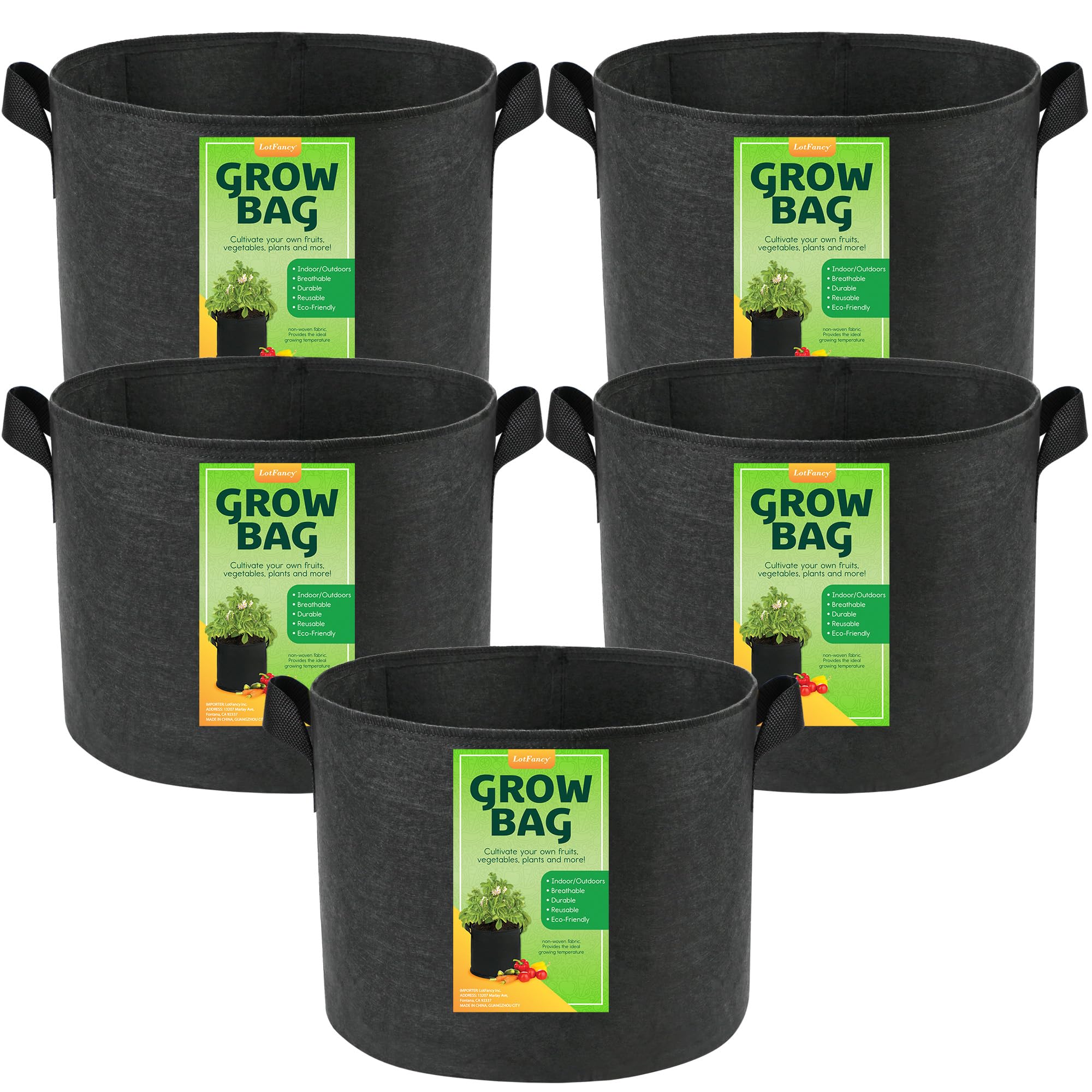
The LotFancy 5-pack stands out for its ability to hold its shape upright even before adding soil — a practical advantage that makes filling easier and prevents the bag from slumping over as it settles. The 300GSM nonwoven fabric is stiff enough to resist collapse while still being porous for drainage. Owners specifically praised the bag’s performance with heavy soil mixes, noting it didn’t bulge or distort like thinner alternatives.
The handles use a heavy-duty polypropylene belt material rather than the fabric loops found on lower-tier bags. These reinforced padded straps are double-stitched and rated to support 78 to 100 kilograms (172 to 220 pounds) — a generous margin above the actual loading of a 10-gallon soil bag. The 16.1-inch diameter provides a wide base that resists tipping, and the 11.8-inch height is slightly shorter than some competitors, making the bags easier to manage on patios or decks.
A few experienced growers noted that the black color and porous fabric can cause soil to dry out quickly in direct sunlight, so more frequent watering is necessary. For growers who want bags that stay where you put them and don’t flop over, this design is a reliable choice that has received consistent praise for its structural integrity.
What works
- Self-standing design stays upright during filling and settling
- PP belt handles rated for up to 220 pounds of load
- Wide 16.1-inch diameter base prevents tipping
What doesn’t
- Black fabric absorbs heat and accelerates soil drying
- Shorter 11.8-inch height offers less vertical room for hilling
4. BN-LINK 5-Pack 10 Gallon Grow Bags
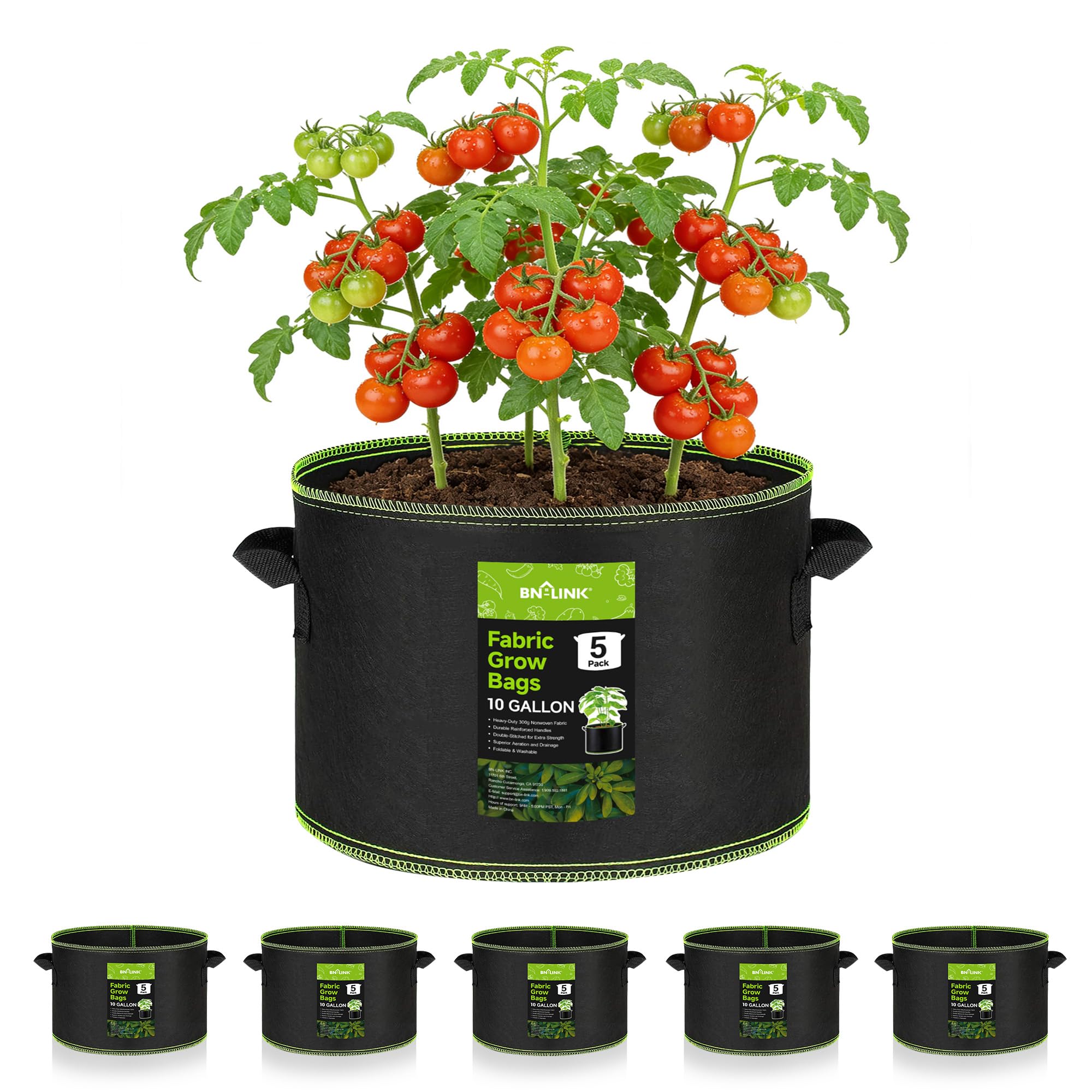
The BN-LINK bags are built around a simple but effective design philosophy: thick fabric and clean stitching. The 300GSM nonwoven material is BPA-free and the serger-stitched handles are attached with multiple passes of thread that distribute stress across a wider area. Several verified reviews noted that the bags survived a second season with no signs of seam separation or handle fatigue, which is a strong indicator of long-term durability.
The drainage characteristics are well-balanced — the porous fabric releases excess moisture without letting soil wash out. Owners growing both peppers and compact tomatoes reported that the bags supported vigorous root development and that the handles made moving plants to track sunlight straightforward. The bag weighs 300 grams, placing it in the mid-weight range that balances portability with material thickness.
The primary limitation is that the labeled 10-gallon capacity actually holds closer to 8 gallons of soil once settled, which reduces the effective growing volume. This won’t matter for shallow-rooted crops, but potato growers will need to account for the slightly smaller internal space when planning their hilling schedule. For urban gardeners with limited space, the compact footprint and reliable construction make these a solid mid-range pick.
What works
- Serger-stitched handles provide strong, long-lasting attachment
- BPA-free material with balanced drainage prevents waterlogging
- Light enough to move but thick enough for multi-season reuse
What doesn’t
- Actual soil capacity is closer to 8 gallons than 10
- Fabric dries out faster than plastic alternatives
5. OPPOLIFE 12-Pack 10 Gallon Plant Grow Bags
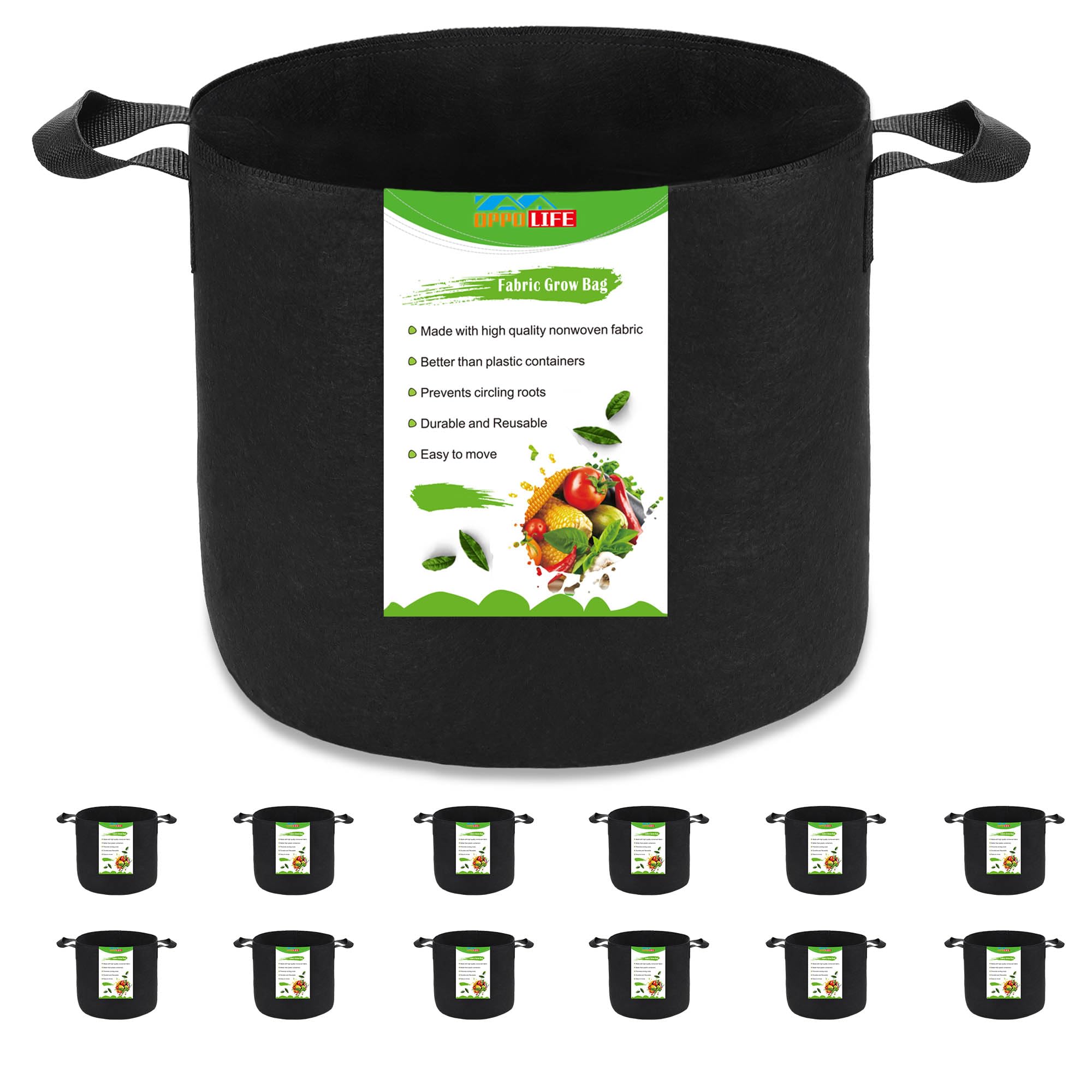
The OPPOLIFE 12-pack is designed for the serious container gardener who needs volume without sacrificing quality. Each bag is made from 300GSM nonwoven polypropylene with added anti-ultraviolet treatment, which helps the fabric resist degradation from prolonged sun exposure. The 12-bag count at this price point makes it one of the best per-unit deals among premium-tier options, especially for growers setting up multiple potato varieties side by side.
The handles are extended and widened polypropylene webbing with an inner lining reinforcement that prevents the strap from cutting into the fabric. The 12-inch diameter and 10-inch height create a squatter profile than some tall potato bags, which can be an advantage for stability on windy balconies. Owners have grown tomatoes and peppers in these bags successfully and reported that the bags handle repeated washing and folding for storage without fraying.
The downside is the relatively shallow 10-inch height — potatoes require vertical depth for hilling, and this bag offers less room for layered soil addition than taller 18-inch models. Some users also noted that the fabric, while thick, can leak fine soil particles during watering. For growers who prioritize bag count and UV resistance, this set delivers strong value, though tall potato varieties may need the taller alternative.
What works
- 12-bag pack gives best per-unit value in the premium tier
- Anti-UV treatment extends outdoor lifespan significantly
- Lined polypropylene handles resist separation from fabric
What doesn’t
- 10-inch height limits hilling capacity for tall potato varieties
- Fine soil particles can seep through fabric during heavy watering
6. Land Guard 10-Pack 10 Gallon Fabric Grow Bags

The Land Guard 10-pack offers the lowest per-unit price among all the packs reviewed here, making it an attractive option for gardeners on a tight budget or those expanding a large container setup. The nonwoven fabric is breathable and the bags come with heavy-duty handles that are adequate for moving filled containers short distances. Owners have used these bags for potatoes, tomatoes, squash, and zucchini with good early-season results.
The 11.8 x 15.7 x 15.7 inch dimensions provide a reasonable volume for potato growing, and the material allows sufficient drainage for healthy root development. Several owners reported using the bags for a second year with no visible wear or handle tearing, suggesting the build quality holds up better than the low price might indicate. The foldable design makes off-season storage simple.
Where these bags fall short is material thickness — multiple reviewers noted the fabric feels less robust than premium 300GSM options. The bags may need to be placed on a hard surface or wire rack to prevent the bottom from sitting in pooled water. For budget-minded growers who don’t mind replacing bags every two to three seasons, this pack provides the highest bag count for the lowest investment.
What works
- Lowest per-bag cost — ideal for large-scale setups
- Breathable fabric prevents root circling and overwatering
- Handles are sturdy enough for moving filled containers
What doesn’t
- Fabric is thinner than premium 300GSM options
- Needs a raised surface to avoid base waterlogging
7. BIJOKETTEN 10 Gallon 8-Pack PE Grow Bags
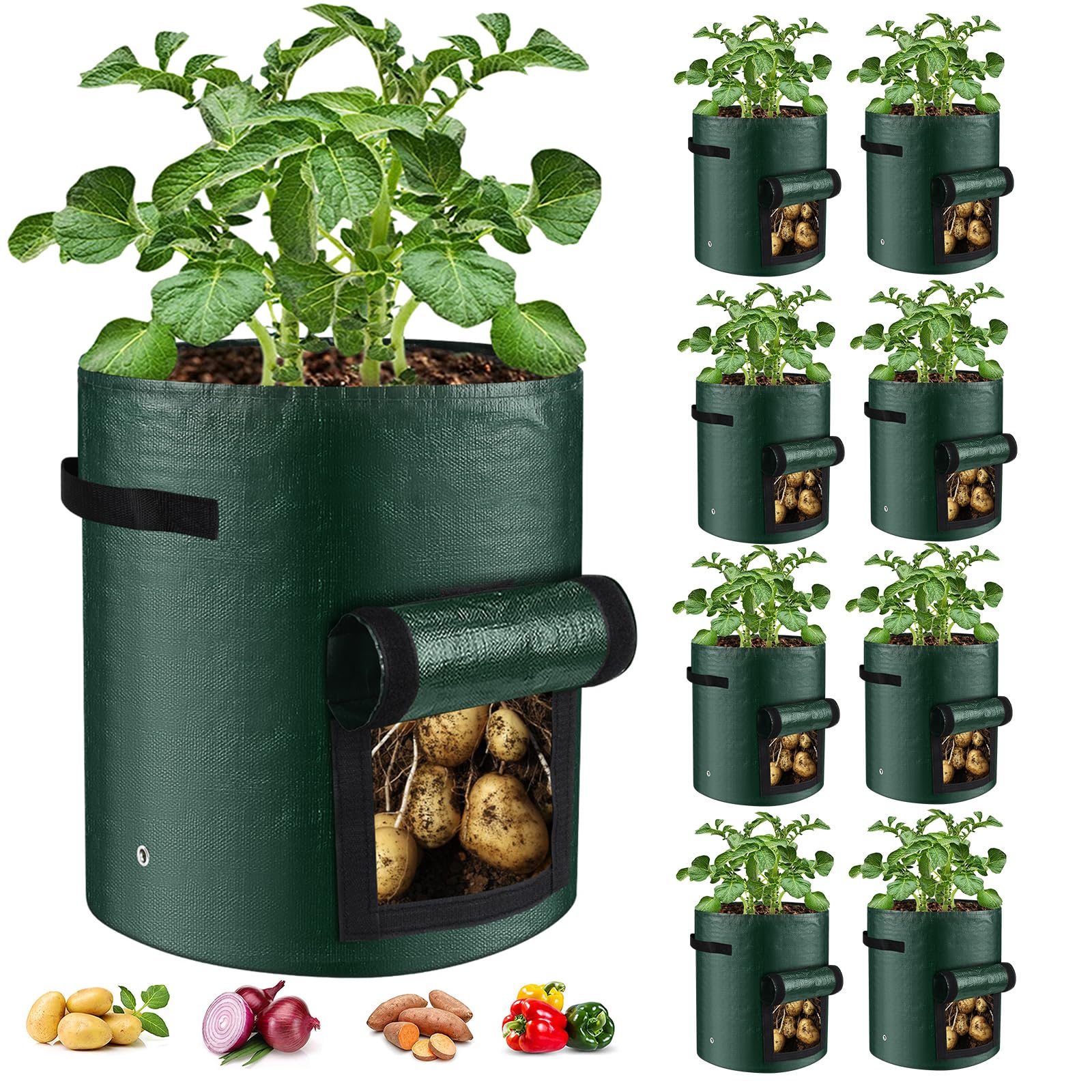
The BIJOKETTEN bags take a different approach by using PE material instead of nonwoven fabric. This makes them lighter and gives a smoother surface that resists abrasion, but it also means they lack the natural breathability of fabric. To compensate, the design includes three drainage holes at the bottom and two side ventilation slits, creating a controlled airflow path that still prevents root rot while reducing the evaporation rate that plagues fabric pots.
The large front viewing window with a flap is the defining feature here — it opens wide enough to inspect root development or harvest potatoes without dumping the entire bag. The 17.7-inch height is the tallest in this lineup, providing generous depth for hilling multiple layers of soil. Owners report that the bags hold their shape well after filling and that the sturdiness makes them easy to move around the patio or garden.
The PE construction is a compromise — it won’t air-prune roots as effectively as nonwoven fabric, and some environmentally conscious reviewers noted the material is plastic-based despite being BPA-free. The bags are also green rather than black, which means less heat absorption in direct sun but also a less traditional aesthetic. For growers who want a tall bag with a large harvest window and slower moisture loss, this design is a practical alternative to fabric.
What works
- 17.7-inch height provides excellent depth for hilling potatoes
- Large front flap with viewing window simplifies harvest inspection
- Side ventilation slits and bottom holes prevent waterlogging
What doesn’t
- PE material does not air-prune roots like nonwoven fabric
- Plastic construction may deter users avoiding synthetic materials
Hardware & Specs Guide
Fabric Weight (GSM)
The single most important durability indicator for fabric grow bags. Measured in grams per square meter, 300GSM is the standard for bags that last multiple seasons. Lower GSM bags may be cheaper but often begin fraying at seams by the second season, especially under the constant stress of moist soil. The 300GSM density also provides enough stiffness for the bag to hold its shape without external support, making filling and hilling much easier.
Handle Construction & Load Rating
Potato bags hold 40 to 60 pounds of saturated soil and tubers. Handles sewn from the same fabric as the bag will fail within one season. Look for separate polypropylene webbing handles with reinforced stitching — either serger or X-pattern — that spreads the load across the fabric. Surround handles that extend under the bag offer the best weight distribution and reduce the chance of tearing at the attachment point.
Drainage and Aeration Mechanism
Nonwoven fabric bags rely on microporous material to wick moisture and allow air exchange — this is called passive aeration. PE material bags require engineered drainage holes and side slits to achieve the same effect. The trade-off is that fabric evaporates water faster, requiring more frequent watering, while PE holds moisture longer but lacks the air-pruning benefit that forces roots to branch and fill the container more densely.
Viewing Windows and Harvest Flaps
A transparent window or flap on the front of the bag lets you check tuber development without digging or dumping. The best designs use a clear panel secured by a fabric flap or hook-and-loop closure that prevents soil from spilling while providing visual access. This feature transforms harvest timing from a guessing game into a precision decision, especially for indeterminate potato varieties that set tubers at different depths over several weeks.
FAQ
What is the ideal size bag for growing potatoes?
How long do fabric potato bags typically last?
Final Thoughts: The Verdict
For most gardeners, the bags for growing potatoes winner is the MEKOLIFE 6-Pack with Viewing Window because it combines premium 300GSM fabric, reinforced surround handles, and a harvest-timing window that no other bag in this lineup offers at a competitive price. If you want maximum bag quantity for a large garden, grab the OPPOLIFE 12-Pack. And for a budget-friendly multi-pack that still handles well, the Land Guard 10-Pack delivers surprising durability for the cost.