
The difference between a flower bed that blooms for weeks and one that fizzles out by mid-summer often comes down to what’s under the surface—not the plants themselves. Fill a bed with the wrong mix, and you’ll fight poor drainage, nutrient lockout, and roots that never establish. Choose the right blend, and your perennials and annuals will settle in fast, push out strong stems, and reward you with dense color without constant intervention.
I’m Rikta — the co-founder and writer behind Lawn Gear Lab. I’ve spent hundreds of hours cross-referencing soil science data, studying organic matter breakdown rates, and collecting real-world feedback from gardeners who push bagged mixes through every season.
This guide breaks down the top bagged soils and amendments for flower beds, sorting through drainage stats, nutrient content, and real-world performance so you can confidently choose the right dirt for flower beds that matches your planting style and soil conditions.
How To Choose The Best Dirt For Flower Beds
Not all bagged soil is built for flower beds. The right choice depends on your native soil type, whether you’re planting in-ground or in a raised bed, and the specific needs of the flowers you’re growing. Here’s what to look for when you scan the labels.
Organic Matter Content
Organic matter—composted manure, peat moss, coir, or worm castings—is the engine of healthy flower bed soil. It feeds beneficial microbes, holds moisture without waterlogging, and releases nutrients slowly. Look for bags that list a specific organic amendment like “composted dairy manure” or “sphagnum peat moss” rather than vague “natural ingredients.” For flower beds, a mix with visible dark, crumbly texture signals high organic content that will support root growth.
Drainage and Aeration
Flower roots need oxygen. Soil that stays soggy after rain will rot perennials and drown annuals. Premium bagged soils include perlite, coarse sand, or coconut coir fibers to create pore spaces. If your native soil is heavy clay, you need a mix that breaks up compaction. If you’re working with sandy soil, choose a blend heavy in peat or coir to hold moisture near the roots.
Nutrient Profile and pH
Bagged soils often come with starter fertilizer pre-mixed. That’s fine for the first month, but for flower beds, you want a mix that supports long-term blooming—look for blends with compost or worm castings that feed slowly without burning. pH also matters: most flowering ornamentals prefer a slightly acidic to neutral range (6.0 to 7.0). Avoid mixes high in raw manure that can spike nitrogen and produce more leaves than blooms.
Quick Comparison
On smaller screens, swipe sideways to see the full table.
| Model | Category | Best For | Key Spec | Amazon |
|---|---|---|---|---|
| Espoma Organic Vegetable & Flower Garden Soil | Organic Blended Mix | In-ground flower & vegetable beds | 1 cu ft bag with mycorrhizae | Amazon |
| Coast of Maine Organic Planting Soil | Organic Compost Blend | Vegetable gardens & heavy feeders | 20 qt with composted manure | Amazon |
| R&M Organics Premium Compost | Compost Amendment | Top-dressing & soil revitalization | 10 lb bag, dairy manure based | Amazon |
| Michigan Peat Premium Potting Soil | All-Purpose Potting Mix | Containers & raised beds | 50 lbs with perlite & sand | Amazon |
| Scotts Premium Topsoil | Soil Conditioner | Lawn leveling & garden amendment | 0.75 cu ft, peat & organic matter | Amazon |
| Avalution Coco Coir Bricks | Soil Amendment | Moisture retention & soil lightening | 6-pack expands to 36 qt | Amazon |
In‑Depth Reviews
1. Espoma Organic Vegetable & Flower Garden Soil

Espoma’s blend is formulated for in-ground flower beds from the start. The inclusion of earthworm castings and a proprietary myco-tone blend of endo and ecto mycorrhizae gives it a biological edge most bagged soils lack. These beneficial fungi colonize root systems, increasing water and nutrient uptake—especially important for perennials that stay in the ground for multiple seasons. The 1-cubic-foot bag provides enough volume to amend a small to medium flower bed without needing multiple bags.
Texture-wise, this mix is dark, crumbly, and well-structured, meaning it integrates smoothly with native garden soil without forming clumps. It works equally well as a backfill when transplanting bare-root roses or as a full-bed amendment for new annual displays. Customer reports consistently note that plants in Espoma soil outperform those in budget generic options, with stronger root development and more vibrant foliage within the first growing month.
The organic certification means you get zero synthetic chemicals—a major plus if you’re growing pollinator-friendly flowers or edibles nearby. Some users have reported a few indoor gnats when using this soil for container plants brought inside, so consider that for strictly indoor applications. For dedicated outdoor flower beds, this is the most complete one-bag solution on the list.
What works
- Mycorrhizae boost root establishment for perennials
- Rich organic texture integrates into native soil easily
- Trusted OMRI-listed ingredients with no synthetics
What doesn’t
- May introduce gnats if used in indoor containers
- Premium tier price for a single cubic foot
2. Coast of Maine Organic & Natural Planting Soil

Coast of Maine packs this bag with composted manure and sphagnum peat moss, creating a nutrient-dense mix that heavy-feeding flowers like dahlias, zinnias, and tomatoes thrive on. The 20-quart volume is practical for topping off raised beds or filling several large containers. The manure content provides a slow-release nitrogen source that fuels leafy growth before bloom season, while the peat moss improves water retention in sandy beds.
Gardeners using this mix report excellent results with heirloom tomatoes and vegetables, but the same nutrient profile serves flowering ornamentals well—especially those that need consistent moisture and rich organic matter. The blend drains well enough to prevent root rot but holds enough moisture to reduce watering frequency during hot weeks. Several users noted the presence of cedar or aromatic wood fibers in the mix, which may help deter soil insects naturally.
The main trade-off is cost per bag relative to simpler topsoils. For large flower beds requiring multiple cubic feet, this adds up quickly. Some users experienced initial fungus gnat activity after opening, which can be mitigated by airing the soil out before planting. If you grow a mix of flowers and edibles and want one bag that handles both, this is a strong contender.
What works
- High organic compost content feeds heavy bloomers
- Balanced moisture retention and drainage
- Cedar fibers naturally help repel insects
What doesn’t
- Premium price for the bag volume
- Can introduce gnats if not aired out
3. R&M Organics Premium Organic Compost
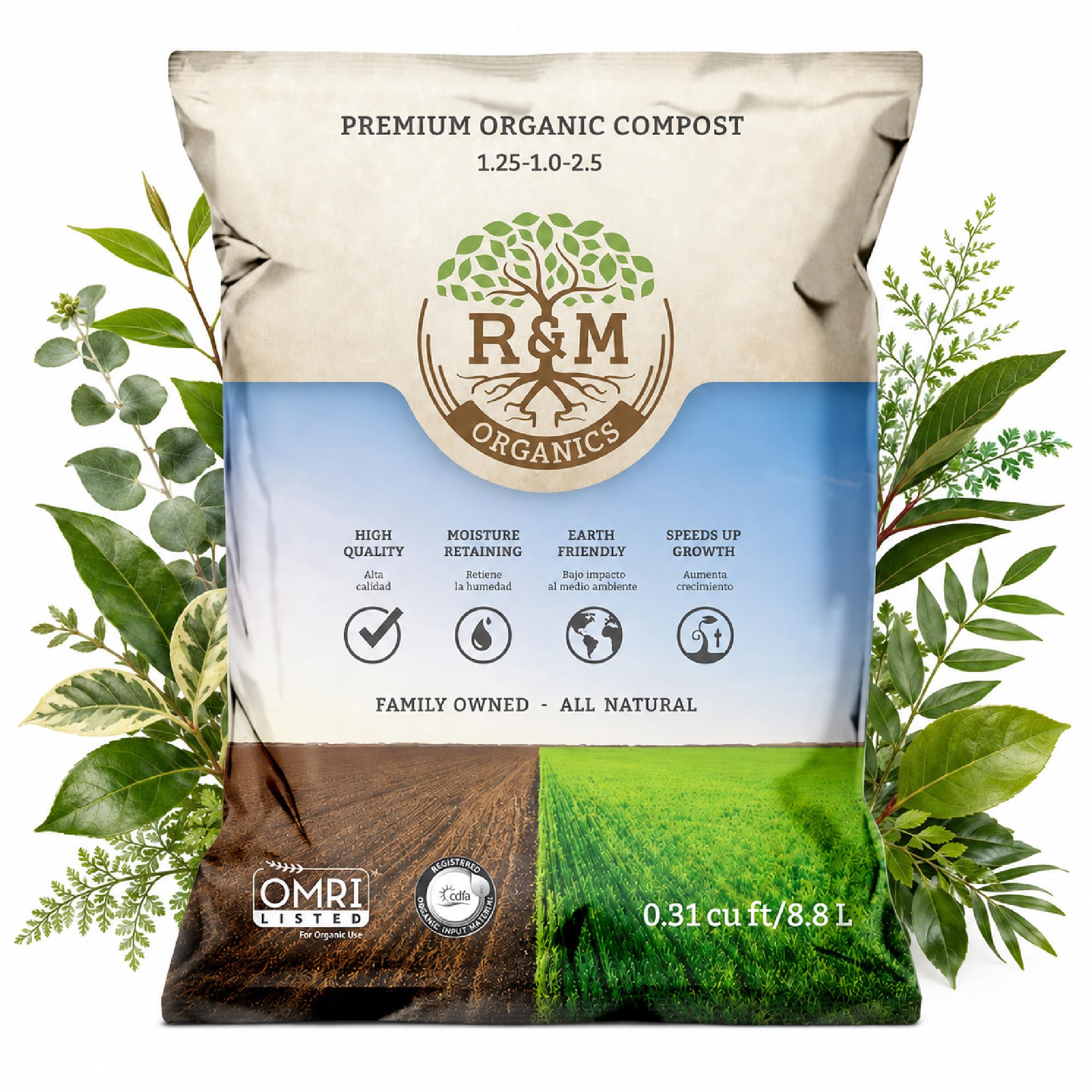
R&M Organics focuses on pure compost rather than a pre-mixed potting soil. This 10-pound bag of fully composted dairy cow manure is designed as a soil amendment rather than a standalone growing medium. When you top-dress an existing flower bed with a quarter-inch layer, the compost slowly releases nutrients and improves soil structure without the shock of raw fertilizers. Gardeners have reported reviving stressed azaleas and yellowing tomato plants within a week of application.
The composting process eliminates the strong manure odor typical of fresh barnyard products. The final material has a clean, earthy scent and a fine, crumbly texture that spreads easily. It’s particularly useful for mid-season refresh: if your flower bed soil has been depleted from previous seasons, a light top-dressing with this compost restores microbial life without requiring a full soil replacement. The 10-pound bag is compact enough to carry easily but covers a surprising area when applied thin.
Because this is a pure compost and not a complete soil mix, you’ll need to combine it with your existing soil or a base topsoil for new beds. It’s also relatively expensive per pound compared to bulk compost options. For gardeners looking to rehab tired soil or boost a single plant’s performance without buying several cubic feet of soil, this bag hits the sweet spot.
What works
- Low-odor compost suitable for indoor use too
- Quick visible revival of stressed plants
- Fine texture spreads easily as top-dressing
What doesn’t
- Not a complete soil—needs mixing with existing dirt
- High cost per pound for large beds
4. Michigan Peat Premium Potting Soil

This 50-pound bag from Michigan Peat is a pre-blended all-purpose potting soil built around rich reed sedge peat, perlite, and sand. The inclusion of both a starter and slow-release fertilizer means your flower bed containers get an immediate nutrient boost followed by sustained feeding over several weeks. For large planters and raised beds, the heavy weight per bag translates to better value per cubic foot compared to many premium organic blends.
The reed sedge peat base provides a dark, moisture-holding structure that works particularly well for annuals in containers. The perlite and sand ensure that excess water drains freely—critical for flower bed situations where roots sit in a pot or raised enclosure without access to deep ground drainage. Users consistently describe the mix as having “perfect consistency for potting” and arriving moist and ready to use straight from the bag.
The main downside is the potential for fungus gnats, which multiple users reported emerging from the bag after opening. This is common with peat-based mixes that hold moisture during storage. If you’re using it outdoors in flower beds, the gnats typically disperse quickly; indoor or covered container use may require pre-treatment. For budget-conscious gardeners filling multiple large pots or a raised bed, the 50-pound bag delivers reliable performance without breaking the bank.
What works
- Great value per pound for large projects
- Pre-mixed with slow-release fertilizer
- Drains well with perlite and sand blend
What doesn’t
- Fungus gnats possible after opening
- Not organic-certified
5. Scotts Premium Topsoil

Scotts Premium Topsoil functions as a soil conditioner rather than a standalone growing mix. The formula blends native topsoil with sphagnum peat moss and organic matter to improve the structure of existing garden soil. If your flower bed suffers from heavy clay that compacts in summer or sandy soil that drains too fast, working a 2-inch layer of this topsoil into the top 6-8 inches creates a more balanced root environment. The 0.75-cubic-foot bag covers 4 square feet at a 2-inch depth, making it easy to calculate for specific bed sections.
Users appreciate the versatility—it works as lawn leveling fill, garden amendment, and backfill for new bed installations. The mix arrives with a consistent, slightly moist texture that blends into native soil without creating layers. Several customers noted the presence of small rocks in the mix, which is expected from a topsoil product rather than a screened potting mix. For filling divots or prepping a new in-ground bed before planting, this bag offers dependable utility.
It lacks the high organic content of compost-based blends and doesn’t contain added fertilizers. That means you’ll need to supplement with compost or a balanced flower fertilizer for heavy bloomers. For gardeners who prefer to build their own soil recipe from scratch—starting with a quality base and layering in amendments—this topsoil is the ideal foundation.
What works
- Versatile for lawn and garden use
- Good base for custom soil mixing
- Consistent moisture and texture
What doesn’t
- Contains small rocks in some batches
- No added fertilizer for bloom support
6. Avalution Coco Coir Bricks
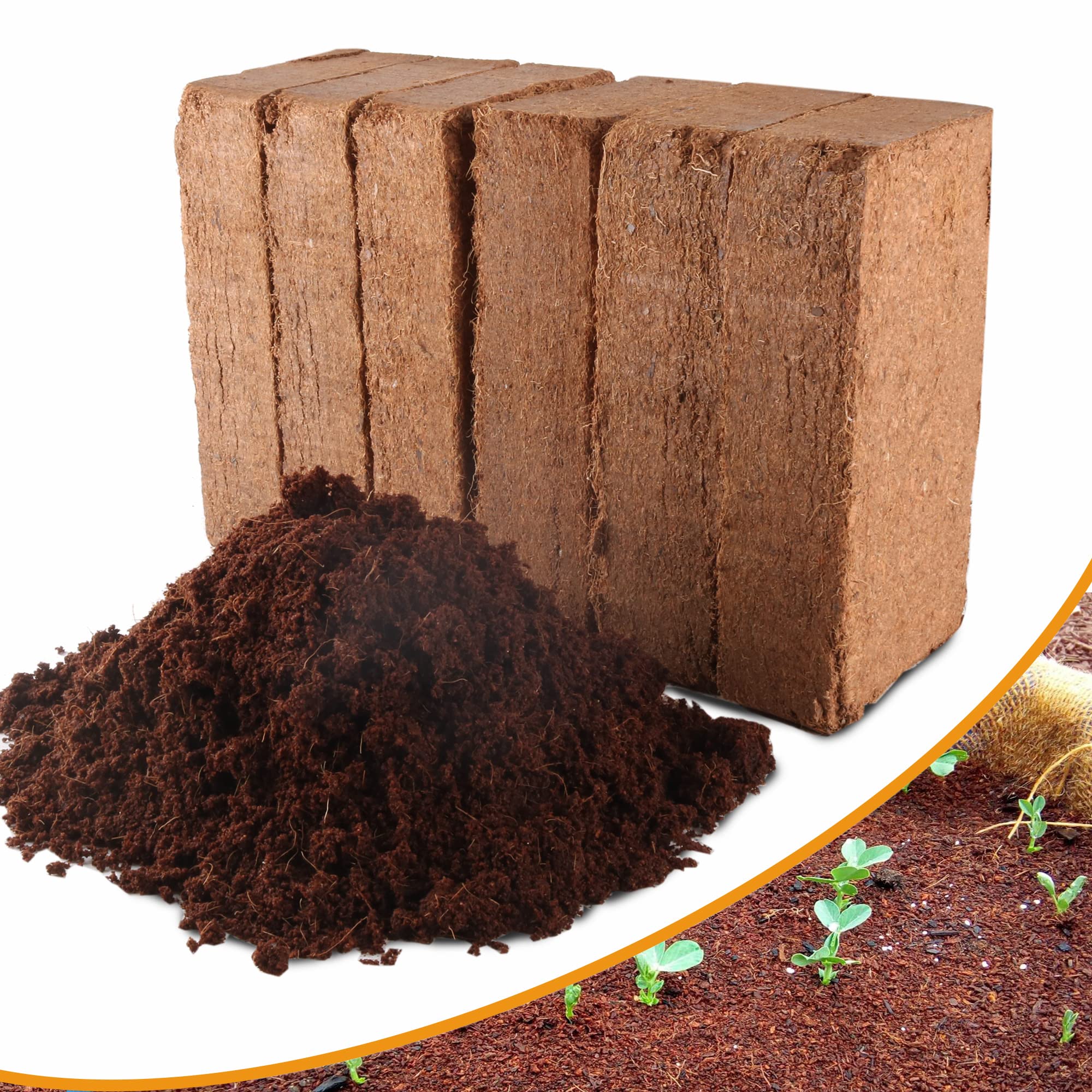
This 6-pack of compressed coconut coir bricks offers a different approach: instead of bagged soil, you get a dry amendment that expands to 36 quarts of growing medium when hydrated. Coco coir’s low EC (electrical conductivity) and balanced pH make it an excellent neutral base for mixing your own flower bed soil. Each brick absorbs 8-10 times its weight in water, dramatically improving moisture retention in sandy or rocky beds. For gardeners who want to lighten heavy clay soil without adding more weight, coir is a smart alternative to peat moss.
Using these bricks is straightforward: soak each brick in 4-5 quarts of water, and it expands into a fluffy, fibrous medium. Users report that the bricks break apart easily after a few hours of soaking, making it simple to mix with compost or topsoil. The compact dry form means you can store several bricks without taking up garage space. This is especially useful for gardeners who want to adjust soil texture seasonally without committing to multiple heavy bags.
The biggest limitation is that coir alone provides almost no nutrients. It’s an amendment, not a complete soil. You must blend it with compost, fertilizer, or a nutrient-rich topsoil to create a functional flower bed mix. Some users found the bricks harder to break apart without sufficient soaking time. For the budget-conscious gardener who already has a composting system, this is the most transportable and space-efficient way to improve soil structure.
What works
- Excellent water retention without waterlogging
- Compact storage and light weight before expansion
- Neutral pH suitable for most flower varieties
What doesn’t
- Zero nutrients—must be mixed with compost or fertilizer
- Requires planning for 6+ hour soak time
Hardware & Specs Guide
Organic Matter by Source
The type of organic matter in a bagged soil determines how it behaves in your flower bed. Sphagnum peat moss (found in Scotts and Michigan Peat) holds moisture well but is slightly acidic and breaks down slowly. Composted manure (Coast of Maine, R&M Organics) delivers a broader nutrient profile and feeds soil microbes faster. Coconut coir (Avalution) offers the best water retention for sandy soils but provides negligible nutrition. For a balanced flower bed, look for blends that combine at least two organic sources to cover both moisture and fertility needs.
Bag Volume and Coverage
Bag sizes are measured in cubic feet or quarts—and the difference matters. A 0.75-cubic-foot bag (Scotts) covers about 4 square feet at a 2-inch depth. A 20-quart bag (Coast of Maine) is roughly 0.67 cubic feet. A 50-pound bag (Michigan Peat) compresses more material but the density varies by moisture content. To calculate how many bags you need for your flower bed, measure the area in square feet, decide on the depth (1-2 inches for amendment, 6-8 inches for new beds), and divide by the bag’s coverage at that depth. When in doubt, overestimate—a thin layer is worse than a surplus you can store.
FAQ
Can I use bagged topsoil alone for a new flower bed?
How often should I replace the dirt in my flower beds?
Final Thoughts: The Verdict
For most gardeners, the dirt for flower beds winner is the Espoma Organic Vegetable & Flower Garden Soil because it combines mycorrhizae-inoculated organic matter with a texture that integrates seamlessly into native soil for lasting perennial performance. If you want a nutrient-dense mix that gives heavy feeders like dahlias a strong start, grab the Coast of Maine Organic Planting Soil. And for revitalizing tired beds or spot-treating struggling plants, nothing beats the R&M Organics Premium Compost as a targeted top-dressing amendment.