
The difference between flowers that merely survive and those that explode with color often comes down to what’s underneath. Standard garden dirt is too dense for containers, while cheap bagged mixes can turn into waterlogged cement that suffocates tender roots. You need a blend that balances moisture retention with sharp drainage while providing a steady supply of nutrients.
I’m Rikta — the co-founder and writer behind Lawn Gear Lab. I’ve spent hundreds of hours analyzing soil structure science, poring over pH balances, and cross-referencing thousands of owner reports to find the blends that actually deliver on their promises for flower beds and containers.
Whether you are refreshing window boxes or planting a perennial border, this breakdown of the best planting soil for flowers will help you match the right mix to your plants, pots, and climate.
How To Choose The Best Planting Soil For Flowers
Not all bags labeled “potting mix” are suitable for flowering plants. Container flowers demand a lighter, more aerated structure than in-ground perennials, and the wrong texture leads directly to root rot or stunted growth. Focus on three core specs before glancing at nutrient labels.
Prioritize Aeration and Drainage
Flower roots need oxygen as much as they need water. A mix heavy on sand or fine peat compacts quickly, trapping moisture around the root zone. Look for ingredients like perlite, pumice, lava rock, or coarse bark fines that create physical air pockets. A good test: dampen a handful of soil and squeeze—it should hold its shape briefly then crumble, not form a solid mud ball.
Match pH to Your Flower Type
A neutral pH of 6.0–7.0 suits most annuals and perennials, but acid-loving flowers like azaleas, rhododendrons, and hydrangeas need a lower range around 4.5–5.5. Using general-purpose mix on acid-lovers locks up micronutrients and causes yellowing leaves. Specialty blends with added sphagnum peat or elemental sulfur deliver the correct pH from the first watering.
Check the Organic Amendment Profile
Worm castings, kelp meal, and crab shell meal provide slow-release micronutrients that synthetic salts cannot replicate. These organic components feed soil microbes that in turn make minerals available to flower roots. A mix listing “compost” without specifying the source may be inconsistent — prefer blends that name specific amendments so you know exactly what is inside the bag.
Quick Comparison
On smaller screens, swipe sideways to see the full table.
| Model | Category | Best For | Key Spec | Amazon |
|---|---|---|---|---|
| Coast of Maine Bar Harbor Blend | Organic | Container flowers & veggies | Lobster & crab shell meal | Amazon |
| Grow Queen Craft Organic | Indoor/Specialty | Houseplants & tropical flowers | Chunky bark + pumice + lava rock | Amazon |
| Miracle-Gro Potting Mix (3-Pack) | All-Purpose | Annuals & perennials in pots | Feeds up to 6 months | Amazon |
| Midwest Hearth Premium Potting Soil | All-Purpose | Seed starting & small containers | Peat + perlite + vermiculite | Amazon |
| Coast of Maine Acid-Loving Mix | Specialty pH | Azaleas, blueberries, rhododendrons | Low pH with sphagnum peat | Amazon |
| Michigan Peat BACCTO All Purpose | Value/Bulk | Large raised beds & containers | 50 lbs with slow-release fertilizer | Amazon |
| Miracle-Gro Cactus, Palm & Citrus | Specialty Drainage | Succulents & drought-tolerant flowers | Fast-draining formula | Amazon |
In‑Depth Reviews
1. Coast of Maine Bar Harbor Blend Potting Soil
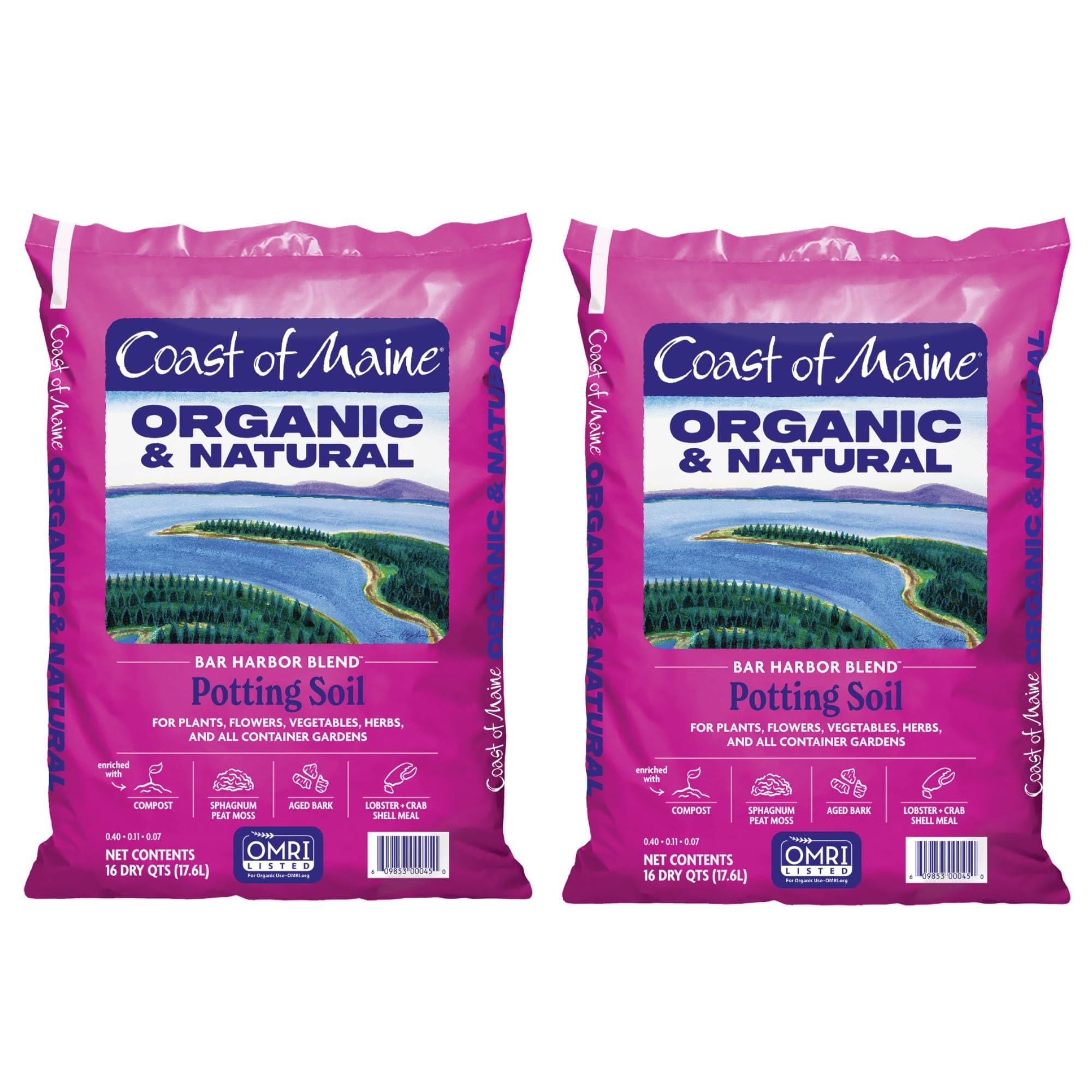
The Coast of Maine Bar Harbor Blend sits at the top because it nails the perfect balance between water retention and drainage for a wide variety of flowering plants. Its base of sphagnum peat moss, compost, and perlite creates an open, fluffy texture that roots can spread through easily. The addition of lobster and crab shell meal provides a natural calcium boost and a slow-release nitrogen source that prevents leafy growth at the expense of blooms.
This mix works exceptionally well in hanging baskets, window boxes, and raised beds where consistent moisture without sogginess is critical. Multiple owners report noticeably greener foliage and heavier flower production compared to generic big-box blends, with several mentioning that even finicky tomato and pepper plants in containers outperform expectations. The sustainable, OMRI-listed ingredients also give peace of mind to growers avoiding synthetic additives.
While the 16-quart bag is priced at a premium compared to economy options, the concentration of active organic matter means you need less frequent fertilizing. A few users noted that the bag can arrive slightly damp, but this is normal for compost-rich organic soil and does not affect performance. For anyone serious about container flower gardening, this is the standard to measure others against.
What works
- Nutrient-dense with lobster and kelp meal.
- Excellent aeration for container use.
- Organic and sustainably sourced.
What doesn’t
- Premium price per quart.
- Some bags arrive pre-moistened which adds weight.
2. Grow Queen Craft Organic Houseplant Potting Mix
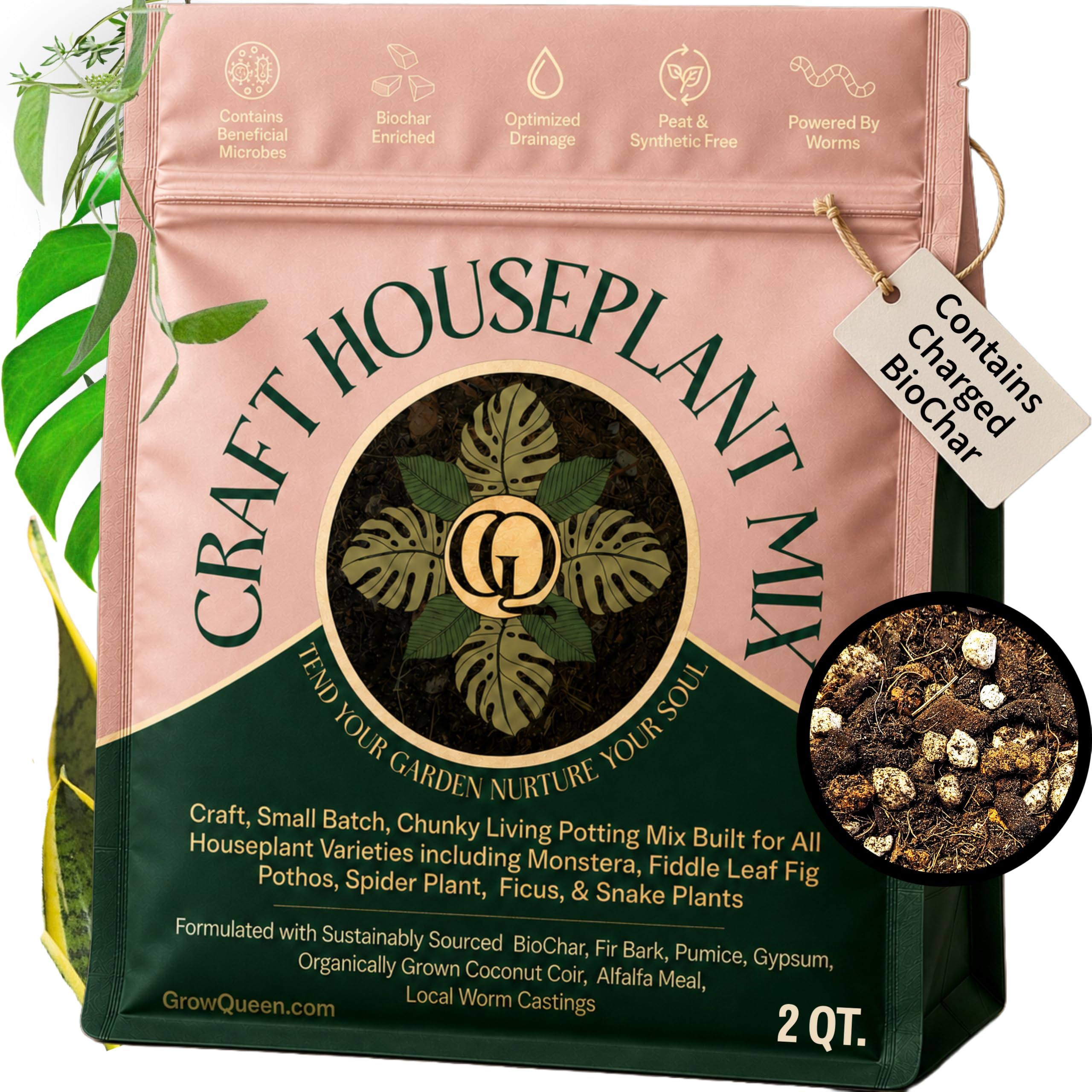
The Grow Queen Craft mix is engineered specifically for plants that demand sharp drainage — think monstera, pothos, and peace lilies — but its chunky structure works equally well for tropical flowering houseplants. It replaces fine peat and perlite with Douglas fir bark fines, lava rock, and pumice, creating permanent pore space that never collapses. The inclusion of charged biochar further improves nutrient retention without making the mix soggy.
Owner feedback consistently highlights how this mix eliminates the “compaction over time” problem common with standard indoor soils. Reviews from growers of Thai Constellation monstera and other high-value aroids confirm that the mix resists fungus gnats by drying evenly, and the pre-moistened arrival reduces transplant shock. The worm castings provide a gentle fertility base that supports steady leaf and flower development for months.
The 2-quart bag is compact and best suited for small container gardens or repotting a few houseplants. For larger flower beds or multiple window boxes, you would need several bags, which adds up. Some users find the price per quart high relative to conventional mixes, but the absence of perlite dust and the superior longevity make it a strong value for indoor flowering plants.
What works
- Superior drainage prevents root rot in sensitive plants.
- Biochar and worm castings provide long-term fertility.
- Peat-free and sustainable.
What doesn’t
- Small bag size limits large projects.
- Premium cost per quart.
3. Miracle-Gro Potting Mix (3-Pack)

The three-pack of Miracle-Gro Potting Mix represents the gold standard for conventional container flower growing. Each 8-quart bag is pre-loaded with plant food that feeds annuals, perennials, and shrubs for up to six months, removing the guesswork from fertilizing schedules. The texture strikes a middle ground — lighter than garden soil but denser than premium organic mixes — making it forgiving for beginners who tend to overwater.
Real-world reports from users confirm that flowers like petunias, marigolds, and zinnias grow visibly faster and bloom more profusely compared to when planted in unamended topsoil. The mix works equally well in 8-inch pots and larger planters, and the three-bag bundle covers multiple containers without needing a separate fertilizer purchase. Users particularly appreciate that the mix resists packing down over a full season.
The trade-off is that this is a synthetic-fertilizer-based product, so organic purists may prefer an amendment-free blend. A minority of users note that the mix can hold onto moisture longer than expected in cool, humid climates — proper drainage holes become essential. Still, for sheer convenience and predictable results, this three-pack is hard to beat for high-volume flower planting.
What works
- Built-in slow-release fertilizer for 6 months.
- Consistent texture across multiple bags.
- Widely available and well-tested by millions of users.
What doesn’t
- Contains synthetic salts, not organic.
- Can stay wet if drainage is poor.
4. Midwest Hearth Premium Potting Soil Mix

The Midwest Hearth Premium Potting Soil delivers the classic three-ingredient formula — peat moss, perlite, and vermiculite — that professional growers trust for seed starting and transplanting small flowers. The pH is balanced to the neutral range, so it suits a broad spectrum of annuals without requiring lime or sulfur adjustments. The 8-quart bag is resealable, keeping unused mix fresh for future projects.
Customers report that this mix excels as a seed starter for flowers like petunias, where a fine, consistent texture allows delicate roots to establish quickly without encountering large wood chips or clods. The perlite content is generous enough to prevent the puddling that can kill young seedlings. Many users also appreciate that the mix arrives free of weed seeds and soil pests, a common complaint with cheaper bulk blends.
Experienced gardeners note that the mix is slightly lighter than ideal for heavy-feeding mature flowers — it may need supplemental fertilizer after four to six weeks. The 8-quart volume is best for small container projects or repairing existing beds rather than filling large planters. For the price, however, it outperforms most economy brands in consistency and cleanliness.
What works
- Fine, uniform texture ideal for seeds.
- Resealable bag keeps mix fresh.
- Free of weeds and insects.
What doesn’t
- Lower nutrient density than compost-rich blends.
- Small volume limits large projects.
5. Coast of Maine Organic Planting Soil for Acid-Loving Plants

This blend from Coast of Maine is purpose-built for the specific needs of acid-loving flowers and fruiting plants. The low-pH formulation — achieved through sphagnum peat moss and composted manure — maintains the 4.5–5.5 range that azaleas, rhododendrons, camellias, and blueberries require to access iron and other micronutrients. Using general-purpose soil on these plants often results in chlorosis, but this mix prevents that from day one.
Owners of established blueberry bushes and rhododendron hedges report visible improvement in leaf color and flower set within two weeks of top-dressing with this mix. The composted manure provides a gentle nutrient release without burning sensitive roots, and the lightweight texture allows easy incorporation into existing beds. The 20-quart bag is large enough to refresh several mature shrubs or fill a sizable raised bed dedicated to acid lovers.
The main limitation is that this mix is not suitable for neutral-pH-loving flowers like lavender, peonies, or most annuals — using it on those plants would lock up nutrients. Some users noted that the bag can contain more bark chunks than expected, though this does not affect the pH performance. For anyone maintaining an acid-specialist flower bed, this is the most targeted option available.
What works
- Correctly acidic pH range for rhododendrons and blueberries.
- Organic compost base provides steady nutrition.
- Large bag covers multiple shrubs.
What doesn’t
- Wrong pH for neutral-loving flowers.
- Bark chunks can be coarse.
6. Michigan Peat BACCTO All Purpose Premium Potting Soil

The Michigan Peat BACCTO mix is the heavyweight option in this lineup — 50 pounds of pre-blended soil that includes reed sedge peat, perlite, sand, and both starter and slow-release fertilizers. The formula is designed to be ready-to-use straight from the bag for large raised beds, massive planters, and garden plots where volume matters more than fine texture. The sand content adds weight, which helps anchor taller flowers in windy spots.
Gardeners using this mix for heavy-feeding flowers like dahlias, sunflowers, and zinnias note that the built-in fertilizers keep plants growing strong for the first six to eight weeks without additional feeding. The reed sedge peat resists compaction better than standard sphagnum peat, maintaining air pockets deeper into the season. For bulk applications like filling a 4×8 raised bed, the cost per cubic foot is significantly lower than specialty organic blends.
The downsides include a higher risk of fungus gnats compared to sterilized mixes — several owners reported gnat emergence shortly after opening the bag. The texture is coarser than premium indoor soils, so it is less ideal for seed starting or delicate transplants. If you need to fill large volumes for outdoor flowers on a tight budget, this is a solid workhorse.
What works
- Excellent value per pound for large projects.
- Includes both starter and slow-release fertilizer.
- Heavy texture anchors tall flowers.
What doesn’t
- Can introduce fungus gnats.
- Too coarse for seed starting and small pots.
7. Miracle-Gro Cactus, Palm and Citrus Potting Mix (3-Pack)

Although the name targets cacti and citrus, this Miracle-Gro mix is a strong choice for succulent-type flowers and drought-tolerant annuals like portulaca, ice plant, and lavender that demand fast drainage. The formula eschews dense peat in favor of coarse sand and perlite, creating a mix that dries out quickly and resists waterlogging even in pots without perfect drainage holes.
Owners of Christmas cacti and Thanksgiving cacti report significantly better blooming cycles after switching to this mix, with less stem rot and tighter growth. The three-pack provides 24 quarts total, enough to repot multiple succulent containers or refresh a small rock garden. The added plant food means you can skip liquid fertilizer for the first couple of months without seeing yellowing or stalled growth.
The main drawback is that this mix is not suited for moisture-loving flowers like impatiens, begonias, or ferns — it dries too quickly and would require constant watering. A few users mention that the bag weight is less than standard potting soil, which can make it feel like you are getting less material. For its intended use of fast-draining succulent containers, the performance is reliable and predictable.
What works
- Dries quickly to prevent root rot on succulents.
- Three-bag bundle covers multiple containers.
- Includes slow-release plant food.
What doesn’t
- Too fast-draining for moisture-loving flowers.
- Bag volume feels light compared to standard mixes.
Hardware & Specs Guide
Understanding Soil pH for Flowers
pH measures acidity or alkalinity on a 0–14 scale, and it directly controls nutrient availability. Most flowering annuals and perennials thrive between pH 6.0 and 7.0. Below 6.0, phosphorus and calcium become locked up — above 7.5, iron and manganese are unavailable. Test your soil with a simple probe before buying; specialty mixes exist for acid lovers (pH 4.5–5.5) and alkaline-loving plants like lavender (pH 7.0–8.0).
Aeration Components Explained
Perlite is the most common aeration additive — it is volcanic glass expanded by heat, creating lightweight white particles that resist compaction. Pumice is denser and lasts longer. Coarse sand improves drainage but adds weight. Bark fines and lava rock create larger air channels beneficial for aroids and tropical flowers. A mix with at least 25–30 percent aeration materials by volume is ideal for container flowers.
Organic vs. Synthetic Fertilizers in Soil
Synthetic fertilizers (like those in Miracle-Gro mixes) deliver nitrogen, phosphorus, and potassium in salt form that plants absorb immediately — but they can burn roots if over-applied and do not feed soil biology. Organic fertilizers (worm castings, kelp meal, fish bone meal) must be broken down by microbes, giving a slower, steady release that builds long-term soil health. Organic soils typically cost more but require less frequent reapplication.
Container Volume vs. Bag Size
One dry quart of soil fills approximately 57 cubic inches. A standard 8-inch diameter pot holds about 2.6 dry quarts; a 12-inch pot holds roughly 6.5 dry quarts. When comparing bags, convert quarts to your total container volume. A single 8-quart bag handles two 8-inch pots. Larger projects like a 2×4-foot raised bed (approximately 10–12 cubic feet) need roughly 300–360 dry quarts — plan your bag count accordingly.
FAQ
Can I use regular garden soil for flowers in containers?
How often should I repot flowers into fresh soil?
Is bagged potting soil safe for organic flower gardens?
What causes fungus gnats in bagged potting soil and how do I prevent them?
Final Thoughts: The Verdict
For most gardeners, the planting soil for flowers winner is the Coast of Maine Bar Harbor Blend because it combines rich organic amendments, excellent aeration, and OMRI-listed purity that supports heavy blooming across container flowers and vegetables. If you want a budget-friendly bulk option for large raised beds, grab the Michigan Peat BACCTO All Purpose. And for acid-loving flowers like azaleas and rhododendrons, nothing beats the targeted pH formulation of the Coast of Maine Acid-Loving Mix.