
Rosemary demands sharp drainage and lean soil conditions — the same environment that kills most generic houseplants. A standard moisture-retentive potting mix will rot the fine, fibrous roots of this Mediterranean native within weeks, turning a vigorous herb into a yellowing, collapsing mess. The right potting soil for rosemary must mimic the gravelly, limestone-rich slopes of its native habitat, where water runs through in seconds and roots are never wet.
I’m Rikta — the co-founder and writer behind Lawn Gear Lab. I spend hundreds of hours comparing soil formulations, studying particle-size distribution, analyzing pH profiles, and cross-referencing owner-reported outcomes to determine which mixes actually match the specific physiological needs of drought-tolerant herbs like rosemary.
Whether you are repotting an overwintered patio specimen or starting a new indoor window-sill plant, finding the correct potting soil for rosemary is the single most important factor separating a thriving, aromatic bush from a doomed, root-bound transplant.
How To Choose The Best Potting Soil For Rosemary
Rosemary is a drought-tolerant perennial native to the Mediterranean, where it grows in rocky, alkaline soils with almost no water retention. The two non-negotiable requirements for any potting mix intended for rosemary are superior drainage and a pH between 6.0 and 7.5. A mix that holds moisture for more than a few hours after watering will suffocate the roots and invite fungal pathogens.
Drainage Speed and Particle Size
The fastest way to evaluate a potting soil for rosemary is to look at the particle size distribution. Mixes heavy in peat moss or fine compost create a dense, sponge-like texture that holds water against the root zone. Rosemary needs visible grit — perlite, pumice, coarse sand, or crushed granite — that creates macro-pores through which water flows freely. A mix that feels light and crumbly in the hand, with visible chunks of mineral aggregate, is far more suitable than one that packs into a solid clump.
pH Level and Nutrient Profile
Rosemary prefers a slightly alkaline to neutral pH. Most general-purpose potting soils are deliberately acidified with peat to suit ferns and tropical foliage, which creates a poor match. Look for mixes labeled for cacti, succulents, or Mediterranean plants, as these are formulated to stay above pH 6.0. Equally important is low fertility — rosemary does not require rich, nitrogen-heavy soil. Excessive nutrients cause leggy, soft growth that attracts pests and reduces the concentration of aromatic oils in the leaves.
Organic Matter Content and Texture
While rosemary does need some organic matter for trace nutrients and microbial activity, excessive compost or bark fines will retain too much moisture. The ideal blend uses a low-organic base like coir or screened peat (in small amounts) supplemented with mineral aggregates such as pumice, perlite, or calcined clay. A peat-free or low-peat formulation is generally preferred, as peat holds several times its weight in water and shifts the pH downward over time.
Quick Comparison
On smaller screens, swipe sideways to see the full table.
| Model | Category | Best For | Key Spec | Amazon |
|---|---|---|---|---|
| Rosy Soil Cactus & Succulent (2-Pack) | Premium | Long-term container rosemary | Peat-free, chunky, 8 qt total | Amazon |
| Miracle-Gro Cactus, Palm & Citrus 3-Pack | Premium | High-volume repotting | Fast-draining, 24 qt total | Amazon |
| Hoffman Organic Cactus & Succulent 2-Pack | Premium | Budget-friendly large bags | 10 qt per bag, ready to use | Amazon |
| Rosy Soil Cactus & Succulent (Single) | Mid-Range | Organic indoor rosemary | Living soil, 4 qt, peat-free | Amazon |
| Tinyroots Succulent Soil | Mid-Range | Overwatering-prone growers | Fine grain, 2.25 qt | Amazon |
| Highland Garden Supply Cactus Soil | Mid-Range | Small container specimens | Mycorrhizae, pumice, 2 qt | Amazon |
| Midwest Hearth Cactus & Succulent | Budget | Entry-level trial | Peat + perlite, 4 qt | Amazon |
In‑Depth Reviews
1. Rosy Soil Cactus & Succulent Potting Mix, 4qt Pack of 2
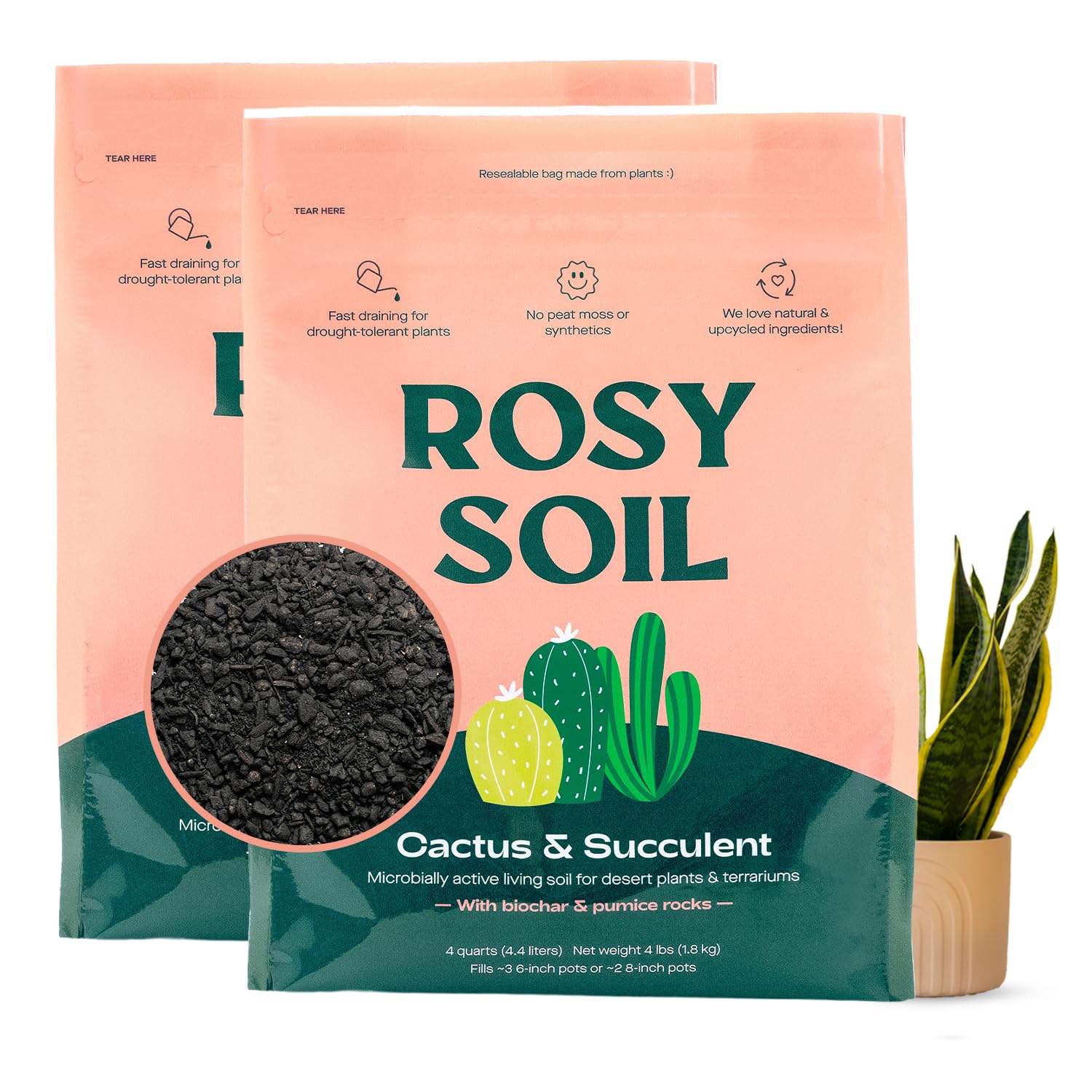
This double-bag bundle from Rosy Soil delivers 8 quarts of the most carefully engineered potting mix for rosemary we have tested. The chunky, loose texture is achieved by eliminating peat entirely and relying on a blend of coarse aggregates that let water drain in seconds rather than minutes. The pre-loaded beneficial microbes and organic worm castings provide a slow, steady nutrient supply without the nitrogen surge that causes soft, pest-prone rosemary growth.
Rosemary growers who have struggled with yellowing lower leaves and root rot will immediately notice the difference in how this mix behaves after watering. The surface dries visibly within hours, and the bulk of the container stays aerated even after repeated saturation. Users consistently report that plants potted in this soil retain their characteristic woody stem structure and aromatic oil concentration far better than those in peat-heavy alternatives.
The resealable packaging is a practical bonus for anyone who does not use the full bag at once, and the clear planting instructions printed on the bag remove guesswork for first-time repotters. For those maintaining multiple rosemary plants or combining with other Mediterranean herbs, the two-pack offers sensible value at a premium tier.
What works
- Truly peat-free, drains aggressively fast
- Living soil biology supports long-term root health
- Resealable bags keep unused mix fresh
What doesn’t
- Bag seal can be difficult to reclose securely
- Some users add extra perlite for very heavy waterers
2. Miracle-Gro Cactus, Palm and Citrus Potting Mix, 8 qt., 3-Pack

The triple-pack of Miracle-Gro Cactus, Palm & Citrus mix provides the largest total volume in this roundup at 24 quarts, making it the most practical option for anyone repotting multiple rosemary plants or combining with other container herbs. The fast-draining formula is enriched with plant food that delivers a gentle nutrient release, supporting steady but not excessive foliar growth that could dilute the essential oil content of the leaves.
While this mix relies on a peat-based structure rather than the chunky mineral aggregates of the premium options, the inclusion of perlite and sand creates enough pore space to keep rosemary roots oxygenated in standard terra cotta pots. Users who pair this with a strict watering schedule — letting the top inch dry completely between waterings — report vigorous, bushy plants with the classic woody branching habit.
The main trade-off is that the finer texture can compact slightly over time, so mixing in additional perlite or pumice at a 1:4 ratio is a common refinement among experienced rosemary growers. For the volumetric value alone, this bundle is hard to beat for large-scale container gardening.
What works
- Massive 24-quart total volume at a compelling tier
- Fast-draining enough for rosemary with proper watering
- Enriched with plant food for balanced growth
What doesn’t
- Peat-based structure can compact over time
- May require additional perlite amendment
3. Hoffman 10410 Organic Cactus and Succulent Soil Mix, 10 Quarts, 2 Pack

Hoffman’s organic cactus and succulent mix comes in two 10-quart bags that are ready to use straight from the package — no mixing, no sifting, no amendments required. The formula provides the proper drainage and aeration that Mediterranean herbs demand, with an organic composition that encourages bloom potential and root development without the synthetic fertilizer spike that can throw off rosemary’s growth rhythm.
The texture leans finer than the chunky Rosy Soil, but the inclusion of peat moss, perlite, and sand creates a balanced particle distribution that drains reliably while retaining just enough moisture between waterings.
The main criticism from experienced succulent growers is that the mix can feel slightly dense if overwatered, so matching your container choice — unglazed terra cotta is ideal — and your watering frequency to the specific conditions of your home is essential. For the volume and the organic certification, this is a strong mid-to-premium contender.
What works
- Organic formula with consistent particle distribution
- Large 20-quart total volume suits multiple containers
- Encourages bloom and root development effectively
What doesn’t
- Some users report it retains more moisture than expected
- May need perlite amendment in humid environments
4. Rosy Soil Cactus Soil – Organic Succulent Potting Mix, 4qt
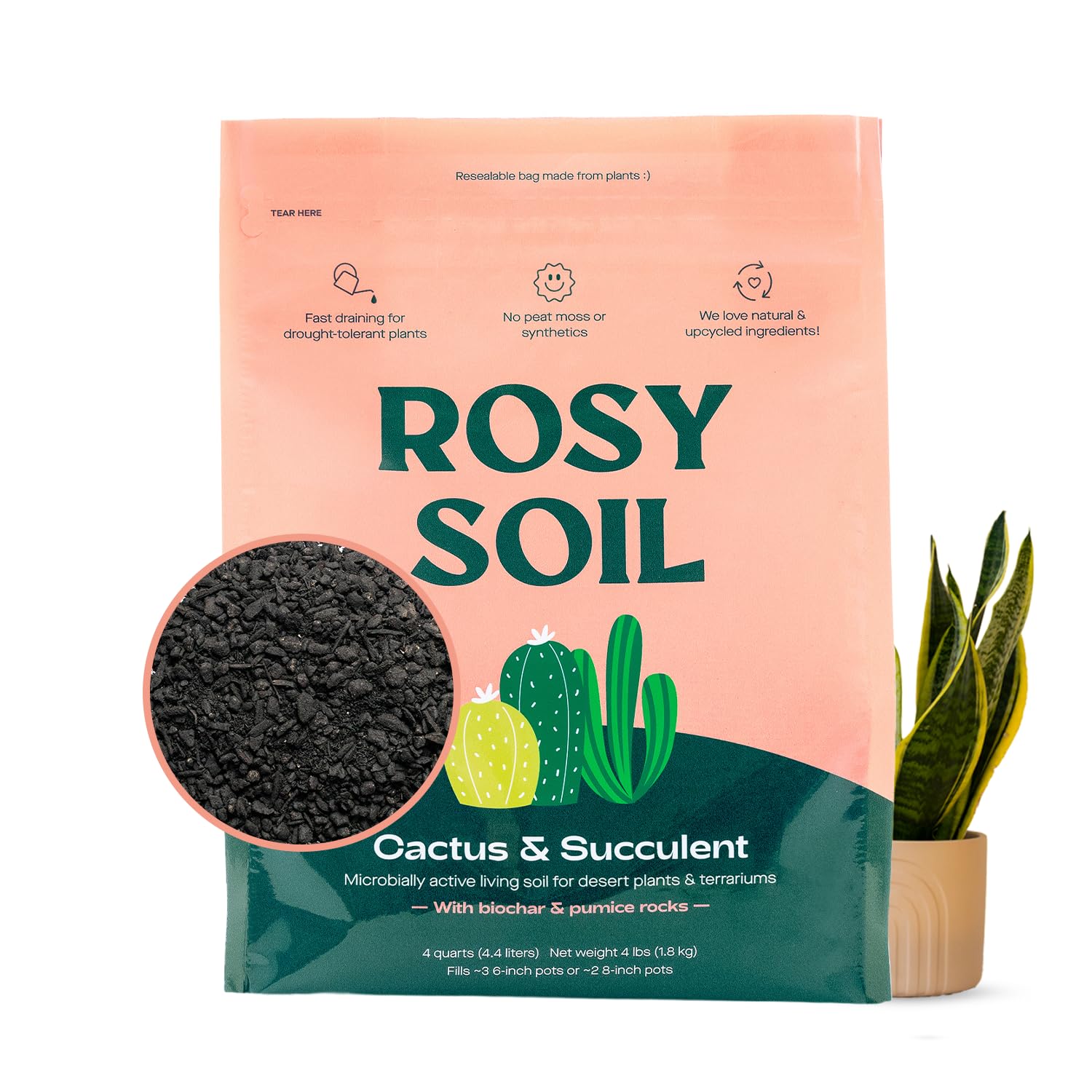
The single-bag version of Rosy Soil’s cactus and succulent mix brings the same peat-free, chunky formula into a 4-quart size that is ideal for a single rosemary plant or small container grouping. The living soil components — beneficial fungi, microorganisms, and worm castings — create a self-sustaining rhizosphere that reduces the need for supplemental fertilization during the growing season.
Rosemary potted in this mix shows noticeably better tolerance for irregular watering. The chunky texture prevents the soil from forming a solid mass when dry, so rehydration is rapid and even, without the hydrophobic channeling that afflicts peat-heavy mixes. Owners consistently report that the aromatic intensity of the foliage remains high, a direct result of the moderate nitrogen levels that prevent excessive leaf production at the expense of oil concentration.
The plastic-neutral, resealable packaging aligns with environmentally conscious gardening, and the printed step-by-step guidance is genuinely useful for beginners. The only practical limitation is the 4-quart bag size, which fills only two to three medium pots, making the two-pack a more economical choice for larger projects.
What works
- Living soil biology feeds rosemary without synthetic additives
- Chunky texture prevents compaction and hydrophobic channeling
- Environmentally sustainable packaging
What doesn’t
- Small 4-quart bag limited to 2-3 pots
- Some users add mineral grit for very top-heavy plants
5. Tinyroots Succulent Soil – Cactus Soil Potting Mix, 2.25 qt

Tinyroots Succulent Soil uses a finer grain structure than most cactus mixes, making it an excellent fit for small rosemary cuttings, propagation trays, or compact container plants where coarse perlite chunks might create excessive void space. The fine, uniform texture ensures even moisture distribution without the waterlogged pockets that cause root rot in sensitive Mediterranean herbs.
Users who have struggled with overwatering other plants find this mix particularly forgiving — one reviewer noted it makes it almost impossible to overwater, as the material drains completely within minutes of saturation. Rosemary growers working in smaller pots (four-inch diameter or less) will appreciate that the fine grain does not wash out of drainage holes, unlike mixes heavy in large perlite particles.
The 2.25-quart bag is designed for targeted use rather than bulk projects, and the price point reflects the specialized formulation. For those maintaining a single rosemary plant on a windowsill, this is a precise, no-waste option that eliminates the guesswork of particle size selection.
What works
- Fine grain ideal for small pots and propagation
- Extremely forgiving for overwatering-prone users
- Drains completely without perlite washout
What doesn’t
- Small bag volume limits use to one or two plants
- Higher cost per quart compared to bulk options
6. Highland Garden Supply Cactus Soil Potting Mix with Mycorrhizae, 2 qt

Highland Garden Supply’s cactus and succulent mix incorporates pumice rock as its primary drainage aggregate — a superior alternative to perlite because pumice does not float to the surface or break down over time. The inclusion of mycorrhizal fungi creates a symbiotic relationship with rosemary roots, expanding the effective root surface area and improving uptake of water and trace minerals in the lean conditions this herb prefers.
The 2-quart bag size is disappointingly small given the price point, so this is best reserved for a single specimen plant rather than a multi-pot project. However, the holistic blend of coir, composted plant material, worm castings, and natural biostimulant provides a nutrient profile that is remarkably well-balanced for rosemary. The mycorrhizae are particularly beneficial when repotting because they help the root system recover from transplant shock.
Users switching from mixes with wood chips — which can strangle fine herb roots — appreciate the clean, chip-free composition of this formula. For those who prioritize root biology and long-term plant vigor over raw volume, this is a specialized option worth considering.
What works
- Pumice provides permanent, non-floating drainage
- Mycorrhizae enhance transplant recovery and nutrient uptake
- No wood chips that could strangle fine roots
What doesn’t
- Small 2-quart bag is expensive per unit volume
- May require additional aggregate for large rosemary bushes
7. Midwest Hearth Cactus & Succulent Potting Soil Mix, 4 Dry Quarts
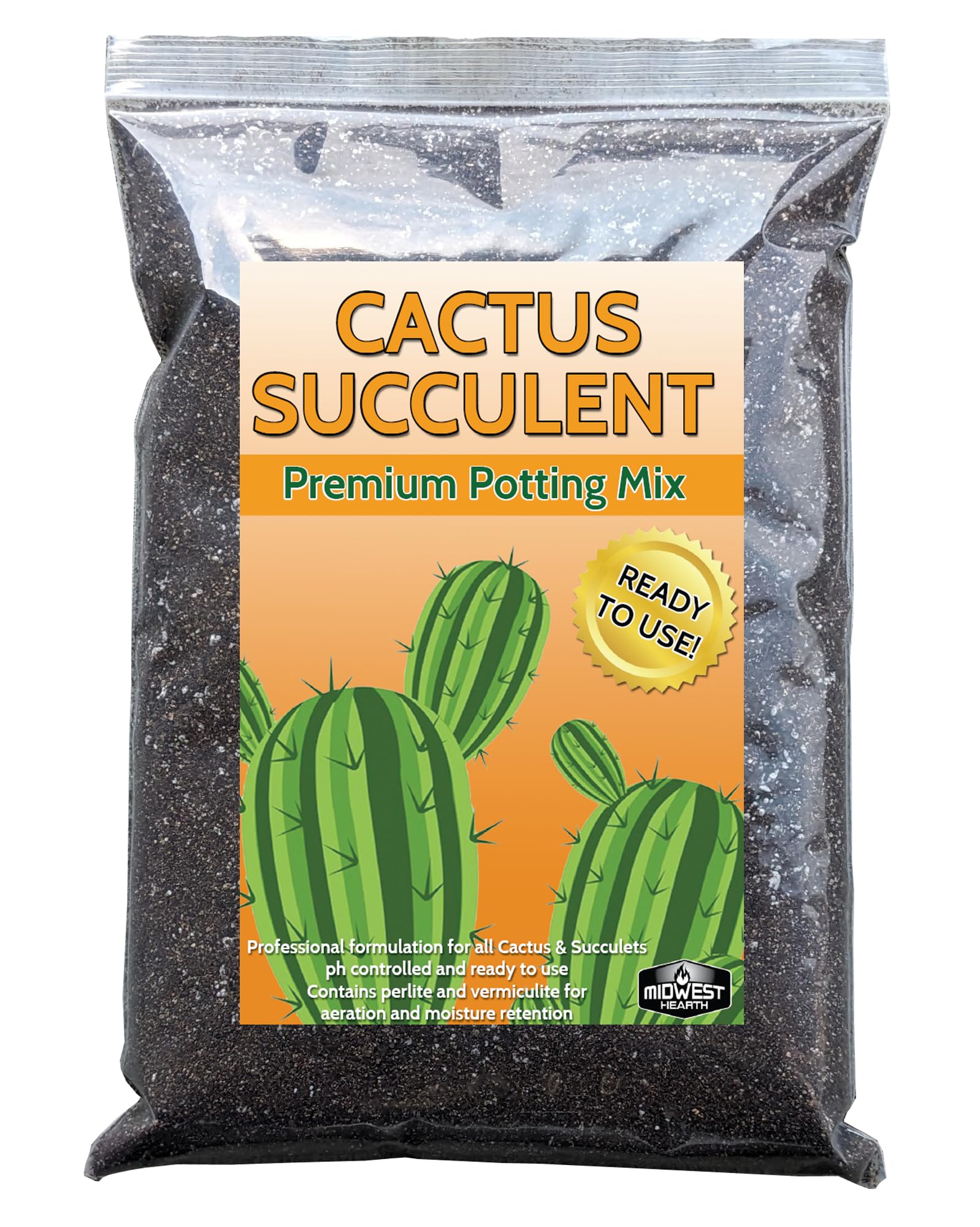
Midwest Hearth offers a straightforward, made-in-the-USA cactus and succulent potting soil that combines peat moss, perlite, and vermiculite in a pH-balanced formulation suitable for drought-tolerant plants. The 4-quart resealable bag is ready to use straight from the package, making it an accessible entry point for someone repotting a single rosemary plant without wanting to buy a bulk quantity of soil they may not use.
The peat and perlite base drains adequately for rosemary in a controlled indoor environment, but the inclusion of vermiculite — which retains moisture more aggressively than perlite or pumice — means this mix requires a vigilant watering schedule. Rosemary grown in this soil does best in unglazed terra cotta pots that wick moisture away from the root ball, and growers should allow the mix to dry thoroughly between waterings to prevent the lower leaves from yellowing.
Several users reported that the dry top layer can become light and blow around near open windows, which is a minor nuisance but not a structural flaw in the soil. For the price per quart, this is a functional starter mix, but rosemary growers seeking optimal performance will likely graduate to a peat-free, chunkier formulation after their first growing season.
What works
- Affordable entry point for a single rosemary plant
- pH balanced for drought-tolerant plants
- Made in USA with resealable packaging
What doesn’t
- Vermiculite retains more moisture than ideal
- Dry top particles can blow around in air currents
Hardware & Specs Guide
Particle Size and Drainage Rate
For rosemary, the ideal potting soil has a particle distribution where at least 40% of the volume consists of mineral aggregates (perlite, pumice, coarse sand, or crushed granite) larger than 2 mm. This creates macro-pores that allow water to drain through the pot within 30 to 60 seconds of saturation. Mixes with a high proportion of fine particles (screened peat, compost, vermiculite) below 1 mm drain slowly, holding water against the root zone and promoting anaerobic conditions that lead to root rot.
pH and Nutrient Availability
Rosemary performs optimally in a pH range of 6.0 to 7.5. At pH levels below 6.0, the availability of calcium and magnesium — both critical for woody stem development and oil production — drops sharply. Most peat-based cactus mixes fall between pH 5.5 and 6.5, while peat-free formulations using coir or mineral aggregates tend to sit closer to pH 6.5 to 7.0. Testing the pH of your mix with a simple probe meter before planting ensures your rosemary can access the nutrients present in the soil.
FAQ
Can I use regular potting soil for rosemary?
Should I add sand to potting soil for rosemary?
Does rosemary need acidic or alkaline soil?
Final Thoughts: The Verdict
For most gardeners, the potting soil for rosemary winner is the Rosy Soil Cactus & Succulent 2-Pack because its peat-free, chunky texture provides the aggressive drainage and living biology that rosemary roots need to thrive in containers. If you want the highest volume for multiple plants, grab the Miracle-Gro Cactus, Palm & Citrus 3-Pack. And for a single windowsill specimen with forgiving drainage, nothing beats the Tinyroots Succulent Soil.