
Digging a hole in compacted, rocky, or clay-heavy soil with a flimsy blade is a frustrating battle that wastes energy and time. A proper digging shovel must transfer the power of your foot and back into the soil efficiently, not flex or snap under pressure. The difference between a tool that glides through the earth and one that bounces off is defined by blade gauge, handle material, and the quality of the edge geometry.
I’m Rikta — the co-founder and writer behind Lawn Gear Lab. I’ve spent hundreds of hours comparing steel gauges, analyzing handle-to-blade joint designs, and sifting through owner feedback from thousands of real digging sessions to find the shovels that hold an edge and survive levering against rocks and roots.
Whether you are planting trees, trenching for irrigation, or breaking ground on a new garden bed, choosing the right tool determines how much dirt you move and how your back feels at the end of the day. This guide breaks down the seven best shovels for digging holes on the market, ranked by real-world performance and build integrity.
How To Choose The Best Shovel For Digging Holes
The best digging shovel for your yard depends on your soil type, the depth you need to reach, and how much leverage you can apply without straining your back. Three critical specs separate a capable digger from a frustrating tool.
Blade Steel Gauge & Edge Sharpness
Thicker steel resists bending when you stomp the blade into hard clay or drive it against a buried rock. A 14-gauge blade is the heavy-duty standard for professional digging; thinner 16-gauge steel flexes under high leverage and dulls faster. A factory-sharpened edge cuts through roots and compacted soil with less downward force.
Handle Length & Grip Design
Longer handles (48 inches and above) provide more leverage for deep hole digging and reduce the amount you need to bend, saving your lower back. D-handle grips give you superior control for twisting and prying out soil, while a straight handle often delivers better raw leverage for full-body power. Fiberglass handles are lighter and more weather-resistant than wood, but a well-sealed hardwood handle absorbs shock better.
Weld Joint & Rivet Construction
The connection between the blade and the handle is the first failure point on cheap shovels. Look for a solid-welded or double-riveted socket that extends well up the shaft. A poorly attached blade separates under the torque of levering out a stump or heavy root, turning the tool into scrap metal.
Quick Comparison
On smaller screens, swipe sideways to see the full table.
| Model | Category | Best For | Key Spec | Amazon |
|---|---|---|---|---|
| Fiskars 60” Pro Straight | Premium | Deep hole digging & prying | 14-gauge steel / 60-inch aluminum handle | Amazon |
| Truper Tru Pro 48” | Premium | Rocky terrain & professional use | 14-gauge High Carbon Steel / 48-inch fiberglass | Amazon |
| Fiskars 44” Pro D-Handle | Premium | High leverage & root cutting | Heavy-gauge steel / 44-inch aluminum D-handle | Amazon |
| Root Assassin One Shot 43” | Mid-Range | Moving large loads in one scoop | Alloy steel / 43-inch fiberglass D-handle | Amazon |
| Ashman Heavy-Duty 41” | Mid-Range | Lightweight digging & trenching | Alloy steel / 41-inch fiberglass handle | Amazon |
| KOLEIYA 41” Wood Handle | Entry-Level | Budget home gardening & light digging | Alloy steel / 41-inch wood handle | Amazon |
| VNIMTI 41” Round Shovel | Entry-Level | Short users & car trunk storage | Cold-rolled steel / 41-inch wood handle | Amazon |
In‑Depth Reviews
1. Fiskars 60” Pro Digging Shovel
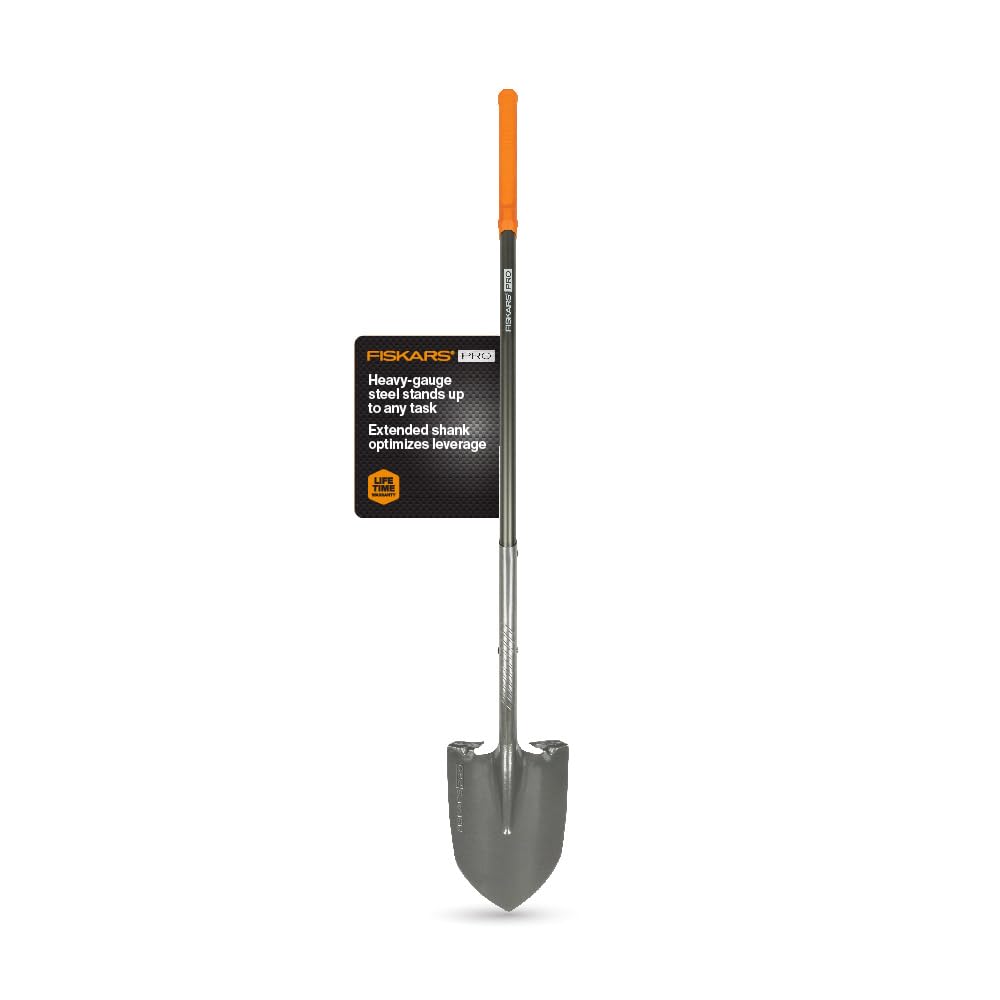
The Fiskars 60” Pro Digging Shovel is the benchmark for deep-hole excavation. Its 14-gauge alloy steel blade is sharpened from the factory, biting into hardpan clay and rocky soil with a clean entry that lighter tools simply cannot manage. The 60-inch aluminum handle delivers exceptional leverage, reducing the bend angle at the waist and transferring more of your body weight into the dig.
The teardrop-shaped shaft is a well-considered detail — it fits the hand naturally during a twisting extraction motion and gives you a solid purchase when prying out a large root. Multiple owners report using this shovel to lever out concrete-encased fence posts and break through eight tons of river rock without any flex in the handle or deformation of the blade edge. The aluminum handle is bonded to a durable rubber grip that stays put even with wet gloves.
Where this shovel loses a point is purely in the weight department — at over 5 pounds, it is not the lightest option for a day of transplanting small perennials. The absence of a D-handle also means you sacrifice some rotational control when scooping loose material. But for raw hole-digging capability, this is the tool that serious landscapers reach for first.
What works
- 14-gauge sharpened edge cuts through clay and roots instantly.
- 60-inch handle reduces back strain during deep hole digging.
- Aluminum shaft is rust-proof and shows zero flex under high leverage.
What doesn’t
- Heavier than fiberglass alternatives at over 5 pounds.
- Straight handle lacks the rotational control for efficient scooping.
2. Truper Tru Pro 48” Round-Point Shovel
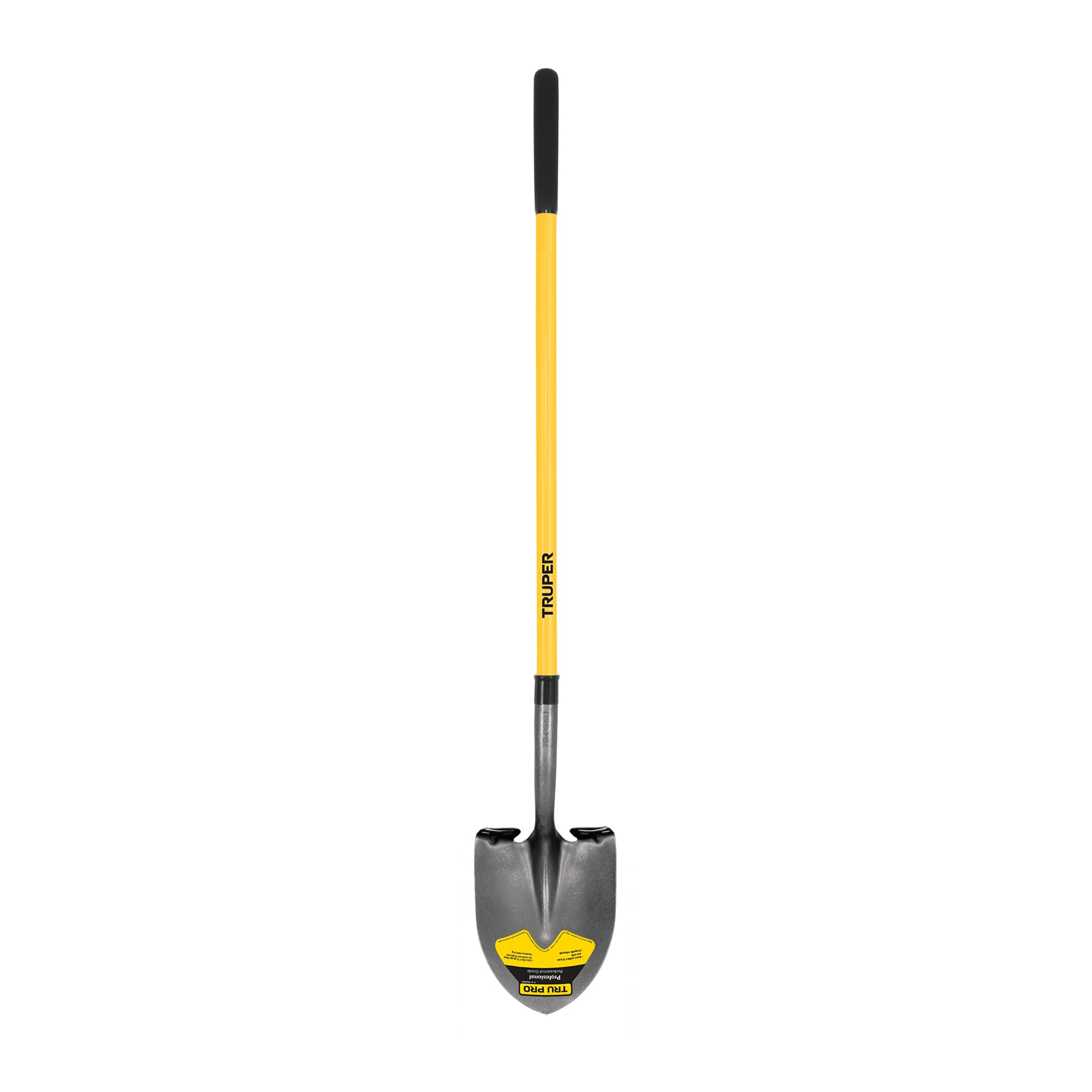
The Truper Tru Pro 48” is a professional-grade tool that feels indestructible in the hand. Its high-carbon steel blade is forged to a 14-gauge thickness — the same gauge used by commercial excavation crews — and it handles rocky, root-infested soil without bending or chipping. The 48-inch fiberglass handle is thicker than most competitors, and at 4.5 pounds, it provides a planted, heavy feel that drives the blade deep with each stomp.
The 9-inch cushioned grip extends far enough to accommodate two-handed choked-up digging, and the fiberglass resists temperature extremes and moisture much better than wood. Owners who regularly dig stumps and trench for hardscaping report that the Truper is the last digging shovel they will ever need to buy. The steel socket connection is welded cleanly and shows no signs of separation even under heavy prying.
The trade-off is heft — this shovel is not designed for lightweight garden tilling. If you are moving delicate topsoil in flower beds, the weight will tire your arms faster than a smaller wooden-handled alternative. But if your project involves breaking ground in north-Florida clay or pulling out old stumps, the Truper is a price-to-performance leader.
What works
- 14-gauge high-carbon steel blade resists bending in rocky soil.
- Fiberglass handle is weatherproof and outlasts wooden handles.
- Lifetime replacement warranty from a trusted brand.
What doesn’t
- Weighs 4.5 pounds, which is heavy for extended overhead use.
- No D-handle option for twist-and-scoop work.
3. Fiskars 44” Pro D-Handle Digging Shovel

The Fiskars 44” Pro D-Handle is the ideal companion for the straight-handle 60-inch model. It uses the same heavy-gauge alloy steel blade with a sharpened edge, but the shorter 44-inch length and aluminum D-handle give you far more control when twisting and pulling soil out of a hole. This design excels at planting bulbs, transplanting shrubs, and digging precise trenches at the garden edge.
The aluminum shaft keeps the weight manageable, and the D-handle provides a secure two-handed grip for levering against embedded roots. Several owners report surviving 8-ton river rock piles and heavy clay digging without the handle cracking or the blade dulling. The full lifetime warranty from Fiskars removes the risk of premature failure, which is rare in this price tier.
On the downside, the shorter handle means you will bend lower to reach deep holes, which can fatigue the lower back during prolonged use. The D-handle also makes it less efficient for scooping and pitching loose material compared to a straight handle. As a dedicated digging tool for precision hole work, it is outstanding.
What works
- Aluminum D-handle provides excellent twist control for precise digging.
- Sharpened blade stays sharp after cutting through rocky soil.
- Lifetime warranty backs a very durable construction.
What doesn’t
- Shorter 44-inch handle requires more bending than a full-length model.
- Not ideal for scooping large loads compared to a straight handle.
4. Root Assassin One Shot 43” D-Handle Shovel

The Root Assassin One Shot Shovel is built around a unique wing design on the blade that serves two purposes: it holds significantly more soil per scoop than a standard round-point shovel, and the wings prevent material from spilling off the back. This makes it a serious tool for moving large amounts of dirt, compost, or gravel efficiently.
The 43-inch fiberglass D-handle is lightweight at roughly 4.5 pounds, and the blade is made from alloy steel with a sharpened edge that cuts through tough roots. The large foot ledges created by the wings give your boot a solid platform for driving the blade deep into hard ground. Owners consistently mention that the blade slices through clay and rocky debris with noticeably less effort than conventional shovels.
The main caveat is that the wing shape can get hung up on tight rocks or root masses that a narrower round blade would slide past. It is also a specialized tool — if you mostly dig narrow post holes, a traditional pointed blade will serve you better. For volume digging and transplanting, however, the One Shot design saves time with every load.
What works
- Winged blade holds more material per scoop than standard shovels.
- Large foot ledges provide excellent stomping platform.
- Sharp alloy steel blade cuts through roots effortlessly.
What doesn’t
- Winged profile can snag on tight rocks or dense root clusters.
- Less precise for narrow trenching or post-hole digging.
5. Ashman Heavy-Duty 41” Digging Shovel

The Ashman Heavy-Duty 41-inch shovel fills the gap between the bargain wood-handle options and the premium Fiskars models. It uses a fiberglass-reinforced handle — which is lighter than wood and impervious to moisture — paired with an alloy steel blade that is sharp enough to penetrate hard soil. At only 2.2 pounds, this is one of the lightest digging shovels in its class, making it a strong choice for users who prioritize a lower fatigue load over raw heft.
The D-handle grip is ergonomically designed with a non-slip surface, and owners confirm that it stays comfortable during extended sessions. The compact 41-inch length works well for shorter users and for storing in a car trunk as an emergency shovel. Multiple reviews highlight that the blade arrives sharp and retains its edge after cutting through rooty soil and gravel.
The trade-off for the low weight is that the fiberglass handle will not withstand the same level of lateral prying force as a thick aluminum or high-quality wood handle. Several users who tried to use it as a lever against heavy stumps noted flex in the shaft. For standard hole digging in moderately compacted soil, it delivers excellent value.
What works
- Very lightweight at 2.2 pounds for easy all-day use.
- Fiberglass handle resists moisture and weather damage.
- Sharp blade arrives ready for digging and trenching.
What doesn’t
- Handle flexes under heavy lateral prying forces.
- Not as durable as premium aluminum or hardwood handles.
6. KOLEIYA 41” Round Point Shovel
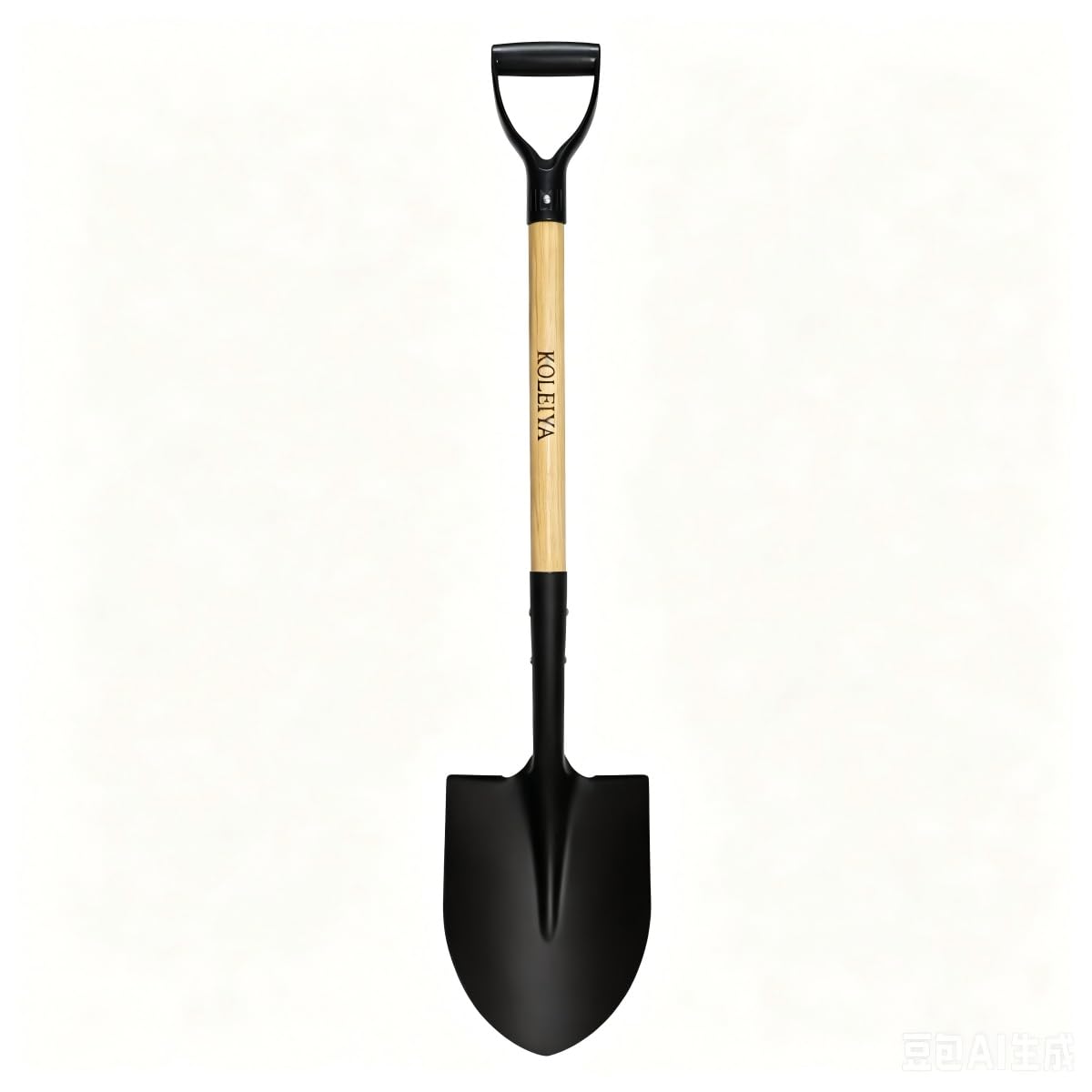
The KOLEIYA 41-inch shovel is the most budget-friendly option in this lineup, but it does not cut corners in the areas that matter most for light- to medium-duty digging. The alloy steel head is double-riveted to a solid wood handle, creating a joint that outperforms many single-rivet competitors in its price bracket. The 3.25-pound weight is manageable, and the D-handle provides adequate leverage for typical home gardening tasks such as transplanting, weeding, and scooping compost.
Owners consistently praise the shovel for its surprising durability — several report using it to clear ice and snow without the handle cracking or the blade bending. The compact 41-inch length is ideal for users under 5’6” and for storage in tight garage spaces. The shovel also arrives fully assembled, so there is no waiting for tool assembly before starting your project.
The limitation is that the wood handle, while comfortable, will not last as long as fiberglass or aluminum in wet conditions if left outdoors. The steel blade is also not as thick as the Truper or Fiskars options, so repeated use in heavy clay or rocky soil will cause edge dulling over time. For the homeowner who digs occasional flower beds rather than construction trenches, it is a solid entry-level pick.
What works
- Double-riveted blade connection improves durability at a low price.
- Lightweight 3.25-pound design reduces arm fatigue.
- Comfortable D-handle suited for short-to-average height users.
What doesn’t
- Wood handle will degrade if stored outdoors in wet climates.
- Blade steel is thinner and dulls faster in rocky soil.
7. VNIMTI 41” Round Shovel

The VNIMTI 41-inch round shovel is a direct competitor to the KOLEIYA model, with a nearly identical size and weight profile. Its cold-rolled steel blade undergoes high-temperature quenching to improve hardness, which translates to better edge retention than unheated steel alternatives. The wooden handle is finished smoothly and feels comfortable in the hand, and the D-grip offers solid control for digging and lifting.
Users who are shorter in stature or prefer a compact tool for car camping and snow removal find this shovel especially useful. The 41-inch length fits neatly in a trunk without folding and is light enough at 3.3 pounds to carry on longer landscaping walks. The drop-shaped blade tapers narrower at the tip, which helps it penetrate packed soil with less initial resistance.
The main drawback is that the wood handle, while aesthetically pleasing, is a weak point if you habitually lever the shovel sideways against heavy objects. The rivet connection is also single-rivet, which is less robust than the KOLEIYA’s double-rivet design. For routine garden digging and light trenching, it performs admirably and provides a good value.
What works
- Quenched steel blade offers better hardness than standard carbon steel.
- Compact 41-inch length is perfect for short users and car storage.
- Drop-shaped tip penetrates packed soil efficiently.
What doesn’t
- Single rivet may fail under heavy lateral prying forces.
- Wood handle requires dry storage to prevent rot.
Hardware & Specs Guide
Blade Gauge (Thickness)
The gauge number is inversely related to thickness — lower gauge means thicker steel. A 14-gauge blade is the standard for heavy digging, offering excellent resistance to bending when the blade hits rocks. Thicker blades also hold a sharpened edge longer. A 16-gauge blade is lighter but will flex more under heavy loads and dull faster in abrasive soil. Check the product description for the gauge number; if it isn’t listed, assume a thinner blade.
Handle Length & Material
Longer handles (48 to 60 inches) provide more leverage and reduce the amount you have to bend, which is critical for deep hole digging. Fiberglass handles are the most weather-resistant and lightweight, while aluminum offers superior strength-to-weight ratio. Wood handles are comfortable and absorb shock, but they must be kept dry to avoid cracking. The choice comes down to your climate, the weight you are willing to carry, and the primary task (digging vs. scooping).
FAQ
What does 14-gauge blade steel mean for a digging shovel?
Is a D-handle or a straight handle better for digging holes?
Why do some shovels bend when digging in rocky soil?
Final Thoughts: The Verdict
For most gardeners, the shovel for digging holes winner is the Fiskars 60” Pro Digging Shovel because its 14-gauge sharpened blade and extra-long handle provide the best combination of penetration power, leverage, and durability for deep holes in tough soil. If you want a D-handle for twist control and root cutting, grab the Fiskars 44” Pro D-Handle. And for moving large loads of dirt or compost in one scoop, nothing beats the Root Assassin One Shot.