
A tomato plant confined to a pot that is too small or poorly drained will never reach its full potential, no matter how much sun and fertilizer you give it. The container’s depth directly determines root volume, which dictates fruit size and plant vigor. Selecting the right vessel is the single most impactful decision in a patio or balcony tomato grower’s season.
I’m Rikta — the co-founder and writer behind Lawn Gear Lab. I’ve spent hundreds of hours comparing container specifications, studying horticultural data on root aeration and drainage, and analyzing aggregated owner feedback to separate the vessels that yield heavy harvests from those that stunt growth.
This guide distills that research into a clear ranking of top-tier, mid-range, and entry-level options so you can confidently buy the best containers for growing tomatoes based on material durability, true soil capacity, and root health features.
How To Choose The Best Containers For Growing Tomatoes
The wrong container starves the root system, leads to blossom-end rot, and produces a fraction of the fruit a healthy plant could yield. Three specifications separate a reliable vessel from a disappointing one: true soil capacity, material aeration, and handle integrity.
True Capacity vs Listed “Gallon” Size
Many nursery pots labeled “5-gallon” hold only 3.5 to 3.8 gallons of soil when compacted. A determinate tomato needs a minimum of 5 gallons of soil volume; indeterminate varieties require 7 gallons or more. Always check the actual fill volume in the description rather than trusting the pot’s name. A pot that holds 3.5 gallons will force roots to circle and shut down growth mid-season.
Fabric vs Rigid Plastic Construction
Fabric pots air-prune roots, preventing the circling that leads to root-bound stress. Plastic pots retain moisture longer and resist evaporation in hot climates but require adequate drainage holes to avoid waterlogging. The fabric’s gram weight (300G vs 500G) determines longevity — heavier grades survive multiple seasons without the stitching fraying.
Handle Design and Moving Loaded Pots
A fully saturated 5-gallon container weighs roughly 40 to 50 pounds. Fabric handles stitched with a 4-inch depth distribute the load across more material, reducing the risk of tearing. Plastic pots rely on a rim grip; if the rim is shallow or lacks structural reinforcement, lifting a wet pot becomes a two-person task.
Quick Comparison
On smaller screens, swipe sideways to see the full table.
| Model | Category | Best For | Key Spec | Amazon |
|---|---|---|---|---|
| AC Infinity Square Fabric Pots | Premium Fabric | Serious tomato growers needing maximum aeration | 500G fabric, true 5.39-gallon capacity | Amazon |
| Gro Pro Premium Nursery Pot | Rigid Plastic | Traditional gardeners who prefer solid-walled containers | Injection-molded, grip lip, 1.5 cu ft soil | Amazon |
| BN-LINK 10-Pack Grow Bags | Mid-Range Fabric | Patio gardeners wanting quantity and portability | 300G nonwoven, reinforced handles | Amazon |
| PHYEX 12-Pack Grow Bags | Value Fabric | Gardeners who need deep stitching for tall plants | 300G polyester felt, 4-inch handle depth | Amazon |
| iPower 12-Pack Grow Bags | Durable Fabric | Users wanting nylon handles for heavy, wet soil | 300G nonwoven, nylon handle straps | Amazon |
| Huvai 12 Pack Nursery Pots | Budget Plastic | Seed starting and transplanting with bonus tags/tools | Soft plastic, 3.4-gallon true capacity | Amazon |
| LiGuVCY 10 Pack Nursery Pots | Sturdy Budget Plastic | Gardeners wanting heavy-duty plastic at an entry-level price | Injection-molded, 3.6-gallon true capacity | Amazon |
In‑Depth Reviews
1. AC Infinity Square Heavy Duty Fabric Pots, 5 Gallon 5-Pack

AC Infinity uses an industry-leading 500G nonwoven fabric, which is nearly double the thickness of the 300G material found in most budget fabric pots. This extra mass resists tearing when the fabric is saturated and holds its square shape even after multiple growing seasons. The listed 5.39-gallon true capacity exceeds the standard 5-gallon nominal size, giving tomato roots more room than advertised.
The square geometry provides more surface area for air pruning compared to round pots of the same volume, which encourages a denser, healthier root ball. Fabric loops incorporated into the side seams allow tomato stakes to pass through without puncturing the root zone, a smart detail that preserves soil structure. Owners consistently report that these bags outlast cheaper alternatives by several years.
Nylon handles stitched deep into the fabric hold up under the full weight of a wet 5-gallon load. The only trade-off is the premium price per pot, but the material density and reinforced stitching translate directly into longer service life and better tomato root development.
What works
- 500G fabric is thicker and more durable than any 300G competitor
- Square shape increases aeration surface area and prevents side-wall leakage
- Fabric stake loops support cages without damaging roots
What doesn’t
- Higher per-unit cost compared to standard round fabric bags
- Gray color may not match all outdoor decor preferences
2. Gro Pro Premium Nursery Pot, 5 Gallon

This injection-molded plastic pot from Gro Pro delivers the thickest, most rigid sidewalls in the single-pot category. The black plastic resists UV degradation better than thinner nursery pots, and the wide grip lip makes one-handed carrying feasible even when the container is full. It holds approximately 1.5 cubic feet of soil, which translates to roughly 11 to 12 gallons — oversized enough for a single indeterminate tomato.
Drainage consists of several large holes at the base, sufficient for outdoor conditions where evaporation helps manage moisture. The modern shape and solid color present a cleaner aesthetic on a deck or patio than fabric alternatives. Multiple owners confirm that the pot survives years of outdoor exposure without cracking or becoming brittle.
The primary drawback is the lack of aeration. Solid walls do not air-prune roots, so plants in this pot are more susceptible to circling roots and eventual root-bound stress if not transplanted up in time. The pot’s heavy weight also means moving it once filled is a moderate lifting task.
What works
- Very thick, rigid plastic resists cracking and UV damage
- Large grip lip makes carrying easier than standard nursery pots
- Oversized capacity suits large indeterminate varieties
What doesn’t
- No root aeration — roots may circle in solid walls
- Heavy when filled with wet soil
3. BN-LINK 10-Pack 5 Gallon Grow Bags
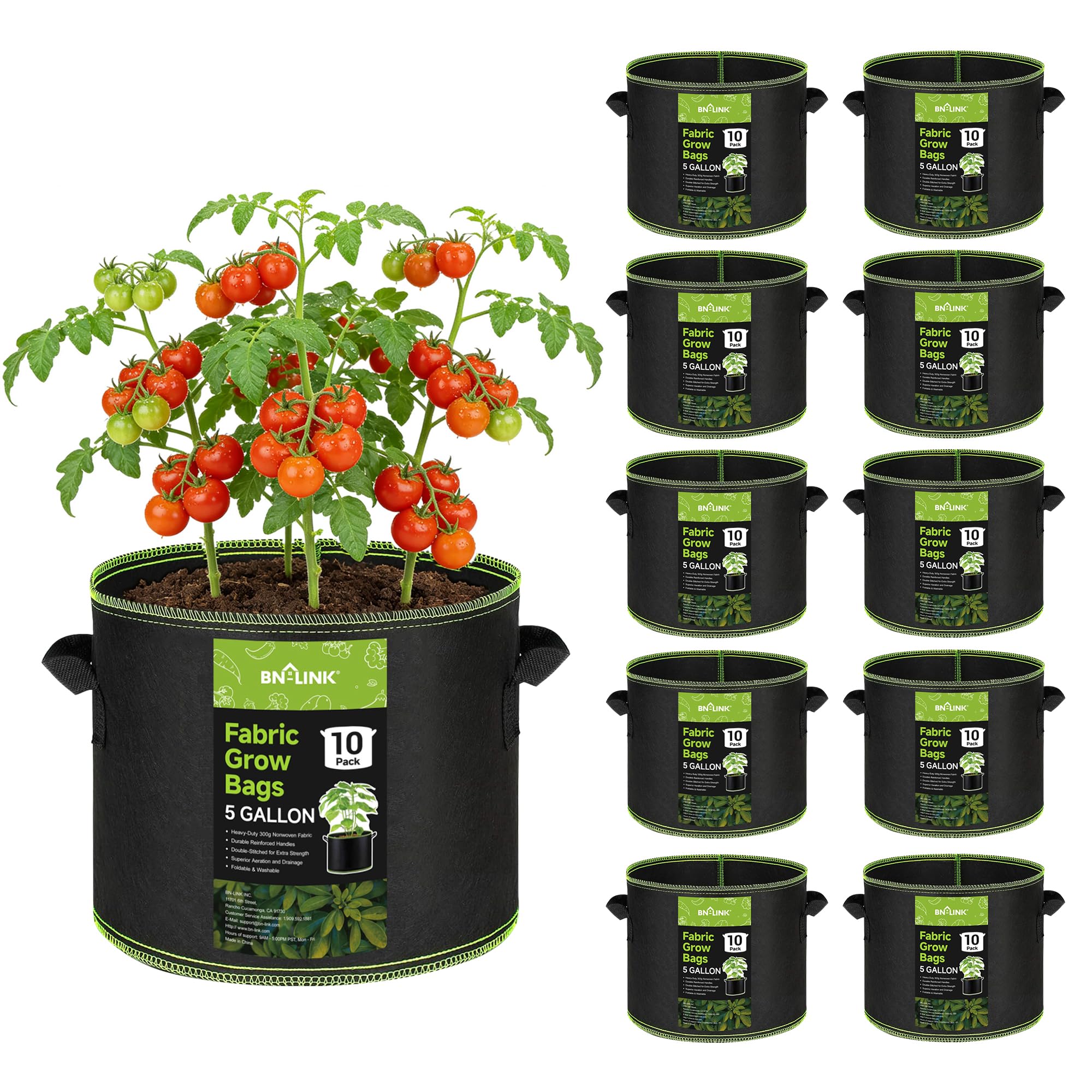
BN-LINK’s 10-pack offers the highest count of 300G fabric pots at a very competitive per-unit cost, making it the logical choice for gardeners managing multiple tomato plants. The nonwoven fabric promotes air pruning and excellent drainage, preventing the waterlogged conditions that lead to root rot in traditional plastic pots. Owners note that the bags hold up for a second and third season with minimal degradation.
The serger-stitched handles are reinforced to handle the full weight of wet soil without tearing. For indeterminate tomatoes that require deep rooting space, the 5-gallon size works for determinate varieties but may be slightly restrictive for large indeterminate types — some users recommend sizing up to the 10-gallon version for vining tomatoes. The lightweight fabric makes it easy to rearrange plants on a patio as the sun shifts.
One repeated observation across verified reviews is that the actual soil capacity measures closer to 4 gallons rather than the advertised 5. This discrepancy matters for root development: a true 5-gallon fill is ideal, so factor this into pot sizing decisions.
What works
- High pot count per dollar — excellent for multi-plant setups
- Reinforced handles withstand heavy wet soil
- Fabric drains well and prevents waterlogging
What doesn’t
- Actual capacity is roughly 4 gallons, not 5
- Indeterminate tomatoes may outgrow the 5-gallon size
4. PHYEX 12-Pack 5 Gallon Grow Bags
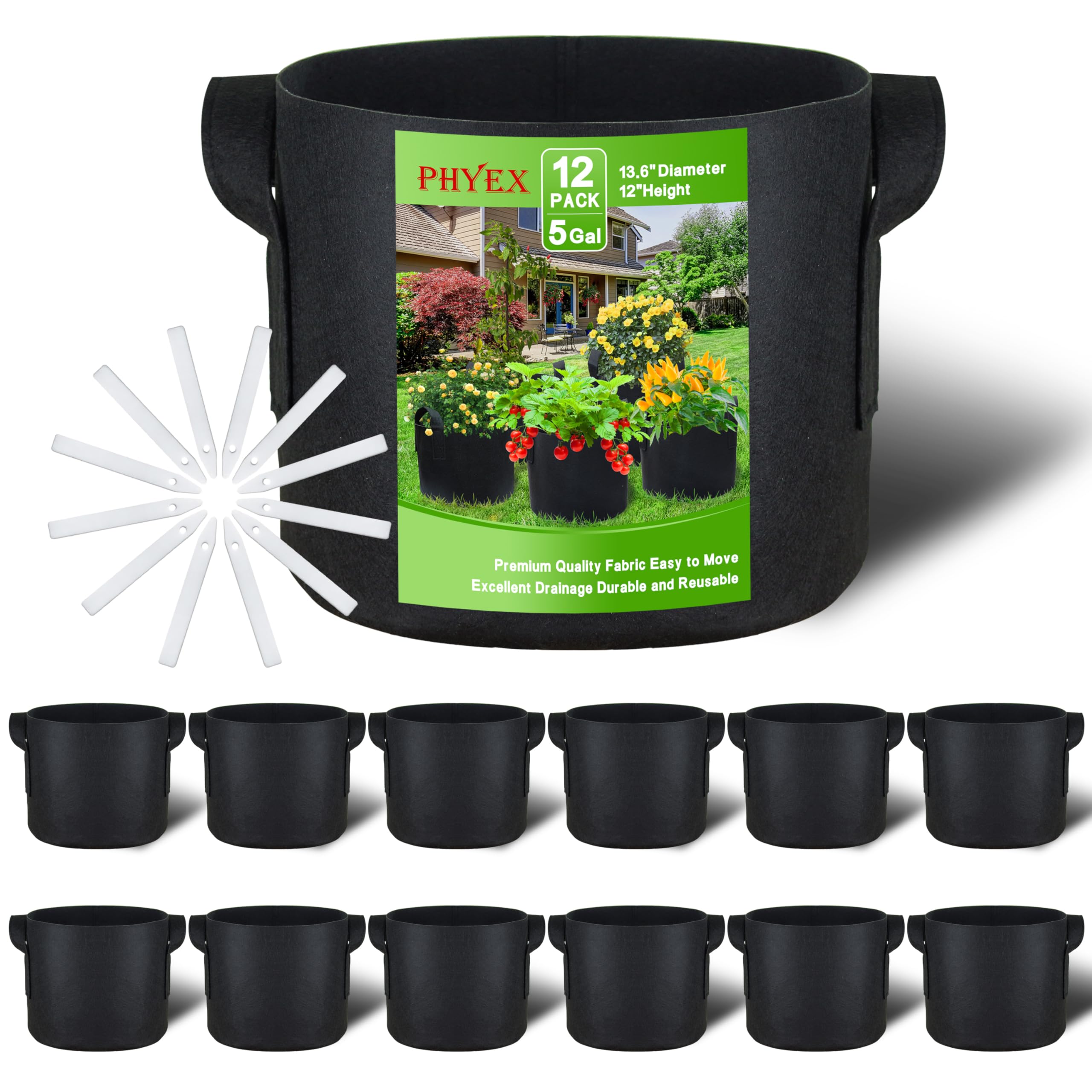
PHYEX’s 12-pack matches the BN-LINK set in fabric density but adds deeper handle stitching — 4 inches versus the 2-inch depth seen on many competing bags. This extra stitch length distributes the weight of a loaded pot across more material, reducing the chance of handle failure during transport. The 300G polyester felt fabric is BPA-free and safe for organic vegetable growing.
Each bag holds exactly one 2-cubic-foot bag of potting mix, which simplifies soil purchasing. The aeration prevents overwatering, a common issue with tomato plants in plastic containers. Twelve plant labels are included, which is a small bonus but saves the step of buying them separately. Owners praise the thick material relative to cheaper alternatives, noting that the bags stand upright independently before filling.
The round shape limits some of the aeration advantages seen in square fabric pots, and the 5-gallon volume is better suited to determinate tomatoes than sprawling indeterminate types. For deep-rooted tomato varieties, some users recommend stepping up to PHYEX’s larger sizes.
What works
- 4-inch deep handle stitching distributes weight well
- Holds a full 2-cubic-foot bag of soil exactly
- Includes 12 reusable plant labels
What doesn’t
- Round shape offers less aeration surface than square designs
- Best for determinate varieties; indeterminate may need more volume
5. iPower 12-Pack 5 Gallon Grow Bags
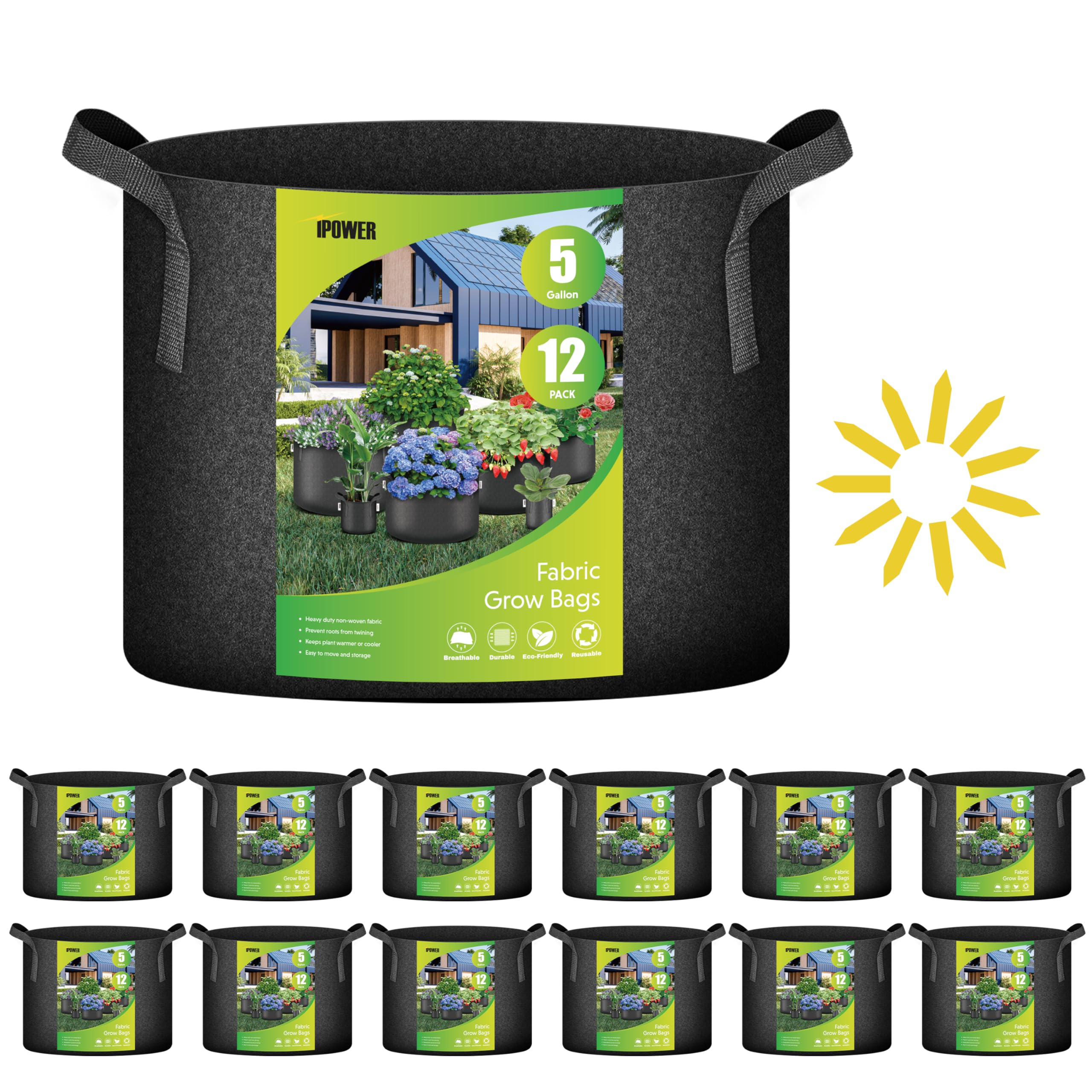
iPower upgrades the standard fabric handle to a nylon strap design, which provides a more comfortable grip and greater tensile strength when lifting waterlogged pots. The 300G nonwoven fabric feels dense to the touch and stands upright with or without soil, making filling and transplanting easier. The reinforced stitching along the side seams prevents the fabric from unraveling after repeated washing.
Root aeration performance is strong — the breathable material prevents the root circling that commonly occurs in solid nursery pots. Gardeners report that plants in these bags show less transplant shock when moved, and the bags dry out faster than plastic, which reduces the risk of fungal issues. The 12-pack quantity at this price point undercuts many competitors offering similar handle quality.
Several owners note that the actual soil capacity seems slightly under 5 gallons, a common shortcoming in this category. The bags also lack the stake loops seen on the AC Infinity square pots, so supporting tall tomato plants requires external cages that must sit outside the bag.
What works
- Nylon handles provide superior strength vs stitched fabric loops
- Thick nonwoven fabric stands upright for easy filling
- Affordable for a 12-pack with high-quality handles
What doesn’t
- True capacity may be slightly less than 5 gallons
- No internal stake loops for cage support
6. Huvai 12 Pack 5 Gallon Nursery Pots with Tags and Tools

This 12-pack from Huvai uses soft, flexible plastic rather than the rigid injection-molded material of premium nursery pots. The flexibility means the pots can be compressed and restored without cracking, which is useful for storage between seasons. The kit includes 20 waterproof T-type plant tags and two transplanting tools, adding practical value for a starter setup.
The listed 5-gallon size refers to the dimensional standard, but the true liquid capacity is roughly 3.4 gallons. This is a critical distinction for tomato growers — this pot is undersized for a full-sized tomato plant and better suited to compact determinate varieties, seedlings, or herbs. The 20 small drain holes at the base provide adequate drainage but may allow soil to escape if the potting mix is fine-textured.
Owners consistently praise the durability of the soft plastic, reporting that the pots survive multiple seasons without cracking. The raised rim makes carrying and stacking easy. However, for a mature tomato, the limited soil volume will restrict root expansion and reduce yield compared to a true 5-gallon container.
What works
- Flexible plastic resists cracking and compresses for storage
- Includes 20 plant tags and transplanting tools
- Lightweight and easy to handle
What doesn’t
- True capacity is only 3.4 gallons — undersized for full-size tomatoes
- Small drain holes may leak fine soil particles
7. LiGuVCY 10 Pack 5 Gallon Nursery Pots
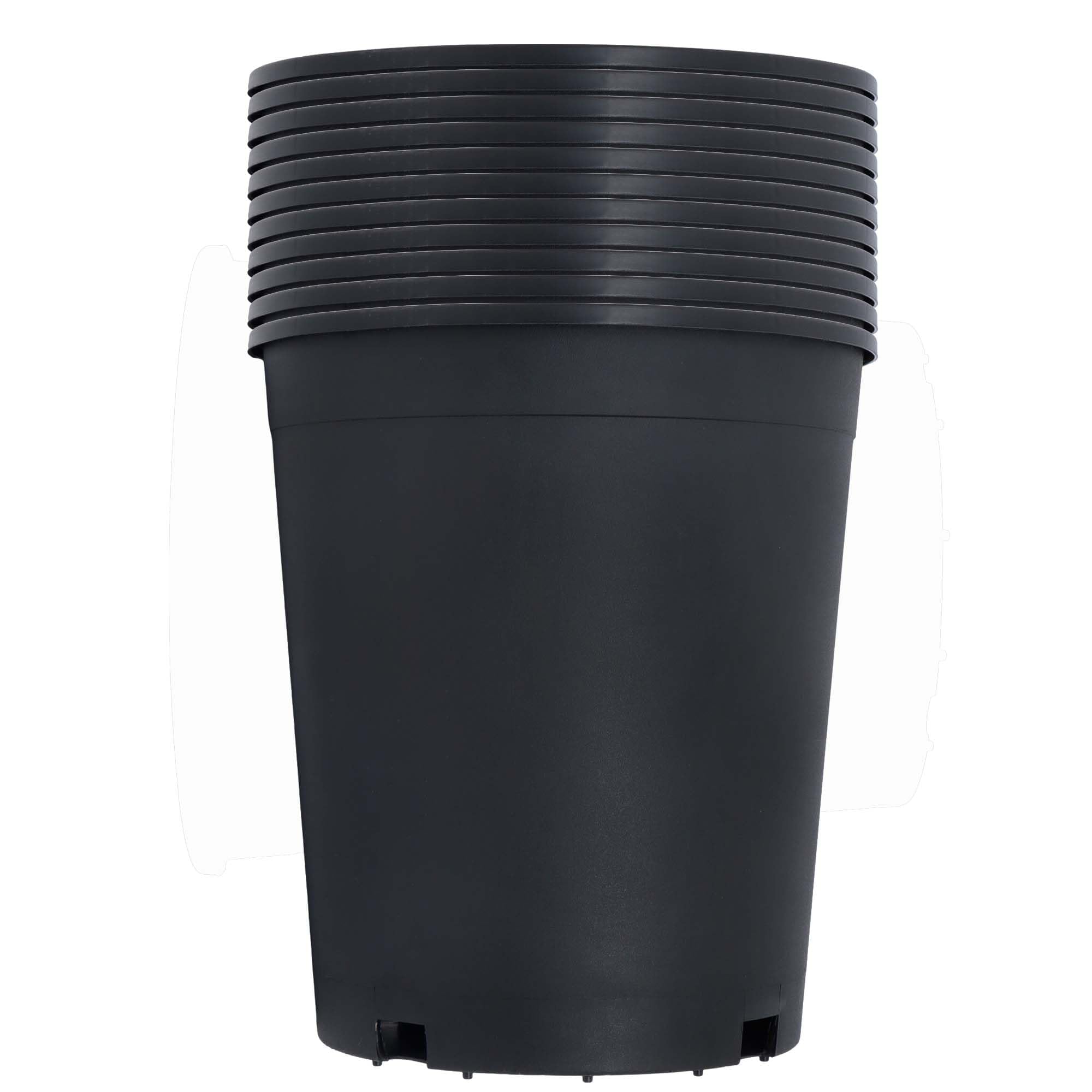
LiGuVCY’s 10-pack offers injection-molded plastic pots at an entry-level price premium, using a sturdy black plastic that feels noticeably thicker than typical flimsy nursery pots. The material is designed to resist cracking from UV exposure and rough handling, and the stackable shape saves storage space when the pots are empty. Each pot includes multiple drainage holes to prevent standing water.
The manufacturer explicitly states that the “5-gallon” designation refers to the standard dimensional size, with a true compacted soil capacity of approximately 3.6 gallons. For determinate tomatoes or compact patio varieties, this volume is workable, but it will restrict the root system of a large indeterminate plant. The pot’s shorter height (8.9 inches) means the soil column is shallower, which can increase the watering frequency needed during hot weather.
Owners highlight the solid build quality — the pots feel substantial and have held up well over repeated use. The lack of aeration is the primary limitation for tomato performance; roots will eventually circle the smooth interior walls. For growers who prefer plastic over fabric, this is a strong choice at a low investment per pot.
What works
- Injection-molded plastic feels sturdy and resists cracking
- Stackable design saves space during off-season storage
- Multiple drainage holes prevent waterlogging
What doesn’t
- True soil capacity is 3.6 gallons, not a full 5 gallons
- Solid walls cause root circling with no air pruning
Hardware & Specs Guide
True Soil Capacity vs Nominal Gallon Rating
Manufacturers frequently label pots with a “gallon” number that refers to the physical dimensions used in the nursery trade rather than the actual volume of soil the pot can hold. A pot labeled “5-gallon” often holds 3.5 to 4 gallons of compacted soil. Always check the product description for the stated true capacity in gallons or cubic feet. For a tomato plant, every gallon of actual soil translates into root zone volume that supports fruit production. Undersized pots force roots to circle, reducing the plant’s ability to absorb water and nutrients.
Fabric Weight and Aeration Performance
Grow bag fabric is measured in grams per square meter (GSM or G). The most common weights are 300G and 500G. A 300G fabric is adequate for one or two seasons but may begin to fray around the handles and seams by the third year. A 500G fabric feels noticeably thicker, holds its shape better, and typically lasts three to five seasons. Heavier fabric also insulates roots better against temperature swings. For tomato plants, which are sensitive to root zone temperature, 500G fabric offers a meaningful advantage in both durability and thermal regulation.
Drainage Hole Count and Pattern
Injection-molded plastic pots typically have 4 to 20 drainage holes, depending on the design. More holes do not always mean better drainage — the total open area and hole size matter more. A few large holes (1/2-inch or larger) drain more reliably than many small holes that can clog with fine soil particles. Fabric pots provide aeration across the entire sidewall, making individual drainage holes less critical. For outdoor use in rainy climates, fabric pots dry out faster than plastic, reducing the risk of root rot.
Handle Construction and Weight Limits
A fully saturated 5-gallon container weighs 40 to 50 pounds. Plastic pots rely on the top rim as a grip point; if the rim is thin or flexible, the pot may buckle when lifted. Fabric pots use stitched or nylon strap handles sewn into the side seams. The depth of the stitching — 2 inches vs 4 inches — determines how much stress the seam can withstand before tearing. Nylon strap handles distribute the load over a wider area than fabric loops and are preferred for larger pots or gardeners who move containers frequently.
FAQ
How many gallons does a tomato plant need to grow well?
Are fabric pots better than plastic for tomato plants?
What does 300G fabric mean in a grow bag?
Final Thoughts: The Verdict
For most gardeners, the containers for growing tomatoes winner is the AC Infinity Square Fabric Pots because the 500G fabric and true 5.39-gallon capacity provide the best aeration and root-room balance. If you want rigid plastic construction with a long lifespan, grab the Gro Pro Premium Nursery Pot. And for growers managing multiple plants on a budget, nothing beats the BN-LINK 10-Pack Grow Bags for the sheer number of reliable pots per dollar.