
Ficus plants—whether fiddle leaf figs, rubber trees, or weeping figs—are notoriously sensitive to compact, waterlogged soil. The difference between a thriving ficus with glossy leaves and one dropping foliage often comes down to one thing: the potting mix. A specialized blend that provides sharp drainage and steady aeration is non-negotiable for these tropical houseplants.
I’m Rikta — the co-founder and writer behind Lawn Gear Lab. I’ve spent many hours analyzing the ingredient lists, particle sizes, and pH profiles of dozens of soil formulations, cross-referencing them against thousands of verified owner reports to find the mixes that consistently deliver strong root systems and healthy foliage growth.
Whether you are repotting a struggling fiddle leaf or starting fresh with a new cutting, the right medium makes all the difference. This guide breaks down the top contenders to help you find the soil for ficus that matches your plant’s exact needs and your experience level.
How To Choose The Best Soil For Ficus
Selecting the right medium for your ficus means prioritizing drainage and aeration above all else. Dense, moisture-retentive mixes that work for some foliage plants will suffocate ficus roots and invite rot. Focus on the structural components of the blend rather than just the price tag or bag size.
Texture and drainage structure
The single most important feature of a ficus mix is its particle size distribution. Chunky, irregular pieces—such as pine bark fines, pumice, lava rock, or coarse perlite—create air pockets that allow oxygen to reach the root zone and excess water to escape quickly. A mix that looks and feels light, with visible particles of different sizes, is far better than a fine, uniform, dusty blend.
Organic amendments and nutrient content
Ingredients like worm castings, compost, or biochar provide a slow-release nutrient supply that supports steady foliage growth without the risk of fertilizer burn. However, too much organic matter can break down over time and collapse the airy structure, leading to compaction. Look for a mix that balances organic nutrition with inert, stable drainage components.
pH and the presence of lime
Ficus plants prefer a slightly acidic to neutral pH range, typically between 5.5 and 7.0. Many quality mixes include garden lime or dolomite lime to buffer the pH and prevent it from dropping too low, especially when peat moss is used as a base ingredient. A mix that explicitly mentions pH balancing is often a safer bet for long-term plant health.
Quick Comparison
On smaller screens, swipe sideways to see the full table.
| Model | Category | Best For | Key Spec | Amazon |
|---|---|---|---|---|
| rePotme Fig & Ficus Potting Soil | Premium | Discerning collectors | Chunky bark, roots, peat blend | Amazon |
| Craft Aroid Potting Mix | Premium | Tropical aroids & ficus | NZ tree fern fiber, pH 6.0 | Amazon |
| 100% Organic Fiddle Leaf Fig Soil | Premium | Fiddle leaf & tropical ficus | Biochar, aged bark, green compost | Amazon |
| Soil Sunrise Premium Fiddle Leaf Fig Tree Soil | Mid-Range | Repotting mid-sized ficus | Peat moss, pine bark, charcoal | Amazon |
| DUSPRO Recycle Fiddle Leaf Fig Soil | Mid-Range | Ficus & citrus in containers | 5-in-1: coir, fiber, perlite, pumice, bark | Amazon |
| Craft Organic Houseplant Potting Mix | Mid-Range | General indoor ficus | Worm castings, biochar, chunky bark | Amazon |
| Perfect Plants Indoor Plant Soil | Budget-Friendly | Beginner ficus owners | Coco coir, perlite, pine bark, sand | Amazon |
In‑Depth Reviews
1. rePotme Fig & Ficus Potting Soil
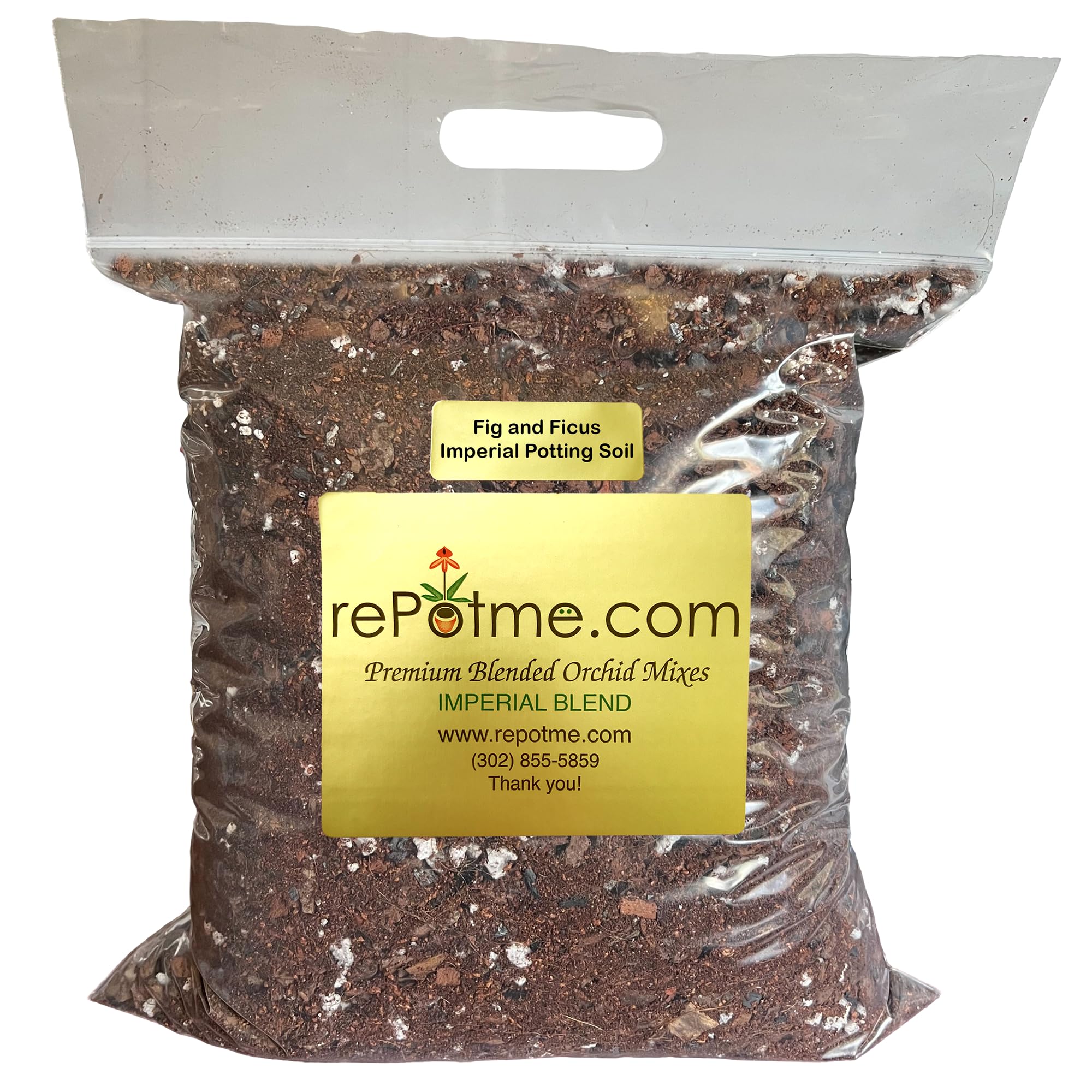
This mix is the benchmark for ficus-specific blends, used by major conservatories and botanic gardens. The texture features chunky bark chips, fibrous roots, and a peat base that creates an open, airy structure—water flows through rapidly while the particles retain just enough moisture between waterings. The 8-quart resealable pouch is practical for apartment dwellers who want to store the soil without mess.
Each batch is handcrafted fresh daily using ingredients sourced globally, which means consistency is high. Owners report that the mix arrives clean, without mold or mildew odors, and that plants—from snake plants to African violets—respond with vigorous root development and abundant blossoms. The lightweight dry weight of about 8 quarts provides generous volume for multiple pots.
The main drawback is the price point, which sits above most competitors. Some users found the bag insufficient for larger pots and needed to supplement with additional mix, which compounds the cost. However, for collectors who want the highest-quality medium and are willing to pay for the craftsmanship, this remains the top-tier choice.
What works
- Exceptional drainage structure from chunky ingredients
- Fresh, handcrafted batches ensure consistent quality
- Resealable bag is convenient for long-term storage
What doesn’t
- High cost relative to bag volume
- Large pots may require more than one bag
2. Craft Aroid Potting Mix
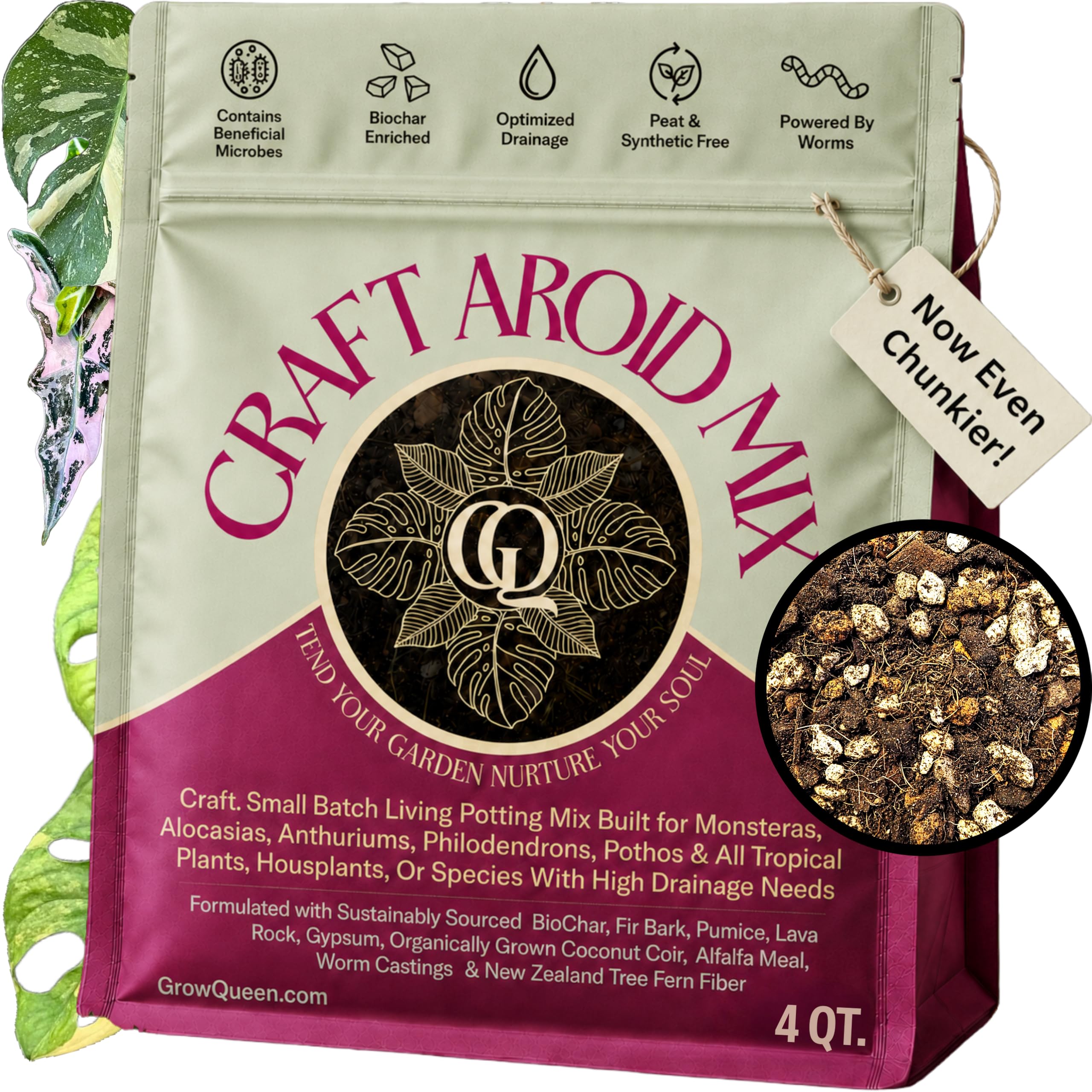
This mix is engineered for aroids but works equally well for ficus due to its emphasis on sharp drainage and pH neutrality. The inclusion of New Zealand tree fern fiber acts as a natural soil conditioner, buffering the pH down to 6.0—a sweet spot for ficus root health. The blend uses Douglas fir bark fines, lava rock, and pumice instead of peat and perlite, avoiding the environmental concerns and structural collapse associated with those materials.
The mix arrives pre-moistened and ready to use, which reduces transplant shock and hydrophobic dry spots. Owners consistently note that plants—including Monstera, Philodendron, and fiddle leaf fig—settle in quickly and push out new growth within weeks. The presence of certified organic coco coir that has been washed multiple times to remove salts ensures a clean starting point without pest contamination.
One limitation is the bag volume: 4 quarts is a modest amount, and owners of larger ficus trees may need multiple bags for a single repotting. Additionally, the premium ingredients push the cost higher than standard mid-range blends. For those seeking an eco-conscious, high-drainage mix that prioritizes root airway, this is a strong contender.
What works
- NZ tree fern fiber stabilizes pH to ideal levels
- Chunky, airy texture prevents overwatering issues
- Sustainable, peat-free and perlite-free formulation
What doesn’t
- Small 4-quart bag runs out quickly for large pots
- Premium price per quart
3. 100% Organic Fiddle Leaf Fig Soil
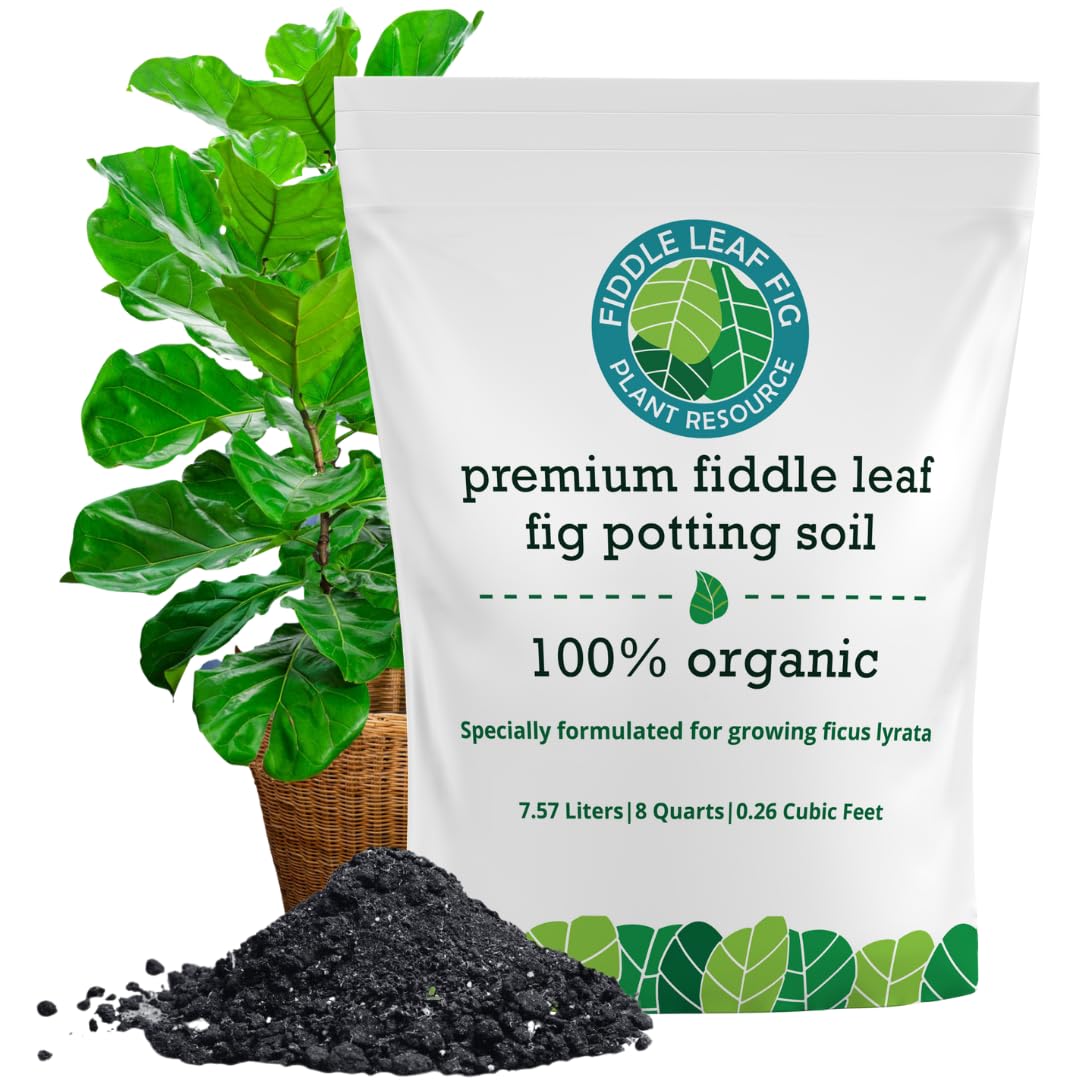
This blend from Houseplant Resource Center is formulated specifically for fiddle leaf figs and all ficus varieties, including Ficus Audrey, rubber tree, and weeping fig. The addition of biochar sets it apart—biochar improves soil structure permanently and enhances nutrient retention without breaking down like compost. Aged bark and green compost provide a slow-release organic nutrient base that supports steady foliage growth.
The 7.57-liter bag offers generous volume for the price, and the mix is packaged in a resealable bag to preserve freshness. Many owners report dramatic turnarounds: a fiddle leaf fig that was dropping leaves recovered within two weeks after repotting, and propagated cuttings rooted faster and produced larger leaves. The lightweight, fast-draining texture is easy to work with and resists compaction well.
A small but notable subset of buyers reported fungus gnat contamination after repotting, suggesting the soil may not be completely sterilized. While the brand emphasizes quality control, some users recommend microwaving the soil before use as a precaution. This issue, combined with the premium price, means it may not suit every budget or tolerance for risk.
What works
- Biochar provides long-term structural stability
- Fast drainage protects against root rot
- Large bag size offers good coverage for bigger pots
What doesn’t
- Some batches reported fungus gnat issues
- Expensive compared to standard organic mixes
4. Soil Sunrise Premium Fiddle Leaf Fig Tree Soil

Soil Sunrise offers a straightforward, no-frills blend at a competitive price point, with a spacious 12-quart bag that covers multiple repotting sessions. The ingredients—peat moss, pine bark, perlite, horticultural charcoal, and lime—are all standard but well-proportioned. The inclusion of lime helps buffer the pH, preventing the peat from acidifying the soil too much over time.
Owners report positive results with rubber trees and fiddle leaf figs, noting that plants appear healthier and more vigorous after repotting. The soil is clean with a fresh smell, and it drains adequately without becoming waterlogged. Several users appreciated that the bag was large enough to repot multiple plants without needing a second purchase.
However, a handful of reviews mention inconsistency: some bags arrived with visible bugs or seemed too similar to orchid bark in texture. The value proposition is strong for the volume, but quality control appears less stringent than premium alternatives. For budget-conscious growers who are willing to inspect the soil before use, this is a solid mid-range option.
What works
- Large 12-quart bag offers excellent value per quart
- Lime content helps maintain stable pH levels
- Mixed with charcoal for improved drainage and odor control
What doesn’t
- Occasional quality control issues with pests
- Texture can be inconsistent between batches
5. DUSPRO Recycle Fiddle Leaf Fig Soil
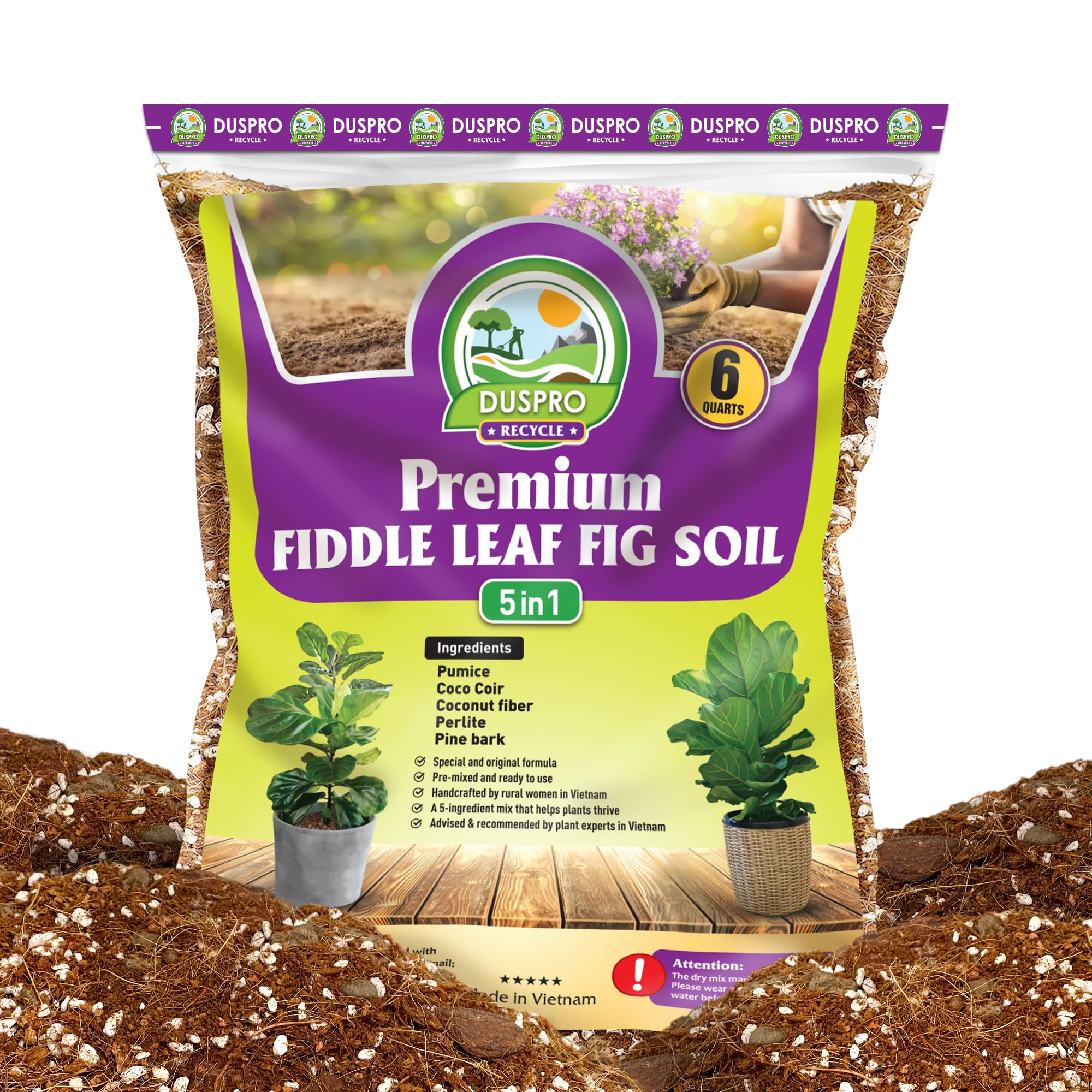
DUSPRO’s 5-in-1 blend combines coco coir, coconut fiber, perlite, pumice, and pine bark in a ready-to-use mix that targets the specific needs of fiddle leaf figs. The inclusion of both pumice and perlite provides redundant drainage pathways, while the coco coir and fiber handle moisture retention without becoming soggy. This redundancy is helpful for growers who tend to water on the heavier side.
Owner feedback highlights versatility: users have repotted money trees, citrus trees, and orange trees with success, noting rapid improvement in plant health and new leaf production within weeks. The 6-quart bag is enough for multiple smaller pots or one medium-sized ficus tree. The mix arrives clean with no noticeable dust or mold, making it easy to use indoors.
Some users found that the end of the bag becomes dusty and recommend wearing a mask when pouring the last portion. The bag size is also modest for larger specimens. For the price, it offers a well-thought-out blend with a clear focus on root health.
What works
- Dual perlite and pumice provide excellent redundancy for drainage
- Works well for citrus and other container trees
- Clean, dust-free upon opening
What doesn’t
- Bag volume is limited for larger ficus trees
- Dusty remnants near the bottom of the bag
6. Craft Organic Houseplant Potting Mix
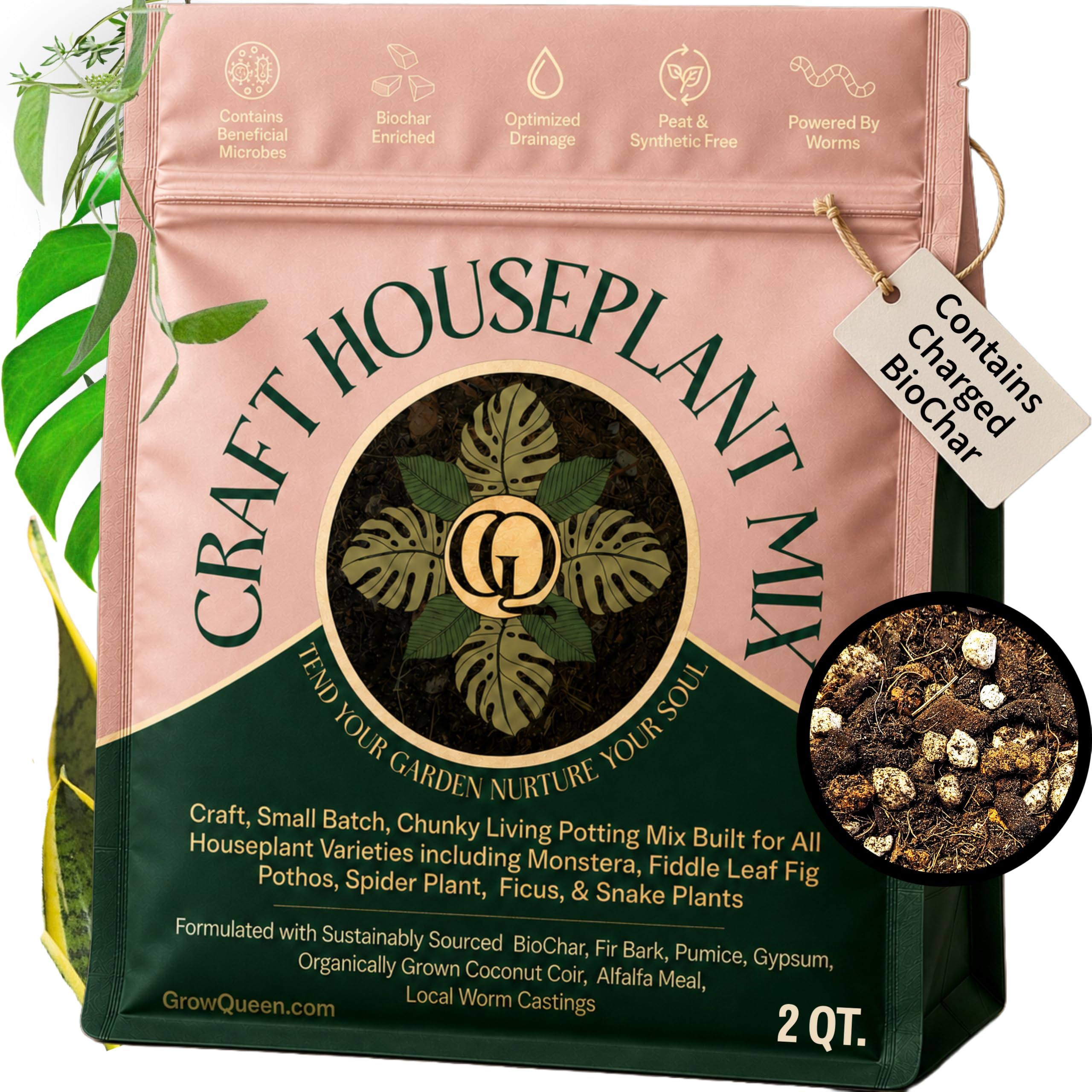
This mix from Grow Queen is designed as a general indoor plant soil but works exceptionally well for ficus due to its chunky, well-draining structure and bioactive ingredients. The inclusion of organic worm castings provides a steady supply of micronutrients, while charged biochar maintains permanent soil structure and prevents compaction. The mix is pre-moistened to reduce transplant shock immediately upon use.
The blend uses Douglas fir bark fines, lava rock, and pumice instead of peat and perlite, which keeps the soil light and airy. Owners report that ficus, monstera, and pothos all thrive in this mix, with stronger root systems and no signs of overwatering or mold. The absence of peat also means the mix resists becoming hydrophobic after drying out.
The 2-quart bag is quite small, making it best for smaller pots or propagation projects rather than large repotting jobs. The premium formulation also commands a higher price per quart. For owners of small ficus plants who prioritize organic, sustainable ingredients, this is a clean and effective choice.
What works
- Biochar and worm castings provide long-term fertility
- Pre-moistened to ease transplant transition
- Peat-free and perlite-free for sustainable gardening
What doesn’t
- Small 2-quart bag limited to small pots
- High per-quart cost
7. Perfect Plants Indoor Plant Soil

Perfect Plants offers a balanced entry-level mix that uses coco coir, pine bark, perlite, sand, and garden lime to create a substrate that drains well while retaining adequate moisture for indoor plants. The 4-quart bag is lightweight and easy to handle, and the resealable packaging keeps unused soil fresh. The pH is adjusted with lime to suit a wide range of houseplants, including ficus varieties.
Customer feedback consistently highlights two major benefits: the soil is completely free of fungus gnats upon opening, and plants respond with rapid new growth even in low-light conditions. The mix is bug-free and has no strong smell, making it apartment-friendly. Several users switched to this blend after having gnat issues with other brands.
The main downsides are the modest bag size and the price per quart, which is higher than some bulk alternatives. The bag may not provide enough volume for a single large ficus repotting. Additionally, the texture is lighter and more airy than traditional potting soil, which some growers accustomed to dense mixes find surprising.
What works
- Consistently bug-free, no fungus gnats reported
- Lightweight and easy to work with
- Resealable bag stores conveniently
What doesn’t
- Bag size is small for larger pots
- Higher per-quart cost compared to bulk mixes
Hardware & Specs Guide
Drainage Particle Size
The ideal ficus mix contains particles ranging from 2 mm to 10 mm in diameter. Ingredients like pine bark fines, pumice, and lava rock provide this critical range. Fine particles under 1 mm—common in cheap garden soil—pack together and eliminate air spaces, leading to waterlogged roots. A simple visual check: if the mix looks like coarse sand or small gravel bits rather than powder, it is structurally sound.
Organic Matter Content
Ficus soil should contain between 20% and 40% organic matter by volume. Sources such as worm castings, compost, or coco coir provide nutrition without collapsing too quickly. Avoid mixes where the organic portion is primarily fine peat moss, as peat decomposes into a dense sludge that reduces aeration over time. Biochar and aged bark are preferable for long-term structural integrity.
FAQ
Can I use regular potting soil for my fiddle leaf fig?
How often should I repot my ficus into fresh soil?
What is the best pH range for ficus soil?
Should I add extra perlite to my ficus soil?
Final Thoughts: The Verdict
For most gardeners, the soil for ficus winner is the rePotme Fig & Ficus Potting Soil because its handcrafted, chunky texture and balanced ingredients provide the most reliable foundation for healthy root systems. If you want a premium blend with sustainable ingredients and precise pH control, grab the Craft Aroid Potting Mix. And for a budget-friendly entry point that still delivers strong performance, nothing beats the Perfect Plants Indoor Plant Soil.