
Banana trees are heavy feeders that demand a specific soil structure—loose, rich, and fast-draining—to produce those massive, tropical leaves and, eventually, fruit. Using standard potting soil or garden dirt is the fastest way to invite root rot, stunted growth, or a tree that simply refuses to thrive.
I’m Rikta — the co-founder and writer behind Lawn Gear Lab. I’ve spent hundreds of hours cross-referencing manufacturer spec sheets, analyzing soil ingredient ratios like peat-to-perlite balance and pH buffering agents, and studying aggregated owner feedback to build this guide around the specific needs of Musa and Ensete species.
After deep research into drainage profiles, nutrient density, and aeration properties across seven soil blends, the soil for banana tree market clearly separates into mixes built for heavy root systems and those that simply repackage generic ingredients under a tropical label.
How To Choose The Best Soil For Banana Tree
Banana trees are not like most houseplants. They grow from a corm, send out massive leaves rapidly, and require a constant supply of moisture without ever sitting in waterlogged soil. Selecting the wrong mix—one that compacts, holds too much water, or lacks organic nutrients—will cause yellowing leaves, slow growth, or fatal root rot within weeks.
Drainage and Aeration Are the Foundation
The single most important quality of a banana tree soil is how fast water moves through it. The mix must be chunky enough to allow oxygen to reach the roots while still retaining enough moisture between waterings. Ingredients like perlite, pumice, lava rock, and coarse sand create the air pockets that prevent the corm from suffocating. A soil that feels dense or clumps like clay when squeezed is a death sentence for a banana tree.
Nutrient Density and Organic Matter
Bananas are among the heaviest feeders in the plant world. They deplete soil nutrients rapidly, especially potassium and nitrogen. A quality mix will include worm castings, aged forest products, kelp meal, or other organic fertilizers built into the blend. Without a high organic-matter baseline, you will need to supplement with liquid fertilizer far more frequently to sustain healthy leaf production and stem thickness.
pH Balance and Ingredient Purity
Banana trees prefer a slightly acidic to neutral pH range, ideally between 5.5 and 7.0. Many premium mixes include lime to buffer pH swings or ingredients like New Zealand tree fern fiber that naturally neutralize acidity toward the ideal 6.0 range. Avoid soils with high salt content or unwashed coco coir, as salt buildup can scorch the sensitive root tips of a banana tree.
Quick Comparison
On smaller screens, swipe sideways to see the full table.
| Model | Category | Best For | Key Spec | Amazon |
|---|---|---|---|---|
| Soil Sunrise Banana Tree Potting Mix | Premium | Balanced drainage & nutrients | 12 quarts, peat moss + worm castings | Amazon |
| FoxFarm Ocean Forest Potting Soil | Premium | Heavy feeding & large containers | 1.5 cu ft, aged forest products + kelp | Amazon |
| Miracle-Gro Cactus, Palm & Citrus Mix | Mid-Range | Fast-draining budget alternative | 8 qt x3, fast-draining formula | Amazon |
| Soil Sunrise Avocado Tree Mix | Mid-Range | Similar tropical tree needs | 12 quarts, peat moss + sand + lime | Amazon |
| Soil Sunrise Olive Tree Mix | Mid-Range | Container trees requiring drainage | 12 quarts, pumice + peat moss | Amazon |
| Doter Premium Banana Tree Potting Mix | Budget | Small pots & seedlings | 10 quarts, organic matter blend | Amazon |
| Craft Aroid Potting Mix by Grow Queen | Premium | Ultimate aeration & root health | 12 quarts, peat-free + pumice + lava rock | Amazon |
In‑Depth Reviews
1. Soil Sunrise Banana Tree Potting Soil Mix

Soil Sunrise built this mix specifically for banana trees, and the ingredient list proves it: peat moss for moisture retention, perlite for drainage, worm castings for a slow-release nutrient boost, sand for weight to anchor the corm, pine bark for structure, and lime to buffer pH. That is a more complete recipe than most generic tropical blends offer.
At 12 quarts, the bag is sized correctly for a single repotting of a medium dwarf banana or two smaller starts. Multiple verified reports mention that the texture is light and “fluffy” straight from the bag—exactly what banana corms need to push roots through without resistance. The included worm castings also reduce the need for immediate fertilization after repotting.
The only real limitation is that the bag size may require two units for a large specimen or a heavy-rooted container. A handful of users report needing a second bag, so measure your pot volume before ordering. However, for its targeted formulation and balanced ingredient profile, this is the most reliable off-the-shelf option for banana trees.
What works
- Custom blend with worm castings for immediate nutrients
- Light, fluffy texture promotes strong root penetration
- Ingredients buffered for optimal pH range
What doesn’t
- Bag may be undersized for large containers
- Premium tier price for a 12-quart volume
2. FoxFarm Ocean Forest Potting Soil
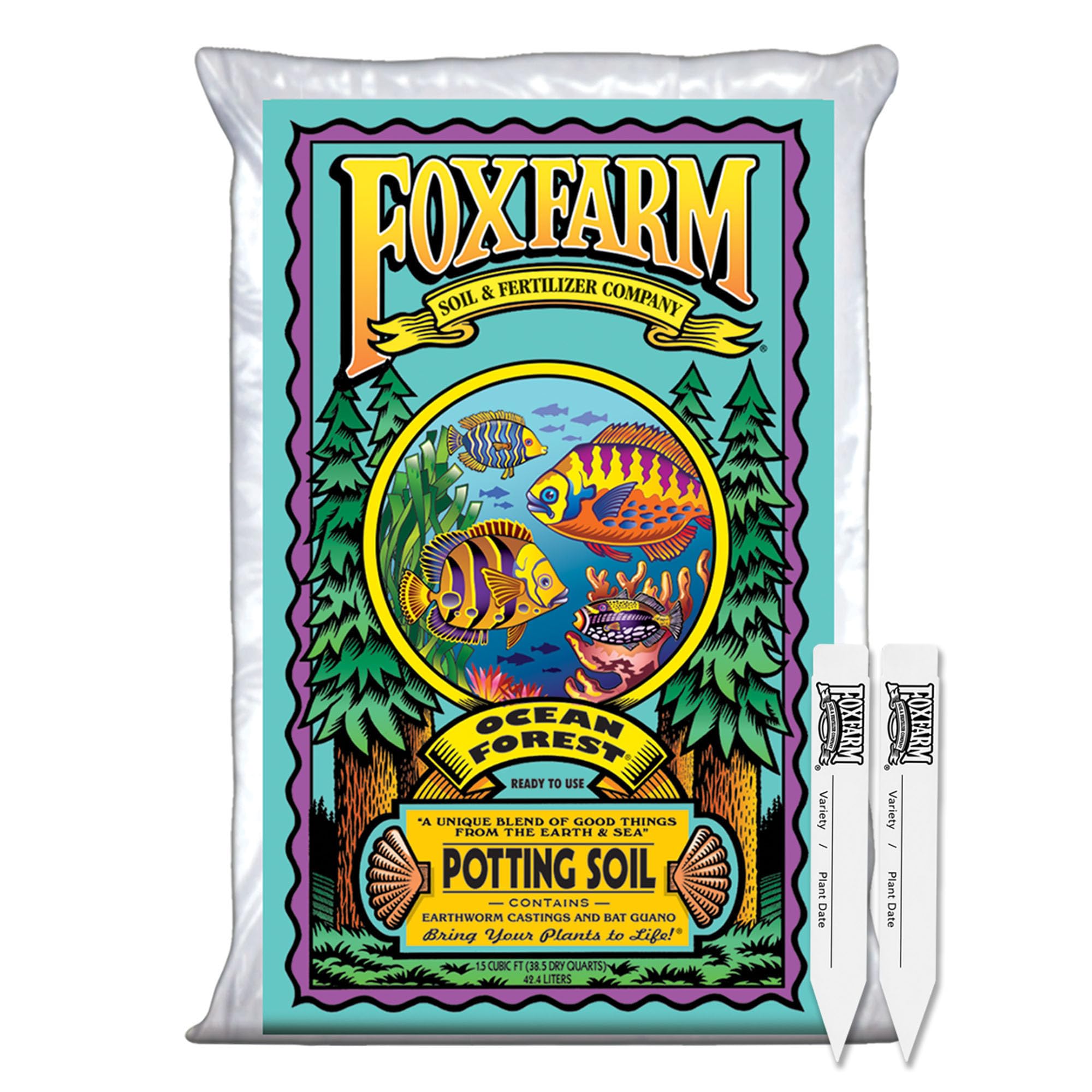
FoxFarm Ocean Forest is the gold standard for heavy-feeding container plants, and banana trees qualify. The 1.5-cubic-foot bag provides a massive 34 pounds of soil—enough to fill a 15-gallon pot for a full-sized banana. The ingredient breakdown includes aged forest products, sphagnum peat moss, perlite, sandy loam, and a fertilizer derived from fish emulsion, crab meal, shrimp meal, earthworm castings, kelp meal, and oyster shell.
The texture is noticeably light and aerated, with excellent immediate water absorption. Users consistently report that this soil creates visible growth differences compared to standard potting mixes. The sandy loam component provides the drainage banana roots require, while the kelp and crab meal deliver the potassium and micronutrients that drive leaf expansion and stem thickness.
On the downside, the high organic content can occasionally sprout mushrooms in humid conditions, and the price per bag has risen over time. Some users blend this with a cheaper base soil to stretch the bag further. For a single large banana tree, however, this mix removes the need for immediate fertilizer and delivers consistent results.
What works
- Enormous bag volume for large containers
- Rich organic fertilizer blend built into the soil
- Light, aerated texture with excellent drainage
What doesn’t
- Can grow mushrooms in warm, humid conditions
- Premium-tier cost per bag
3. Miracle-Gro Cactus, Palm & Citrus Potting Mix (3-Pack)

Miracle-Gro’s Cactus, Palm & Citrus mix is formulated for fast drainage—exactly what a banana tree corm requires to avoid rot. The three-bag bundle gives you 24 total quarts, which is enough for two standard repottings of medium-sized banana plants or one very large container. The formula is enriched with Miracle-Gro Plant Food, so there is some immediate nutrient availability out of the bag.
This mix is significantly more affordable per quart than specialty banana blends, making it a strong mid-range option for growers with multiple trees. The fast-draining structure works well for bananas, especially if you live in a climate with high rainfall or tend to water on the heavier side. Many users pair this mix with added perlite to further increase aeration, though it performs well straight from the bag.
One common complaint is that this blend can feel a bit light on organic richness compared to premium mixes. Users recommend adding a slow-release fertilizer or worm castings to sustain growth over several months. If you are willing to amend it slightly, this bundle delivers exceptional value for volume without compromising on drainage.
What works
- Excellent drainage right out of the bag
- Good value per quart in the 3-pack format
- Enriched with plant food for early growth
What doesn’t
- Lower organic matter than premium blends
- May need additional fertilizer for long-term growth
4. Soil Sunrise Avocado Tree Potting Soil Mix

Avocado trees and banana trees share similar potting needs—both are heavy feeders that require excellent drainage and a slightly acidic pH. Soil Sunrise’s avocado blend uses peat moss for moisture retention, perlite for aeration, sand for weight and drainage, and lime to stabilize pH. This recipe is close enough to what a banana tree needs to function as a viable alternative if the banana-specific mix is unavailable.
Users report that the texture is light and well-draining, with no funky smell and quick adjustment time for transplanted plants. The 12-quart bag is appropriate for dwarf banana varieties or for use as a top-up layer in larger pots. The sand content gives the mix a bit more density than pure potting soil, which helps anchor the banana corm in place.
Some banana growers note that the avocado mix is slightly lower in organic humus compared to the dedicated banana blend from the same brand. Adding a handful of worm castings or compost at planting time will bring the nutrient profile up to banana tree standards. For growers who already maintain avocados, this mix handles double duty well.
What works
- Solid drainage profile with sand and perlite
- Good pH buffer with lime included
- Light, fluffy texture for easy root growth
What doesn’t
- Lower organic content than banana-specific mixes
- Designed for avocados, not optimized for bananas
5. Soil Sunrise Olive Tree Potting Soil Mix
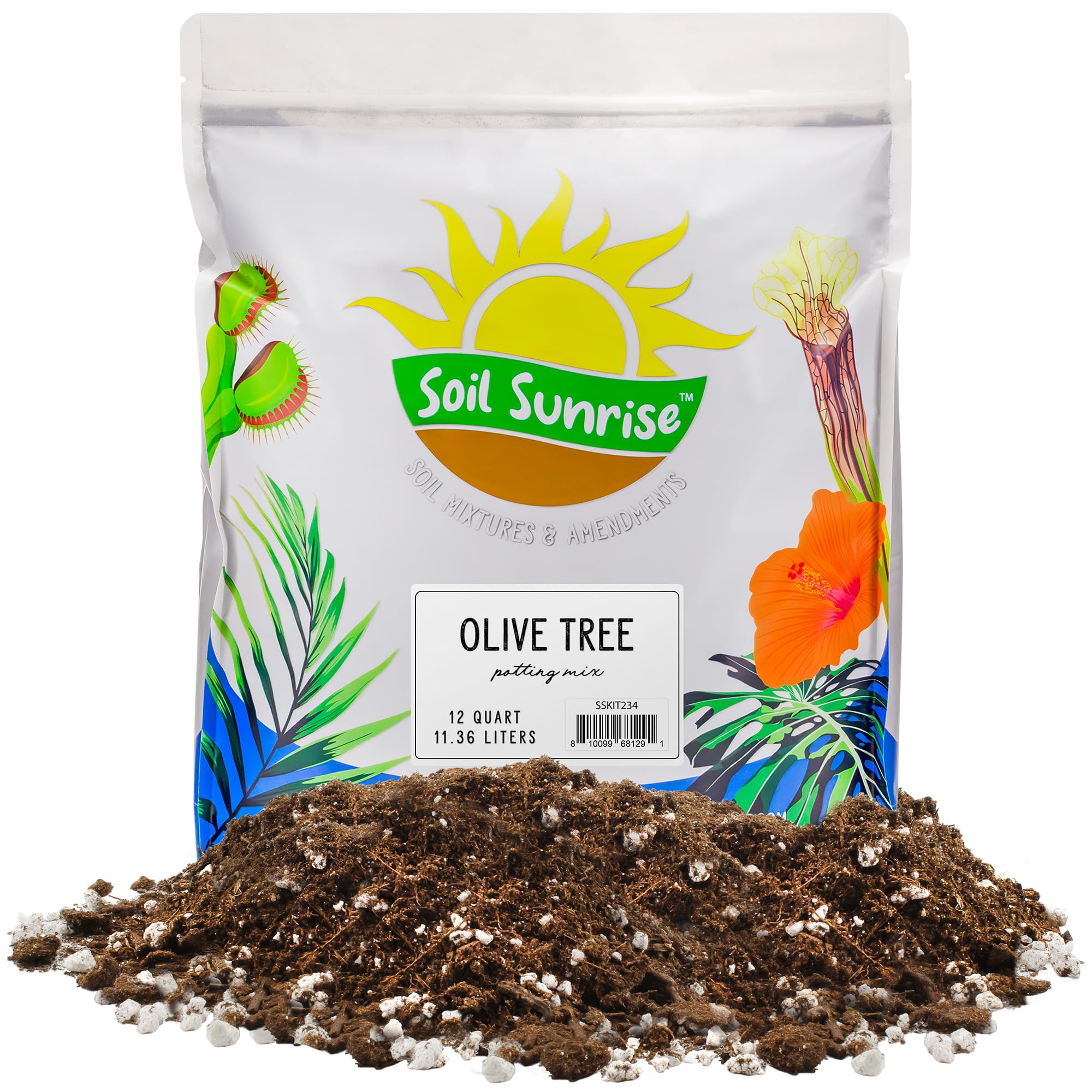
Olive tree soil is formulated for extremely fast drainage and a slightly alkaline tolerance, but the inclusion of pumice and perlite in this mix creates a chunky, airy structure that also benefits banana trees in containers. The peat moss retains enough moisture between waterings while the pumice provides permanent air pockets that prevent compaction over time.
Users report that this mix delivers immediate results, with olive trees recovering from transplant shock within weeks. For banana trees, the pumice content is a standout feature—it is far more durable than perlite and maintains aeration even after months of watering. The 12-quart bag is well-suited for a single dwarf banana or as a base layer in a larger pot.
The primary limitation is that this mix is not optimized for banana-level nutrient demands. The olive tree recipe prioritizes lean conditions, so banana growers will need to supplement with a balanced liquid fertilizer or incorporate slow-release granules at planting. It works best as a structural base that you enrich with amendments for heavy-feeding tropicals.
What works
- Pumice provides long-lasting aeration
- Excellent drainage suitable for corm health
- Good for container banana trees
What doesn’t
- Low organic nutrient density
- Requires fertilizer supplementation for bananas
6. Doter Premium Banana Tree Potting Mix

Doter’s banana tree mix is the most affordable entry point for growers who need a small volume for seedlings or dwarf varieties. The 10-quart bag is marketed as a natural, organic blend with balanced minerals for root development and fruit production. Several users confirm that the soil helped revive sick dwarf banana plants and that the texture holds moisture without becoming soggy.
The bag size is the most common sticking point among buyers. At only 10 quarts, it barely fills a standard 10-inch pot, and multiple reviewers noted they expected more volume for the price. The mix works well as a seed-starting base or as a supplementary ingredient when blended with worm castings and perlite for a custom batch.
For a full-size banana tree in a large container, you will need several bags, which quickly diminishes the value. The quality of the soil itself is solid—nutrient-dense and well-draining—but the volume-to-cost ratio makes it best suited for small-scale applications or as a booster amendment for a larger batch of base soil.
What works
- Good organic nutrient content for small pots
- Moisture retention balanced with drainage
- Effective for reviving struggling dwarf plants
What doesn’t
- Very small 10-quart bag limits usability
- Needs multiple bags for full-sized trees
7. Craft Aroid Potting Mix by Grow Queen
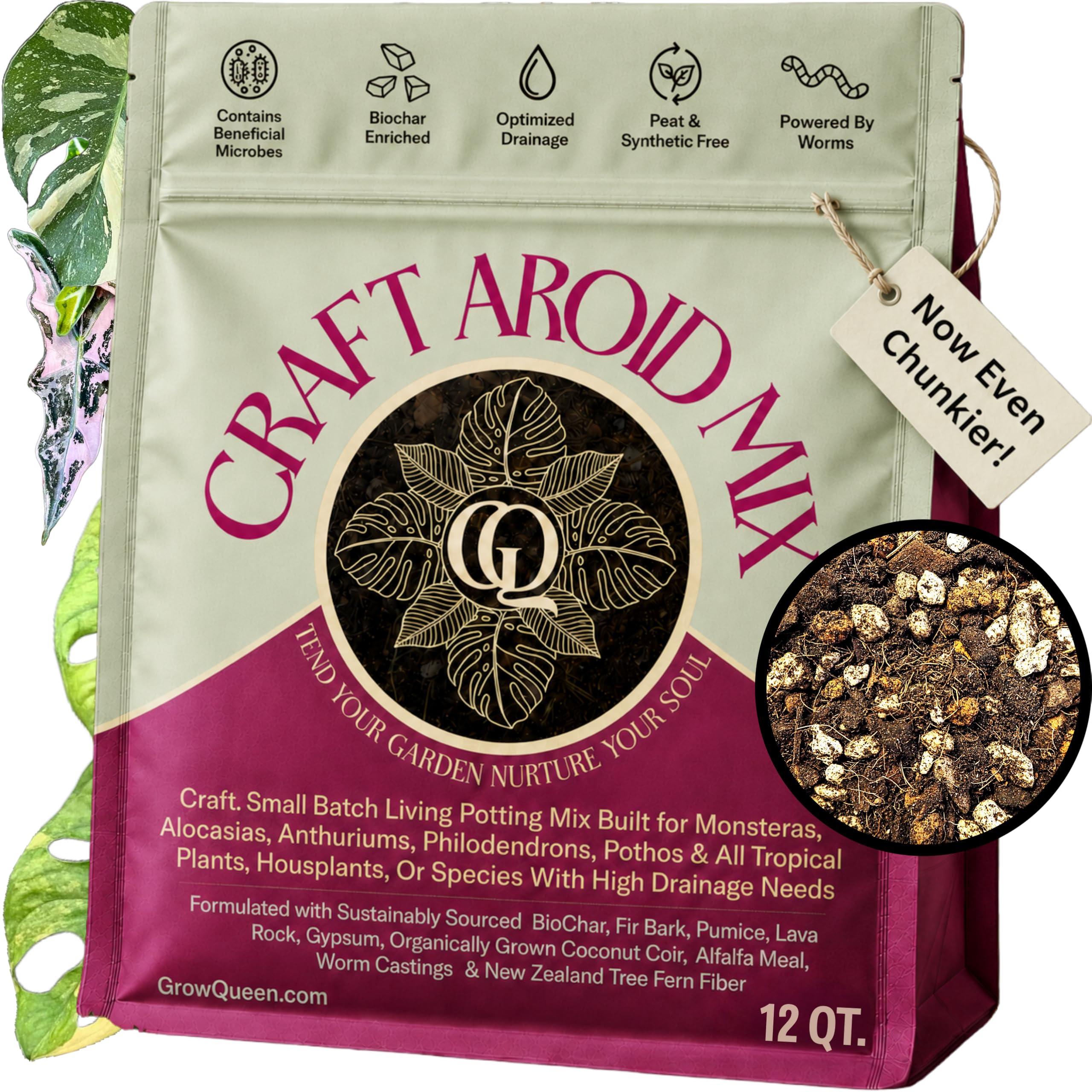
The Craft Aroid mix from Grow Queen is built for tropical plants that demand extremely high aeration and near-impossible overwatering, making it a fascinating candidate for banana trees. It contains Douglas fir bark fines, lava rock, pumice, and organic coco coir, with New Zealand tree fern fiber that neutralizes pH to 6.0—ideal for banana corms. The mix is peat-free and perlite-free, using more durable volcanic rock for permanent structure.
At 12 quarts, this mix is dense with chunky ingredients that create maximum airflow around the root zone. Users report that plants adjust quickly, with no pest issues, no mold, and noticeably stronger root development. The worm castings and beneficial microbes provide a gentle nutrient baseline without the risk of burning sensitive roots.
For a banana tree, this mix may be overly aerated if used alone, potentially drying out too fast between waterings. Mixing it with a moisture-retentive component like peat or coir is recommended for banana trees, which do not like to fully dry out. This is a premium specialist product best suited for experienced growers who want to custom-tune their soil structure for maximum root health.
What works
- Exceptional permanent aeration with lava rock and pumice
- Peat-free and perlite-free sustainable formulation
- pH neutralized to ideal 6.0 for tropicals
What doesn’t
- May dry out too fast for moisture-loving bananas
- Premium price for a single bag
Hardware & Specs Guide
Drainage & Aeration
Banana tree roots suffocate in dense, compacted soil. Look for mixes containing perlite, pumice, lava rock, or coarse sand as dominant ingredients. At least 25-30% of the total volume should be dedicated to aeration particles to ensure water flows through while oxygen reaches the corm. Chunky ingredients like pine bark fines or Douglas fir bark add longevity to the structure, preventing the mix from collapsing over time.
Organic Nutrient Load
Banana trees demand high potassium and nitrogen for leaf and fruit production. Premium mixes incorporate worm castings, kelp meal, crab meal, or aged forest products as built-in slow-release fertilizers. As a baseline, a mix should contain at least 15-20% organic matter by volume to sustain growth without immediate liquid feeding. Lower organic content means you will need to fertilize more frequently, especially during the active growing season.
FAQ
Can I use regular potting soil for a banana tree?
How often should I repot a banana tree with fresh soil?
Does the pH of the soil matter for banana trees?
Final Thoughts: The Verdict
For most gardeners, the soil for banana tree winner is the Soil Sunrise Banana Tree Potting Mix because it delivers a targeted blend of peat moss, perlite, worm castings, and sand that balances drainage, aeration, and immediate nutrient availability. If you want the highest organic nutrient density in a massive bag, grab the FoxFarm Ocean Forest Potting Soil. And for a fast-draining budget bundle that covers multiple pots, nothing beats the Miracle-Gro Cactus, Palm & Citrus Mix.