
Nothing kills the joy of a thriving garden like finding leaves riddled with holes, sticky residue from aphids, or the tell-tale yellowing of a plant under siege. Choosing the wrong formula can mean wasted effort, damaged foliage, or even harming the beneficial insects your garden relies on, making the decision a high-stakes one for any plant owner.
I’m Rikta — the co-founder and writer behind Lawn Gear Lab. For this guide, I’ve spent dozens of hours cross-referencing active ingredient profiles, application methods, and owner-reported efficacy across hundreds of real-world infestations to separate truly effective formulas from the ones that just sound good on the bottle.
After evaluating seven top contenders based on their active chemistry, residual protection, and plant safety data, I’ve built a clear, actionable shortlist that addresses the most common pest pressures head-on. This guide will help you confidently choose the ideal insecticide for plants tailored to your specific growing conditions and pest targets.
How To Choose The Best Insecticide For Plants
Selecting the right plant insecticide starts with identifying your primary pest and your growing philosophy. Contact formulas kill on direct spray but leave no lasting shield, while systemic options are absorbed into the plant’s tissues to protect from the inside out. Your choice also hinges on whether you need a multi-target product for varied insects or a selective formula that spares beneficial bugs and pollinators. The most expensive concentrate on the shelf is wasted money if its chemistry doesn’t match your specific pest pressure.
Active Ingredients and Their Range
The active ingredient defines the product’s killing power and duration. Pyrethroids like permethrin offer broad-spectrum contact control and weeks of residual activity, making them ideal for perimeter defense against ticks and mosquitoes. Biological agents like Bacillus thuringiensis (B.t.) target specific caterpillar larvae without affecting bees or earthworms. For a systemic option, acephate travels through the plant’s vascular system to kill hidden pests like mealybugs and scale. Citric acid and neem oil provide gentler, contact-only control suited for edible crops and indoor use.
Formulation and Application Ease
Ready-to-use spray bottles offer convenience for small gardens and spot treatments — no mixing required. Concentrates demand a pump sprayer but deliver far more coverage per dollar, making them the right call for larger landscapes or repeat applications. The oz-per-gallon ratio on concentrates dictates economy: a 32-ounce concentrate that makes 32 gallons of spray is a fraction of the cost per treatment compared to a pre-mixed bottle. Also consider the material’s smell and staining potential; some systemic concentrates have a notoriously strong odor that lingers for hours.
Quick Comparison
On smaller screens, swipe sideways to see the full table.
| Model | Category | Best For | Key Spec | Amazon |
|---|---|---|---|---|
| Bonide Systemic Insect Control | Systemic Concentrate | Ornamental pest elimination | 16 oz concentrate, 16 gal spray | Amazon |
| Monterey B.t. | Biological Concentrate | Caterpillar control | 8 oz, OMRI Listed | Amazon |
| Ortho Rose and Flower Insect Killer | Ready-to-Use Spray | Rose and flower protection | Dual-action, 24 oz | Amazon |
| Earth’s Ally Disease Control | Natural Fungicide | Disease prevention | Citric acid, 32 oz conc. | Amazon |
| Fertilome Triple Action | 3-in-1 Concentrate | Multi-purpose protection | 16 oz, insect + disease | Amazon |
| Natural Guard Spinosad Soap | Ready-to-Use Spray | Vegetable garden pests | 32 oz, fast contact kill | Amazon |
| Martin’s Permethrin 13.3% | Residual Concentrate | Perimeter tick control | 32 oz, 4-week residual | Amazon |
In‑Depth Reviews
1. Bonide Systemic Insect Control

This acephate-based systemic concentrate represents the premium standard for tackling hard-to-kill pests like thrips, scale, and mealybugs on ornamental plants. Because it travels through the vascular system, it reaches hidden insects that contact sprays miss entirely. The 16-ounce bottle yields an impressive 16 gallons of finished spray, making each treatment incredibly economical for homeowners with large rose beds or shrub borders.
Owner reports confirm it stops bagworms on arborvitae and cleans up fungus gnat infestations in container ornamentals with visible results within days. The strong, pungent odor is a consistent trade-off — multiple reviewers describe it as smelling like “actual poop” or “a dumpster baking in the sun.” The smell dissipates once dry and does not affect plant health, but it makes indoor or enclosed-space applications difficult.
Bonide also includes a measuring cup in the bottle, simplifying mix ratios for beginners. The formula is not labeled for edible crops, so keep it restricted to flowers, shrubs, roses, and listed ornamentals. If your plants are strictly decorative and you want a systemic backbone that keeps working between sprays, this concentrate delivers unmatched penetration and longevity.
What works
- Systemic action reaches hidden pests that contact sprays miss
- 16 oz concentrate makes 16 gallons; excellent per-treatment value
- Kills bagworms, scale, mealybugs, and thrips effectively
What doesn’t
- Pungent, unpleasant odor persists until dry
- Not labeled for use on edible fruits or vegetables
2. Martin’s Permethrin 13.3%
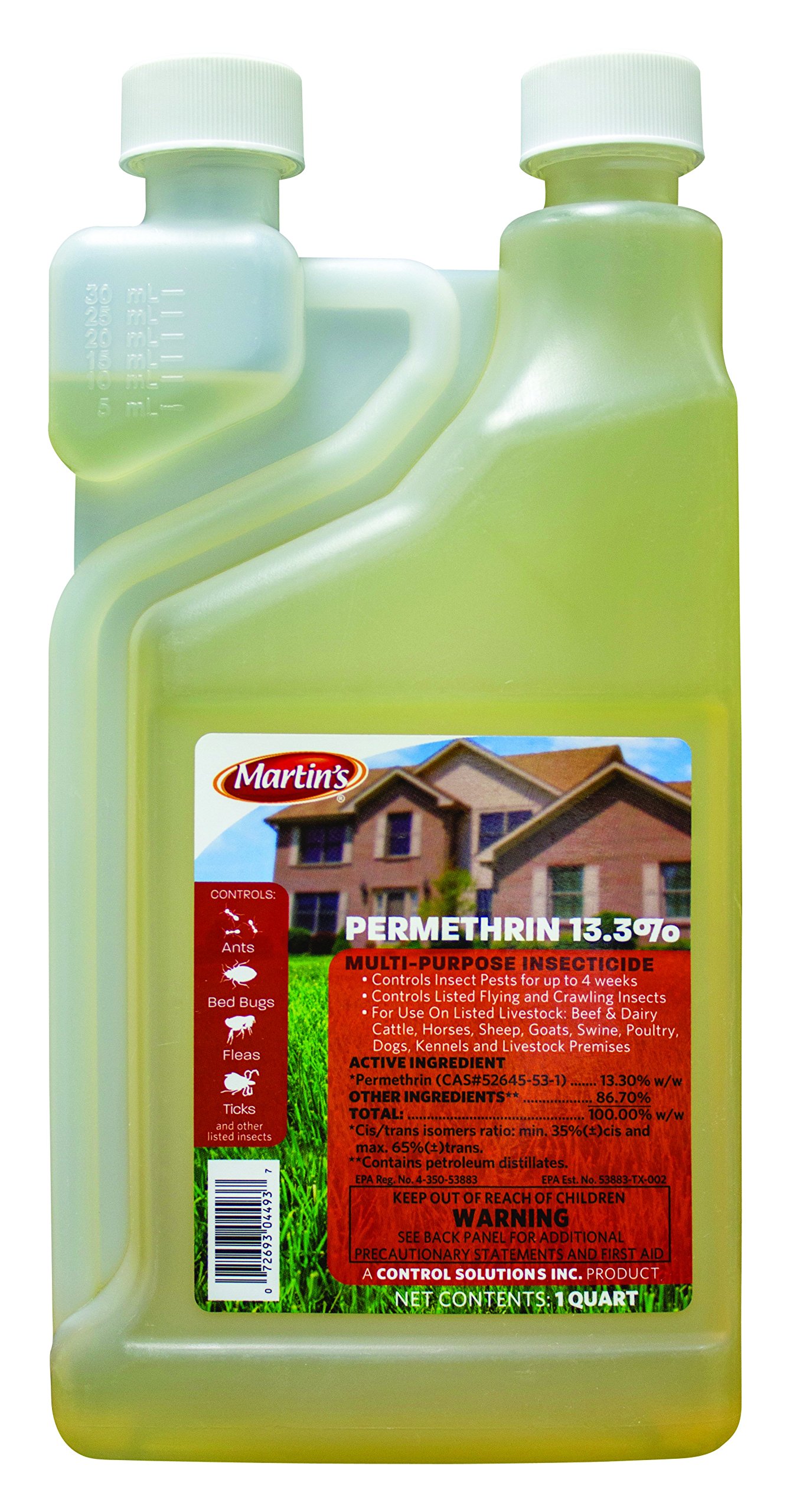
For serious perimeter defense against ticks, mosquitoes, and a broad spectrum of outdoor insects, this permethrin concentrate from Martin’s is a powerhouse at a concentrated price point. The 13.3% active ingredient means a little goes a long way — just 1.5 ounces per gallon delivers effective residual control for up to four weeks on foliage and surfaces. Users consistently report that it is the single most effective product for knocking down tick populations in wooded yards and around chicken coops.
The flexibility of this concentrate stands out; homeowners use it for tick-tube deployment, spraying clothing for invisible bug shields, and treating livestock housing. The chemical odor is strong — one reviewer compared it to paint thinner — and it is best applied outdoors with a respirator. The product’s residual longevity can be a downside for non-target insects if sprayed carelessly at the wrong time of day.
At a dime per mixed gallon, this is one of the most economical options for large properties. It is not ideal for delicate flowers during bloom because of potential petal burn from the solvent base, but for structural barriers and ornamental perimeters, it is tough to beat. Know that it will not last more than about a week against active mosquito populations, so pair it with larvicide for full-season mosquito programs.
What works
- Exceptional residual tick control lasting 4–6 weeks per application
- 32 oz concentrate treats hundreds of gallons; extremely cost-effective
- Versatile for yard sprays, clothing treatment, and livestock areas
What doesn’t
- Strong chemical odor requires outdoor application only
- Short residual against mosquitoes compared to ticks
3. Ortho Rose and Flower Insect Killer

This ready-to-use spray from Ortho has been a reliable entry-level pick for rose enthusiasts and flower gardeners for years. The dual-action formula kills over 100 listed insects — including Japanese beetles, aphids, and spider mites — through both contact and limited systemic activity. Owners consistently report seeing immediate results on rose bushes and flower beds, with Japanese beetle damage stopping after just one solid application.
The 24-ounce bottle covers a modest garden area out of the box, and the claim of up to four weeks of residual protection holds up well against light to moderate pest pressure. Multiple verified buyers note that persistent bugs like mealybugs may require repeat applications every two weeks because the systemic component is relatively weak compared to dedicated systemic concentrates. The formula is safe for blooms when used as directed, which is important for maintaining flower quality.
For small-plot flower gardeners or container rose growers who want a grab-and-go solution without mixing chemicals, Ortho offers solid performance. The trade-off is limited versatility — this spray is optimized for roses and flowers, so vegetable garden use is not a primary design feature. If your main problem is beetles on blossoms, this is the most convenient fix on the list.
What works
- Contact kill works fast on Japanese beetles and aphids
- Won’t damage blooms or leaves when used per label
- No mixing required; easy for beginners to apply
What doesn’t
- Weak systemic — needs repeat applications for mealybugs and scale
- Small bottle size limits coverage for larger gardens
4. Fertilome Triple Action

Fertilome’s Triple Action concentrate combines insecticide, miticide, and fungicide protection in a single bottle, making it a compelling all-in-one for fruit trees, vegetables, roses, and ornamentals. The formula controls aphids, spider mites, leafminers, and common fungal diseases like powdery mildew and rust. For the home orchardist managing multiple pest and disease pressures simultaneously, this eliminates the need for separate spray schedules.
Long-term users with apple trees report dependable annual results, though the price has climbed notably over recent seasons. The product contains neem oil as part of its active profile, which adds a suffocating action on soft-bodied insects but also means it can cause leaf burn if applied during direct sun or high temperatures. A 7–14 day reapplication schedule is recommended to maintain control through the active growing season.
One important caution: the neem-oil component poses risks to pollinators if sprayed during bloom hours. Apply at dusk when bees are not active. The three-in-one convenience is genuine, but the individual efficacy for any single target is slightly lower than a dedicated insecticide-only concentrate. For those who want a single spray that covers the most common garden issues, this is a balanced choice.
What works
- Controls insects, mites, and fungal diseases in one application
- Effective on fruit trees, vegetables, roses, and ornamentals
- Neem oil provides additional suffocating action on soft-bodied pests
What doesn’t
- Requires careful timing to avoid pollinator exposure
- Price has increased noticeably in recent years
5. Monterey B.t. with Measuring Spoon

When the pest in question is a caterpillar — cabbage loopers, bagworms, gypsy moth larvae — this biological concentrate from Monterey is the most targeted tool you can use. The active ingredient is Bacillus thuringiensis (B.t.), a naturally occurring soil bacterium that produces a protein toxic only to leaf-eating caterpillars. It is OMRI Listed for organic gardening, meaning it fits seamlessly into a chemical-free growing system.
The 8-ounce concentrate includes a measuring spoon for easy mixing, pairing well with a standard pump sprayer. Users report that a single application stops cabbage loopers on broccoli and cilantro with no damage to the edible portions. Because B.t. breaks down quickly in sunlight, it requires reapplication after rain and every 7–10 days during heavy caterpillar pressure. The short residual is its biggest limitation for sprawling gardens.
This product is safe for bees, earthworms, ladybugs, and birds when applied per label instructions, so it is ideal for integrated pest management programs. The only consistent buyer complaint is the small container size; heavy users with large vegetable patches may need multiple bottles per season. For precision caterpillar control without collateral damage to beneficial insects, Monterey B.t. is the clear specialist.
What works
- Selectively targets caterpillars without harming bees or earthworms
- OMRI Listed for use in organic vegetable gardens
- Included measuring spoon simplifies mixing ratios
What doesn’t
- Short residual requires frequent reapplication in wet weather
- 8 oz container is small for large vegetable plots
6. Earth’s Ally Disease Control Concentrate
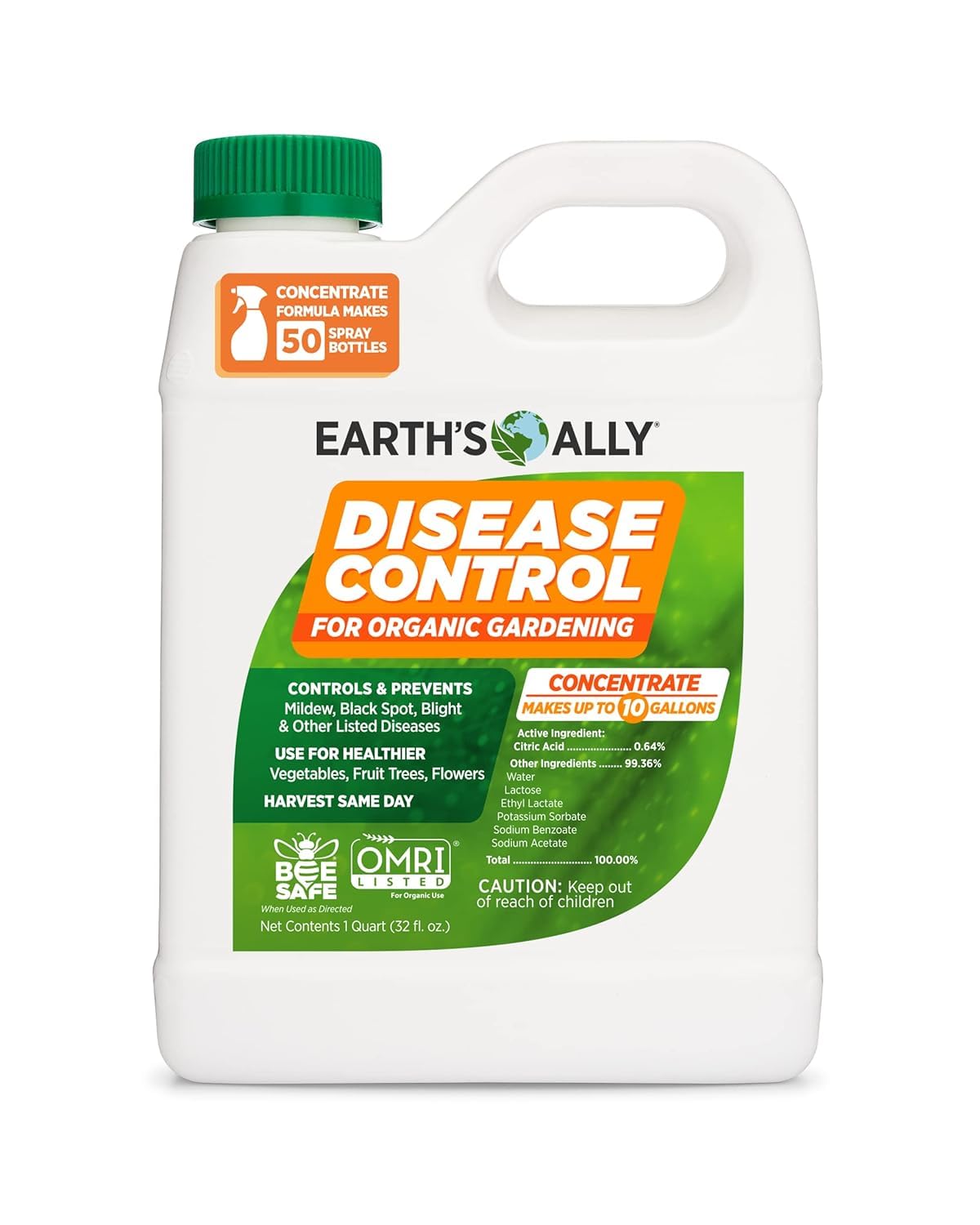
Earth’s Ally Disease Control takes a unique approach by using citric acid as the active ingredient, making it a fungicide-first product rather than a broad insecticide. It is designed to treat and prevent common plant diseases such as powdery mildew, black spot, leaf spot, and blight — issues that often mimic or accompany insect damage. The 32-ounce concentrate makes 10 gallons of ready-to-use spray, and the formula is approved for use on fruits, vegetables, and ornamentals.
Users with roses and grapefruit trees report healthier foliage and visible reduction in fungal spotting after regular applications. The product is OMRI Listed and leaves no harsh chemical residues, making it acceptable to use up to the day of harvest. Because it relies on a contact mechanism, thorough coverage of both leaf surfaces is essential — spray drift or skipping the undersides of leaves will leave fungal patches untouched.
This is not a primary insecticide, so it will not solve a caterpillar or aphid problem on its own. If your garden’s main issue is fungal disease with only incidental insect pressure, the concentrated format makes Earth’s Ally an economical and gentle companion in an integrated treatment schedule.
What works
- Effectively controls powdery mildew and black spot on roses
- Citric acid formula is safe for use on edibles up to harvest day
- 32 oz concentrate yields 10 gallons of finished spray
What doesn’t
- Not effective against insects; strictly a fungicide
- Requires thorough leaf coverage to be effective
7. Natural Guard Spinosad Soap

This ready-to-use spray from VPG combines spinosad with insecticidal soap for a one-two punch against soft-bodied pests and spider mites. Spinosad is derived from a naturally occurring soil bacterium and delivers fast contact kill, while the soap helps break down the waxy outer layer of pests like aphids and whiteflies. The 32-ounce bottle is ready to go straight out of the box, making it an ideal entry-level option for vegetable gardeners.
Owner reviews are consistently positive for mid-size gardens. Cactus owners report it eliminated beetle infestations within days, and it resolves aphids on dracaena plants after a single thorough spraying. The soap component means the spray can leave a visible residue on leafy greens, which should be washed off before consumption. A few buyers noted that the bottle leaked during shipping despite adequate packaging.
The primary limitation is coverage; this ready-to-use format will not go far if you have a half-acre vegetable patch. It also lacks residual protection, so reapplication every 5–7 days is necessary during active infestations. For small-to-medium vegetable beds where you want a fast, low-complexity solution with organic compatibility, Natural Guard Spinosad Soap is a budget-conscious workhorse.
What works
- Fast contact kill works within minutes on aphids and spider mites
- Spinosad-soap combo is suitable for organic vegetable gardens
- Ready-to-use format requires no mixing or measuring
What doesn’t
- No residual protection; must reapply weekly during infestations
- Bottle size is small for large vegetable gardens
Hardware & Specs Guide
Systemic vs. Contact Action
Systemic insecticides are absorbed by the plant’s root or leaf system and circulate through the vascular tissue. Pests that chew or suck on any part of the plant ingest the chemical and die, offering whole-plant protection that contact sprays cannot match. Contact sprays kill only insects that are directly hit during application and offer no protection against new arrivals after the spray dries. For persistent infestations of borers, scale, or mealybugs, a systemic formula like Bonide’s acephate-based concentrate is the stronger option. For fast knockdown of visible insects on vegetables, a contact spray such as Spinosad Soap works well.
Residual Protection Duration
The length of time an insecticide remains effective after drying is critical for scheduling applications. Permethrin-based formulations like Martin’s offer up to four weeks of residual activity on foliage and surfaces, making them ideal for seasonal perimeter sprays. Neem oil and spinosad-based products have much shorter residuals — typically less than a week — and require frequent reapplication, particularly after rain. Systemic concentrates in the soil provide the longest window, with some protecting ornamental plants for four to six weeks. Shorter residuals are not necessarily a disadvantage; they reduce the risk of harming beneficial insects over time.
FAQ
Can I use systemic insecticide on vegetables and edible crops?
How do I prevent my insecticide from harming bees and pollinators?
Why does my insecticide smell so strong and how do I reduce odor?
Final Thoughts: The Verdict
For most gardeners, the insecticide for plants winner is the Bonide Systemic Insect Control because it delivers unmatched penetration against hidden pests like scale and mealybugs and stretches 16 ounces into 16 gallons of effective spray. If you want a biological option that spares bees and caterpillars, grab the Monterey B.t.. And for perimeter defense against ticks and mosquitoes, nothing beats the Martin’s Permethrin 13.3% for long-lasting residual performance at the lowest cost per gallon.