
Winterizing St. Augustine grass is a non-negotiable step if you want a thick, vibrant lawn come spring. A fall application of the right low-nitrogen, high-potassium formula hardens off your turf, protects stolons from freeze damage, and stockpiles carbohydrates in the root zone for a rapid green-up when soil temperatures rise.
I’m Rikta — the co-founder and writer behind Lawn Gear Lab. I dig deep into soil chemistry, N-P-K release rates, and coverage formulas across hundreds of granular fertilizers, cross-referencing manufacturer labels with verified owner feedback to find the precise blend that matches your St. Augustine’s winter dormancy needs.
After analyzing coverage specs, controlled-release ratios, iron content, and potassium levels across seven winterizer products, this guide delivers the definitive verdict on the best winter fertilizer for st augustine grass to protect your lawn from frost stress and drive early spring recovery.
How To Choose The Best Winter Fertilizer For St Augustine Grass
St. Augustine grass enters semi-dormancy once soil temperatures drop below 65°F. A winterizer must deliver enough potassium (K) to strengthen cell walls against freeze-thaw cycles without pushing excessive nitrogen (N) that would trigger tender top-growth vulnerable to frost. The wrong ratio can leave your lawn thin, yellow, or even dead by March.
N-P-K Ratio: Focus on Potassium, Starve the Nitrogen
Look for a second number (phosphorus) at or near zero — most soils already contain adequate phosphorus, and runoff restrictions apply in many regions. The third number (potassium) should be the highest value in the formula. Ratios like 10-0-14, 10-0-20, or 32-0-10 work well. High potassium improves cold tolerance, root density, and disease resistance in St. Augustine stolons.
Slow-Release vs. Quick-Release Nitrogen
A winter fertilizer with at least 40% controlled-release nitrogen (CRN) is ideal. CRN meters out nutrients over 8–16 weeks, feeding roots steadily through late fall and into early winter without a dangerous green flush. Quick-release nitrogen applied after October forces leafy growth that cannot harden off before the first freeze.
Iron Content for Color Without Growth
St. Augustine tends to yellow during cool weather. A winterizer with 1% to 6% iron offers cosmetic greening without stimulating leaf growth. Iron is a micro-nutrient that boosts chlorophyll production, keeping your lawn looking healthy even as it enters dormancy, without the nitrogen-driven flush that invites frost damage.
Quick Comparison
On smaller screens, swipe sideways to see the full table.
| Model | Category | Best For | Key Spec | Amazon |
|---|---|---|---|---|
| SeedRanch St. Augustine 24-2-11 | Premium | Species-specific St. Augustine feeding | 24-2-11 + 6% Iron, 50 lbs. | Amazon |
| Jonathan Green Winter Survival 10-0-20 | Premium | Maximum potassium winter hardening | 10-0-20, 15,000 sq. ft. | Amazon |
| Fertilome Winterizer 10-0-14 | Premium | Large yard winterizing value | 10-0-14, 10,000 sq. ft. | Amazon |
| Scotts WinterGuard Fall Lawn Food | Mid-Range | Reliable root-building for any grass | Low-N, high-K, 5,000 sq. ft. | Amazon |
| Scotts WinterGuard Fall Weed & Feed5 | Mid-Range | Weed control + fall feeding combo | Weed killer + fall fertilizer, 4,000 sq. ft. | Amazon |
| Green Thumb GT58105 32-0-10 | Mid-Range | Controlled-release budget winterizer | 32-0-10, 50% CRN, 5,000 sq. ft. | Amazon |
| Fertilome Centipede 15-0-15 | Budget | Entry-level winter NPK for centipede/St. Aug | 15-0-15, 5,000 sq. ft. | Amazon |
In‑Depth Reviews
1. SeedRanch St. Augustine Lawn 24-2-11 Fertilizer
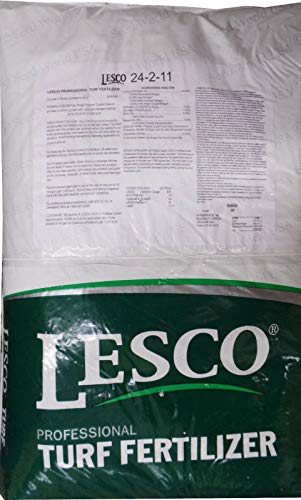
The SeedRanch St. Augustine 24-2-11 is built specifically for St. Augustine grass — not a generic lawn food repurposed for winter use. The 24-2-11 ratio delivers a moderate nitrogen hit for final fall color, but the real star is the 6% iron content, which provides deep greening without forcing soft growth that frost would kill. At 50 pounds covering 12,000 square feet, this bag gives large lawns a single-application winter solution.
Multiple owner reports confirm that St. Augustine darkened to a deep green within days after application, even when applied just before heavy rain. The iron content is significantly higher than any other winterizer on this list, making it ideal for lawns that have faded from summer heat stress. Users describe neighbor-envy results, with thick stolon density carrying through until spring green-up.
The trade-off is the higher nitrogen percentage. While 24% N is fine for a final fall feeding in warm climates (USDA zone 8b and warmer), northern St. Augustine growers may prefer a lower-N winterizer. Additionally, the 2% phosphorus is unnecessary for most established lawns and may be restricted in phosphate-sensitive watersheds.
What works
- Highest iron content (6%) for winter color without growth flush
- Species-specific formula matched to St. Augustine physiology
- Large 50-lb bag covers 12,000 sq. ft. at low application cost per foot
What doesn’t
- 24% nitrogen may be too high for northern St. Augustine zones with early frosts
- Contains 2% phosphorus that may be restricted in some states
2. Jonathan Green Winter Survival Fall Lawn Food 10-0-20

The Jonathan Green Winter Survival 10-0-20 is the textbook winterizer: low nitrogen, zero phosphorus, and a massive 20% potassium load. Potassium is the nutrient that directly strengthens cell walls, improves cold tolerance, and stores carbohydrates in St. Augustine stolons. The 10% nitrogen comes from a slow-release source, feeding roots gradually without forcing top growth during the October-November window.
At 45 pounds covering 15,000 square feet, this is the most coverage-efficient winterizer in the lineup. Owners consistently report that neighboring untreated lawns go brown while the Jonathan Green-treated turf stays greener longer into December and bounces back earlier in March. The large granule size spreads cleanly through rotary spreaders without bridging or clogging.
The downside is the lack of iron. At 0% iron, this formula will not provide the cosmetic dark-green color that some St. Augustine owners expect from a winter application. If you want green color without growth, you will need to supplement with a separate iron product. Also, the 45-lb bag can be heavy to carry for smaller gardeners.
What works
- Perfect winterizing 10-0-20 ratio with zero phosphorus
- Slow-release nitrogen prevents winter growth flush
- Best coverage per bag — 15,000 sq. ft. from a single application
What doesn’t
- No iron content — cosmetic color boost requires separate additive
- 45-lb bag is heavy and bulky to transport
3. Fertilome Winterizer for Established Lawns 10-0-14
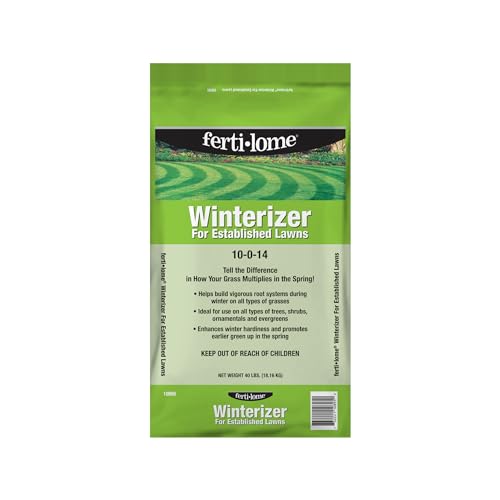
The Fertilome Winterizer 10-0-14 is a no-frills professional-grade formula designed solely for root and stolon hardening during the dormant season. The 10-0-14 ratio delivers 0.4 pounds of nitrogen per 1,000 square feet — the exact rate experts recommend for the final application to avoid stimulating leaf growth — while the 14% potassium strengthens cell structure against freeze-thaw cycles.
This 40-lb bag covers 10,000 square feet at the label rate of 4 lbs per 1,000 sq. ft., making it a mid-sized option for lawns between 5,000 and 10,000 sq. ft. Owners using Fertilome on centipede and St. Augustine report visible boundary lines where their lawn outperforms untreated neighbors in spring green-up. The lack of phosphorus also makes it legal in areas with phosphate runoff bans.
The iron content is low, so do not expect dramatic greening. Some users noted the bag size was smaller than anticipated relative to their total lawn area. Additionally, the 10-0-14 ratio provides slightly less potassium per pound compared to the Jonathan Green 10-0-20, so if maximum cold protection is your priority, the Jonathan Green formula wins that comparison.
What works
- Low nitrogen delivery rate (0.4 lbs N/1k) ideal for final winter application
- Zero phosphorus avoids state-level phosphate restrictions
- Proven performance on centipede and St. Augustine turf types
What doesn’t
- Low iron content limits cosmetic color response
- Potassium percentage (14%) is lower than premium winterizers
4. Scotts Turf Builder WinterGuard Fall Lawn Food

Scotts Turf Builder WinterGuard Fall Lawn Food is the most widely available winterizer in big-box stores, and for good reason: it works reliably across all grass types including St. Augustine. The formula focuses on deep root development rather than top-growth greening, delivering a balanced low-N, high-K blend that repairs summer heat and drought damage while prepping roots for winter.
Each 12.5-lb bag covers 5,000 square feet, making it an ideal size for smaller St. Augustine lawns. Owners consistently report that their grass stays greener longer into December compared to unfed lawns, and the spring green-up is noticeably faster. The capsule-form granules dissolve evenly, and the product comes with clear spreader settings for Scotts, Echo, and Chapin spreaders.
The bag size is relatively small, so owners with lawns larger than 5,000 sq. ft. will need multiple bags. The specific N-P-K ratio is not printed on the front label, which can frustrate buyers who want to compare percentages. Some owners expected more dramatic greening, but the formula is designed for root health, not cosmetic color.
What works
- Widely available with clear spreader setting instructions
- Designed to repair heat and drought damage before winter dormancy
- Improves root depth and water/nutrient uptake capacity
What doesn’t
- Small 5,000 sq. ft. coverage requires multiple bags for larger lawns
- N-P-K ratio not prominently displayed for spec-conscious buyers
5. Scotts Turf Builder WinterGuard Fall Weed & Feed5
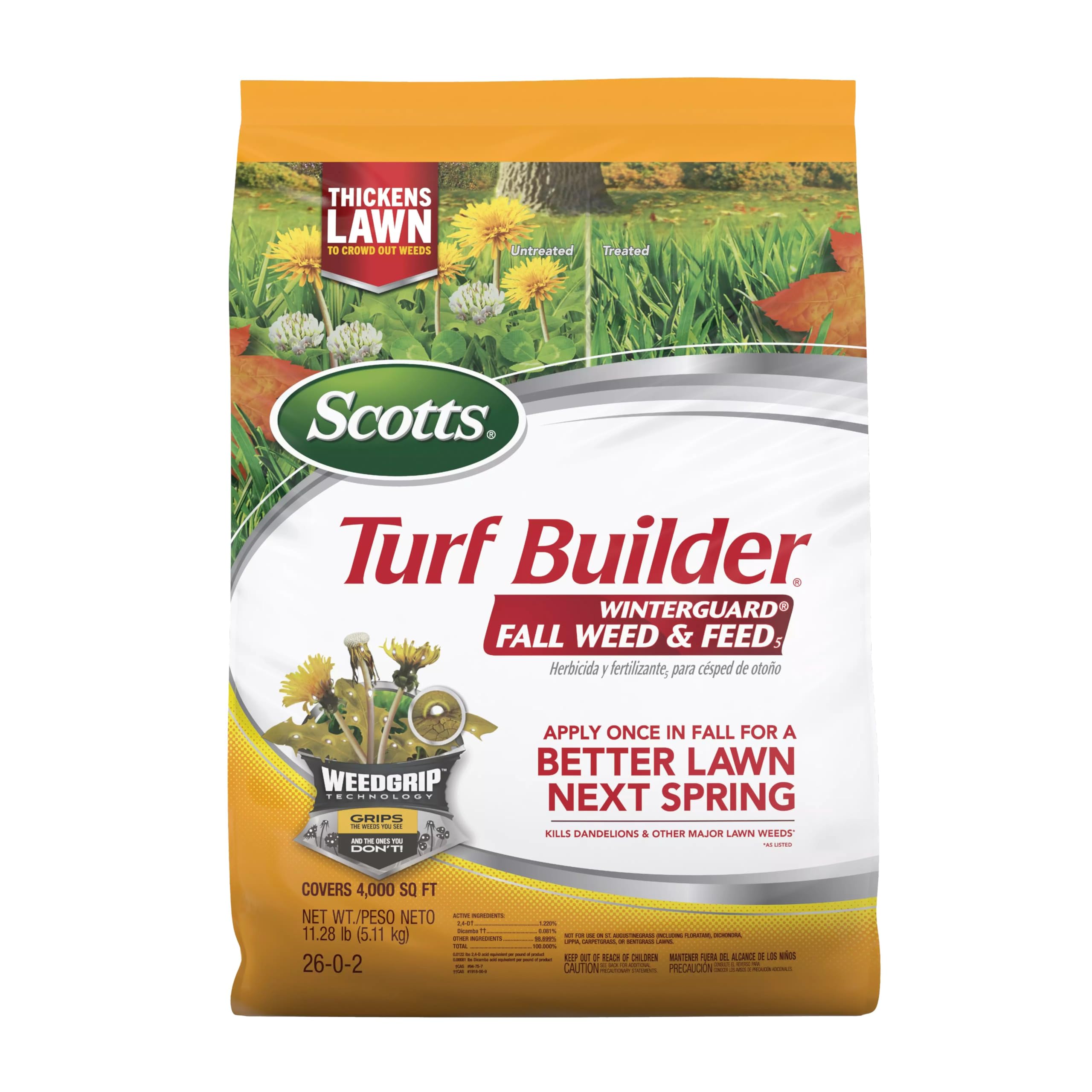
The Scotts WinterGuard Fall Weed & Feed5 is a combination product that kills over 50 types of broadleaf weeds — clover, dandelion, plantain, and morningglory — while delivering a fall fertilizer blend. For St. Augustine owners battling winter weeds like henbit and chickweed, this two-in-one approach saves a separate herbicide pass. The key application rule: apply to wet grass when temperatures are between 60°F and 90°F.
Owner reports are overwhelmingly positive, with weeds visibly dying within 3 weeks and the grass becoming thicker and greener. The product works on Bahiagrass, Bermudagrass, Bluegrass, Centipedegrass, Fescue, Ryegrass, and Zoysiagrass — but St. Augustine is notably absent from that list. St. Augustine is sensitive to many broadleaf herbicides, especially 2,4-D based formulas, which can damage or kill stolons.
The 11.28-lb bag covers only 4,000 sq. ft., the smallest coverage in this comparison. For larger St. Augustine lawns, the cost per square foot adds up. More critically, the weed-killing chemistry may cause stolon burn or yellowing on St. Augustine if applied during active growth. Use with extreme caution and only during the early fall window when St. Augustine is still actively growing and not stressed.
What works
- Kills over 50 weed species while feeding the lawn in one pass
- Strong results on cool-season grasses and Bermudagrass
- Convenient for homeowners who want weed control plus winter feeding
What doesn’t
- Not recommended for St. Augustine due to herbicide sensitivity risk
- Smallest coverage (4,000 sq. ft.) drives up cost for larger lawns
6. Green Thumb GT58105 Winterizer Lawn Fertilizer 32-0-10
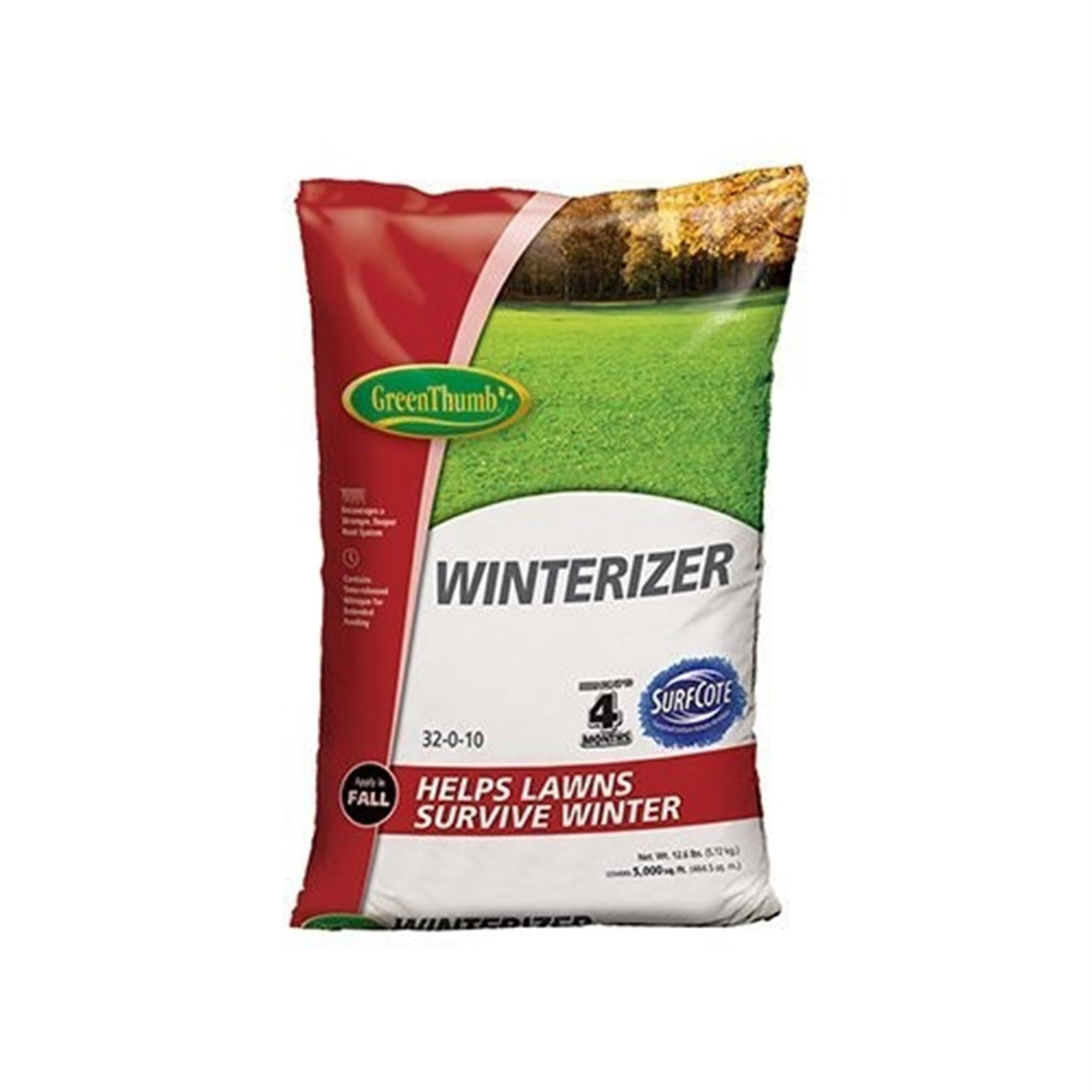
The Green Thumb GT58105 delivers a 32-0-10 ratio with 50% controlled-release nitrogen, continuously feeding the lawn for up to 16 weeks. That CRN percentage is critical for St. Augustine — it prevents the rapid-growth surge that quick-release 32% nitrogen would normally trigger, while the 10% potassium provides modest winter protection. The 2% iron adds cosmetic greening without stimulating leaf growth.
Owners who applied this in late November reported that spring green-up happened exactly as promised, with neighbor-comment-worthy results by April. The powder form spreads easily through rotary and drop spreaders, and the 5,000 sq. ft. coverage matches typical suburban St. Augustine lots. The 16-week feeding window means one application in October covers the entire winter dormancy period.
The 32% nitrogen is very high even with controlled release. In northern zones where St. Augustine enters deep dormancy, that much nitrogen can still push some late growth that may not harden off before a hard freeze. The potassium percentage (10%) is also lower than dedicated winterizers — if your priority is maximum cold hardiness, a 10-0-20 or 10-0-14 formula is a safer bet.
What works
- 50% controlled-release nitrogen feeds through 16 weeks of dormancy
- 2% iron provides winter color without growth flush
- Budget-friendly entry point for winterizing smaller St. Augustine lawns
What doesn’t
- 32% N is high — may push growth in mild winters before freeze
- Only 10% potassium offers modest cold protection vs. 20% K formulas
7. Fertilome Centipede Lawn Fertilizer 15-0-15
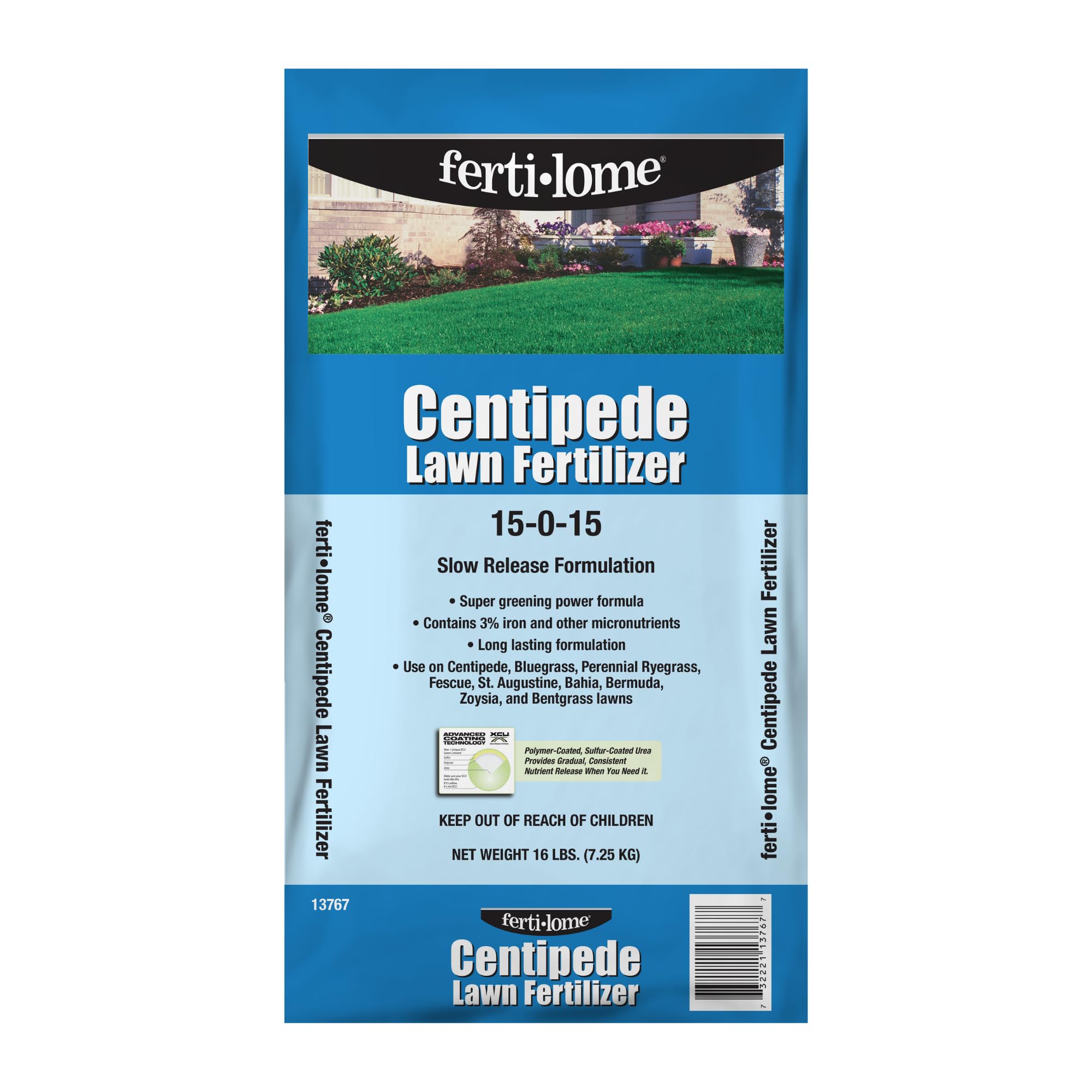
The Fertilome Centipede 15-0-15 is formulated primarily for centipede grass but works well on St. Augustine due to similar low-nitrogen requirements. The 15-0-15 ratio provides equal parts nitrogen and potassium with zero phosphorus, making it suitable for phosphate-free zones. The slow-release nitrogen reduces the risk of burn, and the 16-lb bag covers 5,000 sq. ft. at the 4 lbs per 1,000 sq. ft. rate.
Owner reports are enthusiastic: users describe a lawn that thickened, filled bare spots, and developed strong roots even under NC July heat conditions. Be prepared to mow more frequently — the 15% nitrogen, while moderate, still drives visible growth when applied in early fall. For a true winterizer application in late October or November, this formula is better used as an early fall prep feed rather than a deep-winter hardening application.
The 15% potassium is respectable but not at the level of dedicated winterizers like Jonathan Green’s 20%. The bag size (16 lbs) covers only 5,000 sq. ft., so larger St. Augustine lawns will need two bags. Additionally, this product is labeled for centipede grass first, and some St. Augustine owners may prefer a species-specific formula that accounts for St. Augustine’s higher iron needs.
What works
- 15-0-15 ratio is a solid entry-level winterizer with zero phosphorus
- Slow-release nitrogen formulation reduces burn risk on sensitive St. Augustine
- Thickens lawn and fills bare spots when applied in early fall
What doesn’t
- 15% potassium is lower than premium winterizers designed for cold protection
- Small 16-lb bag requires multiple purchases for lawns over 5,000 sq. ft.
Hardware & Specs Guide
Controlled-Release Nitrogen (CRN)
CRN is measured as a percentage of total nitrogen content. A winterizer with 40%–50% CRN releases nutrients over 8–16 weeks, which matches St. Augustine’s gradual dormancy entry. Quick-release nitrogen (100% water-soluble) should be avoided after mid-October because it causes a rapid green flush that cannot harden before frost. Check the label for “slow release” or “controlled release” wording — Green Thumb’s 50% CRN is the standout in this list.
Potassium (K) Percentage for Cold Hardiness
Potassium is the single most important nutrient for winterizing St. Augustine. A K value of 14% to 20% in the final fall application strengthens cell wall integrity, reduces freeze damage to stolons, and stores carbohydrate reserves for spring regrowth. Fertilome 10-0-14 and Jonathan Green 10-0-20 are the top performers here. Formulas with K below 10% are better suited for early fall feeding than late-fall winterizing.
Iron (Fe) Content
Iron is a micronutrient that drives chlorophyll synthesis, giving St. Augustine a deep green color without forcing nitrogen-driven leaf growth. Winterizers with 1% to 6% iron allow you to maintain cosmetic color through the dormant season. SeedRanch’s 6% iron is the highest in this comparison. Fertilizers with 0% iron (like Jonathan Green) require a separate liquid iron supplement if winter color is a priority.
Coverage Rate (Sq. Ft. per Bag)
Coverage is typically calculated at 4 lbs of product per 1,000 sq. ft. for granular winterizers. The Fertilome Winterizer 10-0-14 covers 10,000 sq. ft., while the Jonathan Green covers 15,000 sq. ft. Match the bag size to your actual lawn dimensions — applying at too-low a rate fails to harden stolons, while over-application risks nitrogen runoff into waterways. Always measure your lawn area before purchasing.
FAQ
When should I apply winter fertilizer to St. Augustine grass?
Can I use a regular lawn fertilizer as a winterizer for St. Augustine?
Should I water after applying winter fertilizer to St. Augustine?
How much winter fertilizer does St. Augustine need per 1,000 square feet?
Is winter fertilizer necessary for St. Augustine in warm climates like Florida or Texas?
Final Thoughts: The Verdict
For most gardeners, the winter fertilizer for st augustine grass winner is the SeedRanch St. Augustine 24-2-11 because its species-specific 24-2-11 ratio and 6% iron deliver the best balance of winter color and root protection for St. Augustine’s unique physiology. If you want maximum potassium cold hardening without the iron, grab the Jonathan Green Winter Survival 10-0-20. And for a large-lot winterizer that covers 10,000 square feet with a clean 10-0-14 profile, nothing beats the Fertilome Winterizer 10-0-14.